
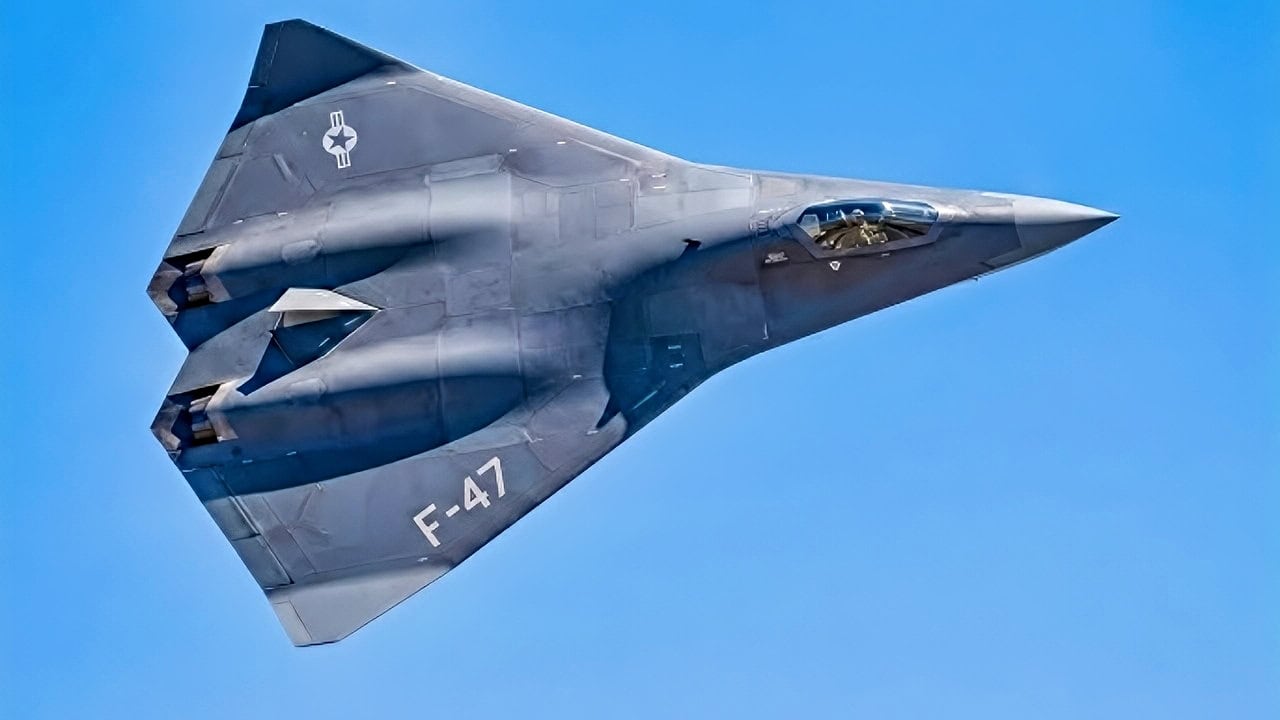
Ever since the United States Air Force awarded Boeing the F-47 Next Generation Air Dominance (NGAD) contract, it’s been a big deal (or, to borrow an old-school WWE slogan for Brock Lesnar, “The Next Big Thing”). A war with China, Russia, or a new conflict with Iran is what the new F-47 NGAD is all about, stealth for the future U.S. Air Force.
This marks America’s entry into the 6th Generation of fighter jet technology.
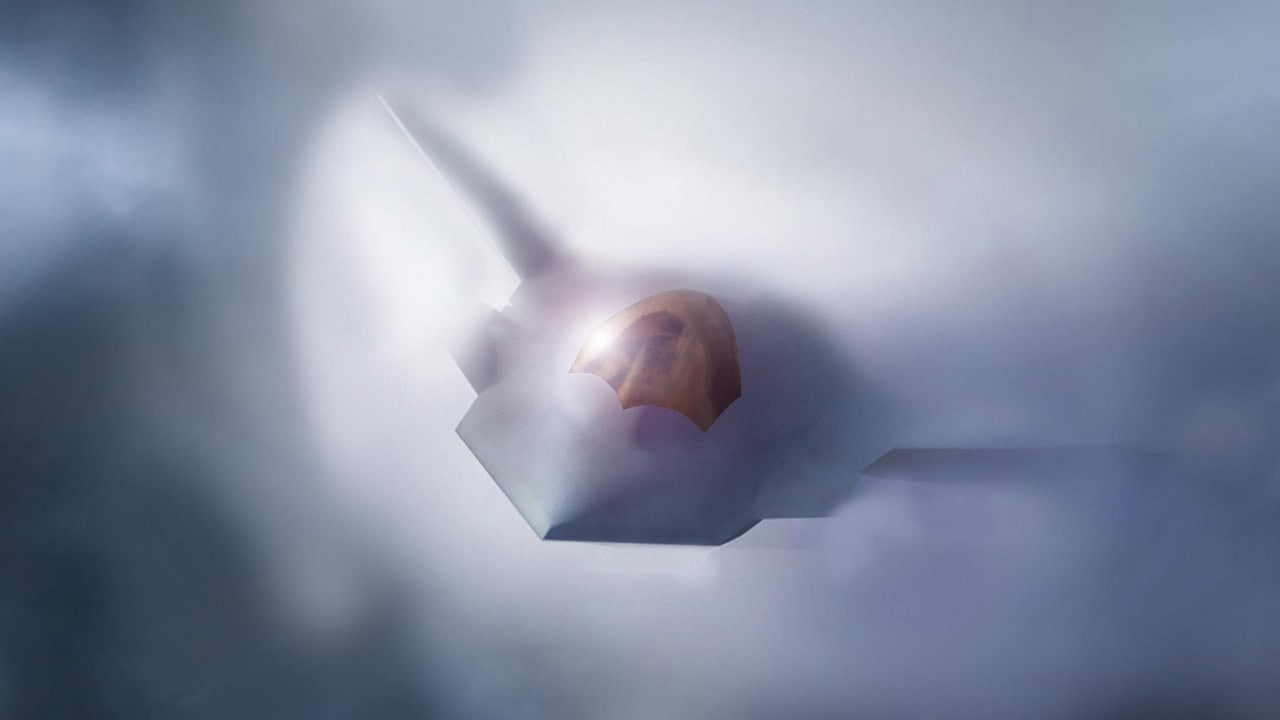
F-47 Fighter. Image Credit: U.S. Air Force.
But beyond all the jargon, what does that really mean? Why is the F-47 such a breakthrough, aside from its connection to the legendary P-47/F-47 Thunderbolt of World War II?
F-47 Attribute #1: Longer Combat Range
The NGAD fighter will have a combat radius in excess of 1,000 nautical miles, which will be a significant increase over the combat radiuses of America’s current 5th Generation stealth fighters, the F-22 Raptor and F-35 Lightning II (both built by Boeing’s biggest competitor in the battle for military contracts, Lockheed Martin’s famed Skunk Works division); the Raptor and the Lightning II have a respective combat radius of 590 nautical miles and 600 nautical miles, respectively, which has caused these two warbirds to be subjected to a goodly amount of criticism, despite their excellent performance in combat thus far.
The F-47 will have a 69 percent increase in combat range over the F-22 and a 68.3 percent increase over the F-35.
Just how significant are these differentials?
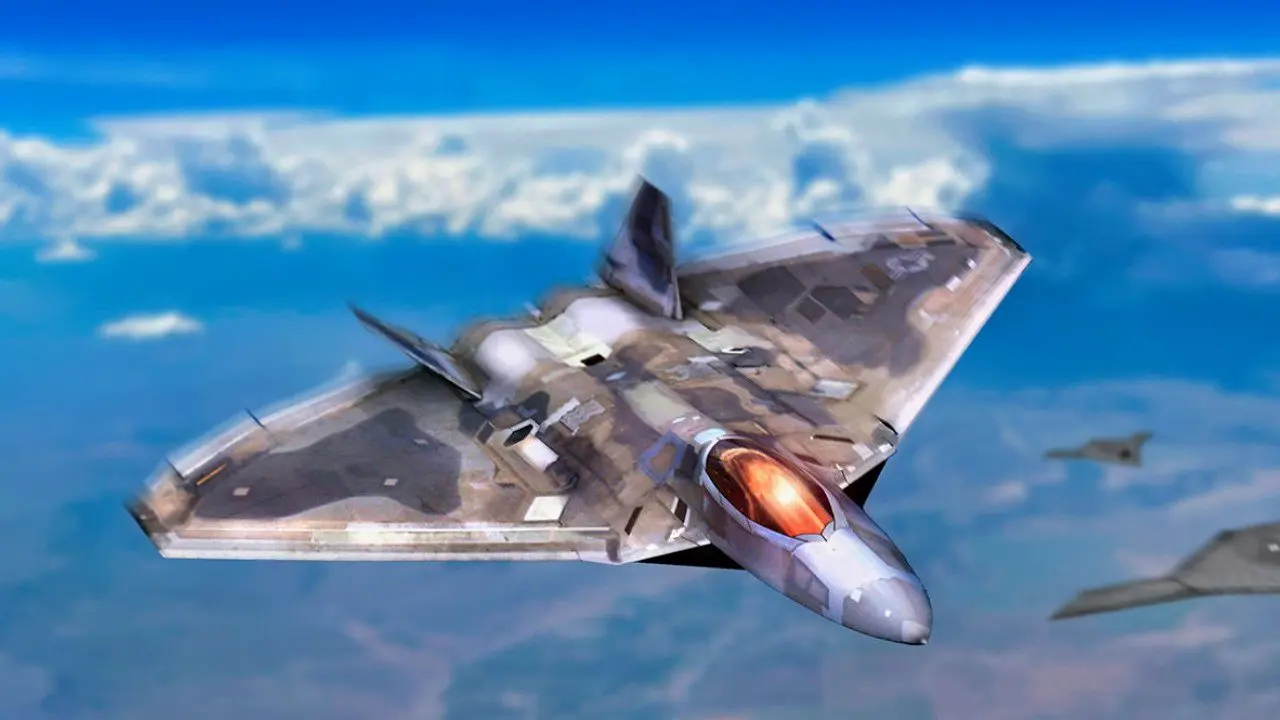
NGAD Fighter. Artist Rendering.
Michael Trent puts it in perspective in a February 12, 2025, article for Military Machine titled “The Boeing F-47: Everything We Know About America’s Sixth-Generation Fighter”: “That range reflects the geography of a potential Pacific conflict. A fighter with 1,000-plus nautical miles of combat radius can reach contested areas around Taiwan or the South China Sea from bases in Guam or Japan without tanker support, or at least with tankers positioned much farther from threat zones. The F-22, by contrast, requires extensive tanker support for Pacific operations, and those tankers are themselves vulnerable to long-range Chinese missiles.”
This would mean the ability to stay in the fight longer against China’s Gen 5 J-20 (NATO reporting name “Fagin”) and Gen 6 J-36 fighters in the event of a World War III breakout in the Indo-Pacific region.
To add some historical perspective, back in World War II, it was the longer combat radius of the P-51D Mustang that proved to be game changer in the European Theatre, as it was able to escort to the B-17 and B-24 bombers to and from the industrial heart of Nazi Germany and properly protect those bombers from the ravages of the Luftwaffe’s Messerschmitt Bf-109 and Focke-Wulf Fw 190 fighters.
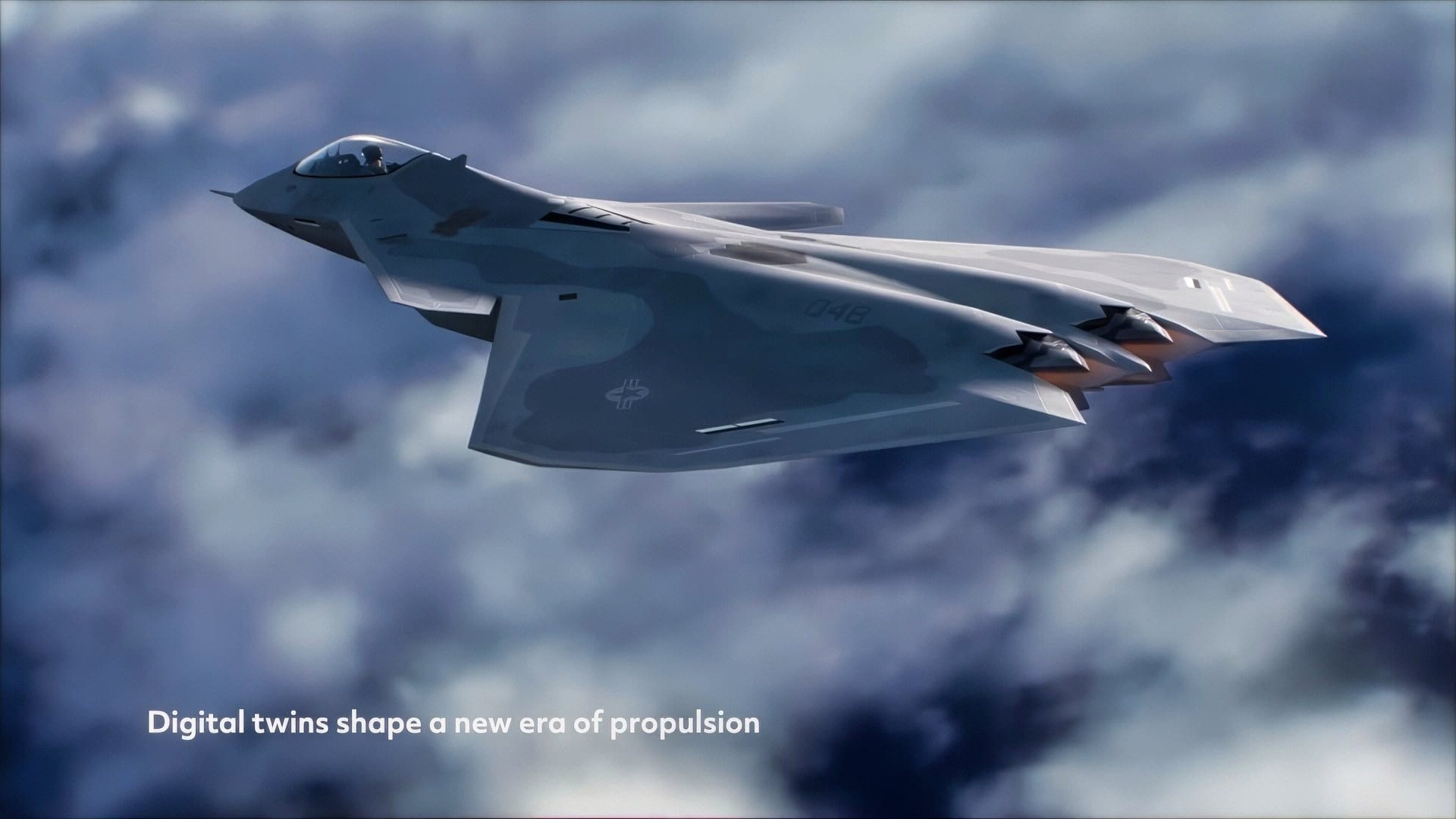
F-47 NGAD Fighter Possible Image. Image Credit: Screenshot.
F-47 NGAD Attribute #2: Coolness Under Fire (Literally)
This is an aspect that’s frequently overlooked when discussing warbirds’ attributes, but that doesn’t make it any less important.
After all, 6th-Generation fighters, in particular, generate enormous heat from their sensors, computers, and electronic warfare systems.
It is a defining challenge to manage heat without degrading performance or creating a detectable infrared (IR) signature.
In addition, the presumptive (as yet unverified) ordnance consisting of the AIM-260 Joint Advanced Tactical Missile, the AIM-174B for long-range engagements, and the AGM-158D JASSM-XR cruise missile for strike missions, will be carried internally to prevent RCS compromise (taking a page out of the book of the ChiCom J-20).
Accordingly, both GE Aerospace (XA102) and Pratt & Whitney (XA103) are developing prototypes of next-generation adaptive-cycle engines.
These are “three-stream” engines that can switch between high-thrust combat mode and high-efficiency cruise mode. They promise about 30 percent more range and double the cooling capacity compared to current engines.
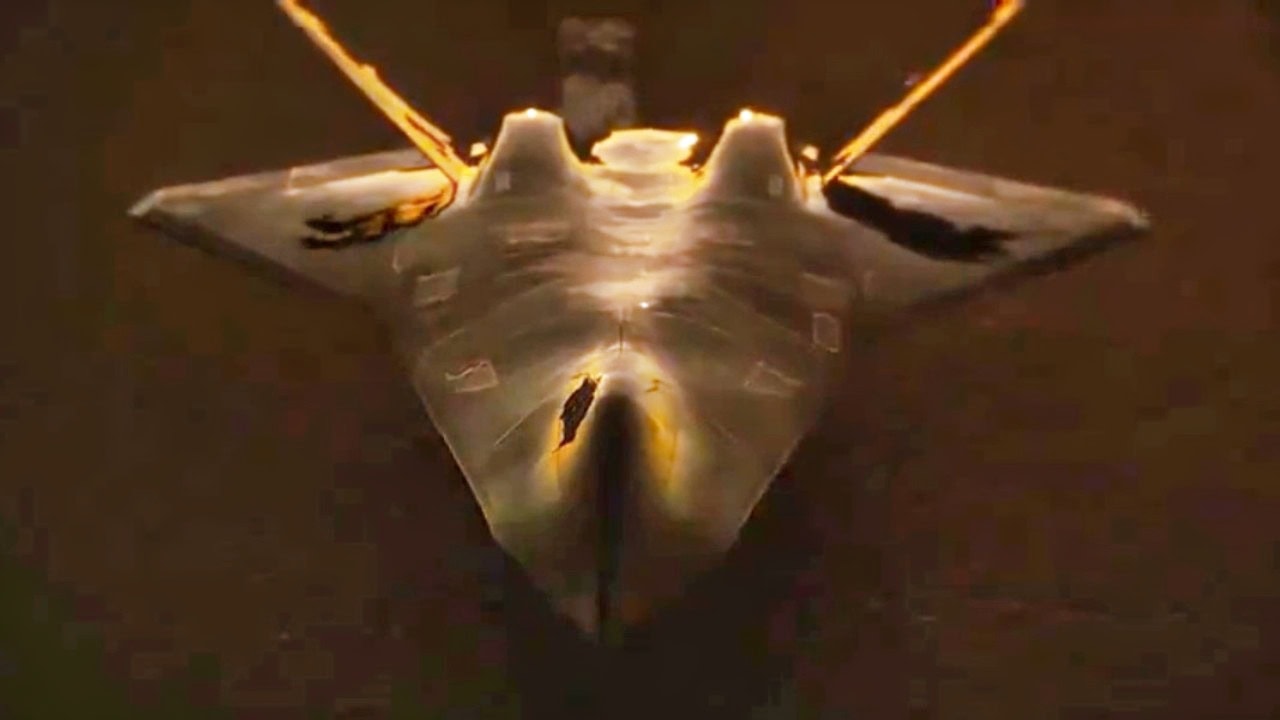
F-47 Fighter from Boeing. Image Credit: U.S. Air Force Screenshot.
F-47 Attribute #3: Stealth & Speed
This may seem like the most obvious duo choice, but I’m not putting as much emphasis on it, as we don’t know yet how the F-47’s radar signature/radar cross-section (RCS) will compare to that of the F-22 and F-35.
That said, the USAF described the F-47 as featuring “all-aspect, broadband low-observability,” meaning reduced radar and infrared signatures from every angle and across multiple radar frequency bands.
“Speed is life,” goes the fighter pilot’s mantra. To that effect, the NGAD won’t exactly be a world-beater, i.e., it’s not expected to top the Mach 2.5 max airspeed of the F-15EX Eagle II or the blinding Mach 2.83 top airspeed of the Russian-made MiG-31 “Foxhound.”
However, it *is* expected to have a top Mach 2.0, which, depending on how the final finished product turns out, should (1) be roughly on a par with (or just slightly behind) the Mach 2.25 max airspeed of the F-22 and (2) easily exceed the Mach 1.6 top airspeed of the F-35.
F-47 Attribute #4: AI, CCA, & Sensors
For better or for worse (cue theme music from “The Terminator”), AI and UAVs are here to stay. Accordingly, as a 6th-Generation fighter, the NGAD is envisioned to harness these technologies in combat.
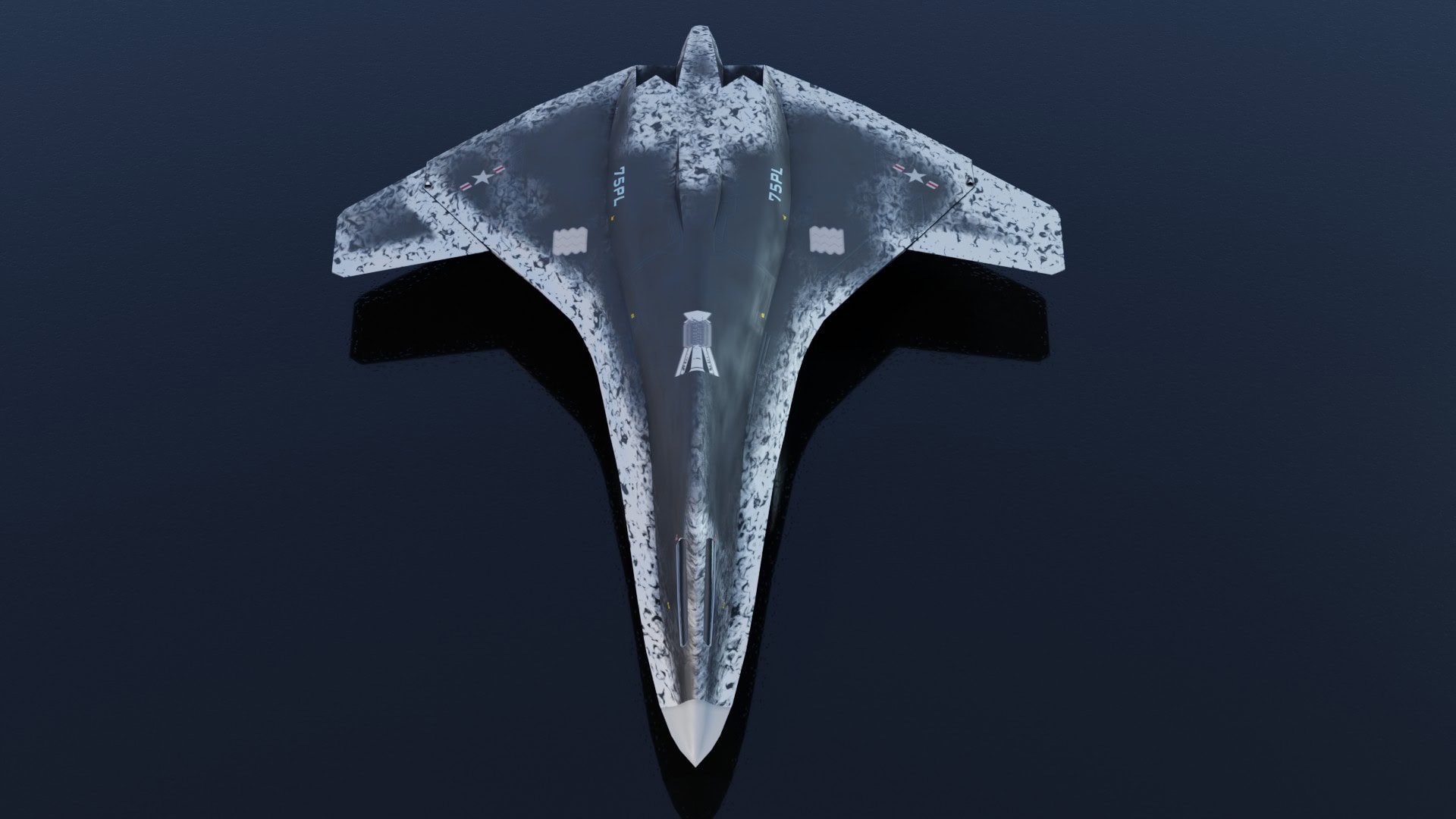
NGAD Fighter Mock Up. Image Credit: Creative Commons.
It will use edge computing for predictive threat modeling, processing sensor data, and recommending tactical decisions faster than a human pilot could manage alone, which will be essential when the F-47 operates as a command node (akin to the “quarterback in the sky” function of the F-35) for multiple autonomous wingmen.
This makes for a perfect segue for the F-47 teaming with the Collaborative Combat Aircraft (CCA), autonomous drones that fly alongside the crewed fighter as “loyal wingmen.”
The USAF envisions each F-47 controlling two or more CCAs that handle sensor coverage, weapons delivery, electronic warfare, or decoy missions.
Two such CCAs are already in test flight mode: (1) the General Atomics YFQ-42A “Dark Merlin,” which made its maiden flight in August 2025, and the Anduril YFQ-44A “Fury,” which followed suit on October 31, 2025.

NGAD artist concept from Northrop Grumman.
And speaking of those sensors, the NGAD will shine in that arena as well.
It’ll synthesize electro-optical, infrared, synthetic aperture radar, and signals intelligence data into a single tactical picture, a next step in the evolution of the sensor fusion architecture pioneered on the Lightning II.
About the Author: Christian D. Orr, Defense Expert
Christian D. Orr is a Senior Defense Editor. He is a former Air Force Security Forces officer, Federal law enforcement officer, and private military contractor (with assignments worked in Iraq, the United Arab Emirates, Kosovo, Japan, Germany, and the Pentagon). Chris holds a B.A. in International Relations from the University of Southern California (USC) and an M.A. in Intelligence Studies (with a concentration in Terrorism Studies) from American Military University (AMU). He is also the author of the book “Five Decades of a Fabulous Firearm: Celebrating the 50th Anniversary of the Beretta 92 Pistol Series,” the second edition of which was recently published.