
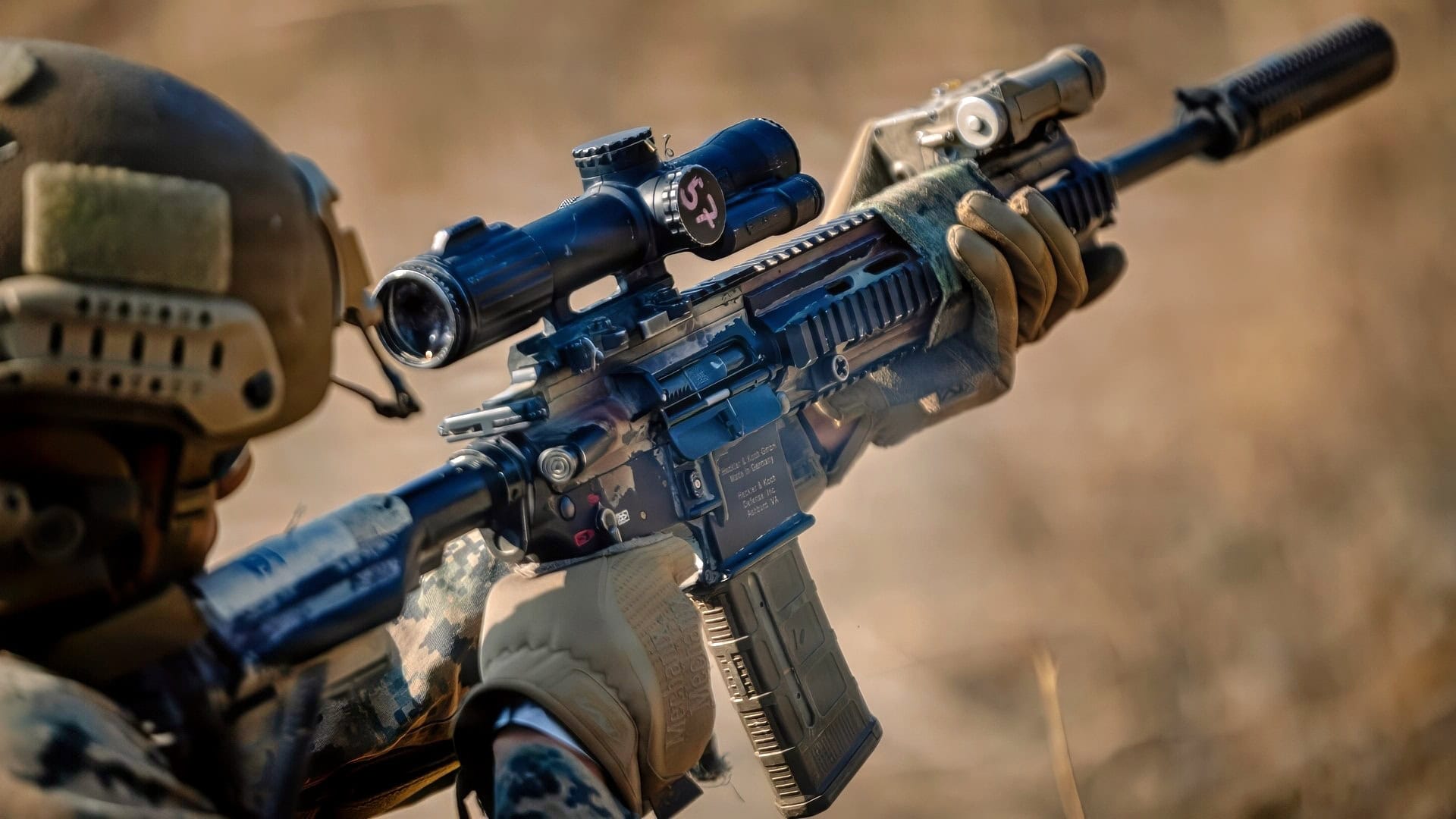
Trump’s FY2027 budget proposal includes $1.5 trillion in defense spending, a 40-plus-percent increase to what was already the world’s most generous defense budget. Framed as a historic buildup, the backdrop for the spending boost is Operation Epic Fury and escalating competition with China. Regardless of the geopolitical context, however, the proposal is excessive—with significant domestic tradeoffs that demand intensive scrutiny.
What the Massive $1,500,000,000,000 Defense Budget Includes
The core components of the defense proposal are a $1.15 trillion base budget, plus an additional $350 billion via reconciliation.
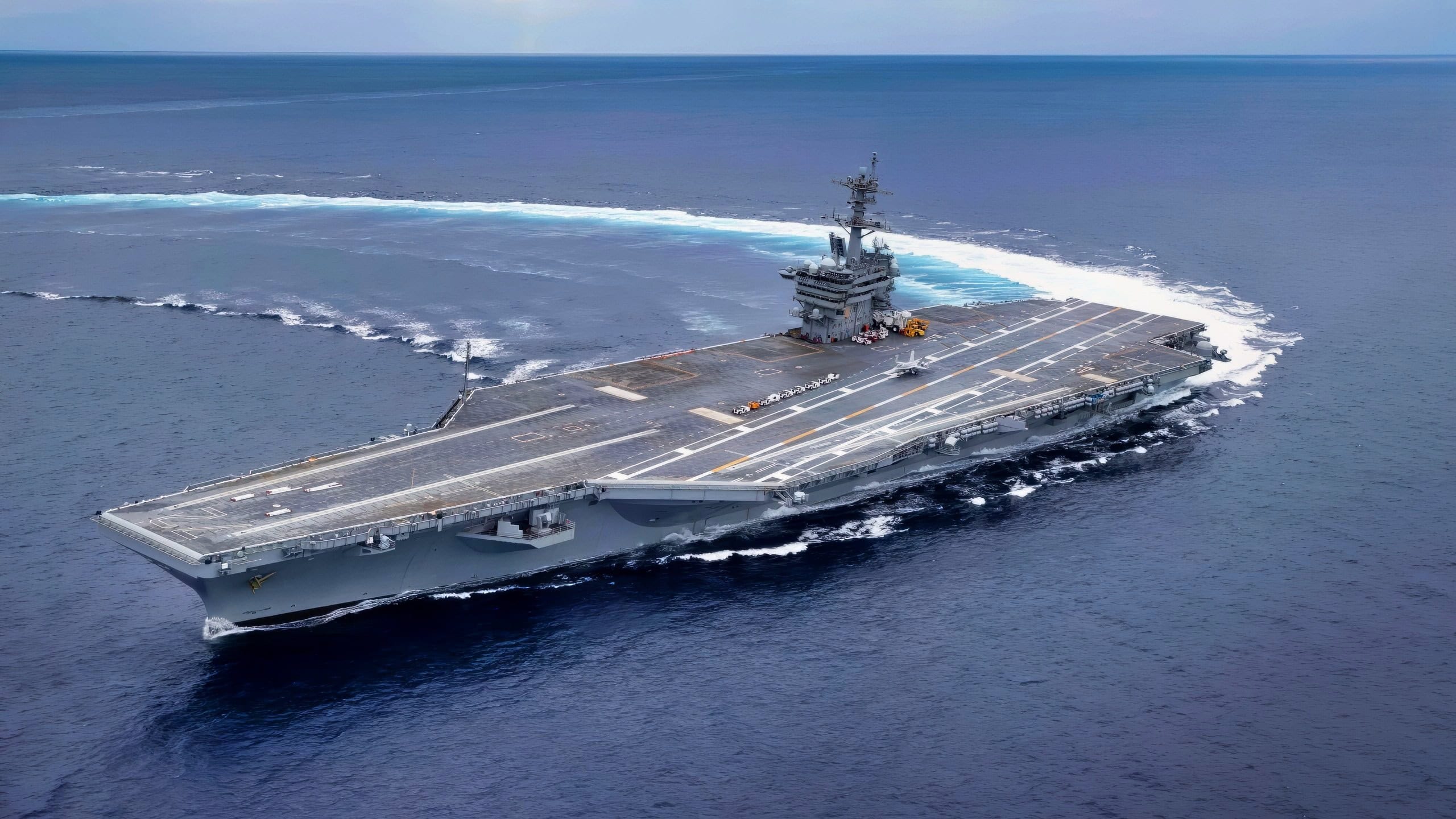
(May 11, 2017) Nimitz-class aircraft carrier USS Abraham Lincoln (CVN 72), conducts high-speed turn drills during sea trials. Abraham Lincoln is underway after successfully completing its mid-life refueling and complex overhaul and will spend several days conducting sea trials, a comprehensive test of many of the ship’s key systems and technologies. (U.S. Navy photo by Mass Communication Specialist 3nd Class Juan A. Cubano/Released)
The major programs driving the increased spending are the Golden Dome missile defense system ($17.5B), a shipbuilding surge ($65.8B for 34 new ships), advanced systems like the F-47, AI, and hypersonics, troop pay increases of five to seven percent, and supply chain investments in critical minerals.
Global Comparison
Keeping Trump’s proposal in perspective globally is an important exercise.
Before the proposed increase, the US was already the world’s largest military spender—by a healthy margin. If the $1.5T went through, it would represent 5-6 times China’s defense budget and 8-10 times Russia’s.
No other country on Earth would come close to the US defense budget. The US’s $1.5T would be roughly equal to the defense spending of the next 8-10 countries combined.
The share of GDP invested in defense under this proposal would rise to 4.5-5 percent, about 100 to 150 percent above the NATO norm of two percent. The US is already the world’s dominant military spender; at what point does additional spending offer diminishing returns?
Do We Need It?
You could argue that we need the budget. The US military-industrial base is strained; the US faces competition across multiple theaters; and the US needs to keep pace with China, which is ambitiously expanding its military capabilities.

The USS George H.W. Bush Carrier Strike Group sails in formation during a strait transit exercise in the Atlantic Ocean, Feb. 8, 2026. The George H.W. Bush Carrier Strike Group is at sea as an integrated warfighting team. Composite Training Unit Exercise (COMPTUEX) is the Joint Force’s most complex integrated training event and prepares naval task forces for sustained high-end Joint and combined combat. Integrated naval training provides combatant commanders and America’s civilian leaders highly capable forces that deter adversaries, underpin American security and economic prosperity, and reassure Allies and partners. (U.S. Navy photo by Mass Communication Specialist 3rd Class John R. Farren)
But the US is already a global military hegemon. The upside of increasing the defense budget by 40 percent is obvious but very expensive, and its payoffs are unclear.
The boosted investment would likely yield several “nice to have” features, but the administration needs to think in terms of needs, not wants. Plus, the current proposal risks overinvestment in legacy and prestige systems (like the Trump-class battleship) rather than cutting-edge systems that reflect the trends of modern conflict.
The Real Downside: Domestic Cuts
The US has finite resources; spending more on defense means spending less elsewhere. To offset the increase, the proposal includes $73B in cuts to non-defense discretionary spending. The cuts have been described as “draconian,” and that about sums it up.
For education and research, the Department of Education is put on a path toward elimination.
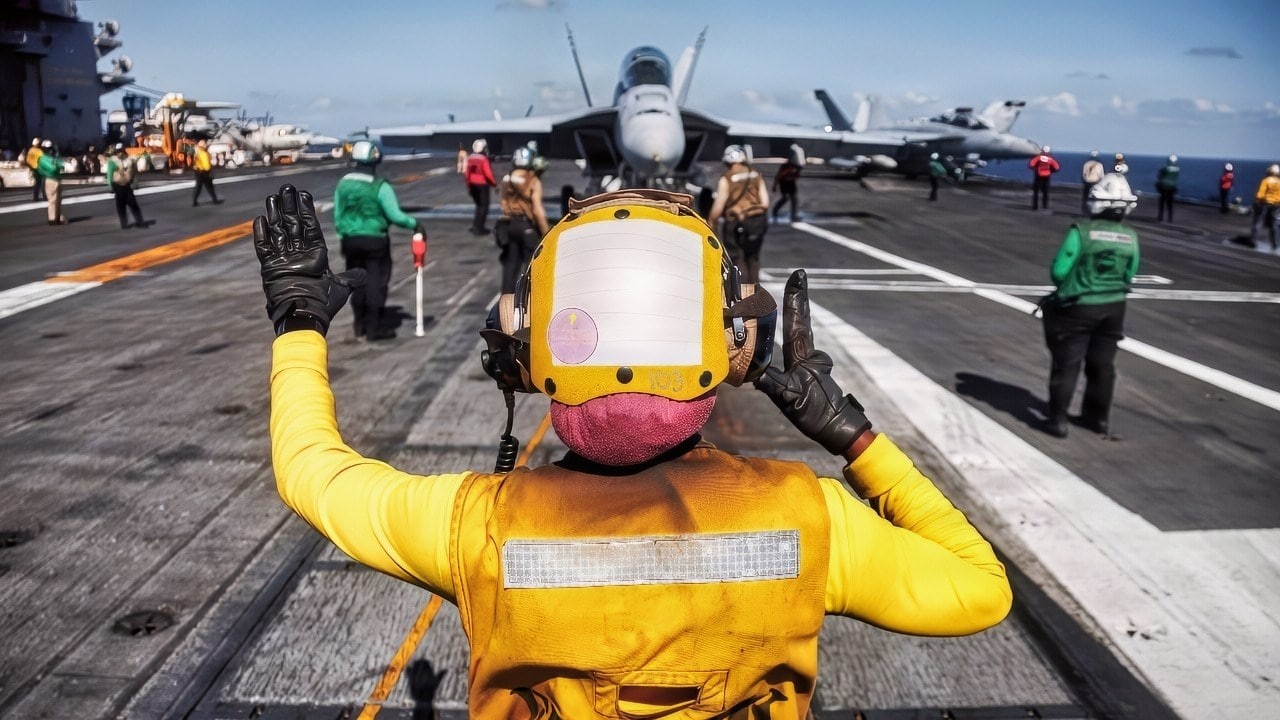
A U.S. Sailor signals to an F/A-18F Super Hornet aircraft, attached to Strike Fighter Squadron 213, on the flight deck of the world’s largest aircraft carrier, Ford-class aircraft carrier USS Gerald R. Ford (CVN 78), while underway in the Caribbean Sea, Feb. 5, 2026. U.S. military forces are deployed to the Caribbean in support of the U.S. Southern Command mission, Department of War-directed operations, and the president’s priorities to disrupt illicit drug trafficking and protect the homeland. (U.S. Navy photo)
The NSF would be cut by 55 percent; NIH would lose $5B in funding. Social programs like LIHEAP would be eliminated, WIC would be cut by 17 percent, and the Job Corps would be eliminated. HUD would lose $10B, while CDBG and HOME would be eliminated outright.
The EPA would be slashed in half, while NASA would be cut by a quarter. The point is: an increase in defense spending would directly lead to a reduction in domestic capacity.
Strategic Implications
The increase in defense spending could yield long-term benefits, but the domestic cuts would have an immediate, deleterious impact. The cuts would weaken education, research, and infrastructure—even NASA.
The paradox here is that the spending undermines long-term national power, because power is more than pure military might. National strength is not tied solely to military spending.

Blended Wing Body Idea from NASA,
Cultures derive both hard and soft power from an educated populace, from cutting-edge research and technology, and from prestige programs like space exploration. Adding 34 warships to the fleet would allow for more comprehensive global coverage, but the benefits are marginal—especially relative to the potential losses tied to the cuts.
The Political Reality
Fortunately, the budget faces major obstacles.
The 60-vote Senate threshold will be hard to reach. Democratic opposition is strong. Moderate Republicans could oppose it, too; margins could be thin with election-year pressure.
Even defense hawks prefer gradual increases. The likely outcome is a scaled-down budget that incorporates major compromises.
Indeed, the current proposal is likely to be “dead on arrival” in its current form, which is the best possible outcome for the country’s interests.
About the Author: Harrison Kass
Harrison Kass is a writer and attorney focused on national security, technology, and political culture. His work has appeared in City Journal, The Hill, Quillette, The Spectator, and The Cipher Brief. He holds a JD from the University of Oregon and a master’s in Global & Joint Program Studies from NYU. More at harrisonkass.com.