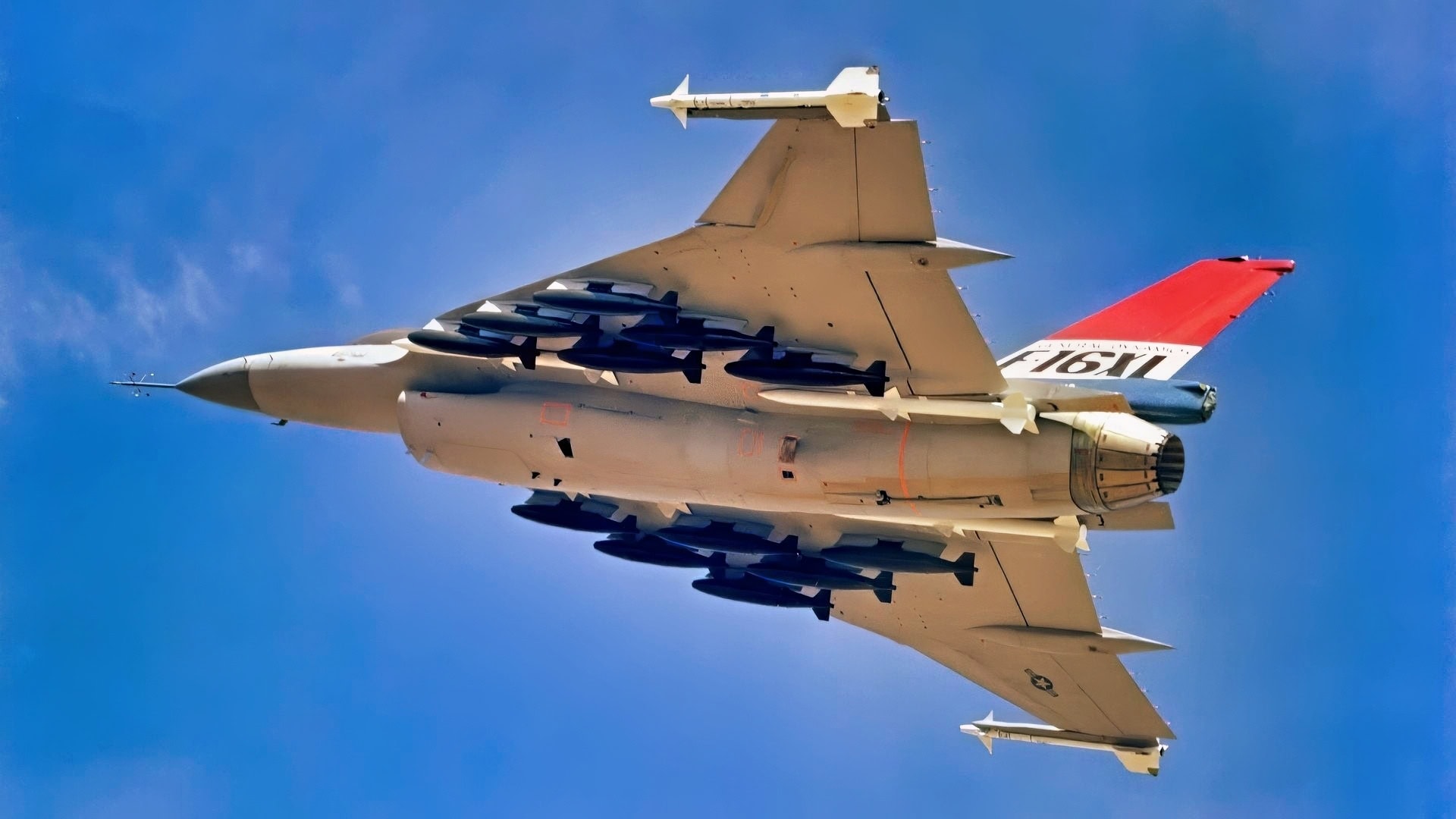
The F-16 has long been one of the workhorses of the United States Air Force since it entered service in 1978 — nearly half a century ago. Thousands of F-16s have been built in multiple production variants. One of the most radical of the multitude of F-16 variants is the F-16XL.
The F-16XL Was a Giant Fighter That Never Got a Chance
Perhaps the prime difference between the baseline F-16 and the F-16XL was the latter’s significantly enlarged wing.
The XL’s cranked-arrow delta wing replaced the F-16’s standard wing arrangement, giving the XL approximately double the wing area of its predecessor.
The wing’s sweep was optimized for efficiency at supersonic speeds as well as high maneuverability, giving the XL a roughly 25 percent improvement in lift at supersonic speeds — an enormous improvement for an already highly nimble fighter.
Internal fuel, consequently, increased dramatically, about 65 percent, and the F-16XL could carry around twice the ordnance of the baseline F-16 thanks to its additional hardpoints. The design radically transformed the jet into a long-range strike platform without reducing agility.
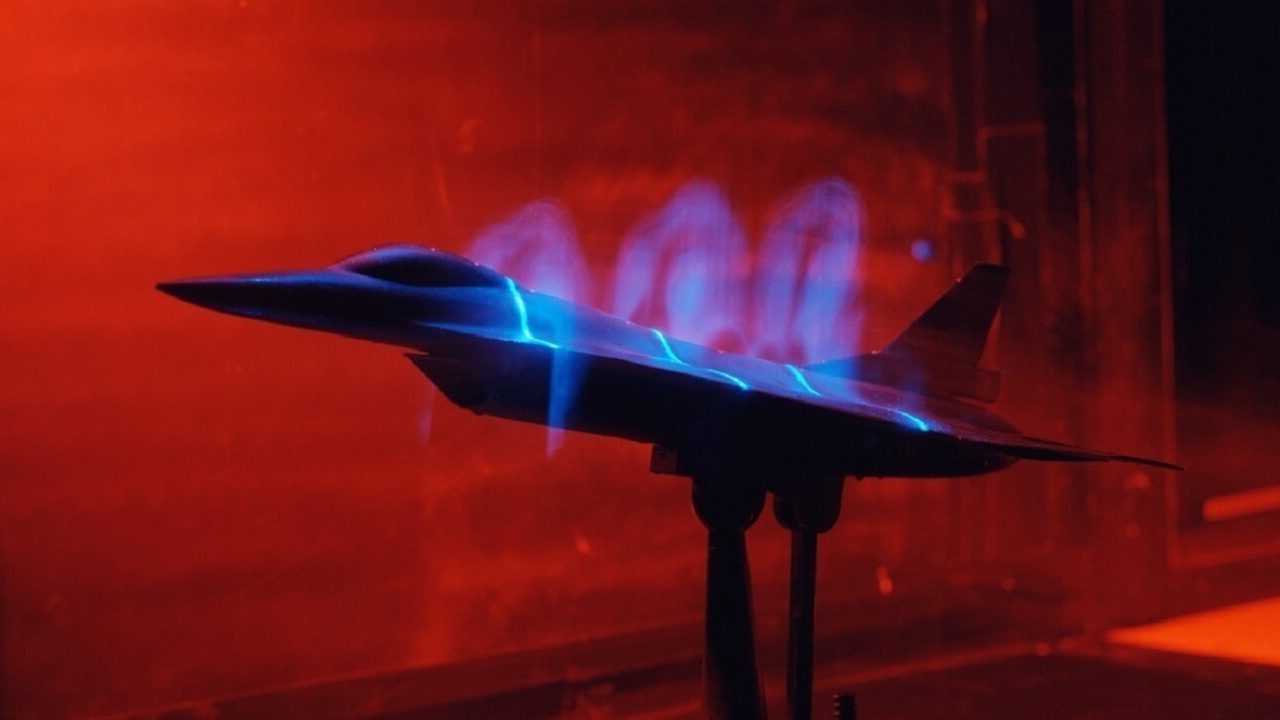
F-16XL fighter. Image Credit: Creative Commons.
But it was not the only change the F-16XL experienced: its fuselage was lengthened by around 56 inches, and its tail was canted upward and ventral fins removed.
Remarkably, the F-16XL’s stability increased, thanks in part to the extensive use of composite materials that helped offset weight increases that arose thanks to its elongated fuselage and larger wings.
Enhanced Tactical Fighter Competition and F-16XL
The F-16XL’s design was a direct response to the United States Air Force’s Enhanced Tactical Fighter program. The F-16XL was a strong contender given its notable capabilities and competed with the F-15E Strike Eagle.
Though the Panavia Tornado was also briefly considered for the role, it would not have been able to perform air superiority missions, and its manufacture outside the United States nearly guaranteed it would not win the competition.
The United States Air Force began testing in March of 1981, seeking a replacement for the F-111 Aardvark.
The Air Force sought a fighter that could conduct air interdiction missions on its own without guaranteed fighter or jamming escort.
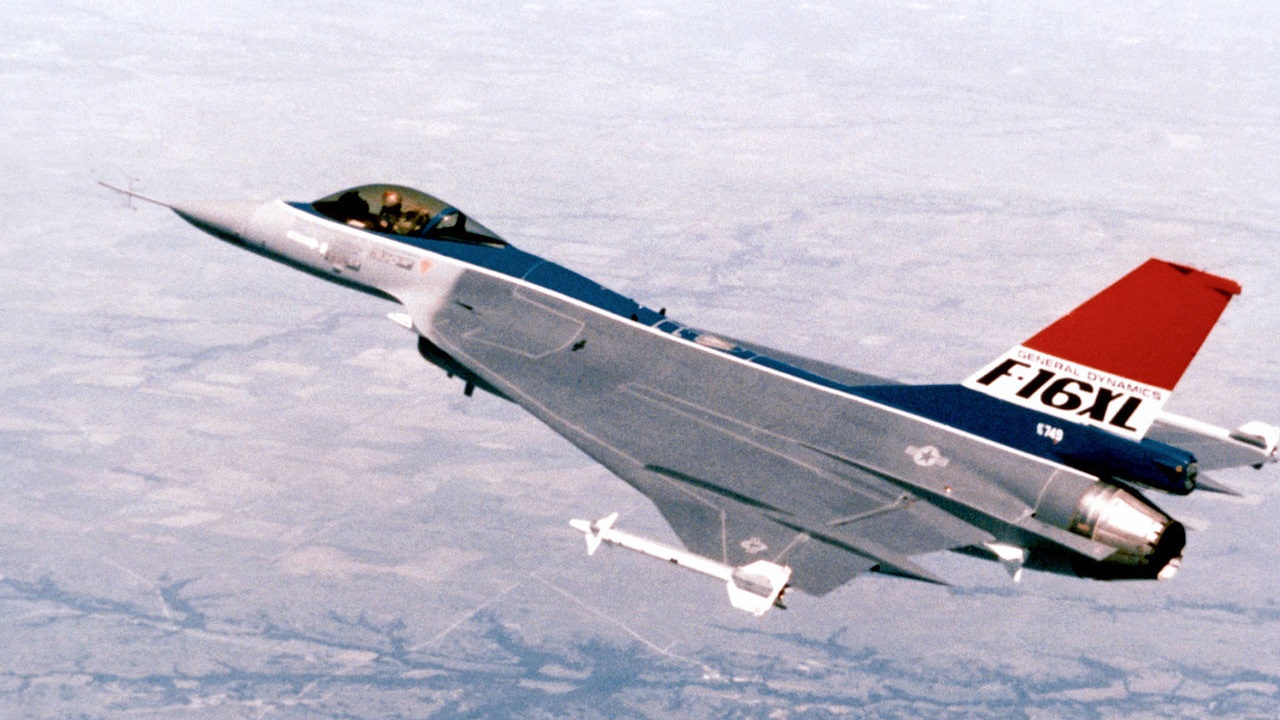
F-16XL. Image Credit: Creative Commons.
On paper, the F-16XL had several significant strengths. Good aerodynamic efficiency combined with respectable payload and range was tantalizing, and a redesigned wing had significant growth potential. Ultimately, however, the U.S. Air Force selected the F-15E in 1984 for several significant reasons.
One account from 1983 outlined the potential advantages of the F-16XL. “Of particular interest were the control surfaces on the aft edge of the cranked-arrow wing. The fighter does not have a horizontal tail.
Thus, the control surfaces for both pitch and roll are on the rear edge of the wing.
The inboard surfaces primarily control pitch, while the outboard surfaces control roll. However, thanks to the automatic flight control system, when performance requires it, all four surfaces can act in either pitch or roll.”
The F-15E’s twin-engine design was a boon for redundancy and survivability, and would allow the jet to limp home back to base. But it also gave the jet the ability to serve as an interceptor and a deep-strike platform.
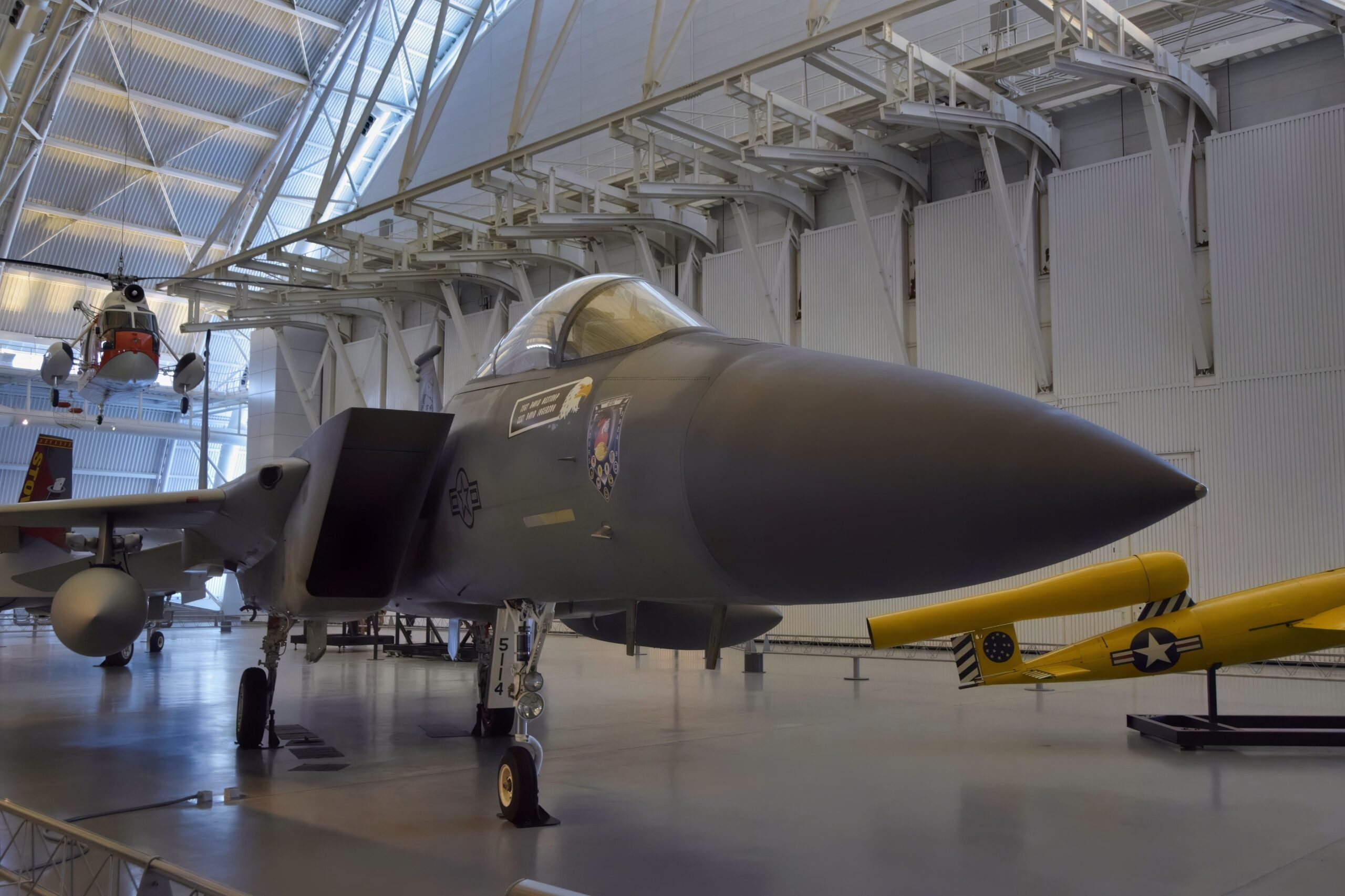
F-15C at the Smithsonian. 19FortyFive.com Image.
It also promised less developmental risk and continuity with the existing F-15 production line. The F-15’s future growth potential was also seen as greater. The F-16XL may have been aerodynamically superior to its F-15 competitor, but it was a higher-risk platform.
But the cost-benefit analysis did not favor the F-16XL. “With the F-16XL, the US Air Force has the option to gain markedly improved range, payload, and survivability performance over current fighters,” Air & Space Forces Magazine wrote. “According to its designers, the F-16XL in production would have a unit flyaway cost of about fifteen to twenty percent more than the F-16C and D.” Though superior to the baseline F-16 by virtually every metric, its performance boost was difficult to justify in light of anticipated cost increases.
NASA’s Interest
Following the cancellation of the Enhanced Tactical Fighter competition, the two existing F-16XLs were transferred to NASA in 1988 for advanced flight testing of supersonic laminar flow. One of the fighters was fitted with a porous titanium “glove” covering its wing.
Thousands of small holes sucked away turbulent air, reducing drag and fuel consumption. The work was used to evaluate the feasibility of supersonic transports and the efficiency of other aircraft.
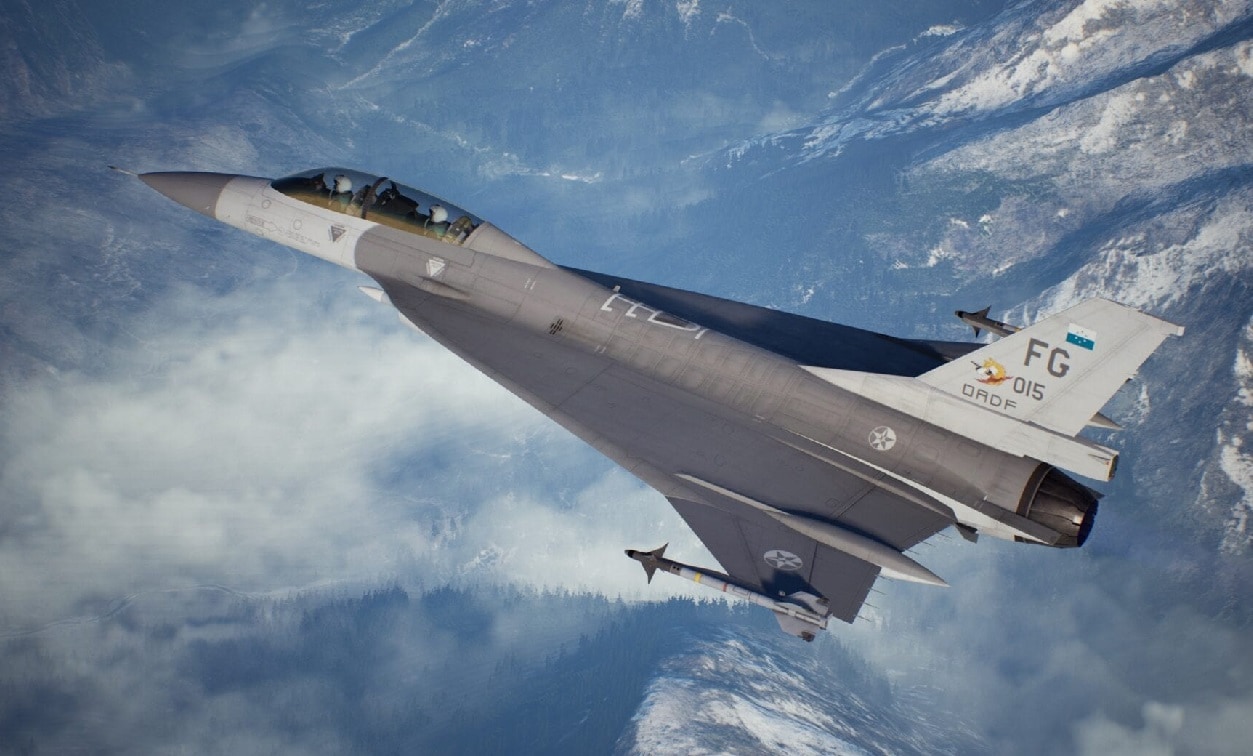
Image of what would have been the F-16XL, an artist rendering. Image Credit: Creative Commons.
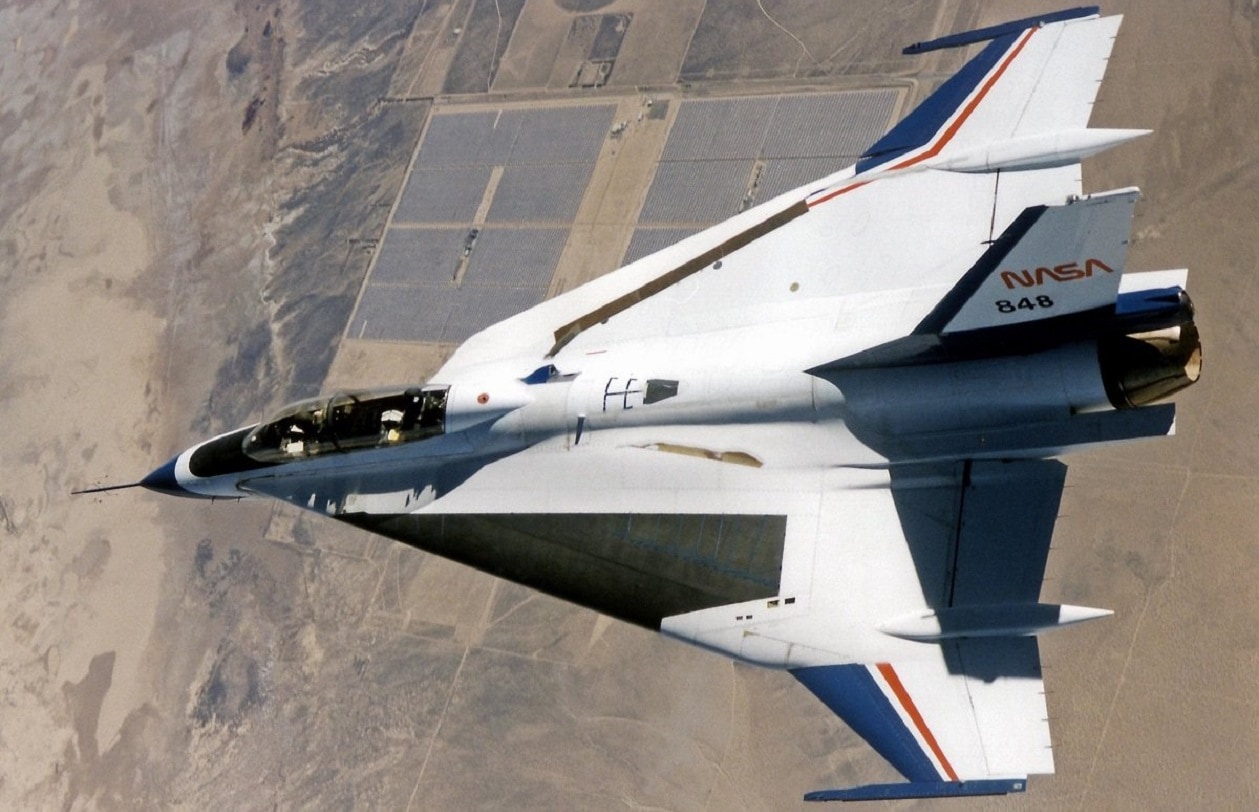
F-16XL. Image Credit: NASA.

Image: Creative Commons.
The F-16XL also flew in tandem with a Lockheed SR-71 Blackbird and measured that jet’s shockwaves, and the data it gathered helped inform strategies to mitigate sonic booms, with the aim of enabling future civilian supersonic flights.
Though NASA and Boeing briefly evaluated the F-16XL’s potential to continue supersonic flight testing with modernized components and software — one of the jets underwent taxi testing — both F-16XLs were ultimately retired and put into storage at Edwards Air Force Base.
About the Author: Caleb Larson
Caleb Larson is an American multiformat journalist based in Berlin, Germany. His work covers the intersection of conflict and society, focusing on American foreign policy and European security. He has reported from Germany, Russia, and the United States. Most recently, he covered the war in Ukraine, reporting extensively on the shifting battle lines in Donbas and writing about the war’s civilian and humanitarian toll. Previously, he worked as a Defense Reporter for POLITICO Europe. You can follow his latest work on X.