
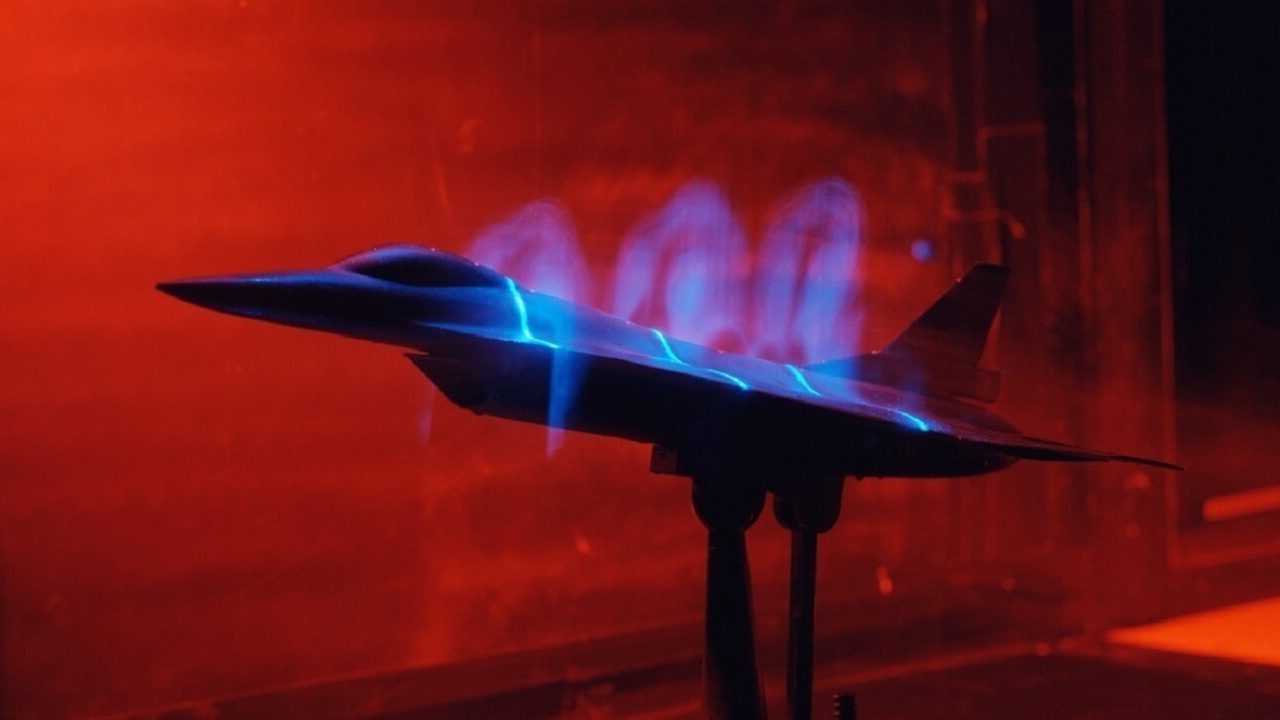
Summary and Key Points: Defense analyst Jack Buckby evaluates the F-16XL, a radically redesigned version of the Fighting Falcon that lost the 1984 Dual-Role Fighter competition to the F-15E Strike Eagle.
-Featuring a cranked-arrow delta wing, the F-16XL doubled the original’s lifting surface and increased internal fuel capacity by 80%.
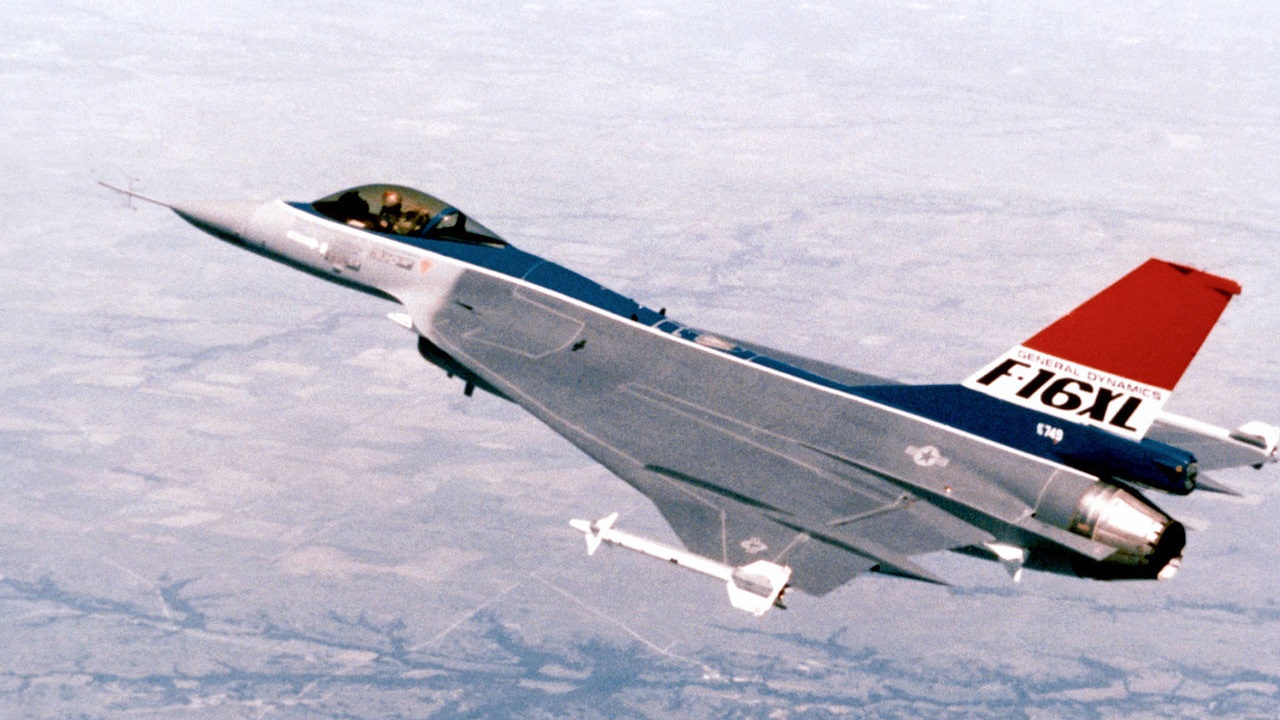
F-16XL. Image Credit: Creative Commons.
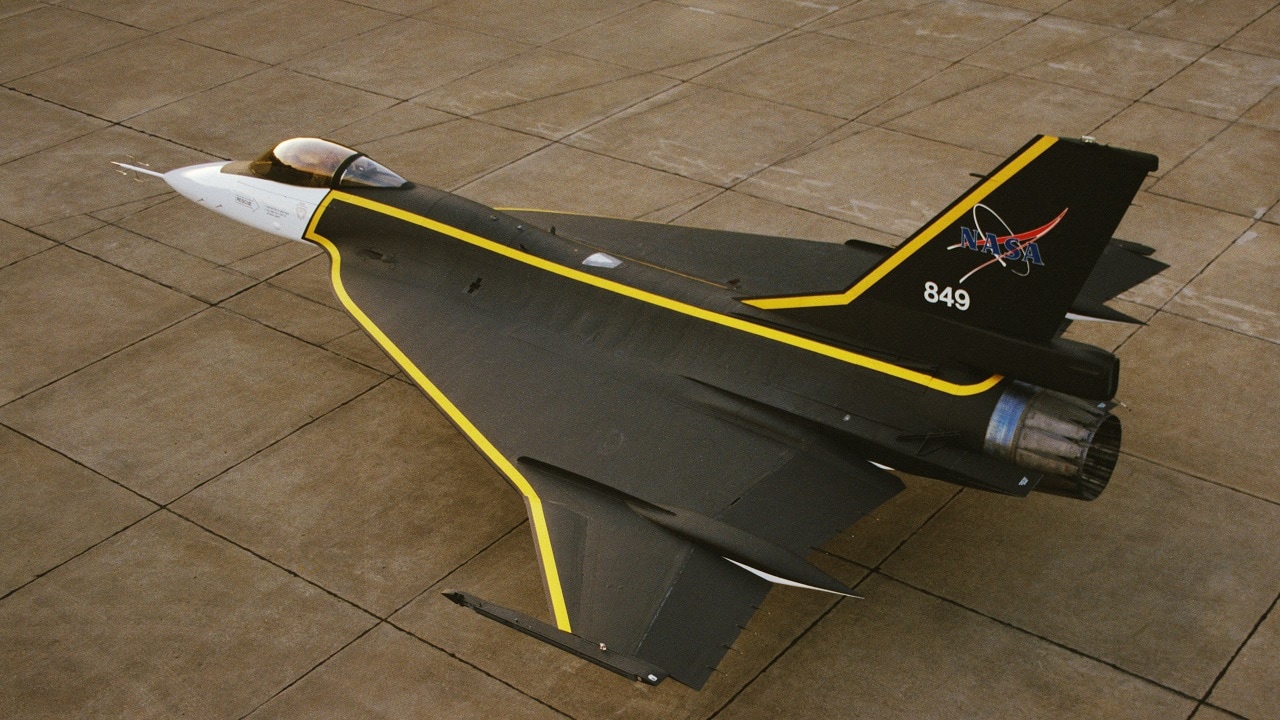
On October 5, 1993, Langley’s F-16XL High Lift jet was rolled out with a dynamic yellow and black paint job for Aero-Dynamic Flow Studies in High Speed Research.
-This report analyzes the aircraft’s 27 external hardpoints and its ability to maintain supersonic speeds while carrying heavy payloads.
-Buckby explores the platform’s relevance to the 2026 air campaign against Iran, concluding that its long-range “hybrid” fighter-bomber capabilities would have addressed current logistical gaps in aerial refueling.
The F-16XL Legacy: Why the “Cranked-Arrow” Delta Wing is the Missing Link in the 2026 Iran Air War
As the United States continues to carry out long-range strikes against Iranian military infrastructure, much of the attention has so far focused on iconic assets like the B-2 stealth bomber and the F-35 stealth fighter jet, as well as cruise missiles launched from submarines and warships. Those systems allow the United States to hit targets deep inside enemy territory without relying on large ground forces.
But decades before these stealth aircraft came to dominate American air campaigns, the U.S. Air Force experimented with another idea: turning the lightweight F-16 fighter into a long-range strike aircraft capable of carrying far more weapons and flying significantly farther than the original design could.
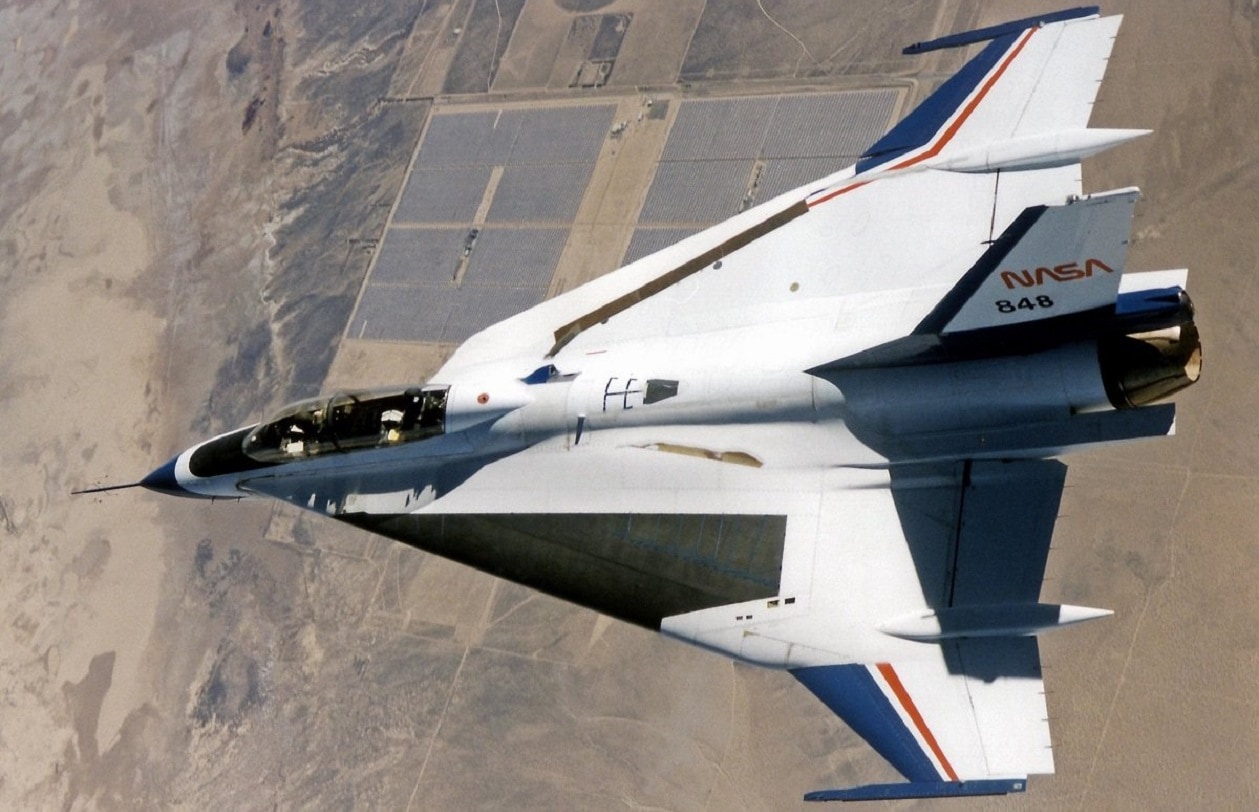
F-16XL. Image Credit: NASA.
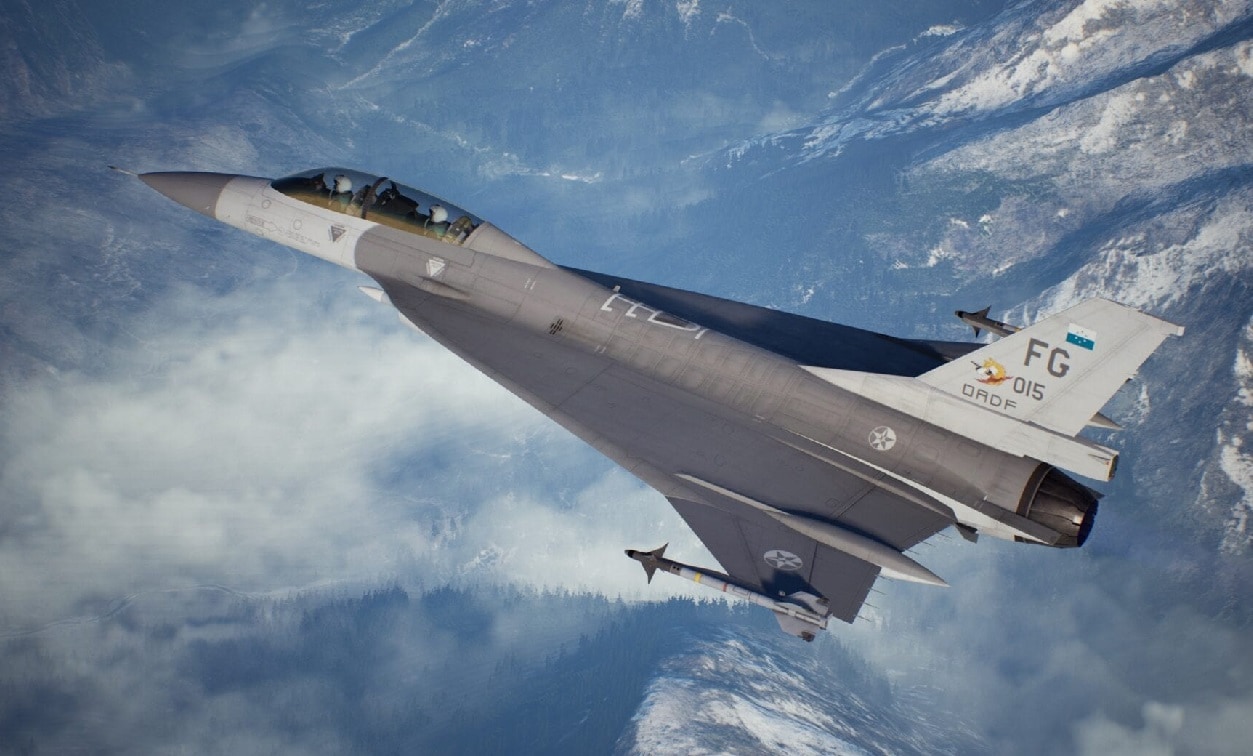
Image of what would have been the F-16XL, an artist rendering. Image Credit: Creative Commons.

Image: Creative Commons.
That aircraft was the F-16XL, a radically redesigned version of the F-16 that featured a large cranked-arrow delta wing (a modified delta-wing design with a leading edge and distinct sweep angles) intended to dramatically expand its payload and range. Only two prototypes were ever built, and the aircraft ultimately lost a competition to what became the F-15E Strike Eagle in the 1980s.
Although the program ended more than forty years ago, the concept behind it – an efficient fighter capable of delivering heavy weapon loads over long distances – is still very much relevant to the kind of air campaign the United States is now fighting against Iran.
The F-16XL and Its Origins
The F-16XL was not simply a modified F-16. It was a fundamentally reworked aircraft built around one defining feature: a large cranked-arrow delta wing that replaced the conventional wing used on standard F-16 fighters.
That new wing was deliberately designed to more than double the aircraft’s lifting surface area compared with the standard F-16 wing, thereby allowing engineers to increase fuel capacity and payload while maintaining aerodynamic efficiency.
The redesign delivered several significant performance improvements, including greater internal capacity, a major increase in payload, improved aerodynamic efficiency, and a larger combat radius than the standard F-16. Specifically, the aircraft’s fuel capacity increased by up to 80 percent, enabling it to conduct longer missions without refueling.
The wing also enabled engineers to distribute weapons across multiple new mounting points. The F-16XL could carry up to 27 external hardpoints, allowing a large load of bombs and missiles to be spread across the wing and fuselage while reducing aerodynamic drag. The aircraft effectively became a hybrid: it was a fighter jet with the payload and strike capability of a light bomber.
Built for Deep Strike
The F-16XL was born during the 1980s as part of a U.S. Air Force effort to develop a new long-range strike aircraft. In 1981, the Air Force launched the Enhanced Tactical Fighter program, later renamed the Dual-Role Fighter competition, which aimed to replace the aging F-111 Aardvark strike aircraft.
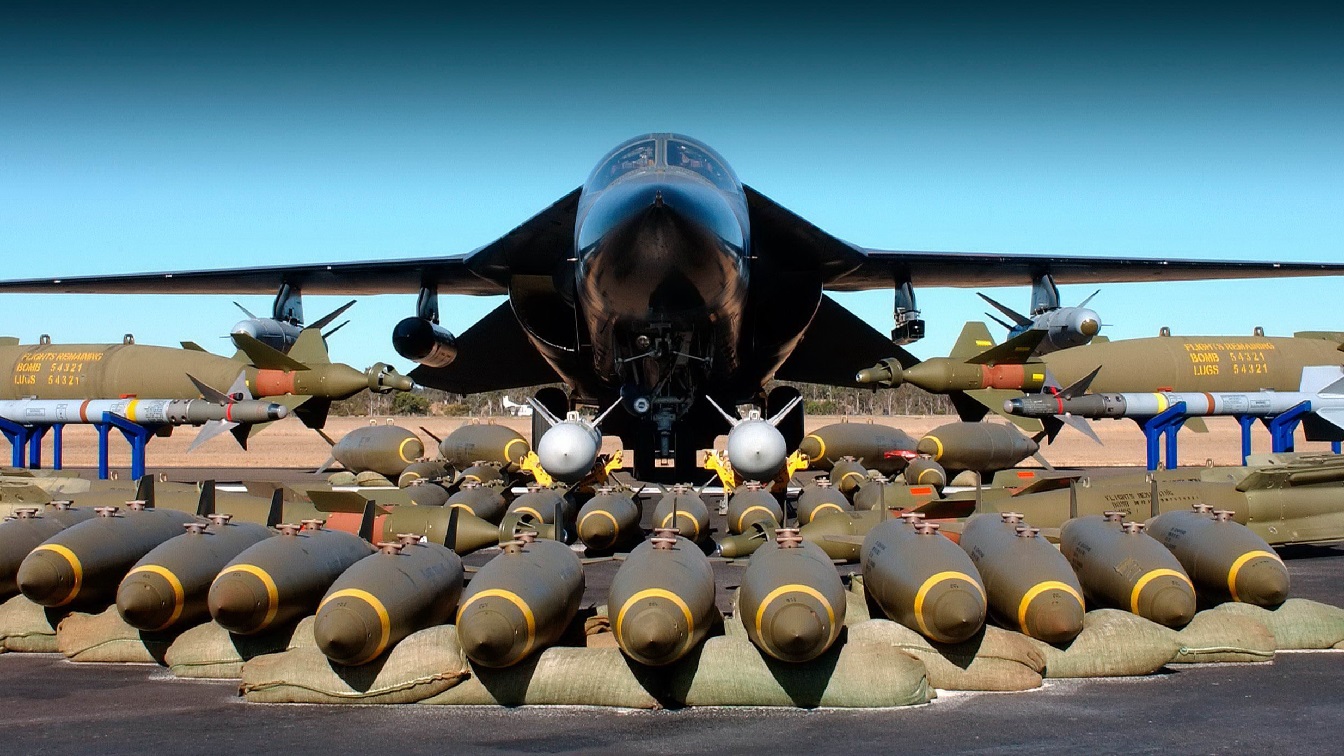
F-111. Image Credit: Creative Commons.
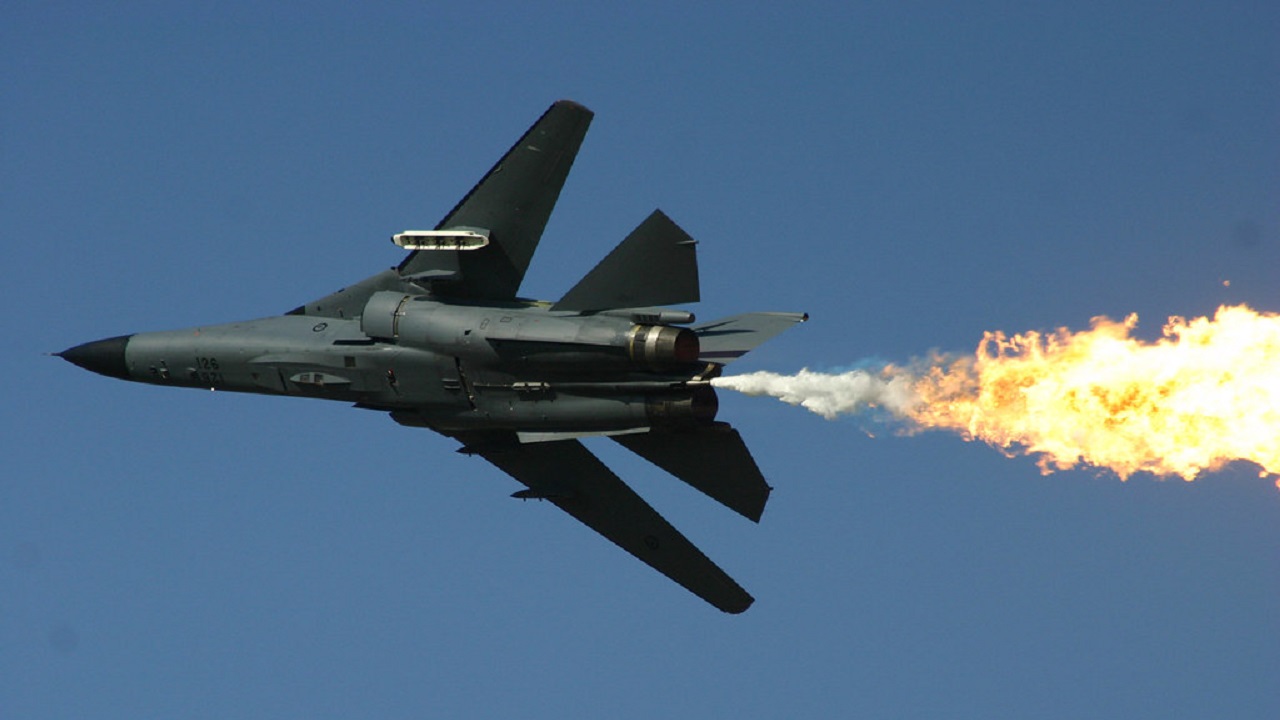
F-111. Image Credit: Creative Commons.
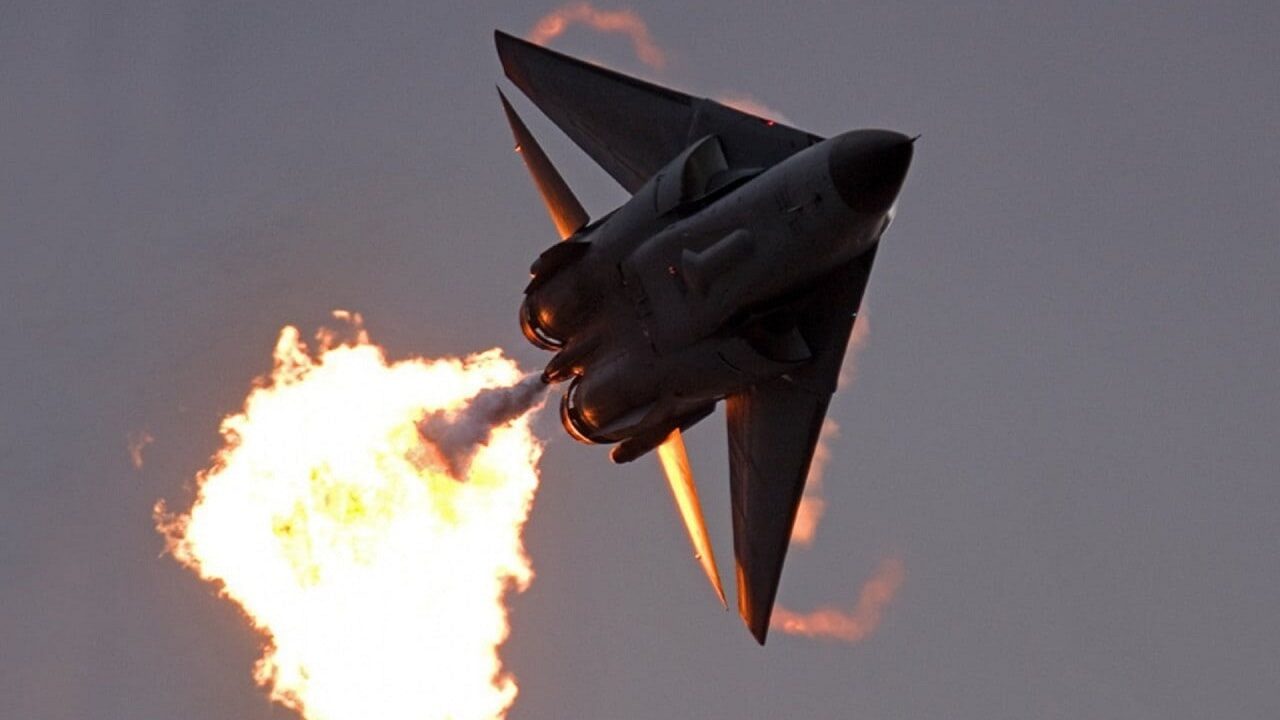
F-111. Image Credit: Creative Commons.
The new aircraft would need to perform deep interdiction missions – military action designed to divert, disrupt, delay, or destroy enemy forces or capabilities far inside enemy territory using substantial payloads.
Two aircraft ultimately competed for that role: the General Dynamics F-16XL and the McDonnell Douglas F-15 Strike Eagle. Both platforms were designed to combine fighter performance with strike capability, with the F-16XL offering all the aforementioned benefits and the F-15E being based on the larger twin-engine F-15 airframe. The F-15E could carry even heavier weapon loads while offering greater survivability thanks to its two engines.
In February 1984, the Air Force selected the F-15E Strike Eagle for production, thereby ending the F-16XL program.
Capabilities were obviously a deciding factor, but budget priorities and development risks also played a role. The F-15E required less development funding and offered greater long-term growth potential.
Why the F-16XL Might Have Proved Useful Today
Although the aircraft never entered production, the concept behind the F-16XL closely aligns with the operational challenges of striking targets inside Iran. One of the central difficulties in such operations is distance. Iranian military infrastructure – including missile bases and command facilities – is often located hundreds or even thousands of miles from major U.S. bases or aircraft carriers.
Aircraft operating at those distances typically require aerial refueling, which complicates mission planning and exposes tanker aircraft to risk.
The F-16XL was designed specifically to address this problem. Its enlarged wing and expanded fuel capacity allowed the aircraft to fly much farther than a conventional F-16 while carrying large weapon loads. And equally important was its payload efficiency. Iranian military infrastructure typically includes hardened facilities and missile launch sites with dispersed logistics networks that require multiple precision weapons to fully destroy.
The F-16XL’s numerous weapon stations allowed it to carry large numbers of bombs and missiles on a single mission, and its aerodynamic design also improved efficiency at higher speeds, meaning the aircraft could maintain supersonic flight while carrying heavy loads. So, in practical terms, it meant the decades-old platform was designed to do exactly what modern air campaigns often require: fly long distances and carry substantial payloads to strike multiple targets in a single sortie.
If it existed today, there’s no doubt it would prove helpful in the Iran campaign.
About the Author: Jack Buckby
Jack Buckby is a British researcher and analyst specialising in defence and national security, based in New York. His work focuses on military capability, procurement, and strategic competition, producing and editing analysis for policy and defence audiences. He brings extensive editorial experience, with a career output spanning over 1,000 articles at 19FortyFive and National Security Journal, and has previously authored books and papers on extremism and deradicalisation.