
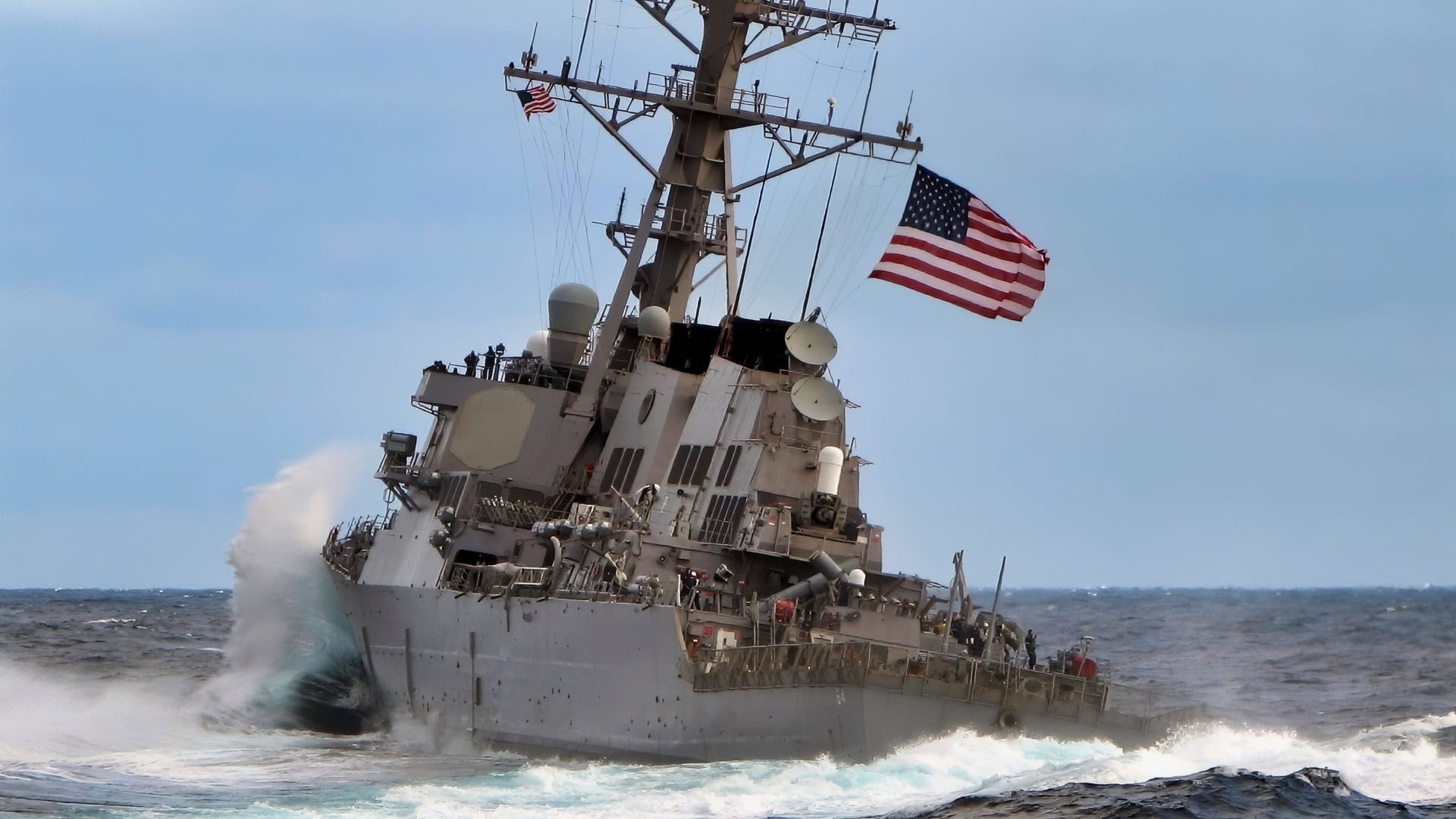
US President Donald Trump is now threatening to blockade the Gulf of Oman, the body of water between the Strait of Hormuz and the Indian Ocean. Oil tankers and other cargo vessels exiting the Persian Gulf transit the strait and then move into open sailing in the Indian Ocean via the Gulf. Insofar as Iran is still limiting access through the strait, Trump’s plan appears to be a blockade of a blockade.
The most obvious explanation for this curious ‘blockade of a blockade’ is Trump’s desire to avoid a ground war. In the run-up to the current ceasefire in the Iran war, Trump faced a harsh choice between invading Iran to open the strait and coerce denuclearization or withdrawal, because airpower had proven insufficient to those tasks.
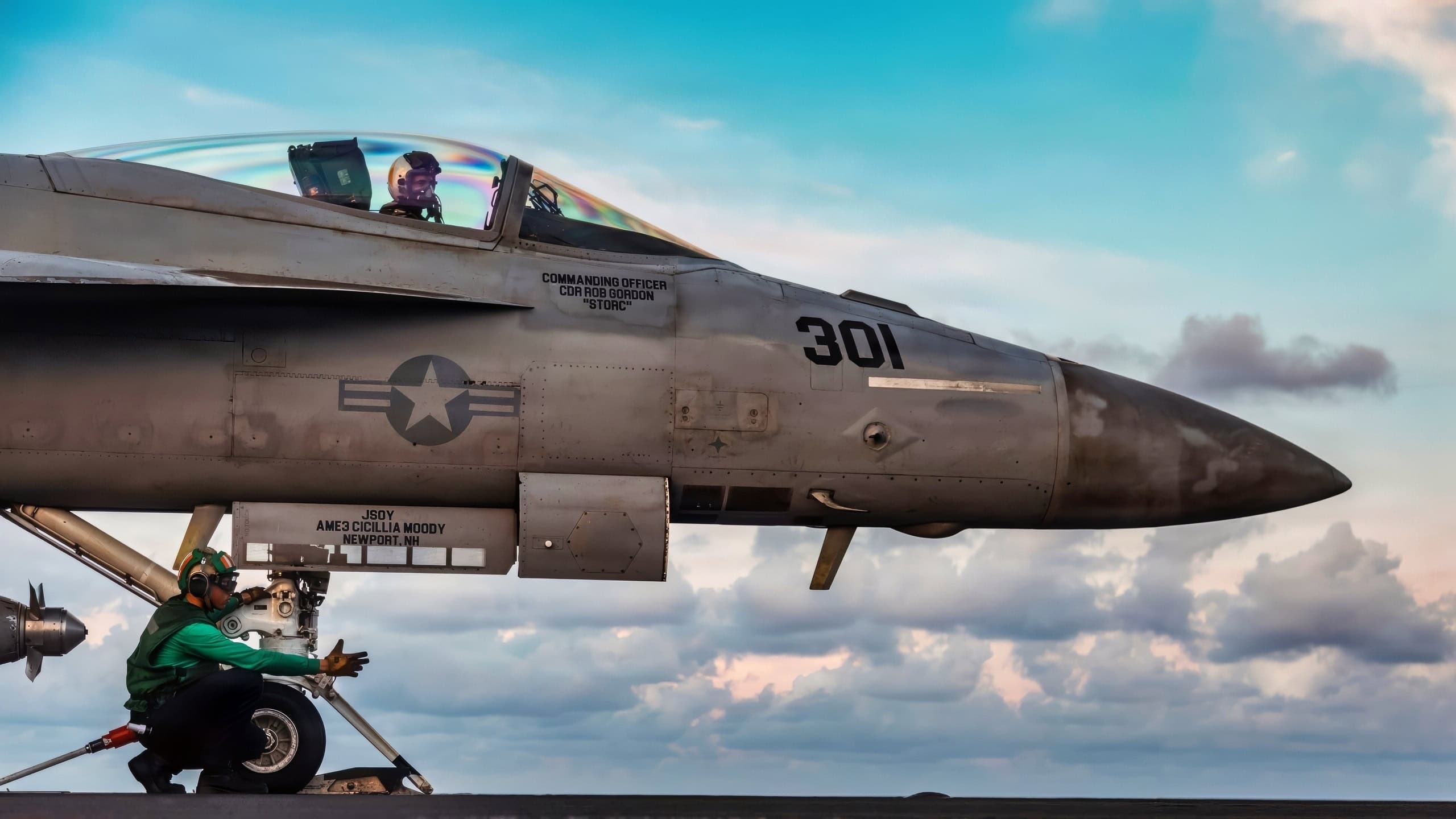
A U.S. Sailor performs a safety scan of the catapult track as an F/A-18E Super Hornet aircraft positions for launch from the flight deck while underway in the Caribbean Sea, Nov. 25, 2025. U.S. military forces are deployed to the Caribbean in support of Operation Southern Spear, the U.S. Southern Command mission, Department of War-directed operations, and the president’s priorities to disrupt illicit drug trafficking and protect the homeland. (U.S. Navy photo)
Trump surprisingly chose the political equivalent of withdrawal.
Iranian intransigence at the ensuing peace talks illustrated this. Tehran clearly does not accept that it has been beaten, no matter what Trump says.
So Trump is back where he was a week ago. He can either massively escalate to truly win, or he can cut a deal, which most will read as a US defeat.
This blockade, like last week’s ceasefire, is another attempt to escape that harsh choice in the wake of US airpower’s inability to deliver a knockout blow.
But the blockade raises a whole new set of risks:
What if China or Another Country Tries to Run the Blockade?
The best-known naval blockade in US history is the quarantine of Cuba during the missile crisis of 1962.
The scariest moments of that blockade were when US and Soviet ships were eyeball-to-eyeball. An accident or misperception could have easily led to inadvertent escalation.
The risk this time is that China will create a similar stand-off, especially if the blockade drags on for weeks or months.
Like Soviet ships near Cuba, Chinese ships would be far from home and locally inferior. So the US could take action, but that would obviously have large implications for Sino-US competition elsewhere.
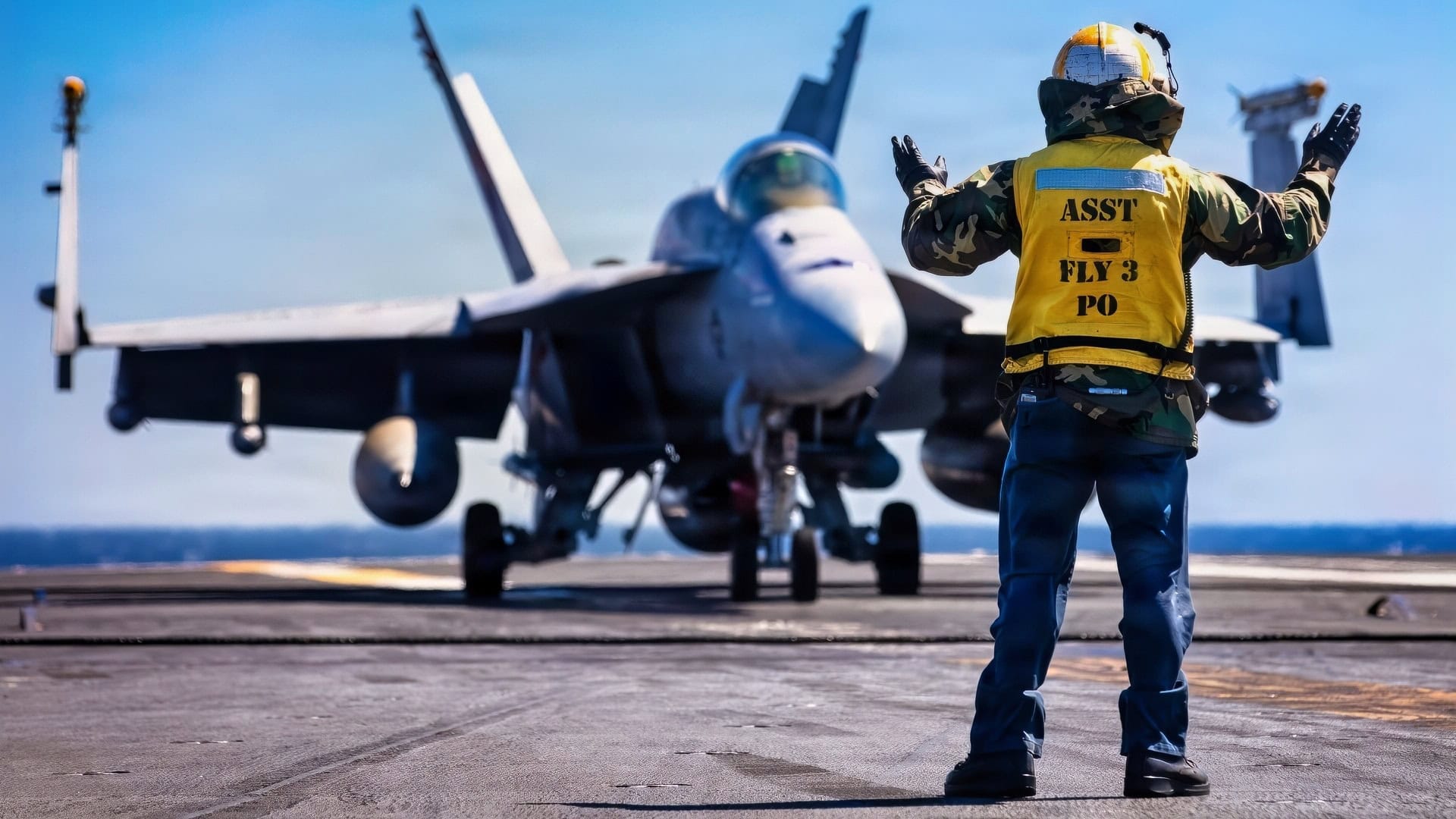
A U.S. Sailor signals to an F/A-18E Super Hornet aircraft, attached to Strike Fighter Squadron 31, on the flight deck of the world’s largest aircraft carrier, USS Gerald R. Ford (CVN 78), while underway during Operation Epic Fury, March 9, 2026. (U.S. Navy photo)
Similar scenarios can be imagined for other countries like India. Many states power their economies with Gulf energy.
The US is unilaterally cutting them off without consulting them. Perhaps they will tolerate that for a few weeks, but any sustained cut-off will encourage other countries to try running the US blockade. Would the US fire on those ships if they did not stop? Would it imprison their crews?
The US very obviously did not plan for ancillary questions like these in its war with Iran. It should do so now, before oil-hungry countries start demanding the US open the Gulf – or even trying to run it – creating more problems for America yet.
What Happens When the Price of Oil Skyrockets?
The Iran war caused the price of oil and other products exported from the Gulf to shoot up. It took just a month for those disruptions to appear in US inflation. If Trump indefinitely shuts down all exports from the Persian Gulf, oil and related products will skyrocket in price.
Trump almost certainly realizes this, but his plan seems to be to rely on American oil for the US economy and foist the pain of the blockade onto others.
This will generate enormous resentment around the world toward the US, likely encouraging countries to try running the blockade.
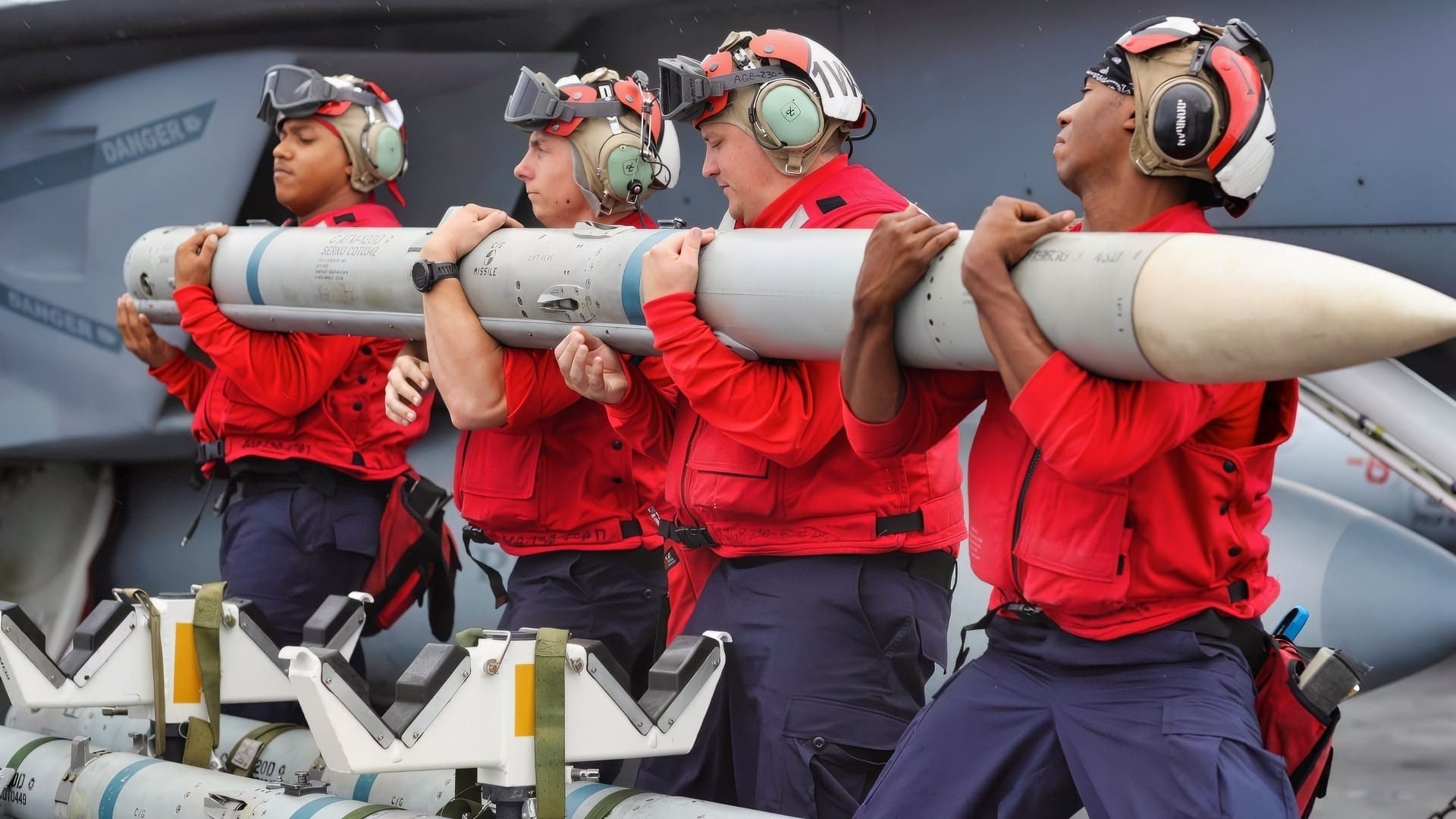
ATLANTIC OCEAN (July 31, 2018) Sailors prepare to transfer ordnance onto an F/A-18E Super Hornet from the Pukin’ Dogs of Strike Fighter Squadron (VFA) 143 on the flight deck of the Nimitz-class aircraft carrier USS Abraham Lincoln (CVN 72). (U.S. Navy photo by Mass Communication Specialist 2nd Class Jessica Paulauskas/Released)
US relationships with its allies are already poor because of Trump’s threats against them. This will only worsen that problem.
Nor will segmenting the world oil market, as Trump seems to want, probably work.
The oil market today is globalized. Even if Trump can sell US oil to other countries at low prices, those countries can still resell it to others at a higher price. Such arbitrage is almost impossible for the US to stop and will re-create a singular global oil price, which Trump almost certainly cannot prevent.
And that price will rise the longer the blockade continues.
If Trump keeps the Persian Gulf closed indefinitely, it could drive more investment in US carbon extraction, as Trump seems to hope.
But such investments are very capital-intensive and take a long time to bring online. The US Navy would have to stay on station in the Gulf of Oman for a long time for the US to make up for the lost supply of the Persian Gulf.
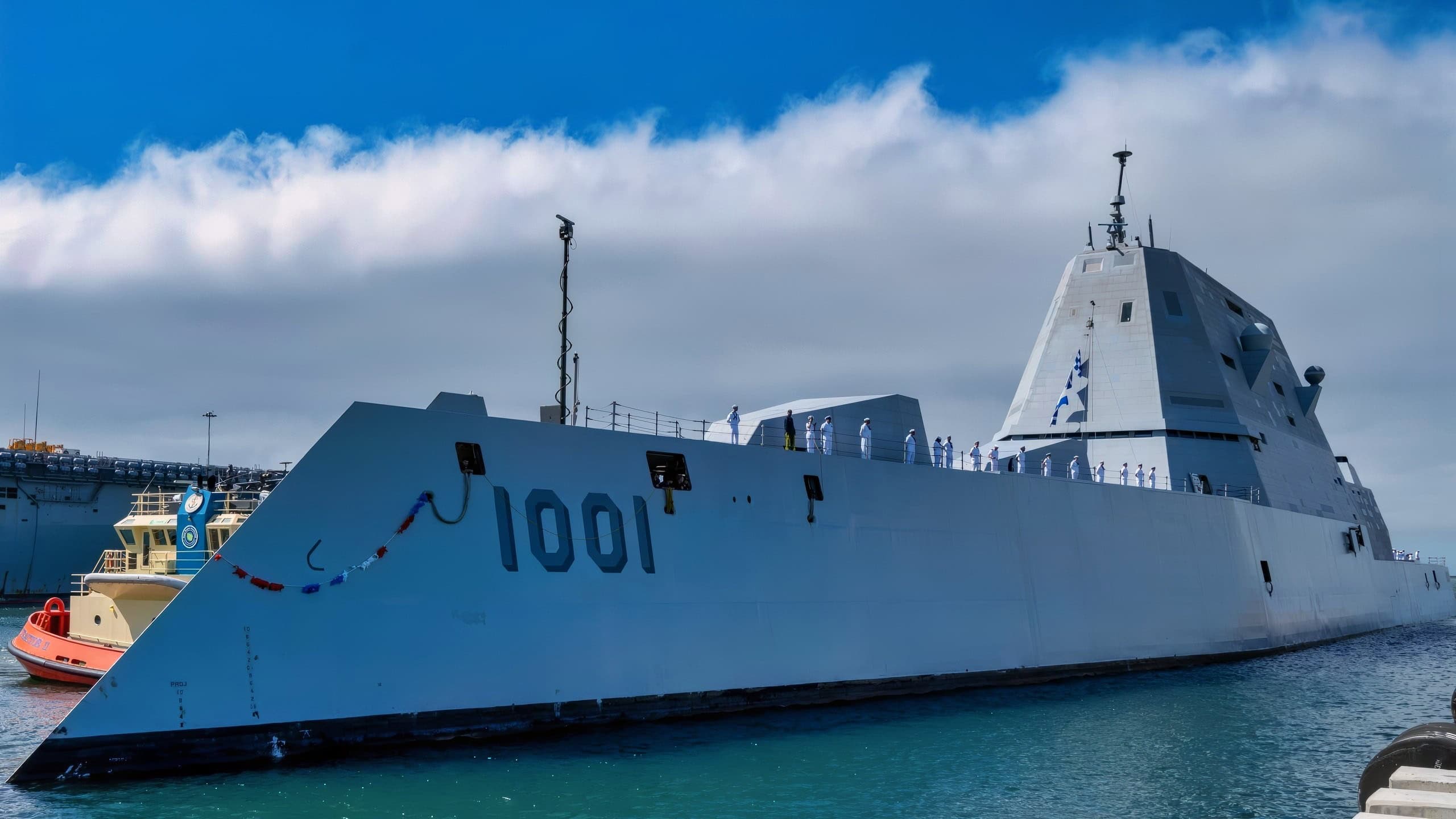
The Zumwalt-class guided missile destroyer USS Michael Monsoor (DDG 1001) returns to its homeport following routine operations in the U.S. 3rd, and 7th Fleet areas of operations to maintain a free and open Indo-Pacific, Oct. 3. An integral part of the U.S. Pacific Fleet, U.S. 3rd Fleet leads naval forces in the Indo-Pacific and provides the realistic, relevant training necessary to execute the U.S. Navy’s role across the full spectrum of military operations. U.S. 3rd Fleet works together with allies and partners to advance freedom of navigation and overflight, the rule of law and other principles that underpin security for the Indo-Pacific region. (U.S. Navy photo by Gunner’s Mate 2nd Class Timothy Weber)
Another Oil Shock
Trump is trying to find a way to win a war he started without launching a ground war, most Americans oppose.
A blockade would impose economic pain in the form of high oil prices on the rest of the planet. Trump seems to be counting on all that pain and anger being directed against Iran.
That might bludgeon Iran into concessions, but Tehran just fought a superpower to a stalemate and will likely not respond.
Ideology is more important to the Iranian regime than the price of oil or the unhappiness of US allies.
The more likely outcome is that world opinion blames Trump for an oil shock, because it reads this conflict as an unnecessary war of choice that Trump should fix.
Author: Dr. Robert Kelly, Pusan National University
Dr. Robert E. Kelly is a professor of international relations in the Department of Political Science and Diplomacy at Pusan National University in South Korea. His research interests focus on Security in Northeast Asia, U.S. foreign policy, and international financial institutions. He has written for outlets including Foreign Affairs, the European Journal of International Relations, and the Economist, and he has spoken on television news services such as the BBC and CCTV. His personal website/blog is here; his Twitter page is here.