
With the two-week ceasefire between the United States and Iran due to expire on April 22, President Donald Trump may soon face the same decision he reportedly rejected only weeks ago. Trump has already warned that if talks fail, “lots of bombs start going off” – so there is no doubt that military pressure remains an option once the ceasefire expires.
But if diplomacy does indeed collapse, as Iranian President Masoud Pezeshkian indicated they would in an April 20 X post, one of the most serious tools available to Washington would not necessarily be bombing Tehran or striking civilian infrastructure. Instead of immediately hitting bridges and power plants, President Trump may consider targeting Kharg Island, Iran’s main oil export hub and one of the regime’s most economically valuable assets.
According to recent reports, Trump previously declined a plan to seize Kharg because he feared American casualties and believed troops there could become “easy targets.” It means the idea of seizing the island has been discussed, and that the risks that come with such a move have already been presented to the president. But if the ceasefire fails to produce a deal, the option could well be back on the table – but should Trump take the island now, or was he right to hold back the first time?
Why Kharg Island Matters So Much
Kharg Island sits in the northern Persian Gulf, roughly 15 miles off Iran’s coast, and has historically handled the majority of Iran’s crude exports. Over many years, analysts and energy observers have often described it as the country’s primary export terminal, with storage tanks, loading berths, pumping stations, and the infrastructure to load millions of barrels of oil onto tankers.
That makes it one of Iran’s most important economic assets. Even under sanctions, Tehran has continued exporting oil through formal and informal channels, especially to Asian buyers. Those sales generate revenue needed for imports, state spending, military programs, and keeping the regime functioning.
If Washington wants leverage without immediately hitting civilian population centers, Kharg is arguably the best choice. Taking or neutralizing it would strike directly at regime income rather than simply punishing the public. That is a very different proposition from bombing power plants or transport networks inside major cities, and still serves as a coercive measure.
Trump Already Considered the Plan
Earlier this month, the Wall Street Journal described how President Trump had already examined the feasibility of seizing Kharg and believed it could be done. However, the president reportedly declined to move forward with the plan over fear of casualties, not wanting American forces to be exposed on the island. That is likely part of the reason Trump chose a blockade instead, preventing ships from moving past the Strait of Hormuz rather than taking control of the ports from which they may have come.
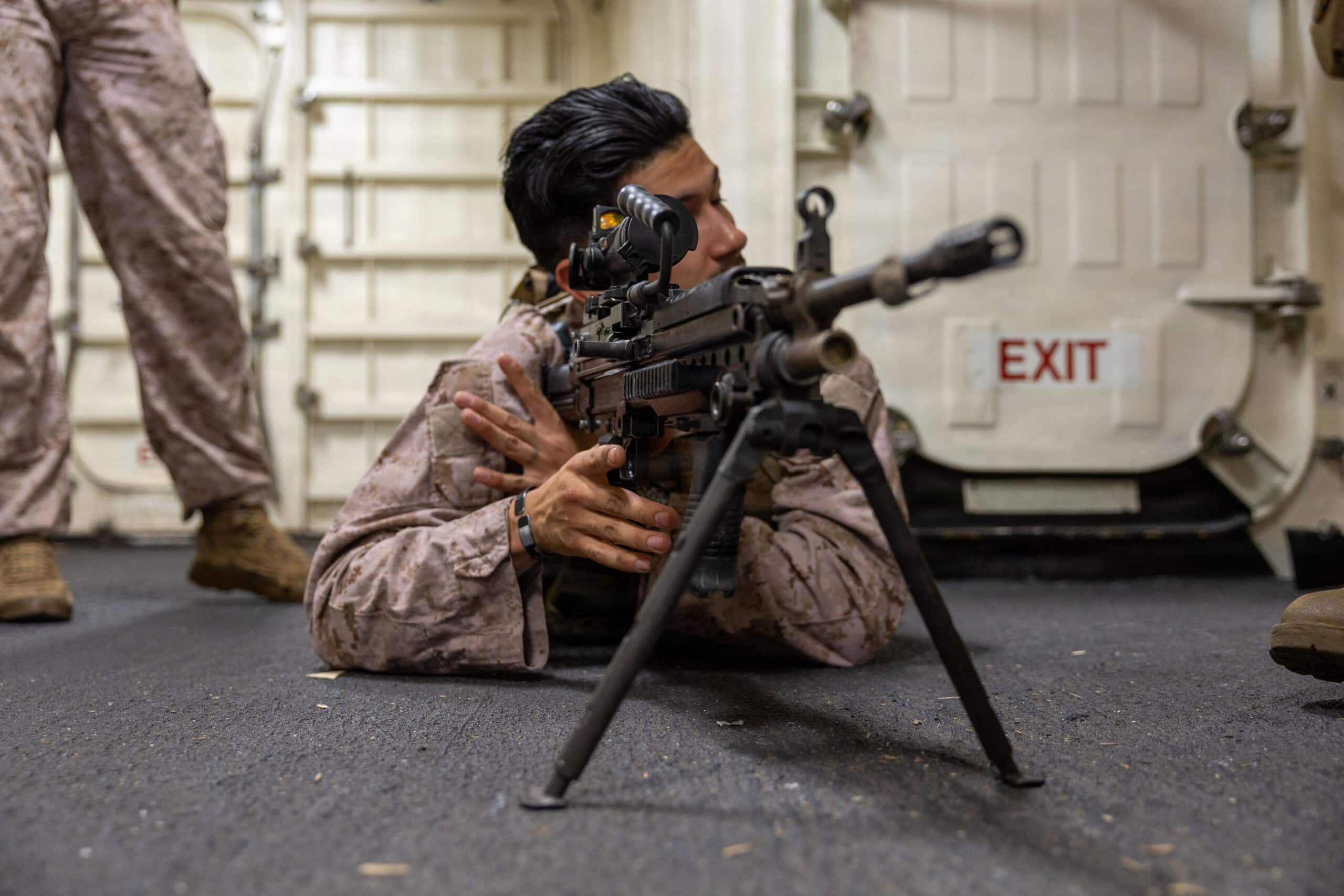
PACIFIC OCEAN (March 23, 2026) U.S. Marine Corps Sgt. Osvaldo Ochoagomez, an infantry squad leader with Lima Company, Battalion Landing Team 3/5, 11th Marine Expeditionary Unit, demonstrates how to use an M27 infantry automatic rifle aboard San Antonio-class amphibious transport dock ship USS Portland (LPD 27), March 23, 2026. Portland, part of the Boxer Amphibious Ready Group, is underway with the 11th Marine Expeditionary Unit in the U.S. 3rd Fleet area of operations demonstrating the U.S. Navy’s long-term commitment to a free and open Indo-Pacific. (U.S. Navy photo by Mass Communication Specialist 2nd Class Sheryssa Dodard)
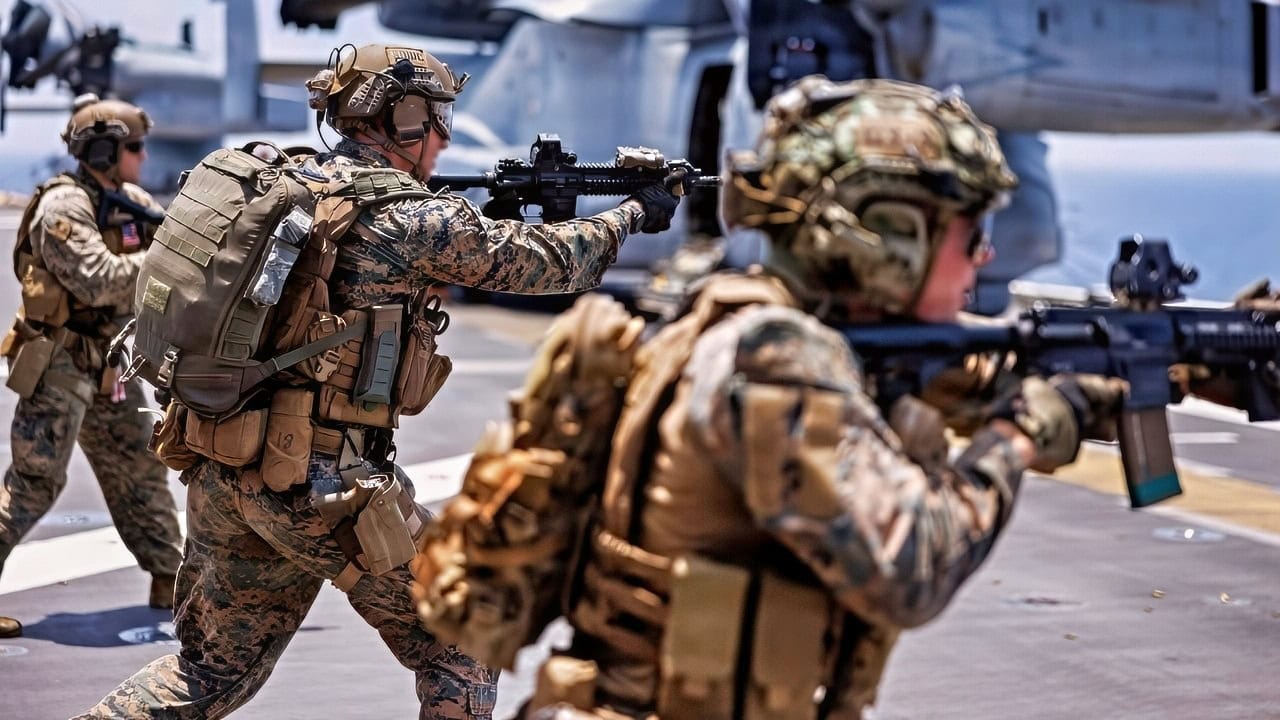
The Marines could land in Iran tomorrow. Navy SEALs would prepare the beach. The 82nd Airborne could infiltrate. The invasion would succeed initially. Then Iran would launch drones and missiles at every U.S. base, satellite terminal, and air defense radar in the Middle East. Getting in is easy. Surviving is the problem.
Taking Kharg would be a big undertaking. Even a successful landing would create immediate vulnerabilities, with troops requiring naval cover and air defense to protect them, intelligence support to guide their next moves, casualty evacuation routes, resupply lines, protection against drones and missiles, and more. Kharg may be offshore, but it is close enough to Iran for retaliation to be possible.
How the U.S. Could Pressure Kharg Without a Major Ground War
In theory, taking Kharg Island need not entail a long occupation. There are several ways Washington could apply pressure while limiting risk. The first would be a naval exclusion zone, whereby U.S. naval forces prevent tankers from loading at Kharg or make insurers unwilling to support traffic there. That would squeeze exports without putting Marines ashore. The second would be precision strikes against loading facilities, radar systems, docks, fuel systems, and nearby air defenses. That would disable exports while keeping the mission fairly narrow.
A third option would be a temporary raid by Marines or special operations forces to seize key infrastructure briefly and then withdraw once objectives are met – but that would expose soldiers to risk, even with support from nearby American naval vessels. It would, however, create stronger bargaining leverage.
Trump does not need to choose between doing nothing and invading Iran – there are options in between. Kharg is one of the few targets where America can impose real economic pain without automatically marching into Iranian territory and conducting urban warfare.
Why Kharg Might Still Be the Least Worst Option
If Iran rejects a deal, Trump’s alternatives may be worse than taking Kharg Island. A wider bombing campaign against mainland infrastructure would damage the regime, but it would also cause blackouts and fuel shortages, disrupt transport, and cause visible suffering for ordinary civilians. It would also likely trigger heavy international criticism. It may even lose some support from Iranian civilians in the campaign.
Kharg is different because it focuses pressure on state revenue. It is much narrower and easier to explain politically than conducting punitive strikes.
That, however, does not mean it is safe. Iran could retaliate through missiles, proxy groups, cyberattacks, or further harassment in the Strait of Hormuz (assets permitting). The regime could also gamble that U.S. forces on the island would create pressure for Washington to leave quickly.
But there is also mission-creep danger. If troops land on Kharg despite Trump’s concerns and Tehran still refuses the terms, calls for wider operations may follow. Iran is a vast, mountainous, populous country with a difficult environment for any prolonged campaign, and starting a campaign on Kharg Island and leaving without success could soon lead to the conflict expanding.
Trump was probably right to worry about casualties the first time – but if diplomacy now fails, he may conclude Kharg Island remains the strongest lever available short of bombing Iranian cities or stumbling toward a much larger war.
About the Author: Jack Buckby
Jack Buckby is a British researcher and analyst specializing in defense and national security, based in New York. His work focuses on military capability, procurement, and strategic competition, producing and editing analysis for policy and defense audiences. He brings extensive editorial experience, with a career output spanning over 1,000 articles at 19FortyFive and National Security Journal, and has previously authored books and papers on extremism and deradicalization.