
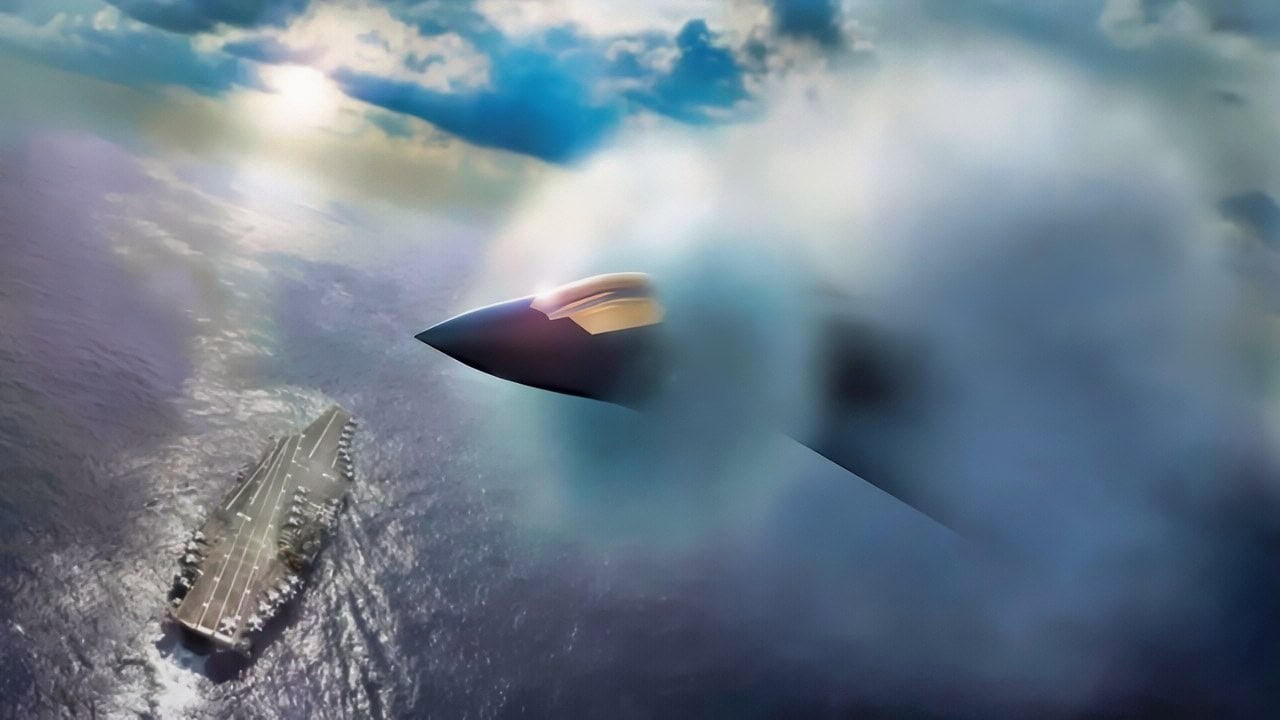
Northrop Grumman’s short-lived video “glimpse” of its F/A-XX offering (the photo above is from that video) invites a world of relevant speculation about its configuration, relative “carrier” readiness, and stealth properties.
The most significant elements of the brief panoramic display are likely to be what was “not” seen, meaning the tail configuration of Northrop’s F/A-XX has not as of yet been seen in any released pictures thus far.
The expectation is that it will be fully horizontal and rounded, without vertical fins or tails, something which arguably brings new levels of stealth to the realm of high-speed fighter jets.
Unlike the previously released Northrop “side-angle” F/A-XX picture, these most recent images seem to show a clear, less obstructed view of the front of the fuselage; this is quite significant, as it shows an engine inlet on top of the fuselage rounded and blended into the aircraft’s wing-body configuration, structures which appear more “bomber-like” than the side-mounted engine inlets we see on the F-35 and F-22.
This lends further credibility to the possibility that, yes indeed, Northrop has leveraged its expertise in stealth to engineer a high-speed, maneuverable fighter jet with bomber-like broadband stealth capability.
A key question, therefore, is just how fast, agile, and able to “vector” a fighter-bomber like fuselage is without the classic tail fins typically necessary for aerial maneuverability. It appears there may be aerodynamic vectoring, propulsion, or computing technologies that enable a fighter jet without fins or tails to “vector” and “maneuver” as well or better than an F-22.
Stealth Breakthrough
In terms of pure stealth, both of Northrop Grumman’s available renderings of F/A-XX configurations would seem to indicate that there have been substantial breakthroughs with efforts to reduce the radar signature of a fighter jet.
It appears possible to build an F/A-XX jet that achieves fighter-like agility, speed, and performance parameters with a fully horizontal, ultra-stealthy, bomber-like blended wing-body fuselage configuration. Stealth bombers such as the B-2 and B-21 are regarded as the stealthiest in existence, thanks to their purely horizontal, smooth, rounded exteriors.
The absence of protruding structures, tails, and vertical shapes offers ground-based enemy radar “pings” very few contours off of which to “bounce” and generate a return rendering. A B-21, for instance, is expected to appear like a small bird to enemy radar systems.
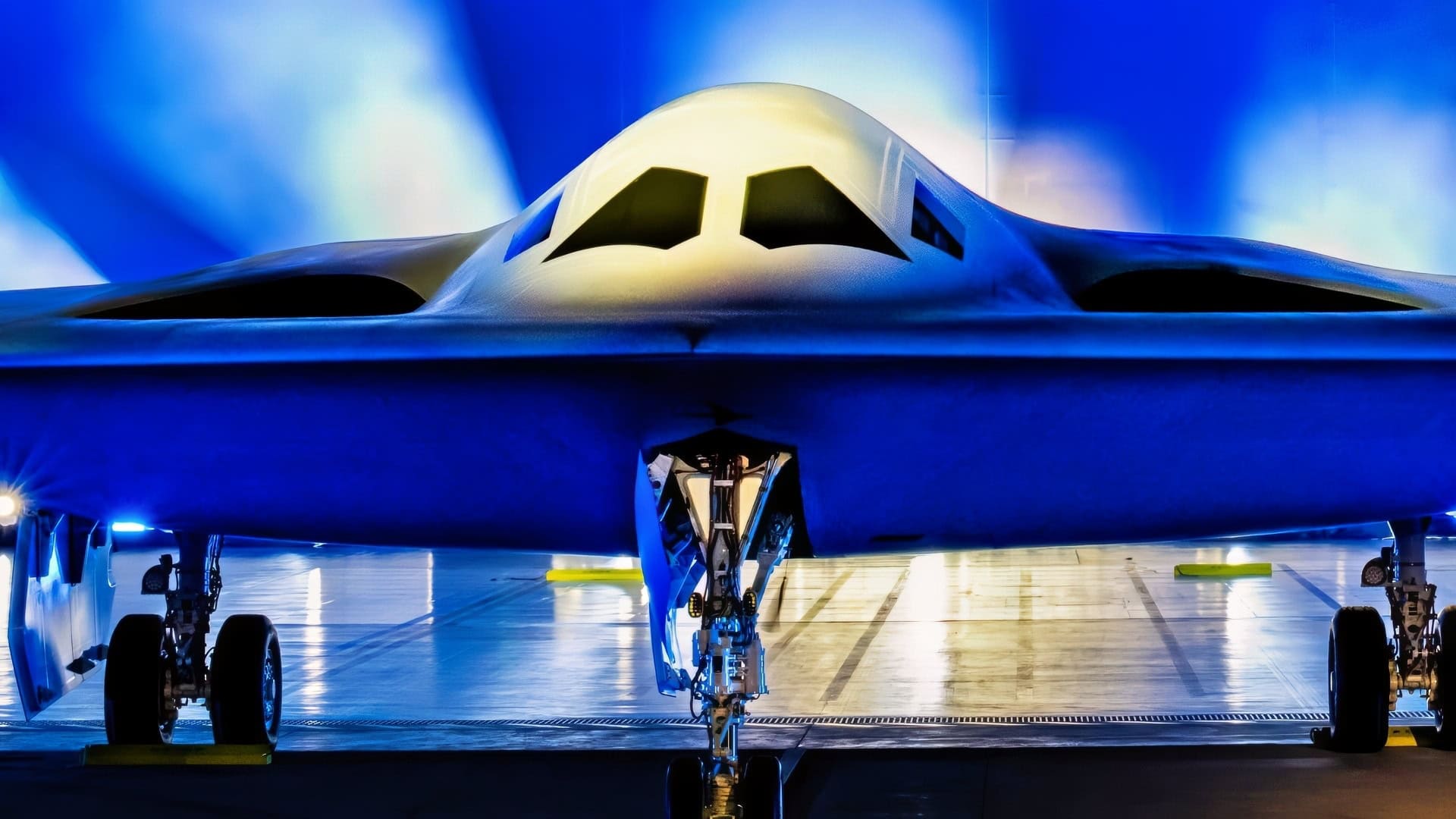
A B-21 Raider is unveiled at Northrop Grumman’s manufacturing facility on Air Force Plant 42 in Palmdale, California, Dec. 2, 2022. The B-21 will be a long-range, highly survivable, penetrating strike stealth bomber capable of delivering both conventional and nuclear munitions. (U.S. Air Force photo by Airman 1st Class Joshua M. Carroll)
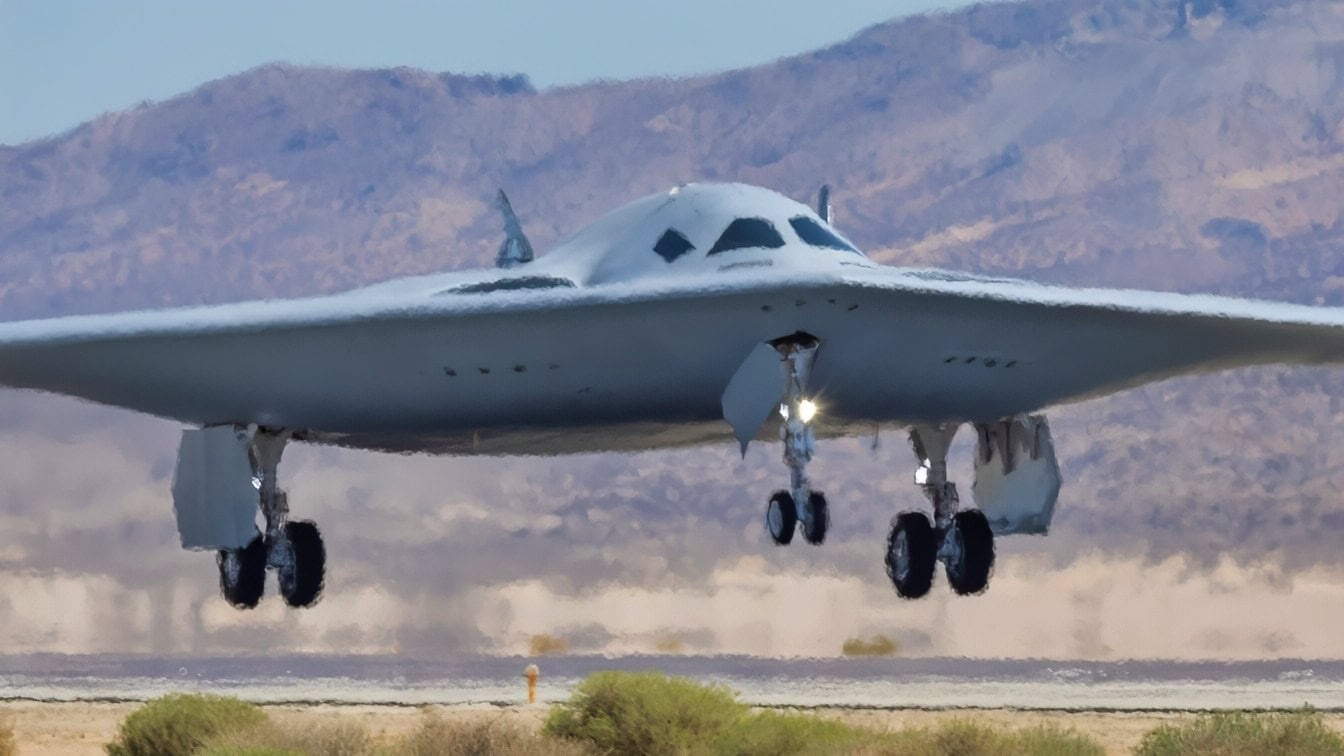
A B-21 Raider test aircraft lands at Edwards Air Force Base, Calif., during ongoing developmental flight testing, Sept. 11, 2025. The B-21 will be the backbone of the bomber fleet; it will incrementally replace the B-1 Lancer and B-2 Spirit bombers. (U.S Air Force photo by Todd Schannuth)
While there are certain to be many unknowns when it comes to this question, there do appear to be some potentially paradigm-changing technological advances in recent years that strongly support the need for an F/A-XX.
Along with the defining advances in stealth technology, there are likely to be commensurate breakthroughs in fighter jet range, sensing, targeting fidelity, and AI-enabled computing and data processing. The most significant element of the F/A-XX Northrop rendering appears to be its extremely “wide” nose radome, which extends across a larger portion of the aircraft’s body while preserving an aerodynamic, stealthy configuration.
The size of the nose radome is extremely significant, as the number of transmit/receive modules packaged into the nose radome is directly correlated to the detection range of a fighter jet’s AESA radar.
China’s J-20, for example, appears to be built with a larger nose radome than the F-35 in what could be an effort to “out-range” the F-35 in radar detection.
While the slightly larger nose radome on the J-20 certainly does not ensure an F-35 would necessarily be “seen” first by a J-20, it does introduce the possibility of a longer range AESA.
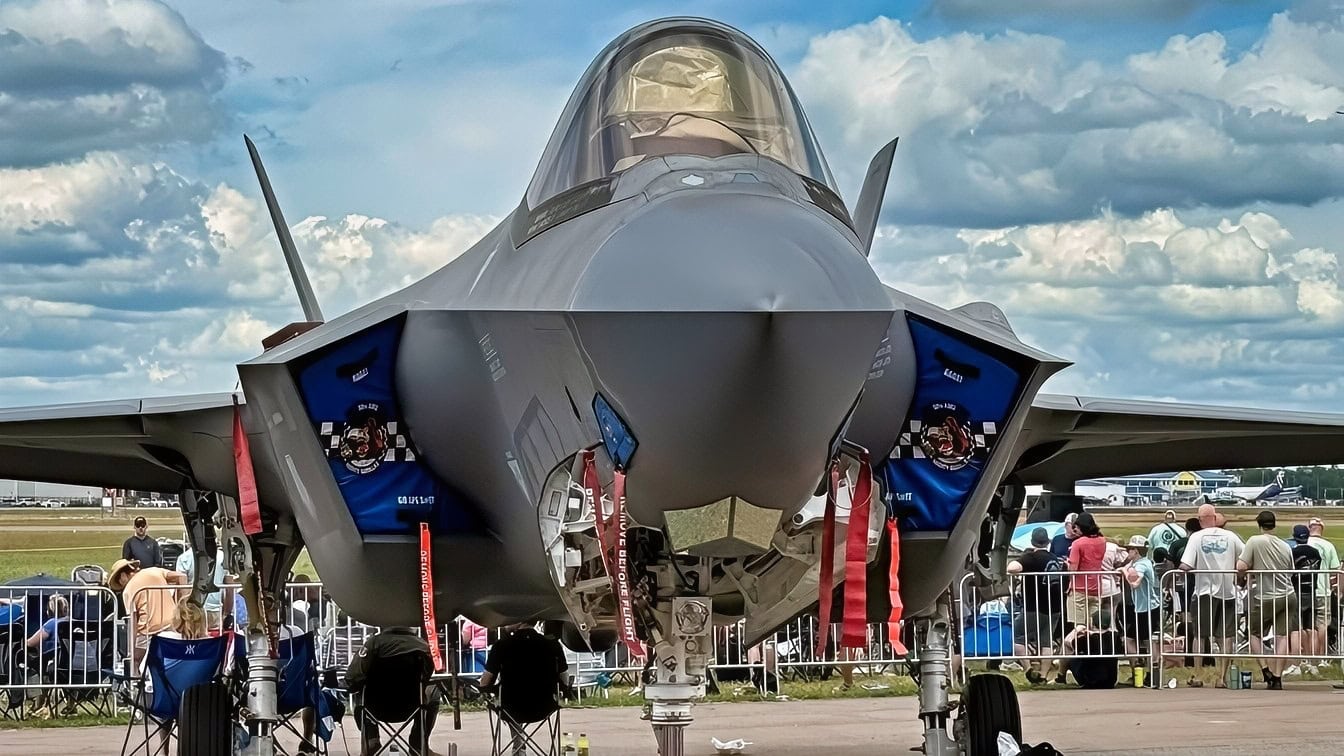
F-35C Lakeland Airshow Photo 19FortyFive Image Taken on 4/19/2026.
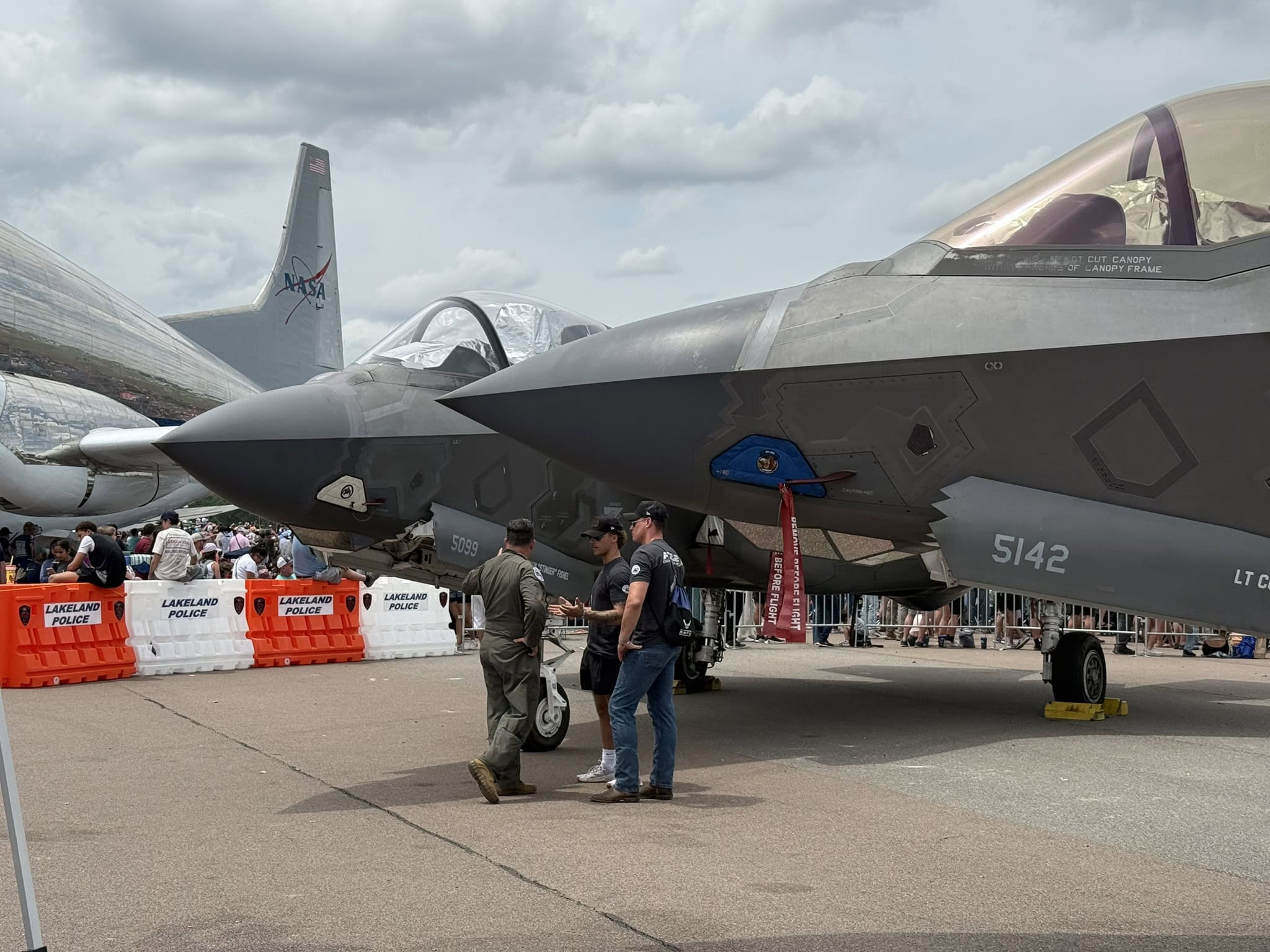
F-35C. Image Credit: 19FortyFive.com taken on 4/19/2026.
Should this be the case, it would make sense for engineers designing the F/A-XX to ensure it is built with a much larger, longer-range, and more sensitive AEAS radar.
Simply put, the larger the nose radome, the more T/R modules it can accommodate, enabling a longer range. It would make sense if the F/A-XX’s detection AESA radar were being built to “out-range” the Chinese J-20.
The large, extended size of the nose radome in Northrop’s recently released “video” seems to indicate a much larger nose radome.
Recently published research from Air University’s China Aerospace Studies Institute, titled “A look at the J-20 AEAS Radar,” suggests that the J-20 AESA radar was engineered with a longer range to support a counter-interventionist concept of operations.
F/A-XX Doubles F-35 Range
For instance, one clear, publicly announced element of the F/A-XX relates to a massive “range” expansion beyond 5th-generation fighters. The F-35 arguably suffers from a range challenge in the Pacific, and preliminary indications suggest the F/A-XX will “double” this range.
Parts of southern Japan are a few hundred miles from Taiwan, and Manila in the Philippines is about 925km from Taiwan, distances potentially within reach of an F-35A should it be stationed there.
F/A-XX Boeing Image.
The F-35C has a range of roughly 1,300 miles, so it would need to operate roughly 500 miles from the coast of mainland China to project power with some dwell time and return to its carrier.
However, China’s famous DF-26 “carrier killer” missile can travel ranges out to 2,000 miles or more, so it is unclear if US Navy carriers could risk projecting power from only 500 miles offshore.
This is why the US Navy will deploy its MQ-25 Stingray carrier-launched refueling drone, which could potentially double the strike range of an ocean-launched F-35C.
A new F/A-XX, however, might be engineered to travel much longer distances. Therefore, with a massively longer attack range, longer-range sensors, and next-generation weapons, a new 6th-generation F/A-XX might have greater success operating at greater distances offshore and be more survivable for carriers.
Carrier-Capable
The new “video clip” shows an F-35C-like folded wing, a feature that optimizes storage capacity on a carrier for the jets.
With folded wings, F-35Cs can line up next to one another in greater numbers on a carrier deck. While precise dimensions are difficult to discern in the available rendering, the “wing” of Northrop’s F/A-XX appears wider, smoother, less angular, and more blended with the body than what we see on an F-35C.
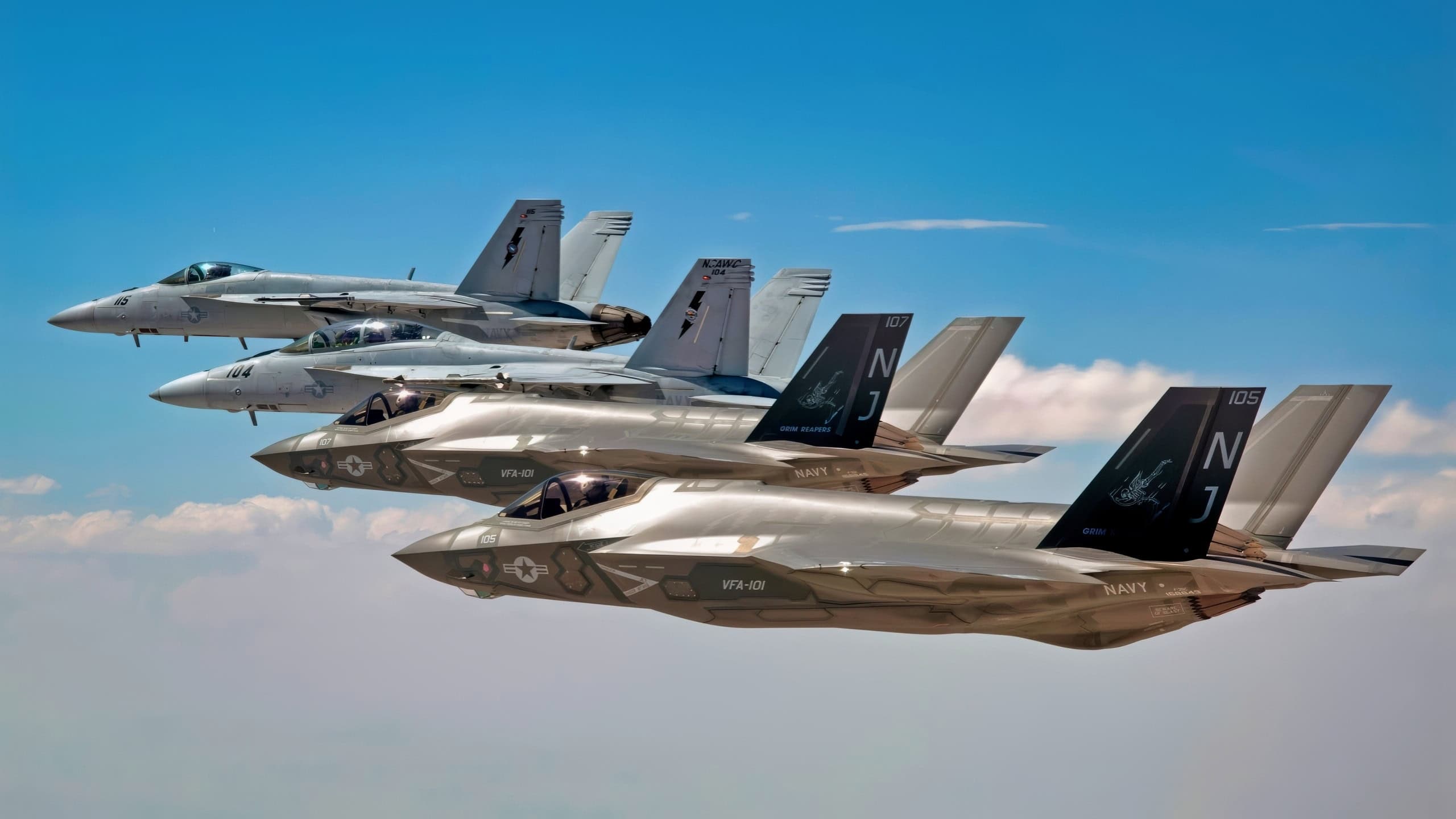
FALLON, Nev. (Sept. 3, 2015) F-35C Lightning IIs, assigned to the Grim Reapers of Strike Fighter Squadron (VFA) 101, and an F/A-18E/F Super Hornets assigned to the Naval Aviation Warfighter Development Center (NAWDC) fly over Naval Air Station Fallon’s (NASF) Range Training Complex. VFA 101, based out of Eglin Air Force Base, is conducting an F-35C cross-country visit to NASF. The purpose is to begin integration of F-35C with the Fallon Range Training Complex and work with NAWDC to refine tactics, techniques and procedures (TTP) of F-35C as it integrates into the carrier air wing. (U.S. Navy photo by Lt. Cmdr. Darin Russell/Released)
The base of the wing appears longer and more extended along the aircraft’s body, which would make sense given efforts to achieve B-2 or B-21-like bomber “stealth.”
The F-35C has a 44-ft wingspan and is the largest of the F-35 family, so it would be interesting to learn of the length or wingspan of this folding-wing Northrop F/A-XX. It likely has a larger fuselage surface area than an F-35C, and is therefore capable of carrying more fuel to support its longer range.
Also, like the F-35C, the Northrop F/A-XX rendering shows an internal weapons bay to maintain a stealthy exterior without protruding structures.
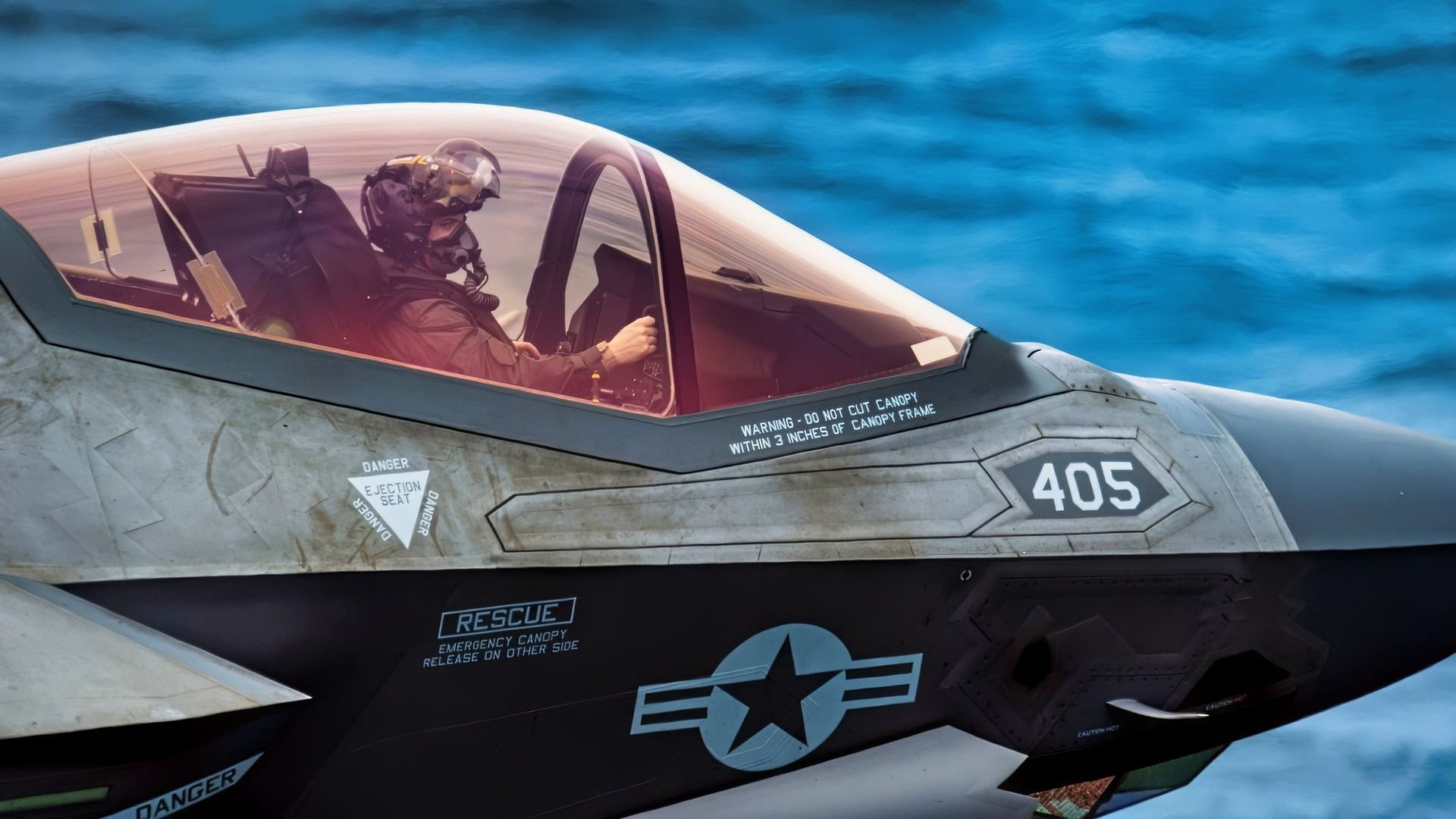
(Jan. 10, 2025) Lt. Cmdr. Joseph Anderson, of Severna Park, Md., waits for launch in an F-35C Lightning II, assigned to the “Warhawks” of Strike Fighter Squadron (VFA) 97, on the flight deck of the Nimitz-class aircraft carrier USS Carl Vinson (CVN 70), Jan. 10, 2025. Vinson, the flagship of Carrier Strike Group ONE, is underway conducting routine operations in the U.S. 7th Fleet area of operations. (U.S. Navy photo by Mass Communication Specialist 3rd Class Nate Jordan)
An F-35C has hardpoints for potential external carriage, as it can flex its payload up to 18,000 pounds when operating in bomb-truck mode. It is likely the F/A-XX will arrive with a larger and even more expansive internal weapons bay, particularly if its fuselage is larger to accommodate more fuel and weaponry.
However, the aircraft cannot be too large or too heavy, as it needs to be ultra-high-speed and operate with aerial agility equal to or superior to that of an F-22.
About the Author: Kris Osborn
Kris Osborn is the Military Technology Editor of 19FortyFive. Osborn is also President of Warrior Maven – Center for Military Modernization. Osborn previously served at the Pentagon as a highly qualified expert in the Office of the Assistant Secretary of the Army—Acquisition, Logistics & Technology. Osborn has also worked as an anchor and on-air military specialist at national TV networks. He has appeared as a guest military expert on Fox News, MSNBC, The Military Channel, and The History Channel. He also has a Master’s Degree in Comparative Literature from Columbia University.