
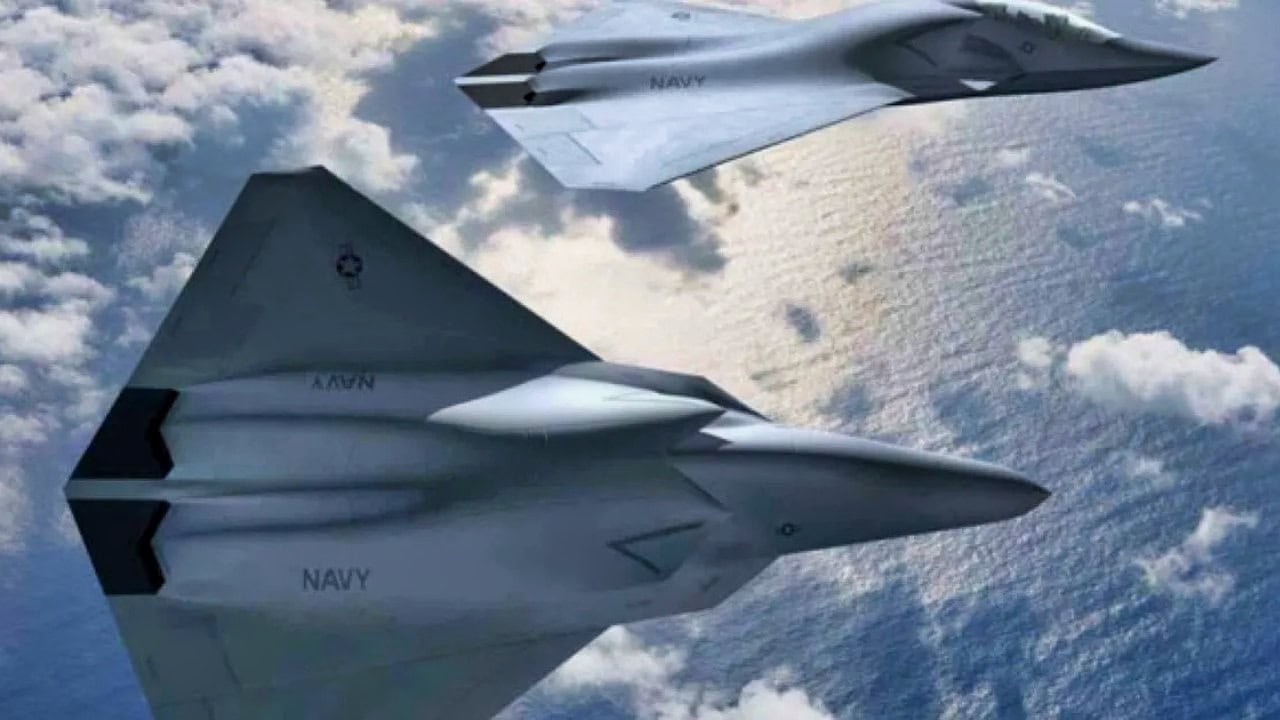
The Air Force’s F-47 Got $5 Billion — The Navy’s F/A-XX Nearly Died at $74 Million Before Congressional Appropriators Intervened
The Navy’s F/A-XX sixth-generation fighter program is in flux, facing severe funding cuts and delays despite some congressional efforts to revive it. While the program was nearing a contractor down-select, it was effectively sidelined to prioritize the Air Force’s F-47 program.
Congress had gutted the U.S. Navy’s F/A-XX sixth-generation fighter program, approving just $74 million for FY 2026, a whopping 84 percent cut from last year and a stark contrast to the multibillion-dollar boost for the Air Force’s F-47 NGAD.
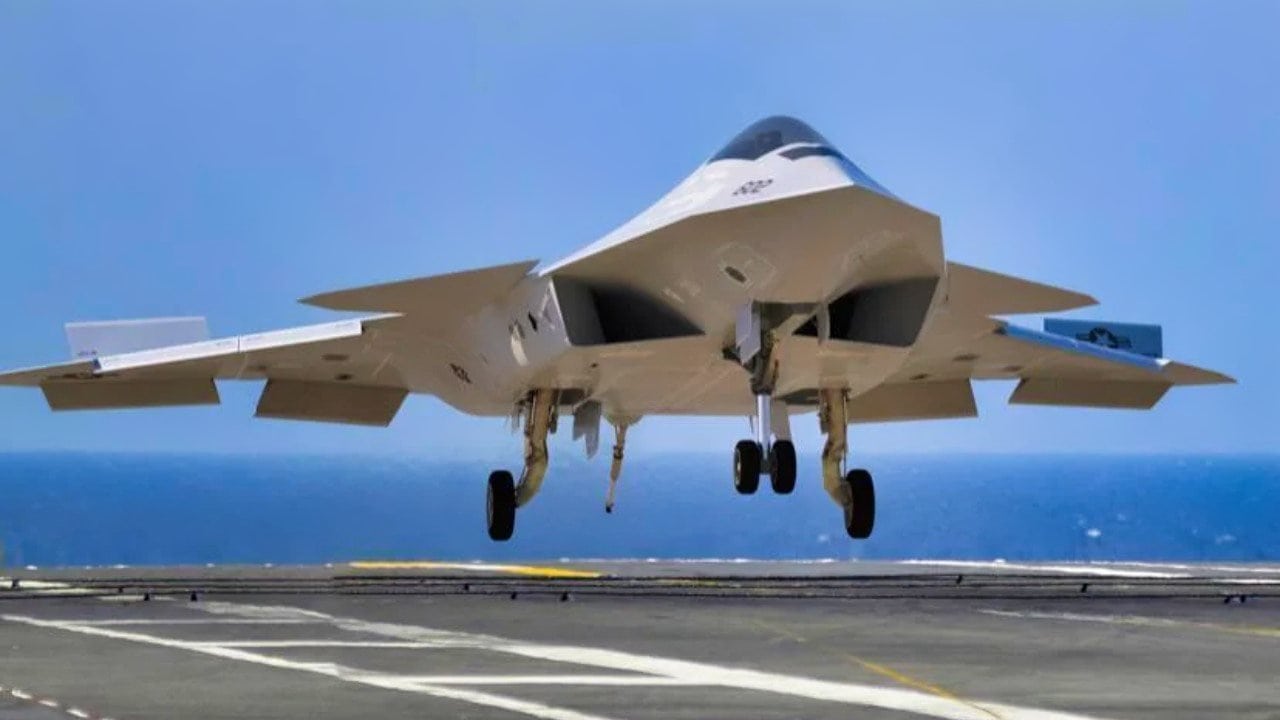
F/A-XX. Image Credit: Creative Commons.
The move effectively left the carrier-based F/A-XX program on life support, as aging Super Hornets wear out amid increased combat usage over Iran and F-35Cs confront growing radar threats from China and Russia.
But the Navy has finally gotten some help in Congress.
The U.S. Navy Needs The F/A-XX In The Indo-Pacific
With improvements made by adversaries like China, including the development of advanced fighters and long-range missile systems, the U.S. Navy needs a new platform capable of establishing air superiority and surviving in high-threat environments while protecting its biggest power-projection platforms, its aircraft carriers.
The U.S. Navy needs the F/A-XX, a sixth-generation carrier-based fighter, to replace the aging F/A-18 Super Hornets and to ensure air superiority and continued power-projection capabilities in increasingly contested environments, particularly against rivals like China in the Pacific.
China is also advancing its own naval aviation. The introduction of the J-35 stealth carrier fighter, the J-36, sixth-generation bomber, and the KJ-600 airborne early warning aircraft strengthens China’s ability to contest sea and air control.
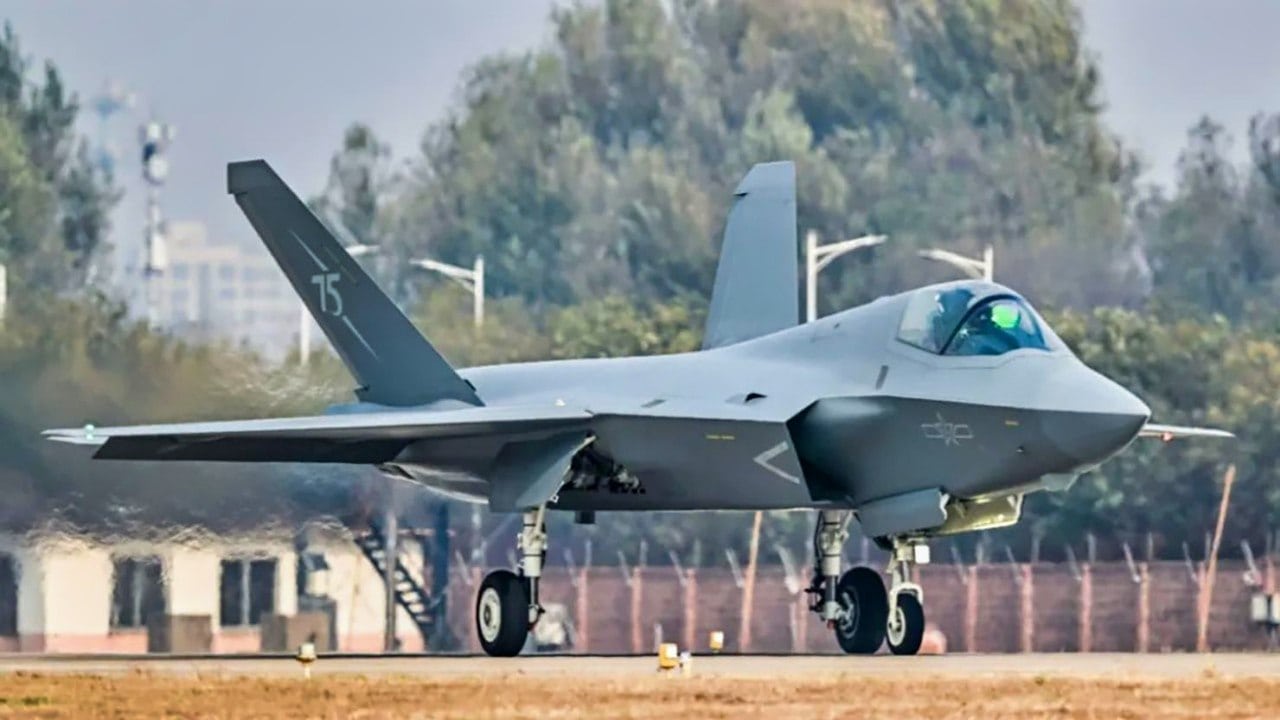
J-35A Fighter from China. Image Credit: Chinese Military
Key requirements for the F/A-XX include advanced stealth, significantly extended range, and the ability to operate alongside and direct Collaborative Combat Aircraft (CCA) drones, forming a critical component of the Next Generation Air Dominance (NGAD) family of systems.
This advanced platform is vital for maintaining the effectiveness and survivability of aircraft carrier air wings against emerging threats and ensuring the Navy can project power and influence globally.
The Threat: China’s Long-Range Missile Systems
Does the War Department view the aircraft carrier as an increasingly obsolete power-projection platform due to the threat of China’s newest and longer-range missiles?
That could be one reason why the Pentagon is loath to develop two new advanced fighters at the same time, the F-47, which has priority, and the Navy’s F/A-XX.
China, however, doesn’t view the carrier as obsolete, given the production rate of new carrier development and construction. China has built a dense anti-access/area denial (A2/AD) envelope to protect its fleet and homeland from U.S. strikes.
China’s strategy is to avoid engaging U.S. carriers one-on-one and instead remove them from the equation entirely by keeping them at maximum distance.
China’s land-based DF-21D ‘carrier killer’ ballistic missile with 1000+ miles range—makes it possible to attack aircraft carriers over great distances at reduced or no risk. China has also developed the DF-26B missile that can reach U.S. bases in Guam.
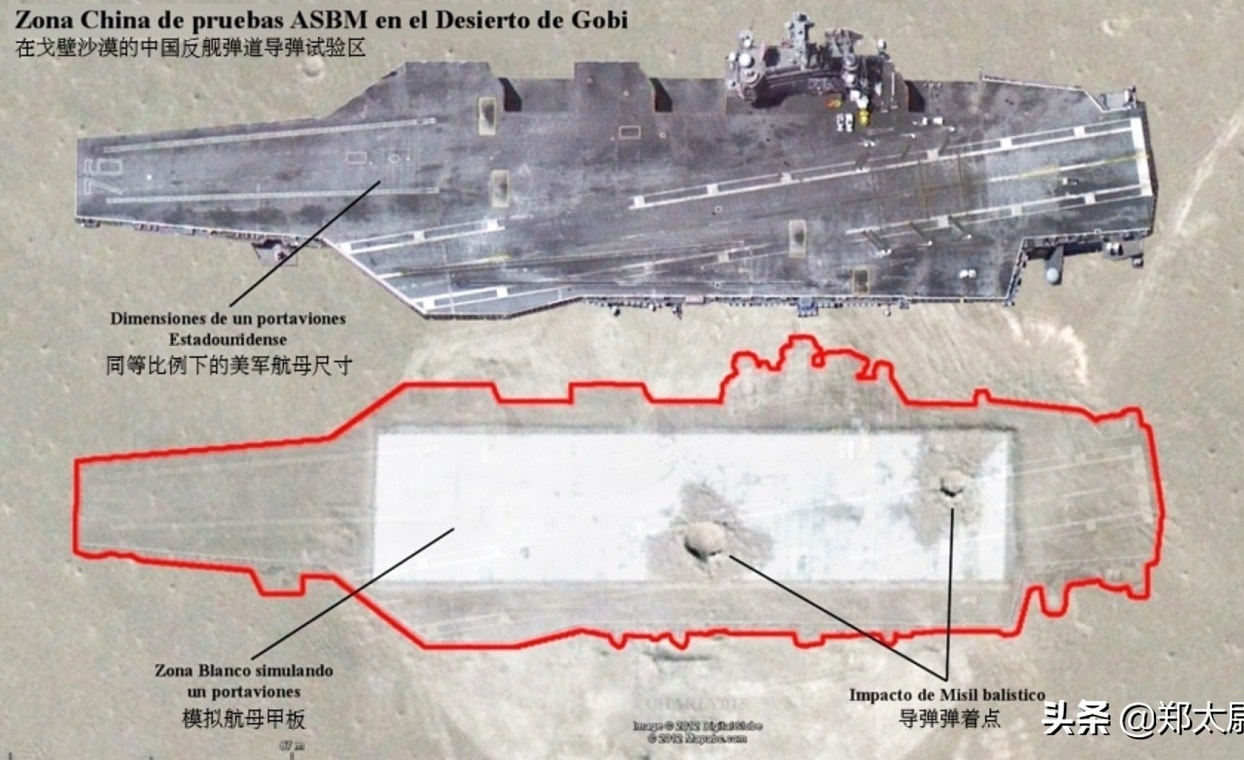
Image from the now closed WantChinaTimes. This shows a mock attack on a U.S. Navy aircraft carrier.
China is also advancing its own naval aviation. The introduction of the J-35 stealth carrier fighter and the KJ-600 airborne early warning aircraft strengthens China’s ability to contest sea and air control.
The U.S. operates 11 aircraft carriers as well as nine amphibious assault ships (LHDs), which are used to maintain force projection around the globe. But the U.S. carriers might not be able to approach targets closely enough without incurring unacceptably high volumes of enemy fire.
Among the Pentagon’s carrier critics, the F/A-XX might seem like a Band-Aid fix for an obsolete platform.
F/A-XX Would Extend Ranges For Strike and Air Defense Missions
The F/A-XX is designed with significantly greater range and payload capacity than the Super Hornet, allowing carrier air wings to project power further into contested areas and conduct deep strikes more effectively.
With the F/A-XX, the carriers can perform deep strikes, quarterback combat drones, and engage any Chinese missiles, planes, and drones seeking a long-range kill on U.S. ships and assets.
The aircraft “will be vital to maintaining air superiority and open sea lines of communication for decades to come,” wrote Vice Admiral Dan Cheever, the Navy’s “Air Boss.”
“It is the centerpiece of sixth-generation naval aviation — a stealthy, long-range, data-integrated platform designed to dominate in contested environments. It is built for the fight we know is coming,” said Rep. Jen Kiggans.
The F/A-XX And The Loyal Wingman Program
The F/A-XX will incorporate key fifth and sixth-generation technologies—stealth radar cross-section minimization, networked sensors, and the capability to simultaneously control four drones, starting with new MQ-25 Stingrays entering service for mid-flight refueling (and likely other roles in time) and future carrier-based Loyal Wingmen drones armed with missiles or radars for combat tasks.
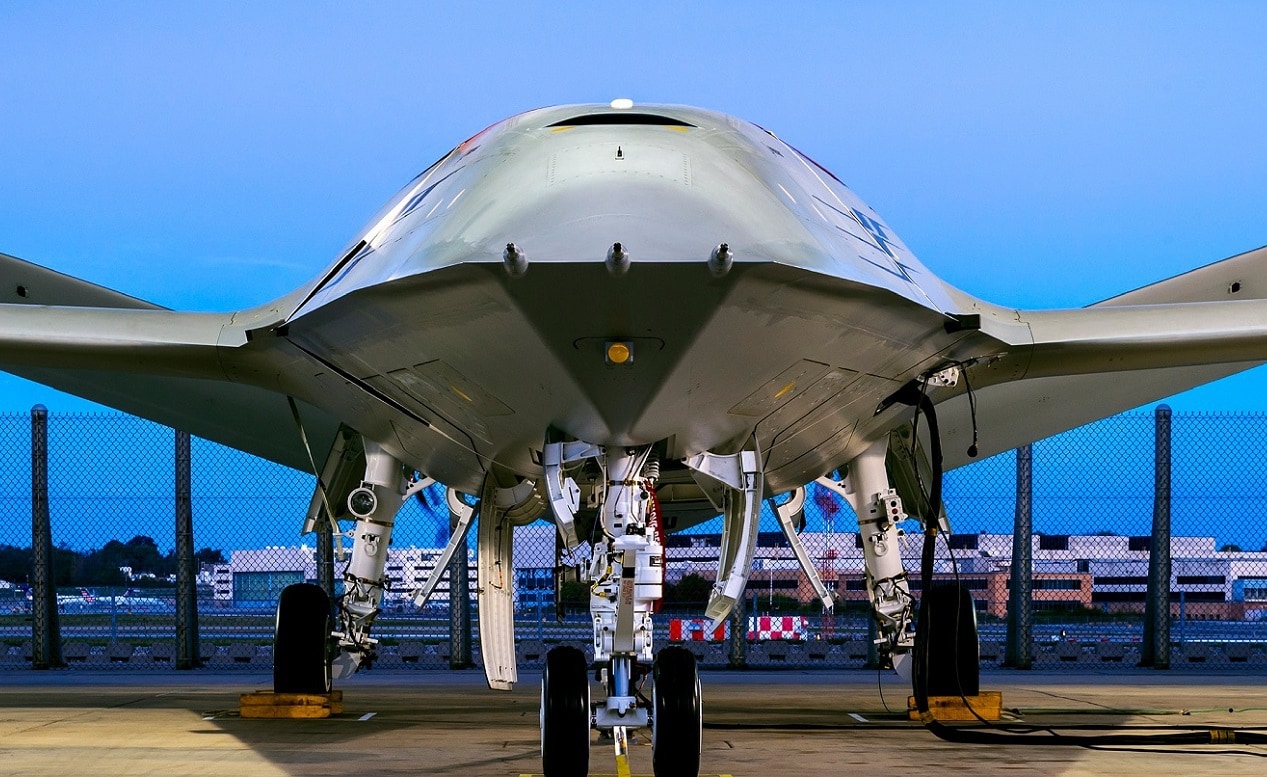
MQ-25. Image Credit – Creative Commons.
USNI reported earlier this month that the U.S. Navy has contracted five defense firms—General Atomics, Boeing, Anduril, Northrop Grumman, and Lockheed Martin—to develop armed, unmanned aircraft and control systems for deployment across its 11 aircraft carriers.
Naval Air Systems Command (NAVAIR) confirmed the contracts, which aim to produce modular, interoperable Collaborative Combat Aircraft (CCA) to augment F/A-18E/F Super Hornets and F-35Cs, while eventually pairing with the future sixth-generation F/A-XX.
Lockheed Martin will also lead development of the MD-5 Mission Control System via its Skunk Works MDCX autonomy platform.
The U.S. Navy’s carrier task forces have extensive air defense capabilities. But their short-range F/A-18 Super Hornets are a potential Achilles Heel. The F/A-XX will definitely help extend that range to where the carriers can fight and survive.
Shortening the F/A-XX in the budget was a mistake. While the Air Force needs to modernize and increase the number of fighter aircraft that it has to accomplish its missions, the Navy does as well. Especially when looking at the Indo-Pacific and the ongoing development of the Chinese navy (PLAN).
The F/A-18 Super Hornets are wearing out faster than the standard F/A-18s, and, in the context of the air campaign against Iran, they are placing even more stress on the aging airframes.
The government is rightly concerned about the simultaneous development of two new projects (F-47 and the F/A-XX), citing budget constraints and production risks.
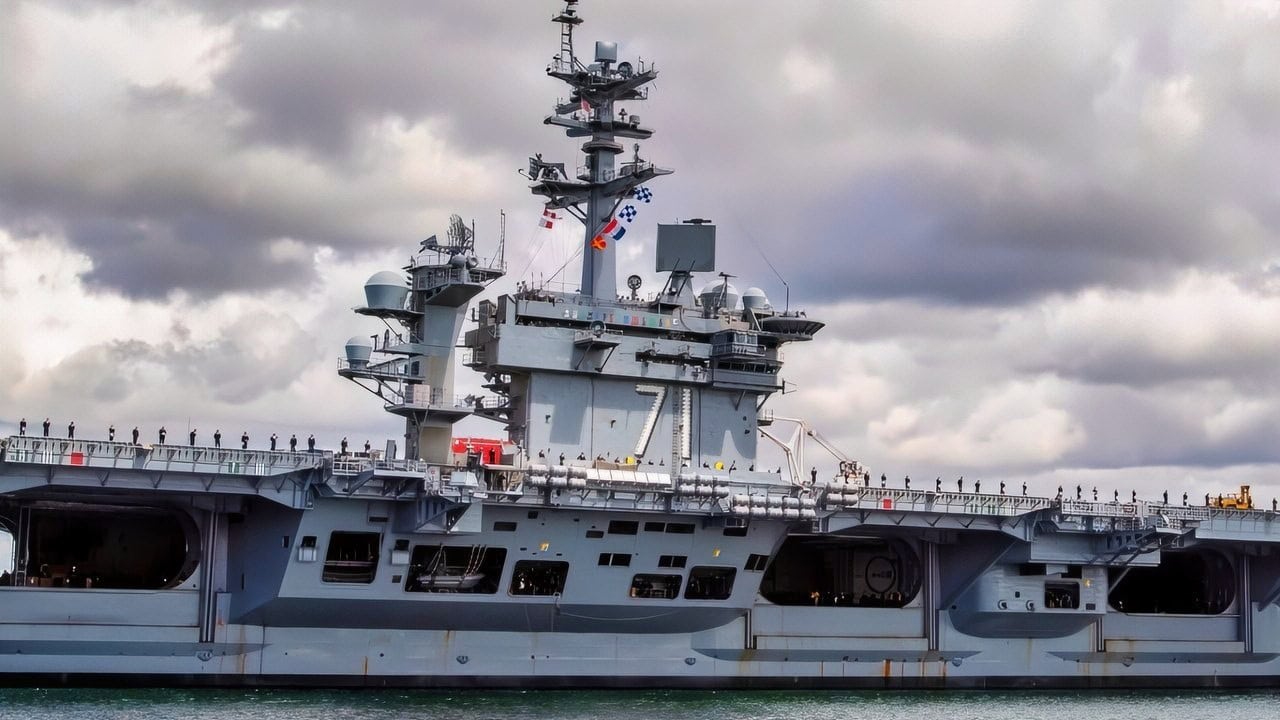
(March 23, 2023) Nimitz-class aircraft carrier USS Theodore Roosevelt (CVN 71) returns to Naval Air Station North Island following a regularly-scheduled maintenance availability and completion of sea trials, March 23. The ship changed its homeport from Bremerton to San Diego after completing an 18-month docking planned incremental availability in Bremerton, Washington, during which the ship received extensive restorations and upgrades to support the F-35C Lightning II, E-2D Advanced Hawkeye, and CMV-22B Osprey, as well as future platforms such as the MQ-25 Stingray unmanned aircraft system. (U.S. Navy photo by Mass Communication Specialist 2nd Class Keenan Daniels)
However, as Isaac Seitz wrote, “The F/A-XX is also designed to be a key node in the Pentagon’s Joint All-Domain Command and Control (JADC2) network.
“It will integrate with space-based assets, undersea platforms, and cyber-resilient systems, enabling multi-domain operations and distributed lethality.
“Its role as a command-and-control hub for unmanned systems and its compatibility with emerging technologies like adaptive propulsion and high-energy lasers position it as a central element of future carrier strike groups.”
Congress Is Pumping New Life Into The F/A-XX Program
The Navy’s F/A-XX fighter jet may have risen from the dead as the program has received a new influx of funding from congressional appropriators. Congress increased 2026 funding for the jet from $74 million to $972 million—enough to resurrect efforts to develop the future jet.
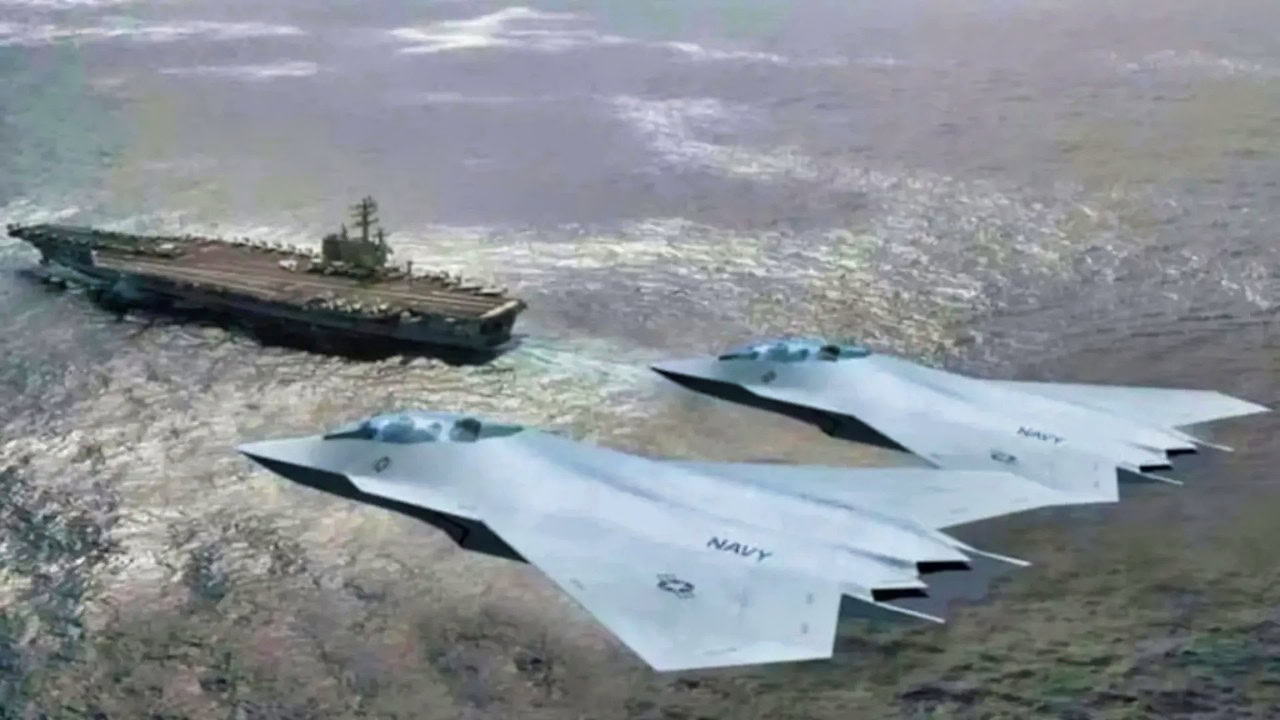
F/A-XX Fighter for US Navy. Navy graphic mockup.
This is a major development for the Navy, which has been waiting to resolve the uncertainty surrounding the F/A-XX.
Boeing and Northrop Grumman are considered the leading contenders to build the platform, but there have been concerns about whether the U.S. industrial base could build two sixth-generation fighter jets simultaneously. Boeing is already involved in the F-47 program.
About the Author: Steve Baestrieri
Steve Balestrieri is a National Security Columnist. He served as a U.S. Army Special Forces NCO and Warrant Officer. In addition to writing on defense, he covers the NFL for PatsFans.com and is a member of the Pro Football Writers of America (PFWA). His work was regularly featured in many military publications.