“There are no extraordinary men…just extraordinary circumstances that ordinary men are forced to deal with.” – U.S. Navy Admiral William Bull Halsey
These were the words spoken by Admiral Bull Halsey after the conclusion of the War in the Pacific. Admiral Halsey was a significant and influential figure in the Pacific.
He was an outspoken advocate of aircraft carriers and played an important role after the surprise attack on Pearl Harbor. Despite his aggressive and headstrong tactics, Halsey was immensely respected by his peers and the sailors who served under him.
His stubborn disposition occasionally led him towards recklessness, but he still played an instrumental role for the U.S. and its allies during the Second World War.
Admiral Bull Halsey: Early Life and Naval Career
Born on October 30, 1882, in Elizabeth, New Jersey, William Halsey Jr. was raised in a family deeply rooted in the naval tradition. As a child, he was raised on stories of his seafaring ancestors, many of whom served in the British Royal Navy.
His father, William F. Halsey, was a Captain in the United States Navy, which further instilled in the young boy a love of the sea. Although he initially struggled to secure an appointment to the United States Naval Academy, he ultimately entered Annapolis in 1900 and graduated in 1904. While his academic performance was nothing special, Halsey distinguished himself through his athleticism, earning him several honors during his time at the academy.
Following his graduation from the Naval Academy, Halsey was assigned to the battleship USS Kansas. Kansas took part in President Theodore Roosevelt’s Great White Fleet initiative, which saw the U.S. Naval fleet circumnavigate the entire globe from 1907 through 1909.
On Wednesday, April 13, 1904, Halsey was aboard the Battleship USS Missouri (not to be confused with the Iowa-class USS Missouri) when a powder charge on the aft turret ignited, quickly setting off two more. The resulting fire resulted in the death of 31 officers and enlisted sailors.
It instilled in Halsey a superstitious fear of the 13th of every month, especially when it fell on a Wednesday. Between the years 1909 and 1912, he rose quickly through the ranks, quickly acquiring the rank of full lieutenant. By the time World War I erupted, Halsey had already made a name for himself due to his aggressive temperament.
WWI and Interwar Years
During World War I, Halsey commanded destroyers escorting Allied convoys across the submarine-infested waters of the Atlantic. As captain of USS Shaw and later USS O’Brien, he led anti-submarine patrols under hazardous conditions, often operating at high speeds in poor visibility while facing the constant threat of German U-boats. For his distinguished service, Halsey was awarded the Navy Cross, one of the highest decorations for valor.
In the interwar years, Halsey held a wide variety of assignments, including service as naval attaché in Europe and command of multiple destroyer squadrons. However, in 1934, he was offered command of the aircraft carrier USS Saratoga (CV-3).
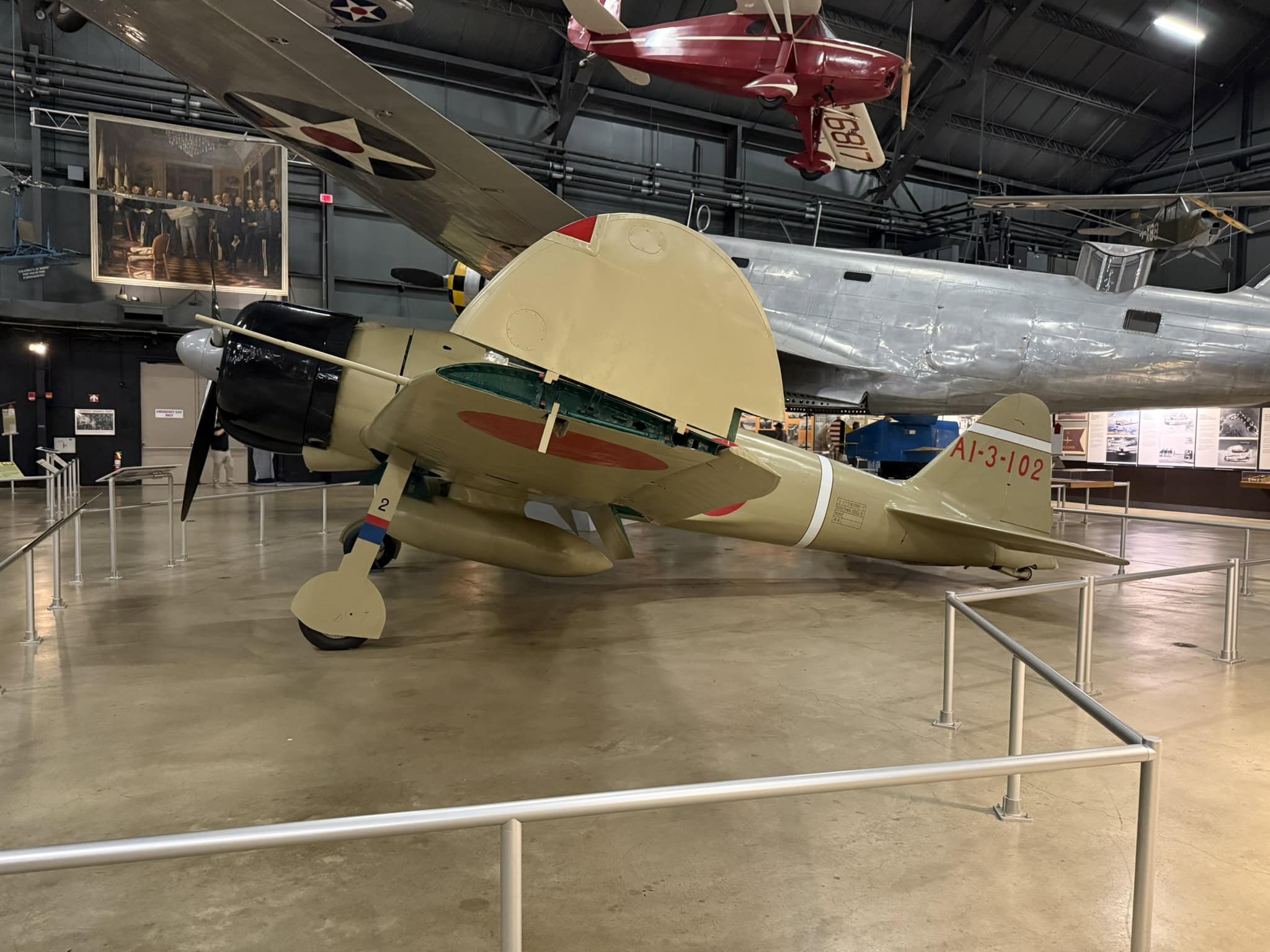
Japan Zero Fighter. Image Credit: 19FortyFive.com Taken at the National Museum of the U.S. Air Force.
The requirement for command on an aircraft carrier was to complete the Naval Aviation Observation Program. Rather than completing the program, however, Halsey opted to enroll as a cadet in the Naval Aviators course.
In 1935, at the age of fifty-two, he qualified as a naval aviator and earned his wings. He later commanded the aircraft carrier USS Saratoga. He later served as Commander of the Aircraft Battle Force, becoming one of the Navy’s most outspoken advocates for carrier-based air power. By the eve of World War II, Halsey had become a vice admiral and one of the most prominent carrier commanders in the fleet.
Outbreak of War in the Pacific
When Japan attacked Pearl Harbor on December 7, 1941, Halsey was at sea aboard USS Enterprise (CV-6), delivering Marine fighter aircraft to Wake Island. Because his carrier task force was at sea, they were spared from the Japanese attack. In the chaotic weeks that followed, Halsey commanded one of the few operational American striking forces in the Pacific.
His attempts to hunt down the attacking Japanese strike force proved unsuccessful, as the enemy carriers had already fled northwest of the Hawaiian Islands. At a time when the United States was reeling from defeat, he launched a series of bold carrier raids against Japanese-held islands in the Marshalls, Gilberts, and even the Japanese homeland itself. Though these early operations inflicted limited material damage, they were enormously valuable for restoring morale after the grim surprise attack on Pearl Harbor. Halsey’s motto, “Hit hard, hit fast, hit often,” quickly became the slogan of the Navy during the Pacific War.
Throughout 1942, Halsey’s physical condition rapidly deteriorated due to the stressful environment in which he found himself. He suffered from Psoriasis, which covered his body in irritating rashes and made it difficult for him to sleep at night.
Despite receiving treatment in Hawaii, his condition continued to worsen to the point where he was dispatched via light cruiser to San Francisco, where he received medical treatment. His condition improved rapidly, but he was ordered to stand down for the next six weeks. As a result, Halsey missed the Battle of Midway, which he would recall as one of the most disappointing moments of his career.
Commander of the South Pacific Area
When Halsey returned to Command in October 1942, he was determined to bring Hell to the Japanese. At the time, the Guadracanal campaign in the Solomon Islands hung in the balance. Japanese naval forces still posed a severe threat, and the Marines were hanging on to their positions at Henderson Field by a thread. Halsey replaced Vice Admiral Robert L. Ghormley as commander of the South Pacific Area and South Pacific forces. Ghormley, a close personal friend of Halsey, had grown exhausted and demoralized, which consequently hindered operations in that theater.
When Halsey assumed command, morale among the beleaguered Marines increased almost immediately. Under his leadership, American naval forces pushed the Japanese away from Guadalcanal, culminating in a series of brutal surface and carrier battles that ultimately broke Japanese momentum. By early 1943, Guadalcanal was secure, marking a strategic turning point in the Pacific War.
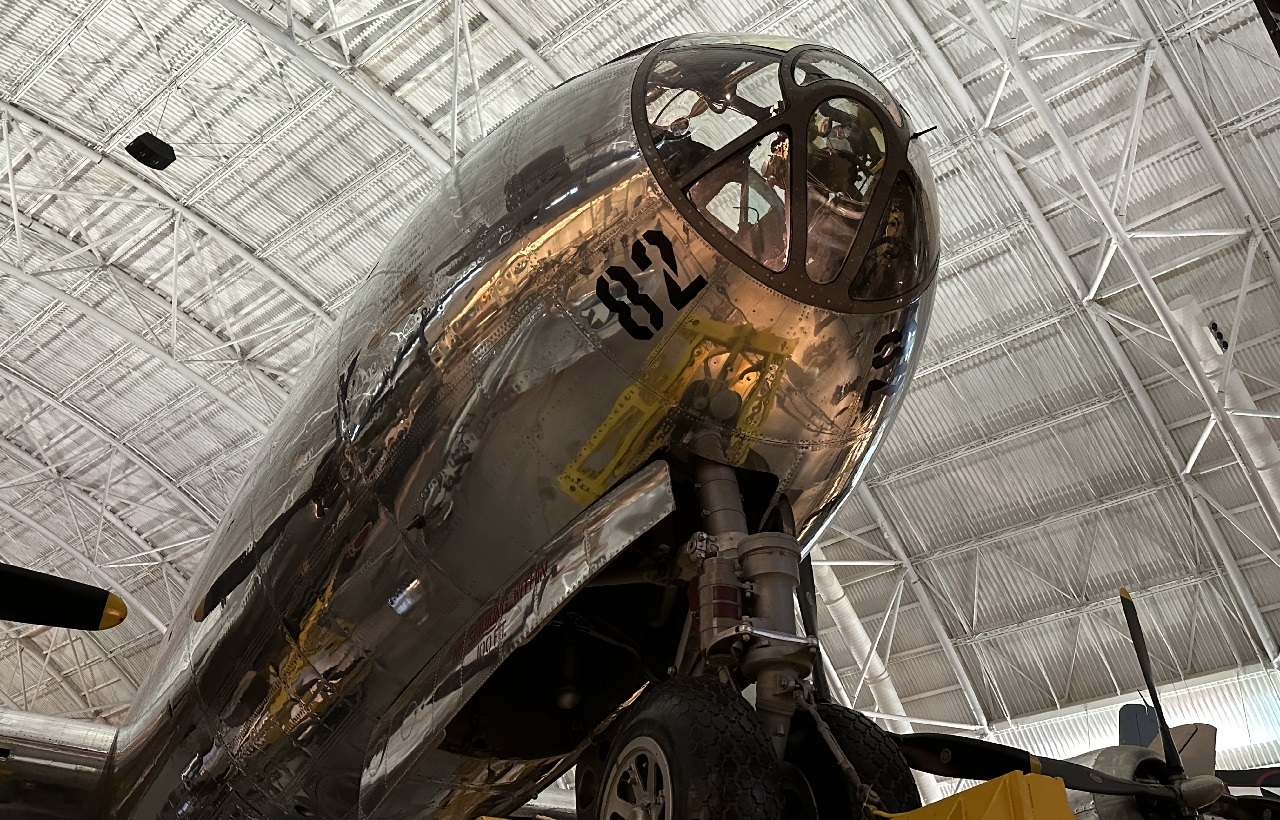
Enola Gay B-29. The image was taken on October 1, 2022. Image Credit: 19FortyFive.com
Following Guadalcanal, Halsey spent the rest of the year battling in the Solomon Islands all the way to Bougainville in Papua New Guinea. Rather than attacking heavily fortified Japanese defenses head-on, he bypassed the fortresses, thereby cutting off their supplies. In 1943, he had taken Bougainville and neutralized the heavily fortified base at Rabaul.
By mid-1944, Halsey’s success in the South Pacific earned him command of the U.S. Third Fleet, alternating operations with Admiral Raymond Spruance’s Fifth Fleet. This arrangement paired two very different leadership styles: Spruance’s analytical caution and Halsey’s instinctive aggressiveness.
Leyte Gulf and Typhoon Cobra: Halsey’s Greatest Mistakes
In October 1944, Halsey and his Third Fleet were assigned to support General Douglass MacArthur’s landings in Leyte Gulf. Halsey led his fast carriers north to engage a decoy Japanese force, believing that the main enemy surface threat had been neutralized. This decision left the San Bernardino Strait unguarded, allowing Japanese battleships and cruisers to fall upon lightly defended American escort carriers off Samar.
Worse still, he had failed to relay his decision to Admiral Thomas Kinkaid of Seventh Fleet, leading to confusion over who was supposed to guard the strait. Despite receiving multiple distress signals from Seventh Fleet, Halsey continued to lead his Third Fleet North away from Leyte Gulf. Only after receiving a direct message from Nimitz did he turn around, but by the time they arrived, the Japanese strike group, led by Vice Admiral Takeo Kurita, had already escaped. In Halsey’s defense, however, the main part of Third Fleet had successfully tracked down and sunk four Japanese aircraft carriers during the Battle off Cape Engano.
Only weeks later, Halsey’s fleet suffered another disaster, this time at the hands of nature itself. In December 1944, the Third Fleet sailed into Typhoon Cobra, a powerful storm that sank three destroyers, damaged dozens of ships, destroyed hundreds of aircraft, and killed nearly eight hundred sailors.
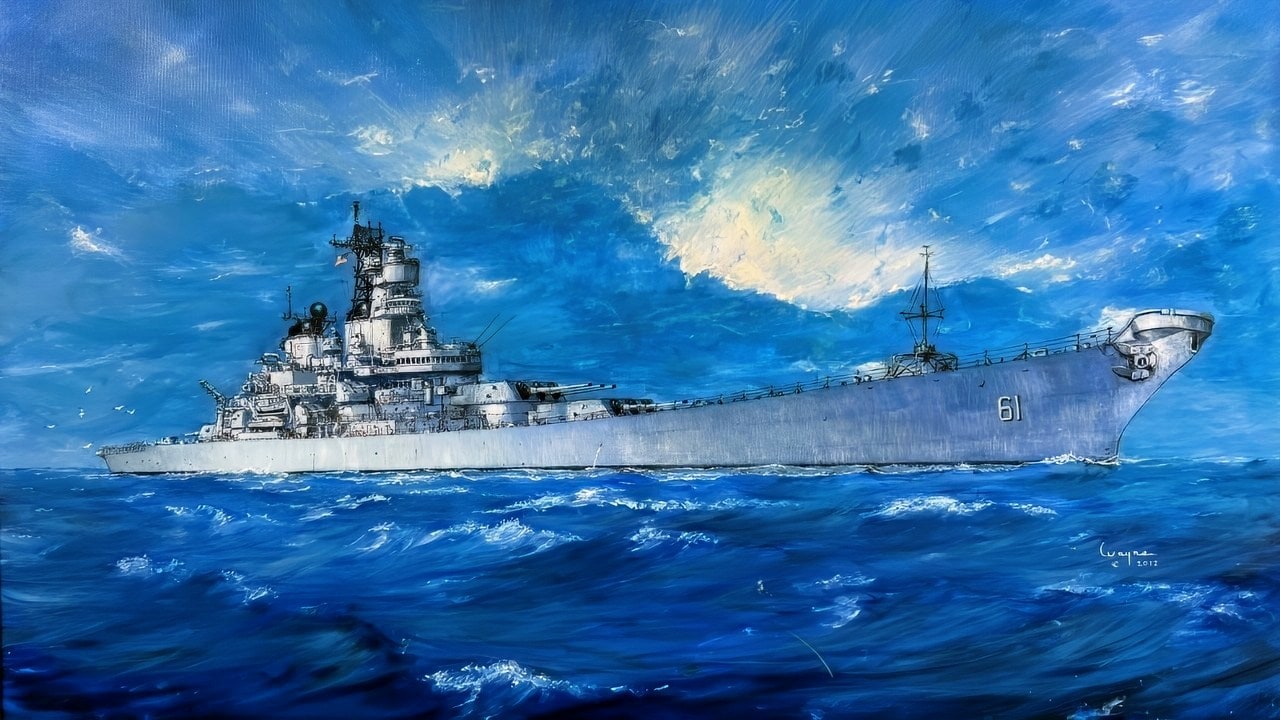
Image taken by Harry J. Kazianis aboard the USS Iowa on August 15, 2025. Image is of a painting of the USS Iowa of the Iowa-Class. USS New Jersey is also a Iowa-Class battleship.
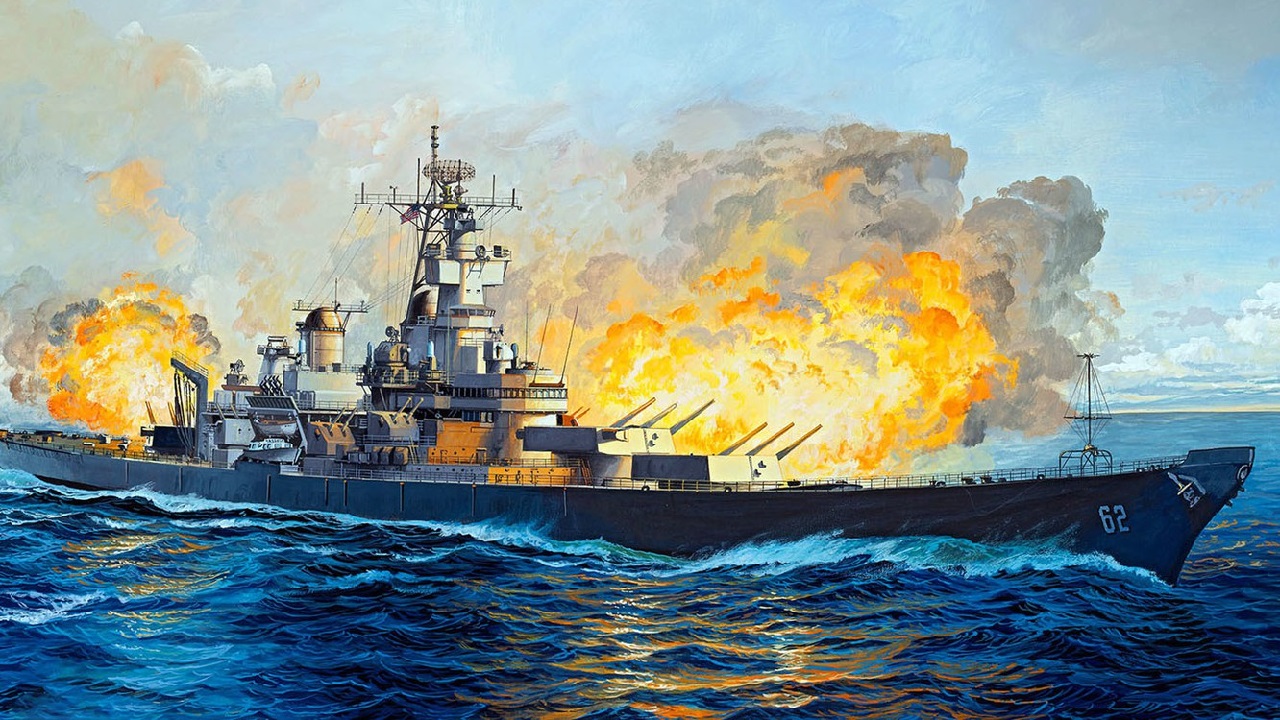
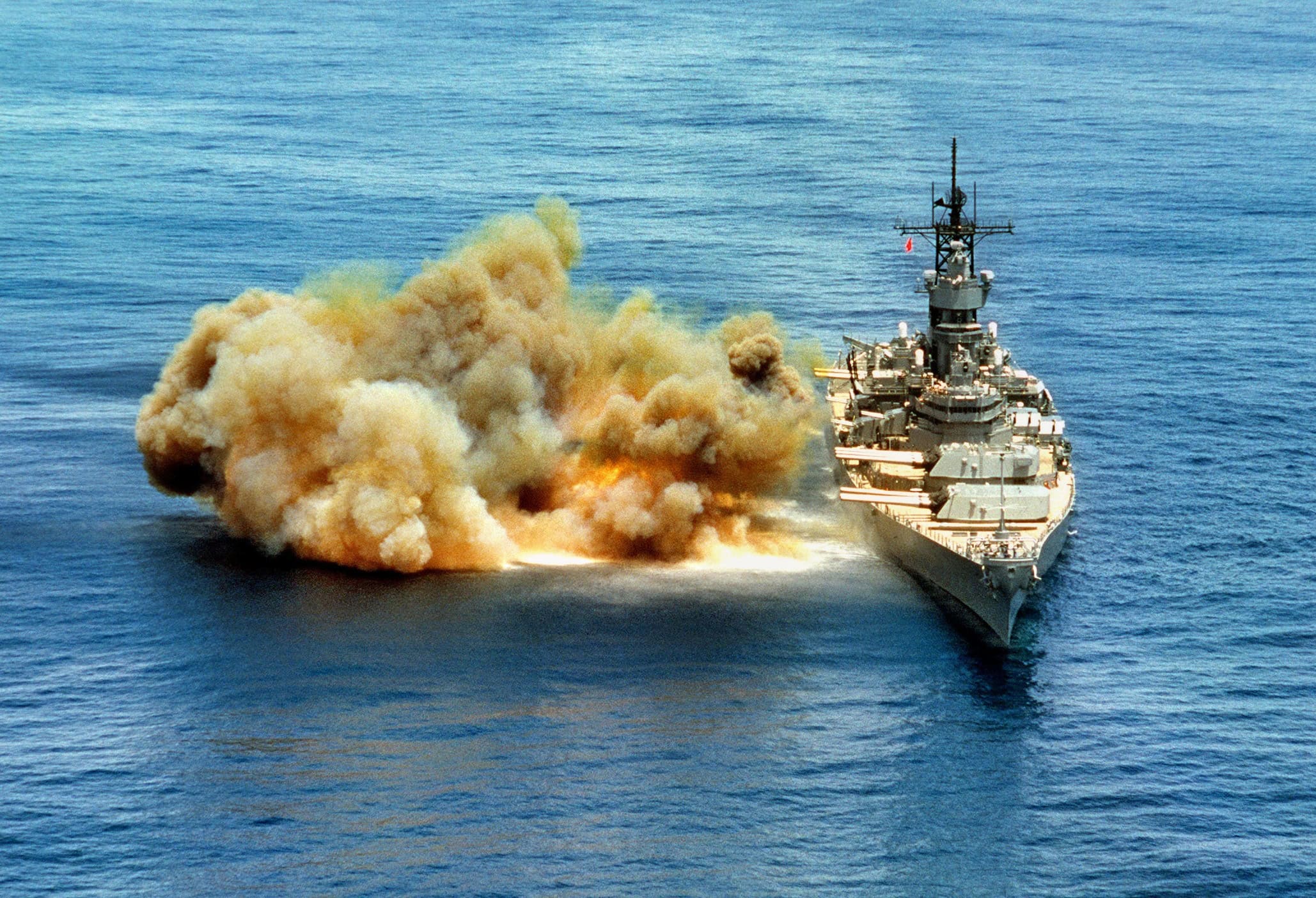
Iowa-Class Battleship USS New Jersey. Image Credit: Creative Commons.
A subsequent Court of Inquiry determined that Halsey’s errors of judgment and inadequate weather assessment contributed significantly to the losses, though he retained command. In fairness, Halsey had received conflicting information and weather reports.
Reports from Hawaii weathermen indicated that the storm would take a northerly course and miss his Task Force 38 by several hundred miles. It wasn’t until later that his own staff would inform him that the storm would venture much closer than originally predicted.
End of the War
Despite these setbacks and errors, Halsey remained one of the most important Naval commanders in the Pacific. His fleet supported operations at Okinawa and participated in massive air and naval strikes against the Japanese home islands.
On September 2, 1945, Halsey was present in Tokyo Bay when Japan formally surrendered aboard USS Missouri, bringing the Pacific War to a close. That December, he was promoted to Fleet Admiral, becoming one of only four officers in U.S. Navy history to attain the five-star rank.
Halsey remained in command for several years after the end of the Pacific War. In 1945, he was promoted to Fleet Admiral, becoming the fourth and most recent person in American history to hold the title.
He officially retired from active duty in 1947 and later served as president of International Telecommunications Laboratories. He was deeply involved in efforts to preserve the USS Enterprise, though these proved unsuccessful due to a lack of funding.
He died on August 16, 1959, and was buried at Arlington National Cemetery near his father. Admiral Bull Halsey was a significant, though controversial figure in the Pacific War.
His headstrong attitude made him a valuable asset when the U.S. Navy was at its lowest point. At the same time, his headstrong disposition made him stubborn, and he often took needless risks. Despite his flaws, Halsey and Seventh Fleet served with distinction in the Pacific, earning their place in naval history.
About the Author: Isaac Seitz
Isaac Seitz, a Defense Columnist, graduated from Patrick Henry College’s Strategic Intelligence and National Security program. He has also studied Russian at Middlebury Language Schools and has worked as an intelligence Analyst in the private sector.