
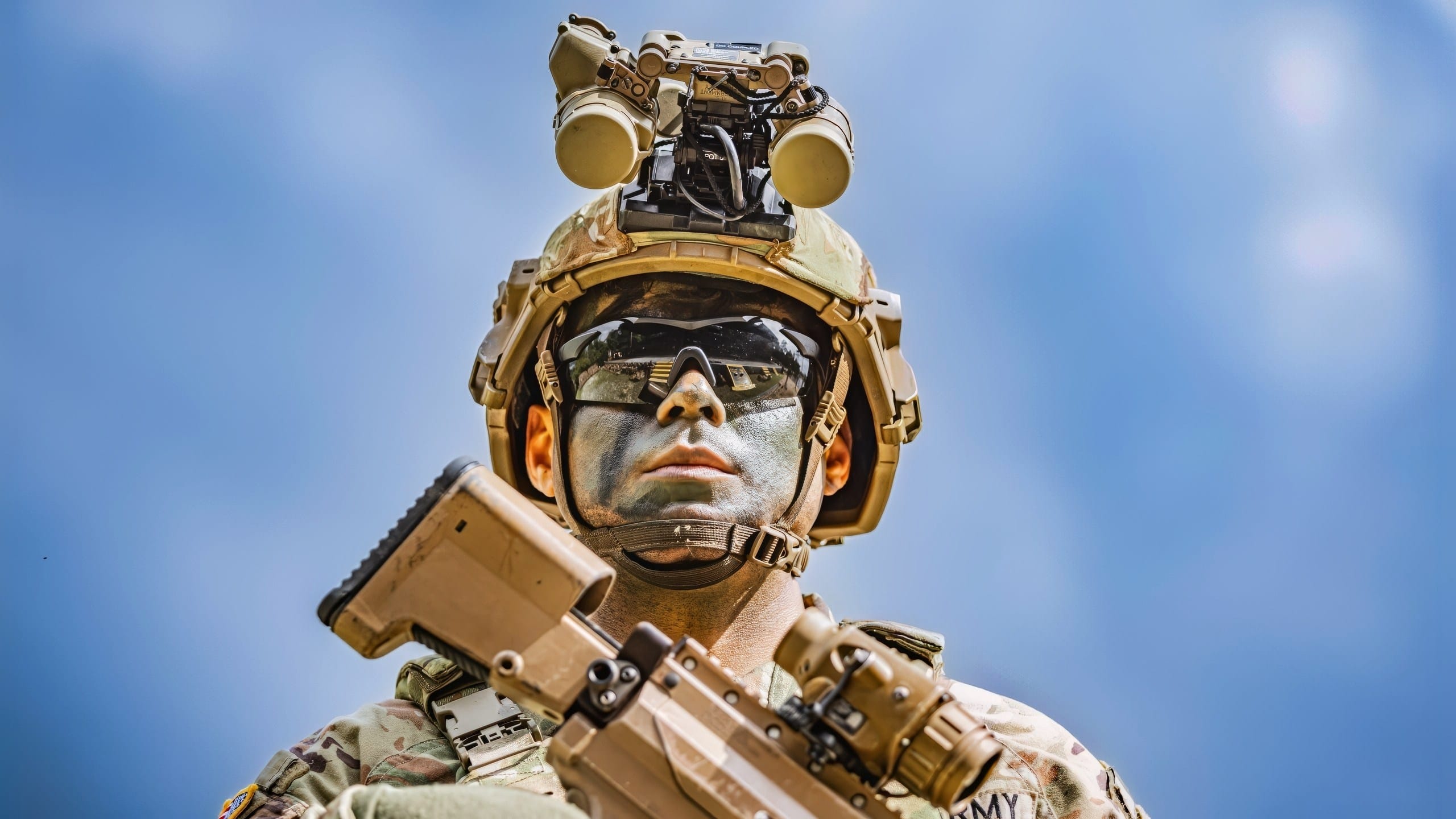
Recently, the Army celebrated a unique milestone when the 43-year-old Sgt. Maj. Russell Hull of the 3rd Infantry Division graduated from the U.S. Army’s Sapper Leader Course, making him the first sergeant major to graduate from the course since 2010.
The Sapper Leader Course (SLC) is a demanding 28-day training program that is both physically and mentally taxing.
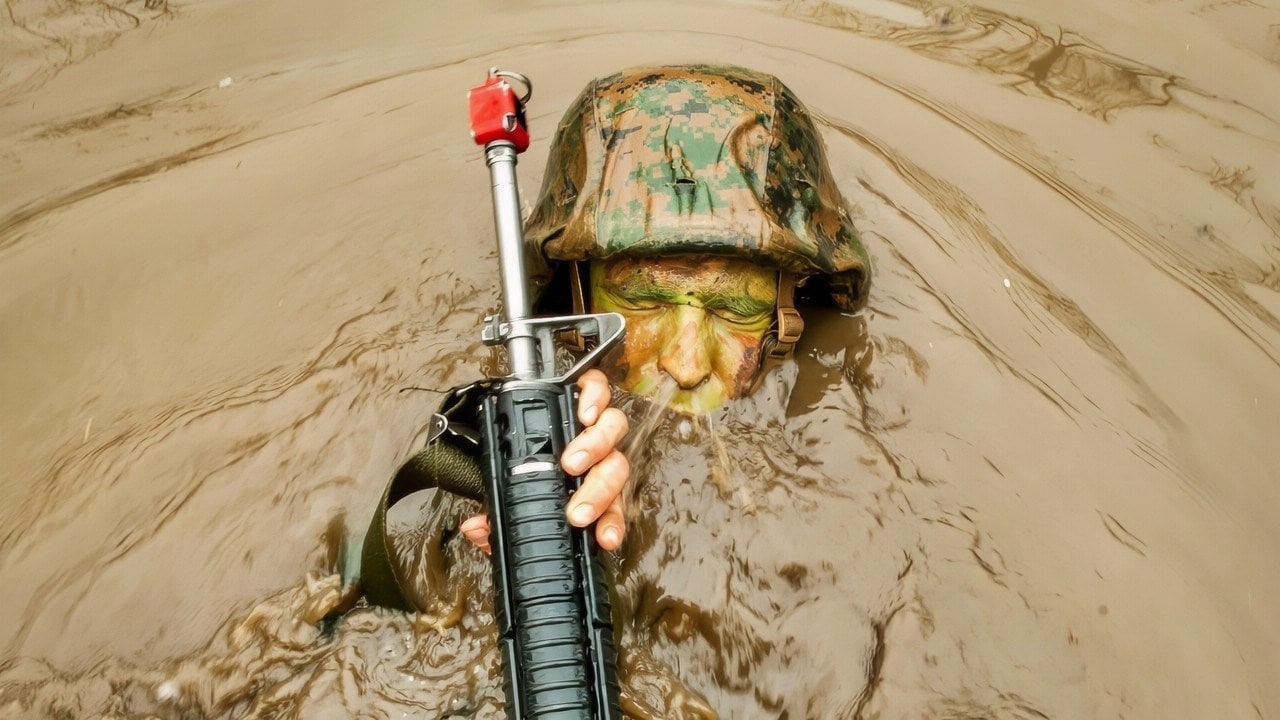
A candidates assigned to Delta Company, Officer Candidates Class-221, breaks the surface of the murky water of ‘The Quigley’ at Brown Field, Marine Corps Base Quantico, Va., on March 15, 2016. The mission of Officer Candidates School (OCS) is to “educate and train officer candidates in Marine Corps knowledge and skills within a controlled, challenging, and chaotic environment in order to evaluate and screen individuals for the leadership, moral, mental, and physical qualities required for commissioning as a Marine Corps officer.” (U.S. Marine Corps Photo by Cpl. Patrick H. Owens/Released)
With graduation rates typically below 50%, few people can claim to have what it takes to pass. Sgt. Maj. Hull’s graduation has now set a new standard for leadership in the Armed Forces.
Leading By Example
For Sergeant Major Hull, attending and completing the SLCe was not a simple matter of pride, but it was a means of proving himself to his soldiers. “I definitely felt a sense of accomplishment when I graduated,” said Hull.
“But more so than anything, at that moment, I felt like a leader that Soldiers could look up to. I could now tell Soldiers that I’ve been through it, and I did it at 43 years old. I wanted to set the example to my Soldiers that if I can do it, so can you.”
Hull’s achievement provides a new exemplar in the military. While many leaders can grow complacent, Hull dared to take one of the Army’s toughest courses to inspire his troops and lead by example.
At 43, Hull was determined to complete the course despite its high physical demands. “A lot of us sergeant majors have a lot of miles on us,” he said. “But we still have some gas in the tank. We still have what it takes to compete. Most of us are from the GWOT (Global War on Terrorism) generation, so we have that ‘I’m going to finish what I started’ mentality.”
This expression of leadership was meant to inspire younger troops and officers to do hard things and provide a good example of leadership for those who serve under you.
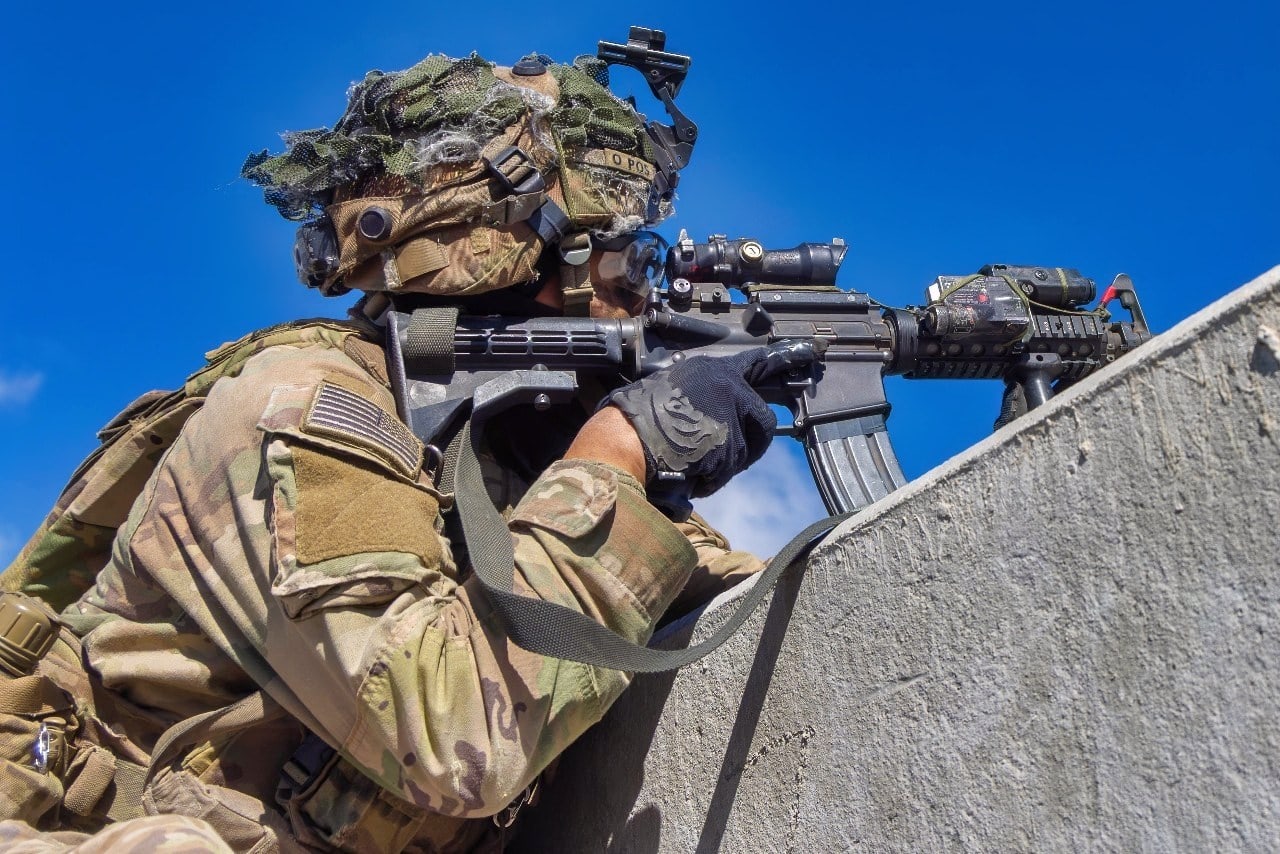
U.S. Army Soldier Pfc. Eric Rivera, assigned to Delta Troop, 1st Platoon, Multipurpose Company, 3rd Squadron, 4th Cavalry Regiment, 3rd Mobile Brigade, 25th Infantry Division, pulls security before a Ghost-X drone conducts reconnaissance. The mission was part of the Joint Pacific Multinational Readiness Center Rotation 26-01, which integrated U.S. forces, multinational partners, and joint capabilities to train tactics, techniques, and procedures required to dominate jungle and archipelagic terrain during large-scale combat operations. (U.S. Army photo by Pfc. Jose Nunez)
Providing a Positive Role Model for Younger Soldiers
Sergeant Major Hull is already becoming a strong example of leadership for younger officers. “We just graduated, and I’ve already started using him as an example,” said Cpt. Cam Nichols, a classmate of Hull’s from SLC. “This guy was told ‘no’ every step of the way. They didn’t want to send him because they thought he was too old, and they didn’t think his body could handle it. They didn’t want to send him because he was too high a rank, and they didn’t think he needed it. He was told ‘no’ over and over again, but he just refused to take ‘no’ for an answer. How could I not use this guy as an example?”
The primary goal of the Sapper Leader Course is to develop leaders who can integrate technical expertise with sound decision-making while fatigued, stressed, and operating in austere conditions.
From the first day, students are immersed in an environment that demands strict discipline, attention to detail, and teamwork.
Physical fitness standards are enforced relentlessly, and students are expected to arrive already prepared rather than train up during the course.
SCL is therefore intended to shape its occupants into effective leaders who can guide and lead others while also accomplishing the mission.
Sapper Leader Course: a More Rigorous Boot Camp
The course generally lasts around four weeks and is structured to increase in intensity as it progresses.
Early training focuses on foundational skills and continual assessment of a Soldier’s suitability for the course.
The trainee is then put through rigorous physical exercises, much like in boot camp, to evaluate whether they are fit for the course. This initial period is intended to identify any trainees who are not fit for the course or cannot handle the pressure, and transfer them out as soon as possible. Mistakes that might be minor elsewhere often carry serious consequences at SLC.
As the course progresses, students receive extensive instruction in combat engineering tasks, particularly demolitions and mobility operations.
They learn the theory and application of explosives and execute practical demolitions under strict safety requirements.
Breaching obstacles, reducing wire and fortifications, and supporting maneuver elements are core components of this training. Safety violations in this phase are treated seriously, as they directly reflect a leader’s ability to control risk and protect soldiers.
Mastery of these tasks is a core requirement for graduation. Students must demonstrate both technical competence and the ability to supervise others effectively.
Turning Soldiers into Leaders
The latter portion of the Sapper Leader Course emphasizes patrolling and field operations. Students spend extended periods in the field, planning and executing tactical missions such as patrols, ambushes, raids, and reconnaissance.
These operations are conducted with limited sleep, restricted food, and constant time pressure, replicating the conditions leaders might face in combat. Engineer tasks are integrated into maneuver missions, requiring students to think holistically about how to support the fight while maintaining momentum. Leadership roles rotate frequently, ensuring every student is evaluated while in charge.
After weeks of rigorous physical, technical, and doctrinal training, the students are assessed on their leadership abilities.
Those who have demonstrated strong skills in guiding others and strong accountability are highly evaluated.
Those who show weak leadership skills ultimately fail the course.
Those who do graduate have proven they meet some of the Army’s highest standards and are capable, competent leaders. With a graduation rate usually below 50%, not everyone is cut out for the course. However, those who do succeed are among the best and brightest in the Army.
About the Author: Isaac Seitz
Isaac Seitz, a Defense Columnist, graduated from Patrick Henry College’s Strategic Intelligence and National Security program. He has also studied Russian at Middlebury Language Schools and has worked as an intelligence Analyst in the private sector.