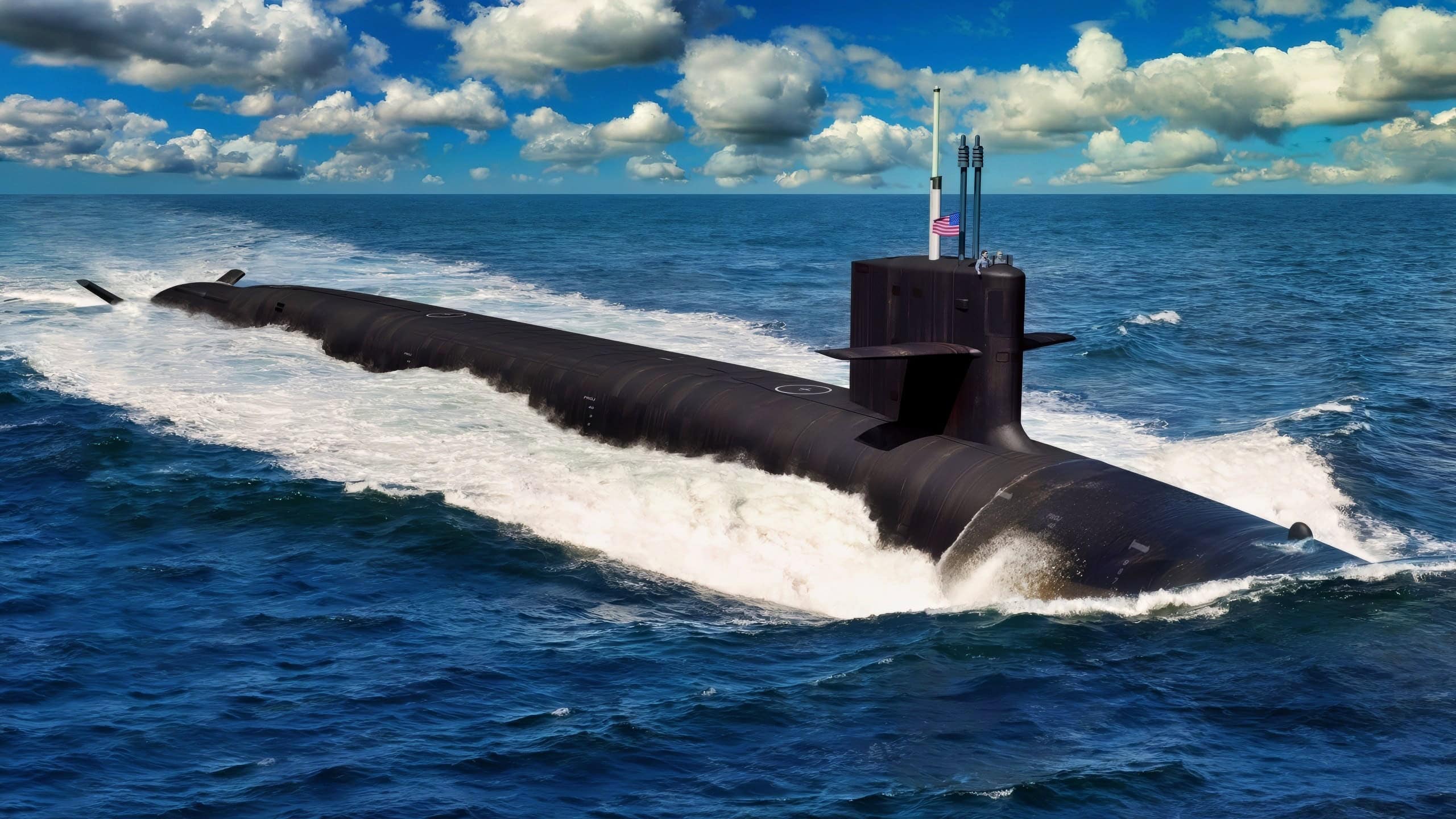
The U.S. Navy’s first Columbia-class ballistic missile submarine, USS District of Columbia (SSBN-826), is now projected for delivery by the end of 2028, according to statements made by Danny Deep, president of General Dynamics, during an April 29, 2026, earnings call. The submarine is being assembled at General Dynamics Electric Boat and represents the Pentagon’s top acquisition priority due to its role in maintaining the United States’ nuclear deterrent.
The comments follow delays in the program due to component production issues. The Navy still plans for the vessel’s first deterrent patrol to take place around 2030.
The Comeback Has Begun for the Columbia-Class After a Rough Start
According to Deep, General Dynamics has reported measurable progress in the assembly of SSBN-826 over the past year.
He also noted significant improvements in supplier performance and shipyard efficiency, indicating the program was operating more efficiently than before.
Those improvements, Deep said, have resulted in “positive momentum on Columbia,” adding that all the major modules required for the vessel were received by the end of last year.
“And so we’re in the process of integrating and assembling those in one of our larger yards, and expect to have a real key milestone achieved by the end of this year,” he said.
This is what many would consider a comeback of sorts after a string of negative headlines. The Columbia-class program was originally scheduled to deliver its lead submarine in 2027. That timeline slipped primarily due to delays in producing key components, including steam turbines, and the late delivery of the bow and stern sections.
Despite General Dynamics’ claim that the ship will be ready by 2028, the U.S. Navy’s official Fiscal Year 2027 budget submission still lists a March 2029 delivery date for SSBN-826. The second submarine, USS Wisconsin (SSBN-827), is currently projected for delivery in April 2030.
The upcoming Columbia-class submarines are intended to replace the aging Ohio-class ballistic missile submarines, which entered service in the 1980s. The Navy plans to procure 12 Columbia-class boats, each designed for a 42-year service life without mid-life nuclear refueling.
Industrial Base Constraints
Delays in the Columbia program are part of a much bigger problem: broad industrial base constraints that are limiting U.S. submarine and boat construction.
The Congressional Research Service noted in a 2025 report that a combination of supplier shortfalls and workforce shortages, along with component manufacturing delays and worldwide supply chain disruptions, has affected the schedules of both the Columbia-class and Virginia-class submarines.
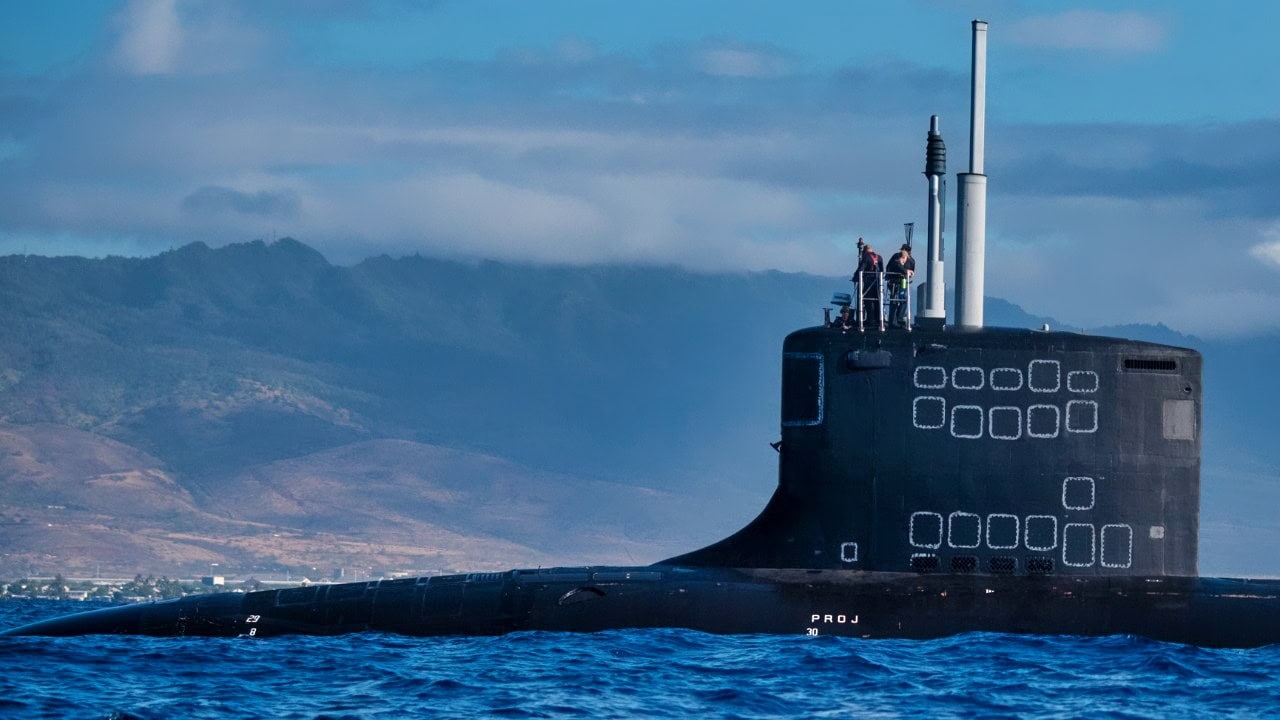
(July 9, 2018) – Multi-national Special Operations Forces (SOF) participate in a submarine insertion exercise with the fast-attack submarine USS Hawaii (SSN 776) and combat rubber raiding craft off the coast of Oahu, Hawaii during Rim of the Pacific (RIMPAC) exercise, July 9. Twenty-five nations, 46 ships and five submarines, about 200 aircraft, and 25,000 personnel are participating in RIMPAC from June 27 to Aug. 2 in and around the Hawaiian Islands and Southern California. The world’s largest international maritime exercise, RIMPAC provides a unique training opportunity while fostering and sustaining cooperative relationships among participants critical to ensuring the safety of sea lanes and security of the world’s oceans. RIMPAC 2018 is the 26th exercise in the series that began in 1971.` (U.S. Navy photo by Mass Communication Specialist 1st Class Daniel Hinton)
General Dynamics now says that some of those problems have been mitigated, with supplier performance beginning to steady and deliveries of critical parts becoming more predictable. Those improvements are allowing shipbuilders to complete receipt of all major modules for SSBN-826 and transition to full integration, in which the parts are pieced together to form the completed submarine.
The Navy has also taken some organizational steps to address production challenges. In April 2026, Vice Adm. Rob Gaucher assumed leadership of a dedicated submarine production office tasked with stabilizing schedules and accelerating delivery timelines. In April 2026, Gaucher described the on-time delivery of the Columbia-class as a “life or death imperative.”
Beyond those immediate fixes, the Navy is currently attempting to scale the submarine industrial base to meet its production targets.
Naval Sea Systems Command (NAVSEA) said in September 2024 that submarine construction capacity must “nearly double,” requiring an additional 3.5 to 4.5 million production labor hours every year to support planned output.
That same statement also noted the supplier base had contracted to roughly one-third of its size compared to 30 years ago, contributing to a reduction in surge capacity.
And, workforce shortages remain a central constraint across the industry. NAVSEA also said that the submarine enterprise needs to recruit and train approximately 140,000 workers over the next decade across skilled trades and engineering roles required for nuclear-powered submarine construction and sustainment.
The Schedule Cannot Slip
The Columbia-class needs to arrive on time. This is not just any shipbuilding program – it underpins the sea-based leg of the U.S. nuclear triad, which accounts for the majority of deployed warheads and is considered the most survivable component of the deterrent.
The Columbia-class is expected to replace the Ohio-class on a one-for-one basis, ensuring continuous at-sea deterrence as existing boats retire on their own fixed schedules. And that schedule leaves little margin for further disruption.
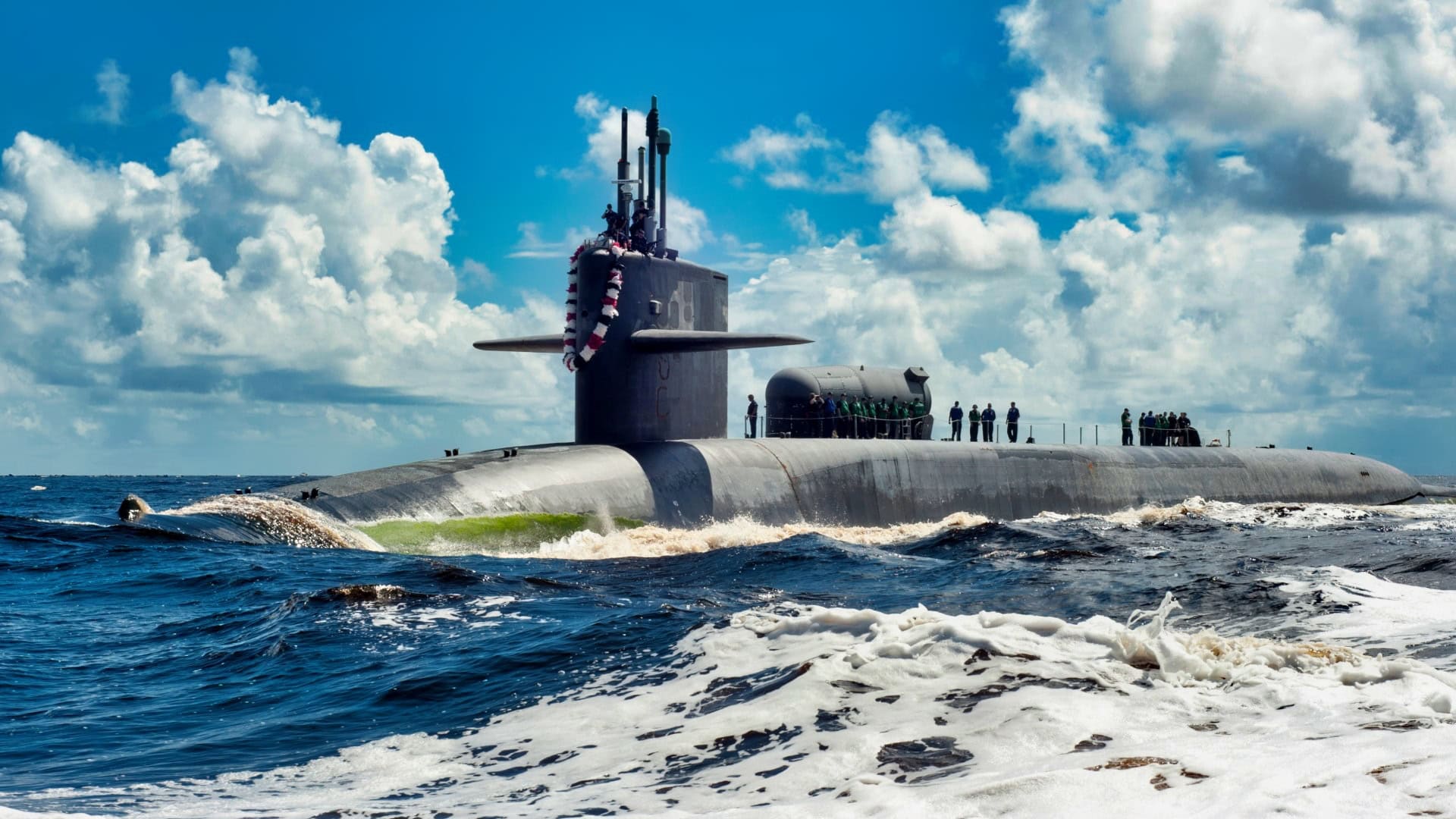
FERNANDINA BEACH, Fla. – The Ohio-class guided missile submarine USS Georgia (SSGN 729) transits the Saint Marys River July 15. Georgia returned to Kings Bay after spending more than a year forward deployed. (U.S. Navy photo by Mass Communication Specialist 1st Class(SW) James Kimber)
The Congressional Research Service has repeatedly warned that any additional delays could create a coverage gap in the number of available ballistic missile submarines, particularly in the early 2030s, as Ohio-class retirements begin to accelerate.
And at the same time, the strategic environment is becoming less forgiving. China and Russia are building their own capabilities, with Beijing in particular rapidly expanding its arsenal and Moscow continuing to modernize its delivery systems.
The Columbia timeline, then, is an important strategic requirement – and any further slippage risks undermining the Navy’s ability to maintain a continuous, credible deterrent at sea just as global nuclear competition is intensifying.
About the Author: Jack Buckby
Jack Buckby is a British researcher and analyst specializing in defense and national security, based in New York. His work focuses on military capability, procurement, and strategic competition, producing and editing analysis for policy and defense audiences. He brings extensive editorial experience, with a career output spanning over 1,000 articles at 19FortyFive and National Security Journal, and has previously authored books and papers on extremism and deradicalization.