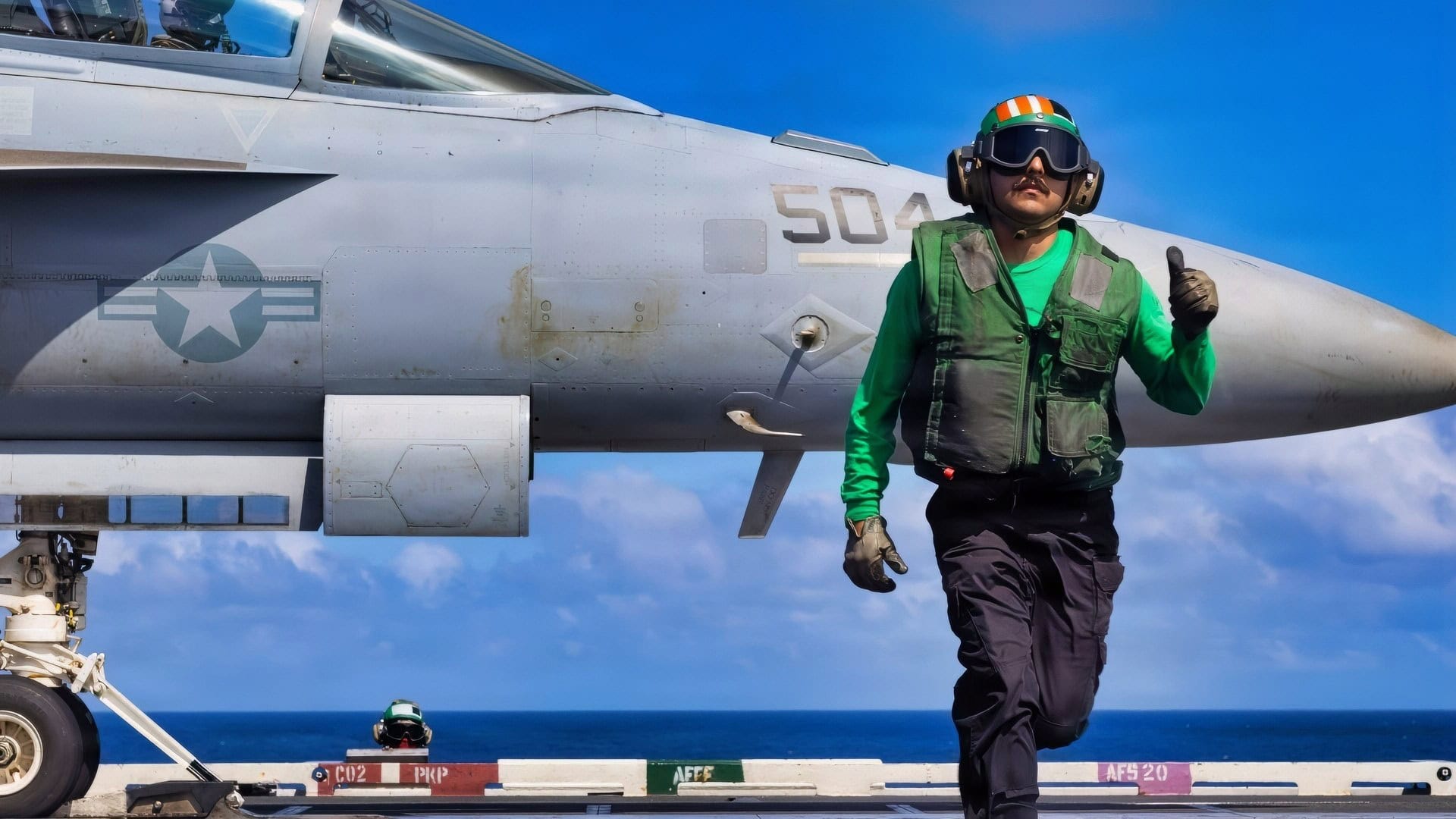
The U.S. Navy’s F/A-18 Super Hornet just received a comprehensive Block III upgrade that transforms the aging fighter into a networked battle-management quarterback for carrier air wings. With service life extended from 6,000 to 10,000 flight hours and a new Advanced Cockpit System, the Super Hornet is now positioned to bridge the gap until the 6th-generation F/A-XX arrives.
The F/A-18 Super Hornet Is Going to War Against Father Time
With an eye towards an uncertain timetable for the introduction of the US Navy’s (USN) 6th-generation F/A-XX fighter aircraft, the service has now completed an in-house Block III upgrade of the F/A-18 Super Hornet.
This upgrade – by all measures – is comprehensive, and it represents a major step in a process that reinforces carrier air wing readiness.
There are three main phases to this modernization program:
First is a Structural Service Life Extension for the aircraft. This enhancement of the aircraft’s structure – even with degradation from the stress on the airframe that is caused by landing – is projected to extend the Super Hornet’s service life from 6,000 to 10,000 flight hours.
This is a process of enhancing the aircraft’s life that is not without precedent. There are still a few specialists left who are experienced in this process, stemming from a program carried out in the 1990s between the Royal Canadian and Royal Australian Air Forces.
The two services worked cooperatively, with the Canadians performing a structural analysis and proposing an engineering rebuild of the aircraft’s front end. At the same time, the Australian Defence Science and Technical Organisation (DSTO, but today is the DSTG) performed a similar design and structural upgrade for the rear half of the fuselage and tail section.
The second phase is to provide a set of new on-board systems that will enhance the platform’s network connectivity and mission capabilities. This will allow the aircraft to operate more synergistically with the carrier’s E-2D Hawkeye and EA-18G electronic attack platforms.
Lastly, the aircraft will be receiving a new Advanced Cockpit System (ACS) and a full-scale avionics modernization. These electronics upgrades are designed to increase the Super Hornet’s current capability to sustain a high op-tempo while at sea and to enhance the aircraft’s survivability in highly contested environments.
Lessons Learned From the Iran Conflict
Just how important these several aspects of this upgrade would turn out to be became increasingly clear during last month’s Operation Epic Fury.
Super Hornets played a critical role while operating from the flight decks of both the USS Abraham Lincoln (CVN-72) and the USS Gerald R. Ford (CVN-78). Their support of the operation was integral to the US-Allied effort.
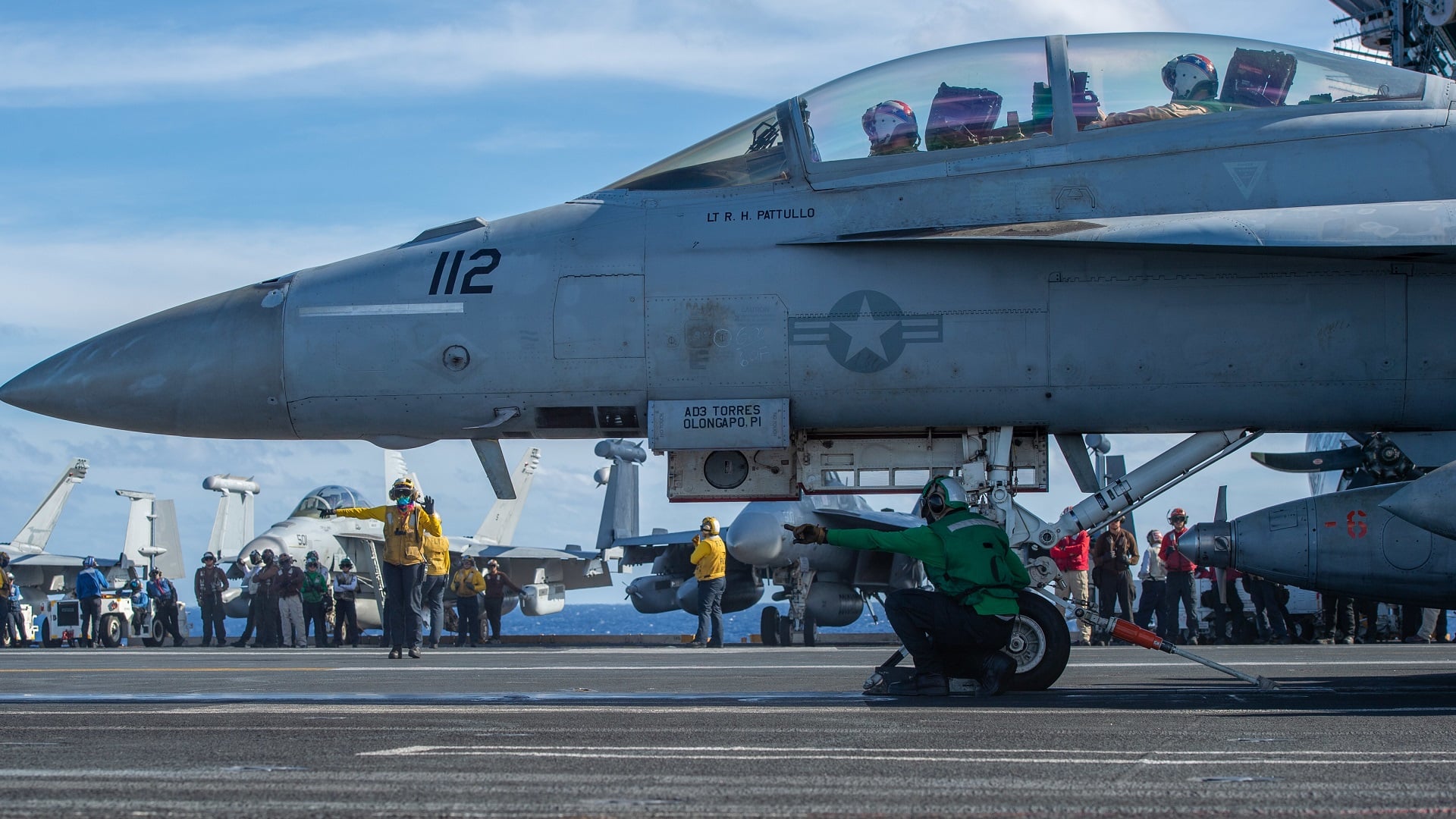
221227-N-DU622-1227 PHILIPPINE SEA (Dec. 27, 2022) An F/A-18F Super Hornet from the “Fighting Redcocks” of Strike Fighter Squadron (VFA) 22 prepares to launch from the flight deck of the aircraft carrier USS Nimitz (CVN 68). Nimitz is in 7th fleet conducting routine operations. 7th Fleet is the U.S. Navy’s largest forward-deployed numbered fleet, and routinely interacts and operates with 35 maritime nations in preserving a free and open Indo-Pacific region. (U.S. Navy photo by Mass Communication Specialist 2nd Class Justin McTaggart)
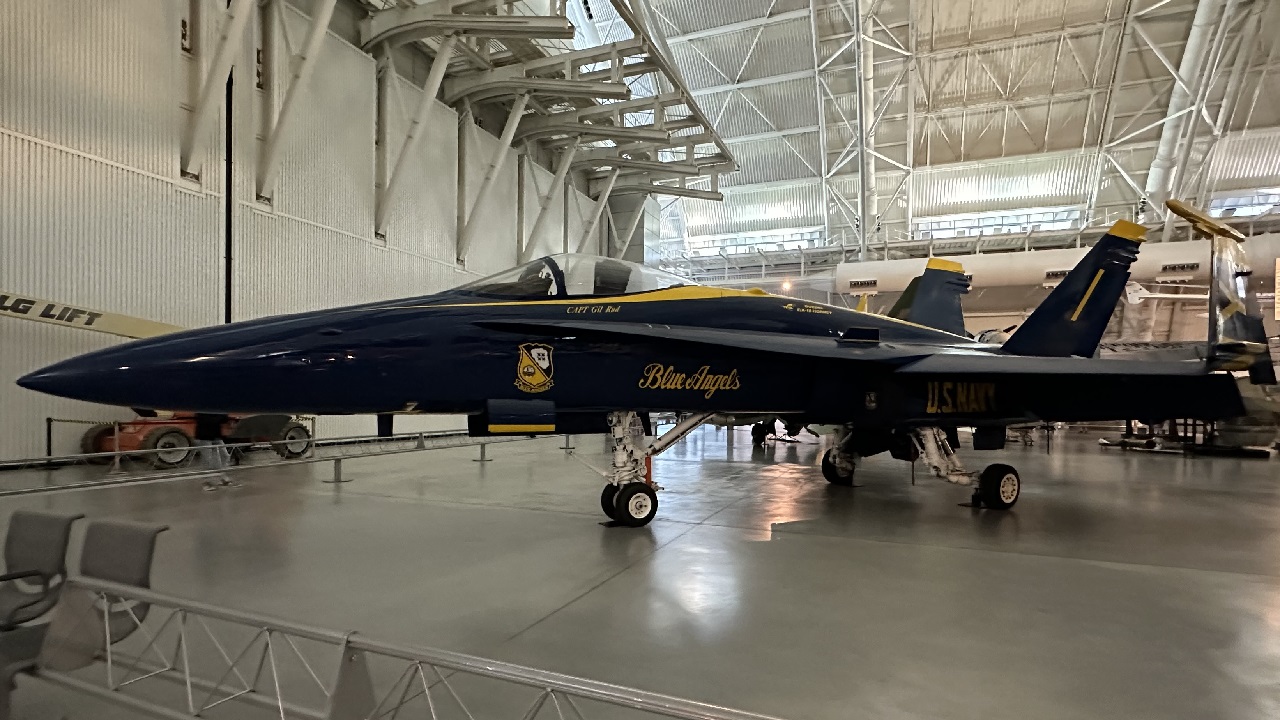
F/A-18 Hornet. Image taken at National Air and Space Museum on October 1, 2022. Image by 19FortyFive.
US Central Command (CENTCOM) released a fact sheet on 1 April tabulating the operations performed by all US aircraft in which the Super Hornet had a prominent role.
The combined tally by the beginning of this month was that more than 13,000 combat flights were performed by F/A-18E/F fighters, the EA-18G two-seat electronic warfare aircraft, the E-2D, plus tankers, bombers, and F-35 and F-22 stealth fighters.
CENTCOM data from the operation to date reveals that the Super Hornet is not just an important asset in a combined-arms operation. Its utility is not just due to its ability to carry a number of munitions on its store stations or its role in carrier operations.
Its even greater utility, as the campaigns the US and its allies are engaged in become more complex, lies in its ability to function as a networked strike fighter. It performs this function while also coordinating the activities of other carrier-launched platforms.
In dense, high-op-tempo environments, the F/A-18E/F also serves as a networked strike fighter within a larger air-sea/long-range strike kill chain. If it is supported by electronic attack assets, airborne C4ISR, refueling, and precision targeting platforms, it can thus operate in much the same manner as the USAF version of the F-35A.
In this manner, the F/A-18E/F has long been envisioned as an airborne battle management platform. But the new Block III upgrade now elevates that role to an entirely new level.
Naval Aviation’s Quarterback: F/A-18 Super Hornet Block III
Overall, the F/A-18 Block III Super Hornet is designed to operate in this “quarterback” role by leveraging the advanced networking and sensor fusion capabilities of its Block III avionics upgrade.
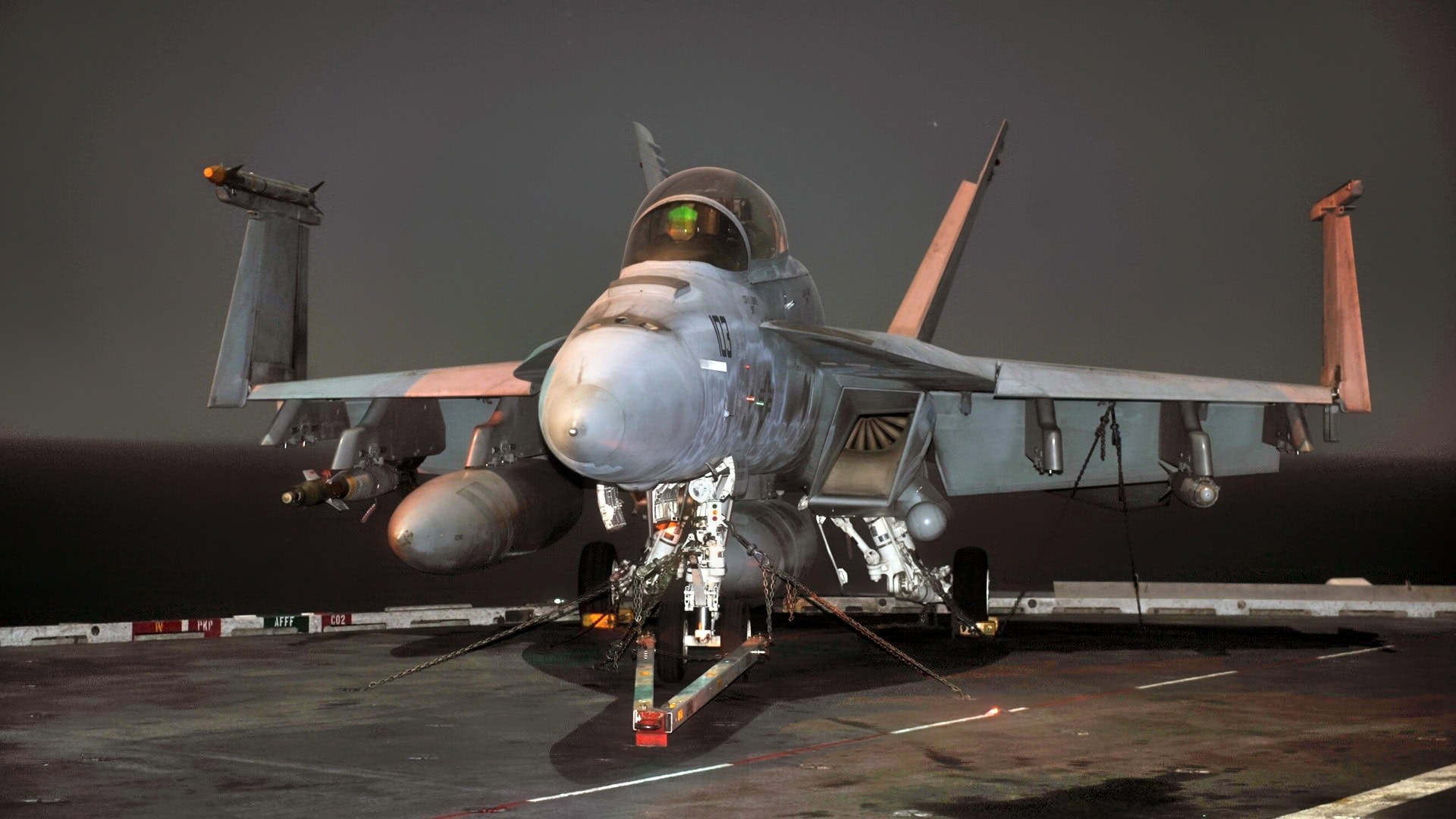
FA-18 Super Hornet. Image Credit: Creative Commons.
Once it has received all of the upgrade modules, it can then act as a central node in a modern network-centric warfare environment.
The aircraft’s designed role is to work in concert with the F-35, while the latter serves as a stealthy, penetrating sensor. It gathers data on enemy radar networks and target sets, then transmits it to the Block III Super Hornet. The latter aircraft then acts as a battle management hub.
In this mission profile, the F/A-18E/F receives data from both the F-35 and the E-2D Hawkeye to direct weapons targeting and manage air-to-air engagements, and also shares an air/tactical picture with other platforms.
“This is the function that the F/A-XX is supposed to perform in the future,” said one of the US Naval Aviation experts who spoke to 19FortyFive. “In some sense, the new Block III Super Hornet, when put into action, will be the dress rehearsal for the 6th-generation fighter.”
The key to this networking role for the Super Hornet is the new Tactical Targeting Network Technology (TTNT) protocol. This is a high-speed data link that permits Block III Super Hornets to exchange massive amounts of data in near-real time, enabling them to receive target data and engage targets without turning on their own radar.
But for naval aviation, which sits at the center of the Super Hornet upgrade, the element in all of this that makes this networking possible is the complete replacement of the previous-generation cockpit. The Block III modification removes the legacy display architecture and, in its place, introduces the new Advanced Cockpit System, built around a large-area display. It is supported by the new comprehensive avionics upgrades and enhanced networking capability. There is also an electrical modernization module that provides power for these new systems.
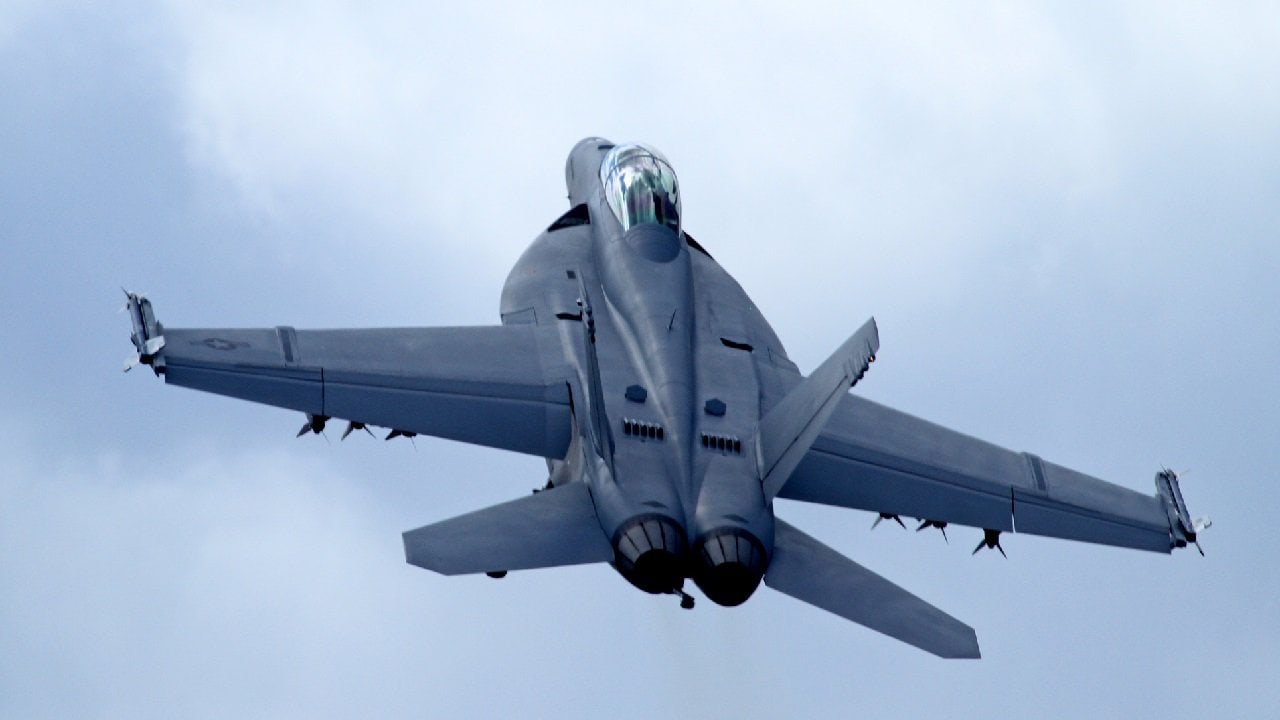
Block III F/A-18 Super Hornet.
As one of the program’s reviews reads, what this means for the pilot is “a cockpit designed less around isolated instruments and more around fused tactical information, faster interpretation of sensor data, and improved mission management.”
In the end, the Super Hornet becomes the main tactical platform for Naval Aviation for at least another decade – if not longer. “What the new upgrades demonstrate,” said one of the long-time and now retired Boeing engineering support team members, “is that the Super Hornet platform is another one of those previous-generation fighters that can be modernized into a 4+ configuration.”
“This is likely the world that the USN will have to accommodate itself to until such time as the 6th-generation fighters are introduced into service. If past practices are any indicator, the Super Hornet will be in this role much longer than most had originally anticipated.”
About the Author: Reuben F. Johnson
Reuben F. Johnson has thirty-six years of experience analyzing and reporting on foreign weapons systems, defense technologies, and international arms export policy. Johnson is the Director of Research at the Casimir Pulaski Foundation. He is also a survivor of the Russian invasion of Ukraine in February 2022. He worked for years in the American defense industry as a foreign technology analyst and later as a consultant for the U.S. Department of Defense, the Departments of the Navy and Air Force, and the governments of the United Kingdom and Australia. In 2022-2023, he won two awards in a row for his defense reporting. He holds a bachelor’s degree from DePauw University and a master’s degree from Miami University in Ohio, specializing in Soviet and Russian studies. He lives in Warsaw.