
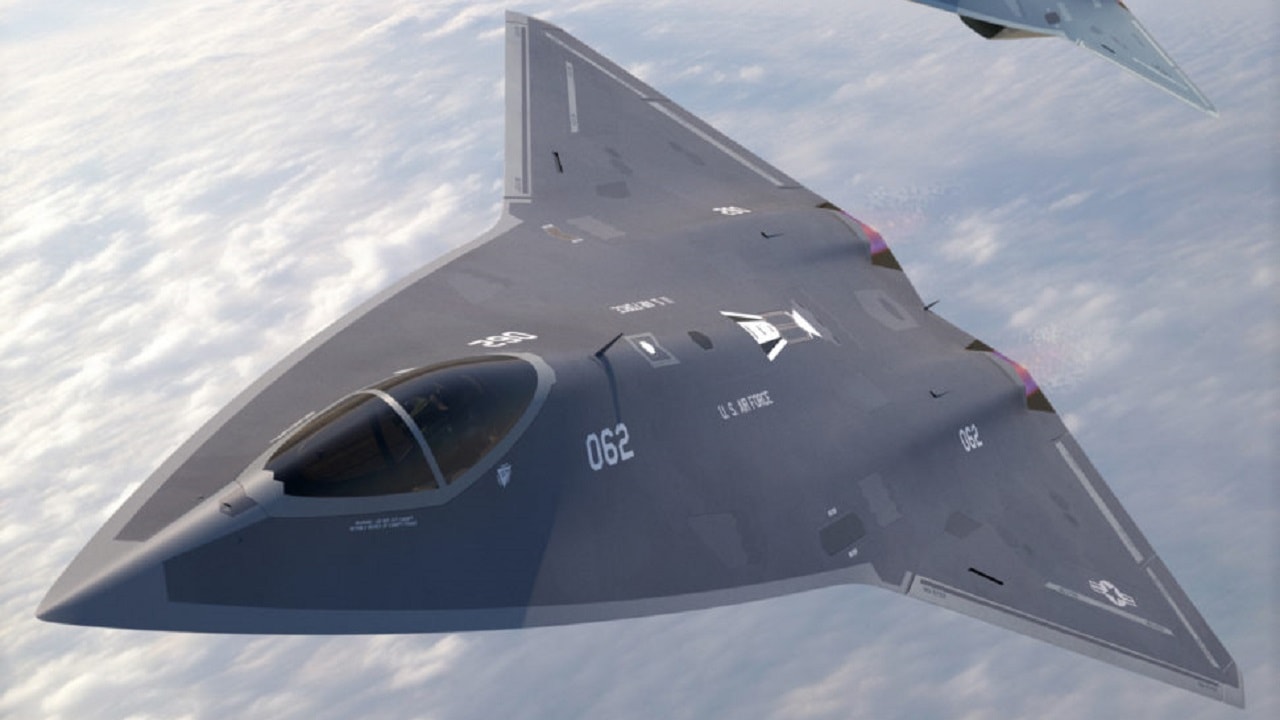
The U.S. military is already under pressure to build two sixth-generation fighters, with the Navy’s F/A-XX program perpetually underfunded in favor of the Air Force’s NGAD program and the associated F-47 fighter. Now, the U.S. Marine Corps is beginning early work on its own sixth-generation fighter concepts that will “look like” the Navy’s planned aircraft. But with the Marine Corps now looking for its own platform, Pentagon planners face a tough question: how many sixth-generation fighters can the United States actually afford?
The NGAD platform has been widely reported to cost roughly $300 million per aircraft by the time it’s ready – roughly three times the unit cost of an F-35, with the total program potentially exceeding $100 billion depending on procurement scale and its associated systems, including wingman drones.
And while the Navy has not yet determined the cost of a single F/A-XX fighter, it is generally expected to be in the hundreds of millions per aircraft.
What the Marines Are Asking For
The Marine Corps has begun early conceptual work on a sixth-generation fighter, with Lt. Gen. William Swan, the deputy commandant for aviation, stating this month that a future Marine fighter would look much like the Navy’s planned F/A-XX fighter. The concept was outlined in the Marine Corps’ 2026 Aviation plan, which outlined a platform entering service after 2041 to augment, but not replace, the F-35.
“I think right now, if you had to say, ‘Hey, what is it going to look like?’ I think it’ll look a lot more like what the Navy’s doing because we still fly off the carriers, we’re part of the Department of the Navy,” Swan said.
“We’re fast following with the Air Force, right? They got the F-47, the Navy’s looking at F/A-XX, and they’re just starting on that. So we are going to watch. We want an all Block 4 F-35 fleet, and that’s probably going to take another 10 years,” Swan said. “So we’re probably five to 10 years away from ultimately making that decision, and we’ll see what they have, see what the threat looks like,” Swan added.
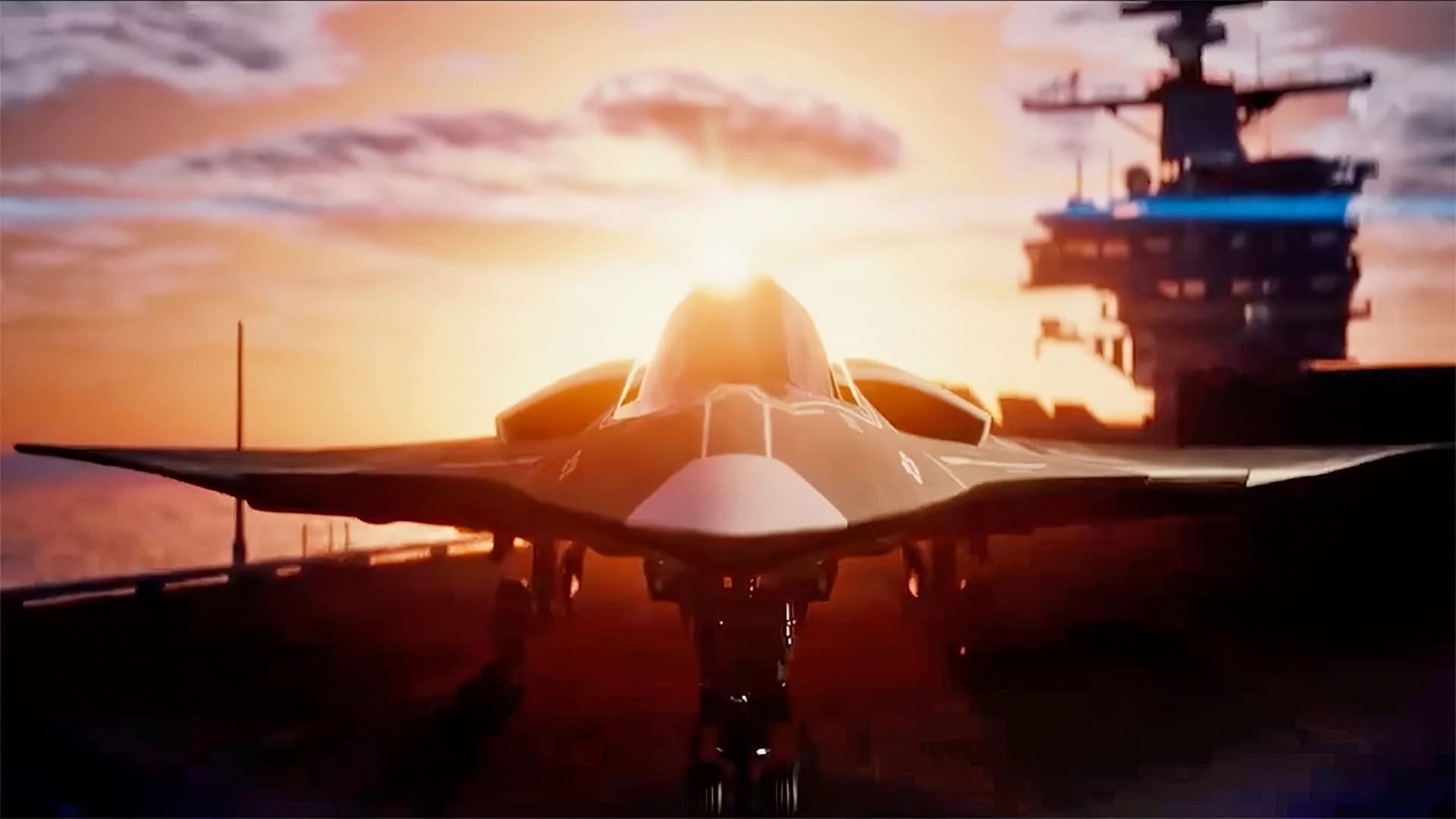
FA-XX Fighter Video Screenshot. Image Credit: NG Video Screencap.

FA-XX Fighter Screenshot from X
The F/A-XX Is Already In Trouble
While the Marines pursue their own plans, the Navy’s sixth-generation fighter has faced years of budgetary pressure, raising questions about its viability in the near term.
The program has not been canceled, but it has been repeatedly delayed and deprioritized as funding has shifted toward other priorities, including the Air Force’s NGAD program.
In its FY2025 budget planning, the Navy proposed delaying F/A-XX development to free up funding for near-term readiness and shipbuilding requirements.
That pressure continued into FY2026, when the Navy requested just $74 million for F/A-XX research and development, compared with roughly $3.4 billion requested for NGAD.

NGAD image. Image Credit: Creative Commons.
Chief of Naval Operations Adm. Daryl Caudle said in December 2025 that F/A-XX remains an “imperative” for the future of carrier aviation, even as the service has struggled to secure consistent funding.
Caudle has also increased pressure recently for a decision to be made about the Navy’s next-generation fighter to be made “quickly.”
But the program’s downselect decision, originally expected much earlier, has been pushed beyond this year due to budget constraints and ongoing internal debates over priorities. It means the F/A-XX is active and moving forward, but without the financial momentum seen in its Air Force counterpart.
Will $1.5 Trillion Be Enough?
Even with the proposed $1.5 trillion defense budget for FY2027 – one of the largest in Pentagon history – the funding picture remains uncertain.
The request includes roughly $1.1 trillion in discretionary defense spending, with an additional $350 billion expected to come through reconciliation, a mechanism that still requires congressional approval and remains a hot political topic.
At the same time, the Pentagon is balancing a number of high-cost modernization programs.
The B-21 Raider stealth bomber is now moving into production, the Sentinel intercontinental ballistic missile program is replacing the Minuteman III, and the Navy is attempting to expand shipbuilding capacity – all while maintaining current readiness levels.
There is broad pressure, and it is hitting every element of the U.S. military.
With NGAD consuming a growing share of advanced airpower funding and F/A-XX struggling to secure consistent investment, the addition of a Marine Corps fighter program further complicates this already elaborate equation.
Of course, the Marines won’t be starting from scratch – but their future capability will depend on a program that has yet to achieve stable funding itself.
That leaves the Marine Corps facing an uphill battle. The Pentagon is not short on ambition when it comes to sixth-generation power, but it is increasingly constrained in how many of those ambitions it can afford to fund and turn into operational fleets.
About the Author: Jack Buckby
Jack Buckby is a British researcher and analyst specializing in defense and national security, based in New York. His work focuses on military capability, procurement, and strategic competition, producing and editing analysis for policy and defense audiences. He brings extensive editorial experience, with a career output spanning over 1,000 articles at 19FortyFive and National Security Journal, and has previously authored books and papers on extremism and deradicalization.