
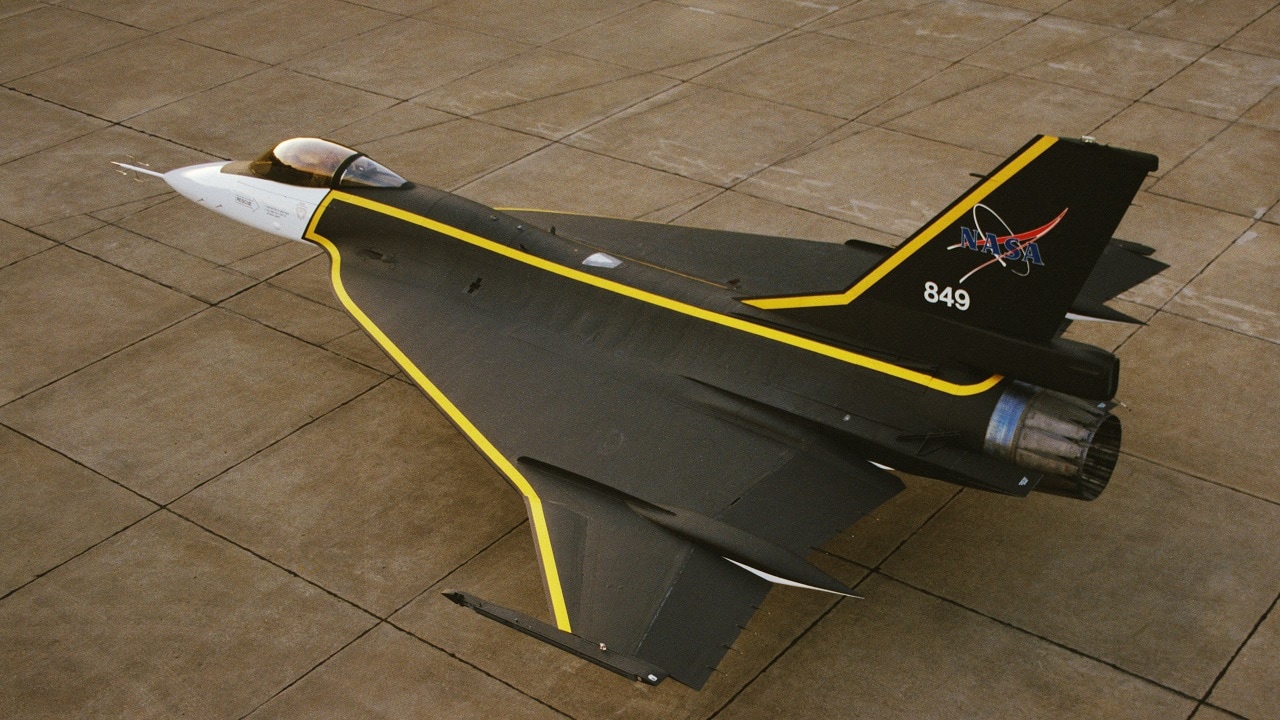
General Dynamics built the F-16XL fighter prototype with 27 hardpoints. The standard F-16 has 9 hardpoints. The F-16XL had 120% more wing area than the standard F-16. The F-16XL could carry twice the payload of a standard F-16. The F-16XL had a delta wing in a “cranked arrow” configuration. The F-16XL was built for the Enhanced Tactical Fighter (ETF) program. The F-16XL lost the ETF competition to the McDonnell Douglas F-15E Strike Eagle. The U.S. Air Force selected the F-15E for its 2-seat configuration, twin engines, larger radar, and greater redundancy. The F-16XL was transferred to NASA after the ETF loss.
The F-16XL Mystery
The F-16XL is one of the most unusual fighter variants ever built. Developed in the early 1980s by General Dynamics, the XL’s purpose was to transform the lightweight F-16 into a long-range strike aircraft.
Set against McDonnell Douglas’s F-15E Strike Eagle for the Enhanced Tactical Fighter (ETF) program, the XL lost the competition but became a major NASA research platform, in effect earning a sort of life after death. The XL is memorable because it wasn’t just an upgraded F-16 but an attempt to fundamentally reshape what the platform could do.
Creating the F-16XL
Towards the end of the Cold War, the Air Force wanted a deep-strike aircraft capable of penetrating Soviet air defenses.
The existing F-16 was insufficient for deep-strike missions, with a relatively short range and limited payload capacity compared to larger strike aircraft.
So General Dynamics set forth to create a fast, efficient, high-payload strike fighter while leveraging the existing F-16 infrastructure. Built for the ETF competition against the F-15E, the XL was designed to combine fighter agility with bomber-like payload and range.
Massive Design Changes
The most obvious difference between the original F-16 and the XL is the radically enlarged delta wing in a “cranked arrow” configuration. Offering 120 percent more wing area than the standard F-16, the XL’s delta wing increased lift, fuel capacity, and payload stations.
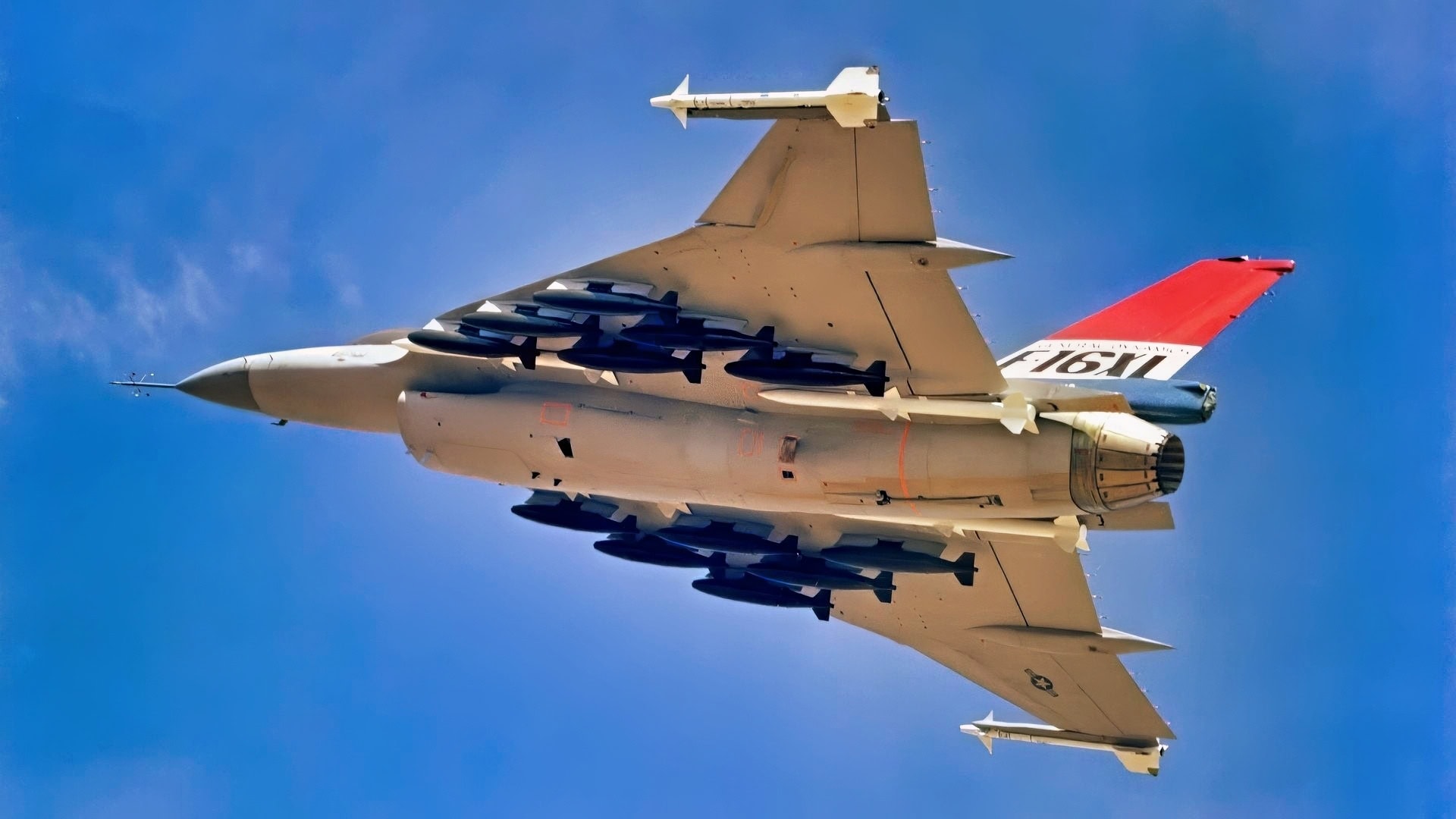
An air to air left underside view of an F-16XL aircraft. The aircraft is armed with two wing tip mounted AIM-9 Sidewinder and four fuselage mounted AIM-7 Sparrow missiles along with 12 500-pound bombs.
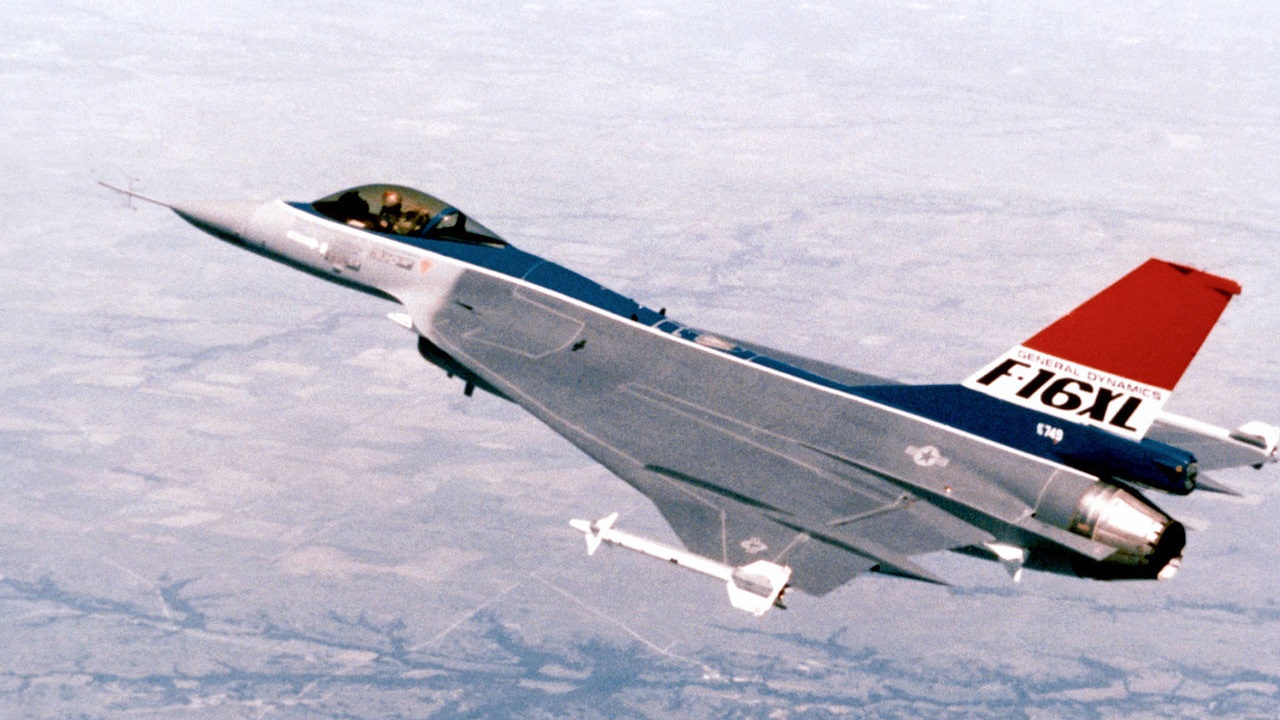
F-16XL. Image Credit: Creative Commons.
The new wing also improved supersonic efficiency, reducing drag at high speeds. The hardpoint count increased drastically; the standard F-16 held 9 hardpoints, whereas the XL held 27. In terms of payload, the XL could carry twice the payload of the standard F-16.
Basically, the wing changes transformed the aircraft from a nimble lightweight fighter into something closer to a high-speed missile truck.
Flight Characteristics
The XL retained much of the F-16’s renowned agility despite having a much larger wing. The supersonic performance of the new aircraft was excellent, highly efficient at transonic and supersonic speeds, and optimized for high-speed penetration missions.
The jet also featured a significantly increased combat radius with more internal fuel carried in the wing.
The aircraft was smoother at altitude as well, with strong stability during strike profiles. The trade-off was that the aircraft was heavier, with reduced close-in dogfight agility compared to the standard F-16, which was a nimble, agile knife fighter. But the XL wasn’t built for dogfighting performance; dogfighting was already falling out of fashion. Rather, the F-16XL was built for strike efficiency.
Tactical Concept
The XL’s imagined mission profile included deep interdiction, long-range strike, and precision attack. With the Cold War still active, the XL was built to penetrate Warsaw Pact airspace and attack infrastructure, command nodes, and air defenses.
The advantage of the XL’s massive delta wing was the ability to carry bombs, missiles, and fuel simultaneously—without the heavy dependence on support tankers. The operational logic was that one aircraft could carry heavy loads over long distances at high speeds.
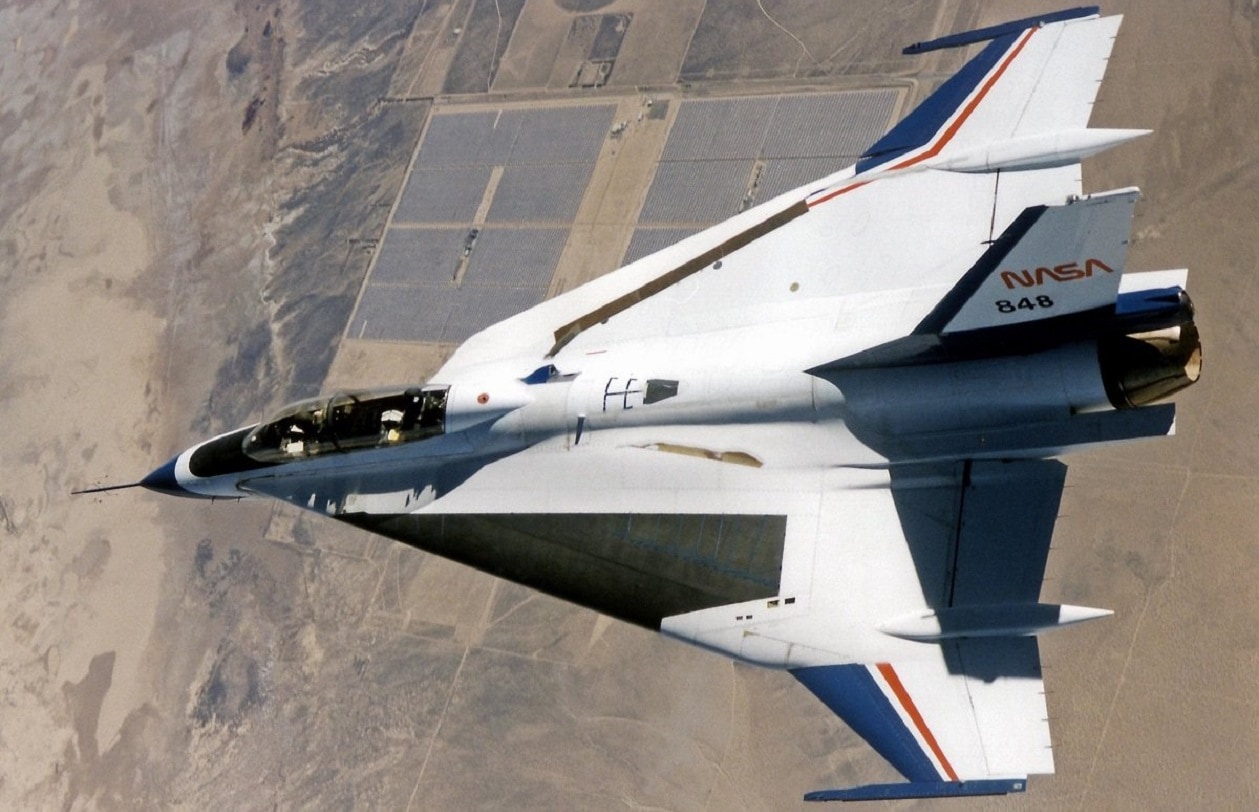
F-16XL. Image Credit: NASA.
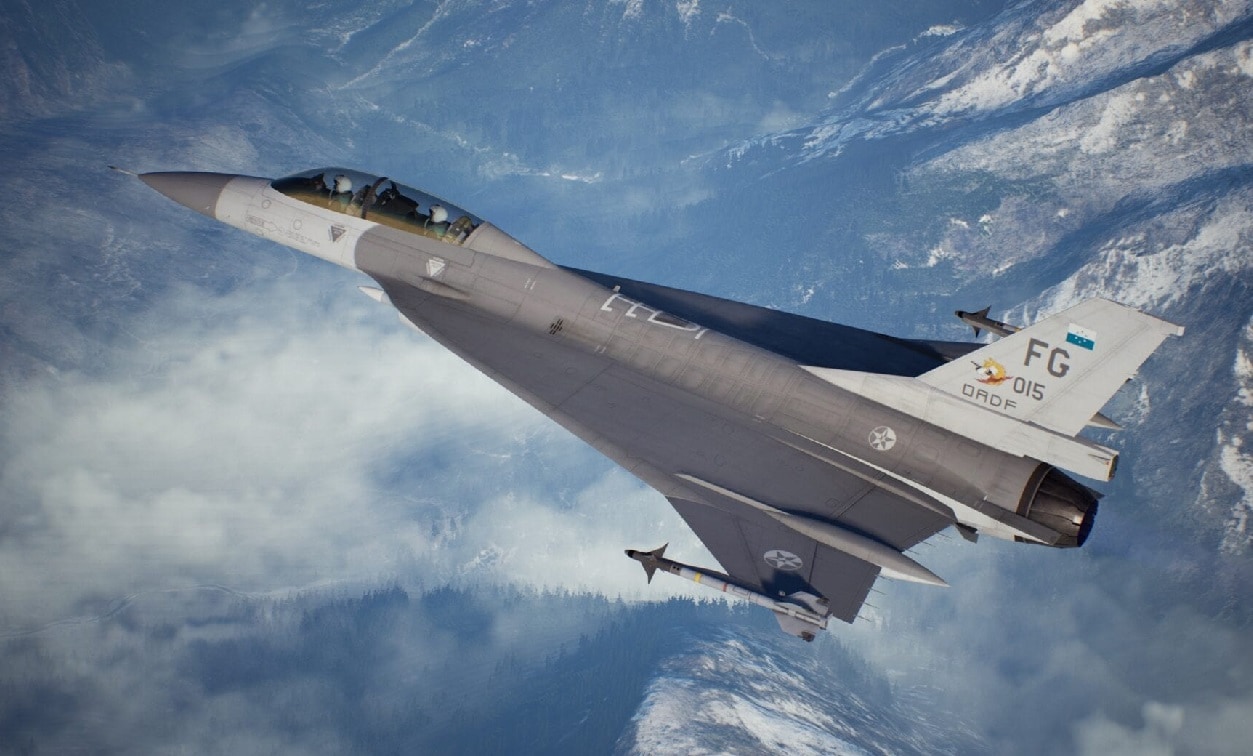
Image of what would have been the F-16XL, an artist rendering. Image Credit: Creative Commons.

Image: Creative Commons.
The XL was built accordingly, reflecting the late-Cold War emphasis on deep precision strikes against Soviet targets behind well-defended airspace.
Losing to the F-15E
The Air Force selected the F-15E, which is still in service today, as the ETF winner. Why? The two-seat configuration worked better for workload management on strike missions, which are complex and demanding.
The F-15E also featured twin engines and a larger radar, with more redundancies—all of which equated to an aircraft more likely to survive the perils of penetration strikes. The F-15E was also viewed as more likely to adapt coherently with future avionics and strike systems. And the F-16XL, meanwhile, was still derivative of a lightweight fighter, with one engine and one seat. The Air Force believed the F-15E was better suited for the mission at hand.
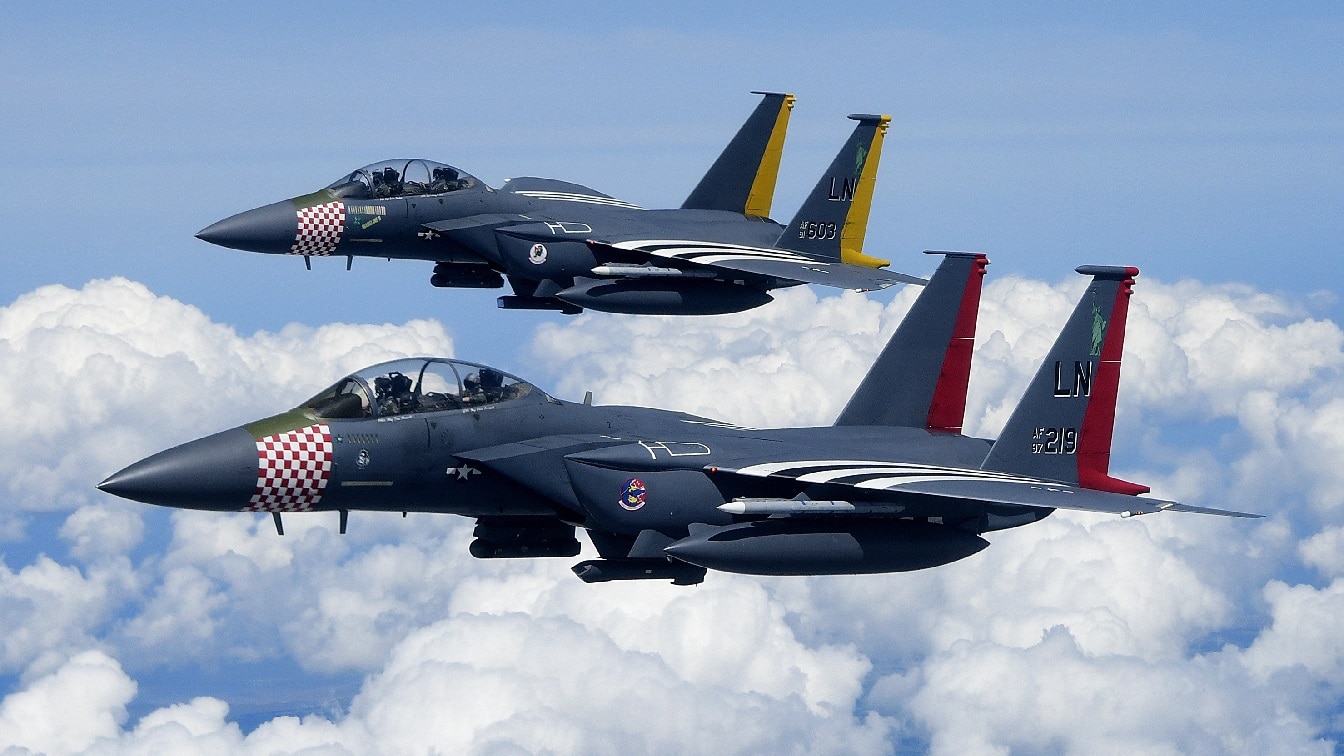
A pair of heritage painted F-15E Strike Eagles assigned to the 48th Fighter Wing conduct aerial maneuvers over southern England June 9, 2019. The Liberty Wing conducts routine training daily to ensure the 48th Fighter Wing brings unique air combat capabilities to the fight when called upon by United States Air Forces in Europe-Air Forces Africa. (U.S. Air Force photo/ Tech. Sgt. Matthew Plew)
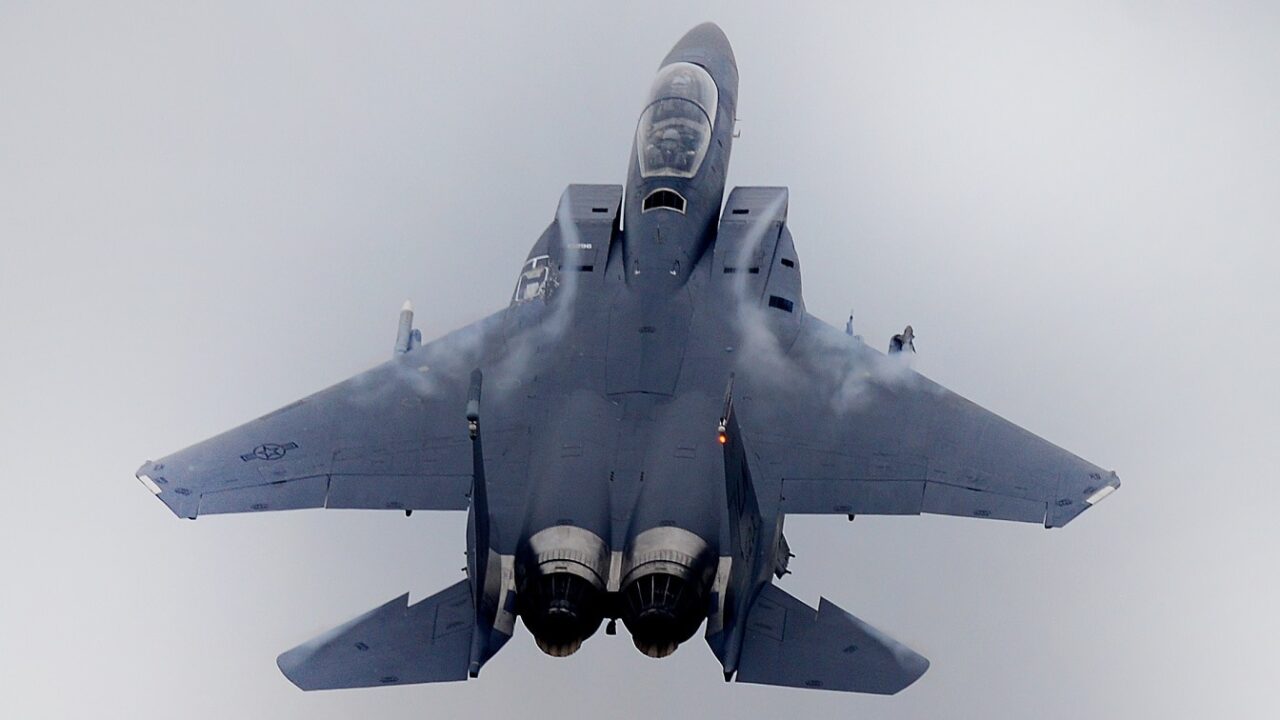
An F-15E Strike Eagle assigned to the 494th Fighter Squadron takes off for a training sortie at Royal Air Force Lakenheath, England, Oct. 26, 2018. The 494th trains regularly to ensure RAF Lakenheath brings unique air combat capabilities to the fight. (U.S. Air Force photo/ Tech. Sgt. Matthew Plew)
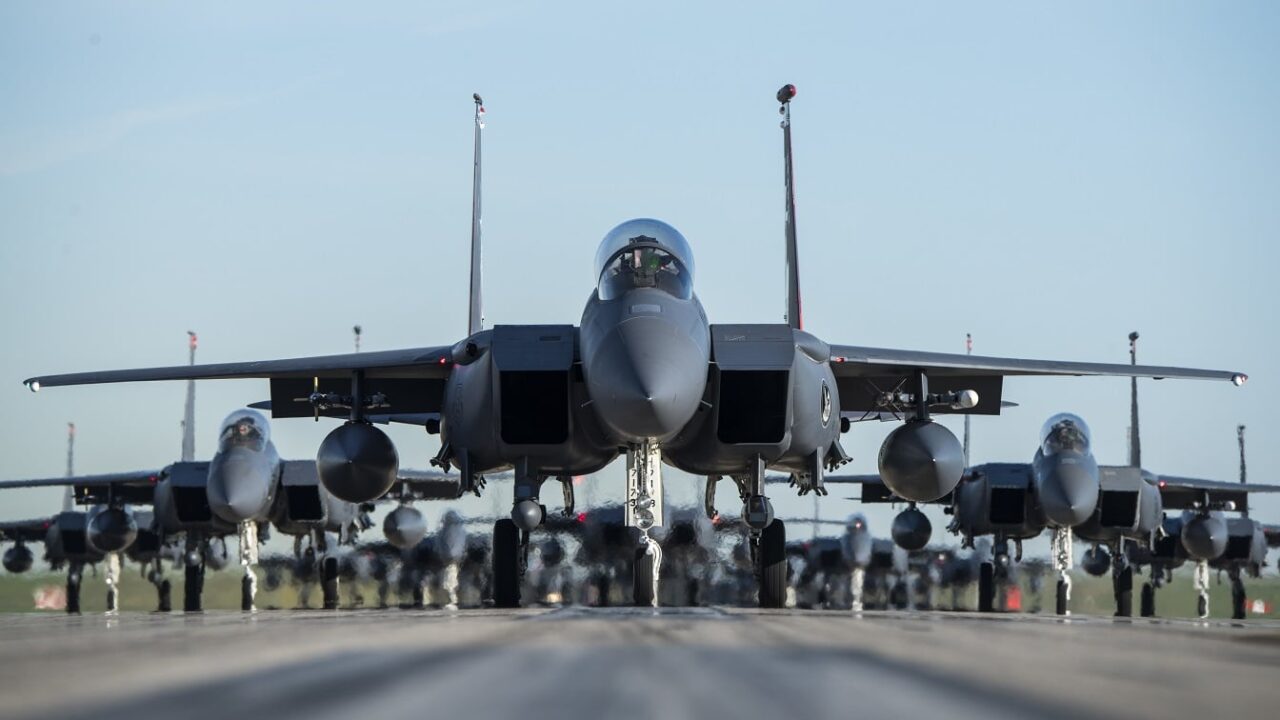
F-15E Strike Eagles taxi into formation June 12, 2019, at Mountain Home Air Force Base, Idaho. This was a rare opportunity to capture the Gunfighter family, including the 391st, 389th and 428th Fighter Squadrons, before a morning flight. (U.S. Air Force photo by Staff Sergeant Jeremy L. Mosier)
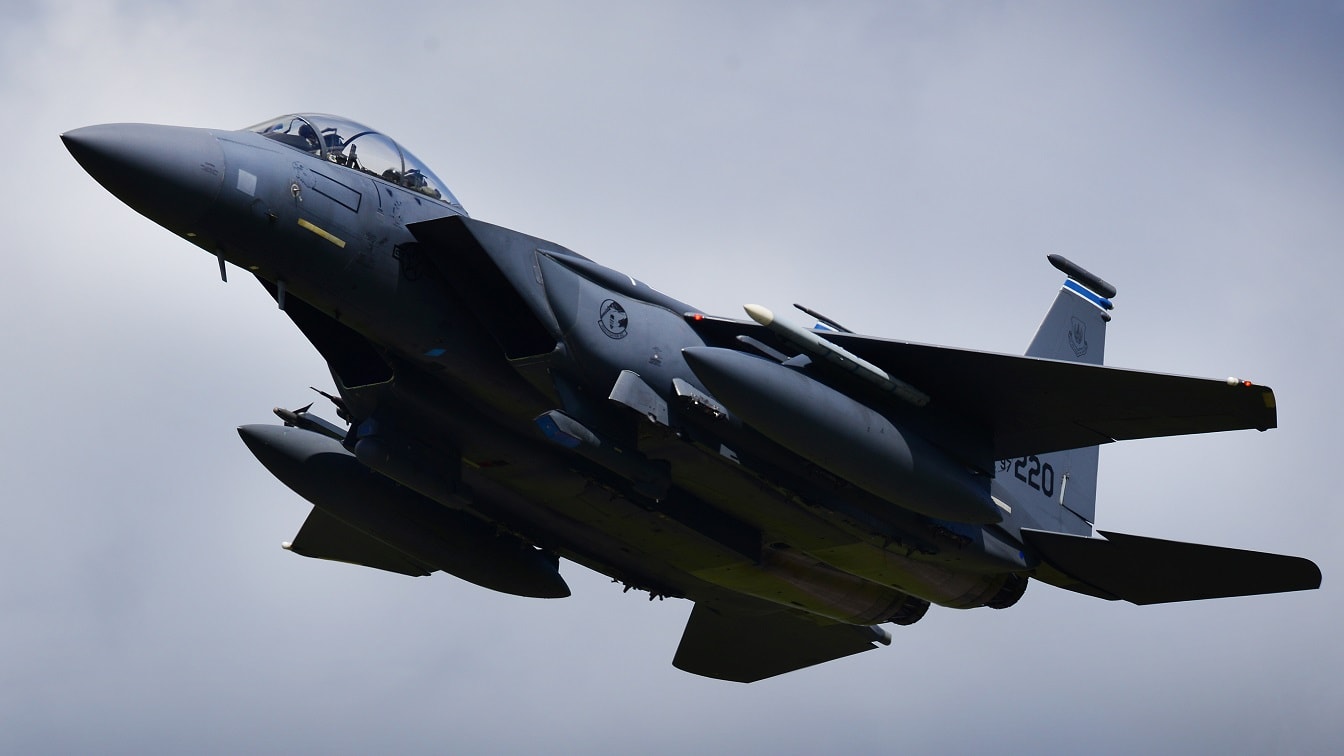
An F-15E Strike Eagle assigned to the 492nd Fighter Squadron flies over Royal Air Force Lakenheath, England, May 10. The 492nd trains regularly to ensure RAF Lakenheath brings unique air combat capabilities to the fight. (U.S. Air Force photo/ Tech. Sgt. Matthew Plew)
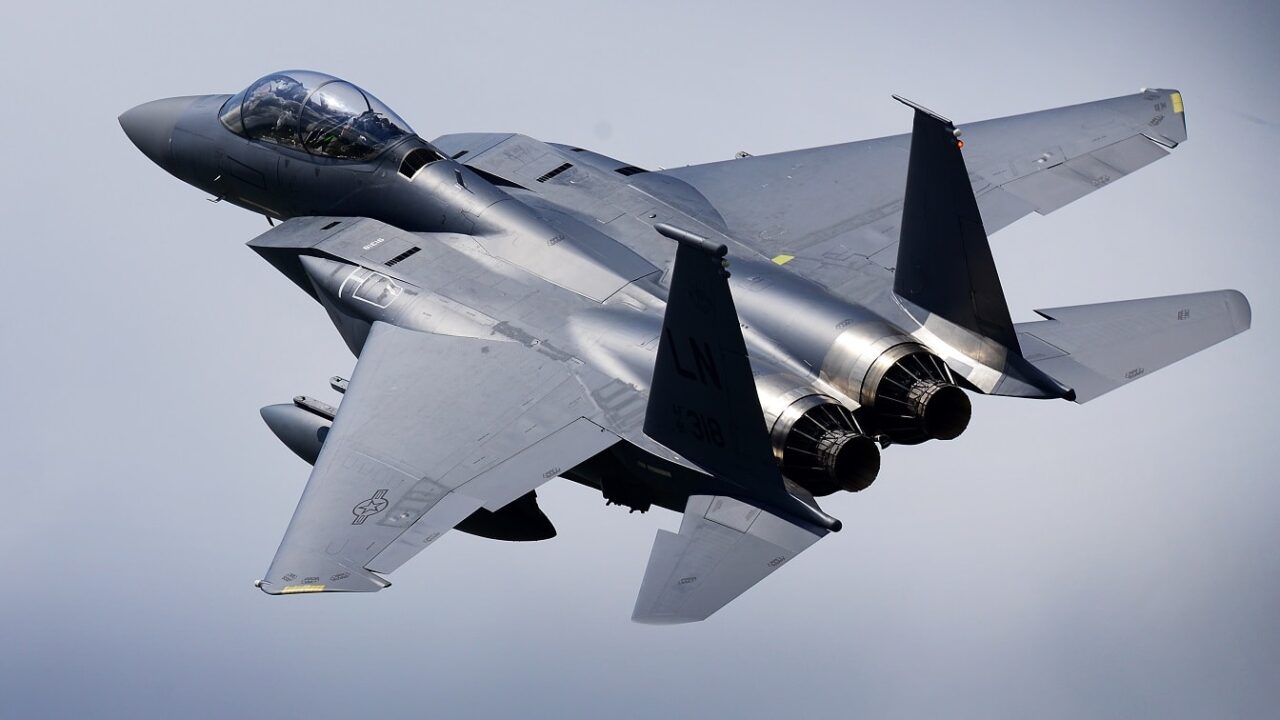
An F-15E Strike Eagle assigned to the 492nd Fighter Squadron flies over Royal Air Force Lakenheath, England, May 10. The 492nd trains regularly to ensure RAF Lakenheath brings unique air combat capabilities to the fight. (U.S. Air Force photo/ Tech. Sgt. Matthew Plew)
NASA Second Life
After the ETF failure, the F-16XL prototypes were transferred to NASA, where they were used for research on supersonic laminar flow and aerodynamic efficiency testing. The F-16XL was useful because it featured an unusual wing shape that was an ideal research platform.
Tested through the 1990s and 2000s, the F-16XL proved valuable in major high-speed aerodynamic experiments. Despite losing the ETF, the XL made its mark as a cutting-edge aerospace platform.
About the Author: Harrison Kass
Harrison Kass is a writer and attorney focused on national security, technology, and political culture. His work has appeared in City Journal, The Hill, Quillette, The Spectator, and The Cipher Brief. He holds a JD from the University of Oregon and a master’s in Global & Joint Program Studies from NYU. More at harrisonkass.com.