
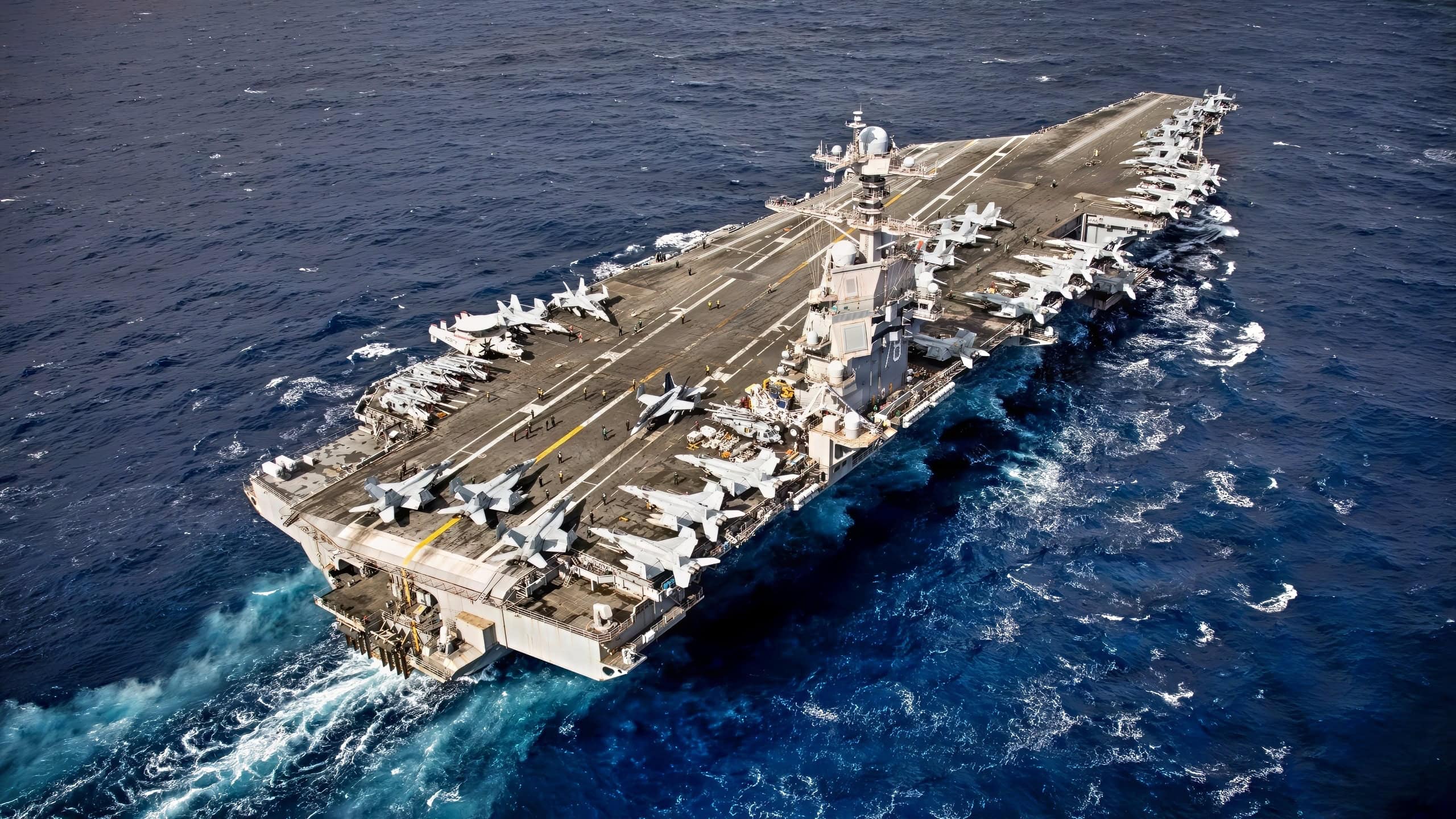
Summary and Key Points: The USS Gerald R. Ford is the most expensive warship ever built — a $13 billion supercarrier and the most advanced on earth. She is also, as of the spring of 2026, a cautionary tale: kept at war for eleven months across back-to-back campaigns against Venezuela and Iran, driven home by a fire that forced hundreds of sailors from their bunks and a sanitation system that failed by the hundreds. Now the Navy’s newest carrier faces a repair bill measured not in weeks but in seasons — and the deeper question of what her breakdown says about a carrier fleet stretched too thin for the wars it’s being asked to fight.
The USS Gerald R. Ford: When Will She Sail Again?
The USS Gerald R. Ford is the most expensive warship ever built, a $13 billion supercarrier and the lead ship of the world’s most advanced aircraft carrier class.
She is also, as of the late spring of 2026, a cautionary tale.
After a deployment that stretched past eleven months and dragged the ship from the Mediterranean to the Caribbean to the Red Sea, after a fire that drove hundreds of sailors from their bunks, and after months of maintenance deferred to keep her in the fight, the Navy’s newest carrier has limped home to Norfolk.
The hard question now facing the service is how long she will be out of action as she puts herself back together, and the honest answer is that it could be a very long time. This is what happens when a single ship is asked to fight two wars back-to-back with no break in between.
A Deployment That Would Not End
The Ford left Naval Station Norfolk on June 24, 2025, with roughly 4,500 sailors aboard, originally bound for a regularly scheduled deployment to the waters around Europe. That plan did not survive contact with events. Over the following months, the carrier was repeatedly retasked and her deployment extended again and again, shuttling between the Mediterranean, the Caribbean, and the Red Sea as one crisis after another pulled her in a new direction.
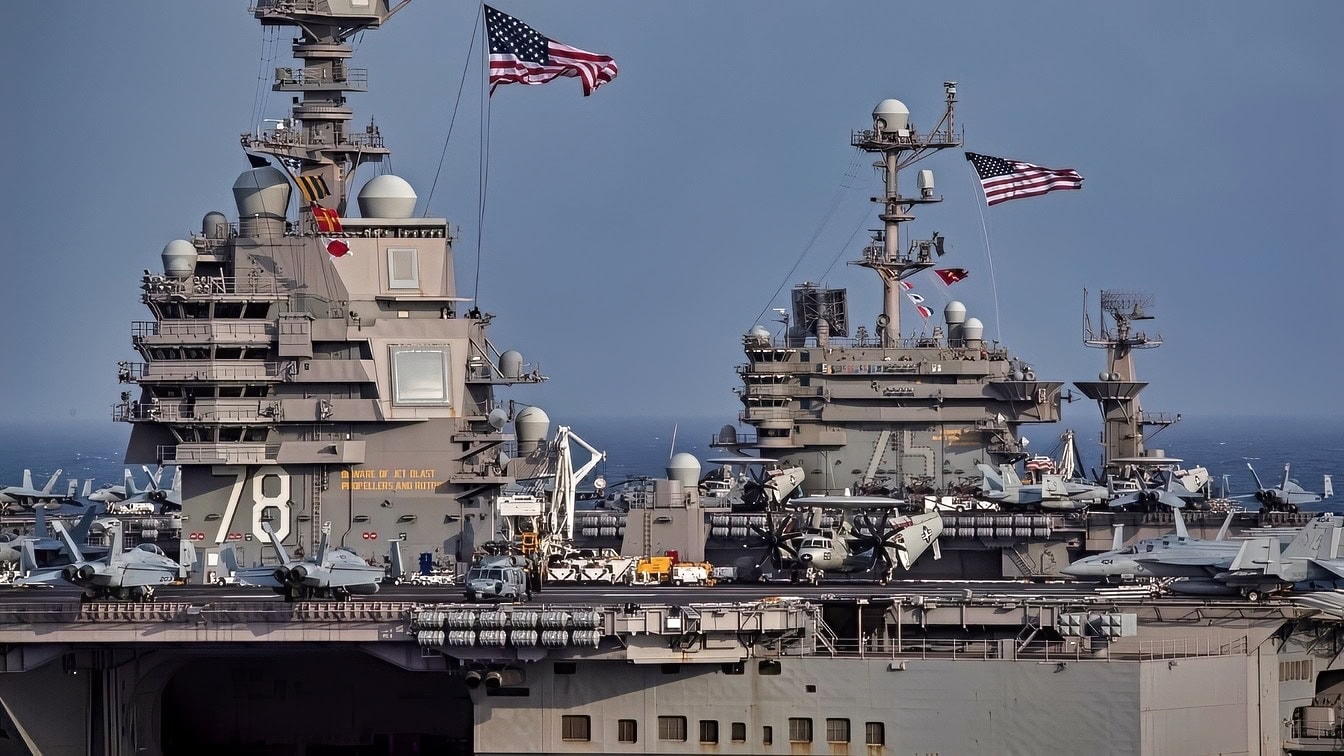
The Ford-class aircraft carrier USS Gerald R. Ford (CVN 78) and the Nimitz-class aircraft carrier USS Harry S. Truman (CVN 75) transit the Atlantic Ocean June 4, 2020, marking the first time a Ford-class and a Nimitz-class aircraft carrier have operated together underway. Ford is underway conducting integrated air wing operations, and the Harry S. Truman Carrier Strike Group remains at sea in the Atlantic as a certified carrier strike group force ready for tasking in order to protect the crew from the risks posed by COVID-19, following their successful Day 295. The Ford’s crew has been at sea since June. The Vietnam-era record is next. A laundry fire forced repairs in Crete and Croatia. Reports say 12-14 months to fix. In 1942, the Yorktown was repaired in 3 days after a 551-pound bomb plunged 50 feet into the ship. Admiral Nimitz demanded it. They delivered.
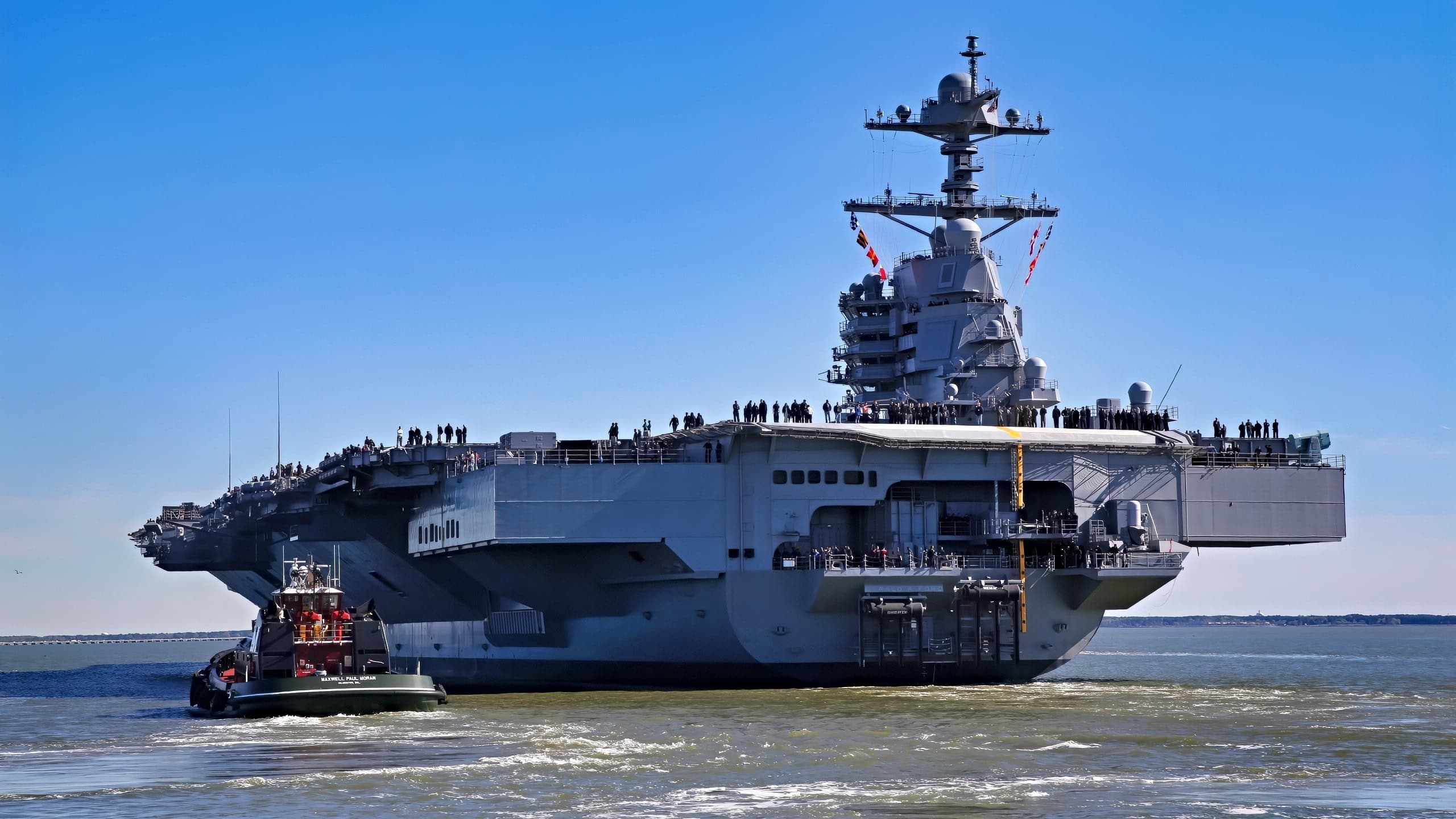
(April 8, 2017) – Pre-Commissioning Unit Gerald R. Ford (CVN 78) departs Huntington Ingalls Industries Newport News Shipbuilding for builder’s sea trials off the coast. The first- of-class ship—the first new U.S. aircraft carrier design in 40 years—will spend several days conducting builder’s sea trials, a comprehensive test of many of the ship’s key systems and technologies. (U.S. Navy photo by Mass Communication Specialist 2nd Class Ryan Litzenberger)
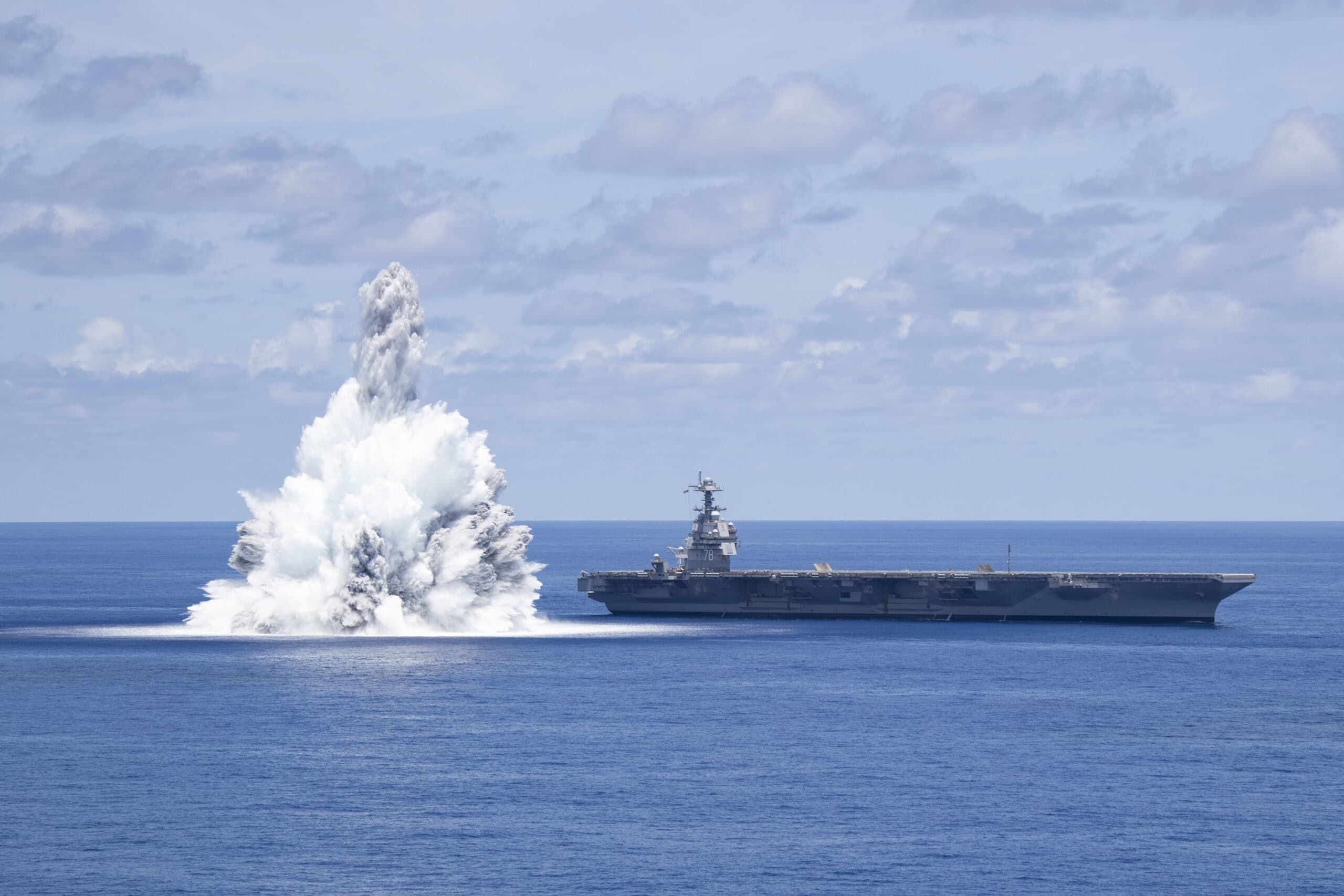
USS Gerald R. Ford (CVN 78) successfully completed the second of three scheduled explosive events for Full Ship Shock Trials (FSST), July 16, 2021. The shock trials are designed to demonstrate the ship’s ability to withstand the effects of nearby underwater explosion and retain required capability. Ford is underway in the Atlantic Ocean for required inspections and preparation for the third FSST explosive event, scheduled for later this month. (U.S. Navy Photo by Mass Communications Specialist Seaman Jackson Adkins)
By the time she turned for home, the Ford had been at sea for more than 320 days, a length of deployment the Navy’s own top officer acknowledged was extraordinary. The Chief of Naval Operations, Admiral Daryl Caudle, confirmed the carrier would notch a record-breaking deployment of around eleven months, the longest by an American carrier since the Vietnam War.
When the ship finally pulled back into Norfolk in mid-May, Caudle described the crew as heroes returning from an extraordinary tour. The language was celebratory. The reality underneath it was a warship and a crew that had been pushed to the edge of what either could sustain.
Two Wars, No Rest
The reason the deployment stretched so long is that the Ford was fed into two separate conflicts with no meaningful pause between them. She played a central role in the January 3 strike on Venezuela, and rather than rotating home or standing down afterward, she was sent on to the Gulf without a break. From there, she entered the Red Sea in early March to join Operation Epic Fury, the joint American-Israeli campaign against Iran, continuing her role in that operation as one of the carriers holding the line against Tehran.
That back-to-back tasking is the heart of the problem, and the warning signs were raised before it happened. Reporting on the decision-making indicated that the Chief of Naval Operations had cautioned that pushing the deployment past seven months would disrupt sailors’ lives and break the maintenance schedules that shipyards plan around, expecting the carrier back on time, and that the White House overruled that warning.
Whatever the precise internal deliberations, the outcome is not in dispute. A carrier built to deploy for about seven months was kept forward for roughly eleven, doing the work of a fleet that no longer has enough carriers to go around, and the bill for that decision is now coming due in the repair yards of Virginia.
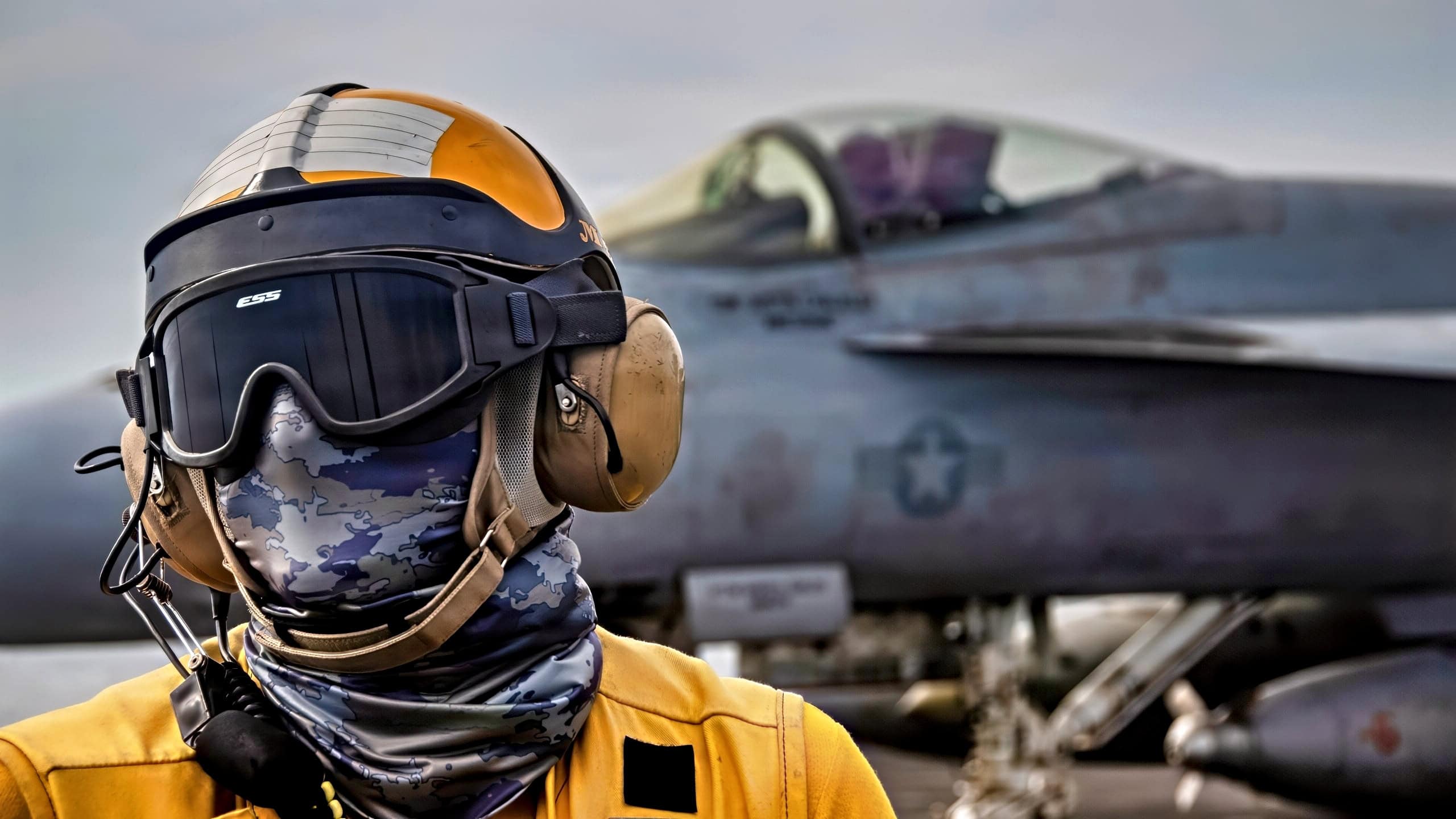
A U.S. Sailor prepares to launch a F/A-18E Super Hornet, attached to the “Kestrels” of Strike Fighter Squadron (VFA) 137, from the flight deck of Nimitz-class aircraft carrier USS Nimitz (CVN 68) in the Pacific Ocean, April 8, 2026. Nimitz is deployed as part of Southern Seas 2026 which seeks to enhance capability, improve interoperability, and strengthen maritime partnerships with countries throughout the region through joint, multinational and interagency exchanges and cooperation. (U.S. Navy photo by Mass Communication Specialist 2nd Class Jaron Wills)
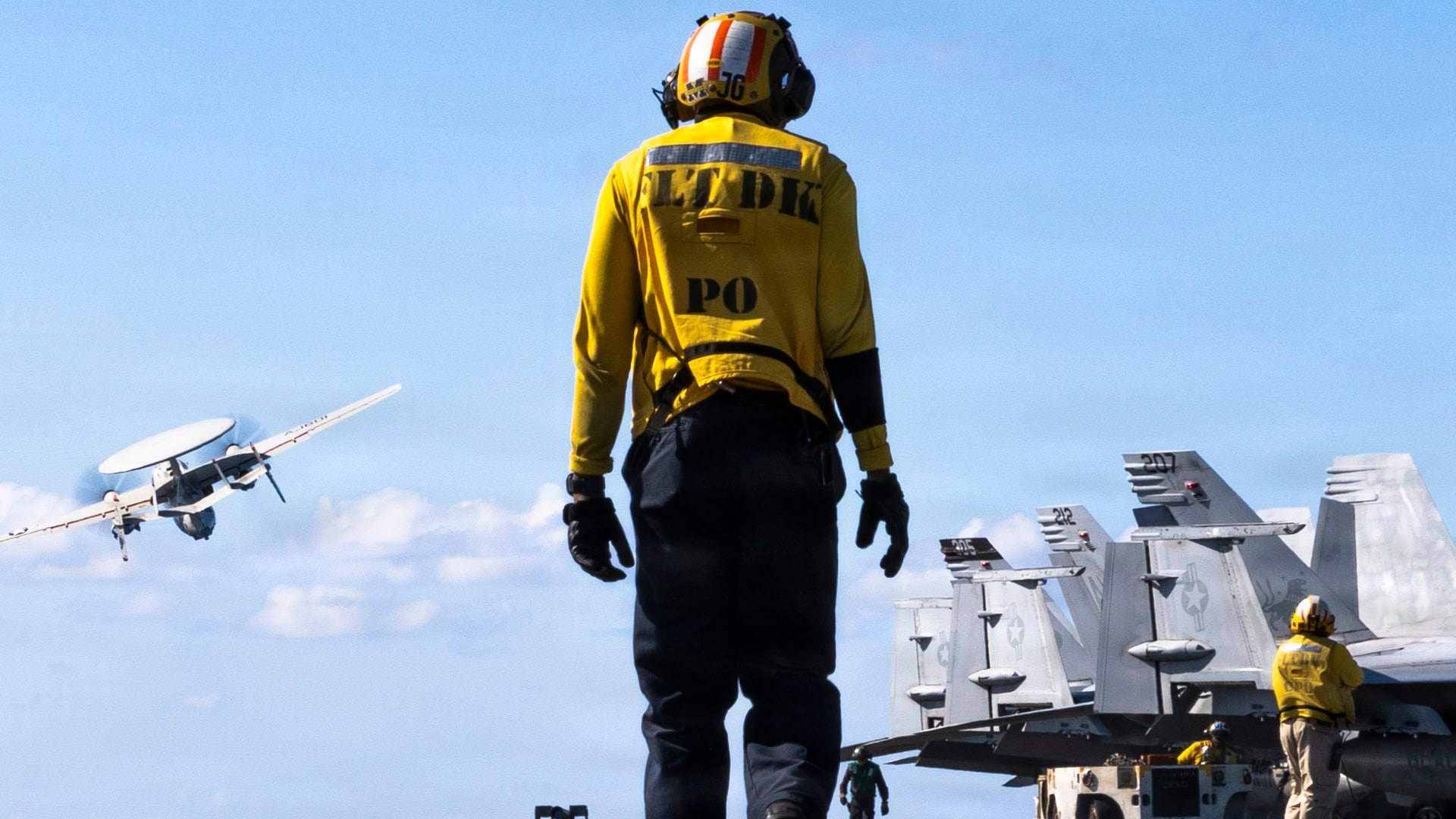
Aviation Boatswain’s Mate (Aircraft Handling) 2nd Class Jawan George transits the flight deck of the world’s largest aircraft carrier, USS Gerald R. Ford (CVN 78), while underway in the Mediterranean Sea, April 6, 2026. Gerald R. Ford is on a scheduled deployment in the U.S. 6th Fleet area of operations to support the warfighting effectiveness, lethality and readiness of U.S. Naval Forces Europe-Africa, and defend U.S., Allied and partner interests in the region. (U.S. Navy photo by Mass Communication Specialist Seaman Paige Brown)
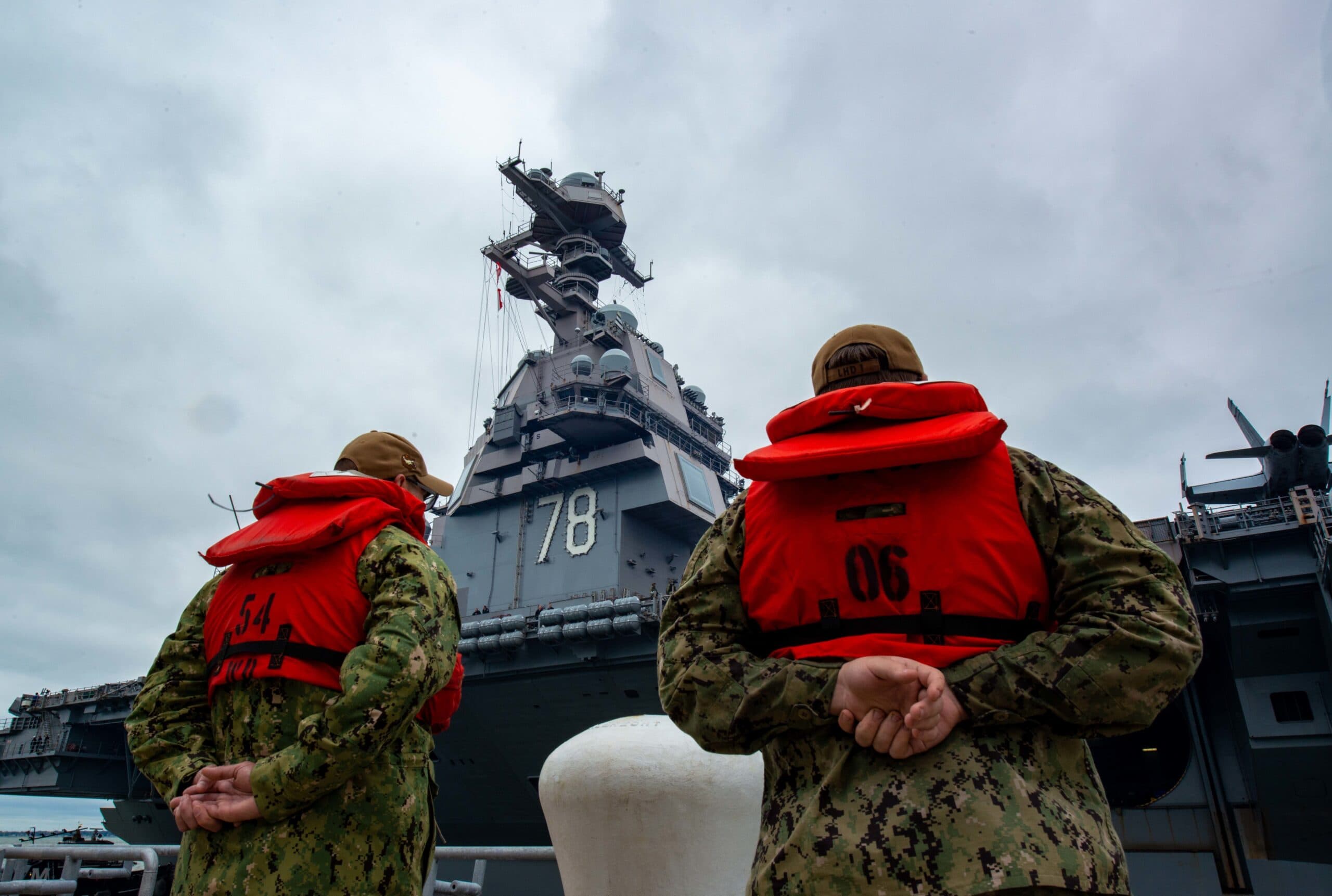
NORFOLK, Va. (Oct. 4, 2022) Sailors stand at parade rest as the first-in-class, Ford class aircraft carrier USS Gerald R. Ford (CVN 78) departs Naval Station Norfolk on its first deployment, Oct. 4, 2022. The Gerald R. Ford Carrier Strike Group (GRFCSG) is deployed in the Atlantic Ocean, conducting training and operations alongside NATO Allies and partners to enhance integration for future operations and demonstrate the U.S. Navy’s commitment to a peaceful, stable and conflict-free Atlantic region. (U.S. Navy photo by Mass Communication Specialist 3rd Class Thomas Boatright)
The Fire That Exposed The Strain
The breaking point came on March 12, 2026, when a fire broke out in the ship’s aft laundry facility while she was operating in the Red Sea. The Navy has said the fire was not combat-related, and reporting attributed it to a lint fire, but the damage-control response it required was severe. The blaze displaced sailors across the carrier and disrupted operations throughout the ship, requiring hours of firefighting. More than 200 sailors were treated for smoke inhalation, and two for lacerations, with one sailor medically evacuated from the vessel.
The human toll of the fire revealed just how thin the margins had become. More than 600 service members lost access to their bunks after berthing compartments were fouled by the flames, and sailors reportedly slept on floors and tables in the aftermath. The Navy’s response underscored the improvisation the situation demanded. Officials pulled roughly 1,000 mattresses off the future USS John F. Kennedy, a carrier still under construction at Newport News, and shipped them overseas, along with nearly 2,000 sweatsuits and other clothing for crew members who could no longer wash their own. The ship that was supposed to represent the cutting edge of American naval power was reduced to borrowing bedding from an unfinished sister ship.
The Ford pulled into Naval Support Activity Souda Bay on the Greek island of Crete on March 23 for assessment and repairs, including the rehabilitation of seven berthing compartments. After a brief stop and a port visit to Split, Croatia, for maintenance and crew rest, she returned to operations and reentered the Red Sea about two weeks later, going right back into the fight rather than heading home. Even a fire serious enough to hospitalize hundreds was treated as a pit stop.
The Plumbing Of A $13 Billion Warship
The fire was the dramatic failure, but the quieter ones tell the same story. Before the blaze, the Ford had been struggling with its sanitation systems, and local reporting in Norfolk documented more than 600 toilets that had malfunctioned aboard the carrier during the deployment. For a ship carrying close to 5,000 people, failing toilets are not a punchline.
They are a readiness problem, a morale problem, and a sign of systems being run continuously without the downtime they were designed to receive.
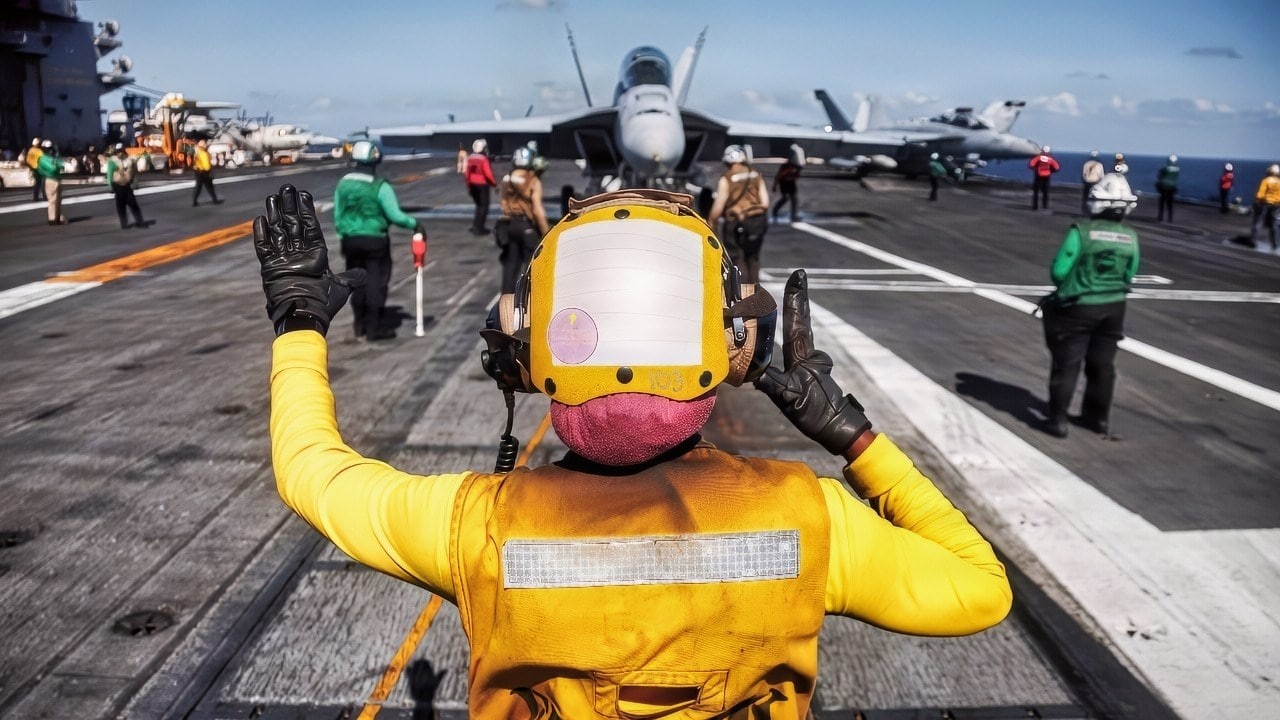
A U.S. Sailor signals to an F/A-18F Super Hornet aircraft, attached to Strike Fighter Squadron 213, on the flight deck of the world’s largest aircraft carrier, Ford-class aircraft carrier USS Gerald R. Ford (CVN 78), while underway in the Caribbean Sea, Feb. 5, 2026. U.S. military forces are deployed to the Caribbean in support of the U.S. Southern Command mission, Department of War-directed operations, and the president’s priorities to disrupt illicit drug trafficking and protect the homeland. (U.S. Navy photo)
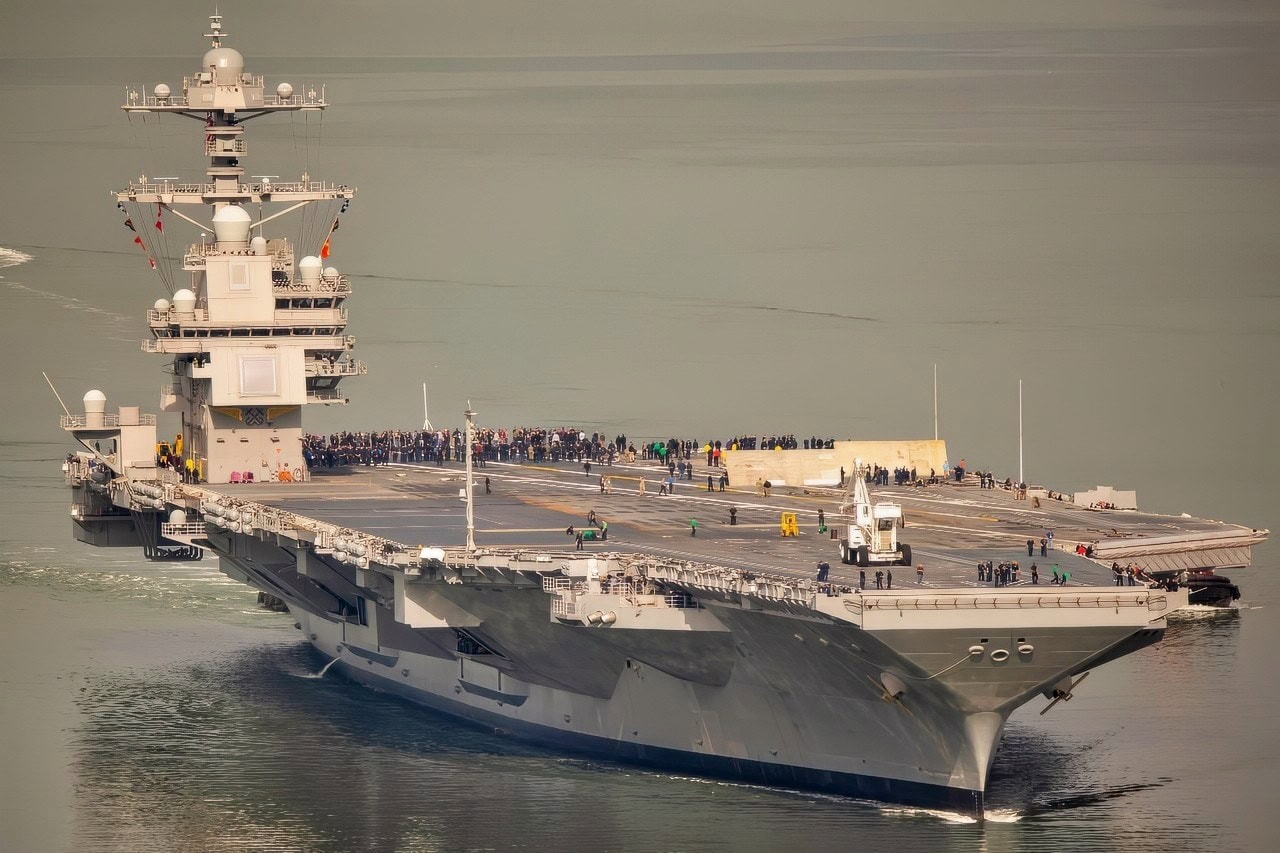
NEWPORT NEWS, Va. (Oct. 25, 2019) USS Gerald R. Ford (CVN 78) gets underway for the first time since beginning its post-shakedown availability July 2018. Ford is currently conducting sea trials, a comprehensive test of the ship’s systems and technologies. (U.S. Navy photo by Mass Communication Specialist 3rd Class Connor Loessin)
These are the symptoms of deferred maintenance: the accumulated wear that builds up when a complex machine is kept running past the point when it should have been brought in for care. A carrier is meant to cycle between deployment and maintenance availability, periods when shipyards can inspect, repair, and recalibrate the thousands of systems that keep it functioning. The Ford’s repeated extensions ate into that schedule, and the strain showed up everywhere from the plumbing to the habitability spaces to the high-stress mechanical systems tied to flight operations.
How Long Could She Be Gone
This is where the cost of the two-war deployment becomes concrete. When the Ford returns to a maintenance availability, she faces what amounts to deep reconstruction rather than routine upkeep. Repairing the fire damage entails rebuilding the laundry system and restoring the gutted berthing compartments. The plumbing and sewage systems need overhauling.
The electromagnetic launch system and advanced arresting gear, the novel and historically troublesome technologies that catapult aircraft off the deck and catch them on landing, will need inspection and full recalibration. The flight deck will need its non-skid coating stripped and reapplied, and the hull will need corrosion treatment after nearly a year in saltwater.
Admiral Caudle himself acknowledged before the carrier came home that the deployment’s length would affect her return and the schedule for her maintenance availability, conceding there would be an impact on how soon she could be ready to deploy again. The Navy’s public framing has been reassuring, with one official noting that 17 of the past 25 carrier maintenance availabilities were completed within two weeks of their planned schedules.
But the Ford is not a routine case. Between the fire damage, the deferred maintenance, and the sheer length of the deployment, defense analysts have warned that the carrier could realistically be sidelined for an extended period, with estimates running as high as 12 to 14 months and some assessments suggesting it could stretch toward two years before she is fully combat-ready again.
What It Means For A Navy Stretched Too Thin
The Ford’s predicament is bigger than one ship. Congress noticed the strain before she even came home. In a March 31 letter to Defense Secretary Pete Hegseth, lawmakers wrote to express serious concern about the condition, operational strain, and crew welfare aboard the strike group as its deployment passed nine months at sea, warning that the cumulative effects of an extended, high-tempo deployment raised significant questions about force sustainability, crew endurance, and long-term readiness. The deployment pushed toward and threatened to exceed the modern record of 294 days set by the USS Abraham Lincoln in 2020.
The deeper issue is what the Ford reveals about the math of American naval power. The United States does not have enough carriers to meet the demands placed on them, so when two crises erupt in close succession, the answer is to keep a single ship forward until it breaks rather than rotate fresh hulls into the fight. The Ford absorbed that strain in a peripheral conflict against an unconventional adversary, not a great-power war.
The relief carrier, the USS George H.W. Bush, had to be surged out of Norfolk to cover the gap. If keeping one carrier in the fight against Iran and Venezuela requires running the newest ship in the fleet into a year or more of repairs, the obvious and uncomfortable question is what would happen to the carrier force in a sustained, high-tempo conflict against a near-peer like China.
For now, the Ford sits pierside in Virginia, and the work ahead of her is measured in seasons rather than weeks. Somewhere in the Red Sea, the Abraham Lincoln still holds station, and the Bush is steaming toward its own open-ended tasking.
The carrier the Navy spent thirteen billion dollars to build as the centerpiece of its fleet will spend the better part of a year as a fixed object, hull open to the yard workers, while the demands that broke her go looking for the next ship in line.
About the Author: Harry J. Kazianis
Harry J. Kazianis (@Grecianformula) was the former Senior Director of National Security Affairs at the Center for the National Interest (CFTNI), a foreign policy think tank founded by Richard Nixon based in Washington, DC. Harry has over a decade of experience in think tanks and national security publishing. His ideas have been published in the NY Times, The Washington Post, The Wall Street Journal, CNN, and many other outlets worldwide. He has held positions at CSIS, the Heritage Foundation, the University of Nottingham, and several other institutions related to national security research and studies. He is the former Executive Editor of the National Interest and the Diplomat. He holds a Master’s degree focusing on international affairs from Harvard University.

