
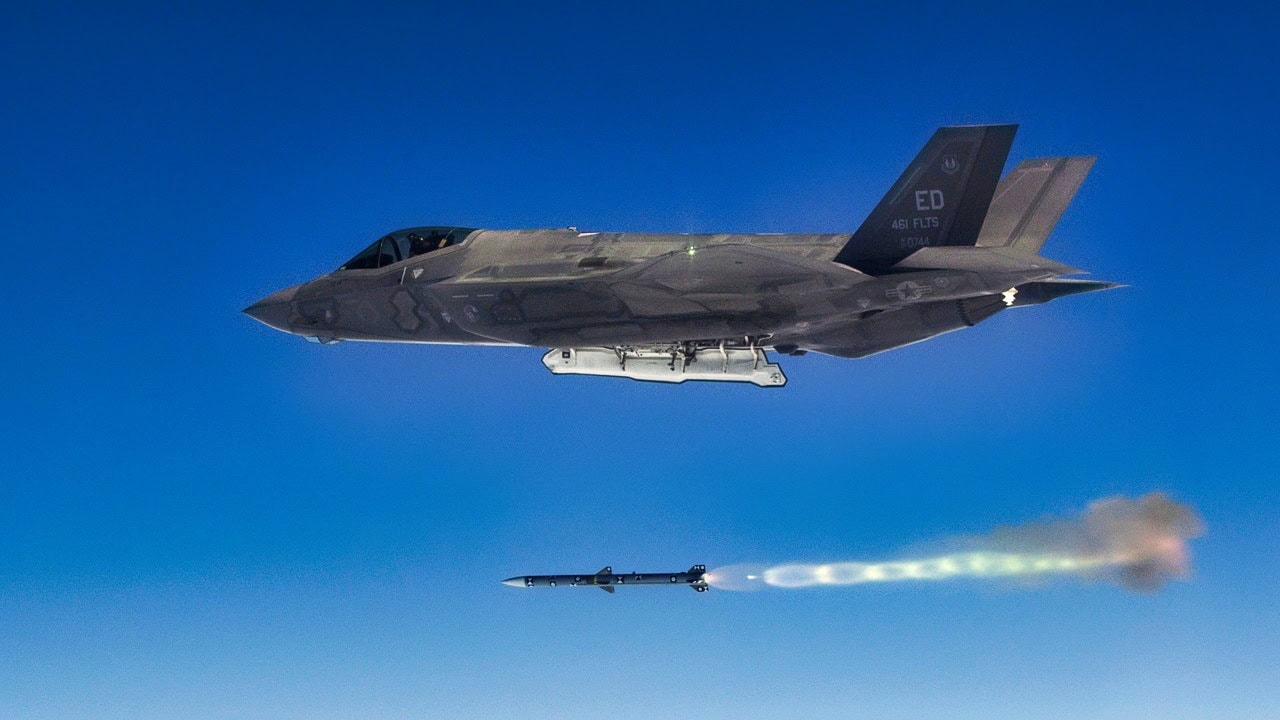
The first Meteor missile flights on an F-35 happened on an American jet. In March 2025, a US Marine Corps F-35B carried the European ramjet missile aloft from Naval Air Station Patuxent River, opening flight trials under a UK-US government collaboration — American test infrastructure integrating, for America’s allies, a weapon no American squadron is slated to carry. The MBDA Meteor’s engagement envelope exceeds anything the United States currently fields on the jet, its integration cleared major ground hurdles in December, and the American answer — the classified AIM-260 — exists, flies, and remains years from the F-35’s bay by the Pentagon’s own sequencing.
The result has no precedent in the stealth era: the country that builds the world’s premier fighter is positioned to be the last major operator, arming it with a previous-generation missile, while its allies bolt on a longer spear with American help.
One Ground Test From Flight Trials: Where Meteor-On-F-35 Stands
The latest milestone arrived in early December, when MBDA, Lockheed Martin, and the F-35 Joint Program Office completed critical ground-based integration tests of the Meteor on the F-35A — ground vibration trials and internal weapons bay fit checks conducted at Edwards Air Force Base, validating clearances, structural response, and mounting hardware without compromising the jet’s stealth profile.
By MBDA’s own announcement, a single ground test remains before clearance to begin flight trials on the A-model, with Italy sponsoring the A’s integration while the UK leads on the B — the variant the Marine test jet has already flown with.
The honest caveats about the schedule carry real weight. Meteor integration rides the Block 4 upgrade program, the F-35 enterprise’s perpetual long pole, and a UK National Audit Office report has flagged supplier performance and contracting problems behind delays to the missile’s British timeline — pushing operational capability on the UK’s F-35Bs toward the early 2030s, according to some reports.
The capability is coming — the missile fits, the jet has flown with it, and one final ground test stands between the program and A-model flight trials — but the gap between flight trials and a loaded combat air patrol is measured in years, on both sides of the Atlantic. The argument below survives the delay, because the American alternative sits behind a longer queue still.
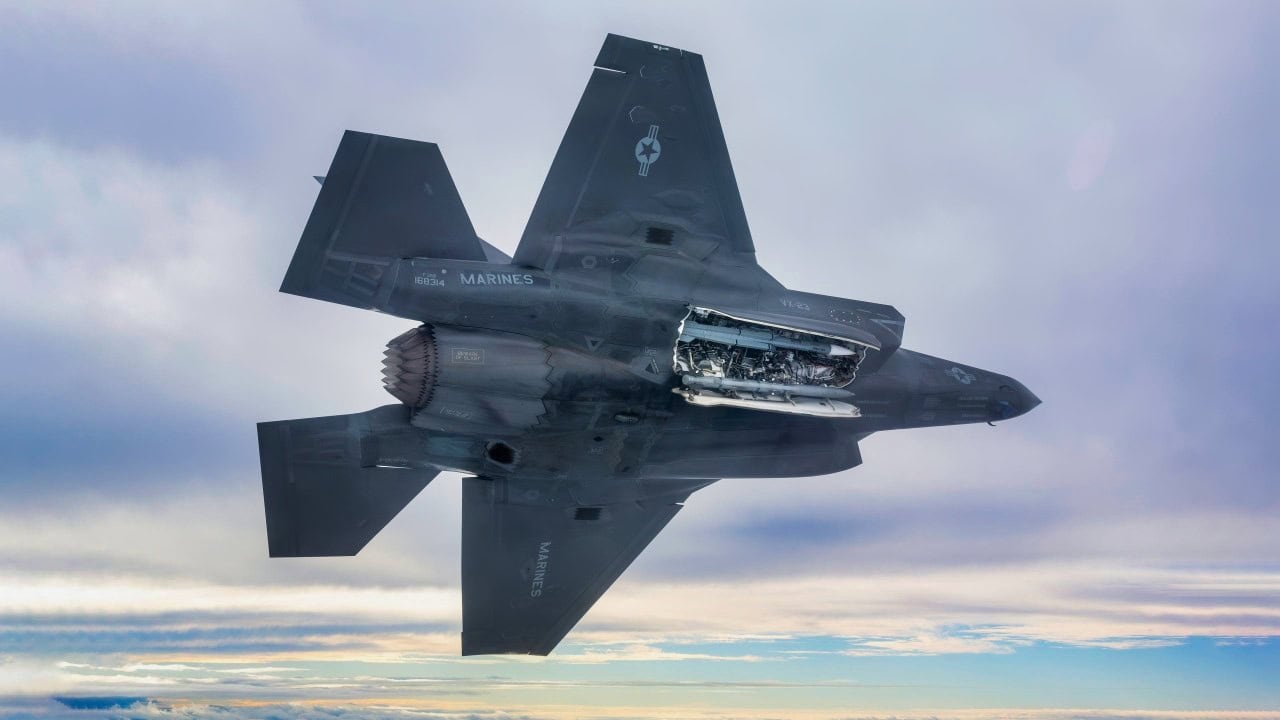
F-35B Armed with Meteor Missile. Image Credit: UK Government.
Why The Meteor’s No-Escape Zone Changes The Math
The Meteor’s advantage is propulsion physics. A conventional air-to-air missile burns its rocket motor in seconds and coasts the rest of the way, bleeding energy through every maneuver, which means its effective lethal range against an alerted, maneuvering target — the no-escape zone — is a fraction of its brochure range.
The Meteor replaces boost-and-coast with a throttleable solid-fuel ramjet that sustains thrust all the way to intercept, maintaining Mach 4-class speed and maneuvering energy into the endgame across a reach in the 120- to 200-kilometer class, managed by a two-way datalink.
MBDA’s claim — the largest no-escape zone of any air-to-air missile, several times greater than conventional medium-range weapons — is the rare marketing line the engineering supports: against a Meteor launched in parameters, the target’s options for running out the missile’s energy approach zero, because the missile never goes ballistic.
The weapon is no paper promise. It arms Typhoons, Rafales, and Gripens across NATO, has been fired from South Korea’s KF-21 in testing, and the fair caveats — high cost, the deep mission-system access its integration demands, and the electronic-warfare vulnerability of any radar-guided missile — are the standard bill for the category, with the energy margin itself mitigating the jamming problem. Paired with the F-35’s sensors and signature, the combination is the entire point: a platform built to see first and shoot first, finally carrying a missile whose reach matches its eyes.
The AMRAAM Is A 1991 Missile In A PL-15 World
The weapon American F-35s carry instead entered service when the Soviet Union still existed. The AIM-120 AMRAAM has been upgraded relentlessly — the current D-3 variant is a genuinely modern missile in guidance and networking — but it remains a boost-and-coast weapon at the end of its kinematic growth, and the world it was built to dominate is gone.

A U.S. Air Force F-35A Lightning II flies over the 56th Fighter Wing during Luke Days 2026, March 22, 2026, at Luke Air Force Base, Arizona. Luke Days 2026 highlights the precision and professionalism required to generate combat airpower and sustain the nation’s defense. Currently in operational service, the F-35A integrates stealth technology and advanced sensors to detect and defeat threats while maintaining air dominance. Opportunities for the public to see military aviation up close helps build appreciation for the readiness of the joint force. (U.S. Air Force photo by Senior Airman Belinda Guachun-Chichay)
China’s PL-15 brought extended reach, modern guidance, and datalink mid-course updates to the other side of the equation, and in May 2025, the theory became reality when Pakistani aircraft reportedly used PL-15s against Indian fighters at ranges past 160 kilometers.
The PL-17 reaches farther still. Meanwhile, the Iran war has consumed air-to-air missiles at historic rates — air combat over the Gulf and the ground-based launchers that fire the same AMRAAM drawing down one inventory — which is precisely why the missile appears alongside the Tomahawk in the RTX framework agreements driving production toward at least 1,900 AMRAAMs per year. The Pentagon is surging production of the missile it already considers outranged, because it is the missile the force actually has.
The AIM-260 Problem: Classified, Delayed, And Still Not In The F-35’s Bay
The American answer has existed since 2017, and its history is a cautionary procurement tale conducted entirely behind closed doors.
The AIM-260 Joint Advanced Tactical Missile was launched explicitly to recapture parity with the PL-15 and PL-17, sized to the AMRAAM’s form factor so it fits the same stealth bays, with a reported range more than double the AMRAAM’s — and senior Air Force officials have acknowledged the program is delayed from initial disclosures that promised fielding by 2022 or 2023. The fiscal 2026 budget finally sought production funding — roughly $370 million from the Air Force and $300 million from the Navy — and the missile itself was seen publicly for the first time only last month, seven years after the program’s existence was revealed.
The sequencing is the detail that makes the European comparison bite. The first operational JATM platforms are slated to be the Air Force’s F-22s and the Navy’s Super Hornets, with F-35 integration planned afterward — meaning the jet America builds in the largest numbers, flies in the largest numbers, and sells to every ally sits explicitly behind two older aircraft in the queue for the missile that answers the PL-15.
Nobody outside the program knows the real dates; classification cuts both ways, and the JATM may be further along than the public record shows. What the public record does show is a Meteor that has flown on the F-35 and a JATM that has not been announced on it.
The American Hand In The Meteor — And The Option Washington Has Not Picked Up
The natural question is whether the United States wants the European missile for itself, and the documented answer is layered. American involvement in the integration is deep and official: the F-35 Joint Program Office is a full partner in the test campaign, the ground trials ran at Edwards, and the flight testing opened on a Marine Corps jet at a Navy air station.
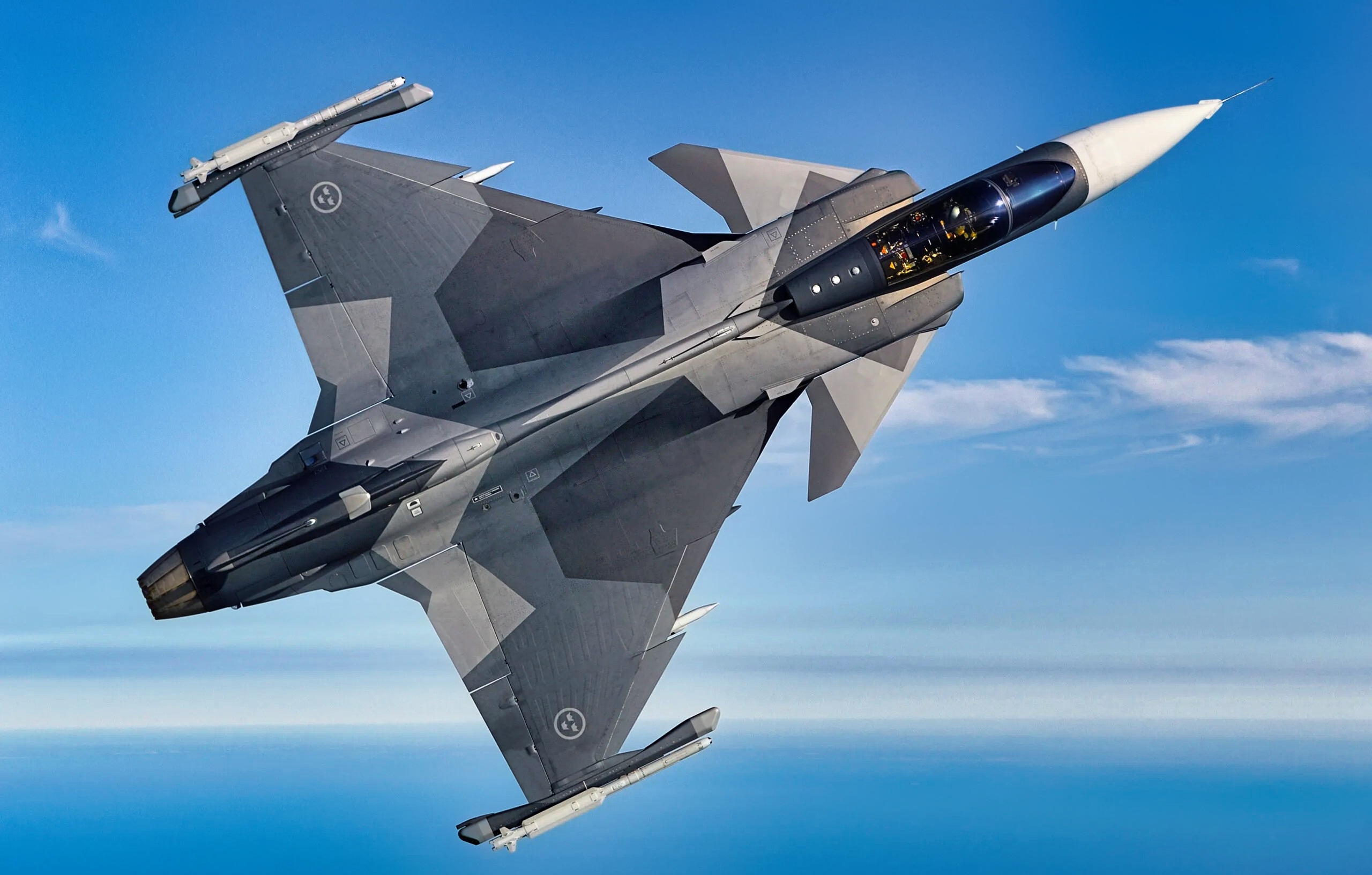
JAS 39 Gripen E Fighter. Image Credit: Saab.
The United States government is, quite literally, qualifying the Meteor on its own fighter. What does not exist is any announced American intent to buy it — no budget line, no requirement, no statement of interest from either service.
The silence has an industrial explanation. The AMRAAM is Raytheon’s franchise, and the JATM is Lockheed Martin’s answer to the range gap, so an American Meteor purchase would send US air-to-air money to a European consortium while two American primes hold funded programs against the same problem — a decision no service has reason to volunteer for, whatever the kinematics say.
Nonetheless, the integration work changes the meaning of the choice. Once the Meteor is cleared on the F-35, fielding it becomes a procurement decision rather than an engineering program, available to any operator of the jet — including, should the JATM slip badly enough or a Pacific war arrive early, the one that builds it. Washington is not buying the Meteor.
Washington, with its own test fleet, is keeping the option alive, and the option’s value rises with every year the AIM-260 remains classified and queued.
When Allies Out-Range The Owner
The situation deserves to be stated plainly because it has no precedent in the fifth-generation era: when the integration is complete, British and Italian F-35s will fly with a longer-range, higher-energy air-to-air weapon than any F-35 in American service.
For the alliance, the development is genuinely good — coalition air wings gain magazine diversity, a second production base in Europe, and a weapon the PL-15 has to respect, and the F-35 program was always designed to carry partner weapons.
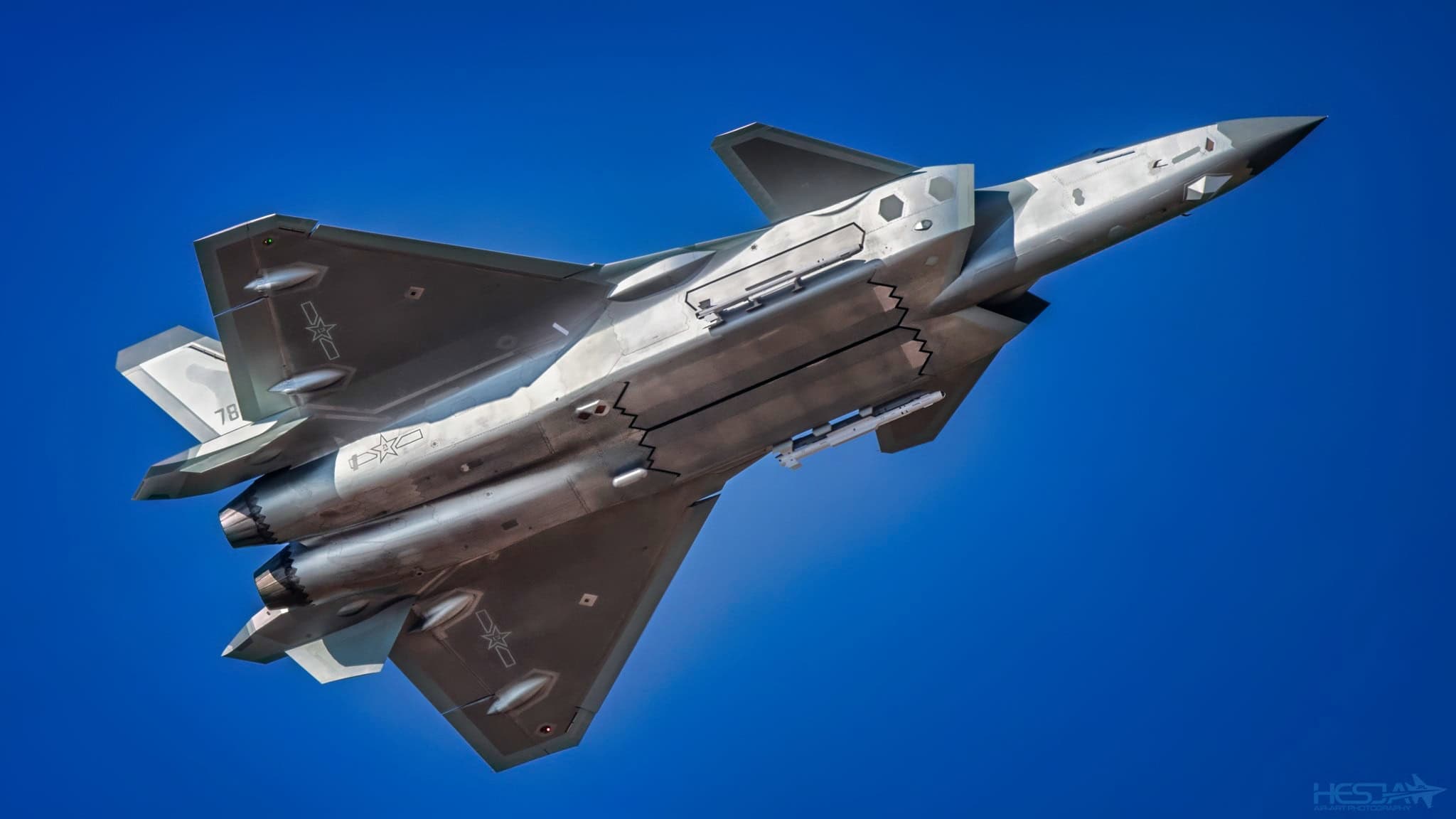
J-20 Fighter from China. Image Credit: Creative Commons.
For Washington, the same fact reads as an indictment with familiar handwriting. The AMRAAM’s successor was promised for 2022 and photographed for the first time in 2026. The Meteor was a known quantity for a decade, while the F-35’s weapons roadmap kept it waiting behind American priorities. And the force that would fight China across Pacific distances — the war the JATM was conceived for — currently plans to enter the missile’s service life through the F-22, a fleet of roughly 185 jets, before the global F-35 fleet of more than 1,100 aircraft and growing sees it.
China fields the PL-15 in numbers and flies prototypes meant to outrange the PL-17. Europe’s answer is one ground test from F-35A flight trials, with the Marine test jet already flying it on the B. America’s answer is funded, flying, classified, and queued behind two other airframes.
Until the AIM-260 reaches the Lightning’s bay, the longest spear an F-35 carries will be European — and the only American Meteor shots on record will belong to the test jet at Patuxent River, flying a capability its own country has not ordered.
About the Author: Harry J. Kazianis
Harry J. Kazianis (@Grecianformula) was the former Senior Director of National Security Affairs at the Center for the National Interest (CFTNI), a foreign policy think tank founded by Richard Nixon based in Washington, DC. Harry has over a decade of experience in think tanks and national security publishing. His ideas have been published in the NY Times, The Washington Post, The Wall Street Journal, CNN, and many other outlets worldwide. He has held positions at CSIS, the Heritage Foundation, the University of Nottingham, and several other institutions related to national security research and studies. He is the former Executive Editor of the National Interest and the Diplomat. He holds a Master’s degree focusing on international affairs from Harvard University.

