
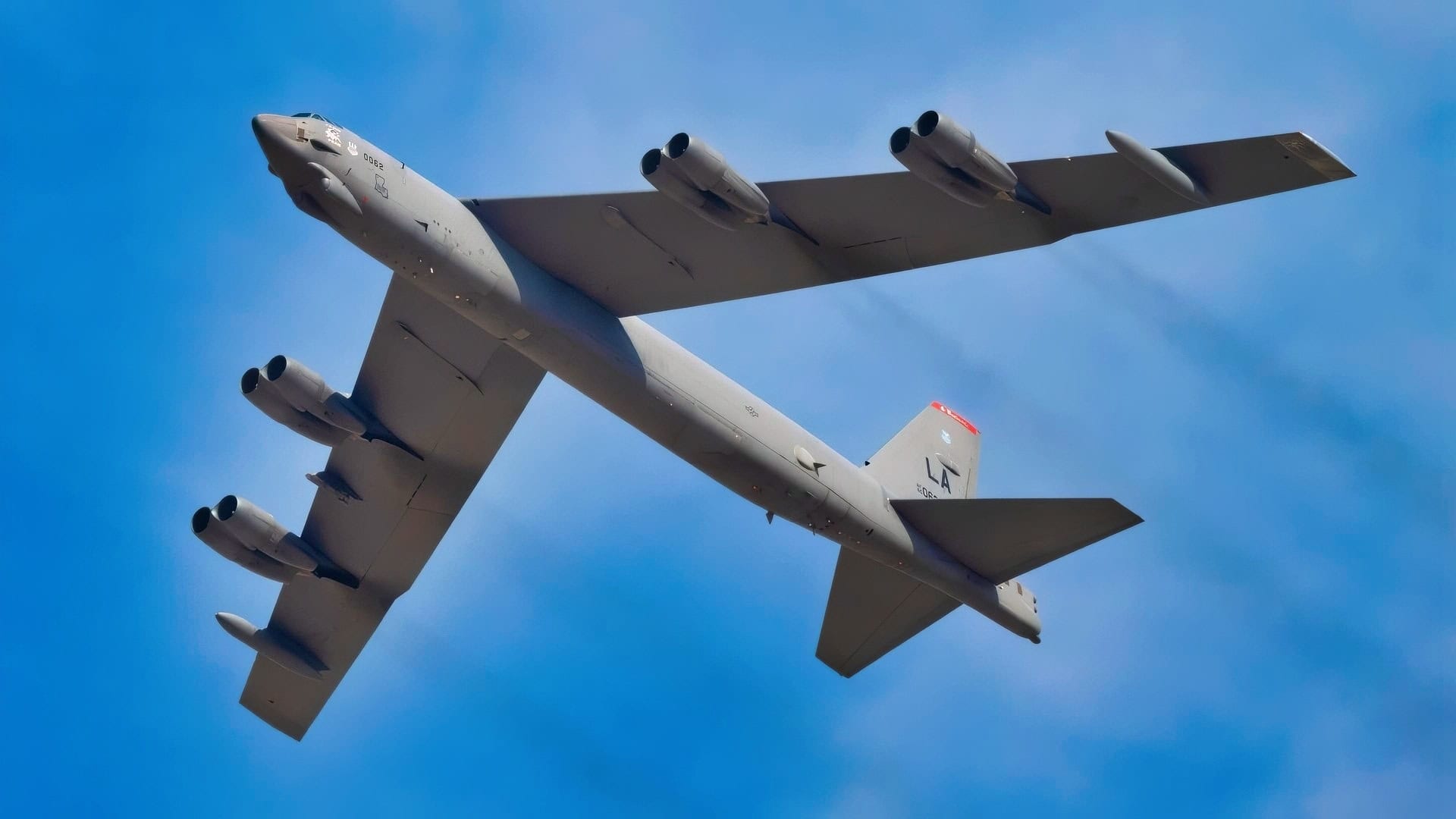
A United States Air Force B-52 Stratofortress crashed shortly after takeoff at Edwards Air Force Base in California on Monday, June 15, the base confirmed. The crash happened on the Edwards airfield at 11:20 a.m. local time, and aerial footage showed a large fire and a column of black smoke rising over the Mojave Desert. As of this writing, the Air Force has not released the crew’s condition, the cause of the crash, or the aircraft’s tail number, and the base has described the situation as ongoing.
B-52 Bomber Crash: What The U.S. Air Force Has Confirmed
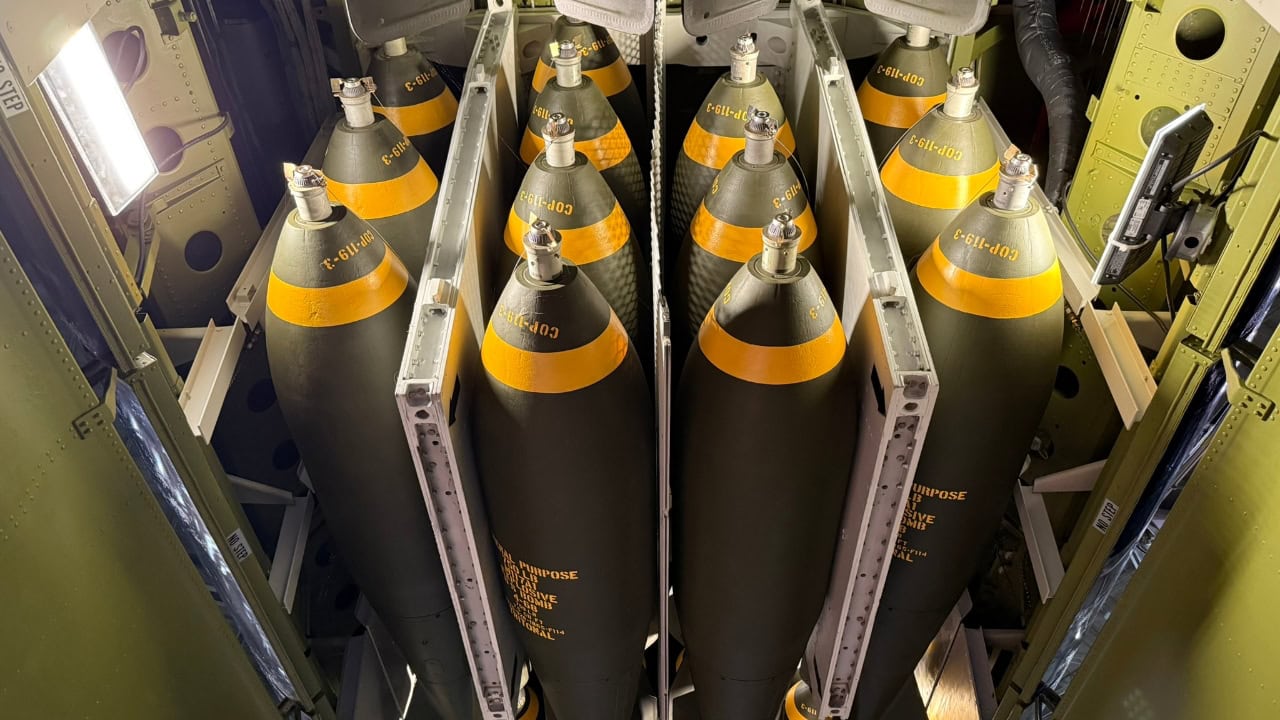
B-52 Bomber. Image Credit: 19FortyFive.com Taken at the National Museum of the Air Force.
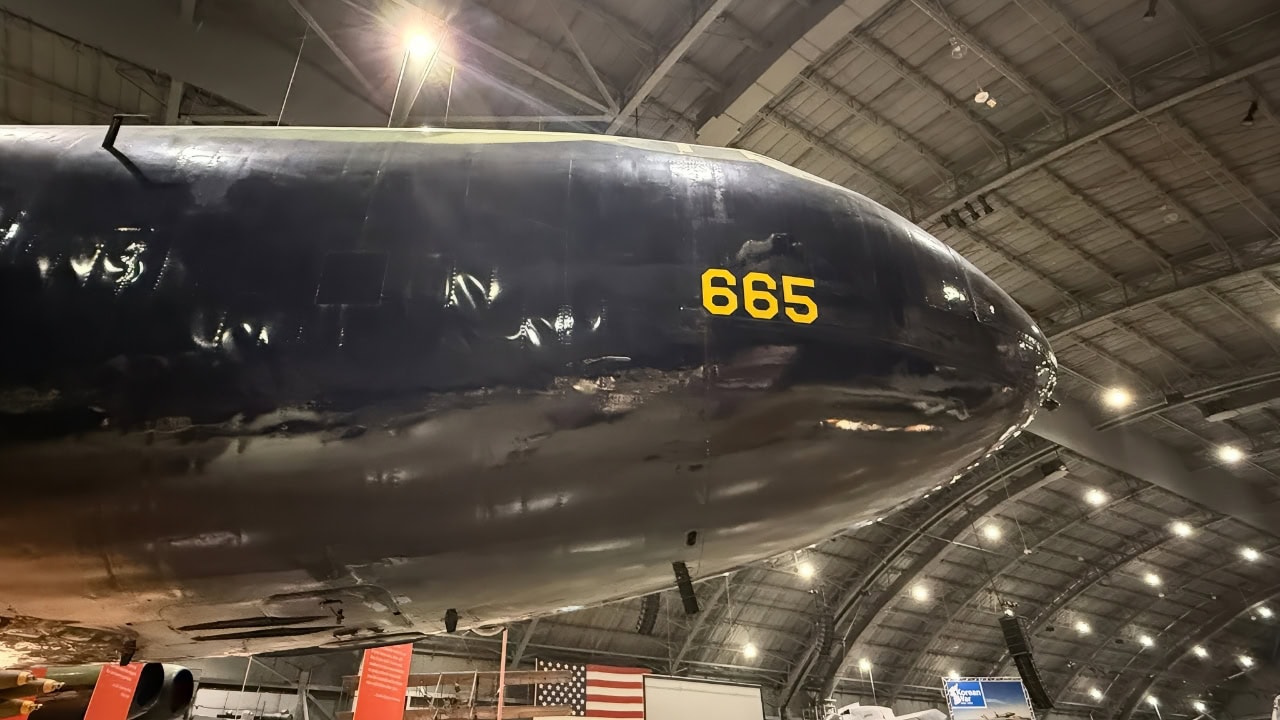
B-52. National Museum of the U.S. Air Force photo from 19FortyFive.com
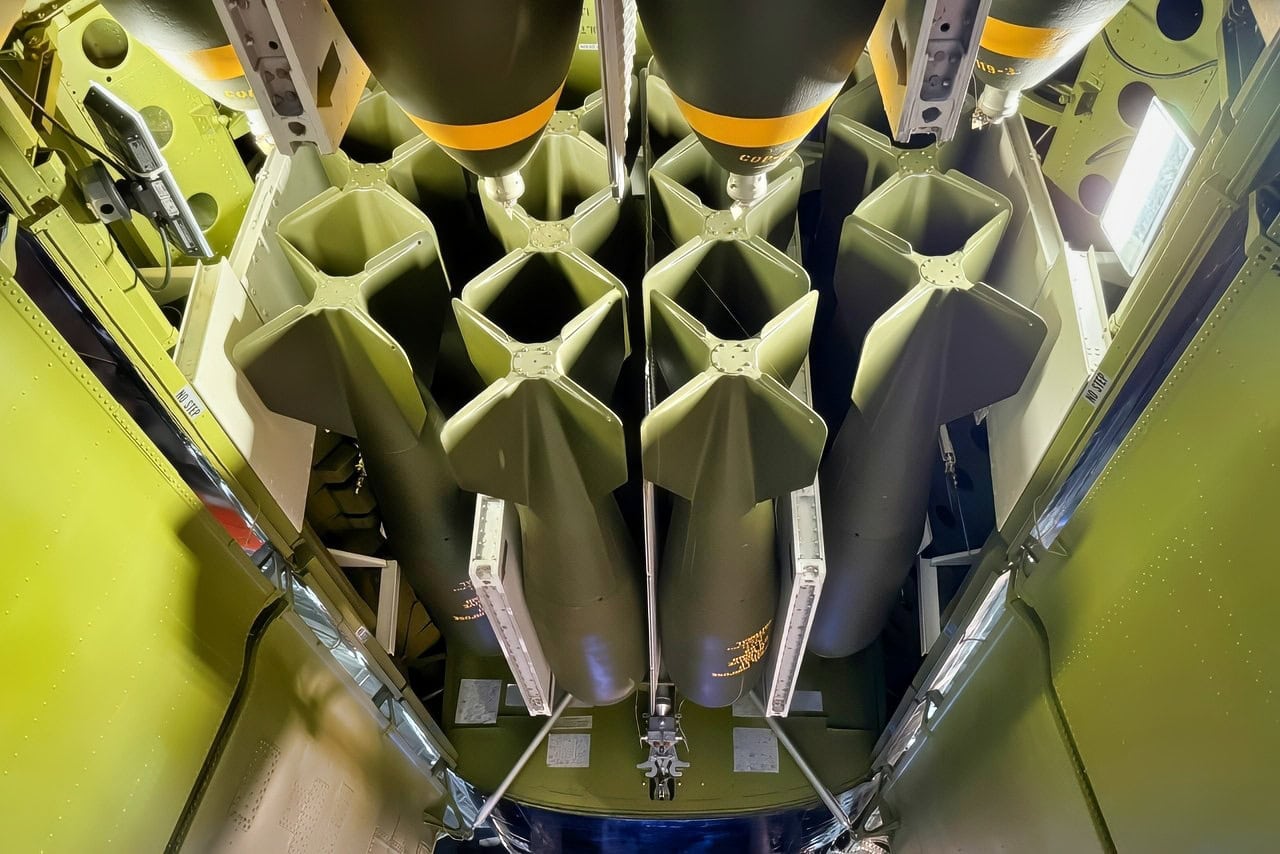
B-52 bombs. Image Credit: 19FortyFive.com Taken at the National Museum of the Air Force.
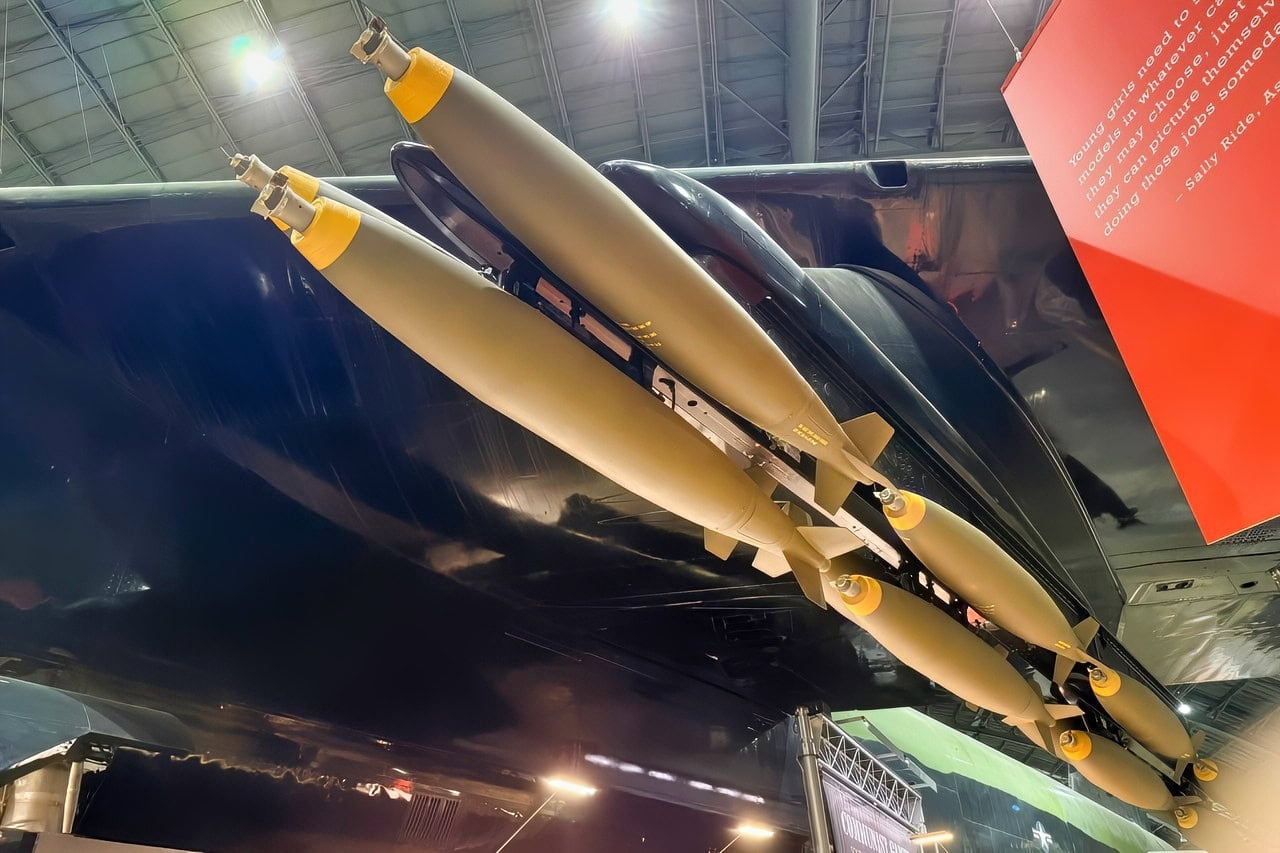
B-52 bombs. Image Credit: 19FortyFive.com Taken at the National Museum of the Air Force.
The official account is brief and consistent across the early reporting.
In a statement posted to social media, Edwards Air Force Base said a B-52 Stratofortress crashed shortly after takeoff at 11:20 a.m. and that emergency crews immediately responded to the scene, with more information to follow as it becomes available. Local aerial coverage showed fire crews working a smoldering burn site on or near the base’s main runway.
Beyond that, the official details are sparse, and the base has been careful not to get ahead of what it knows.
The number of crew members aboard, their condition, and the cause of the crash have not been released, and the Air Force has not confirmed the identity of the specific aircraft.
The B-52H typically carries a crew of five, though the Air Force has not said how many were on this flight.
No injuries or fatalities have been confirmed in either direction.
The Tail Number Remains Unconfirmed
One detail circulating online should be treated with caution. Before the base issued its statement, unconfirmed posts in an unofficial Air Force social media group identified the aircraft as B-52H tail number 60-0061, and that claim has not been verified by the Air Force.
The detail draws attention because that specific aircraft was reported in December 2025 to have flown from Boeing’s San Antonio facility to Edwards after receiving a modernized radar system.
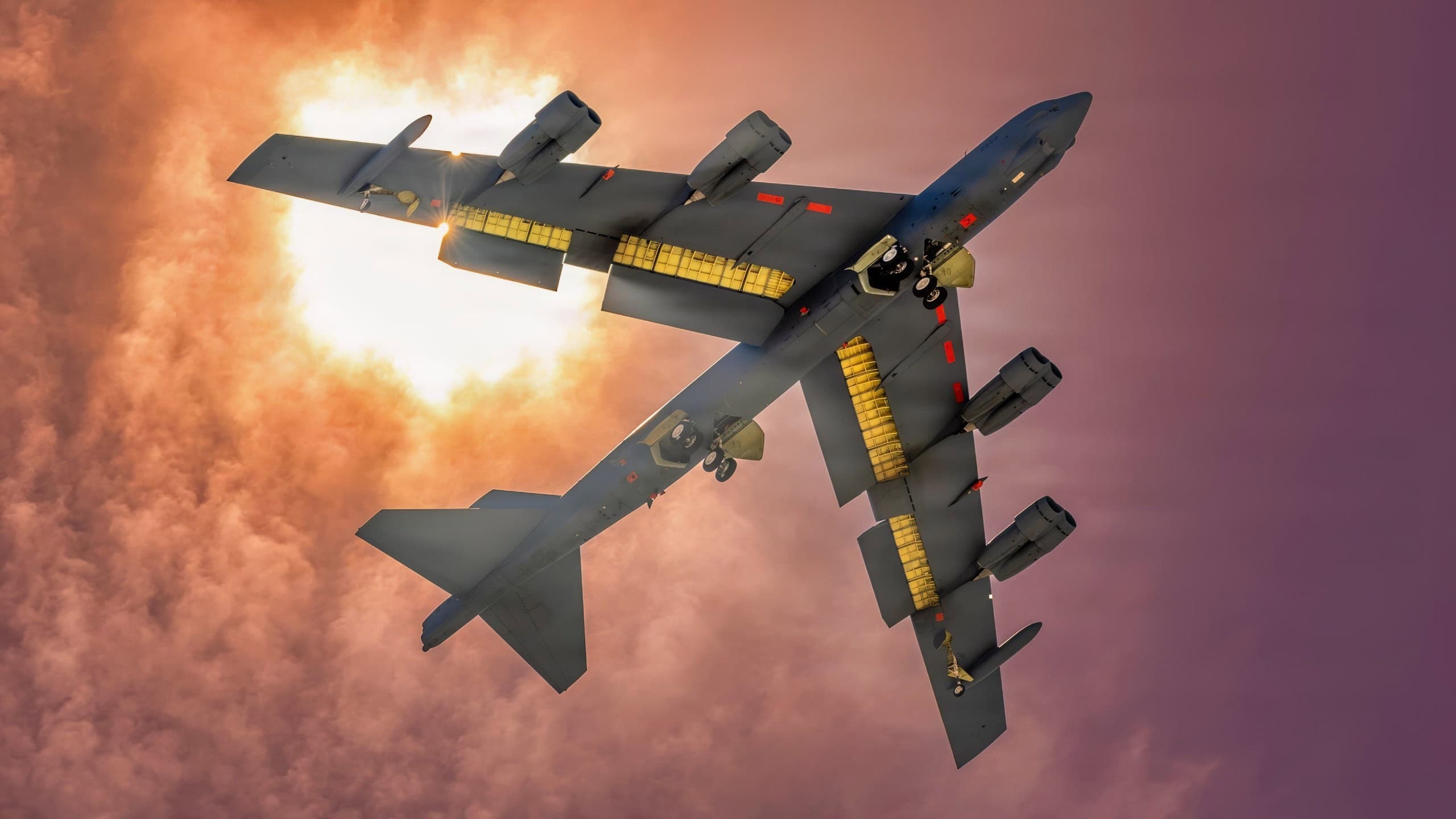
A B-52H Stratofortress assigned to the 419th Flight Test Squadron at Edwards Air Force Base, California, departs for an evening test mission over the Mojave Desert. The B-52H test fleet is in high demand, testing a variety of advanced capabilities for the joint-force. The 412th Test Wing will soon begin developmental test work on new avionics, radar, and engines as part of the B-52J effort, allowing the Stratofortress to serve the warfighter into the 2050’s. (Air Force photo by Todd Schannuth)
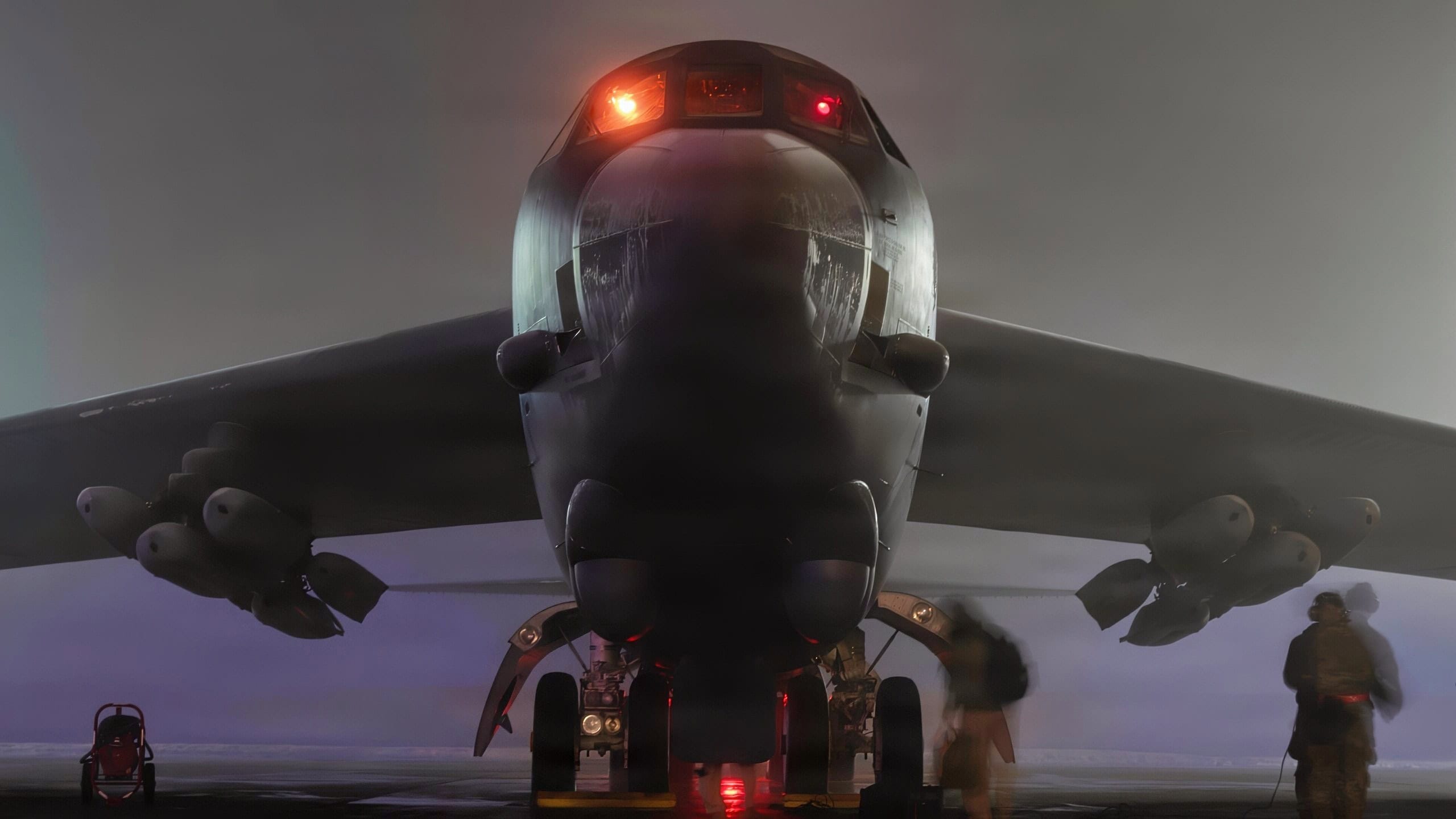
Aircrew members board a B-52H Stratofortress prior to taking off in support of Operation Epic Fury, March 4, 2026. (U.S. Air Force photo)
The Air Force has not said whether the crashed aircraft was connected to any test or modernization program, and the tail number should be regarded as unconfirmed until the service identifies the aircraft directly.
Why The Crash Happened At A Test Base
Edwards Air Force Base sits in California’s western Mojave Desert, roughly 100 miles northeast of Los Angeles, and it is the Air Force’s primary flight-test center, home to the 412th Test Wing.
The Air Force and NASA conduct test flights of new and developmental aircraft there, which makes the presence of a B-52 on the airfield unremarkable in itself — the aging bomber is the subject of two major ongoing modernization efforts.
One is a radar upgrade; the other is the Commercial Engine Replacement Program, which will replace the B-52’s eight original Pratt & Whitney engines with new Rolls-Royce F130 engines and recently passed a critical design review.
Whether the crashed aircraft was involved in either program is not known, and any link is speculation until the Air Force says otherwise.
The B-52 Stratofortress, built by Boeing, is a long-range heavy bomber first introduced in the 1950s that remains a central part of American air power.
It is capable of carrying both conventional and nuclear weapons and has been used in conflicts from the Vietnam War through the recent fighting in the Iran War. The Air Force intends to fly the upgraded version, redesignated the B-52J, into the 2050s, which would give the airframe a service life approaching a century.
A Recent Run Of Military Aviation Mishaps
The crash is the latest in a series of U.S. military flight incidents in recent weeks.
Two Navy EA-18G Growlers collided in midair during an airshow at Mountain Home Air Force Base on May 17, and on June 13, a Marine Corps F/A-18 Hornet crashed near Mount Rainier during a training flight, with the pilot ejecting.
Whether today’s crash reflects anything beyond coincidence with those events is unknown, and the cause of the B-52 mishap will not be established until the Air Force completes an investigation, a process that typically takes months.
For now, the confirmed facts are limited: a B-52 down at Edwards Air Force Base shortly after an 11:20 a.m. takeoff, a major fire, emergency crews on scene, and an Air Force statement promising more information to come.
The condition of the crew is the question that matters most, and it remains unanswered
. This is a developing story, and the details — including the crew’s status and the aircraft’s identity — may change as the Air Force releases verified information.
My Own B-52 Bomber Experience
Last year, I visited the National Museum of the U.S. Air Force and captured several original photos of the B-52 bomber, which are included in this article.
She is massive and a real tragedy that this occurred. We will keep updating this post as more details come in.
About the Author: Harry J. Kazianis
Harry J. Kazianis (@Grecianformula) was the former Senior Director of National Security Affairs at the Center for the National Interest (CFTNI), a foreign policy think tank founded by Richard Nixon based in Washington, DC. Harry has over a decade of experience in think tanks and national security publishing. His ideas have been published in the NY Times, The Washington Post, The Wall Street Journal, CNN, and many other outlets worldwide. He has held positions at CSIS, the Heritage Foundation, the University of Nottingham, and several other institutions related to national security research and studies. He is the former Executive Editor of the National Interest and the Diplomat. He holds a Master’s degree focusing on international affairs from Harvard University.

