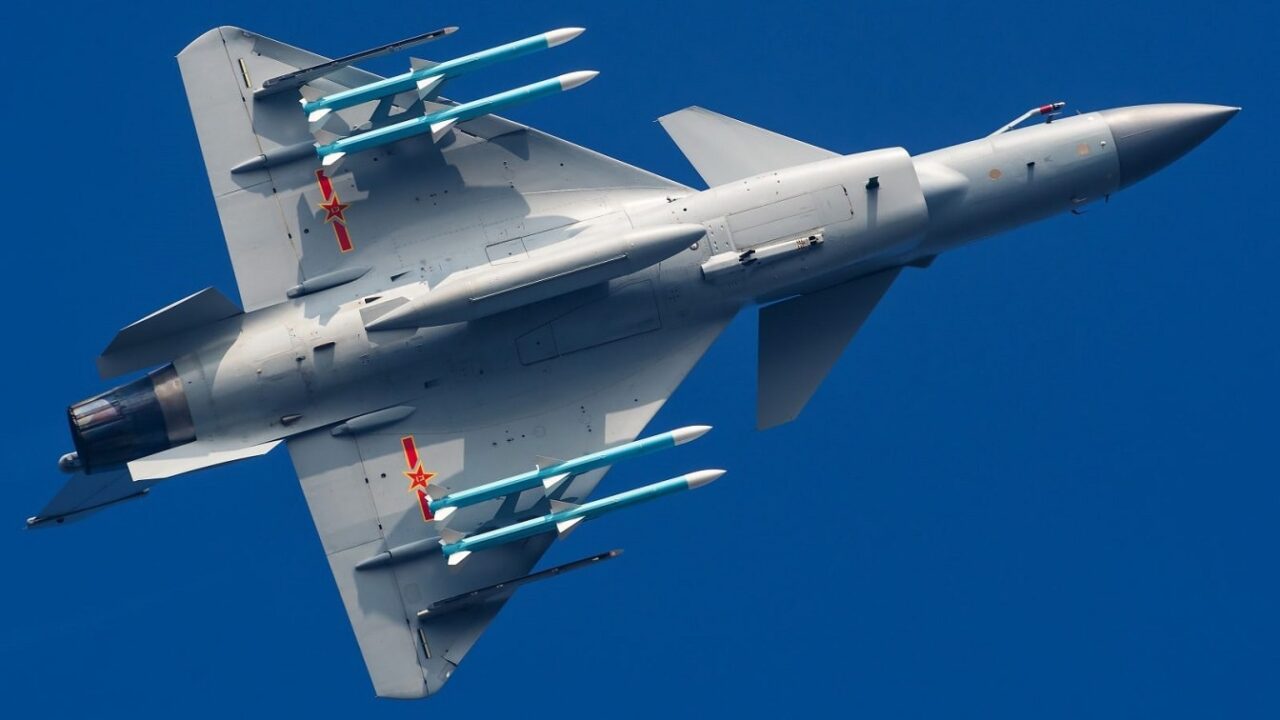
China is racing to become a major weapons exporter.
In a market saturated with weapons and platforms from Russia, the United States, France, and a variety of other Western states, China wants its indigenously made systems to be as competitive–if not more–than all those other countries.
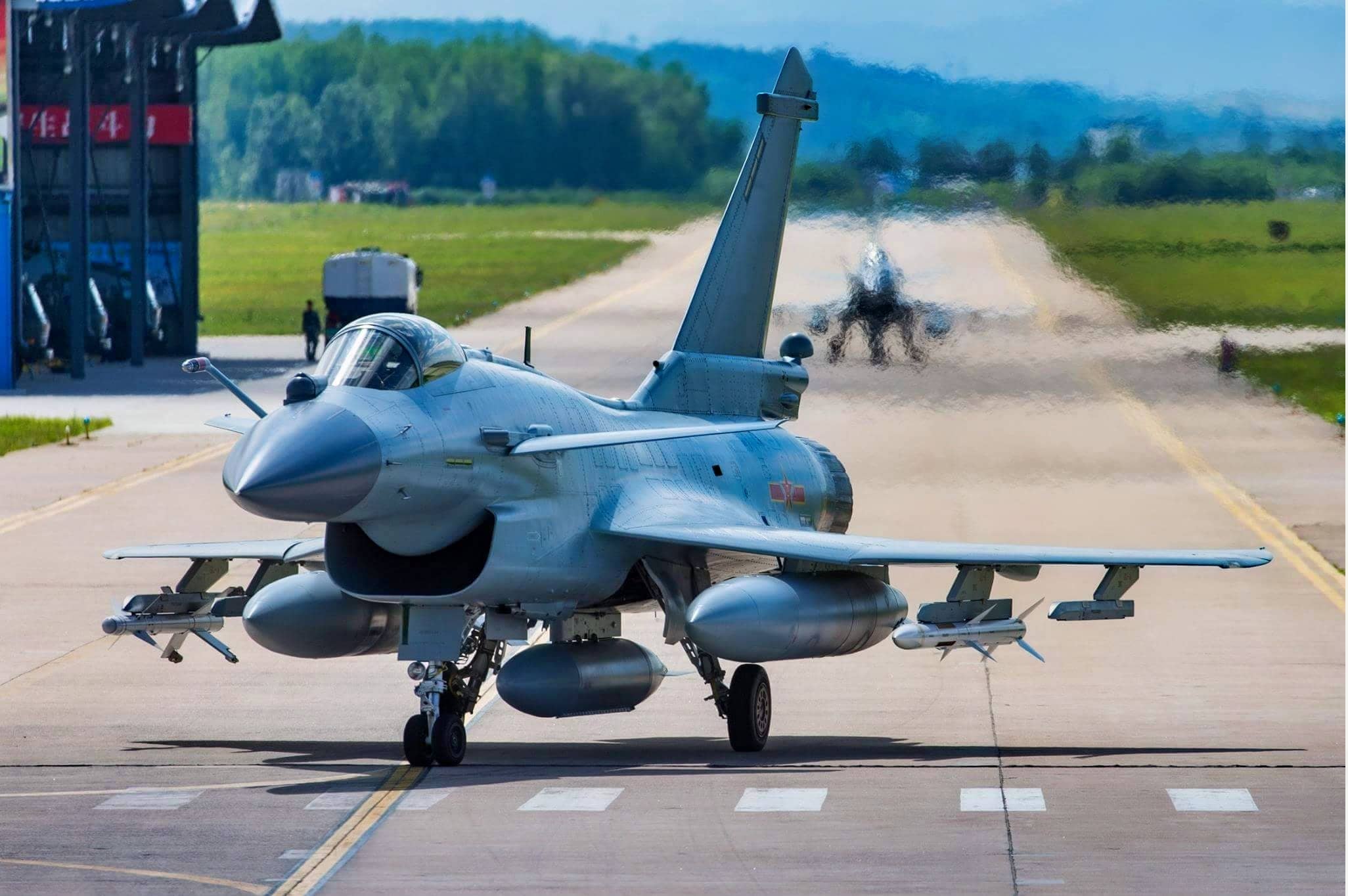
J-10C Fighter from China. Image Credit: Creative Commons.
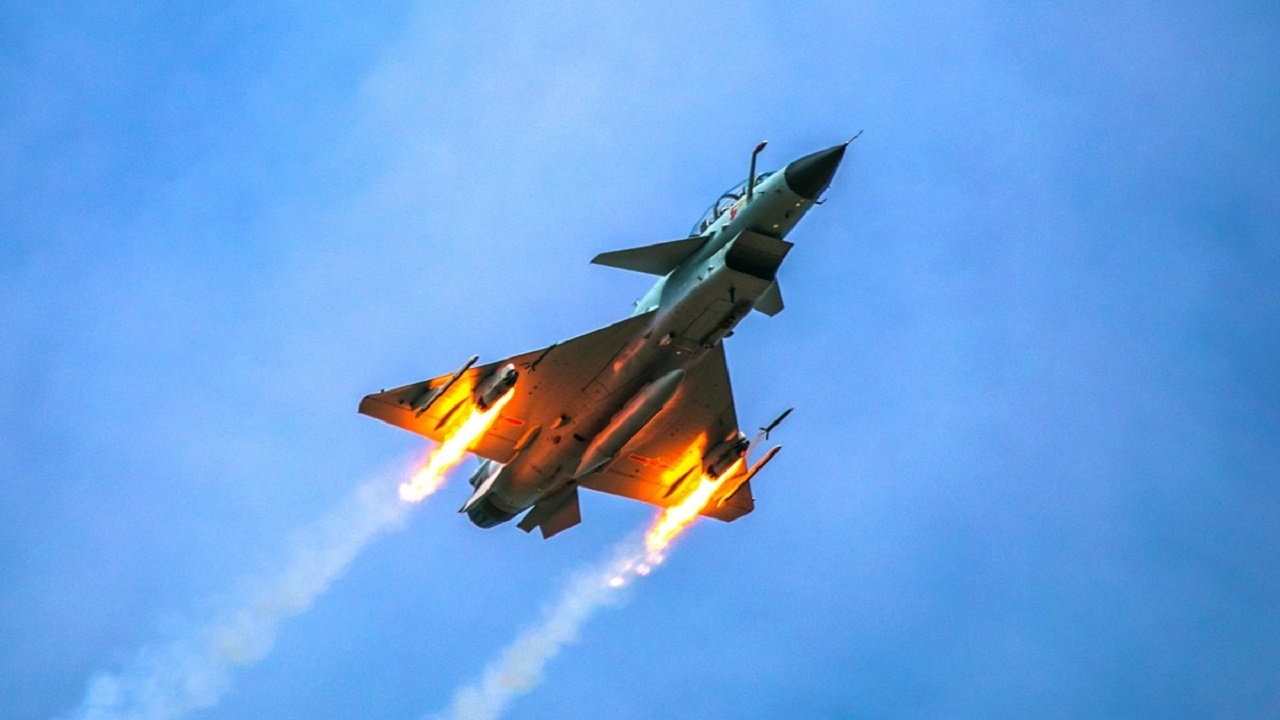
J-10 Fighter. Image Credit: Creative Commons.
China’s Bid for the Global Arms Market
To showcase the capabilities of China’s growing arsenal, Pakistan employed Chengdu J-10CE warplanes to square off against Eurofighter Typhoon warplanes of the Qatari Air Force in the 2024 “Zilzal-II” joint military exercise between the Pakistani and Qatari air forces.
That 2024 exercise pitted Chinese J-10CEs against Eurofighter Typhoons in nine simulated air-combat engagements. In each one of those simulated engagements, the Chinese planes defeated the premier European fourth-generation warplane all nine times.
Why Western Analysts Should Pay Attention
Of course, there is much carping from Western analysts over the reports on the recent exercises. You see, the story originated with the Chinese state broadcaster, CCTV.
Many Western observers believe that CCTV is either lying or exaggerating in its reporting of the combat exercises. But Western analysts who doubt the news should take care when making such claims. China’s J-10CE has proven itself already in the real world.
Last year, as the Indian Air Force (IAF) prepared retaliatory strikes for a wave of Islamic terrorism that erupted in the contested Kashmir region, in which Islamists went on a killing spree of Indian civilians, the Pakistani Air Force (PAF) prepared to defend their territory from Indian warplanes.
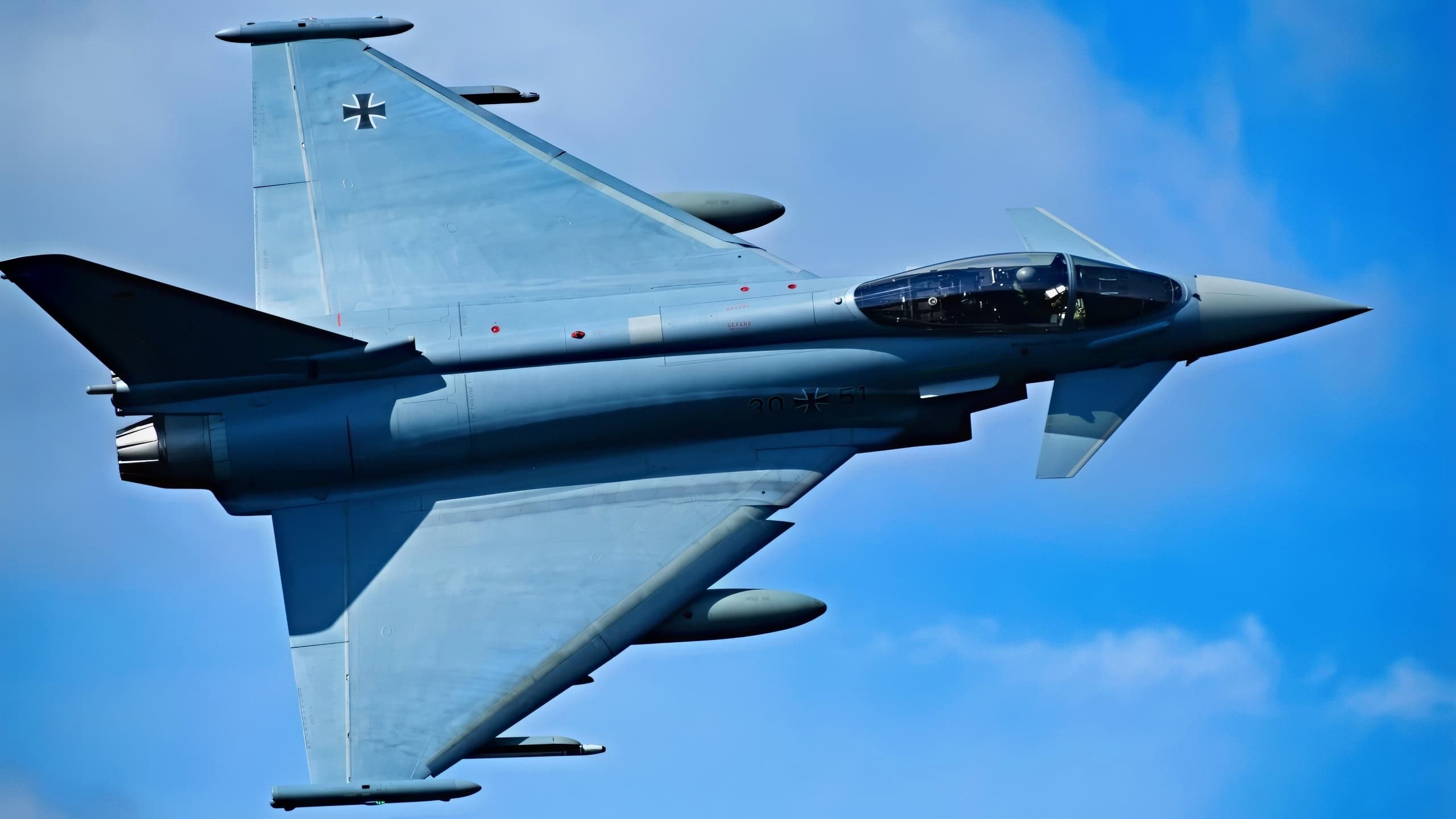
A German Air Force pilot, assigned to the German Air Force Weapons School, conducts strafing runs with an Eurofighter Typhoon in conjunction with U.S. Air Force Joint Terminal Attack Controller assigned to 2d Air Support Operations Squadron identifying targets on the ground at the 7th Army Training Command’s Grafenwoehr Training Area, Germany, June 9, 2021. (U.S. Army photo by Kevin Sterling Payne)
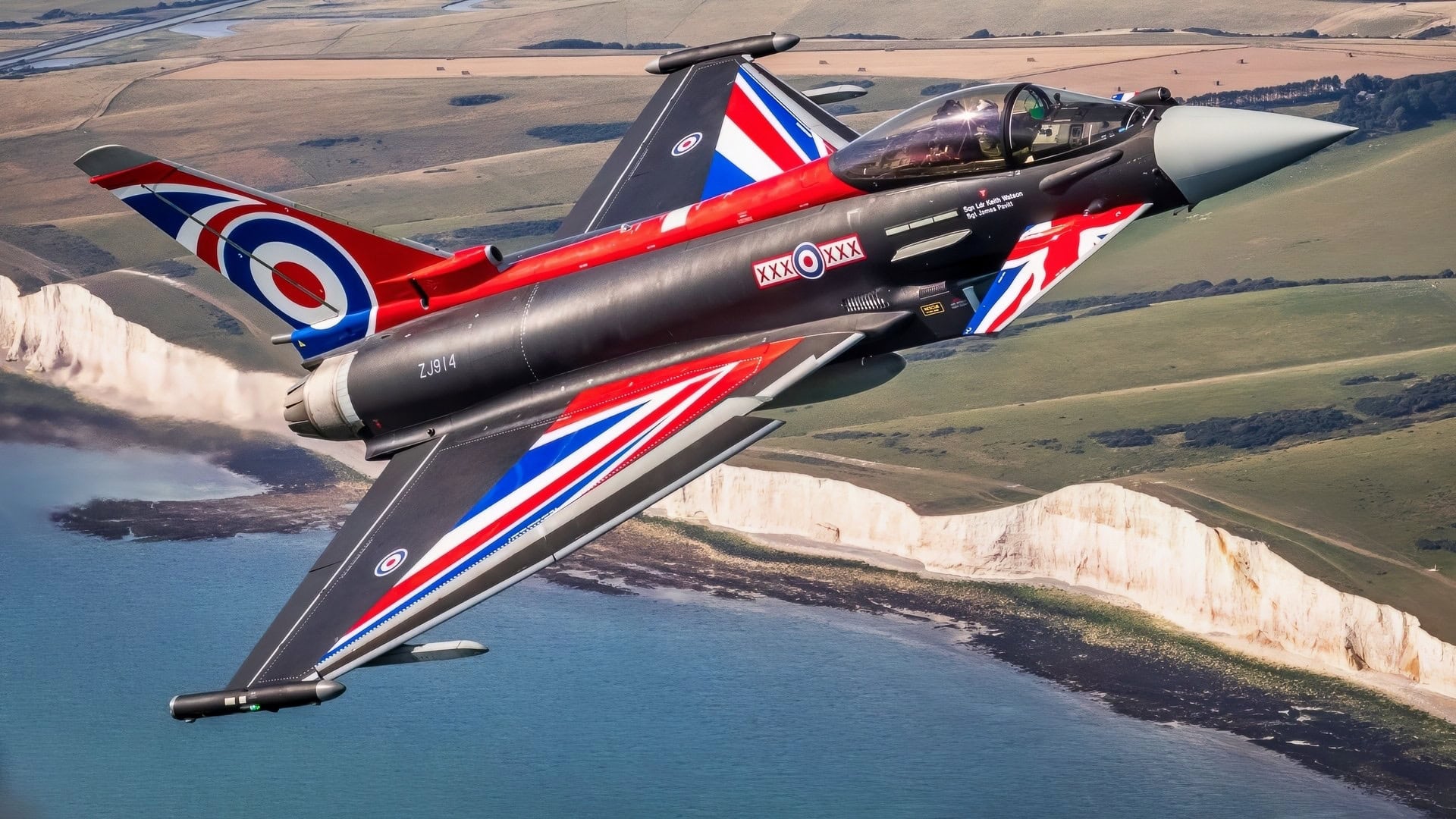
Eurofighter Typhoon Fighter NATO. Image Credit: British Government.
Most experts assumed that the Indians, employing advanced Western and Russian warplanes, along with Western munitions, would easily trounce the PAF–especially because the Pakistanis were utilizing Chinese warplanes and missiles, which were considered subpar.
But the PAF surprised the IAF in the opening phases of what India referred to as “Operation Sindoor.” And the reason they surprised the Indians was that the Chinese-made systems at Pakistan’s disposal–the J-10CE warplanes and the PL-15 air-to-air missiles–were much better than what the Indians thought they’d be.
So, those Western analysts who are poo-pooing the performance of the Chinese systems should take heed. Yes, it was not long ago that Chinese military technology lacked the sophistication and effectiveness of that of the other countries mentioned above.
Those days are over.
China’s Industrial and Technological Advantage
China has long enjoyed its status as the world’s industrial powerhouse of mass production. China’s high-tech industry has also become its own success story.
Now, those two areas are converging to create a viable, competitive, and increasingly marketable arms-export industry.
Look back at the Typhoon versus J-10CE example. For years, Western analysts generally viewed the Typhoon as one of the world’s top non-stealth fighters.
If the Chinese aircraft genuinely dominated both Beyond-Visual-Range (BVR) and visual-range engagements, which the CCTV reports clearly state they did, then China’s fighter ecosystem–particularly its radar, electronic warfare (EW) suite, and missile packages–may be far more competitive than many Western observers assumed.
The Real Story Is the Weapons Package
Let’s focus on the weapons package. J-10CEs have an advanced AESA radar, advanced EW systems, and the long-range PL-15E missile.
That’s not even talking about the networked targeting architecture. These are areas where China has invested heavily.
While there’s always the chance that China is running an information operation to exaggerate the effectiveness of its fighters against the vaunted Eurofighter Typhoon, it is likely safe to say that that is all China did–exaggerate (if they even did that).
Why?
Because if China really did not feel confident that its J-10CEs and PL-15 missiles underperformed, it would not have publicly validated its claims of success two years after the Pakistani-Qatari exercises.
The results from that 2024 exercise, coupled with the undeniably strong performance of the J-10CE and PL-15E missile in the Indo-Pakistani War of 2025, are Beijing’s calling cards for telling potential customers that they don’t have to buy expensive Western fighters or Russian systems anymore.
A Challenge to the West’s Defense Industry
That’s a major–and lasting–challenge to European, Russian, and American aerospace exports.
It’s not that the J-10CE’s reported 9-0 result proves Chinese warplanes are superior to the Eurofighter Typhoon (although, if China keeps going at the rate it is, that day will come sooner than most people understand).
What this does prove, however, is that China’s aerospace industry has reached the point where outsiders can casually dismiss the fighters it produces as second-tier systems.
China keeps advancing across the board. The West keeps ignoring and downplaying those advances.
Soon, the world will learn whether Beijing really is overstating its capabilities or if the West is understating China’s advances. At this point, it is likely the latter.
About the Author: Brandon J. Weichert
Brandon J. Weichert is the Senior National Security Editor at 19FortyFive.com. He also manages The Weichert Brief on Substack. Weichert also hosts “National Security Talk” on Rumble. He is the author of four bestselling national security books, the most recent of which is A Disaster of Our Own Making: How the West Lost Ukraine (Encounter Books). Follow him via Twitter/X @WeTheBrandon.