
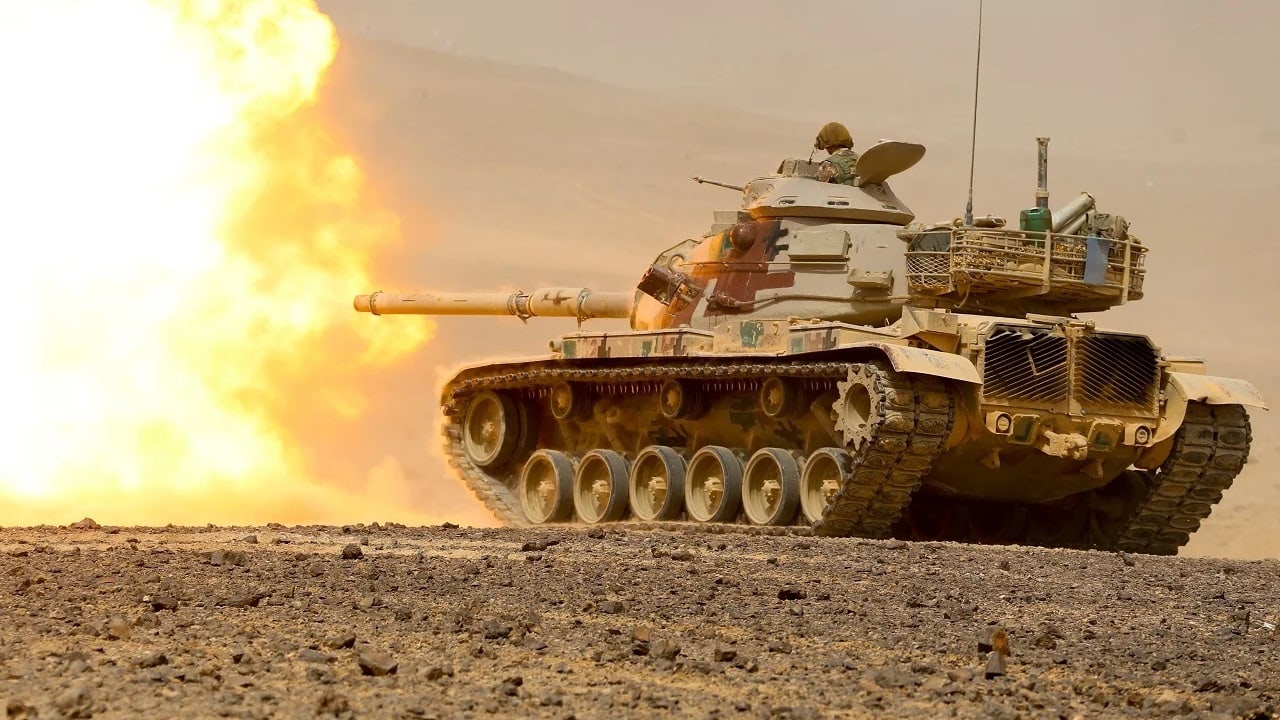
The M60A3 was the final and finest version of the M60 — the last tank in an American lineage running back to World War II — and it earned a distinction that surprises people: it was not a new design, but a 1950s tank upgraded so thoroughly that in one crucial respect, its thermal night sight, its own crews widely rated it better than the early M1 Abrams that replaced it. What made the M60A3 the best of the Patton line was not revolutionary armor or a bigger gun. It was a disciplined package of upgrades — a laser rangefinder, a solid-state ballistic computer, and above all, a thermal sight that let the gunner see in total darkness — bolted onto a proven hull.
The result was a tank that punched far above its age, served the U.S. Army for a quarter-century, and lives on in foreign service and heavily modified forms decades after America retired it, a case study in how careful evolution of a known platform can outlast the revolutionary design meant to supersede it.
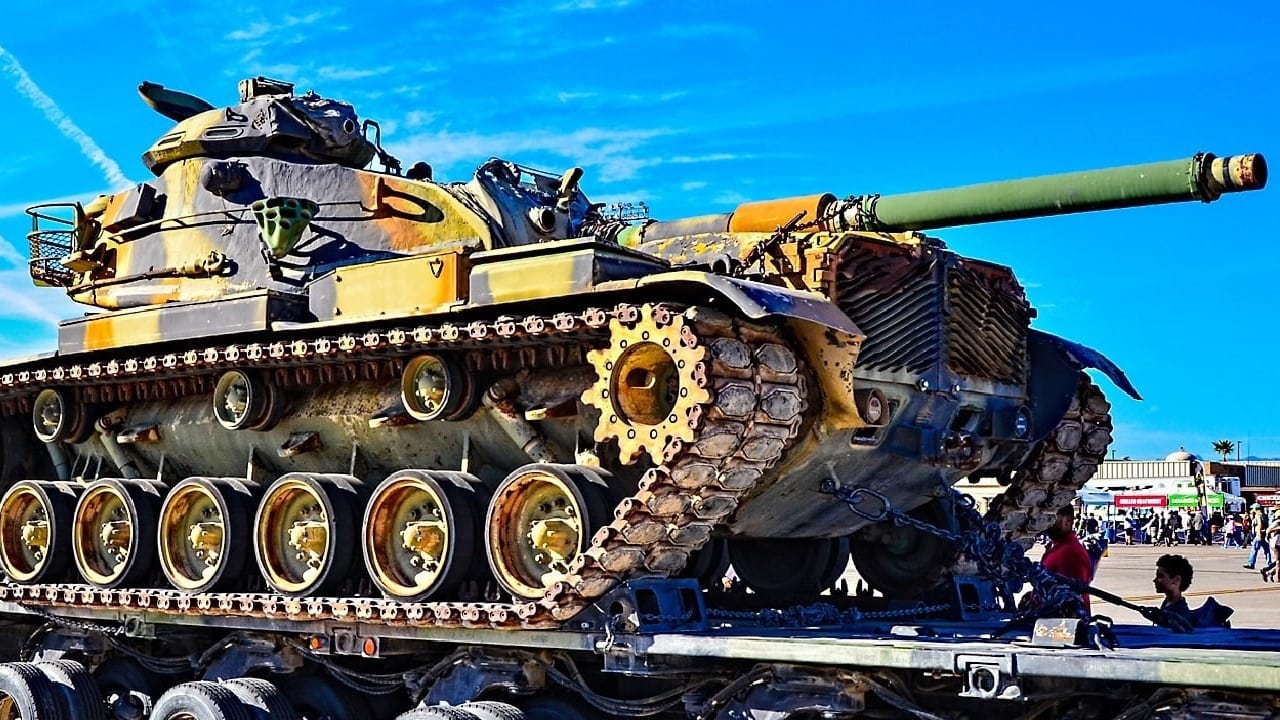
M60 Tank. Image Credit: Creative Commons.
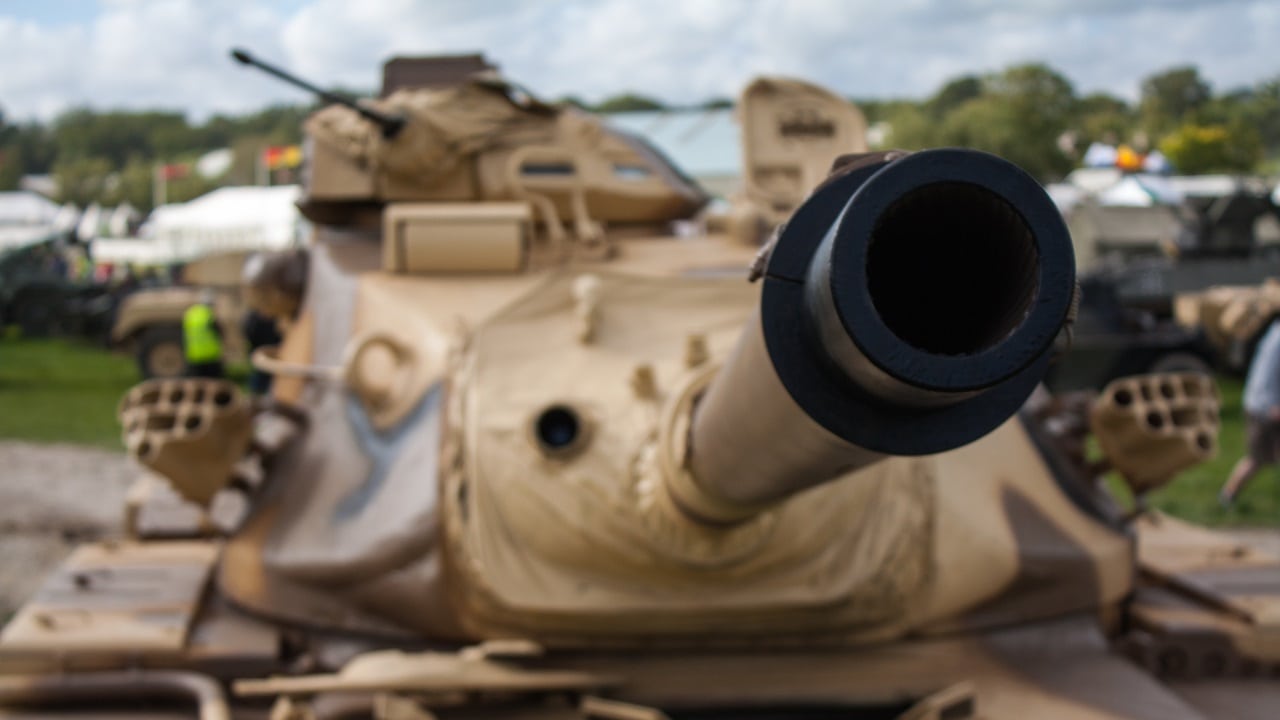
M60 Tank. Image Credit: Creative Commons.
The Patton Lineage: From Pershing To The M60
The M60 sits at the end of a family tree that begins in the last year of World War II. The lineage runs from the M26 Pershing, the heavy tank that arrived in 1945, through the M46, M47, and M48 Patton series of the late 1940s and 1950s, and finally to the M60, which was standardized in March 1959 as the Tank, Combat, Full Tracked: 105-mm Gun, M60.
The new tank was developed from the M48 but was never officially given the Patton name; the Army described it instead as a product-improved descendant of the Patton design.
The nickname stuck anyway, and the M60 has been universally called a Patton ever since.
The M60 entered service in 1960 and quickly became the backbone of American armor. It carried a 105mm main gun at a time when many tanks still used smaller weapons, and over the following two decades, it evolved into a series of variants.
The original M60 gave way to the M60A1, which introduced a redesigned turret and improved armor and would remain the core of the fleet for years. The M60 was meant to be a temporary solution while more advanced tanks were developed, but program after program to replace it failed, and the Patton ended up serving for four decades — an exceptional run for what was supposed to be a stopgap.
The M60A2 “Starship” Misstep
Before the M60A3 brought the line to its peak, the Army took a detour that nearly defined the M60’s reputation for the wrong reasons. The M60A2, nicknamed the “Starship,” replaced the conventional 105mm gun with a 152mm gun-launcher capable of firing both conventional rounds and the Shillelagh guided anti-tank missile. On paper, it was a leap into the future. In practice, it was a costly disappointment: the complex gun-launcher and missile system proved troublesome and unreliable, and the variant never lived up to its promise.
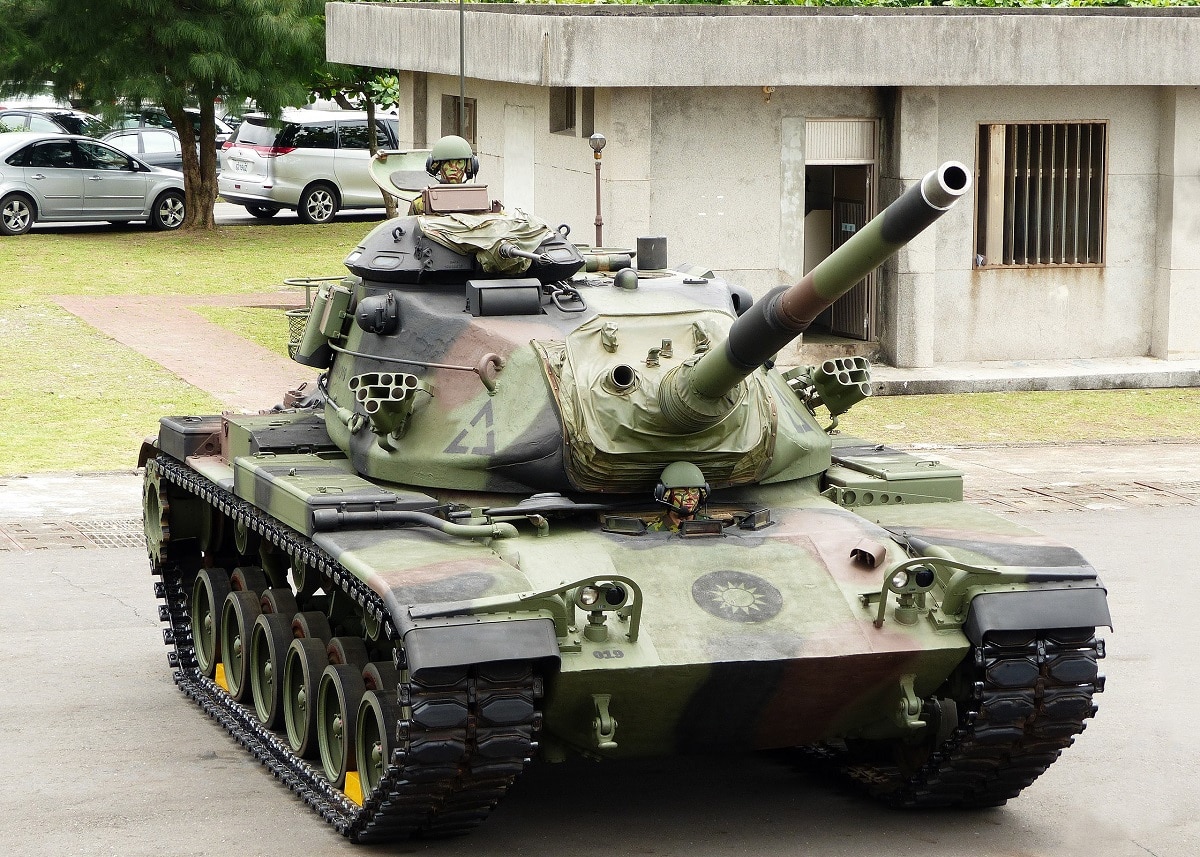
ROC M60 tank. Image: Creative Commons.
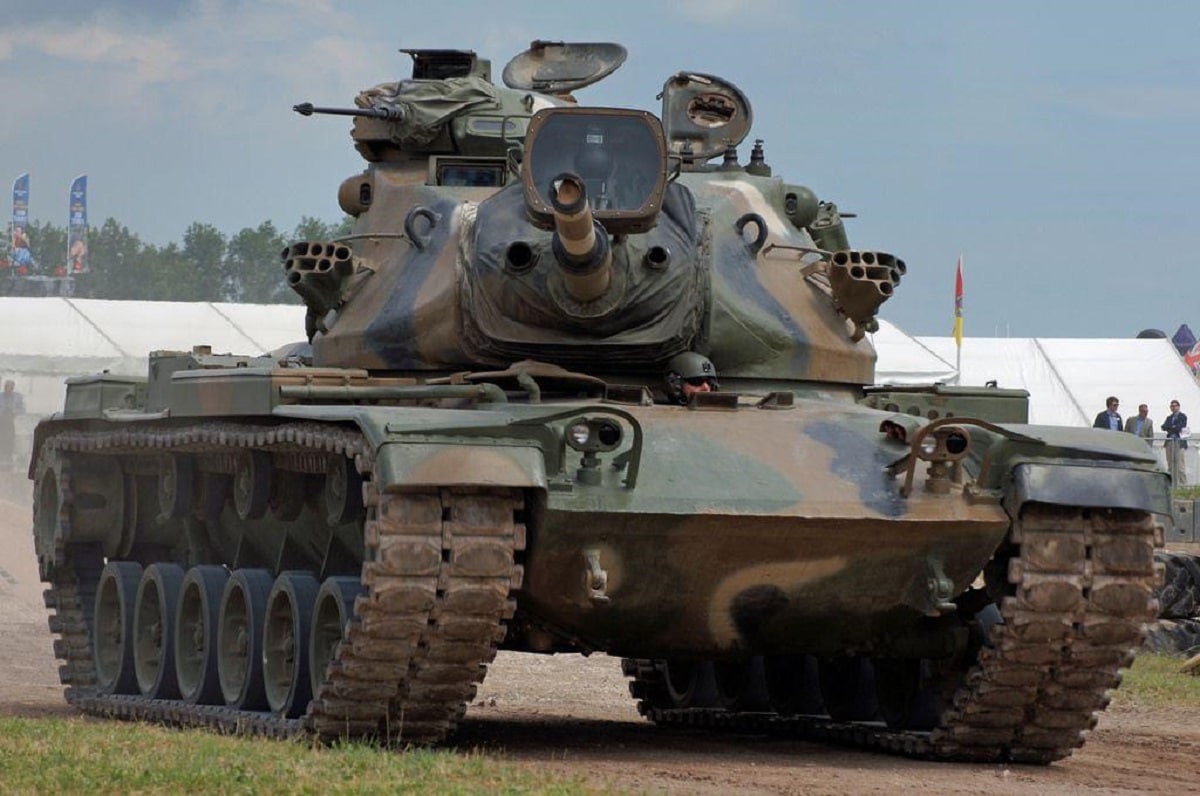
M60 Patton Tank. Image: Creative Commons.

An M60A3 main battle tank from the 1st Platoon, 48th Brigade, 108th Armored Division, Georgia National Guard, moves through a recently cleared roadblock during the training exercise Company Team Defense. (1983)
The Starship was a cautionary lesson in reaching for an immature technology, and it is the reason the M60A3 went the opposite direction. Rather than chase another revolutionary weapon, the Army chose to take everything that worked about the proven M60A1 and make it dramatically better through disciplined, incremental upgrades. That decision produced the best tank of the entire line.
Building The M60A3: A Proven Hull, Transformed Inside
The M60A3 entered U.S. Army service in 1978, and it was an upgrade package layered onto the M60A1 rather than a clean-sheet design. It kept the same steel-armored hull, the same rounded turret, the same four-man crew, and the same long 105mm gun, so that from the outside it was difficult to tell apart from its predecessors. Inside, it was a substantially more modern machine, the product of two converging improvement efforts.
The first was the Reliability Improved Selected Equipment program, known as RISE, which focused on the running gear: an upgraded AVDS-1790-2C diesel engine of roughly 650 horsepower, improved suspension, a better electrical system, and an air-filtration arrangement suited to dusty environments. The Army later developed an improved system for the M60 series, called the Vehicle Exhaust Dust Ejector System, which was retrofitted to the fleet starting in late 1984. The second effort transformed the tank’s ability to find and hit targets.
The M60A3 added a thermal sleeve around the 105mm barrel to prevent heat-induced warping that degrades accuracy, M239 smoke dischargers on the turret sides, and an engine-exhaust smoke-generation system. Most importantly, it replaced the old optical coincidence rangefinder and mechanical computer with a Raytheon laser rangefinder with a maximum range of 5,000 meters and a solid-state ballistic computer that took in crosswind velocity, air temperature, gun-trunnion tilt, altitude, and ammunition ballistics to calculate a firing solution. The gun itself was the M68 105mm rifled cannon, the U.S. version of the British Royal Ordnance L7 that had become NATO’s standard tank weapon, fully capable against contemporary Soviet armor like the T-72.
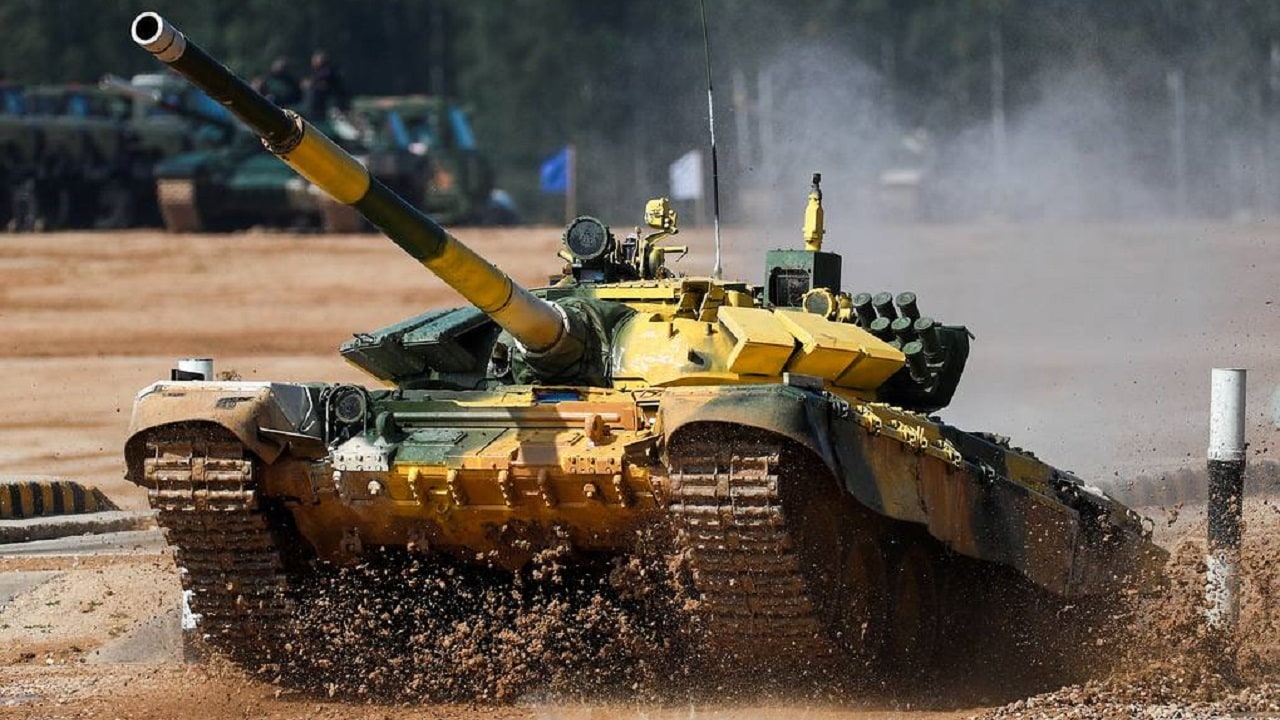
Russian T-72 tank. Image Credit: Creative Commons.
There were two configurations, and the distinction matters. The earlier M60A3, sometimes called the “Passive” version, used the same passive night-vision gunner’s sight as the late-model M60A1.
The definitive version, the M60A3 TTS, added the piece of equipment that made the tank’s reputation: the AN/VSG-2 Tank Thermal Sight, first fielded to Army units in Europe in 1979. Production of the M60A3 TTS for the Army ran from fiscal 1980 to fiscal 1984, with a total of 1,052 tanks built, and hundreds of earlier M60A1 and M60A3 hulls were also converted to the TTS standard at the Anniston and Mainz Army depots through 1990.
The Tank Thermal Sight: The Night Eye That Made Its Name
The AN/VSG-2 thermal sight is the heart of the M60A3’s legend. It replaced the gunner’s passive night-vision periscope with a true thermal imager that read heat rather than amplifying light, which meant the gunner could see in total darkness, through battlefield smoke, and across ground cover that would hide a target from the naked eye.
The thermal sight not only improved the tank’s night-fighting capability but enabled it to see through smoke and concealment, turning the M60A3 from a daylight weapon into one that owned the night — a decisive edge in an era when the ability to fight after dark increasingly separated winners from losers on the battlefield.
What elevates the TTS from a good piece of equipment to a piece of armor folklore is the verdict of the people who used it. Tankers who operated both the M60A3 and the Abrams have widely held that the AN/VSG-2 was among the finest thermal sights ever fielded, and crews and tank enthusiasts commonly say it was better than the thermal imaging system on the early M1s — a striking claim, given that the M1 was the space-age replacement and the M60 the supposedly obsolete predecessor. The TTS gave the gunner a fixed daylight optical channel and a thermal channel, and it was credited with the ability to pick out a tank-sized target in the dark at hundreds of meters under nothing more than starlight.
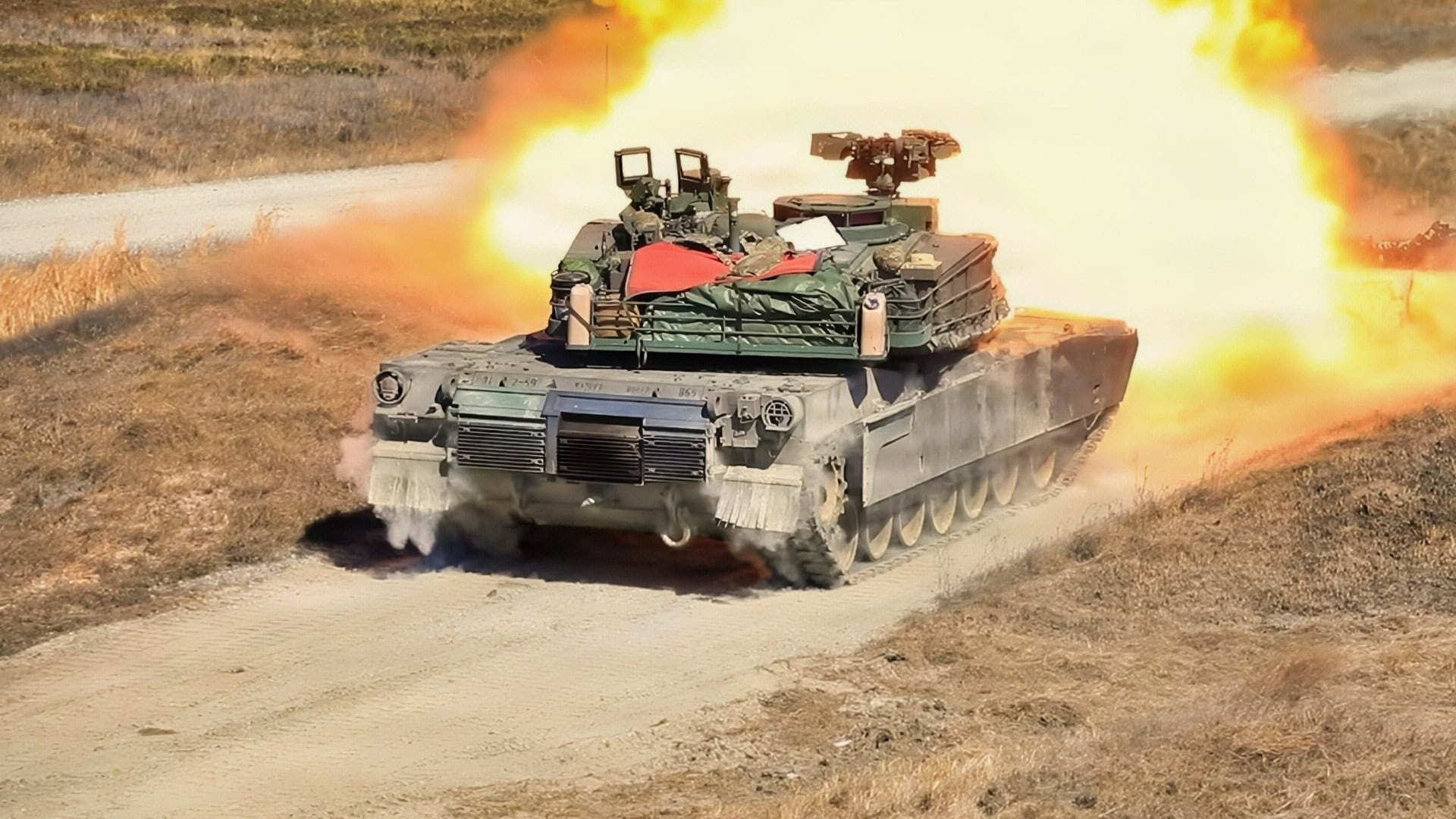
An M1 Abrams tank, operated by U.S. Soldiers assigned to the 2nd Battalion, 69th Armor Regiment, 2nd Armored Brigade Combat Team, 3rd Infantry Division, conduct a Table V live-fire exercise during Spartan Focus at Fort Stewart, Georgia, Feb. 1, 2026. The Marne Division is innovating, experimenting and investing in emerging technologies to dominate the battlefield. (U.S. Army photo by Staff Sgt. Anthony Herrera)

U.S. Soldiers assigned to the 1st Armored Brigade Combat Team, 1st Armored Division fire at a target from an M1 Abrams main battle tank during Rotation 26-01 at the National Training Center, Fort Irwin, Calif., Oct. 17, 2025. Rotations at the National Training Center ensure Army Brigade Combat Teams remain versatile, responsive, and consistently available for future and current contingencies. (U.S. Army photo by Cpl. Anna Mae Tumacder, Operations Group, National Training Center)
Paired with the laser rangefinder and the ballistic computer, it gave the M60A3 a genuine first-round-hit capability and the ability to engage accurately at night, the combination that made the last Patton far more lethal than its 1950s bones suggested. The thermal-sight superiority is a crew-and-enthusiast verdict rather than a laboratory measurement, but it is repeated often enough by people who have run both tanks to have become part of the M60A3’s identity.
Better Than The Abrams? The Edges Over Its Successor
The M60A3’s reputation rests on more than its night sight, because the old tank genuinely did several things better than the new one that replaced it — specifically, the M1A1 Abrams, the 120mm-gunned version that became the Army’s standard. The first advantage was the engine. The M60A3’s AVDS-1790 diesel was far more fuel-efficient than the Abrams’ AGT-1500 gas turbine, which drank fuel at a prodigious rate; the diesel also ran cooler, cost less to operate, and demanded less maintenance, giving the Patton a logistical lightness the thirsty turbine could not match.
The second advantage was in the ammunition. The M60A3’s 105mm gun could fire high-explosive rounds, useful against soft targets, bunkers, and infantry, while the M1A1’s 120mm gun was limited in its early years to dual-purpose HEAT-type ammunition and lacked a dedicated high-explosive round. It is worth being precise here, because the comparison is often muddled: the very first M1 Abrams of 1980 used the same M68 105mm gun as the M60A3 and could fire the same rounds, so the high-explosive advantage applies to the later 120mm-armed M1A1, not to the early 105mm Abrams.
The third advantage was simpler and very practical — the M60A3 carried an external telephone box that let accompanying infantry talk directly to the crew inside — a feature the early Abrams lacked — making it far easier for the Patton to coordinate with foot soldiers. None of this made the M60A3 a better overall tank. It made the M60A3 a tank with real, specific edges over its successor, which is exactly the point: a well-executed evolution kept advantages that the revolutionary replacement, for all its leaps, gave up.
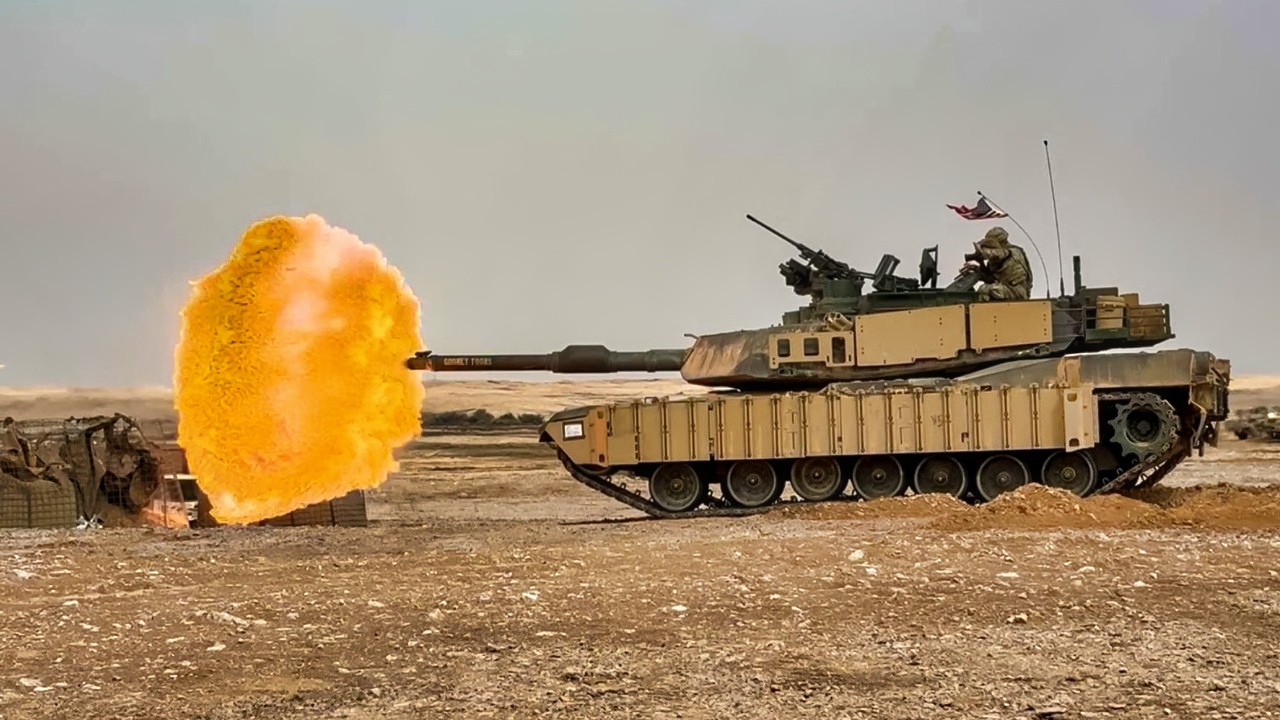
U.S. Army Soldiers assigned to Troop G, 2nd Squadron, 278th Armored Cavalry Regiment, Task Force Reaper fire a M1A2 Abrams tank within the U.S. Central Command’s area of responsibility during the Friendship 25 exercise, Feb. 12, 2025. Exercises like Friendship 25 develop U.S. and Royal Saudi Land Forces service members and enable increased military capacity to address threats to regional security. (U.S. Army Photo by U.S. Army Photo by Maj. Matthew Madden)
Combat And A Quarter-Century Of Service
The M60A3 became the standard main battle tank of U.S. armored and mechanized units in Europe in the early 1980s, positioned along the Cold War front to blunt any Warsaw Pact armored breakthrough. Its combat history in American hands, however, comes with an important clarification. By the time of the 1991 Gulf War, the U.S. Army had largely transitioned to the M1 Abrams, and the American Pattons that fought in Operation Desert Storm were overwhelmingly the U.S. Marine Corps’ M60A1 RISE tanks, some fitted with Blazer explosive reactive armor — not the Army’s M60A3.
The Marines had chosen to keep their Pattons rather than adopt an interim Abrams, and in the Gulf, those tanks performed well: the M60 series destroyed dozens of Iraqi tanks while suffering only light losses, a record shared across the American, Egyptian, and Saudi M60 fleets deployed in the campaign. The fire-control philosophy that defined the M60A3 — laser rangefinder, ballistic computer, thermal sight — was vindicated in combat, even if the A3 itself was already being replaced.
The M60A3’s service life was remarkably long for a design rooted in the 1950s. It was retired from U.S. Army front-line service as the Abrams took over, with the last front-line units withdrawn from the Army National Guard in 1997. Even then, it did not entirely disappear from American use: the tank continued to serve as a training aid, playing the opposing-force role at the Combat Maneuver Training Center in Germany until 2005, when it was finally phased out completely. From its 1960 origin to that last training-fleet retirement, the M60 served the United States for some four and a half decades.
The Afterlife: A Global Upgrade Baseline
The M60’s American career ended, but the tank itself was only getting started elsewhere. Although it was produced only in the United States, the M60 was exported around the world, and in total, the series produced roughly 15,000 vehicles that served in the armies of more than 20 countries.
Many of those operators did exactly what the U.S. Army had done — they upgraded their M60A1 fleets to the A3 standard or beyond — and several went much further, turning the Patton into a thoroughly modern fighting vehicle. The A3’s strong fire control made it a favored baseline for these modernizations.
The most famous derivatives have outlived the original by decades. Israel rebuilt its M60s into the Magach 6 and 7 series, adding explosive reactive armor, improved fire control, and other survivability upgrades that kept them relevant long after the base tank would have been obsolete. Turkey modernized part of its fleet into the Sabra configuration, fitting a 120mm smoothbore gun, new armor, and modern electronics, and has continued to upgrade its Pattons with newer protection systems.
The platform’s endurance is striking: Turkey, Taiwan, Egypt, and other nations still operate M60-derived tanks, and as recently as January 2025, Brazil pulled more than a dozen long-stored M60A3s out of mothballs and returned them to operational service, citing delays in fielding their replacements. The United States no longer operates the M60 in any form, but the tank it retired its soldiers on is still used by several other militaries, often in versions far more capable than those America fielded.
The Verdict: Evolution That Outlasted Revolution
The M60A3 is the proof of a quiet but important principle: a disciplined upgrade of a proven platform can produce a weapon that punches well above its age and outlasts the revolutionary design meant to replace it.
The last Patton was not a new tank. It was a 1950s hull and turret given a new heart — a thermal sight its crews swore by, a laser rangefinder, a ballistic computer, a more reliable engine — and that package made it one of the most effective tanks of the late Cold War, with genuine advantages over the early Abrams in fuel economy, high-explosive firepower, and infantry coordination.
None of that means the Army was wrong to move on. The basic M60 design was aging against the T-72 and the new generation of Soviet armor; its steel hull and rolled-homogeneous protection were rooted in the 1950s, and the Abrams offered a real revolutionary leap in composite armor, turbine speed, and eventually a 120mm gun that the Patton could never have matched.
The honest reading of the M60A3 is not that it should have been kept instead of the Abrams. It is that a brilliantly executed evolution gave a proven platform a second life, a global afterlife, and a few genuine edges over its space-age successor — and that the night sight on the last Patton, the one its crews still talk about, is the detail that captures the whole story.
The tank America treated as a stopgap turned out to be the one that would not stop.
About the Author: Harry J. Kazianis
Harry J. Kazianis (@Grecianformula) was the former Senior Director of National Security Affairs at the Center for the National Interest (CFTNI), a foreign policy think tank founded by Richard Nixon based in Washington, DC. Harry has over a decade of experience in think tanks and national security publishing. His ideas have been published in the NY Times, The Washington Post, The Wall Street Journal, CNN, and many other outlets worldwide. He has held positions at CSIS, the Heritage Foundation, the University of Nottingham, and several other institutions focused on national security research and analysis. He is the former Executive Editor of the National Interest and the Diplomat. He holds a Master’s degree focusing on international affairs from Harvard University.

