
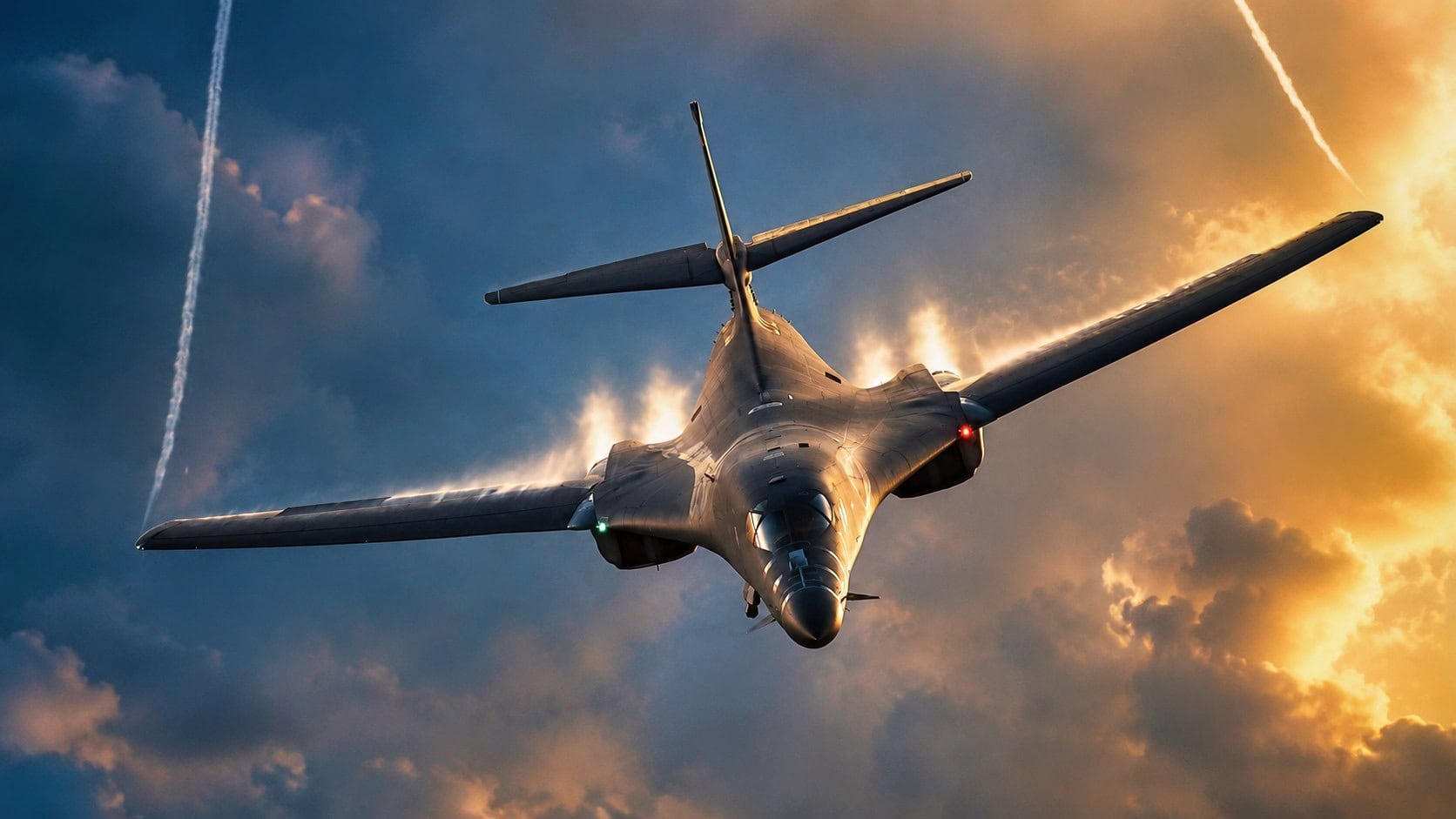
The US Air Force Plans On Keeping B-1 And B-2 Bombers Flying Into The 2030s: According to Air and Space Forces magazine, the Air Force is planning to officially extend the lifespans of the B-1 and B-2 bombers into the late 2030s.
Both bombers were slated for retirement in the early 2030s; however, both fleets are receiving a combined $1.7 billion in life-extension and modernization funding to prevent a bomber capability gap as the new B-21 Raider fleet ramps up
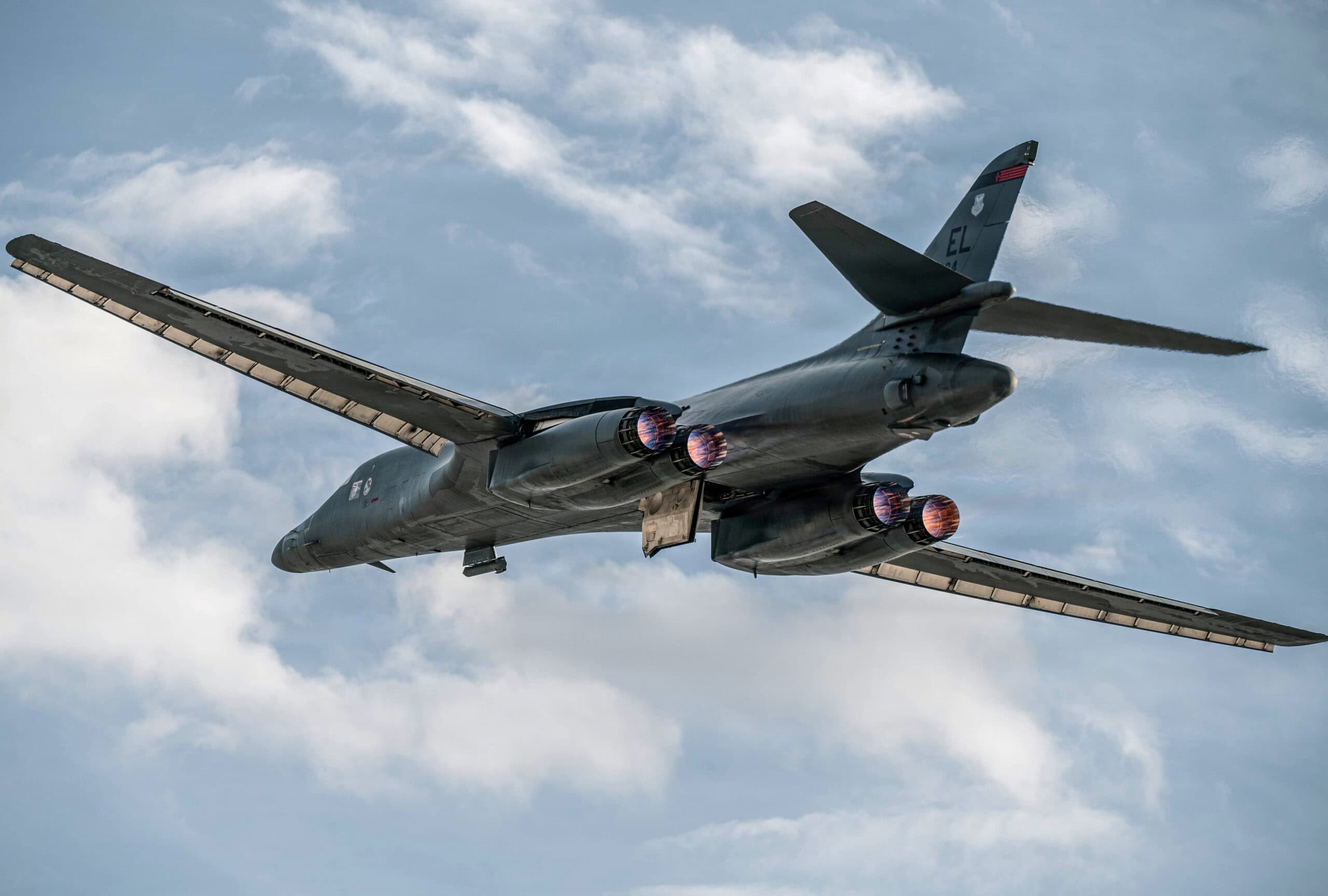
A U.S. Air Force B-1B Lancer assigned to the 28th Bomb Wing takes off in support of a U.S. Air Force Weapons School Integration mission at Nellis Air Force Base, Nevada, Nov. 18, 2025. The mission contributed to the Air Force’s efforts to maintain a ready and agile bomber force providing students with experience coordinating large-scale air operations across dispersed locations. (U.S. Air Force photo by Senior Airman Lauren Clevenger)
The Air Force is also upgrading the iconic B-52 bomber into the new J configuration, with new Rolls-Royce engines and an all-glass cockpit.
With the events of two separate air campaigns against Iran, the B-2 Spirit stealth bomber has more than proved its worth again.
In those two separate bombing campaigns, the B-2 Spirit flew to Iran from its home base in Missouri; the aircraft has a 7,000-mile range before needing to refuel.
The B-1 Is Getting A $342 Million Upgrade
The Air Force is using the upgraded B-1B bomber as a bridge until the B-21 Raiders are produced in sufficient numbers to take over.
Budget documents show that the venerable B-1 (aka The Bone) will get $342 million in modernization upgrades between 2027 and 2031.
This request provides the necessary funding to modernize the platform, ensuring its lethality and relevance through 2037,” the budget said.
The Air Force is equipping its B-1B Lancer bombers with new external pylons, specifically the Load Adaptable Modular (LAM) pylons, to enhance their weapons carriage capabilities.
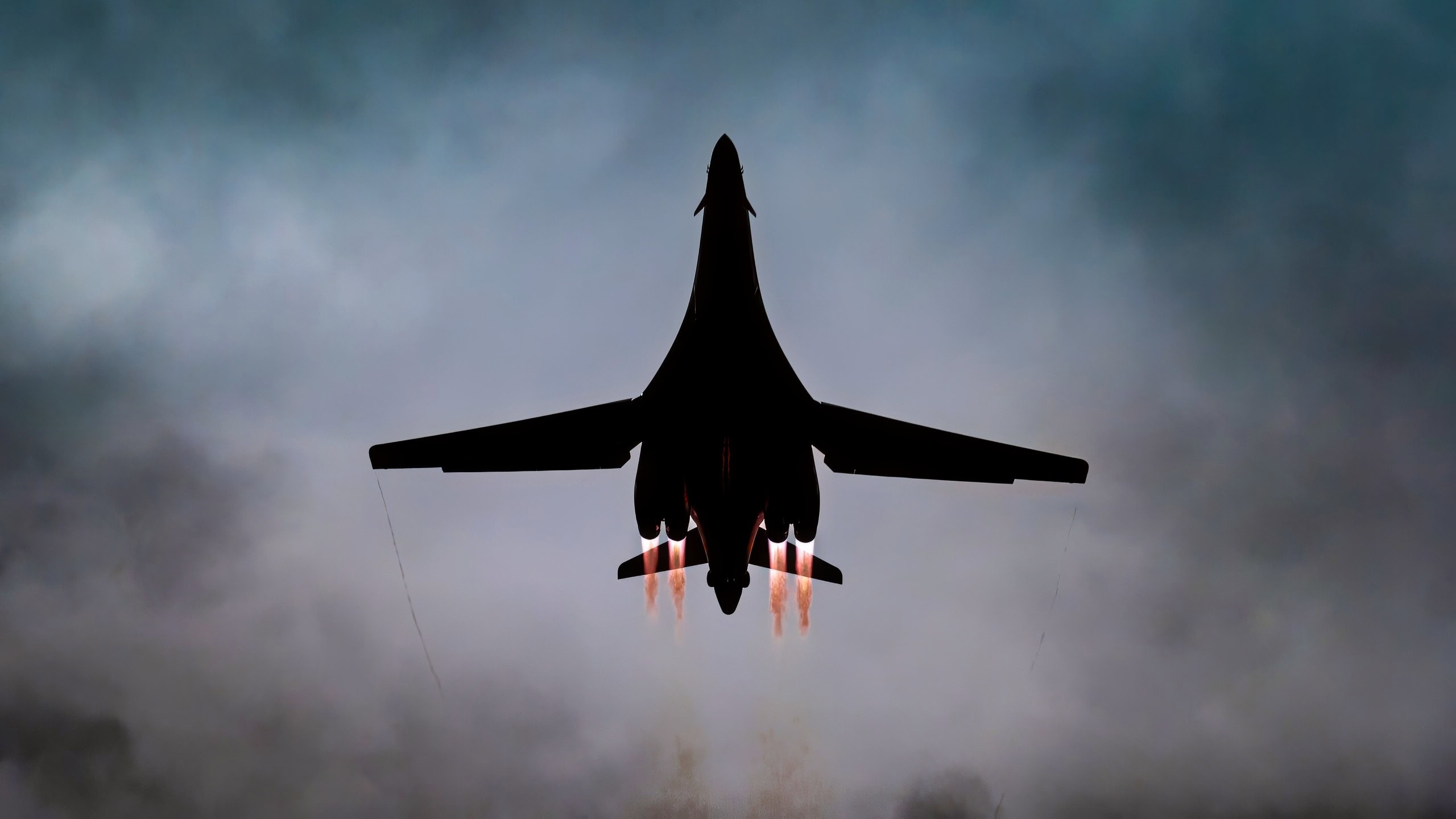
A B-1B Lancer assigned to the 9th Expeditionary Bomb Squadron takes off at RAF Fairford, United Kingdom, to participate in a Bomber Task Force Europe mission, Oct. 27, 2021. “Bombers enhance our ability to address dynamic threats and counter adversary actions in the region as an effective joint force,” said Gen. Jeff Harrigian, U.S. Air Forces in Europe – Air Forces Africa commander. Operations and engagements with NATO allies and global partners demonstrate the shared commitment to global security and stability. (U.S. Air Force photo by Senior Airman Colin Hollowell)
According to Boeing, the LAM pylon will reuse six external structural hardpoints that were originally designed and used to carry AGM-86 nuclear missiles. However, those structural hardpoints were rendered unusable due to the START strategic arms reduction treaties.
“The B-1 LAM pylon is going to be used to allow us to carry a variety of different weapons and different weapons configurations on the external pylons of the B-1,” said Lt. Col. Scott Pontzer, 419th Flight Test Squadron Commander.
“That will enable weapon delivery and testing in a variety of different configurations and include new weapon release profiles.”
On May 26, Boeing reported that the LAM pylon had passed its design review, an important step in the design process.
“This is only just the beginning of the incredible things we can do to support this aircraft,” says Lynsay Brannock, Boeing’s B-1 program manager. “Our team is committed to finding new capabilities for this aircraft that give commanders more options and keep the B-1’s place as a pillar of the USAF’s bomber fleet.”
Modifying the fleet with Load Adaptable Modular (LAM) pylons will enable it to carry heavy standoff missiles and hypersonic weapons, such as the AGM-183 ARRW, as well as up to 36 larger guided missiles (such as JASSM or LRASM).
The B-2 Spirit Is Getting Even More Upgrades
The Air Force will invest even more in its small fleet of B-2s—$1.35 billion over the same five-year timespan.
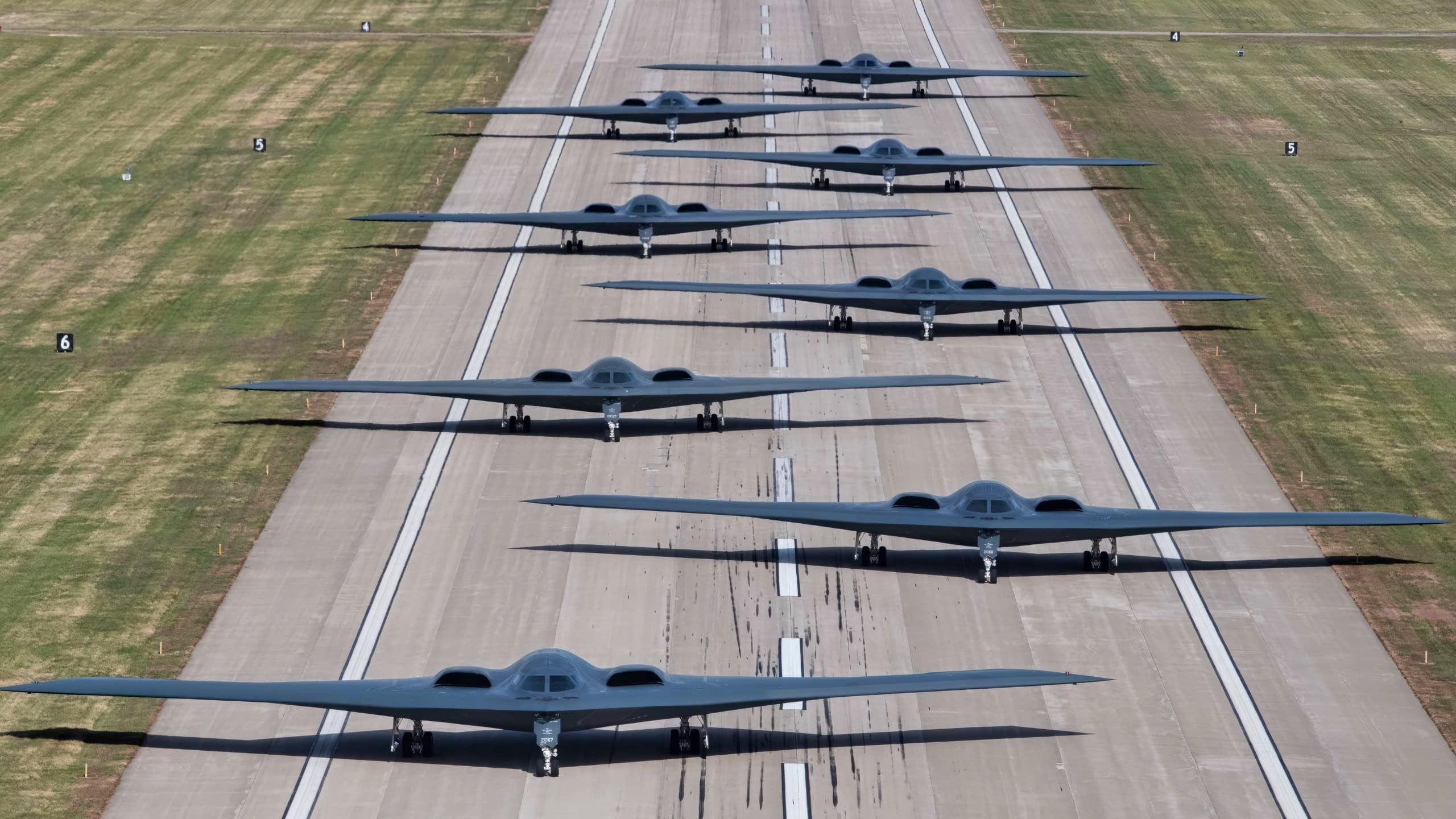
B-2 Spirit stealth bombers assigned to Whiteman Air Force Base taxi and take-off during exercise Spirit Vigilance on Whiteman Air Force Base on November 7th, 2022. Routine exercises like Spirit Vigilance assure our allies and partners that Whiteman Air Force Base is ready to execute nuclear operations and global strike anytime, anywhere. (U.S. Air Force photo by Airman 1st Class Bryson Britt)
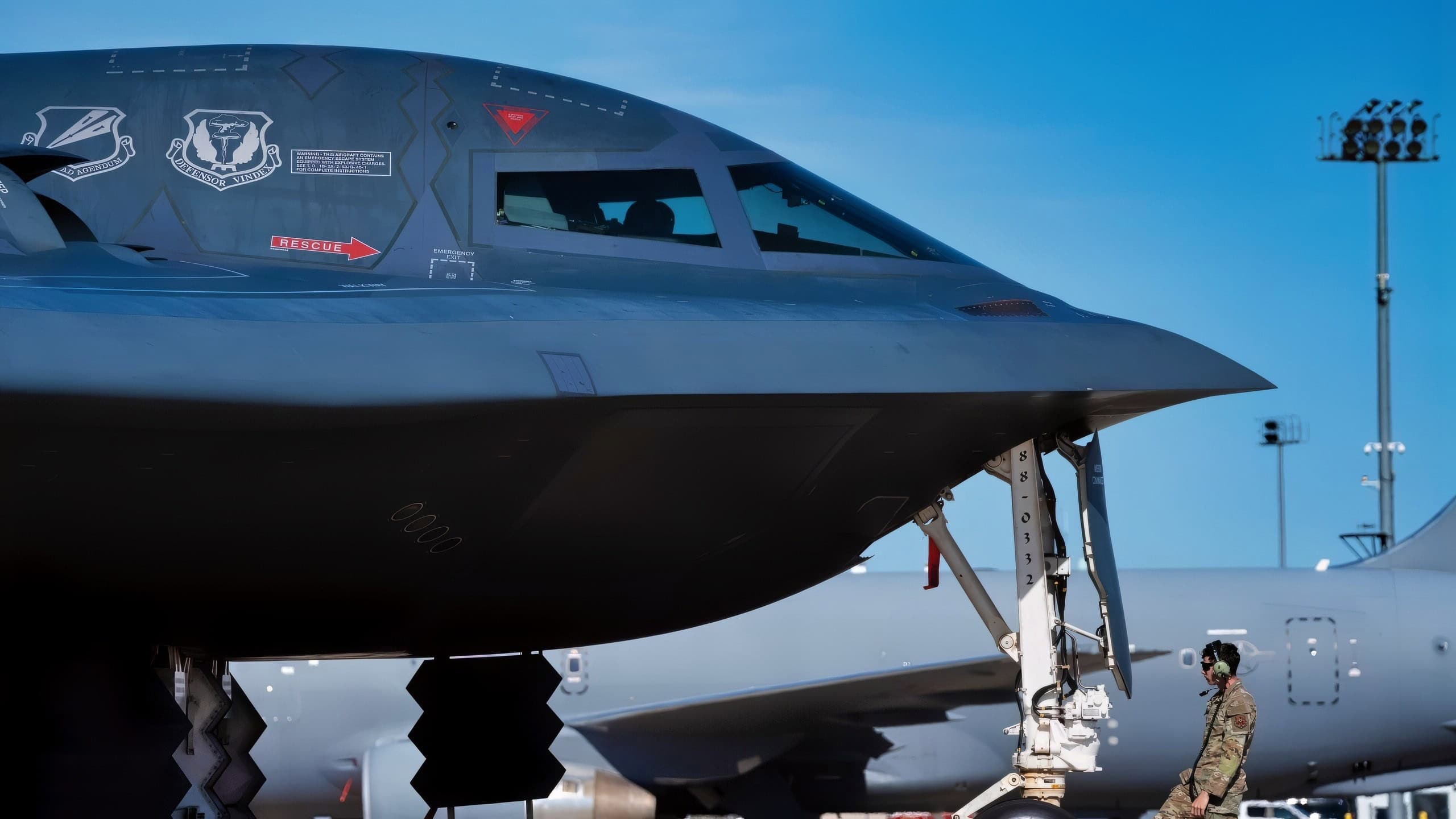
U.S. Air Force Staff Sgt. Hunter Kaloci, 393rd Bomber Generation Squadron crew chief, adjusts a wheel chock in front of a parked B-2 Spirit aircraft at Pease Air National Guard Base, New Hampshire, Sept. 20, 2025. The 393rd BGS provides worldwide combat capability by planning and conducting all aspects of on-aircraft maintenance, launch and recovery of B-2 aircraft in direct support of Joint Chiefs of Staff nuclear and conventional taskings. (U.S. Air Force photo by Staff Sgt. Joshua Hastings)
This funding ensures the fleet’s lethality and operational relevance to 2037 and beyond while the B-21 Raider is slowly phased in.
“Given the skyrocketing demand [for bomber capacity], it makes perfect sense to buy back the B-1 and B-2,” retired U.S. Air Force Col. Mark Gunzinger, director of future concepts and capability assessments for AFA’s Mitchell Institute for Aerospace Studies, said.
“The B-2 is the only fully operational stealth bomber that we have, and frankly, long-range penetrating strike capability is one of the most significant shortfalls in our military. So why divest the B-2 early? It was completely budget-driven and resource-driven.”
The B-2 Spirit is powered by four General Electric F118-GE-100 engines, each with over 17,000 pounds of thrust. Its ceiling is 50,000 feet, and it can carry conventional or nuclear weapons.
In last June’s campaign against Iran’s nuclear weapons enrichment facilities, one of the weapons carried by the B-2 Spirit stealth bomber is the GBU-57A/B Massive Ordnance Penetrator, a 30,000-pound bunker-buster weapon.
That weapon’s unique capabilities significantly enhanced the effectiveness of an American strike against Iran’s nuclear facilities, and each B-2 bomber can carry two of the bunker-buster bombs. And its stealth allowed it to penetrate Iranian airspace undetected.
The Air Force Global Strike Command said the B-2s will continue to operate from Whiteman Air Force Base, MO., for as long as they are needed, even after the B-21 comes online. The first operational B-21s will be fielded at Ellsworth Air Force Base, S.D., in 2027, with Whiteman the second base to host them.
“As we field the B-21, the requirement exists to simultaneously train and perform operational missions,” the spokesperson for the command said. “The B-2 will remain a critical long-range strike option for the President and will be maintained as a viable capability for as long as it is needed for national security.”
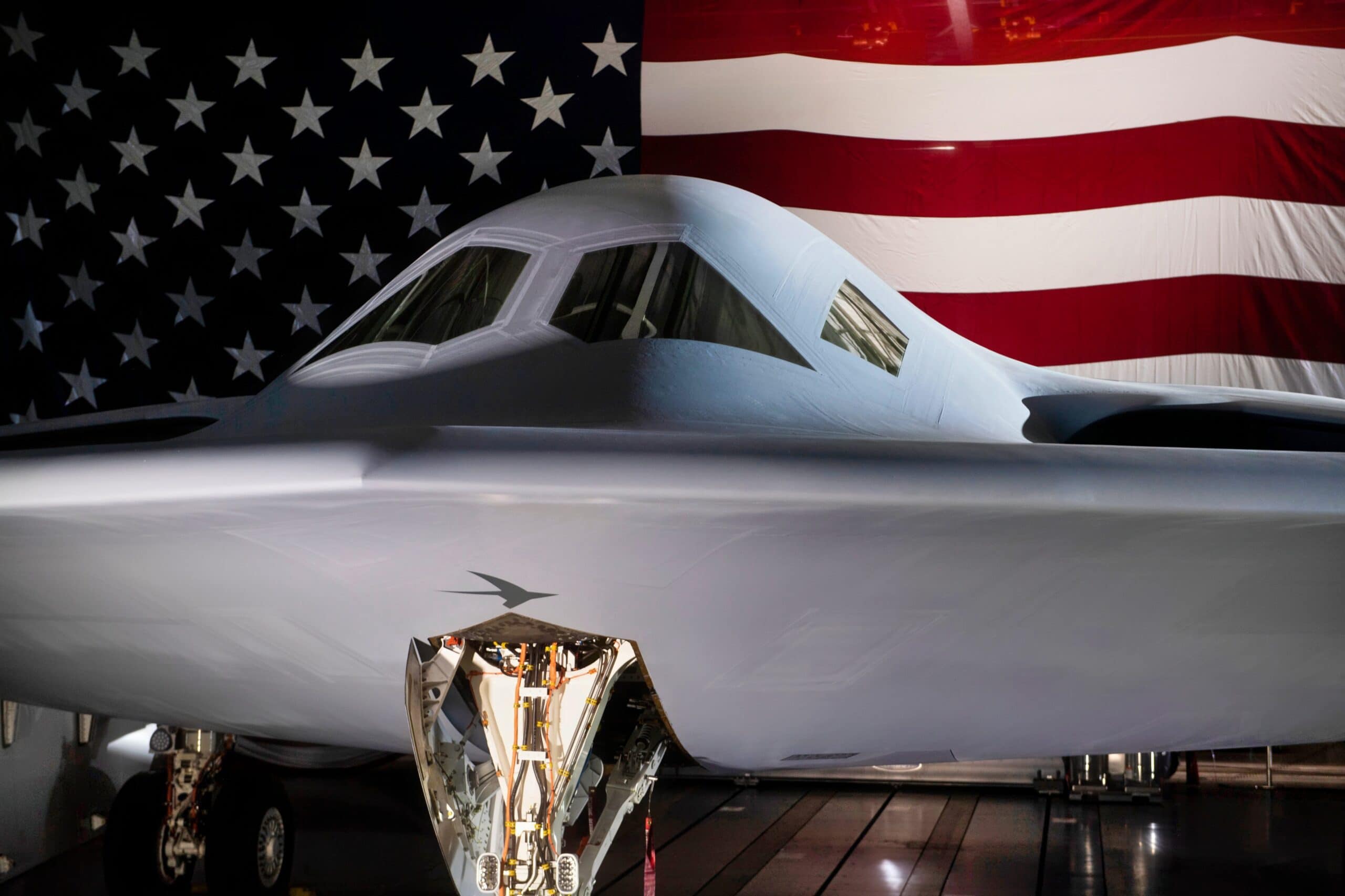
B-21 Raider. Image Credit: Creative Commons.
The B-21 Raider Is The Future, But 100 Isn’t Going To Be Enough
The Northrop Grumman B-21 Raider, the next-generation stealth bomber, is set to replace the aging B-2 Spirit and B-1 Lancers as the backbone of the US Air Force’s strategic bomber fleet.
It is expected that, although China and Russia pursue advanced bomber designs of their own, the B-21 Raider’s technology will keep it a step ahead of its opponents for the next generation of air warfare.
However, the issue facing the Air Force isn’t the bomber itself, but the number of B-21s the US plans to purchase. Currently, the official US policy is to buy just 100 Raiders.
The Center for Strategic and Budgetary Assessments recommends 288 B-21s, suggesting a significantly larger fleet is necessary.
A larger fleet would ensure a credible deterrent, allow for suppression of advanced air defenses, support continuous operations, and hedge against potential attrition.
Northrop Grumman CEO Kathy Warden recently stated she believed that the possibility of expanded orders was “exactly what the Air Force is looking at,” with the former Secretary of the Air Force Frank Kendall having “been open about looking at the various options they have for increasing their force size, and has talked specifically about NGAD, and we know that B-21 is in the mix, as well.”
The future of America’s NGAD (Next Generation Air Dominance) sixth-generation fighter program is highly uncertain due to its tremendous projected costs. Analysts have repeatedly raised the possibility that funds saved by the program could enable larger B-21 acquisitions if the Air Force pauses the NGAD project.
Thus, the B-21 is set to be the first intercontinental range stealth bomber to be widely fielded. Its development comes at a time when China is developing its own comparable aircraft under the H-20 program.
The B-21, Smaller, More Flexible, Survivable:
The B-21’s compact design will allow it to penetrate China’s area-denial strategy, known as Anti-Access/Area Denial (A2/AD) defenses, more effectively, ensuring it can deliver precision strikes or gather intelligence in high-threat environments where the larger B-2 might face greater risks.
The B-21’s smaller size also translates into greater operational flexibility. The B-2 Spirit, with its massive wingspan and heavy payload capacity, was designed for long-range, high-payload missions, often carrying large nuclear or conventional munitions over intercontinental distances.
The B-21 Raider also provides a generational leap in stealth over the B-2 Spirit, advancing from “very low” to “extremely low” observability across the entire electromagnetic spectrum.
Key upgrades include more durable, next-generation radar-absorbent materials (RAM), optimized 360-degree stealth shaping, and superior infrared heat management.
One potential force multiplier is that the B-21 could play a key role in multi-domain operations, integrating with space-, cyber-, and ground-based assets to provide a comprehensive and coordinated response to threats, including the CCA “loyal wingman” program.
The B-21’s open-system architecture will allow frequent updates to its onboard systems, not only affecting the types of weapons it can carry but also making it easier to upgrade the bomber’s avionics.
It has been reported that the B-21 can take off and land from smaller, more austere airfields. The aircraft will not require the climate-controlled hangars that the B-2s do. Therefore, the long flights from Missouri won’t be necessary, as the Air Force could forward deploy the Raiders in the theater.
But as the B-21s slowly come online, having the upgraded B-1s, B-2s, and B-52s flying into the late 2030s and beyond allows the Air Force to maintain a critical deterrent capability and to hit hard targets with all the ordnance in its inventory.
About the Author: Steve Balestrieri
Steve Balestrieri is a National Security Columnist. He served as a US Army Special Forces NCO and Warrant Officer. In addition to writing on defense, he covers the NFL for PatsFans.com and is a member of the Pro Football Writers of America (PFWA). His work was regularly featured in many military publications.