
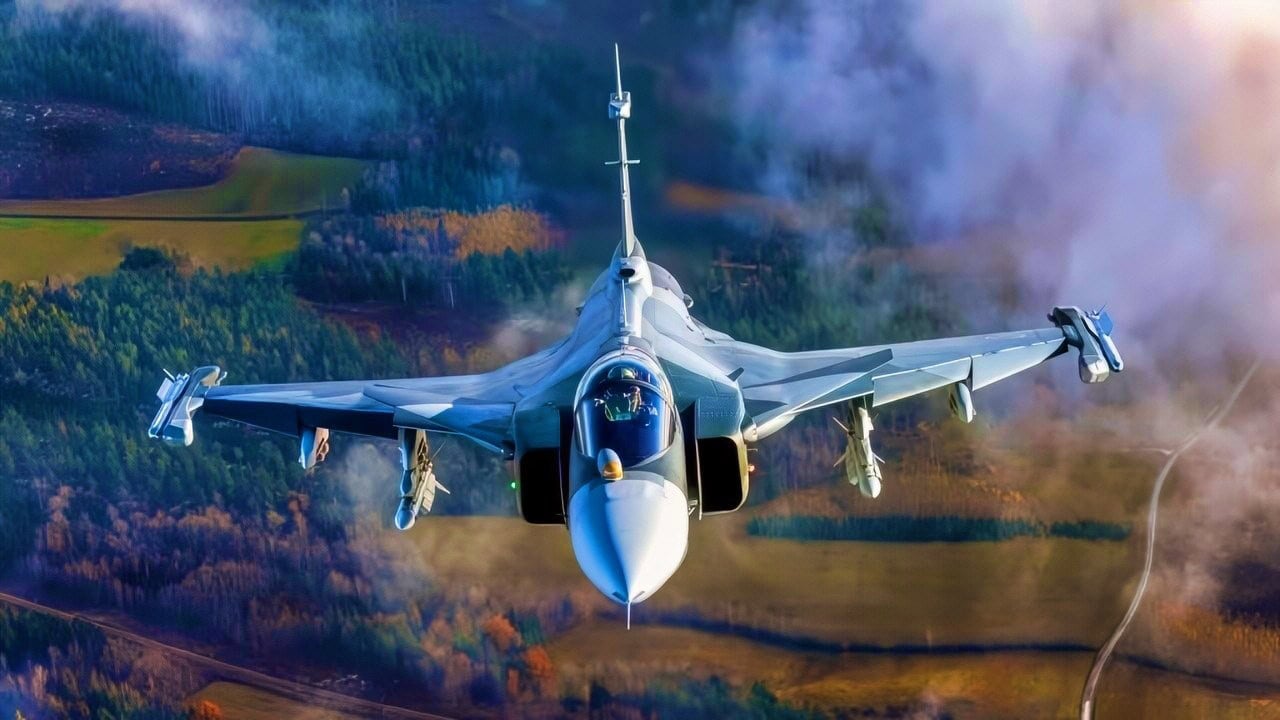
Just when you think the saga concerning the Canadian air force’s new order of combat jets has been concluded, a new wrinkle in the story crops up.
It seems now that the Canadian government has made a decision that is raising eyebrows in the military aviation community. The Canadian air force may order over 140 new fighter jets instead of 88.
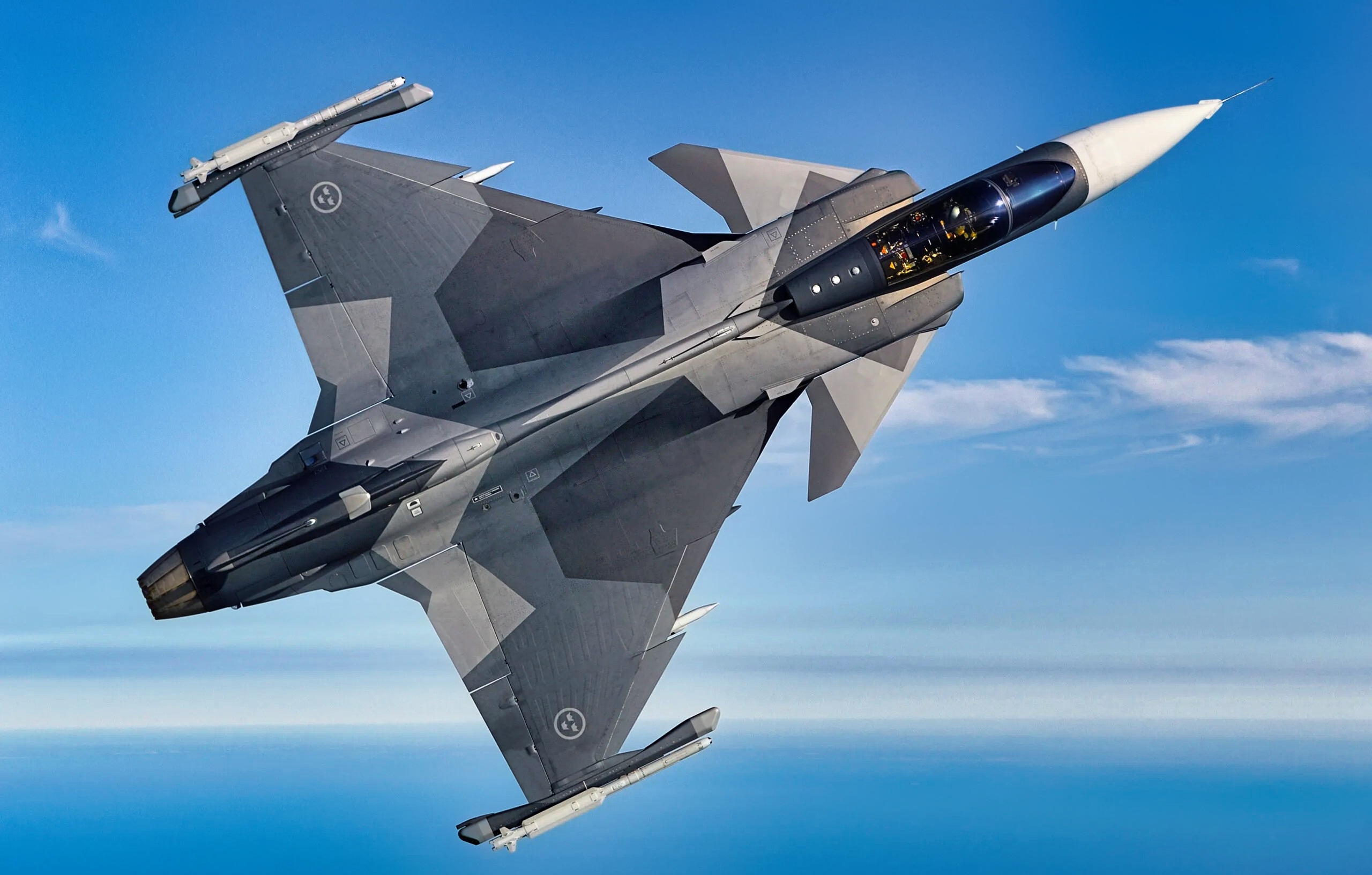
JAS 39 Gripen E Fighter. Image Credit: Saab.
It Was Supposed to Be a Huge Fleet of F-35s
For the longest time, Canada had committed to purchasing 88 F-35 Lightning II stealth fighter jets from the United States.
The Great White North had already paid for the initial lot of 16 fifth-generation warbirds, but what about the rest?
Frustrations with the Americans
That’s still not clear.
Canada has been playing footsie with the United States. The northern neighbor is tired of being hectored by President Donald Trump and hates that the Americans are slapping tariffs on Canadian goods.
Prime Minister Mark Carney grew frustrated and placed the F-35 deal on the back burner. The agreement is in “review mode,” and no one knows if Canada will buy the full 88-airplane allotment from Lockheed Martin.
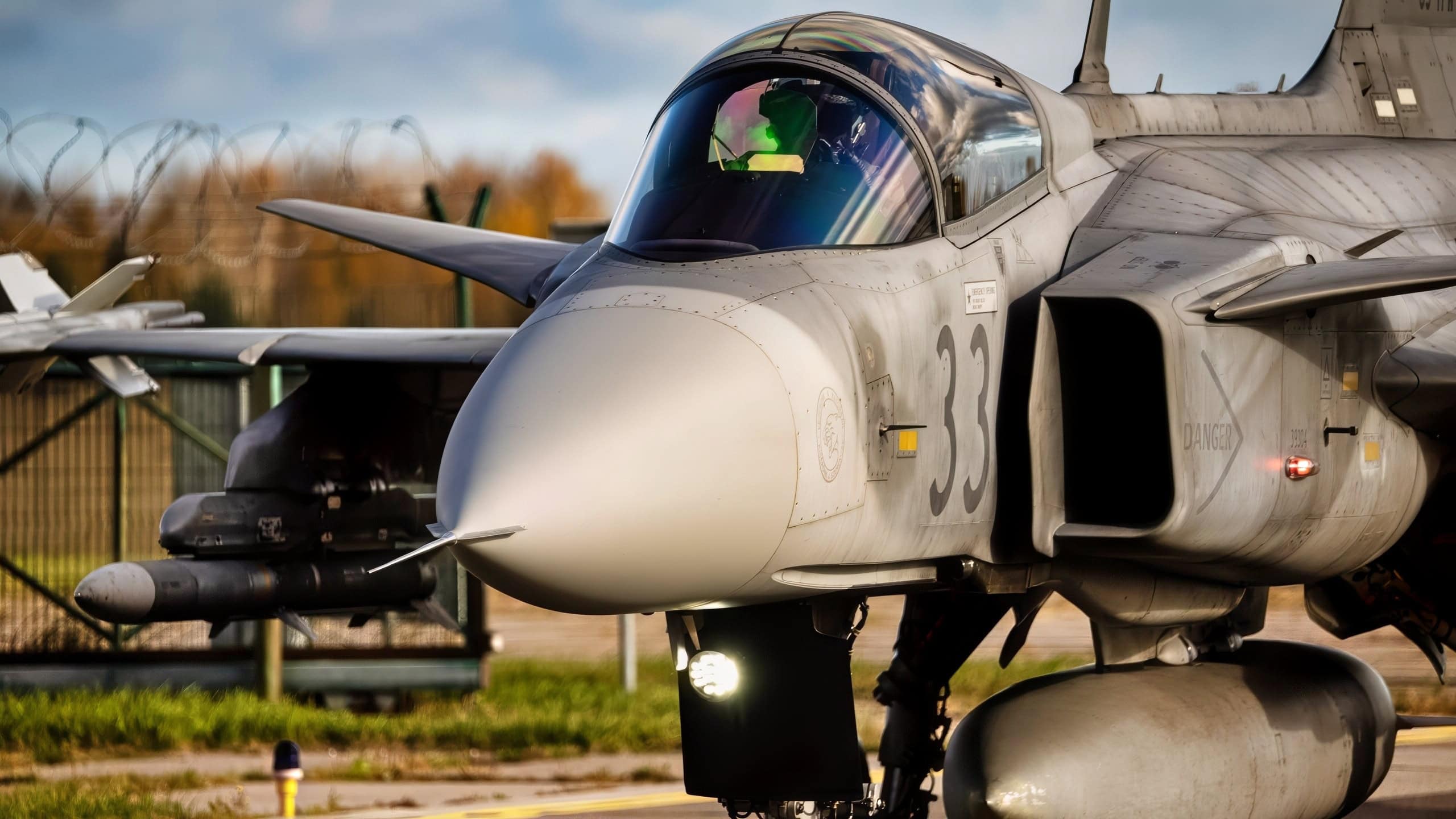
A Hungarian Air Force JAS-39 Gripen is seen taxiing across the runway after completing a successful training scramble.
Hungary took command of NATO’s Baltic Air Policing mission in August 2022, deploying JAS-39 Gripen fighter jets to Siauliai Air Base in Lithuania for the third time since 2015. Air Policing is a long-running mission that operates 24 hours a day, 365 days a year. It includes quick reaction fighter aircraft are ready to take off within minutes to intercept any aircraft that may threaten Allied airspace.
Sweden Wants Canada to Take a Saab Fighter Jet for a Drive
So if Canada is not buying F-35s, what fighter jet will emerge as a target for the air force?
In steps Sweden’s Saab and the JAS 39 Gripen. This fourth-generation “+” or “++” fighter is a capable airplane.
It can take off and land on unimproved runways. Avionics, engine thrust, and acceleration are top-notch, and while it is not fully stealthy, it has radar-evading characteristics.
Sweden naturally wants the Gripen to be the choice for the full allotment of new airplanes. With 140 ordered in total, Saab thinks it has the potential to make this the deal of the century.
What If Canada Buys As Many As 100 Gripens?
Perhaps Canada will not split the deal between 70 F-35s and 70 JAS 39s. Or, if Sweden has its way, there could be as many as 100 Gripens with just 40 F-35s ordered.
Sensing it holds the winning hand, Sweden has put the full-court press on the Canadians, using a high level of irresistible sales and marketing gimmicks to sweeten the deal.
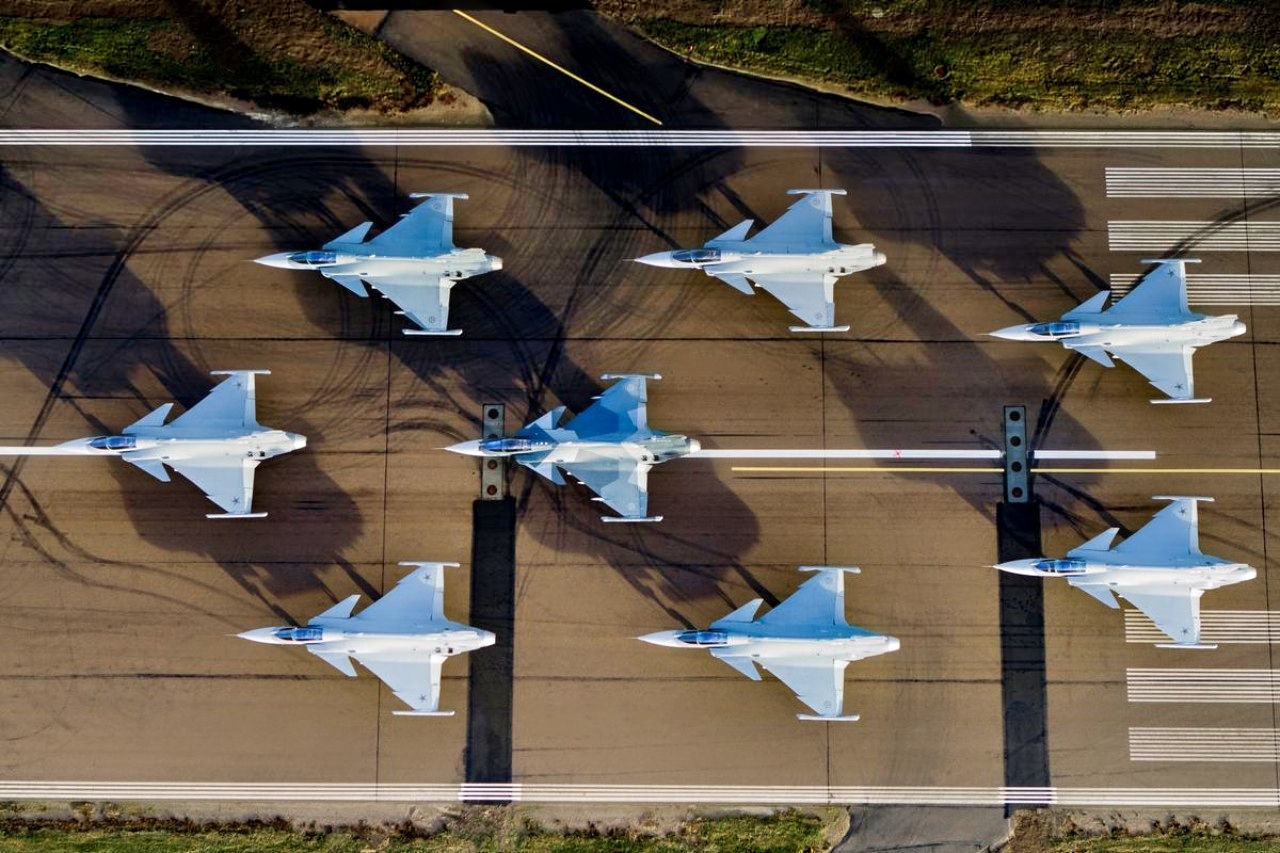
JAS 39 Gripen E. Image Credit: Creative Commons.
The Swedes Are Offering New Airplanes and New Jobs
For example, Saab could allow the JAS 39 to be assembled in Canada at a new plant or let more parts be made in the country.
This would boost economic development and create high-paying jobs for many Canadians.
While there are numerous suppliers of F-35 parts in Canada, the Americans have no plans to allow the F-35 to be made outside Lockheed’s Fort Worth, Texas, manufacturing facility. Saab could also offer the Canadians a full contract to maintain the JAS 39s, too.
Why Flying Both the F-35 and JAS 39 Is Problematic
Carney’s defense ministry wants to diversify its aircraft order, and it looks exceedingly likely that it will buy both Gripens and F-35s.
This could pose some issues for the Canadian Air Force.
Two training centers would need to be established in the country to prepare pilots to fly the two types of airplanes.
Then the ground crews would have to be trained, probably both in the United States and Sweden. Canadian maintainers would have to be schooled in stealth coatings and how to care for those materials.
Weapons would be different, and both airplanes would have separate maintenance schedules. We know by now that the F-35 can be finicky.
The airplane is expensive to keep in the air and sometimes suffers from significant downtimes.
This is one reason that the Canadian government is considering buying the JAS 39. That will probably be fine with the Americans if (and this is a big if) they order at least 70 F-35s.
But Stealthiness Reigns Supreme
The United States continues to remind the Canadians that the country needs a fifth-generation stealth warbird to keep up with Russia and China.
Moscow is proud of its Su-57 Felon stealth fighter, and China has oodles of J-20 Mighty Dragon radar-evading warbirds.
If Canada wants to have a chance at going toe-to-toe with either country, its air force will need fully stealth fighters.
Saab says the JAS 39 is perfect for air policing Canada’s huge borders and that it will be interoperable with NATO.
This is an important consideration, as the Canadian military wants to do more to demonstrate its commitment to the alliance.
This would mean it could deploy more fighter jets to a NATO military exercise or get ready for real combat if Russia ever attacked a member.
Deputy Minister of National Defense Stefanie Beck emphasized that fifth-generation capabilities remain essential for keeping pace with adversaries.
“It is impossible to underestimate the importance of having fifth-generation aircraft because that is what our adversaries have,” she stated.
Don’t Forget How Politics Is Part of the Decision-Making Calculus
It seems like the military is aware of the advantages of the F-35 over the JAS 39, but what about political considerations?
Carney knows that he can gain more popularity by sticking it to the Americans and refusing to buy the full 88 allotment of F-35s.
His finger is to the wind, and the United States is not the most popular Canadian ally at the moment.
This could mean that the Swedes can win a large order.
We have covered the F-35/ JAS 39 story for over a year, and it is fascinating to watch how this situation is developing. The stakes are high for Lockheed and Saab. Reputations are on the line.
What I call “fighter plane diplomacy” is in full force with the Americans scrambling to appease the frustrated Canadians, who are tired of Trump’s shenanigans.
We will watch closely to see what the final order will be. Who knows? It could be an even-steven order of 70 airplanes apiece from Sweden and the United States.
About the Author: Brent M. Eastwood, PhD
Author of now over 3,500 articles on defense issues, Brent M. Eastwood, PhD, is the author of Don’t Turn Your Back On the World: A Conservative Foreign Policy and Humans, Machines, and Data: Future Trends in Warfare, plus two other books. Brent was the founder and CEO of a tech firm that predicted world events using artificial intelligence. He served as a legislative fellow for US Senator Tim Scott and advised the senator on defense and foreign policy issues. He has taught at American University, George Washington University, and George Mason University. Brent is a former US Army Infantry officer. He can be followed on X @BMEastwood.