
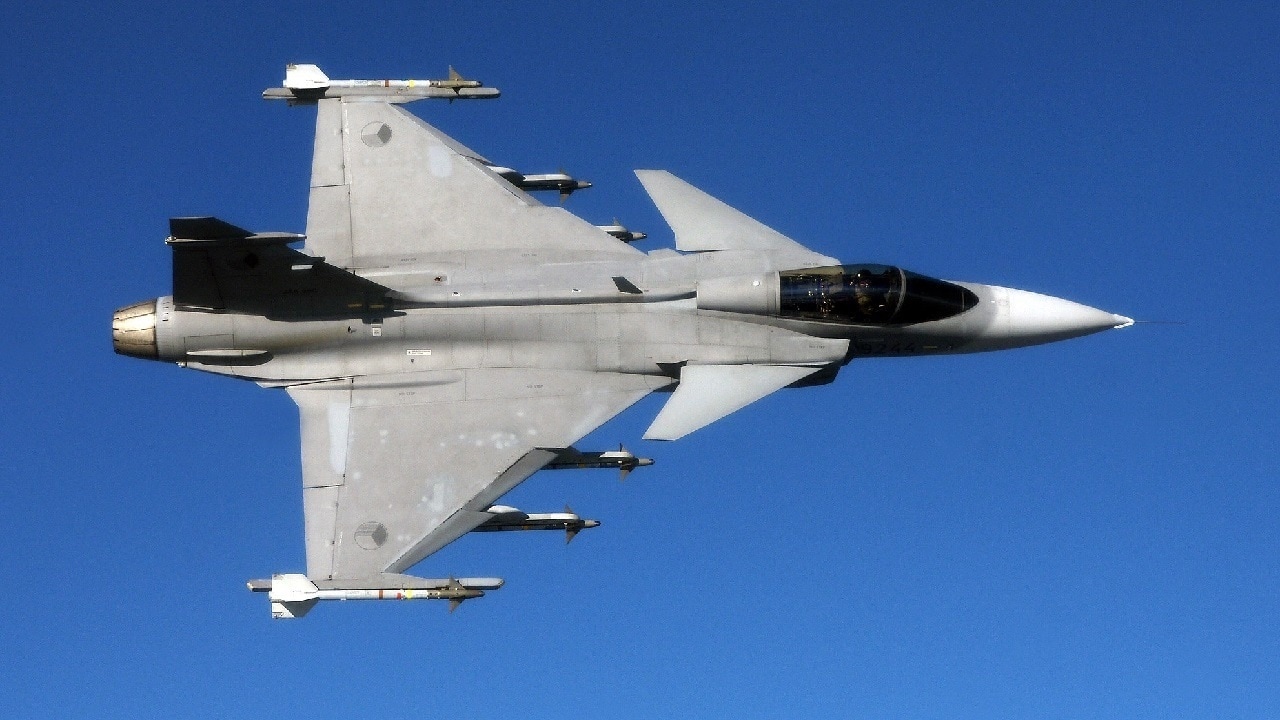
The United States holds a veto over sales of Sweden’s JAS 39 Gripen fighter for one simple reason: every Gripen ever built runs on an American engine, and under U.S. export law, Washington decides where that engine — and therefore the jet — is allowed to go. For 25 years, that veto was invisible, because the United States always said yes. In 2025, it said no for the first time, signaling it would withhold the engine for Colombia’s planned Gripen purchase and casting doubt on the deal. Now the same leverage hangs over every country reaching for the JAS 39 Gripen as the affordable, sovereign alternative to American airpower — including Canada, which is currently moving to replace most of its F-35 order with Gripens precisely to escape U.S. control, without escaping the American engine bolted into the jet it is buying instead.
The Gripen is the sharpest illustration of a quiet law of modern airpower: the country that builds the engine controls the jet, and almost everyone’s engine is American.
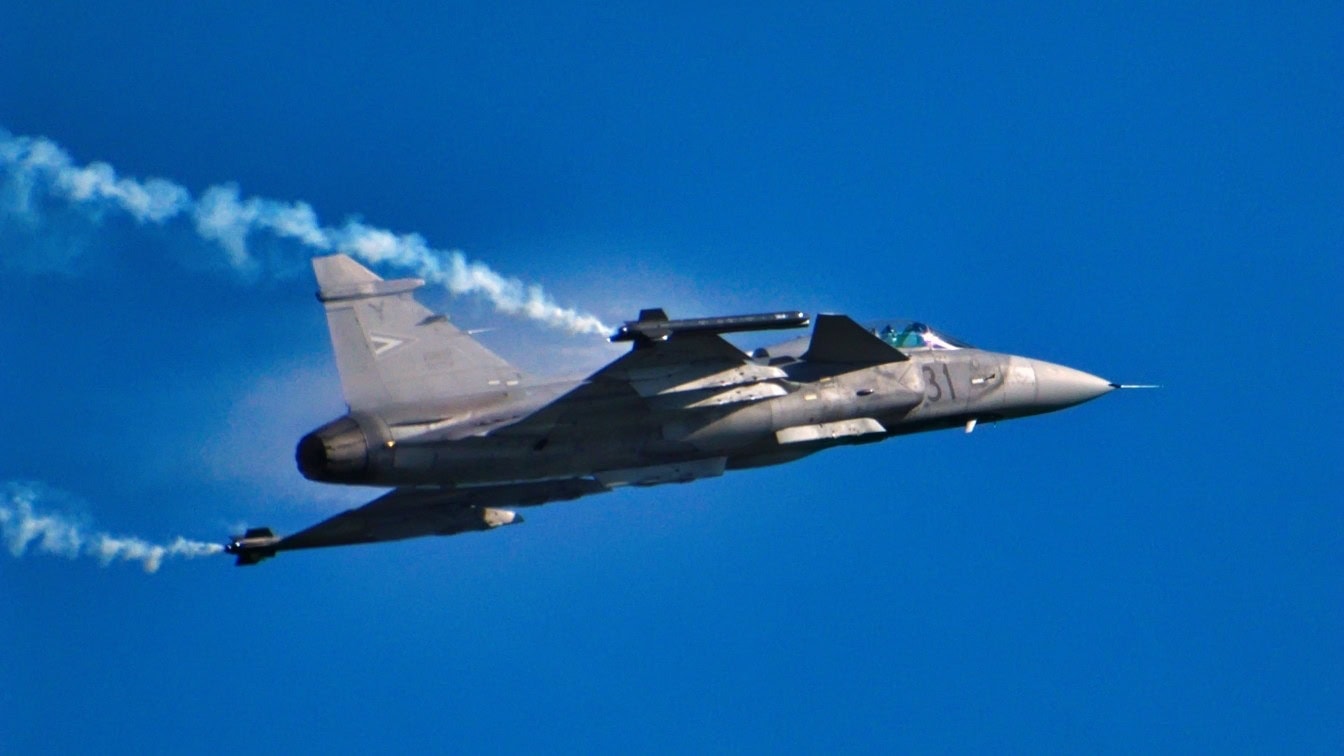
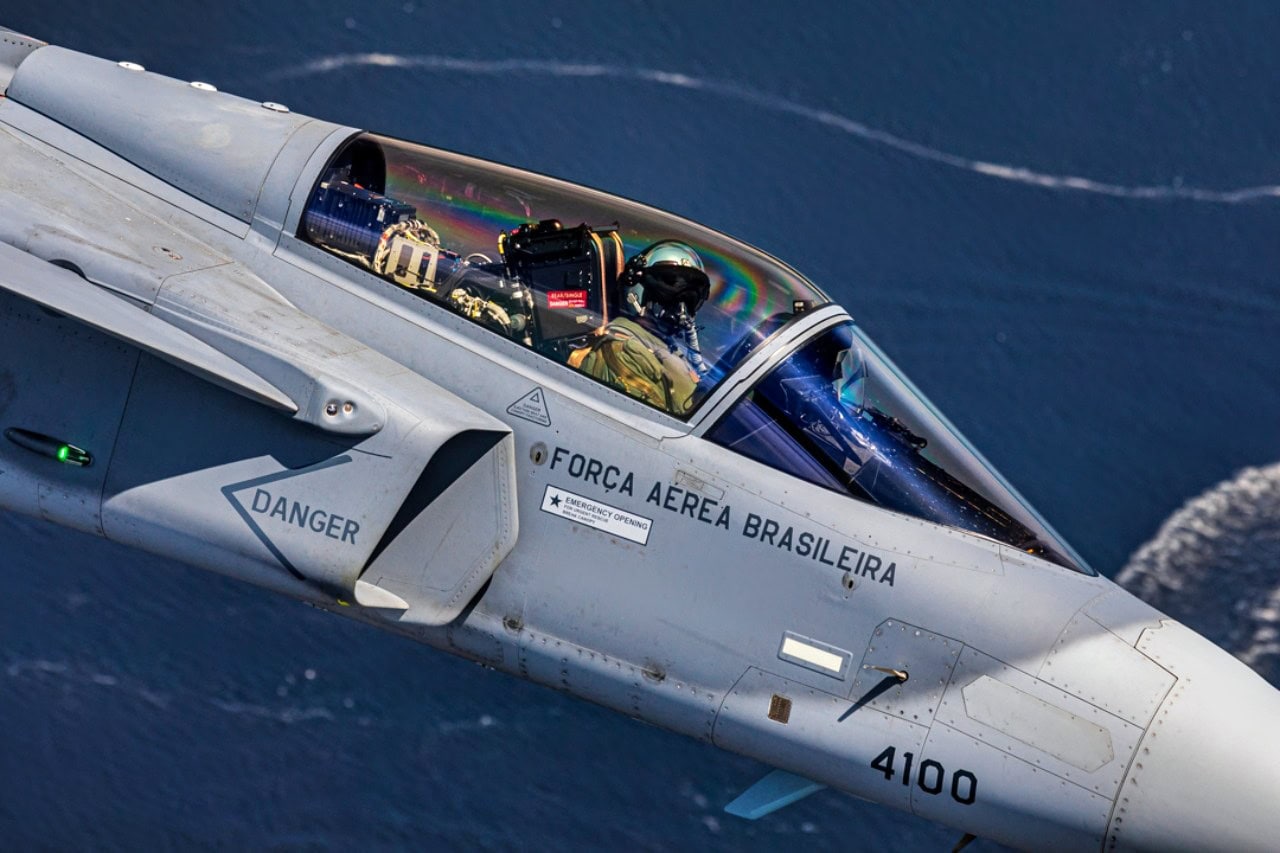
JAS 39 Gripen Brazil. Image Credit: Creative Commons.
Canada’s Escape Hatch Has An American Lock
The irony is clearest in Canada, where the Gripen is being pitched as the way out from under Washington.
Canada committed in 2023 to buy 88 Lockheed Martin F-35As, but after relations with the United States deteriorated sharply under the Trump administration’s trade war and sovereignty threats, Prime Minister Mark Carney’s government opened a review of the order.
As of a late-May 2026 report, Ottawa appeared to be moving toward a mixed fleet of roughly 30 F-35As and about 60 Saab Gripen Es, explicitly to reduce its reliance on U.S. defense supply chains and political leverage.
Canada is legally committed to only the first 16 F-35s, with long-lead payments hedging another 14, and the remaining 72 aircraft carry no signed production contract — leaving them open to substitution. Saab’s pitch is built around Canadian assembly, a secure data center in Montreal, some 12,000 jobs, and first delivery within five years.
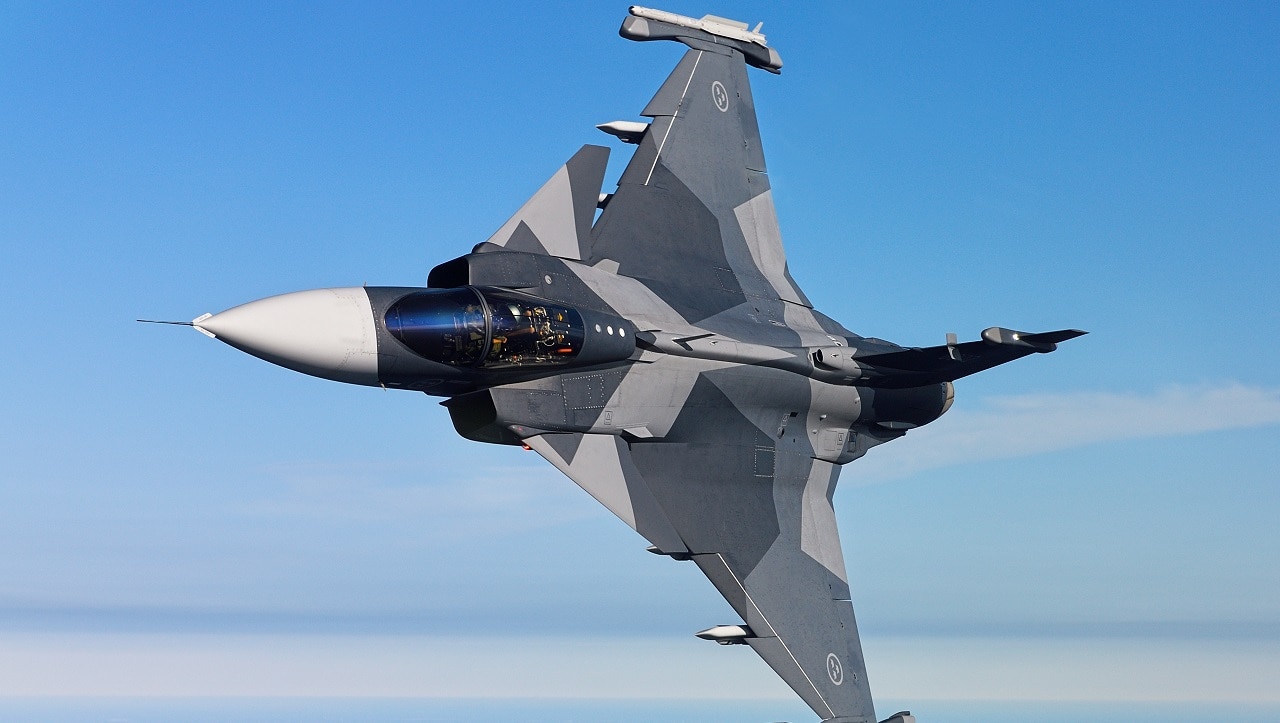
Saab Gripen E. Image Credit: Creative Commons.
The sovereignty argument driving the pivot is real: Canadian critics worry that operating the F-35 ties the country into an American-managed software and sustainment ecosystem that Washington could, in theory, restrict during a political dispute.
But the Gripen does not actually deliver the independence Canada is seeking, because the Gripen E runs on the General Electric F414 engine — a U.S.-origin component subject to the same American export controls.
In principle, the leverage Canada is gaining by dropping the F-35s applies to the Gripen aircraft it would buy instead. The escape hatch from American dependence has an American lock, and the key is the engine.
The Independence Pitch: The Sovereign Fighter
The JAS 39 Gripen was designed in the late Cold War for a neutral Sweden that intended to fight alone if it had to.
Built around the country’s Bas 90 doctrine of dispersing aircraft to operate from highway strips and short runways with conscript ground crews, it was made to be cheap, simple, rugged, and self-reliant — the opposite of a complex superfighter dependent on sprawling infrastructure. That heritage became its sales pitch abroad. Marketed as the affordable, independent choice, the Gripen has been held up as the smart buy for countries that did not want to be captured by Washington’s pull or Brussels’ consortium politics, the underdog with a genuine strategic autonomy appeal.
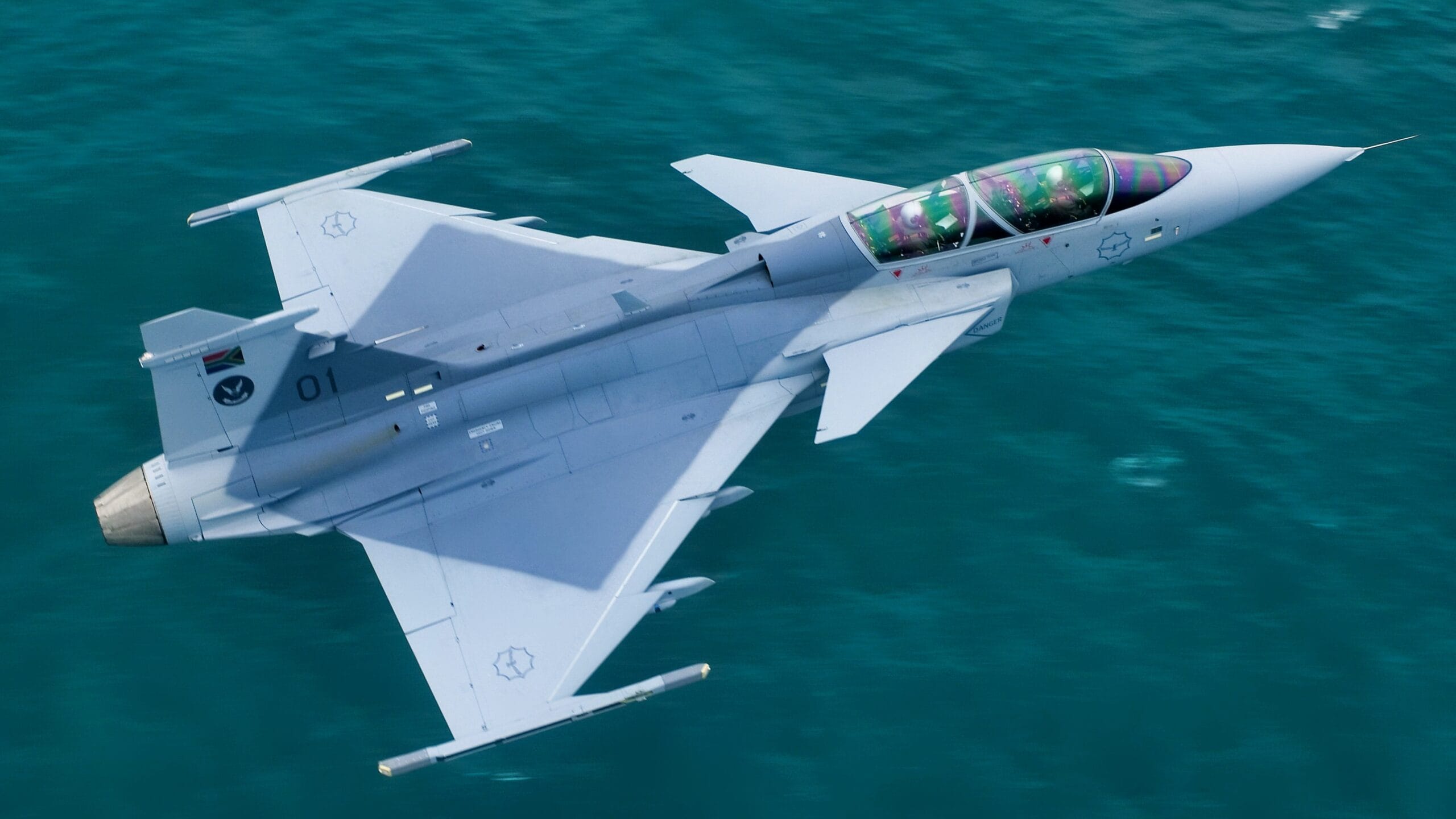
The pitch has found buyers. Beyond Sweden, the Gripen flies with the Czech Republic and Hungary, which each operate 14 leased C/D jets, and with South Africa, which bought 26 in the type’s first export deal. Thailand operates older C/D models and selected the newer Gripen E/F in 2025 to replace its aging F-16s, with the first four jets due by 2029.
JAS 39 Gripen. Image Credit: Creative Commons.
Brazil is assembling its own F-39E/F fleet and plans to add 20 more aircraft, and Saab is expanding production to build Gripen aircraft for Ukraine. The brand is the sovereign fighter for the middle powers, which is exactly what makes its dependence on America so striking.
The American Heart: From The RM12 To The F414
Under the Swedish branding, the Gripen has always used a General Electric engine. The A, B, C, and D models use the Volvo RM12, a license-built derivative of the GE F404 that Volvo redesigned for single-engine reliability and bird-strike resistance — but roughly half of the original F404 core remains GE’s design, and GE supplies the spare parts for the unmodified components.
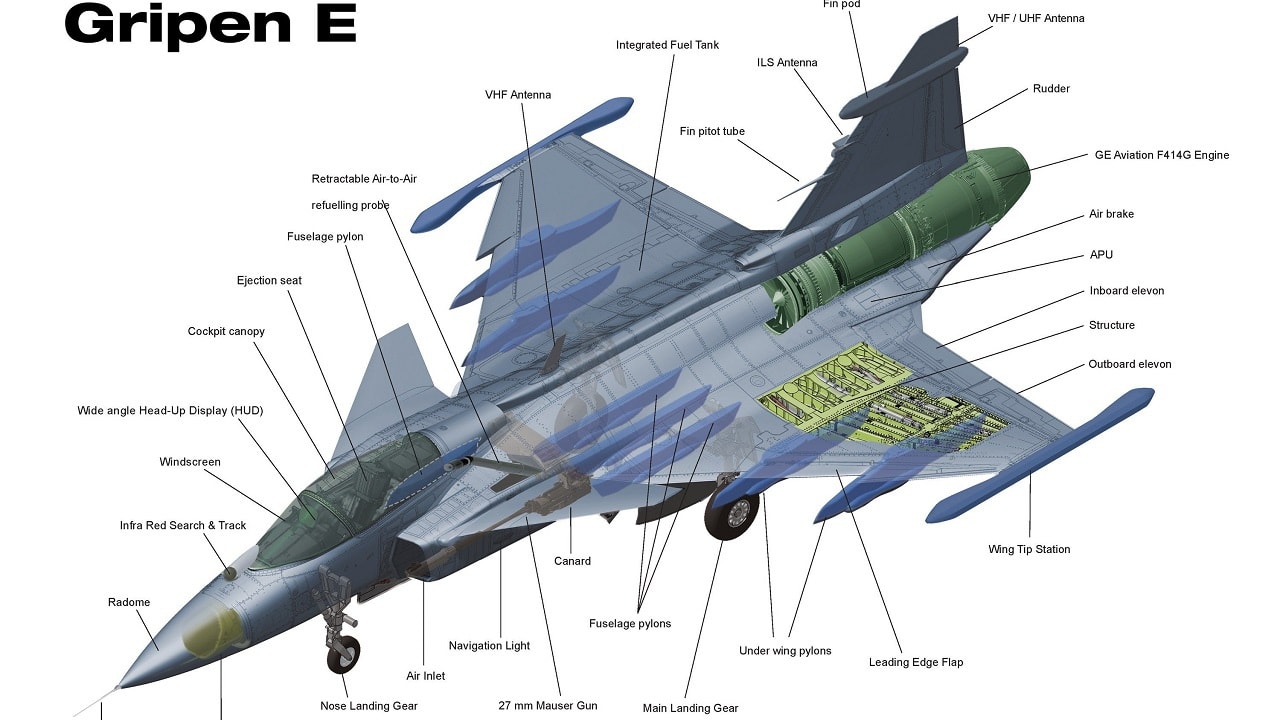
The latest Gripen E and F models, the version every new customer is now buying, are powered by the GE F414-GE-39E, the same engine family as the U.S. Navy’s Super Hornet, which Saab designates the RM16 and which produces about 22,000 pounds of thrust with afterburner.
The engine is the sharpest example of a broader dependence. By most estimates, less than half of the Gripen is actually Swedish, with around a third of its components American — including not just the engine but systems from suppliers like Honeywell and Collins Aerospace — alongside British and French content.
That mix of foreign parts gives several governments a say over Gripen exports, but the engine is the decisive one, because a fighter cannot fly without it, and there is no drop-in replacement on the shelf. The crucial point for every current and future sale is that the veto bites hardest on the F414-powered E/F — the only version still being sold.
JAS 39 Gripen. Image Credit: Creative Commons.
The Veto Was Always There, And Always Granted
Because the engine is a U.S.-origin defense article, every Gripen export has required U.S. authorization under the International Traffic in Arms Regulations, the State Department regime that governs the re-export of American military technology. South Africa, the Czech Republic, Hungary, Thailand, Brazil — every Gripen sale to a foreign air force cleared U.S. approval, because the American engine made that approval a legal prerequisite. When GE won the South African engine deal in 1999, it publicly celebrated the sale as a new market for the F404. The authority to say no was structural and universal from the start.
For a quarter-century, though, it was a rubber stamp rather than a constraint. The buyers were friendly nations, the sales served American interests or at least did not threaten them, and Washington had no reason to object — so it never did.
As one observer of the program noted, the United States had not stopped a single Gripen project by blocking the engine. The leverage sat unused for so long that the Gripen’s reputation as an independent fighter took hold, precisely because the veto was never visible.
That is the setup that makes 2025 significant: nothing about the mechanism changed. What changed was Washington’s willingness to use it.
The Veto Exercised: Colombia, 2025
Colombia became the first test. In early 2025, after years of negotiation, President Gustavo Petro announced Colombia would acquire the Gripen E/F to replace its aging Israeli-made Kfir fleet, choosing the Swedish jet over the French Dassault Rafale and the American F-16 in a deal worth roughly three billion euros for between 16 and 24 aircraft. It would have been the Gripen’s first new customer in more than a decade. Then the leverage appeared: defense outlets reported that the United States intended to withhold the re-export license for the F414 engine, reportedly to steer Bogotá toward the Lockheed Martin F-16 instead. The signal alone was enough to cast doubt on the deal.
JAS 39 Gripen Fighter. Image Credit: Creative Commons.
The reporting is not entirely uniform — Saab publicly disputed that it faced any block, with executives insisting they held all the necessary licenses and could deliver the aircraft without disruption — and the sale’s ultimate fate has remained tangled. But the significance is in the signal, not the paperwork. For the first time, Washington indicated it would use its engine authority to block a Gripen sale to a friendly country, turning a 25-year rubber-stamp into an active instrument of policy. The mechanism that had always existed was, for the first time, pointed at a buyer.
And because the F414 powers not only the Gripen but also other fighters, the implications extended well beyond Colombia.
The Veto Now Hangs Over Everyone
The same leverage now shadows every Gripen prospect. Ukraine, which has moved to acquire the jet, would be subject to U.S. approval of the engine, and the F414 supply chain — the same bottleneck that has held up India’s Tejas deliveries — could constrain how fast any Ukrainian fleet materializes. Portugal, which has publicly questioned its own F-35 plans, has been pitched the Gripen as an alternative, even though the Swedish jet would carry the very American dependence Lisbon would be trying to escape.
And Canada, the most prominent case, is weighing a Gripen-heavy fleet specifically to reduce U.S. leverage, on a jet whose engine gives Washington that leverage anyway.
In none of these cases is the United States likely to block a close ally on a whim — the Colombia signal was an exception against the 25-year pattern, not a new routine, and a NORAD partner like Canada sits in a different category. But the Colombia case proved the authority is real when Washington chooses to use it, and that is the uncomfortable discovery for every country buying the Gripen to get out from under American control: the leverage does not disappear, it just moves from the airframe to the engine.
Why Saab Did It: The Rational Choice
The dependence is not a Saab blunder. It is the result of a rational calculation that makes the trap nearly inescapable. When Saab developed the Gripen E, it evaluated the European alternative — the Eurojet EJ200 that powers the Eurofighter Typhoon — and rejected it. The reason was money and time: the F414 delivered the roughly 22,000 pounds of thrust Saab wanted off the shelf, while the EJ200 — a twin-engine design never adapted for a single-engine aircraft — would have required development and integration work that Saab itself would have had to fund, an unjustifiable expense for a deliberately low-cost fighter sold in modest numbers. The Gripen C/D had already run the RM12 for decades, Volvo was already an F414 subcontractor, and that commonality made the F414 the nearest thing Sweden had to a domestic engine.
Saab even had a homegrown option and passed on it. Volvo proposed an upgraded RM12, the so-called RM12++, promising better thrust-to-weight at lower cost, and described it as the higher-risk, lower-cost path compared with the EJ200, F414, or France’s M88. Saab still chose the proven American engine, because the calculus that governs every such decision is brutal: building an indigenous fighter engine is a decade-plus, multibillion-dollar undertaking that costs more than an entire low-volume fighter program is worth.
There is, in fact, a genuinely ITAR-free European alternative in the EJ200 and its uprated derivatives — and Saab has reportedly floated the idea of offering re-engined Gripens to customers worried about American control — but the integration cost is high enough that no buyer has been willing to pay it. Saab chose the rational path, and it runs through Washington.
The Bigger Pattern: Almost No One Can Build A Fighter Engine
The Gripen’s predicament is not unique; it is the rule. The United States holds the same latent veto over nearly every “indigenous” fighter built outside its borders, because they nearly all run on American engines. India’s Tejas and its planned Tejas Mk2 use the GE F404 and F414, and defense analysts noted that the Colombia engine signal raised direct questions about India’s ability to export the Mk2. Turkey’s Kaan and South Korea’s KF-21, both marketed as sovereign state-of-the-art fighters, also fly on GE engines. The same export authority that governs the Gripen governs all of them.
The reason is that building a modern fighter engine is one of the most concentrated industrial capabilities on earth. It belongs effectively to the United States, through GE and Pratt & Whitney; to the European Eurojet consortium, which carries its own four-government web of export controls; to France’s Safran; and to Russia and China. Outside America, there is barely an alternative that does not come with its own strings — France’s Safran-powered Rafale is the rare major Western fighter genuinely free of the U.S. veto, which is precisely why countries fearing American leverage keep circling back to it.
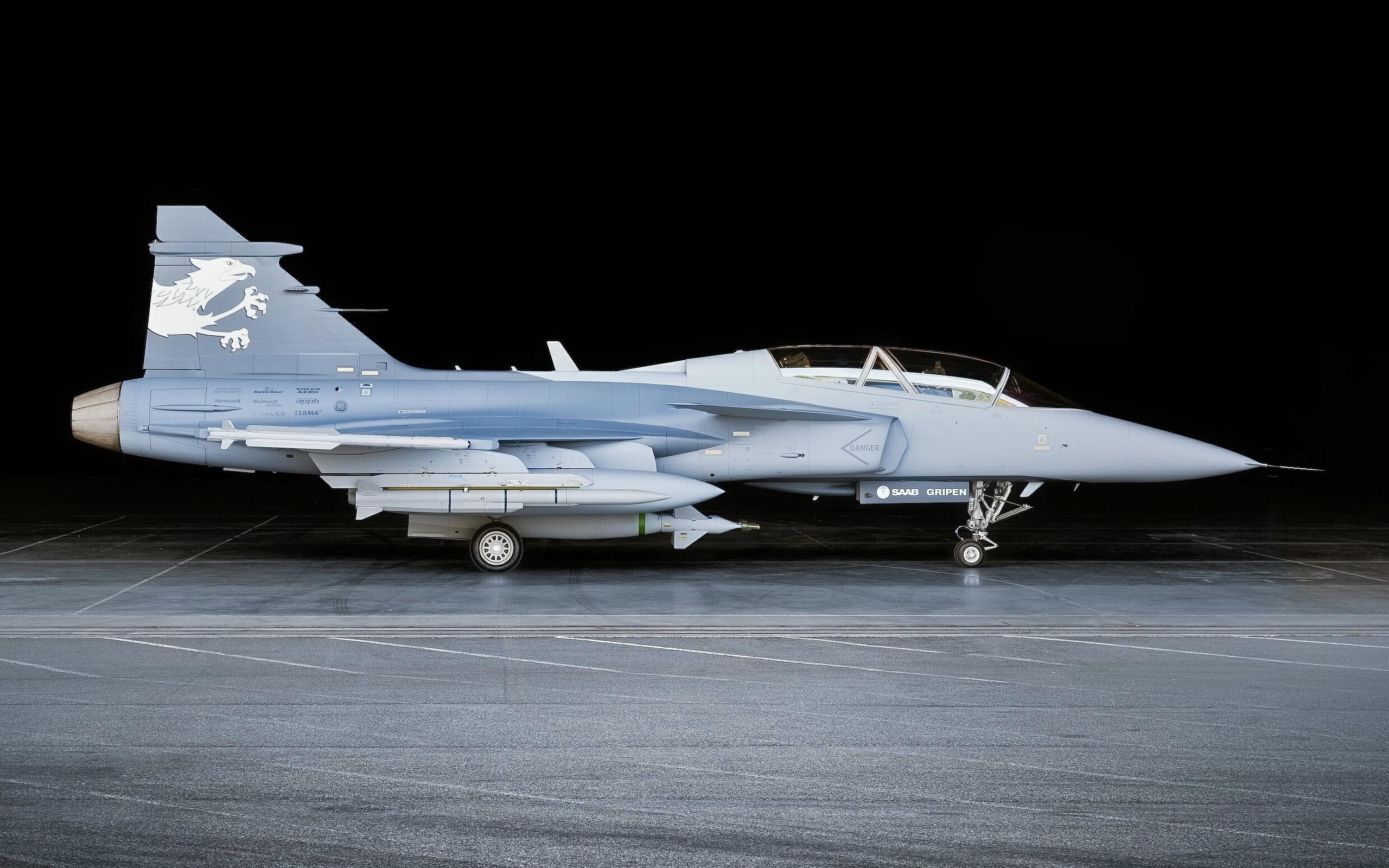
JAS 39 Gripen. Image Credit: Creative Commons.
The U.S. veto does not extend so far because the world chose American engines carelessly, but because, at the price and volume most countries can manage, there was almost nothing else to choose from.
The Honest Balance: Latent Leverage, Newly Willing To Be Used
The leverage is real, but it should not be overstated. It is latent authority, not routine operational control — the United States does not approve each Gripen sortie, and the same kind of dependence is true of any jet with American components, including the F-16 itself, whose buyers are equally bound by U.S. rules.
For 25 years, the Gripen veto was never exercised, and allied engine supply is normally approved as a matter of course; Sweden and Brazil have built and flown their F414-powered jets without an embargo. Lockheed Martin, defending the F-35 against the sovereignty criticism, makes a parallel point — that it provides customers the infrastructure to operate their aircraft according to their own national requirements, and that the F-35 brings deep industrial participation, with scores of Canadian firms already in its supply chain.
The fair conclusion is not that America controls every Gripen in the sky. It is that a veto which quietly governed every Gripen sale for a quarter-century has gone, for the first time, from rubber stamp to instrument — and that the change is one of political willingness under a harder-line posture toward allies, not one of mechanism.
The F-35 ties its users to American software and sustainment; the Gripen ties them to an American engine. Both are forms of dependence on the U.S. defense industrial base, each at a different point in the jet. That is the honest shape of the choice facing Canada, Portugal, and everyone else: not independence versus dependence, but which kind of American leverage they prefer to live with.
The Verdict: Whoever Builds The Engine Controls The Jet
Sweden set out to build a fighter that would keep it free of everyone — cheap enough to afford alone, simple enough to maintain alone, rugged enough to fight alone. It succeeded at all of that except the one component it could not make itself, which happens to be the component that matters most.
The engine is where sovereignty in combat aviation actually lives, and Sweden buys its engines from General Electric, which means it builds its sovereign fighter on an American foundation. For 25 years, that did not matter, because Washington always said yes. It has now stopped saying yes automatically, and the countries turning to the Gripen to escape American dependence are discovering that the escape route runs on an American engine too.
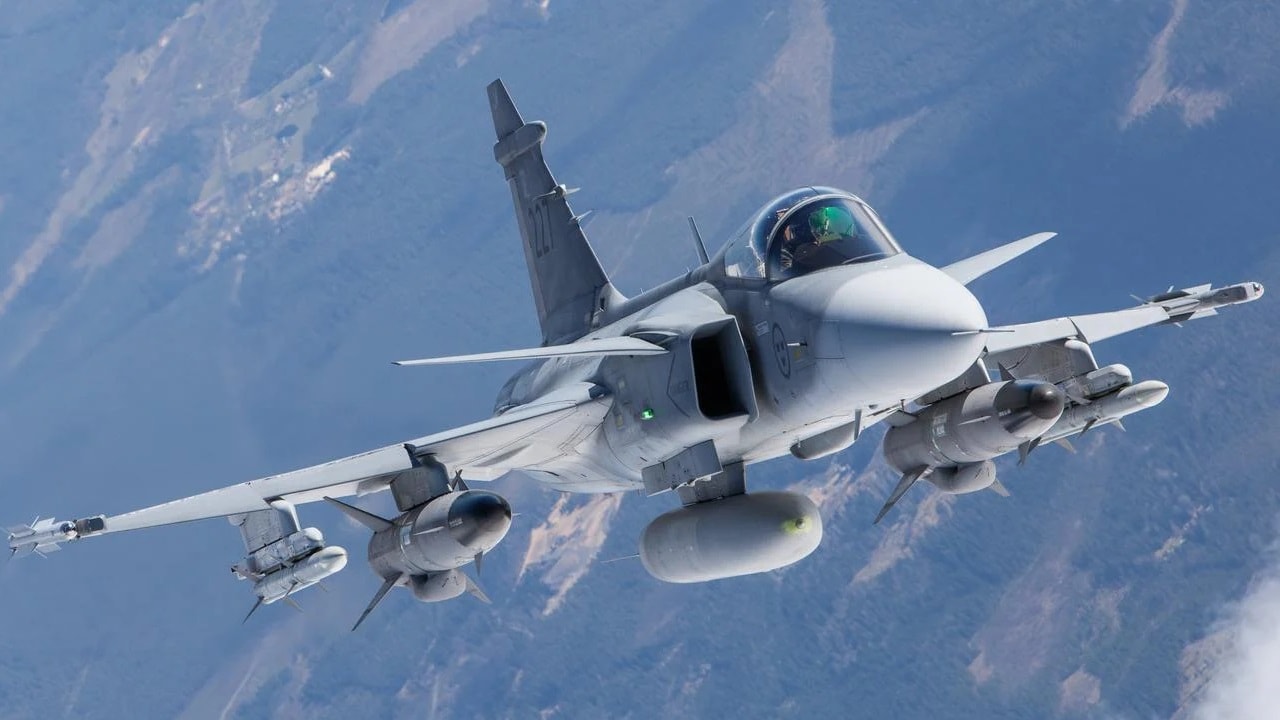
Saab JAS 39 Gripen E fighter. Image Credit: Creative Commons.
That is the law the Gripen illustrates more sharply than any other aircraft: in modern airpower, whoever builds the engine controls the jet. The dependence is not Saab’s mistake, nor Sweden’s failure of nerve. It is the structure of an industry in which a handful of countries can build the single hardest and most important part of a fighter, and almost everyone else — however independent their ambitions, however sovereign their branding — has to buy that part from someone who can then decide where the finished jet is allowed to fly. Colombia learned it first. Canada might be next.
About the Author: Harry J. Kazianis
Harry J. Kazianis (@Grecianformula) was the former Senior Director of National Security Affairs at the Center for the National Interest (CFTNI), a foreign policy think tank founded by Richard Nixon based in Washington, DC. Harry has over a decade of experience in think tanks and national security publishing. His ideas have been published in the NY Times, The Washington Post, The Wall Street Journal, CNN, and many other outlets worldwide. He has held positions at CSIS, the Heritage Foundation, the University of Nottingham, and several other institutions related to national security research and studies. He is the former Executive Editor of the National Interest and the Diplomat. He holds a Master’s degree focusing on international affairs from Harvard University.

