
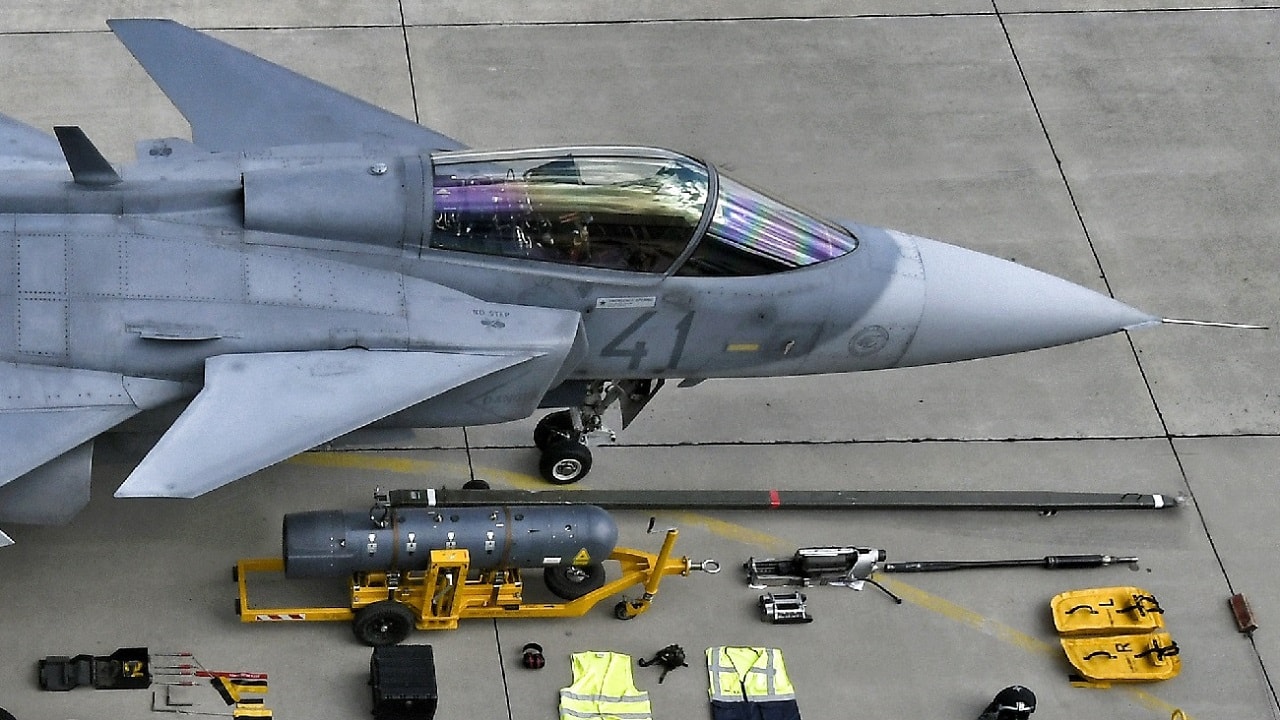
The JAS 39 Gripen fourth-generation fighter jet, at “+” or “++” level, is one to remember. Canada is considering purchasing it instead of the full allotment of 88 F-35’s from the United States. The JAS 39 has many redeeming features, and we have the evidence to prove it. Here are five reasons, and more, why Canadians should acquire the Swedish airplane.
JAS 39 Gripen: Decentralized Deployment for Better Base Protection
First, the airplane can be dispersed around Canada to protect it against enemy ground attack.
It doesn’t need one or two centralized bases. This is important because the United States has shown that without a decentralized number of installations with hardened bunkers and reinforced underground facilities, airplanes can be destroyed or damaged with ballistic missiles and drones on the ground.
Canada can learn from Sweden’s defense strategy of rapid aircraft turnaround after missions.
This allows for new ground crew members to be trained quickly and efficiently. The F-35 requires a high level of maintenance training, and maintenance crews have been excruciatingly busy dealing with a multitude of technical issues. Refueling and rearming a JAS 39 takes only 20 minutes. This is a great aspect of the airplane, and in combat, one could realize how valuable this lack of substantial downtime is.
Gripen: It May Be More Reliable Than the F-35
Second, the JAS 39 is also known for not requiring lengthy repair periods, while the F-35 has endured problems with overheated engines, cockpit pressure systems, and AESA radar that has not performed to standard.
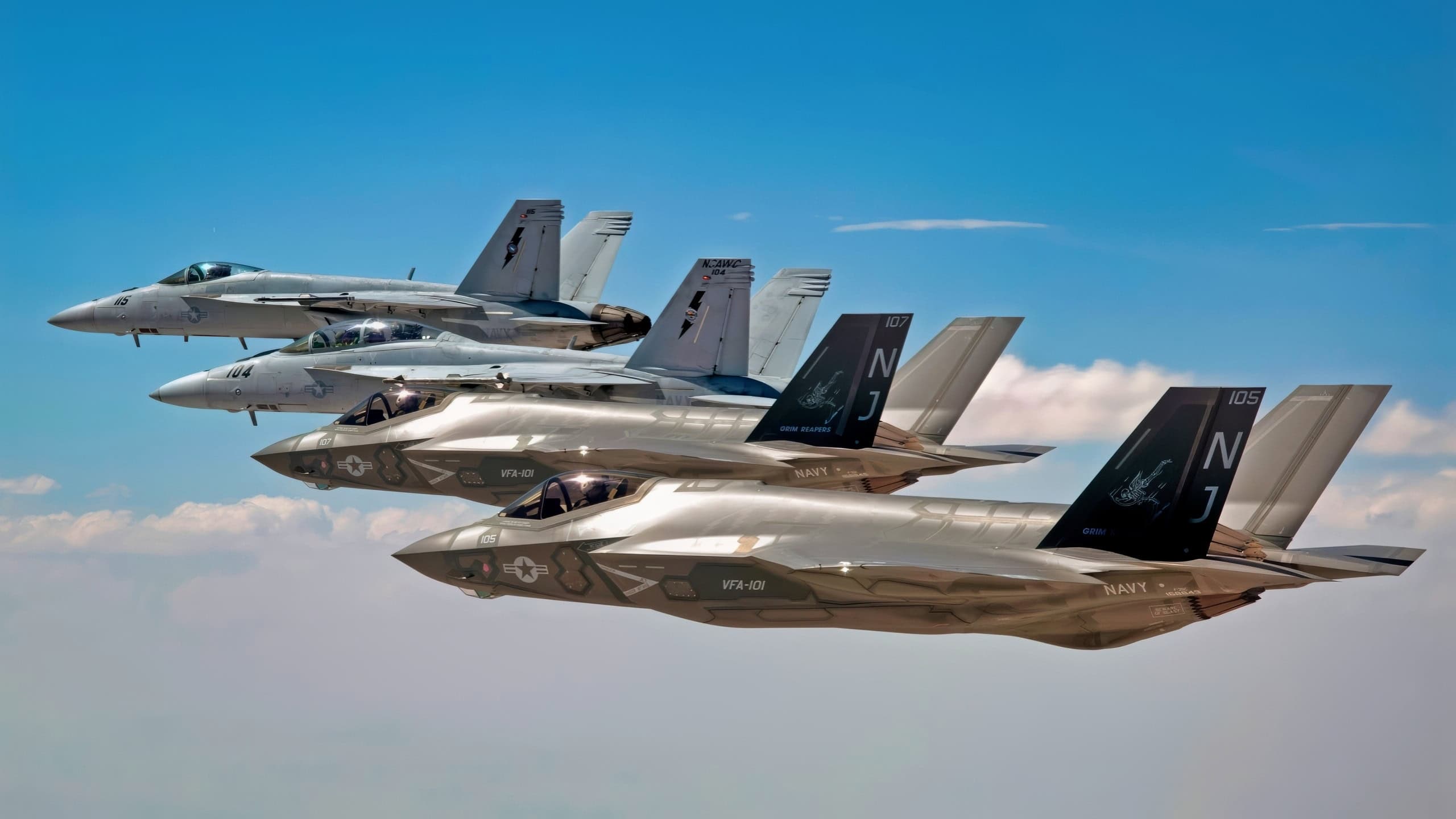
FALLON, Nev. (Sept. 3, 2015) F-35C Lightning IIs, assigned to the Grim Reapers of Strike Fighter Squadron (VFA) 101, and an F/A-18E/F Super Hornets assigned to the Naval Aviation Warfighter Development Center (NAWDC) fly over Naval Air Station Fallon’s (NASF) Range Training Complex. VFA 101, based out of Eglin Air Force Base, is conducting an F-35C cross-country visit to NASF. The purpose is to begin integration of F-35C with the Fallon Range Training Complex and work with NAWDC to refine tactics, techniques and procedures (TTP) of F-35C as it integrates into the carrier air wing. (U.S. Navy photo by Lt. Cmdr. Darin Russell/Released)
The reliability of the JAS 39 Gripen allows it to be maintained by small, inexpensive crews without long work periods.
You Mean It Can Take Off From a Road?
Third, the JAS 39 can also take off from unimproved and short runways. This helps with its survivability and dispersal across rural areas of Canada that lack sophisticated air bases.
Canada can emulate Sweden by adopting the tactics, techniques, and procedures that Sweden has developed over the years. This is called the Bas 90 defense posture.
Canada has a large area to patrol during air policing missions. This huge country could utilize bases without lengthy improved runways. The JAS 39 can take off quickly and efficiently while intercepting enemy fighters that stray into Canadian airspace. The JAS 39 can even launch from a 500-meter-long highway. That is how valuable this airplane is. Canada can use a decentralized approach, with regional, less sophisticated bases, to ensure the JAS 39 can police more territory across the country.
Upgrading on the Fly
Fourth, the JAS 39 Gripen also has an open architecture for rapid upgrades. This comes in handy in modern air combat, when pilots want to provide feedback after each mission and the aircraft needs to learn lessons quickly for future combat.
Canada will appreciate that the JAS 39 can be updated without much fuss or effort. The airplane can take on new AESA radar or weapons systems as technology improves over time.
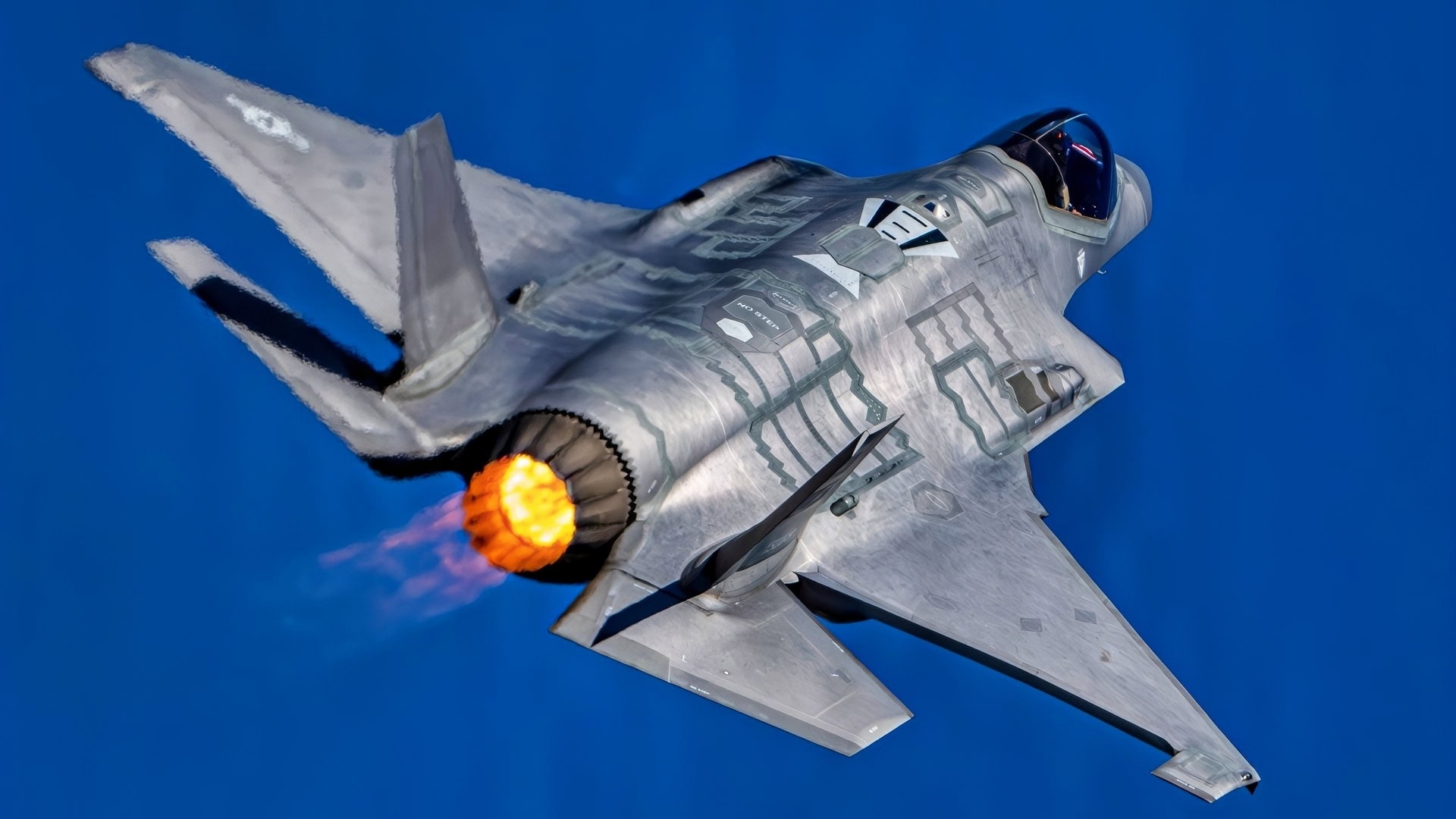
U.S. Air Force Maj. Sean “Rambo” Loughlin, pilot of the F-35A Demonstration Team, performs aerial maneuvers at the Luke Days Airshow at Luke Air Force Base, Arizona, March 21, 2026. The team travels worldwide to showcase the power and capabilities of the U.S. Air Force’s most advanced fifth-generation fighter and its Airmen. (U.S. Air Force photo by Staff Sgt. Nicholas Rupiper)
All the Way Around Cheaper
Fifth, the Swedish Saab airplane also has less downtime and is cheaper to keep in the air. The F-35 can be finicky, and its life cycle costs have risen to over $2 trillion. The JAS 39 is considered a bargain compared to the Lightning II.
Canada will find that many of the JAS 39’s issues will have been resolved before they potentially buy it. The airplanes have been flying since the late 1990s, providing the Swedish air force with extensive flight data for analysis and improvement. Pilots are happy with the E and F variants. This is now a fully modernized fighter jet.
Working Well With NATO
Canada will also find that since the JAS 39 was designed for war with Russia, it will be an able NATO asset. Canada is looking to find its way after failing to spend at least 2 percent of its GDP on defense for several years.
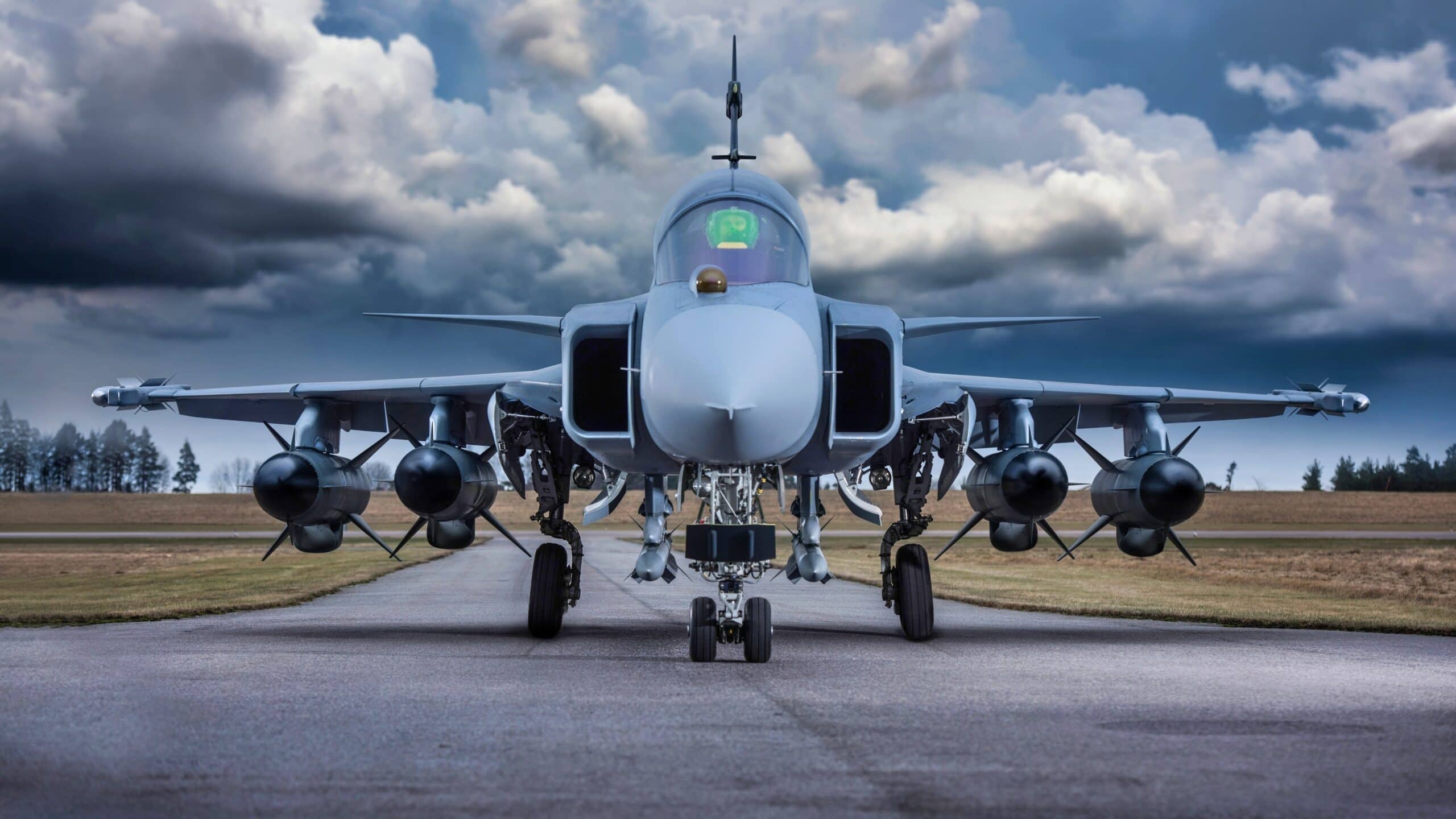
JAS 39 Gripen. Image Credit: Creative Commons.
The JAS 39 purchase could signal to the alliance that Canada is ambitious about its air force and that its aircraft would be interoperable with NATO aircraft should it be sent to Europe in a showdown with Russia.
AI Software Is Exciting
JAS 39 Gripen E’s are only getting better. Last year, one flew with artificial intelligence software known as “Centaur.” This system was put to the test, and the Swedes were impressed. The idea behind Centaur is to give the JAS 39 more situational awareness beyond visual range (BVR).
This is where air-to-air missiles are more effective. The JAS 39 can use a medium-range missile for these types of BVR kills.
Anti-Drone Rockets
As combat evolves, there is a greater need to use arms against fighters to eliminate enemy drones and one-way Kamikaze unmanned craft. The Advanced Precision Kill Weapon System is a rocket especially configured to take out drones.
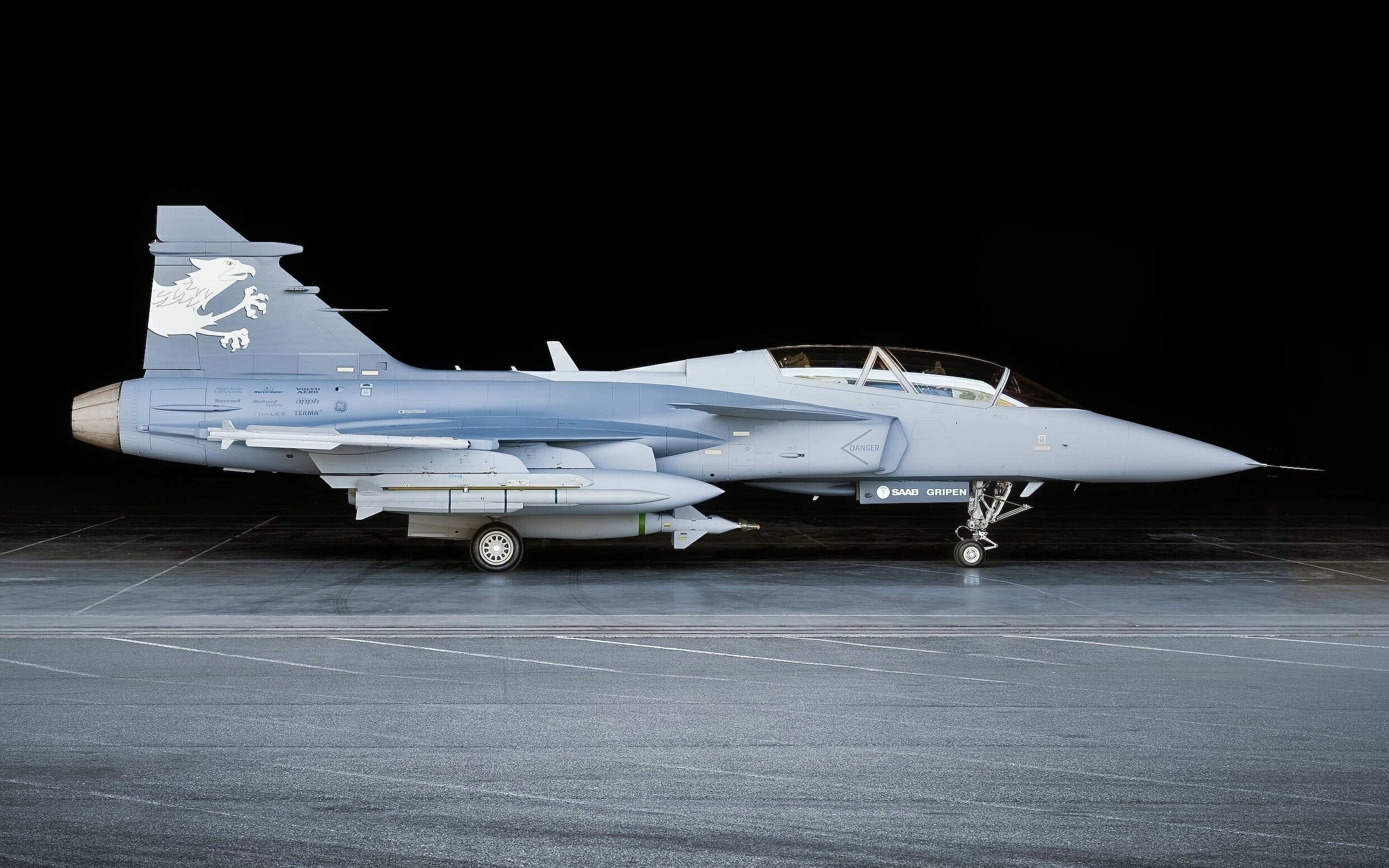
JAS 39 Gripen. Image Credit: Creative Commons.
Saab is testing this munition against difficult targets to simulate what it expects to encounter in the next war. Missiles are expensive, and cheaper rockets will be in high demand as drones proliferate in aerial combat.
This is an impressive list of reasons for Canada to choose the JAS 39 Gripen. The airplane is survivable, cheaper than the F-35 in life-cycle costs, can be quickly turned around by ground crews, can be dispersed across the country to decentralize its basing system, and is less expensive to keep in the air.
Canada faces a difficult choice between the F-35 and the JAS 39 Gripen, but the Swedes should be pleased with their product. It is only up to the government of Canada to decide when to pull the trigger on its new fighter program. The JAS 39 is quite capable and full of features that can serve the Great White North in style.
JAS 39 Gripen: A Story in Photos
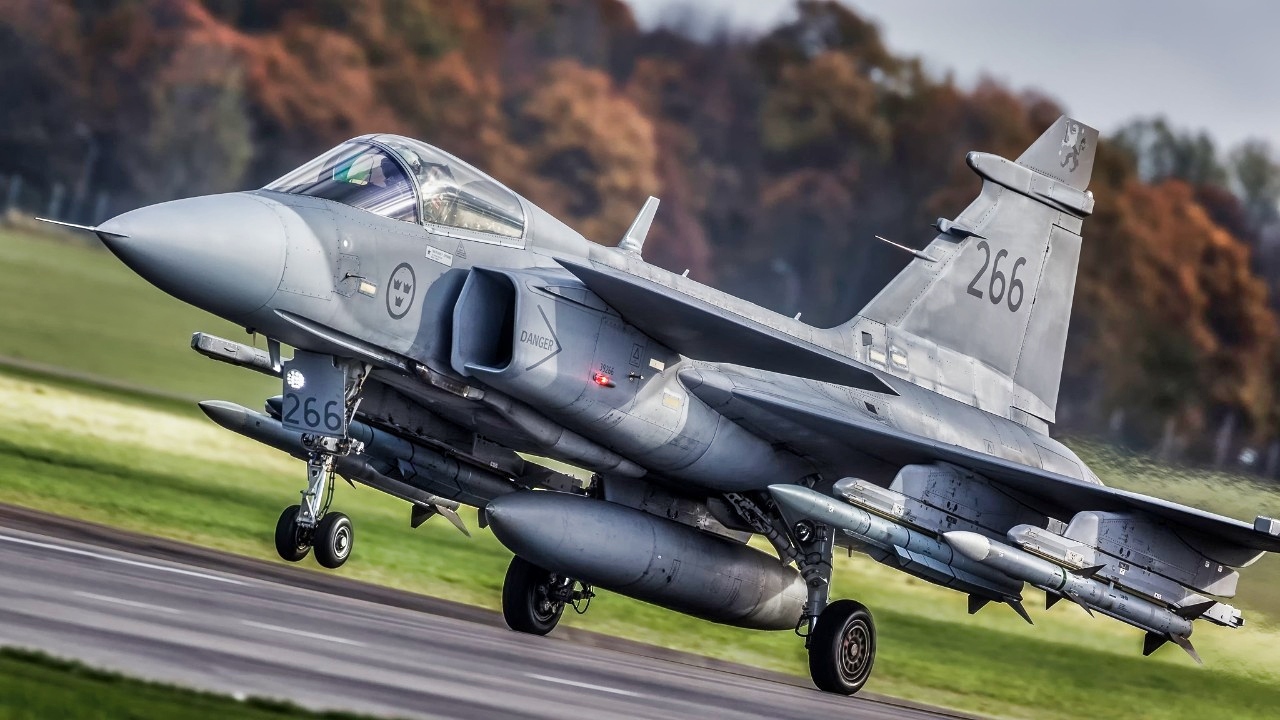
JAS 39 Gripen. Image Credit: Creative Commons.
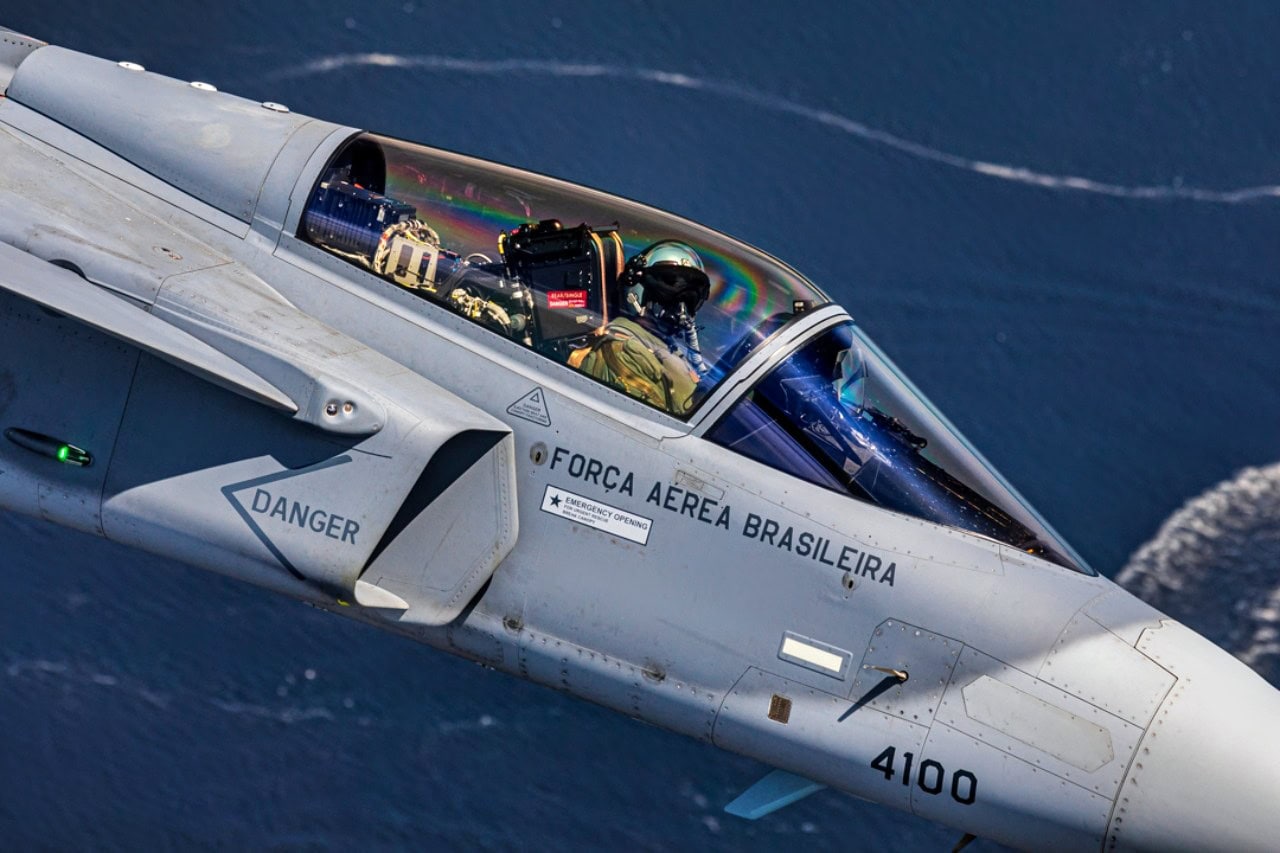
JAS 39 Gripen. Image Credit: Creative Commons.
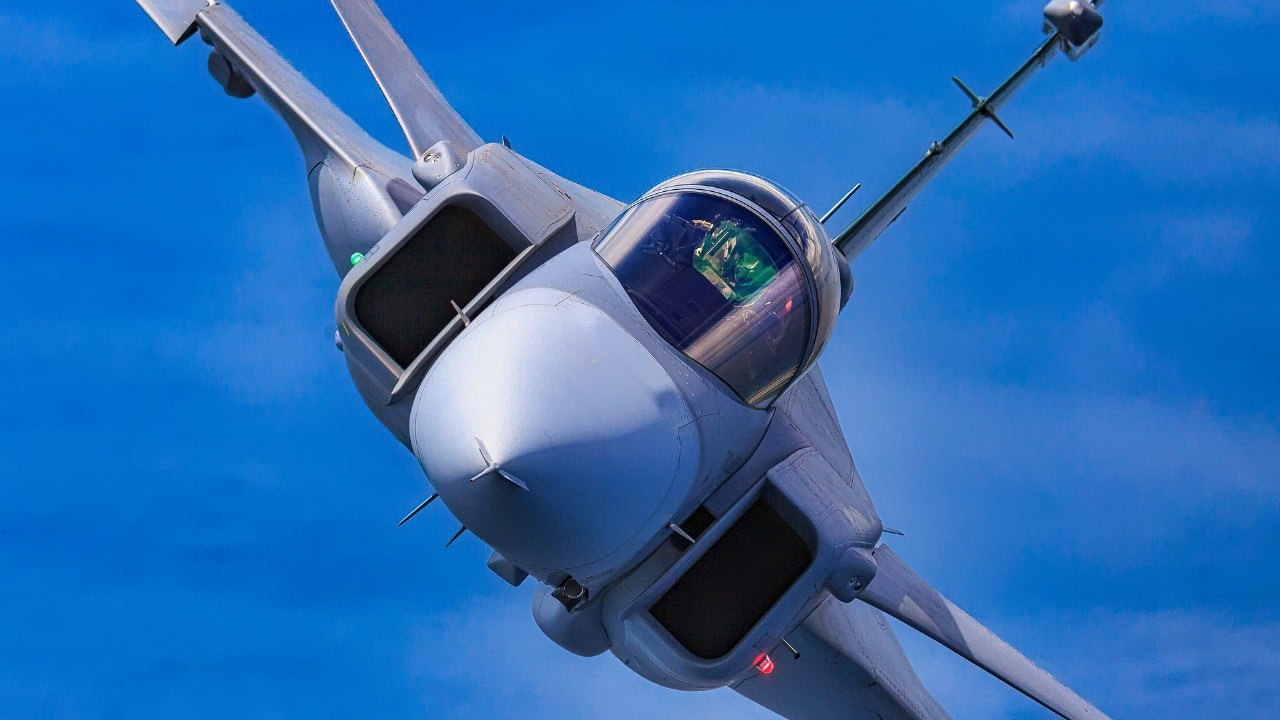
JAS 39 Gripen. Image Credit: Creative Commons.
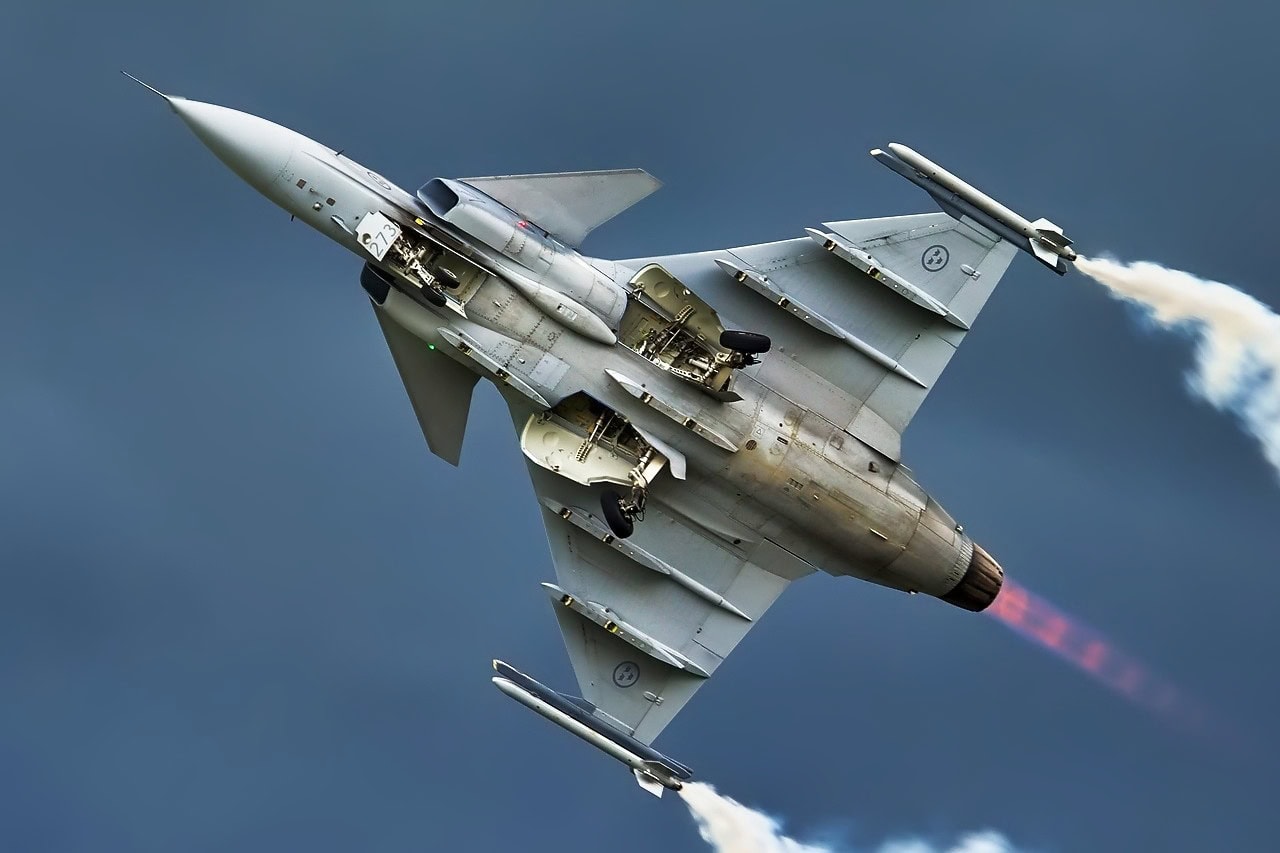
JAS 39 Gripen Fighter from Sweden.
About the Author: Brent M. Eastwood, PhD
Author of now over 3,500 articles on defense issues, Brent M. Eastwood, PhD, is the author of Don’t Turn Your Back On the World: A Conservative Foreign Policy and Humans, Machines, and Data: Future Trends in Warfare, plus two other books. Brent was the founder and CEO of a tech firm that predicted world events using artificial intelligence. He served as a legislative fellow for US Senator Tim Scott and advised the senator on defense and foreign policy issues. He has taught at American University, George Washington University, and George Mason University. Brent is a former US Army Infantry officer. He can be followed on X @BMEastwood.