

Following the collapse of the Soviet Union, the newly independent Ukraine and the Russian Federation faced an important dilemma: what to do with the remaining fleet of strategic bombers? Ukraine inherited a fleet of 18 Tupolev Tu-160 “White Swan” (NATO designation: Blackjack) supersonic bombers.
The Russians attempted to buy the bombers from Kyiv, which the U.S. viewed as an undesirable outcome. In a strange flurry of events, an American company attempted to purchase three Tu-160s from Ukraine, which would be converted into launch aircraft for Pegasus SLVs.
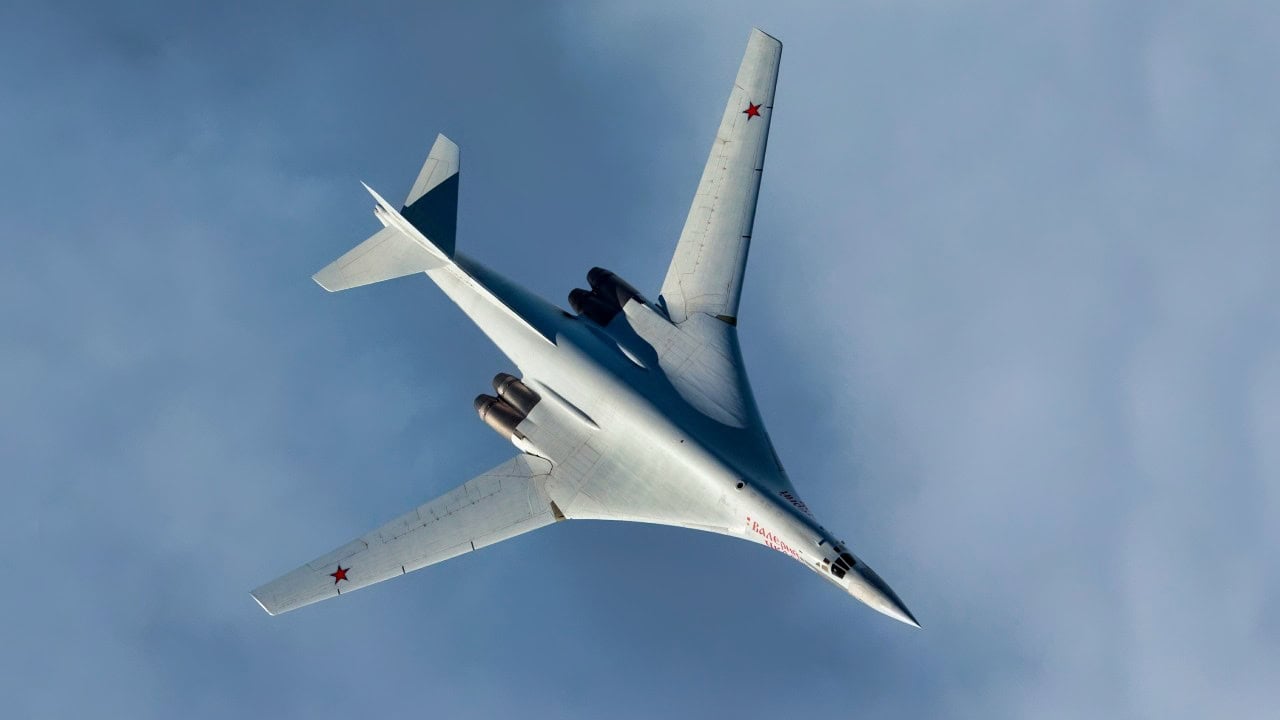
Tu-160. Image Credit: Creative Commons.
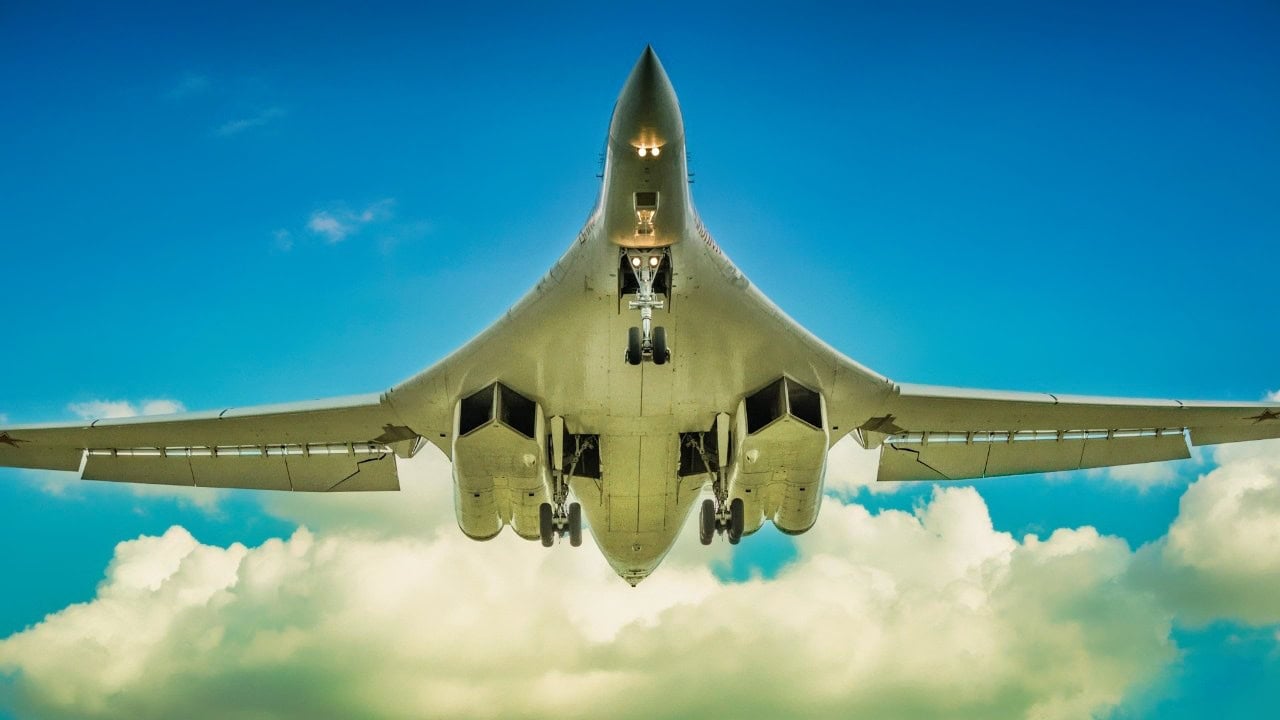
Tu-160 Bomber from Russia. Image Credit: Creative Commons.
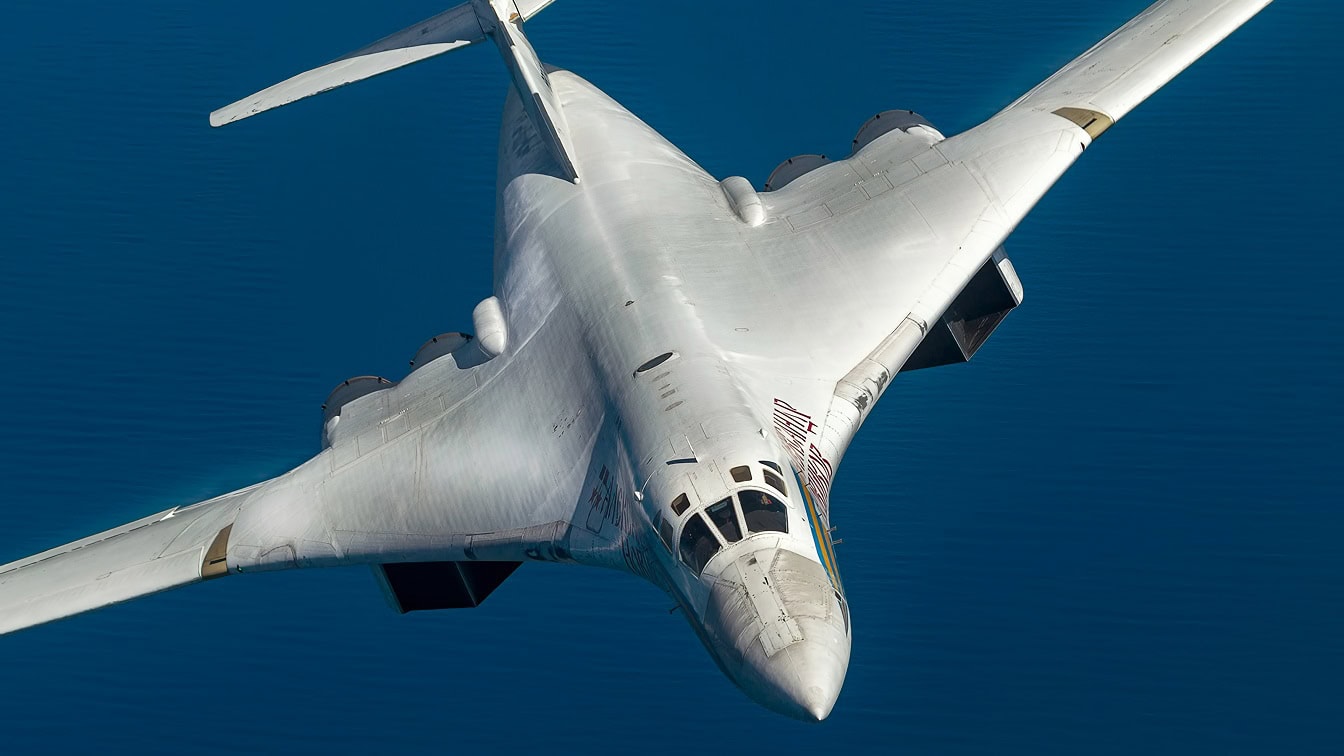
Tu-160 Bomber. Image Credit: Creative Commons.
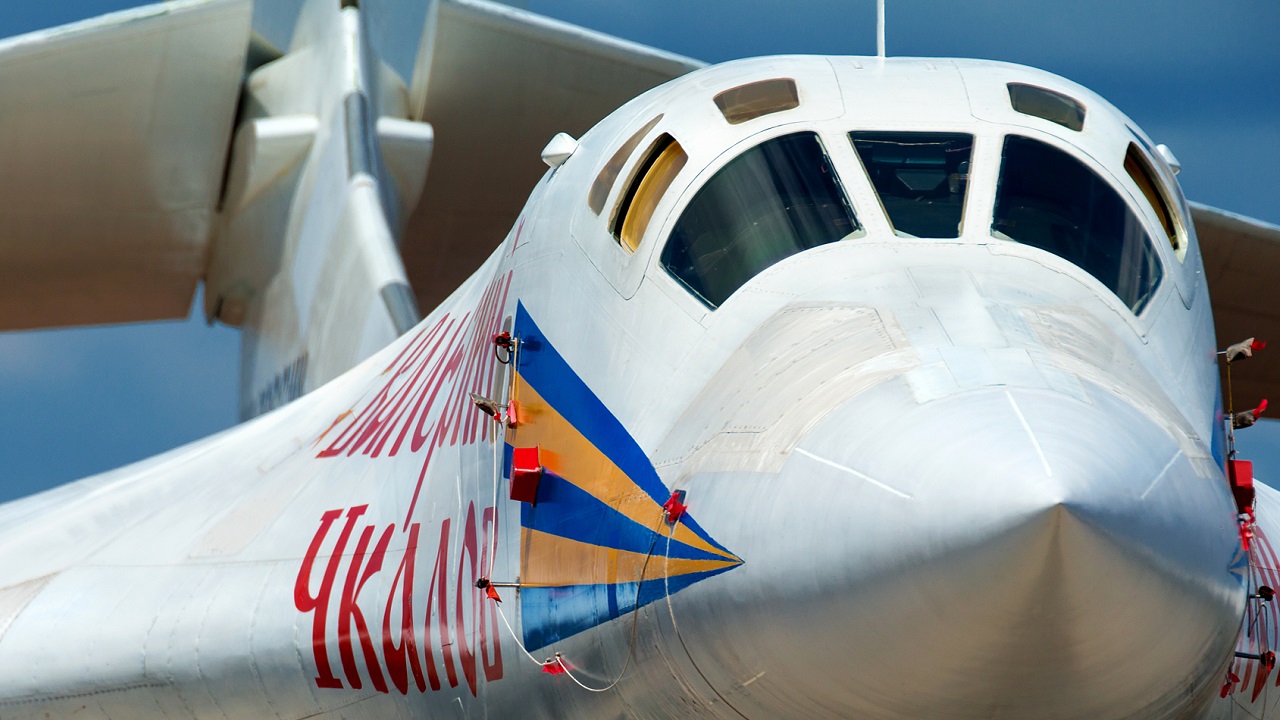
Tu-160. Image Credit: Creative Commons.
This deal was ultimately canceled, and the bombers would eventually go to Russia.
Why the U.S. Attempted to Purchase Soviet Bombers
Throughout the 1990s, the United States pursued a policy of eliminating former Soviet nuclear delivery systems in newly independent states through the Nunn-Lugar Cooperative Threat Reduction (CTR) program.
This initiative funded the dismantling of missiles, warheads, and strategic bombers, including the Tu‑160 fleet, as part of efforts tied to treaties such as START II. The official American position was that these bombers should be scrapped, not retained or redistributed.
Against this backdrop, it may seem surprising that a plan emerged for an American-linked entity to acquire some of these aircraft.
Yet, in the fluid and often unpredictable circumstances of the post-Soviet transition, unconventional ideas sometimes gained traction.
Now, why, one might ask, would the U.S. want to buy Soviet bombers? The primary goal, as stated under the START II agreement, was to destroy as many nuclear bombers as possible.
However, the U.S. saw an opportunity to obtain three Blackjacks for testing. The idea was to convert the bombers into carriers or platforms for the Pegasus Space Launch Vehicles (SLVs) for launching satellites into low orbit.
In this way, the Tu-160s could avoid the chopping block altogether and be used for civilian purposes. The Ukrainian Ministry of Defense signed an agreement to sell three bombers to the American company Platforms International Corp for a total price of $20 million.
Moscow Intervienes
This deal was unacceptable to the Russians. Following the collapse of the USSR, the Russian Federation inherited only six operational Tu-160 aircraft.
As a matter of national security, Russia sought to purchase as many bombers from Ukraine as possible. Initially, the Ukrainians were hesitant to part with their aircraft, but once it became apparent how expensive they were to maintain, selling them suddenly seemed much more appealing.
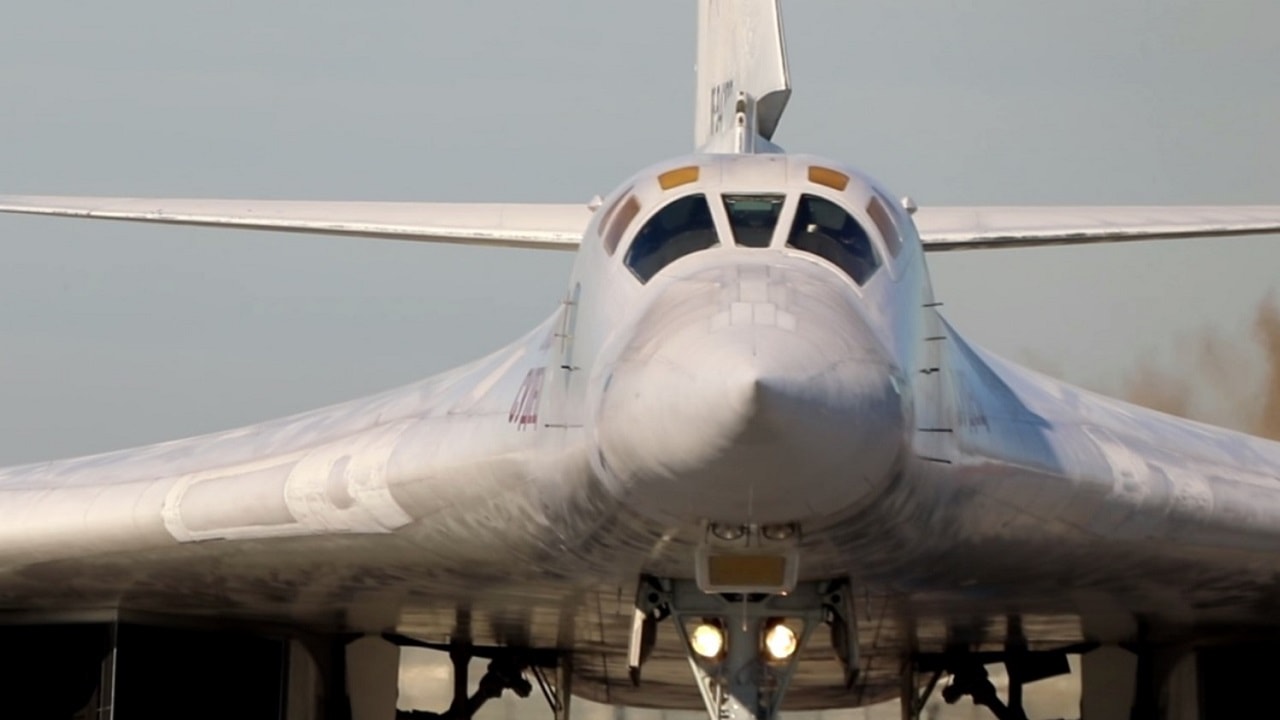
Tu-160. Image Credit: Creative Commons.
The thought of Russia rebuilding its strategic fleet did not sit well with the U.S. The U.S. State Department later “encouraged” the Ukrainians to refrain from selling bombers to Russia and instead destroy the remaining fleet.
Consequently, when the Russians heard that an American company intended to purchase three bombers for only $20 million (Russia had initially offered $25 million per aircraft and was turned down), they were furious.
The Tu-160 was arguably one of the most advanced aircraft produced by the USSR and remained a vital component of its strategic fleet.
If the Americans got hold of even one aircraft, there was no doubt that the U.S. would study it and learn its secrets. From its perspective, if Moscow was not allowed to have the bombers, then no one was.
Russia claimed that the deal between the U.S. and Kyiv violated the START II agreements and, to their surprise, many in Washington actually agreed.
The Ukrainians were therefore left with no option but to abandon the plan.
Less than a year later, Russia and Ukraine again discussed the possible sale of Kyiv’s bombers (keep in mind that relations between Kyiv and Moscow were relatively stable at the time).
The two parties arranged a deal in which Russia would receive eight Tu-160s, three Tu-95MSs, and several hundred cruise missiles, while Ukraine would receive several An-22 heavy transports along with gas debt relief.
The Americans tried desperately to interrupt the deal and promised Ukraine additional funds if the bombers were scrapped. Ukraine, however, went ahead with the deal, and eight White Swans were sent to Engels-2 air base.
Diplomatic Fumblings
The result was a diplomatic defeat for Washington.
As a result, its former enemies would gain a sizable number of strategic bombers—the Russians were in the process of introducing new nuclear-tipped Kh-102 long-range cruise missiles at the time.
Although the Cold War had ended, tensions between Moscow and Washington remained high. To hardliners in the Pentagon, the deal was proof that Russia was planning on regaining its lost power and would soon resume its place as America’s primary adversary.
To the Russians, the fact that the Americans had tried so hard to interrupt the deal was proof that the U.S. still regarded the Russian Federation as the USSR and that the Americans still had no interest in working with Russia as an equal partner.
In hindsight, it might seem that Ukraine was the real loser of this whole exchange.
More than two decades later, the very Tu-160s it had sold are now participating in air operations to bomb Kyiv. Unfortunately, there was never a scenario in which Ukraine would ever be allowed to keep its strategic bombers.
When the USSR disappeared, the funds and spare parts necessary to keep Ukraine’s Blackjacks flying disappeared with it. Without support from Moscow, the bombers would have been left to rot in the field.
Arms control issues aside, Kyiv simply did not have the resources necessary to maintain a fleet of strategic bombers.
It may be unfortunate, but had Ukraine kept its bombers, they would not have been in a serviceable state by the time Russia annexed Crimea.
About the Author: Isaac Seitz
Isaac Seitz, a Defense Columnist, graduated from Patrick Henry College’s Strategic Intelligence and National Security program. He has also studied Russian at Middlebury Language Schools and has worked as an intelligence Analyst in the private sector.