

During a recent live-fire sinking exercise (SINKEX), a U.S. Air Force Northrop Grumman B-2 Spirit stealth bomber fired an AGM-158C Long-Range Anti-Ship Missile (LRASM) in the Western Pacific.
The B-2 reportedly fired an LRASM against a stationary surface vessel and successfully managed to hit its mark.
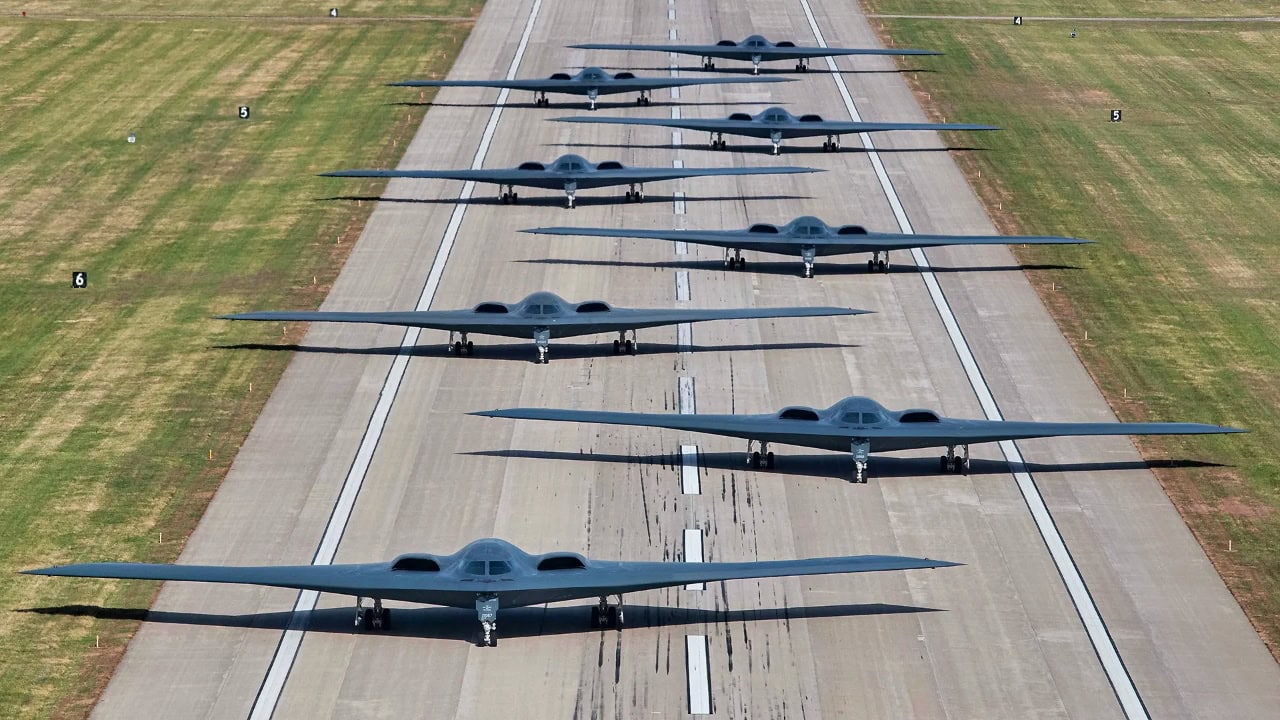
Air Force B-2 Bomb.er Elephant Walk.
Prior to this exercise, it was assumed that the LRASM was not compatible with the B-2.
Now, however, integrating the stealthy anti-ship missile with the stealth bomber provides a huge boost in capability, giving the U.S. a highly survivable platform capable of taking out Chinese surface ships in the Pacific.
Exercise Valiant Shield
The SINKEX was part of a broader joint exercise called Exercise Valiant Shield 2026. This exercise incorporated allied air forces in an obvious show of force to China.
“The Pacific Air Forces successfully conducted a live-fire Sinking Exercise using the B-2 Spirit north of the Mariana Islands.
The B-2 deployed the Long Range Anti-Ship Missile, demonstrating enhanced ability to achieve strategic objectives within range of potential threats,” according to a press release from Pacific Air Forces (PACAF).
“With the deployment of the LRASM from the B-2 Spirit, the Pacific Air Forces takes a major step forward in countering maritime threats.
This milestone showcased impressive high-end innovation, reinforcing the US military’s commitment to safeguarding national interests and maintaining global security.
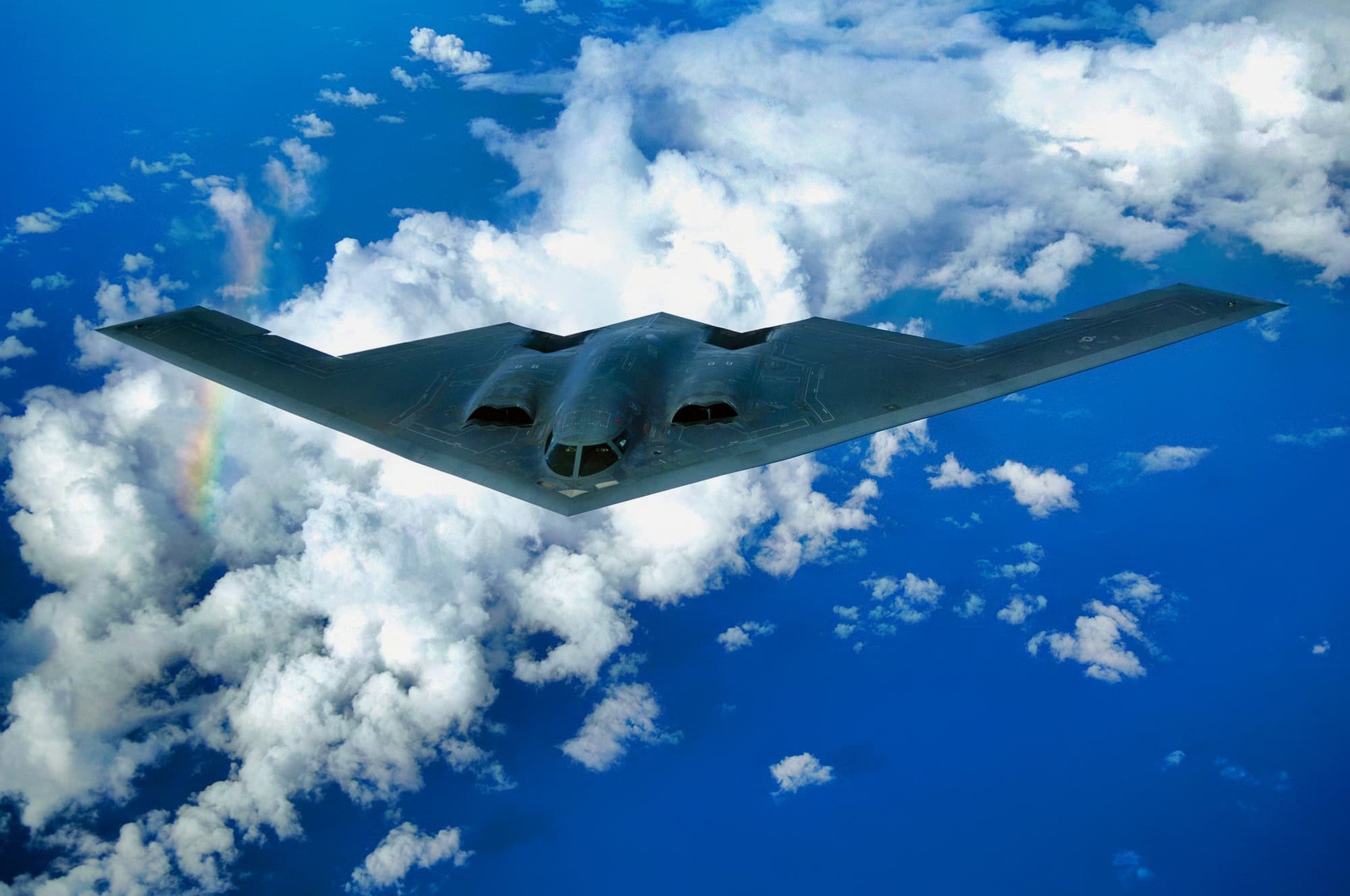
A B-2 Spirit soars after a refueling mission over the Pacific Ocean on Tuesday, May 30, 2006. The B-2, from the 509th Bomb Wing at Whiteman Air Force Base, Mo., is part of a continuous bomber presence in the Asia-Pacific region. (U.S. Air Force photo/Staff Sgt. Bennie J. Davis III)
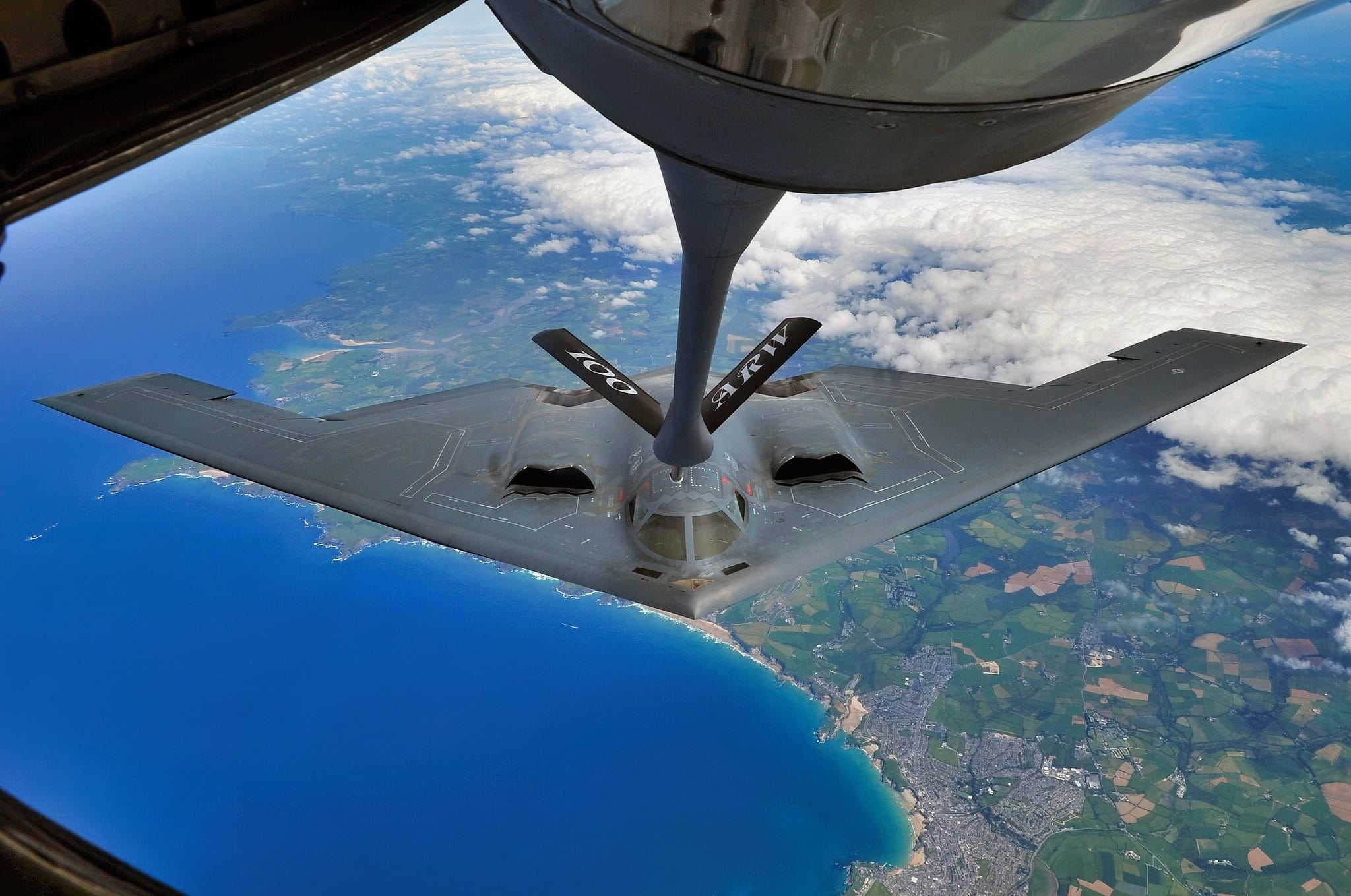
B-2 Bomber. Image Credit: Creative Commons.
During the exercise, the U.S. Navy, along with the U.S. Air Force and the Japan Maritime Self-Defense Force (JMSDF), targeted the USS Juneau, a decommissioned Austin-class amphibious warfare ship.
Juneau was pounded by multiple types of munitions, from torpedoes to air-launched anti-ship missiles. PACAF confirmed that a B-2 managed to fire an LRASM at the ship and successfully struck its target.
The death blow was reportedly dealt by an unmanned JMSDF submarine, which struck the ship with a heavyweight torpedo.
It should be noted that the primary goal of SINKEX is not to sink the designated ship, but rather to test how certain weapon types interact and how effective they are.
The B-2 Can Launch LRASMs?
The primary goal of Valiant Shield 2026 was to demonstrate to China the capabilities of the U.S. and its allies.
“Exercises like Valiant Shield allow U.S. Pacific Command the opportunity to integrate forces from all branches of service and with our allies to conduct precise, lethal, and overwhelming multi-domain effects that demonstrate the strength and versatility of the Joint Force and our commitment to a free and open Indo-Pacific,” a PACAF spokesperson said.
As the U.S. continues to envision a future war in the Pacific, exercises like this are an effective means of bolstering deterrence by showcasing the destructive capabilities of the U.S. Armed Forces and its allies.
The real bombshell of Valiant Shield 2026 was the fact that the B-2 is compatible with the LRASM. Prior to the exercise, the USAF made no mention that the B-2 platform could be fitted with the missile, nor was there any announcement that the Air Force had even considered integrating LRASM with the stealth bomber.
When TWZ asked for details, the Air Force simply replied that the information was classified.
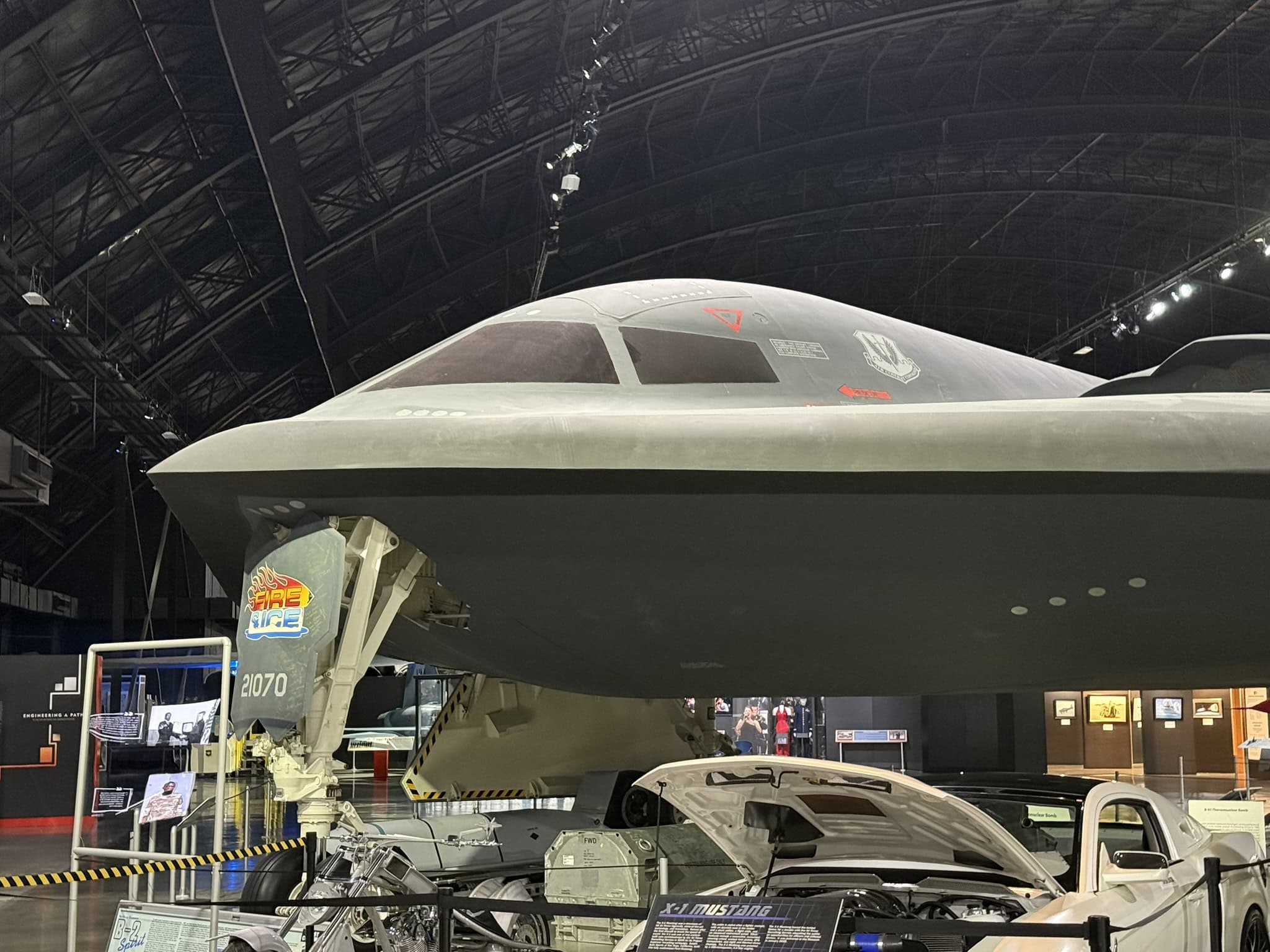
B-2 Spirit. 19FortyFive.com image taken at the National Museum of the U.S. Air Force in July, 2025.
It is currently unknown whether this is the first time a B-2 has launched an LRASM or how long the missile has been compatible with the bomber. Currently, the only aircraft publicly known to be compatible with the missile are the F/A-18 Super Hornet and the B-1B Lancer, with efforts underway to integrate the missile onto the F-15E/EX, F-16C/D, F-35, and, interestingly, the P-8A Poseidon.
Aerospace Dominance: Expanding the B-2’s Anti-Ship Capabilities
In the past, the USAF has stated its intent to improve the B-2’s anti-ship capabilities by integrating Quicksink. Quicksink is essentially a navalized version of the Joint Direct Attack Munition (JDAM) guidance kit.
It utilizes a 2,000-pound bomb with precision guidance systems, giving it anti-ship capabilities similar to those of a torpedo but at a much lower cost.
Torpedoes are currently the most capable anti-ship weapons, but the problem is that whenever a submarine launches a torpedo, it gives away its position and becomes an easy target.
Quicksink, especially when integrated with the B-2, offers similar capabilities, but from a much more survivable platform.
It was thought that Quicksink was the only anti-ship platform being integrated into the B-2, but now we know that the USAF has been quietly working to integrate the LRASM.
LRASM was originally derived from the AGM-158A Joint Air-to-Surface Standoff Missile (JASSM) family of land-attack cruise missiles.
The missile has an effective range of around 500 nautical miles and uses advanced guidance systems to track moving sea targets.
The missile also uses data links to get real-time threat updates while in flight. Based on the low-RCS JASSM design, the missile is designed to be difficult to detect by enemy radar and IR systems.
The U.S. Has Its Own Carrier Killers
The B-2 is known to carry around 16 JASSMs in its internal weapons bays. It is expected to carry the same number of LRASMs, since they share the same design.
The integration of LRASM into the B-2 greatly expands the USAF’s anti-ship capabilities.
The B-2 is a highly capable and extremely survivable platform that can bypass most contemporary air-defense radars.
With the integration of the advanced anti-ship missile, the bomber is now an extremely capable surface-ship hunter, capable of damaging or destroying most vessels operated by the PLAN.
Its only limitation is the missile’s high cost and relatively low production rate, an issue that Lockheed Martin is currently trying to address.
About the Author: Isaac Seitz
Isaac Seitz, a Defense Columnist, graduated from Patrick Henry College’s Strategic Intelligence and National Security program. He has also studied Russian at Middlebury Language Schools and has worked as an intelligence Analyst in the private sector.