
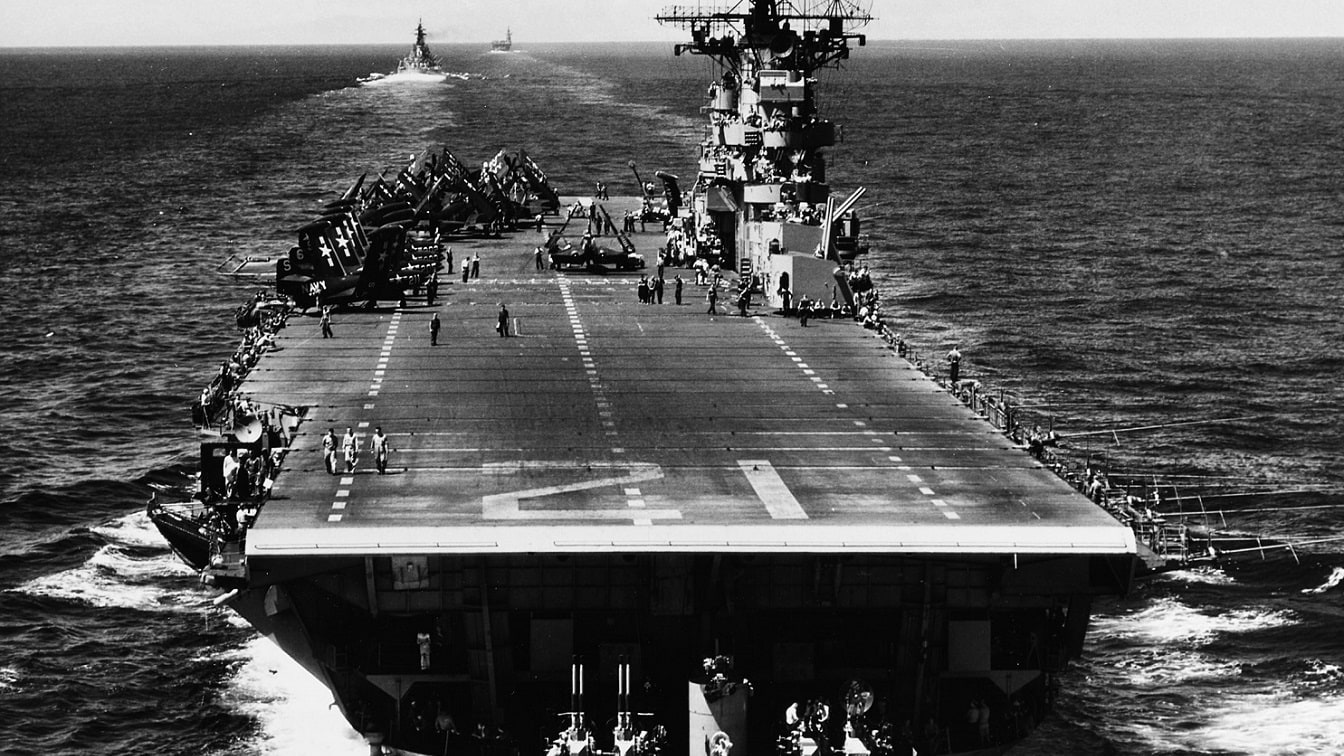
The U.S. Navy Built 24 Essex-Class Carriers. Today’s Shipyards Could Not Repeat It: USS Essex was laid down on April 28, 1941, launched on July 31, 1942, and commissioned on Dec. 31, 1942. In just over 20 months, the United States turned steel, labor, engines, flight-deck equipment, weapons, and thousands of shipyard decisions into the lead ship of one of the most important carrier classes in naval history. The basic dates appear in the Navy’s official USS Essex record.
That speed looks almost impossible from the perspective of the modern U.S. Navy. The Ford-class aircraft carrier program now lives in a different industrial world, where a single nuclear-powered carrier takes years longer to deliver, depends on one carrier-building yard, and must integrate nuclear propulsion, electromagnetic catapults, advanced weapons elevators, new digital systems, and a far more complex combat architecture than anything World War II shipbuilders faced.
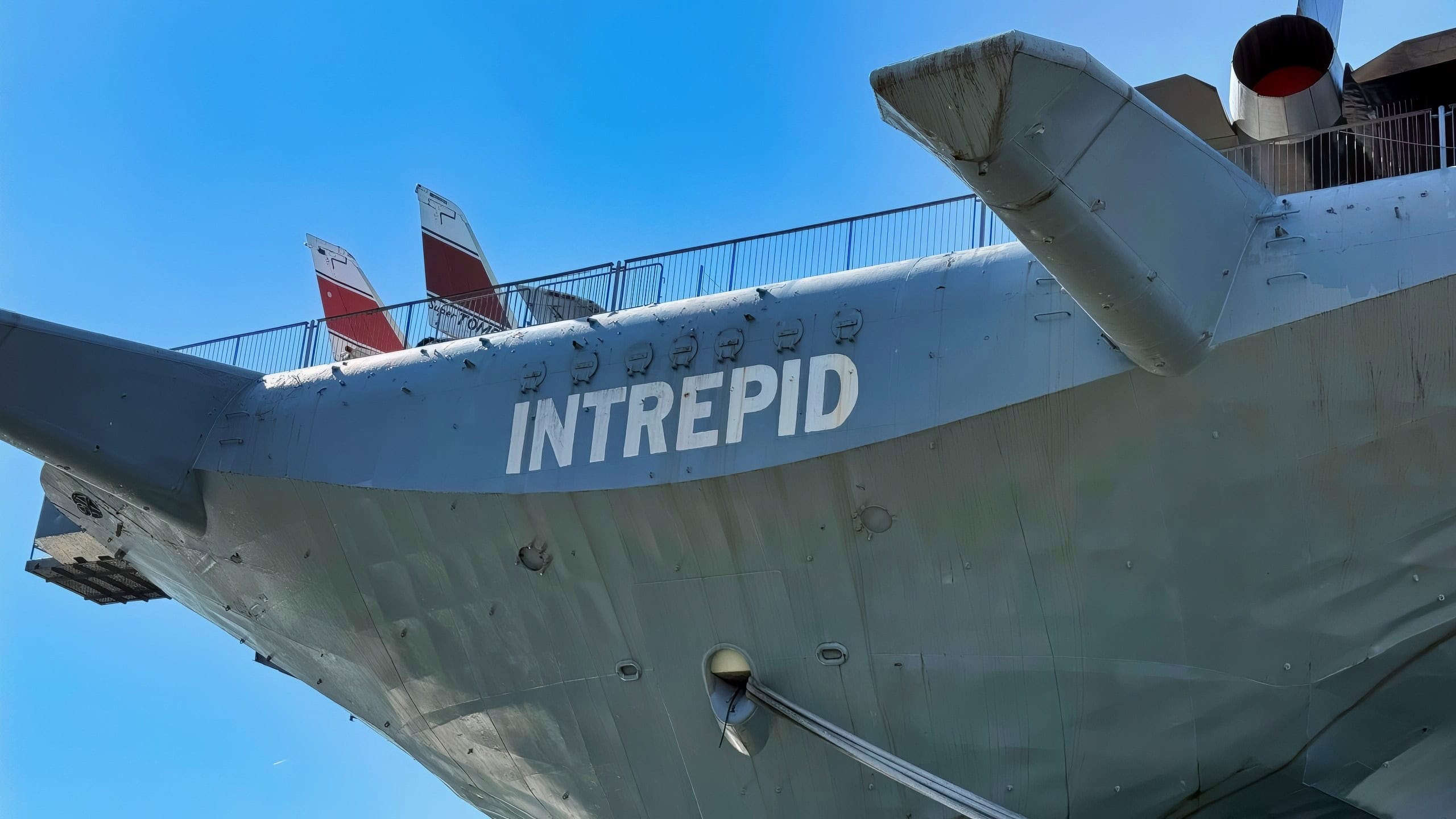
USS Intrepid of the Essex-Class Aircraft Carriers. Image Credit: 19FortyFive.com Original Photo.
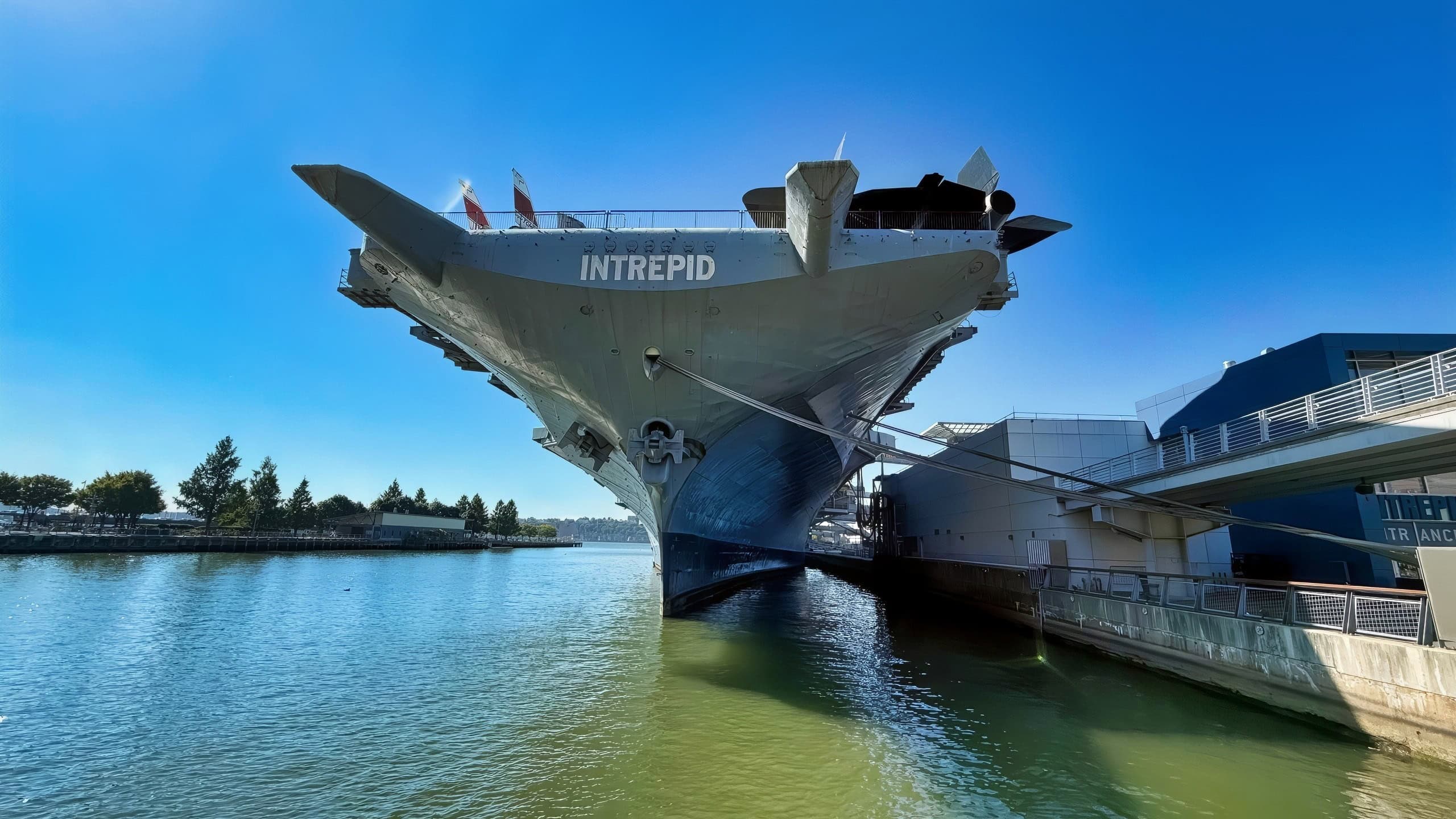
USS Intrepid Essex-Class Aircraft Carrier 19FortyFive.com Photo.
The comparison needs precision. An Essex-class fleet carrier and a Gerald R. Ford-class nuclear supercarrier are different industrial objects. The Ford class is vastly larger, more capable, more complex, and built for a service life and air wing that the World War II Navy never had to imagine.
The fair comparison centers on the industrial system around the ships. World War II America had a mobilized shipbuilding base, standardized designs, multiple yards, a deeper commercial maritime sector, a huge labor pool, and a national emergency that pushed production at an extraordinary pace. Today’s Navy builds unmatched warships, yet its industrial base is narrow, slow, highly specialized, and already struggling to deliver the ships on order.
Note: We visited USS Intrepid, a real-life Essex-class aircraft carrier, and have included photos from that visit.
USS Essex CV-9 And The World War II Carrier Production Surge
The Essex-class carriers became the backbone of the Pacific carrier force for a reason. A current Navy page for the modern USS Essex notes that the World War II Essex was built as the lead ship in a 24-carrier class and that the class became the backbone of the Pacific Fleet. That language matters because the Essex story was never only about one ship. It was about a fleet-construction program large enough to alter the naval balance during the war.
USS Essex entered service barely more than a year after the attack on Pearl Harbor. After accelerated workups, she headed to the Pacific and joined the fast-carrier war that pushed U.S. naval aviation across the Central Pacific. Sister ships followed in quantity. The class gave the Navy the ability to absorb combat damage, rotate ships, support overlapping operations, and keep pressure on Japan over vast distances.
USS Yorktown (CV-10) gives another concrete example of the production pace. Patriots Point states that Yorktown was built at Newport News in a record 16 1/2 months and commissioned on April 15, 1943. That kind of speed did not come from one yard working harder. It came from a national production system built for volume.
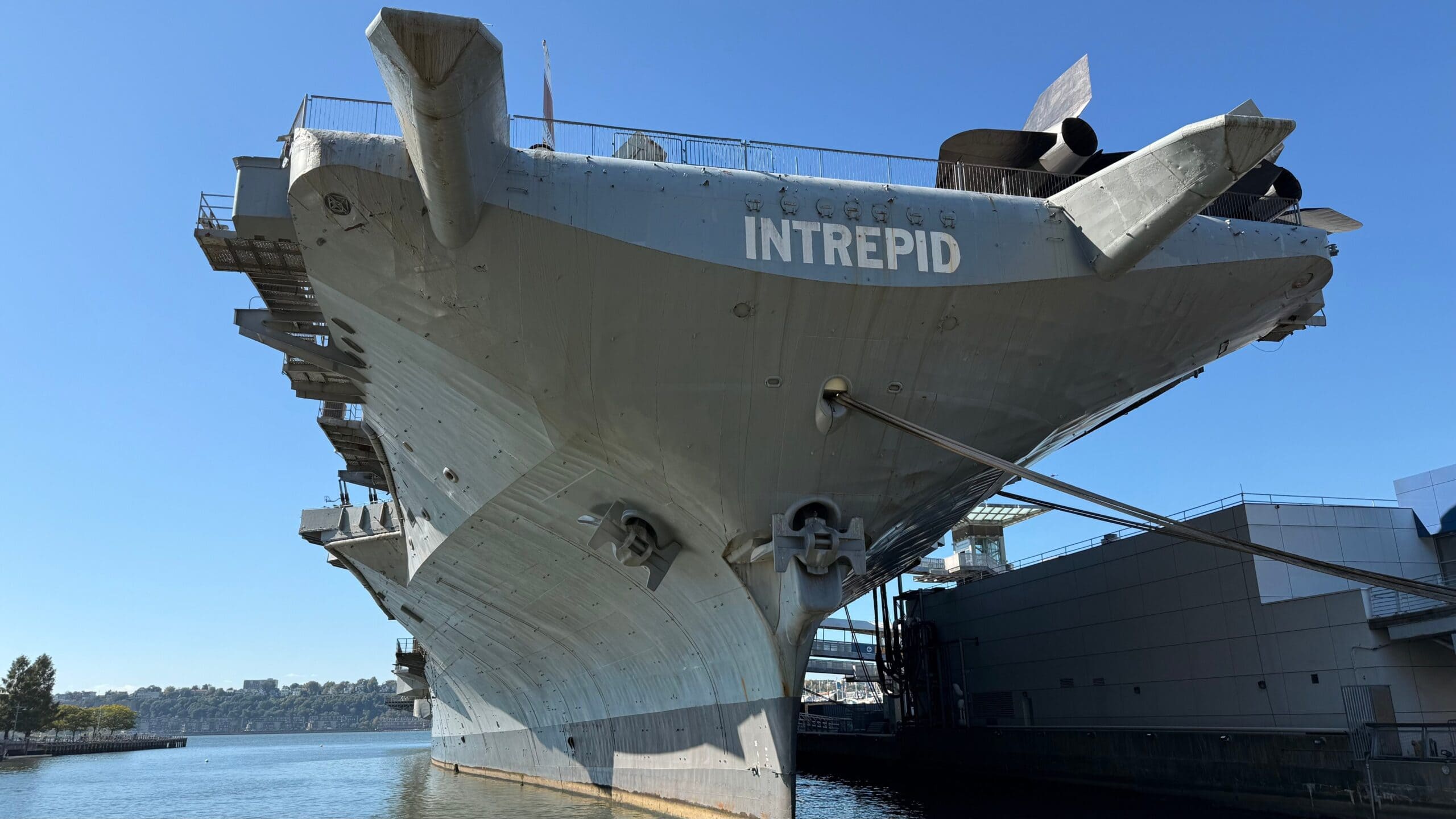
Exterior of Essex-Class USS Intrepid. Image Credit: 19FortyFive.com
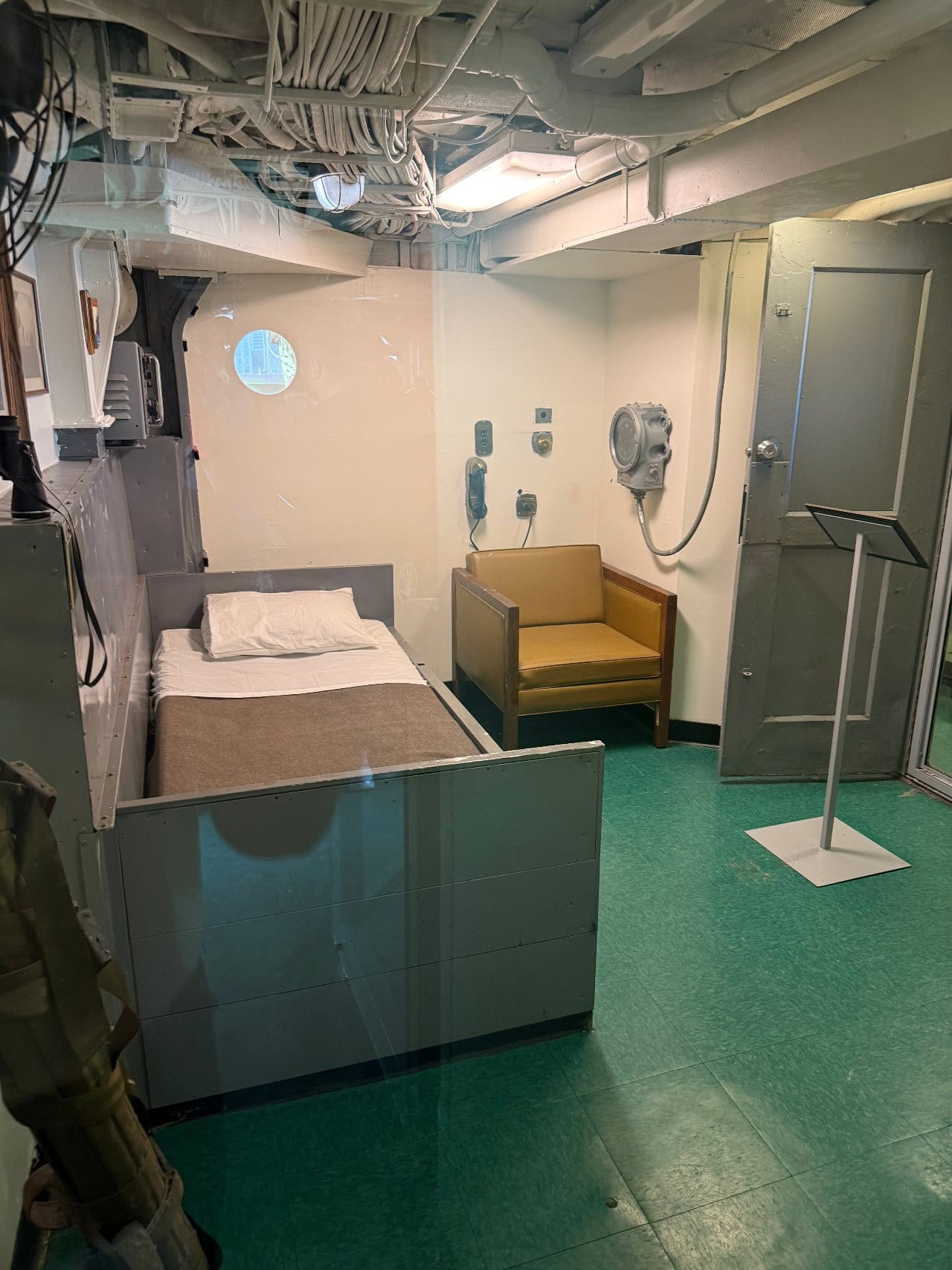
Inside USS Intrepid Essex-class. Image Credit: 19FortyFive.com
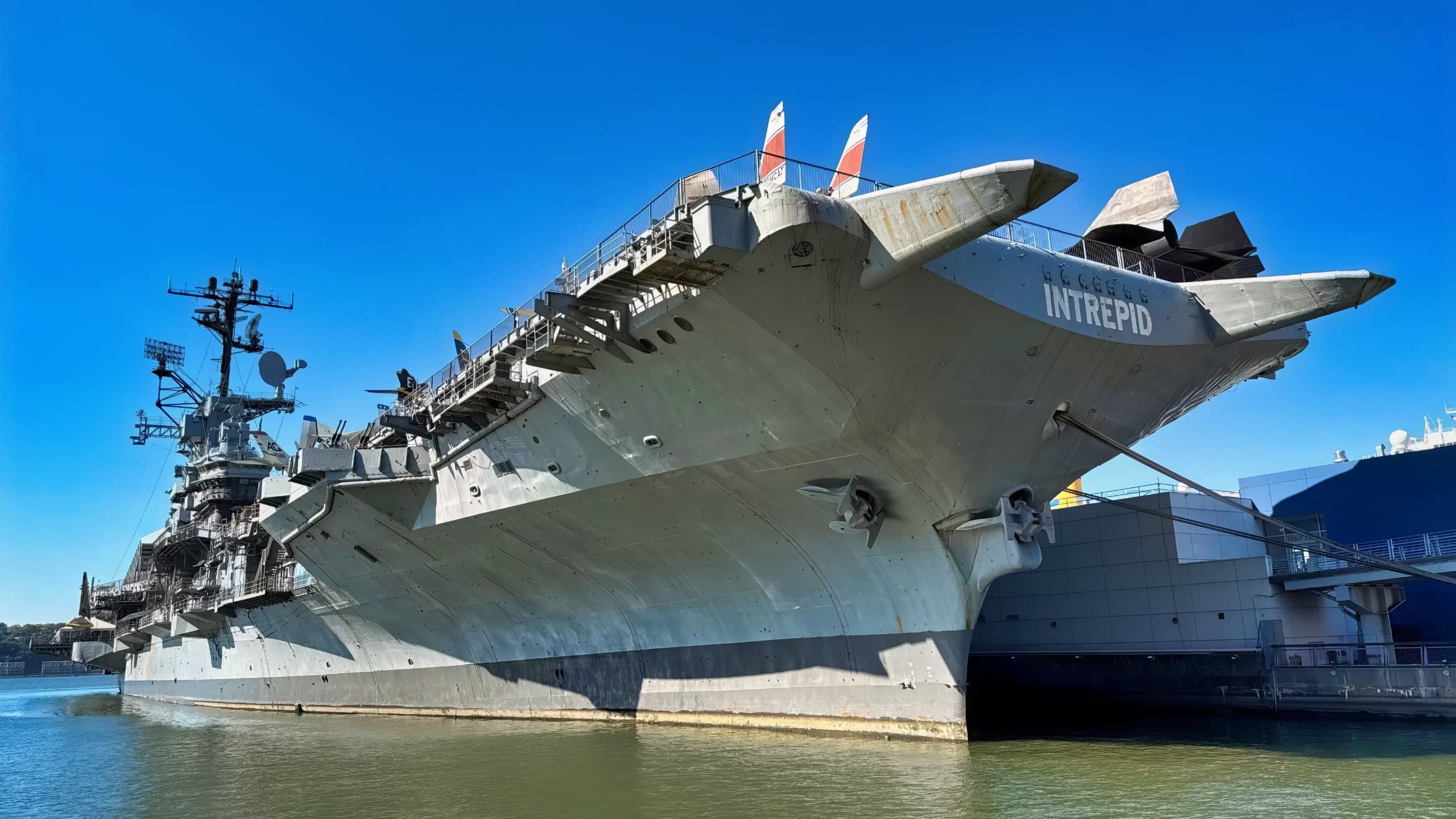
Essex-Class USS Intrepid 19FortyFive.com Photo
The Essex program also benefited from timing. The design was mature enough to be built repeatedly, while still adaptable enough to absorb wartime lessons. The Navy did not ask each carrier to become a one-off technological revolution. The ships were part of a class, and the value of that class came from repeated construction, operating familiarity, and the ability to put large numbers of flight decks into the war.
Essex-Class Aircraft Carriers Were Built Around Repeatable Industrial Scale
World War II shipbuilding worked because the United States treated production as a national weapon. Shipyards expanded. Workers moved into defense production. Suppliers delivered steel, engines, electrical equipment, guns, deck machinery, aircraft support systems, and thousands of parts through a wartime economy that had been forced into scale. The Essex class emerged from a broader American mobilization that was also producing destroyers, submarines, landing ships, cargo vessels, aircraft, tanks, trucks, ammunition, and merchant ships.
Carrier construction still demanded skill. An Essex-class carrier was a major warship, not a simple cargo hull. It required a large flight deck, hangar deck, aviation fuel systems, magazines, elevators, arresting gear, defensive weapons, machinery spaces, command facilities, aircraft maintenance areas, and living spaces to support a large crew and an embarked air group. Essex was hard to build. Wartime America had the industrial depth to build many hard things at once.
Design stability mattered. Repetition allowed yards and suppliers to learn. Workers gained experience on similar structures and systems. The Navy could take lessons from the first hulls and apply them across later ships without redesigning the entire class around a different technological concept.
Modern acquisition often loses that advantage. New ships frequently carry new systems, software, combat architectures, manufacturing processes, and integration burdens. The first ship of a new class becomes a construction project, a test program, and a requirements negotiation all at once. That combination consumes time even when the shipyard and Navy are competent.
The Essex program also had strategic urgency that no peacetime plan can fully reproduce. The United States needed carriers immediately because the Pacific War demanded mobile air power at sea. That urgency simplified priorities. The nation needed hulls, aircraft, trained crews, and operational carriers in the fight.
Ford-Class Aircraft Carriers Are A Different Shipbuilding Problem
The modern carrier comparison must start with the Ford-class. Newport News Shipbuilding, part of HII, says it has been the sole designer and builder of nuclear-powered aircraft carriers for the U.S. Navy since Enterprise (CVN-65). HII also describes the Gerald R. Ford-class as the first new carrier design in decades, with electromagnetic catapults, weapons elevators, a redesigned flight deck and island, and more than twice the electrical capacity of the preceding class.
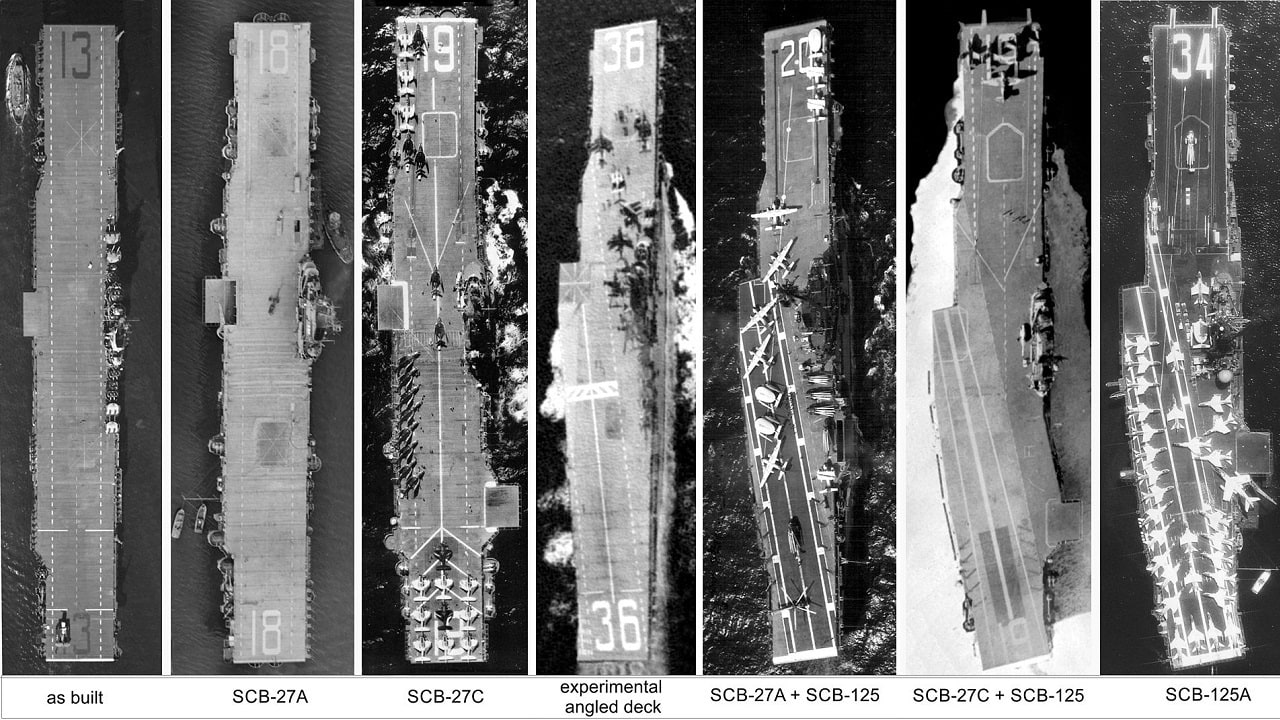
Seven aerial photographs showing the major different modernizations of the U.S. Navy Essex-class aircaft carriers (l-r): USS Franklin (CV-13), a “short hull” type as delivered, 21 February 1944. Franklin, USS Bunker Hill (CV-17), USS Boxer (CV-21), USS Princeton (CV-37), USS Tarawa (CV-40), USS Valley Forge (CV-45) and USS Philippine Sea (CV-47) received no or little modernization. USS Wasp (CV-18), after her SCB-27A conversion in late 1951: new hydraulic catapults, new island, removal of the deck guns, new bow. Modernized as such were USS Essex (CV-9), USS Yorktown (CV-10), USS Hornet (CV-12), USS Randolph (CV-15), Wasp, USS Bennington (CV-20), USS Kearsarge (CV-33) and USS Lake Champlain (CV-39). USS Oriskany (CV-34) was completed as such. USS Hancock (CV-19) after her SCB-27C modernization, circa 1955: like SCB-27A but new steam catapults and relocation of the aft elevator to the deck edge. USS Intrepid (CV-11) and USS Ticonderoga (CV-14) also received SCB-27C. USS Antietam (CV-36) after the installation of an experimental angled deck, circa 1954. USS Bennington (CV-20) after SCB-125: enclosed hurricane bow, angled deck, starboard deckedge elevator. USS Essex (CV-9), USS Yorktown (CV-10), USS Hornet (CV-12), USS Randolph (CV-15), Wasp, USS Bennington (CV-20) and USS Kearsarge (CV-33) received SCB-125. USS Hancock (CV-19) after SCB-125 in April 1957. The three SCB-27C ships were modernized as such an had the starboard deckedge elevator located further aft. The forward elevator was enlarged. USS Oriskany (CV-34) received SCB-125A, here on 30 May 1974. Similar to SCB-27C/SCB-125, only the starboard deckedge elevator was located further forward, as with the SCB-27A/SCB-125 ships. USS Lexington (CV-16), USS Bon Homme Richard (CV-31) and USS Shangri-La (CV-38) received SCB-27C/SCB-125 in one refit but had the starboard elevator in the same position as Oriskany.
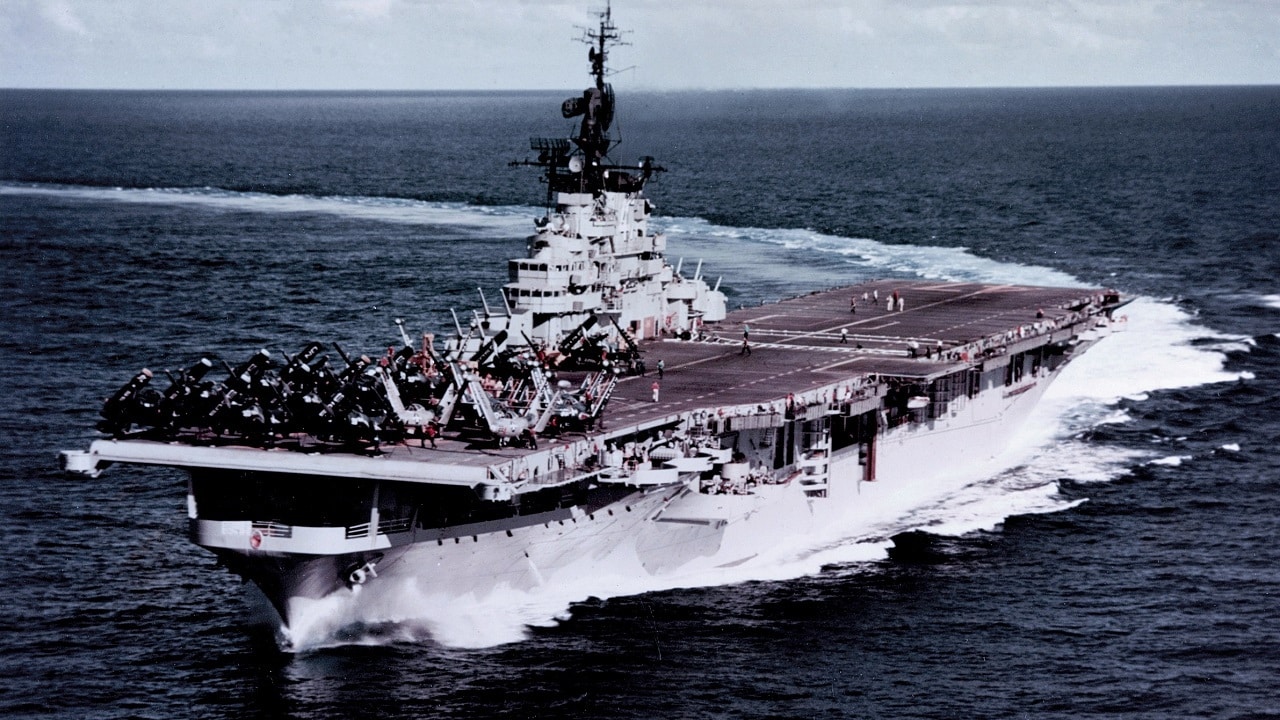
The U.S. Navy aircraft carrier USS Philippine Sea (CVA-47) makes a sharp turn to starboard, while steaming in the Western Pacific with the U.S. Seventh Fleet, 9 July 1955. Philippine Sea, with assigned Air Task Group 2 (ATG-2), was deployed to the Western Pacific from 1 April to 23 November 1955.

Essex-Class Aircraft Carrier. Image Credit: Creative Commons.
Those features explain why the Ford class cannot be treated as a modern Essex. A Ford-class carrier is a nuclear-powered air base at sea with two reactors, advanced launch and recovery systems, high electrical power demands, sophisticated sensors and networks, modern command spaces, and a 50-year service life. It also carries the industrial burden of nuclear standards, specialized labor, security requirements, and long supply chains for components that few companies can produce.
That complexity is part of why the Ford class exists. The Navy wanted more sortie-generation capacity, lower long-term manning costs, greater electrical growth margin, and room for future systems. Those are legitimate objectives. However, complexity has schedule consequences. When a ship class introduces several major technologies at once, construction risk moves into the shipyard and the delivery schedule.
The Essex program shows the power of repetition. The Ford program shows the difficulty of modern integration. Both lessons matter. A Navy that wants the most advanced carrier on Earth must bear the industrial cost of building it.
USS Doris Miller CVN-81 Shows The Modern Carrier Bottleneck
The current Ford-class schedule makes the industrial-base problem concrete. As of June 30, 2026, the future USS Doris Miller (CVN-81), the fourth Ford-class carrier, is scheduled for delivery in February 2034. A May 2026 report on the delay cited the Navy’s FY2027 budget documents, which said the ship’s delivery shifted from February 2032 to February 2034 because shipbuilder construction-footprint constraints limited the ability to build CVN-81 modules.
That is a direct industrial constraint. It is about physical space, sequence, module construction, and the way delay on one ship can affect the next one. The same report said the revised timeline stretches the beginning of construction to delivery across 15 years. Stars and Stripes also covered the 2034 delivery date and noted that all U.S. nuclear-powered aircraft carriers are built at HII Newport News Shipbuilding.
The issue centers on concentration rather than skill at Newport News. The yard has built America’s nuclear carrier fleet for decades. The United States has also concentrated a uniquely demanding category of naval construction in one place with limited physical capacity and a highly specialized workforce.
That concentration limits surge potential. If the Navy wants more carriers faster, it cannot simply hand the same design to several other American yards and expect them to start building nuclear supercarriers. The workforce, nuclear expertise, facilities, supplier relationships, engineering experience, and quality-control systems are all part of the product.
Essex-class production rested on broader wartime shipbuilding capacity. Ford-class carrier production rests on a narrow nuclear-carrier industrial base. That difference explains much of the gap between 1940s carrier output and modern carrier scheduling.
GAO Says The U.S. Shipbuilding Industrial Base Is Under Strain
The carrier problem sits inside a larger shipbuilding problem. GAO reported in 2025 that the Department of Defense spent more than $5.8 billion supporting the shipbuilding industrial base from fiscal 2014 through 2023 and planned another $12.6 billion through fiscal 2028. Those investments supported infrastructure and workforce improvements, but GAO said the Navy and the Office of the Secretary of Defense had not fully coordinated them or established sufficient metrics to assess whether the money was producing the intended results. The findings are in GAO’s industrial-base report.
Essex-Class Aircraft Carrier. Image Credit: Creative Commons.
GAO’s public summary used plainer language. It said U.S. Navy shipbuilding has been consistently over budget and delayed despite billions invested in the industry. It also said shipbuilders face aging infrastructure, workforce shortages, and limited physical capacity. The summary noted that the Navy continues to plan for more ships than private yards have delivered in recent history. GAO laid out those points in its shipbuilding overview.
That is the core difference from the Essex era. World War II production expanded during a national industrial surge. Modern shipbuilding is trying to recover capacity inside a smaller, specialized, and constrained maritime sector. More money helps, but funding cannot instantly produce trained welders, nuclear-qualified engineers, supplier capacity, dry docks, module shops, design maturity, or experienced production managers.
The Navy faces a problem of time as much as money. Industrial capacity has to be built before it can be used. Workers have to be recruited, trained, and retained. Suppliers need stable demand before they invest in capacity. Shipyards need confidence that new facilities and tooling will be used long enough to justify the capital. That kind of rebuilding takes years.
CBO Says Navy Shipbuilding Is Slower Than Earlier Eras
The Congressional Budget Office has put numbers on the slowdown. In April 2026 testimony, CBO said that in the 2000s, the shipbuilding industry took 5 to 6 years to build destroyers and submarines, while shipyards now need 9 to 10 years on average for those ships. CBO also said Nimitz-class aircraft carriers took 7 to 8 years to build, while Ford-class carriers are taking 10 to 11 years on current schedules. The testimony appears in CBO’s assessment of shipbuilding challenges.
CBO also warned that tonnage under construction has grown sharply. From 2014 to 2024, the amount of naval tonnage under construction increased by 80 percent. Combat-ship tonnage rose 65 percent over the same period. That workload has left yards struggling to build the ships already ordered.
That point matters because the Navy’s industrial base is carrying more work before any future fleet expansion occurs. Adding a larger, long-range shipbuilding plan on top of an already overloaded base risks creating additional schedule pressure unless capacity expands in parallel.
CBO has also described the cost gap. Its analysis of the Navy’s 2025 shipbuilding plan estimated total shipbuilding costs at about $40 billion per year in 2024 dollars over 30 years and said the plan would cost 46 percent more annually in real terms than the average amount appropriated over the previous five years. That estimate appears in CBO’s shipbuilding-plan analysis.
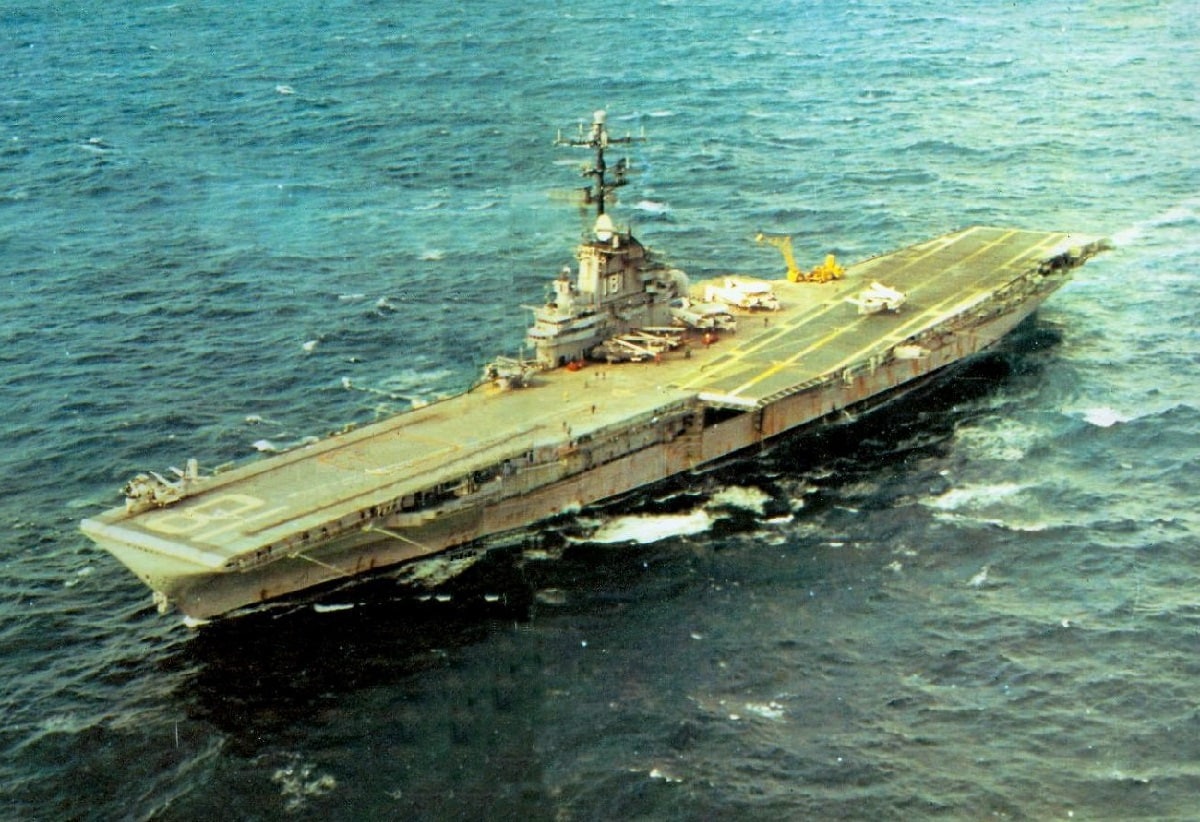
USS Wasp Essex-Class Aircraft Carrier. Image: Creative Commons.
In other words, the Navy’s plans require more money and more industrial performance at the same time. Either one would be difficult. Doing both while current programs are delayed is the real challenge.
The Navy’s 2027 Shipbuilding Plan Puts The Foundry At The Center
The Navy knows the industrial base is now central to sea power. On May 11, 2026, the Department of the Navy released its Fiscal Year 2027 Shipbuilding Plan and said the FY2027 budget request included a $65.8 billion Navy shipbuilding investment. The official release said the plan focuses on expanding shipbuilding capacity and delivering what the administration calls the Golden Fleet. The Navy published that announcement in its shipbuilding plan release.
The plan’s language is notable. It defines the “Foundry” as the industrial base: shipyards, suppliers, maintainers, and the maritime workforce. The plan says stable demand, on-time and at-cost production, disciplined requirements, and long-term industry investment are essential to restoring capacity at the speed and scale required. That language appears in the Navy’s May 2026 shipbuilding plan.
That is close to the Essex lesson in modern language. The Navy says ships begin with industrial capacity. Hulls come from yards, suppliers, workers, requirements, contracts, capital investment, and production discipline.
However, the plan also depends on assumptions. Long-range shipbuilding plans can show the desired future fleet, but the industrial base has to turn that plan into steel, systems, and delivered ships. The Essex class was built by an industrial system already mobilized for war. The modern Navy is trying to build an industrial system while also ordering the future fleet.
China Makes U.S. Shipbuilding Capacity A Strategic Problem
The Essex comparison becomes more important because naval competition has returned to industrial scale. China’s naval growth has made shipbuilding capacity a strategic issue rather than an acquisition-management issue. A CRS China naval modernization report posted by USNI says China’s navy surpassed the U.S. Navy in battle-force ship numbers sometime between 2015 and 2020, and that the Pentagon assessed China’s navy at more than 370 platforms, with projected growth to 395 ships by 2025 and 435 by 2030. The figures appear in the CRS China naval report.
Ship counts alone are a crude measure, and every Chinese ship does not equal every American ship. The U.S. Navy still has advantages in nuclear-powered aircraft carriers, submarines, allied access, combat experience, undersea warfare, and global logistics. However, sustained shipbuilding output gives China options. It allows Beijing to replace older hulls, field new classes, put pressure on the U.S. Navy in the Western Pacific, and convert industrial capacity into military presence.
That is where the Essex-class lesson becomes current. In World War II, the United States won at sea in part because it could build, repair, replace, and expand faster than its enemies could absorb. Modern naval competition will differ sharply from 1943. Yet industrial endurance remains a measure of power.
A Navy that cannot deliver ships on time faces a strategic ceiling. It can write ambitious plans, design advanced platforms, and request large budgets. The fleet still depends on yards that can produce hulls and suppliers that can deliver components on schedule.
The Essex-Class Carrier Lesson For Today’s Navy
The Essex class offers a clear lesson for modern shipbuilding, though the lesson requires restraint. The United States cannot recreate the conditions of World War II by willpower alone. It cannot turn every modern yard into a nuclear-carrier yard. It cannot make a Ford-class carrier as simple as an Essex-class carrier. It cannot produce specialized workers, nuclear-qualified facilities, or critical suppliers overnight.
The useful lesson is industrial discipline. Stable designs matter. Repeat production matters. Supplier depth matters. Workforce training matters. Yard infrastructure matters. Realistic schedules matter. Requirements discipline matters. A Navy that changes designs late, begins construction before work is mature, overestimates industrial capacity, or underfunds supplier resilience will keep buying delayed.
CSIS reached a similar broad diagnosis in its 2025 naval shipbuilding report. It said that 17 private shipyards that had constructed ships for the defense industry had closed or left the defense industry over the previous 50 years, and that, as of 2021, only seven shipyards built battle-force ships for the Navy. The report also discussed the limits of using commercial yards for major combatants, while noting that commercial capacity may be better suited to smaller, simpler, or more modular vessels. That assessment appears in CSIS’s shipbuilding report.
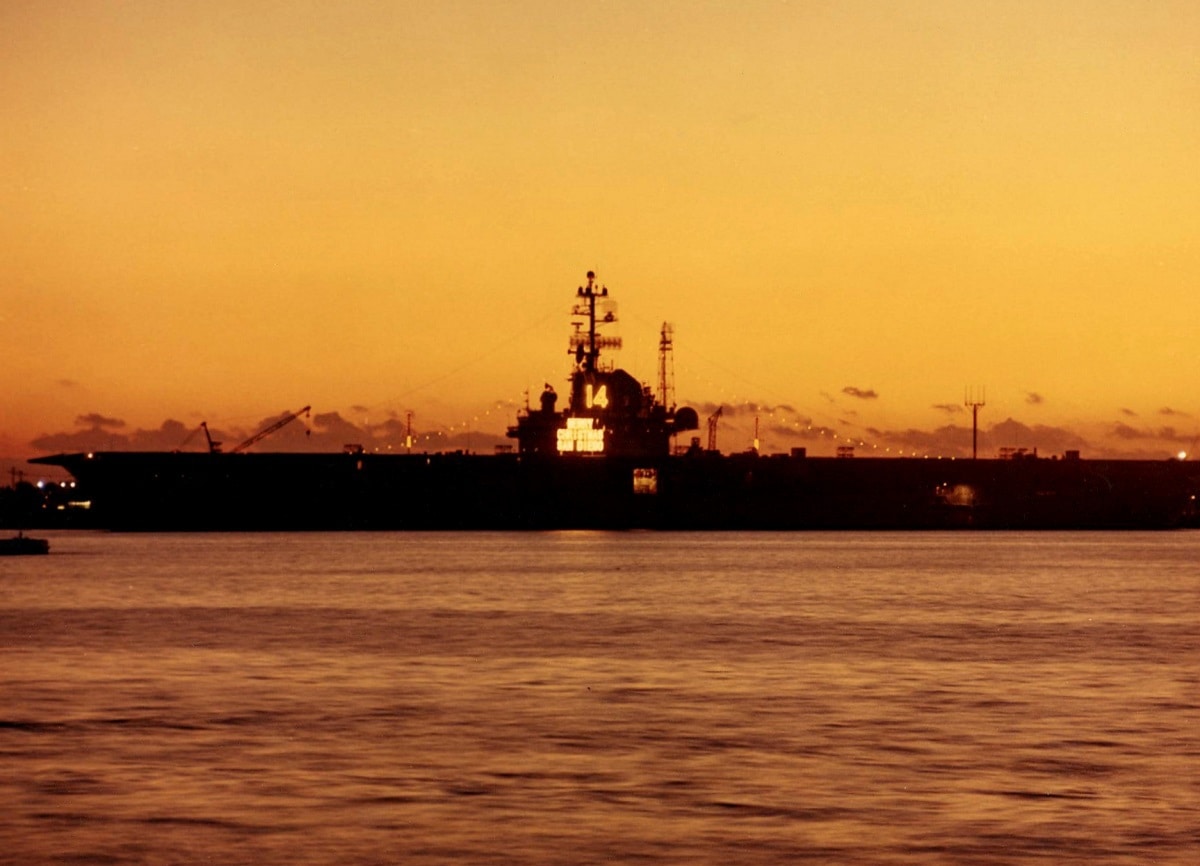
Essex-Class. Image Credit: Creative Commons.
That is an important distinction. America needs more shipbuilding capacity, but different yards can contribute in different ways. Nuclear carriers and submarines require unique infrastructure and expertise. Amphibious ships, destroyers, frigates, logistics ships, unmanned vessels, modules, and auxiliary hulls offer other opportunities for capacity expansion. The answer will vary by ship type.
The Essex program also reminds the Navy that production is a military capability. A fleet plan that exists only in documents does not deter anyone. Delivered ships do. Delivered ships with trained crews, working systems, spare parts, and maintenance capacity matter even more.
America Still Builds Great Warships, But Not Fast Enough
The United States still builds the world’s most powerful aircraft carriers. No other navy operates anything equal to the Ford class. No other carrier force combines nuclear endurance, large-deck aviation, global logistics, decades of operational experience, and allied access on the same scale.
That fact should sit beside a second one. America no longer has the shipbuilding depth and speed that produced the Essex-class carrier fleet under wartime pressure. The modern Navy’s challenge is the gap between ambition and industrial throughput.
USS Essex went from keel-laying to commissioning in just over 20 months. The future USS Doris Miller is now scheduled to reach the Navy in 2034, following a timeline measured in years and shaped by construction-footprint limits. Those facts describe a changed shipbuilding system.
The Essex-class carriers were built by America with scale, urgency, workforce depth, and repeatable production. Today’s Navy has unmatched technology but less industrial margin. The Navy’s May 2026 shipbuilding plan now puts shipyards, suppliers, maintainers, and maritime workers at the center of fleet expansion because the Essex-class scale no longer exists.
About the Author: Harry J. Kazianis
Harry J. Kazianis (@Grecianformula) was the former Senior Director of National Security Affairs at the Center for the National Interest (CFTNI), a foreign policy think tank founded by Richard Nixon based in Washington, DC. Harry has over a decade of experience in think tanks and national security publishing. His ideas have been published in the NY Times, The Washington Post, The Wall Street Journal, CNN, and many other outlets worldwide. He has held positions at CSIS, the Heritage Foundation, the University of Nottingham, and several other institutions related to national security research and studies. He is the former Executive Editor of the National Interest and the Diplomat. He holds a Master’s degree focusing on international affairs from Harvard University.

