Summary and Key Points: General Dynamics Electric Boat, Newport News Shipbuilding, and the rest of America’s naval industrial base need to hire roughly 250,000 workers over the next decade just to build the submarines the U.S. Navy has already ordered — and Congress has already funded. The money is there. The steel is there. What is missing is people: the welders, pipefitters, and nuclear-certified machinists who take years to train and cannot be produced on a deadline. As China’s shipyards expand at a pace American yards can’t match, the U.S. submarine program is discovering that its hardest shortage isn’t budgetary at all.
The U.S. Navy’s Industrial Crisis Is Real
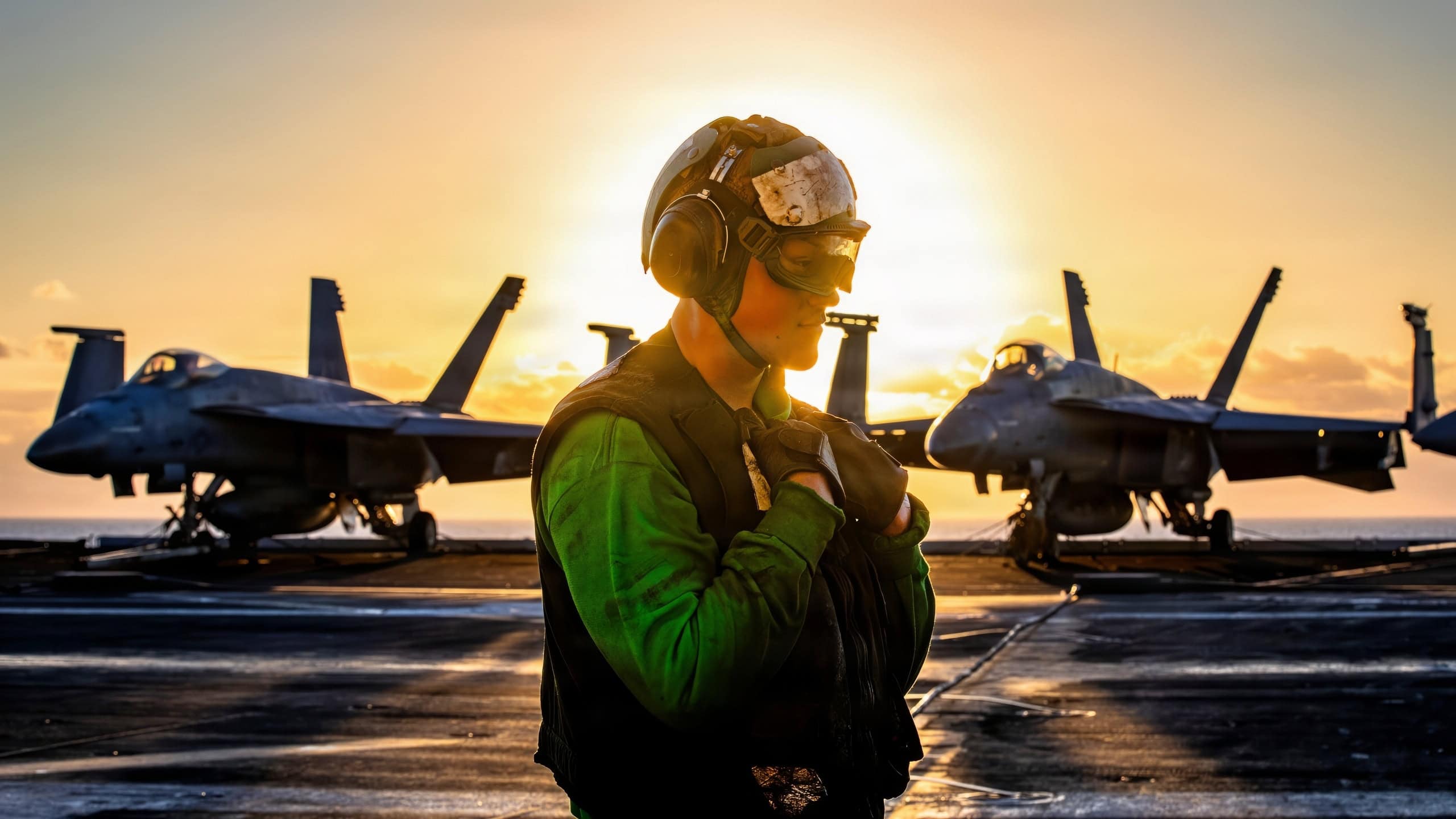
A U.S. Sailor observes flight deck operations on the flight deck of the world’s largest aircraft carrier, USS Gerald R. Ford (CVN 78), during Operation Epic Fury, Feb. 28, 2026. (U.S. Navy photo)
For years, American defense debates have revolved around budgets. Whenever military readiness declined or shipbuilding slowed, the default explanation was that Congress had failed to appropriate enough money. Washington therefore responded the only way it knew how: by increasing spending. The assumption was simple. If America spent more, the ships would eventually appear.
Reality has been far less accommodating.
The US Navy today possesses ambitious plans for a dramatically larger fleet. It wants to simultaneously build the new Columbia-class ballistic missile submarines, continue producing Virginia-class attack submarines, prepare for the next-generation SSN(X), modernize surface combatants, and maintain an aging fleet that has accumulated years of deferred maintenance. Congress has largely embraced those goals. Billions of dollars continue flowing into shipbuilding accounts.
Yet production remains behind schedule.
The explanation for those delays is becoming impossible to ignore. America’s greatest shipbuilding shortage is no longer steel. It is not even money. The most important missing ingredient in the whole recipe is skilled American workers.
The Industrial Base Lost Its Human Capital
During the Cold War, the United States maintained an enormous industrial workforce capable of producing warships, submarines, aircraft, and nuclear weapons at a pace that astonished rivals. Public shipyards and private contractors employed generations of industrial workers. Welders, pipefitters, electricians, machinists, quality inspectors, and other specialized craftsmen whose expertise had accumulated over decades comprised the workforce of America’s naval shipyards.
Capacity, therefore, is more than just funding and industrial mechanics.

ATLANTIC OCEAN (Oct. 29, 2019) USS Gerald R. Ford (CVN 78) conducts high-speed turns in the Atlantic Ocean. Ford is at sea conducting sea trials following the in port portion of its 15 month post-shakedown availability. (U.S. Navy photo by Mass Communication Specialist 3rd Class Connor Loessin)
It’s the human element. In fact, that is (and don’t tell this to the industrialists who are so quick to end the human worker’s role in industrial production) the most important element of this endeavor. And the human capital component of our shipbuilding industry has been disappearing since the end of the Cold War, when the Soviet threat vanished.
The post-Cold War peace dividend rewarded efficiency over resilience. Shipbuilding slowed dramatically. Defense contracts for new builds declined significantly. Suppliers, therefore, consolidated or disappeared altogether. Apprenticeship programs, once the lifeblood of constant regeneration for the shipbuilding industry, shrank.
Technical education, meanwhile, gave way to four-year college degrees as policymakers encouraged young Americans to pursue careers in finance, technology, consulting, and other white-collar professions rather than the skilled trades.
America retained much of its physical infrastructure (though it declined somewhat). Dry docks, for example, remained. Heavy cranes were still found at those facilities. The workforce that gave those facilities life–purpose–diminished. The consequences of that decision are arriving precisely as Washington has belatedly rediscovered great-power competition and the role industry plays in it.
The Numbers Are Staggering
America’s maritime industrial base must hire roughly 250,000 additional workers over the next decade merely to execute the Navy’s existing fleet plans. That figure becomes even more daunting when retirement trends are factored in.
A significant portion of today’s experienced shipbuilders will reach retirement age during the coming decade. Every retirement removes institutional knowledge that cannot be replaced with a short training course. A master welder who has spent 30 years constructing nuclear submarines possesses innate expertise that takes decades to reproduce.
Those workers cannot simply be manufactured, no matter what progress is made in humanoid robotics and AI.
America must recruit, train, certify, mentor, and retain an entirely new generation of artisans while simultaneously increasing production. That challenge extends across virtually every skilled trade involved in submarine construction.
Each position represents years of training before a worker reaches peak productivity.
Building Nuclear Subs Is Among the Hardest Manufacturing Jobs on Earth
Modern nuclear submarines rank among the most technologically sophisticated machines humanity has ever constructed. Every weld must meet extraordinary standards. Every pipe carries demanding certification requirements. And on it goes.
What’s more, this is physically demanding work.
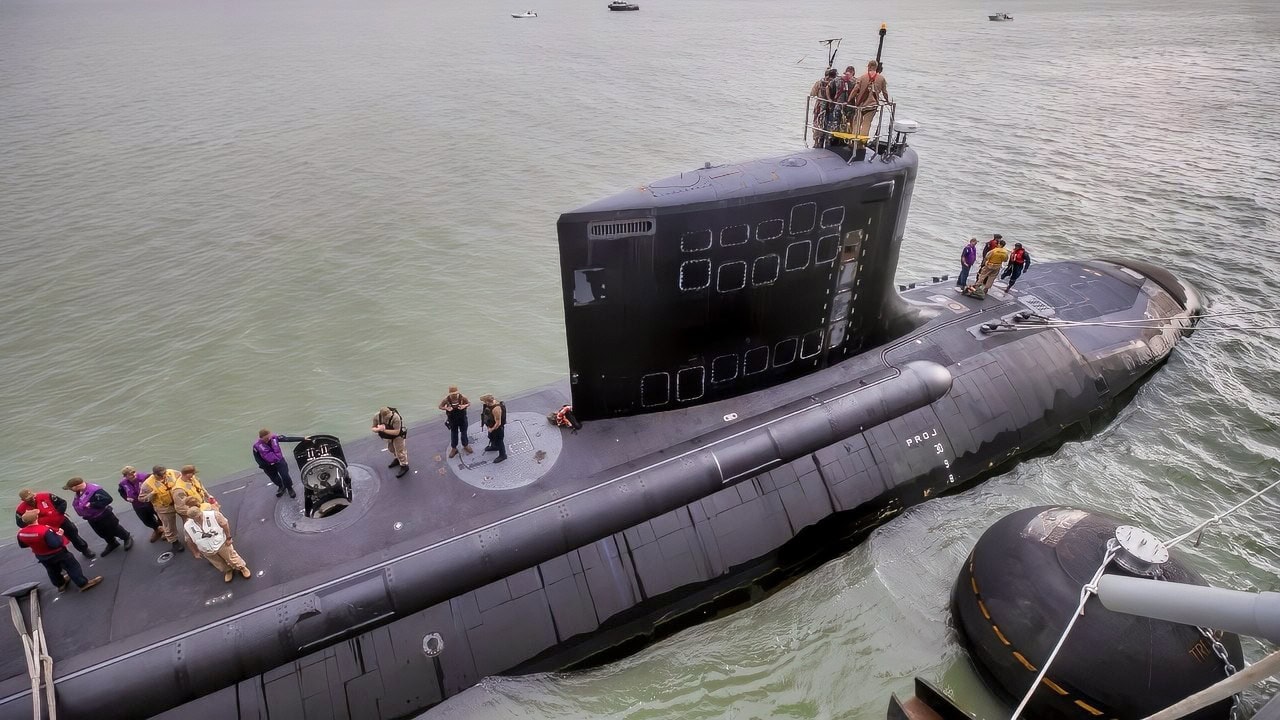
DARWIN, Northern Territory, Australia (March 31, 2025) – The Virginia-class fast-attack submarine USS Minnesota (SSN 783) departs from the submarine tender USS Emory S. Land (AS 39) after a scheduled port visit at Darwin, Northern Territory, Australia, Mar. 31, 2025. Darwin is Emory S. Land’s 17th port call since it departed on deployment May 17, 2024. Emory S. Land and Minnesota are operating in U.S. 7th Fleet, the U.S. Navy’s largest forward deployed numbered fleet, operating with allies and partners in preserving a free and open Indo-Pacific region. (U.S. Navy photo by Mass Communication Specialist Seaman Mario E. Reyes Villatoro)
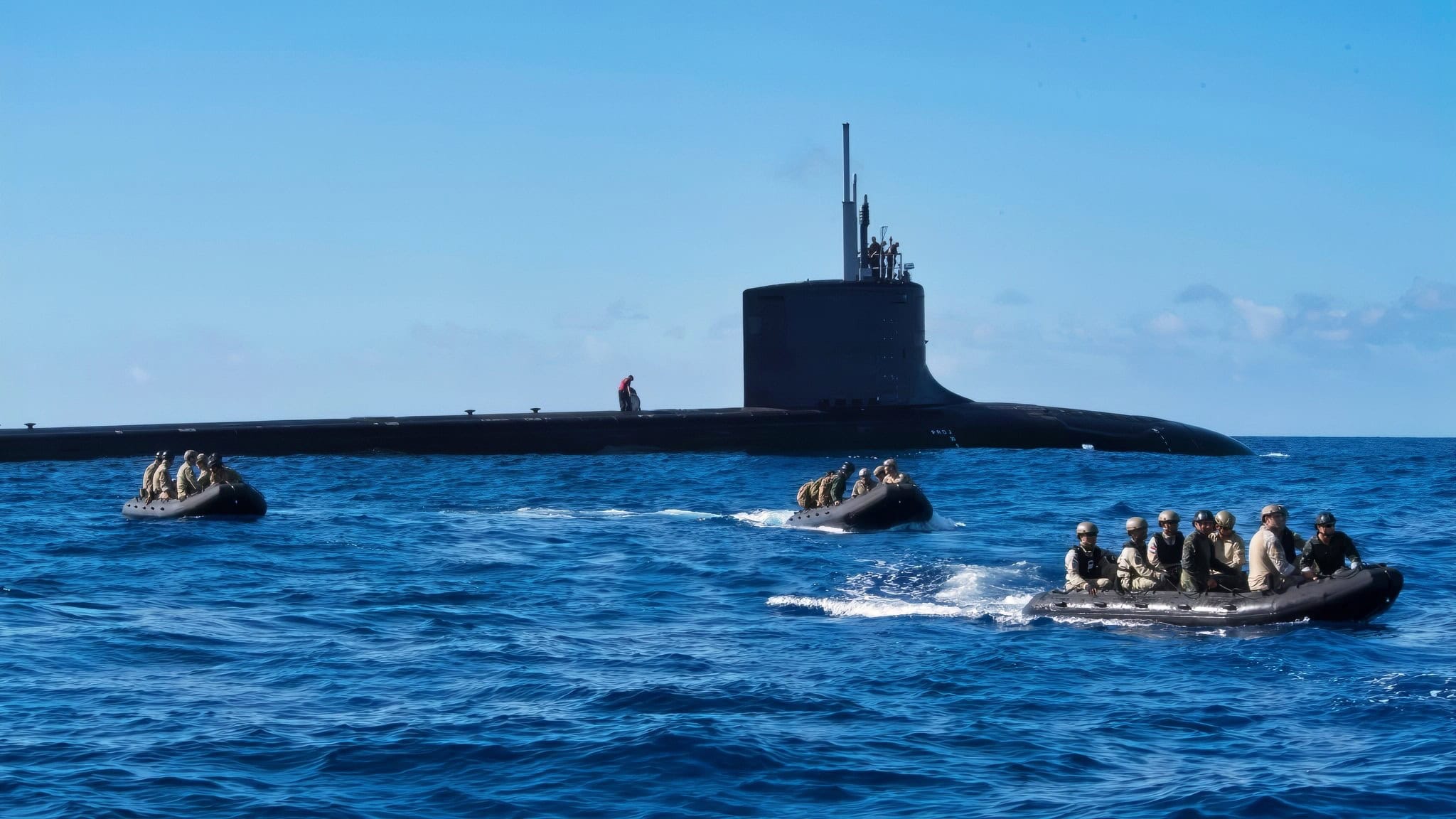
PEARL HARBOR (July 9, 2018) – Multi-national Special Operations Forces (SOF) participate in a submarine insertion exercise with the fast-attack submarine USS Hawaii (SSN 776) and combat rubber raiding craft off the coast of Oahu, Hawaii during Rim of the Pacific (RIMPAC) exercise, July 9. Twenty-five nations, 46 ships and five submarines, about 200 aircraft, and 25,000 personnel are participating in RIMPAC from June 27 to Aug. 2 in and around the Hawaiian Islands and Southern California. The world’s largest international maritime exercise, RIMPAC provides a unique training opportunity while fostering and sustaining cooperative relationships among participants critical to ensuring the safety of sea lanes and security of the world’s oceans. RIMPAC 2018 is the 26th exercise in the series that began in 1971. (U.S. Navy photo by Lt. j.g. Michelle Pelissero)
Shipbuilders spend long days climbing through confined spaces, welding inside narrow compartments, maneuvering heavy equipment, enduring extreme heat, and working in noisy environments where mistakes carry enormous consequences. Every completed submarine reflects millions of hours of labor performed under conditions that few Americans ever experience.
Many new hires discover those realities only on their first day of work at the shipyard.
The Navy has begun providing applicants with realistic previews of daily life because retention has become almost as important as recruitment.
A Different Workforce Has Different Expectations
The workforce entering today’s shipyards approaches employment differently from previous generations. Many younger workers emphasize predictable schedules, workplace culture, flexibility, and even quality of life, whereas earlier generations spent entire careers with one employer.
Career mobility has become commonplace throughout the broader American economy, and skilled manufacturing workers understand their abilities remain valuable across multiple industries.
Shipbuilders therefore compete with energy companies, aerospace firms, and an assortment of other industries for many of the same finite pools of skilled workers.
When better opportunities emerge in another industry for these skilled workers, employees leave. Attrition has become one of the industry’s greatest obstacles. Every worker who leaves during the first year forces employers to restart the entire hiring and training process. Experienced craftsmen shift from building submarines to mentoring replacements. Productivity slows while new employees learn complicated manufacturing processes. Production schedules slip further behind.
The result becomes a cycle that compounds itself.
America Cannot Surge Experience
Political leaders frequently discuss rebuilding the defense industrial base as though industrial capacity resembles a switch that can simply be flipped on. Reality operates according to far less forgiving, predictable timelines. Factories can expand relatively quickly. And firms can purchase more new machines. Experienced nuclear-certified artisans, however, require years to develop.
A welder capable of performing routine commercial work does not immediately become qualified to construct nuclear submarines. Certification standards remain extraordinarily rigorous because lives depend upon every completed system functioning exactly as designed throughout decades of service.
That experience accumulates gradually through repetition, mentorship, and time.
Money accelerates some aspects of industrial expansion. Time and human skill, sadly, remain irreplaceable for the shipbuilding firms tasked with maintaining and expanding America’s Navy.
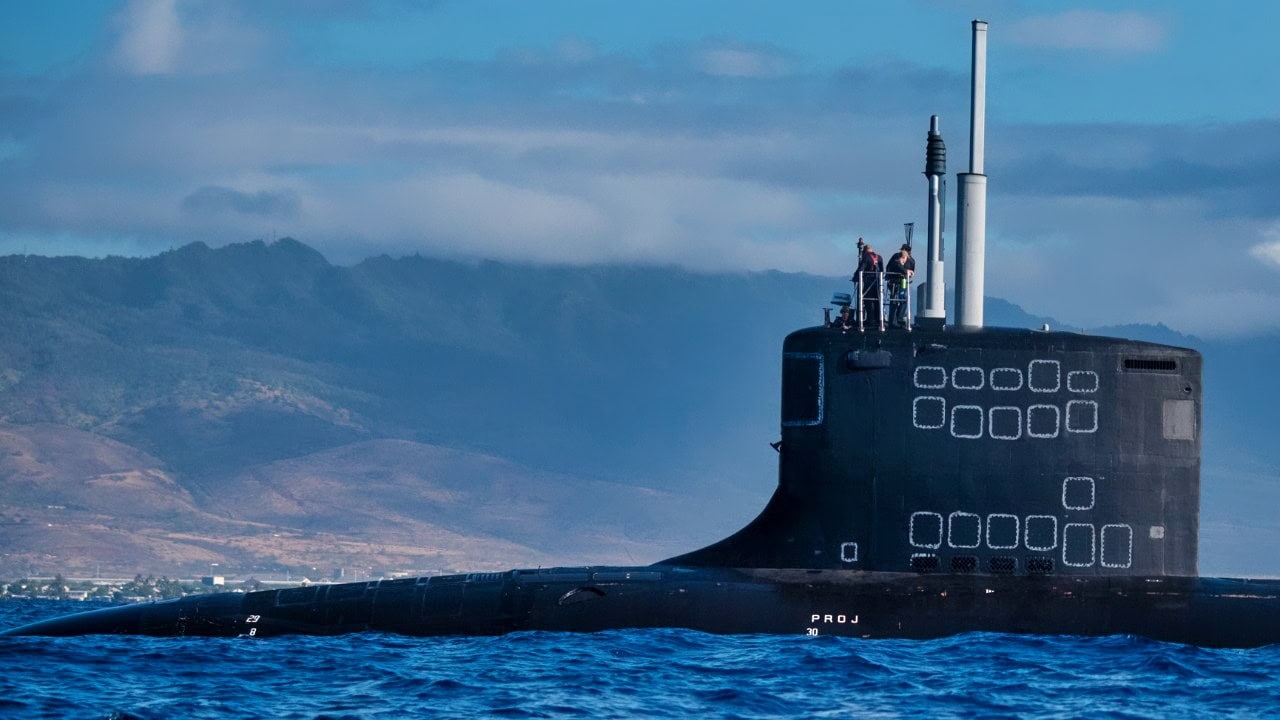
(July 9, 2018) – Multi-national Special Operations Forces (SOF) participate in a submarine insertion exercise with the fast-attack submarine USS Hawaii (SSN 776) and combat rubber raiding craft off the coast of Oahu, Hawaii during Rim of the Pacific (RIMPAC) exercise, July 9. Twenty-five nations, 46 ships and five submarines, about 200 aircraft, and 25,000 personnel are participating in RIMPAC from June 27 to Aug. 2 in and around the Hawaiian Islands and Southern California. The world’s largest international maritime exercise, RIMPAC provides a unique training opportunity while fostering and sustaining cooperative relationships among participants critical to ensuring the safety of sea lanes and security of the world’s oceans. RIMPAC 2018 is the 26th exercise in the series that began in 1971.` (U.S. Navy photo by Mass Communication Specialist 1st Class Daniel Hinton)
The Strategic Consequences Continue Growing
The United States defines China as its primary long-term strategic competitor. Naval power sits at the center of that competition. Attack submarines represent one of America’s greatest military advantages because they gather intelligence, track enemy fleets, protect aircraft carriers, conduct precision strikes, and threaten hostile naval forces across enormous distances.
Delays at the industrial level in the production of new submarines and ships, therefore, harm the operational readiness of the Navy. Every missed production target drastically reduces the Navy’s ability to sustain a larger presence across the Indo-Pacific.
As America’s industry struggles to produce and maintain its key submarine fleet, China continues to expand at an extraordinary pace. That comparison highlights the true nature of the competition. Industrial strength fueled by a robust workforce wins the war before the shooting even starts.
America Is Rediscovering an Old Lesson
For much of the twentieth century, America’s greatest strategic advantage rested upon its ability to mobilize enormous industrial capacity faster than any rival. The nation possessed more factories, raw materials, and transportation networks–along with millions of skilled workers capable of transforming those resources into military power.
That foundation has collapsed under the weight of globalization, financialization, and industrial consolidation.
Washington assumed the industrial workforce would always exist whenever another geopolitical emergency emerged. The submarine workforce crisis demonstrates otherwise. Because of this, the country must once again produce skilled craftsmen in sufficient numbers to sustain great-power competition over the coming decades.
Without that workforce, every ambitious shipbuilding plan, each naval modernization strategy, and all the congressional appropriations run into the same immovable constant: the workforce determines everything.
The future of US naval power depends upon the industrial workforce. And that workforce is declining. If the US cannot mitigate this decline immediately, the US cannot win the next major war.
About the Author: Brandon J. Weichert
Brandon J. Weichert is the Senior National Security Editor at 19FortyFive.com. He also manages The Weichert Brief on Substack. Weichert also hosts “National Security Talk” on Rumble. He is the author of four bestselling national security books, the most recent of which is A Disaster of Our Own Making: How the West Lost Ukraine (Encounter Books). Follow him via Twitter/X @WeTheBrandon.