
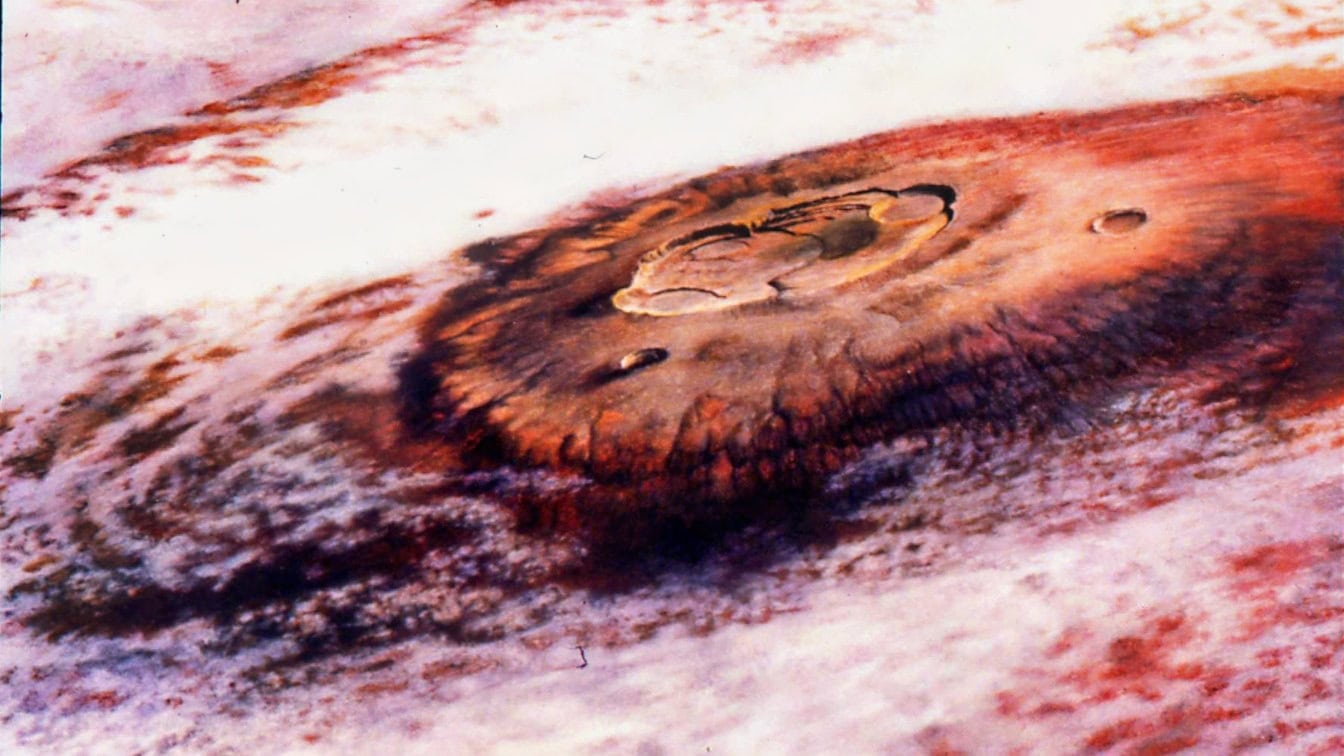
Summary and Key Points: Mars built the largest volcano in the solar system, and planetary scientists are still not certain it is finished. Olympus Mons rises about 70,000 feet above the Martian datum, nearly two and a half times the height of Mount Everest, and spreads roughly 370 miles across, about the size of Arizona. NASA spacecraft have studied the giant since Mariner 9 photographed it in detail in 1971, and crater counts date some lava flows on its flanks to just 2 million years ago. The last major eruption came about 25 million years ago, recent enough that researchers describe the volcano as dormant rather than extinct
Introduction: Mount Everest Is Small Compared to Olympus Mons on Mars
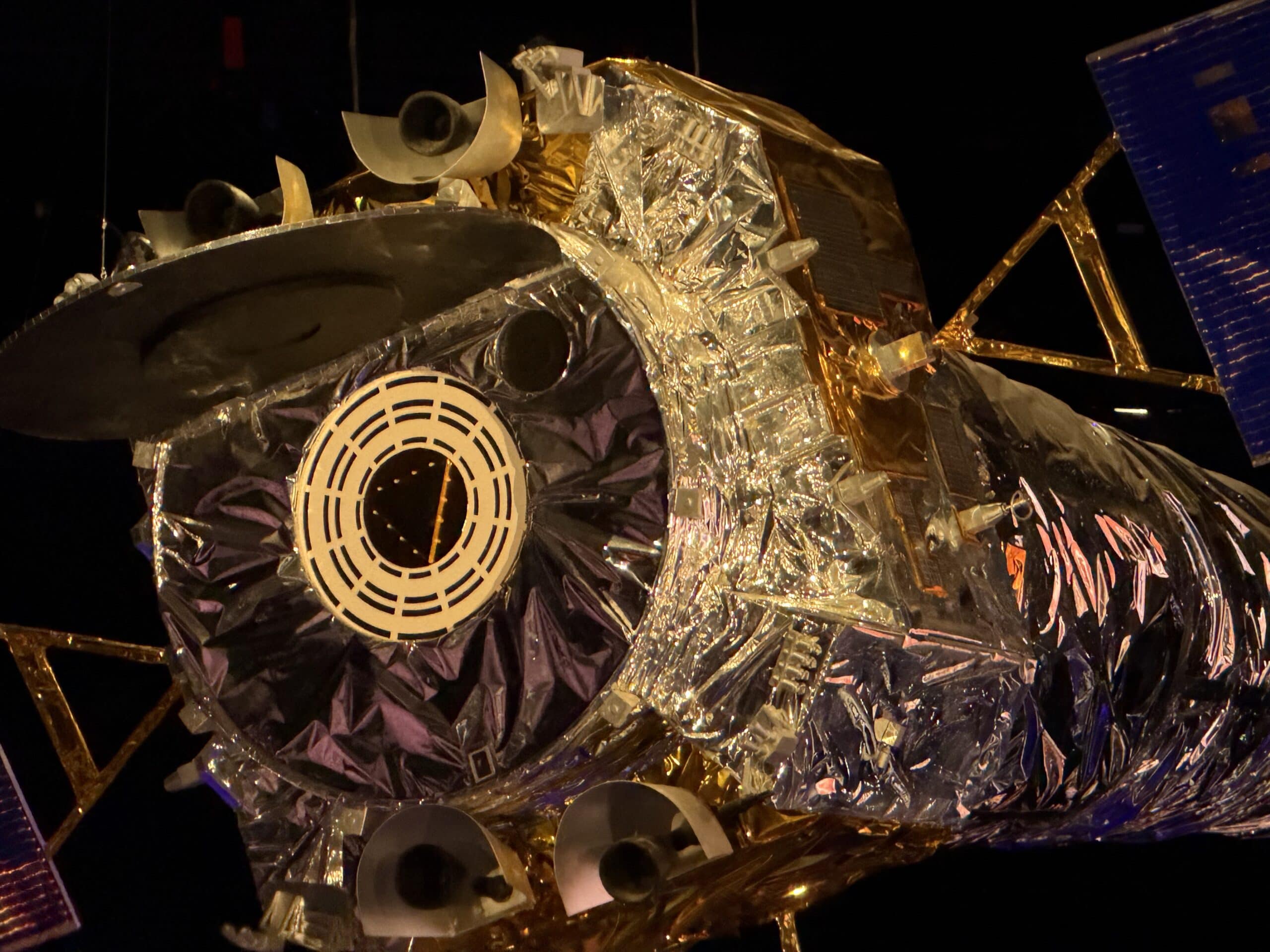
Smithsonian New Exhibit in Space Section from Washington, DC. Taken on July 1, 2026.
The single number that defines Olympus Mons is its height, and it is staggering.
The Martian volcano rises about 21.3 kilometers, close to 70,000 feet, above the datum that scientists use as the planet’s equivalent of sea level, and its total relief from the low plains northwest of it to its summit approaches 26 kilometers, or about 16 miles. Mount Everest, by comparison, reaches 8.85 kilometers above sea level, roughly 29,000 feet.
That makes Olympus Mons about two and a half times taller than the highest mountain on Earth by the standard comparison, and nearly three times taller by the looser figure often quoted. No volcano anywhere else in the solar system comes close, and understanding how Mars built something this large and whether it is truly dead opens a window into how differently the red planet works.
The Numbers That Make Olympus Mons Almost Impossible to Picture
Height is only the beginning of what makes Olympus Mons difficult to imagine. The volcano is a shield volcano, the same broad, gently sloped type that built the Hawaiian Islands, and it spans about 600 kilometers (370 miles) across.
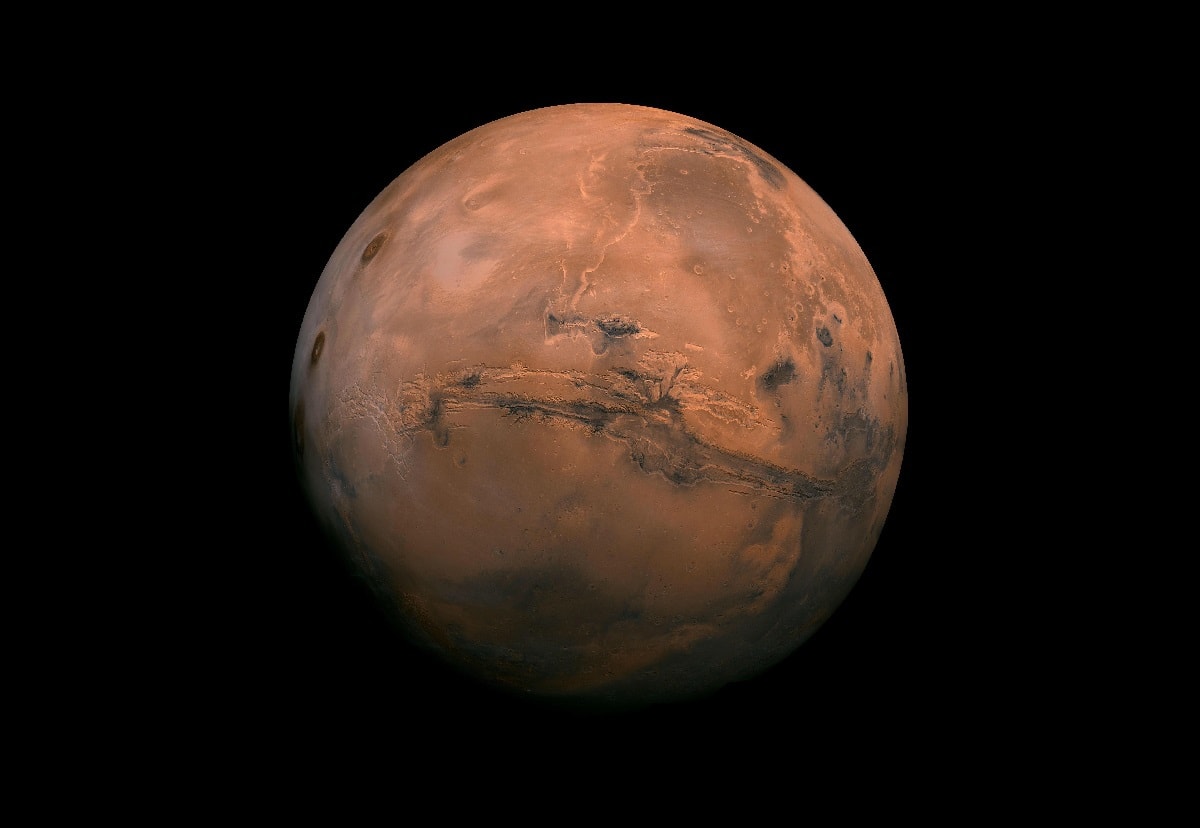
Mars. Creative Commons Image.
That footprint covers roughly 300,000 square kilometers, which planetary scientists variously describe as about the size of Arizona, France, Italy, or Poland. Britannica records the central edifice at about 22 kilometers high and 700 kilometers across, with an outward-facing cliff rising as high as 10 kilometers around much of its perimeter. That escarpment alone, the ring of cliffs at the volcano’s base, stands taller in places than Mauna Loa rises above the Pacific seafloor, and Mauna Loa is the largest volcano on Earth.
The summit is equally outsized. A complex of at least six nested calderas, collapsed craters left when magma chambers emptied and their roofs fell in, forms an irregular depression roughly 60 by 80 kilometers across and up to 3.2 kilometers deep.
The whole structure sits on the Tharsis volcanic province and is supported by a Martian crust, or lithosphere, about 70 kilometers thick. For scale on Earth, the Lunar and Planetary Institute notes the volcano rises nearly 25 kilometers above the surrounding plains, taller than three Mount Everests stacked with room to spare, and remains the tallest volcano known to exist anywhere in the solar system.
Why You Could Stand on It and Not Know
Despite its height, Olympus Mons would not look like a mountain to anyone standing on it, and this is one of its strangest features. Because the volcano is so broad relative to its height, the average slope of its flanks is only about 5 percent, a barely perceptible grade.
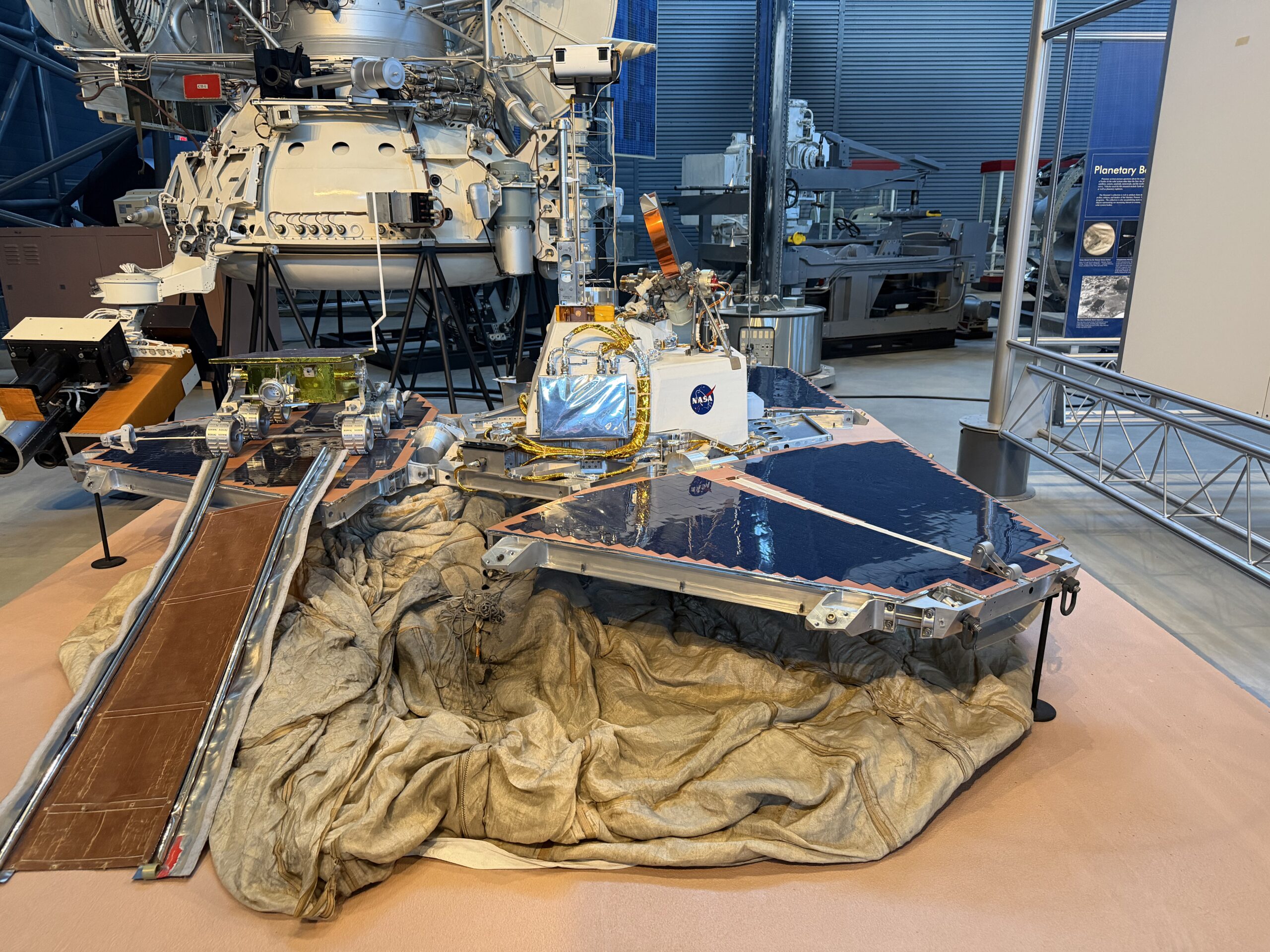
Mars Pathfinder at the Smithsonian. Image taken by 19FortyFive on 6/30/2026.
An observer on the surface would perceive a gently rising plain rather than a peak, and the curvature of the volcano itself, combined with the curvature of Mars, would hide the full profile from view.
From the summit, the horizon would sit only about three kilometers away, and the slope would vanish over it long before revealing that one stood atop the tallest volcano in the solar system.
The altitude produces another remarkable effect. Mars already has a thin atmosphere, less than 1% of Earth’s surface pressure, and at the summit of Olympus Mons, the air pressure drops to only about 12% of the average Martian surface value.
The peak effectively rises above most of the planet’s already sparse atmosphere.
Lowell Observatory captures the consequence vividly, noting that Mars’s atmosphere is so thin that the volcano’s peak pokes above much of it, so that hiking to the summit would mean hiking into space in a meaningful sense. Even so, high-altitude clouds of water ice frequently drift across the summit, and airborne Martian dust still reaches it.
Largest Volcano, but Not the Undisputed Tallest Mountain
Here, precision matters because popular accounts often overstate the claim.
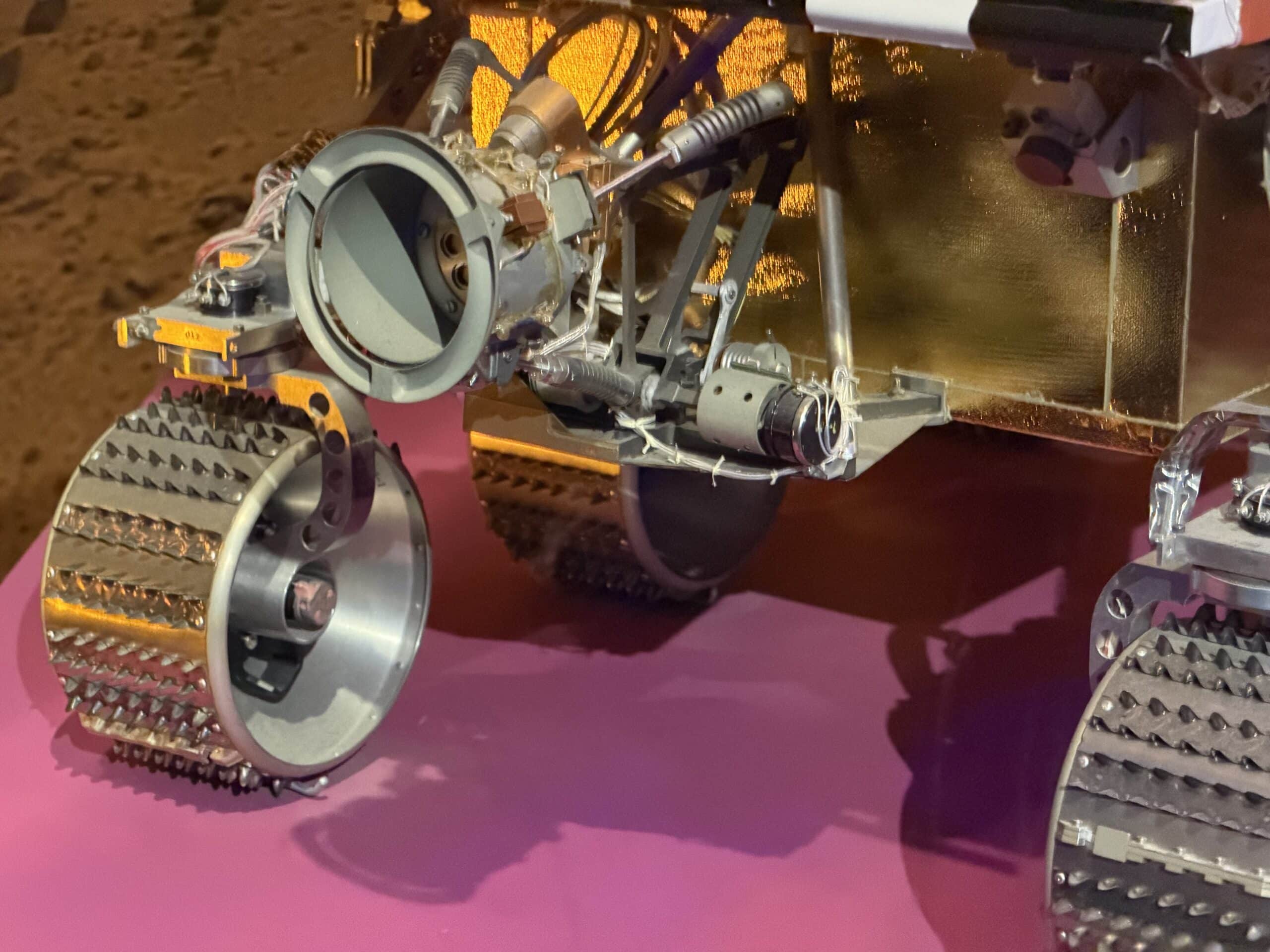
Mars Pathfinder Sojourner at the Smithsonian on July 1, 2026 image taken by 19FortyFive.

Mars Pathfinder Sojourner at the Smithsonian on July 1, 2026 image taken by 19FortyFive.
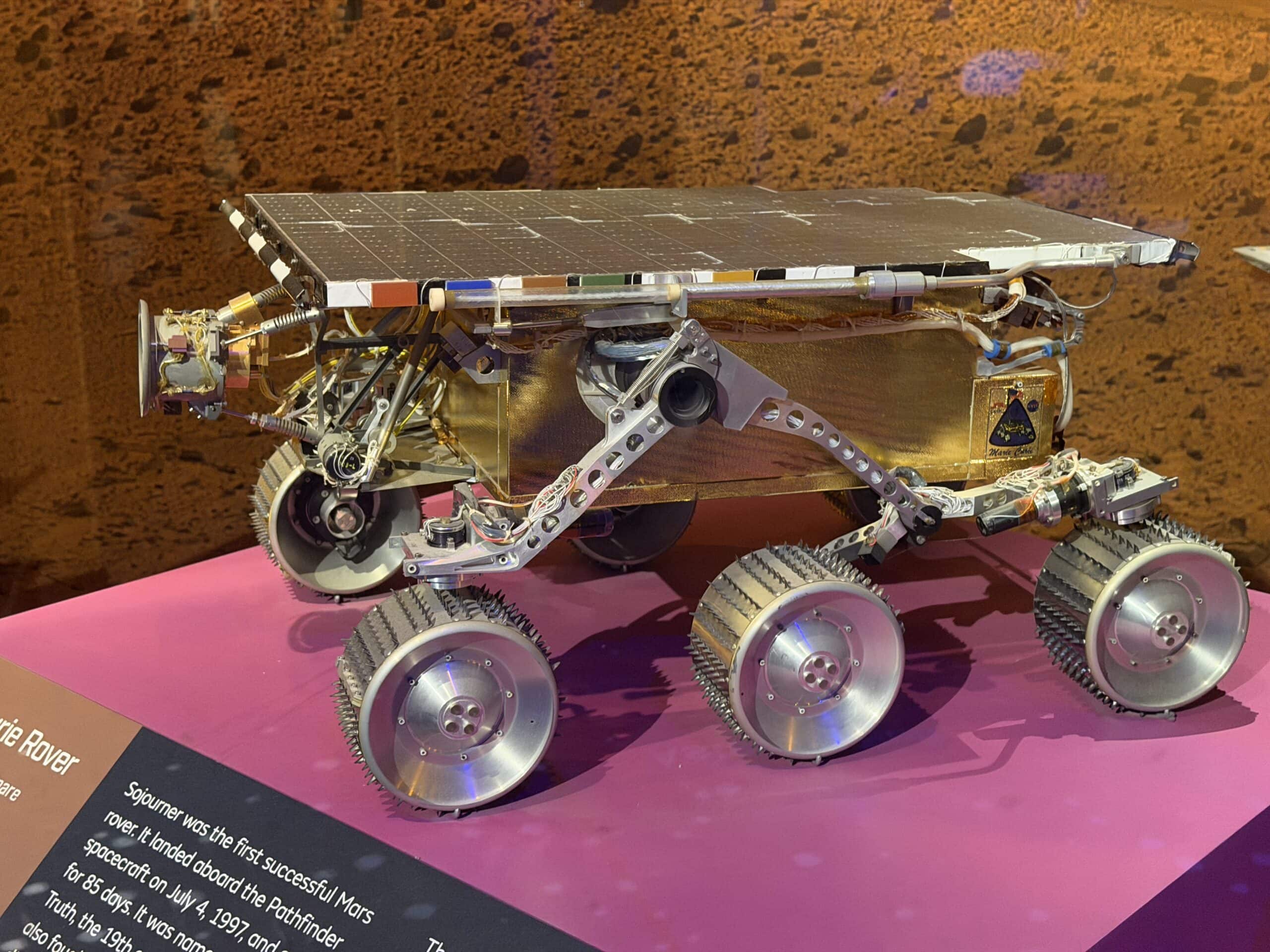
Mars Pathfinder Sojourner at the Smithsonian on July 1, 2026 image taken by 19FortyFive.
Olympus Mons is, without dispute, the largest and tallest volcano in the solar system, a title consistently carried by NASA and observatory sources. When the comparison broadens from volcanoes to all mountains, though, the record is shared.
Comparative planetary measurements place Olympus Mons in an approximate tie with Rheasilvia, the central peak rising from an enormous impact basin on the asteroid Vesta, for the title of tallest mountain currently known anywhere in the solar system. Rheasilvia was formed not by volcanism but by a colossal collision that punched a crater across most of Vesta and left a central peak of comparable height.
The honest framing, then, is that Olympus Mons is the undisputed champion among volcanoes and a co-holder of the broader mountain record, a distinction that sharpens rather than diminishes its extraordinary nature.
How Mars Built Something This Big
Three factors combined to let Mars grow a volcano that Earth could never match, and each reflects a fundamental difference between the two planets.
The first is gravity. Mars has only about one-third of Earth’s surface gravity, which means there are weaker forces pulling down on a growing pile of rock and weaker buoyant forces acting on the magma beneath.
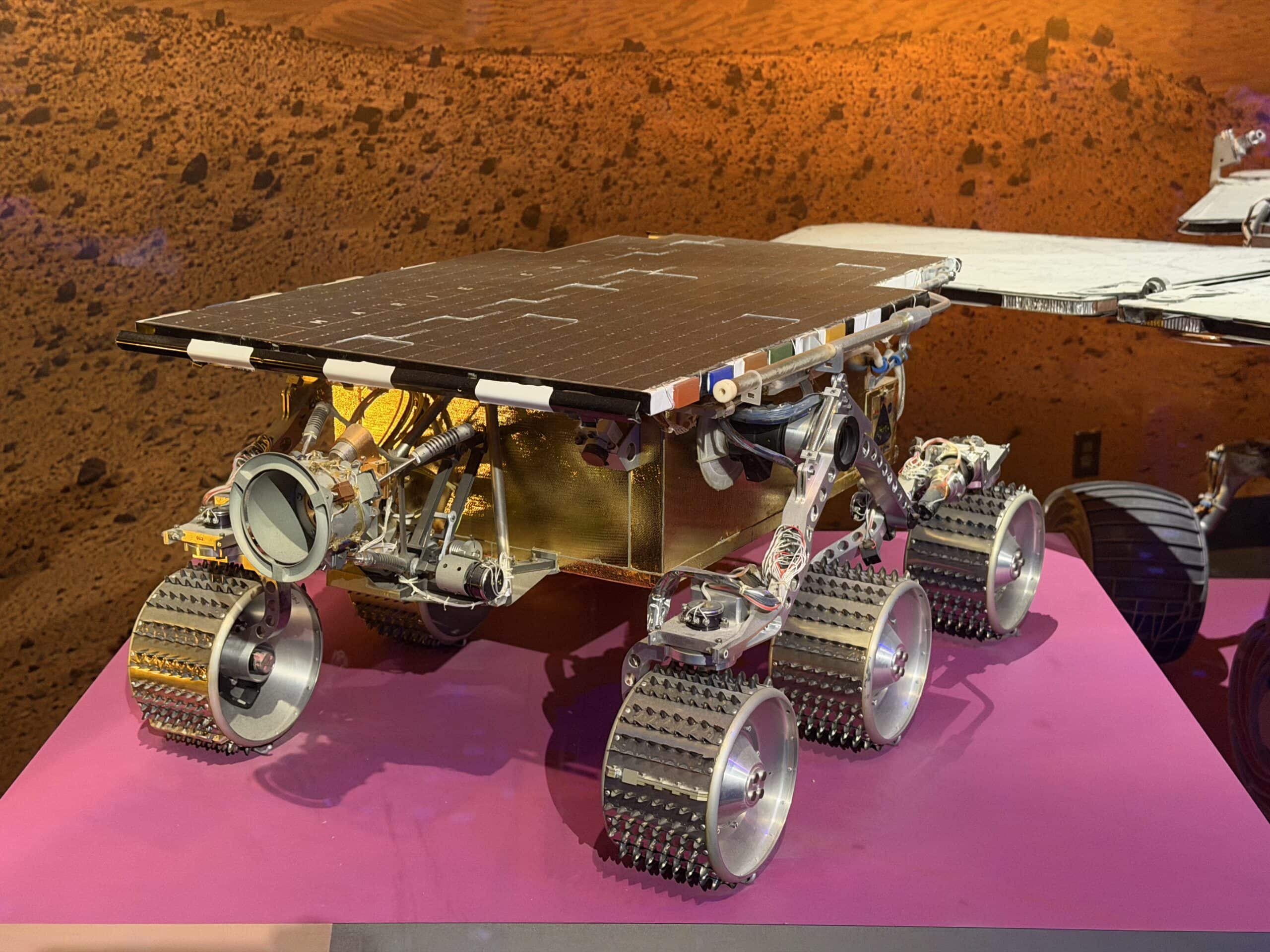
Mars Pathfinder Sojourner at the Smithsonian on July 1, 2026 image taken by 19FortyFive.
Rice University’s planetary scientists point to that reduced gravity as a primary reason the volcano could grow significantly larger than the Hawaiian shield volcanoes it otherwise resembles. Lower gravity allows a structure to stack higher before it collapses under its own weight.
The second and most important factor is the absence of plate tectonics. On Earth, the Pacific plate drifts steadily over a stationary magma hotspot, so each volcano that forms is eventually carried off the hotspot and a new one begins, producing the long chain of the Hawaiian Islands rather than a single giant. Mars is too small to sustain that kind of moving crust.
Its surface remains fixed over the hotspot, so lava erupts in the same spot for immense spans of time, piling flow upon flow in one place rather than spreading the output along a chain. The third factor is time itself. Studies of Martian meteorites called nakhlites indicate that Mars’s volcanoes grew as much as a thousand times more slowly than Earth’s volcanoes and correspondingly lasted far longer.
Crater counts from the Mars Express orbiter show lava flows on the volcano’s flanks ranging in age from about 115 million years to as recent as 2 million years, evidence of activity sustained across a staggering stretch of the planet’s history.
The Volcano That Helped Tip a Planet
Olympus Mons did not grow alone, and the collective weight of its neighborhood produced one of the most dramatic events in Martian history. The volcano sits at the edge of the Tharsis Rise, a bulge that also hosts three other enormous volcanoes: Ascraeus Mons, Pavonis Mons, and Arsia Mons, each taller than any mountain on Earth.
When four giant volcanoes formed so close together, the load they placed on the planet’s crust exceeded what the surface could bear. According to research summarized by Astronomy magazine, roughly three billion years ago, Mars’s outer layers slipped about 20 degrees, sliding the crust and mantle so that the Tharsis region migrated from higher latitudes toward the equator. The shift was substantial enough to reroute rivers and alter the planet’s climate. The mass of the Tharsis volcanoes effectively tipped the planet over.
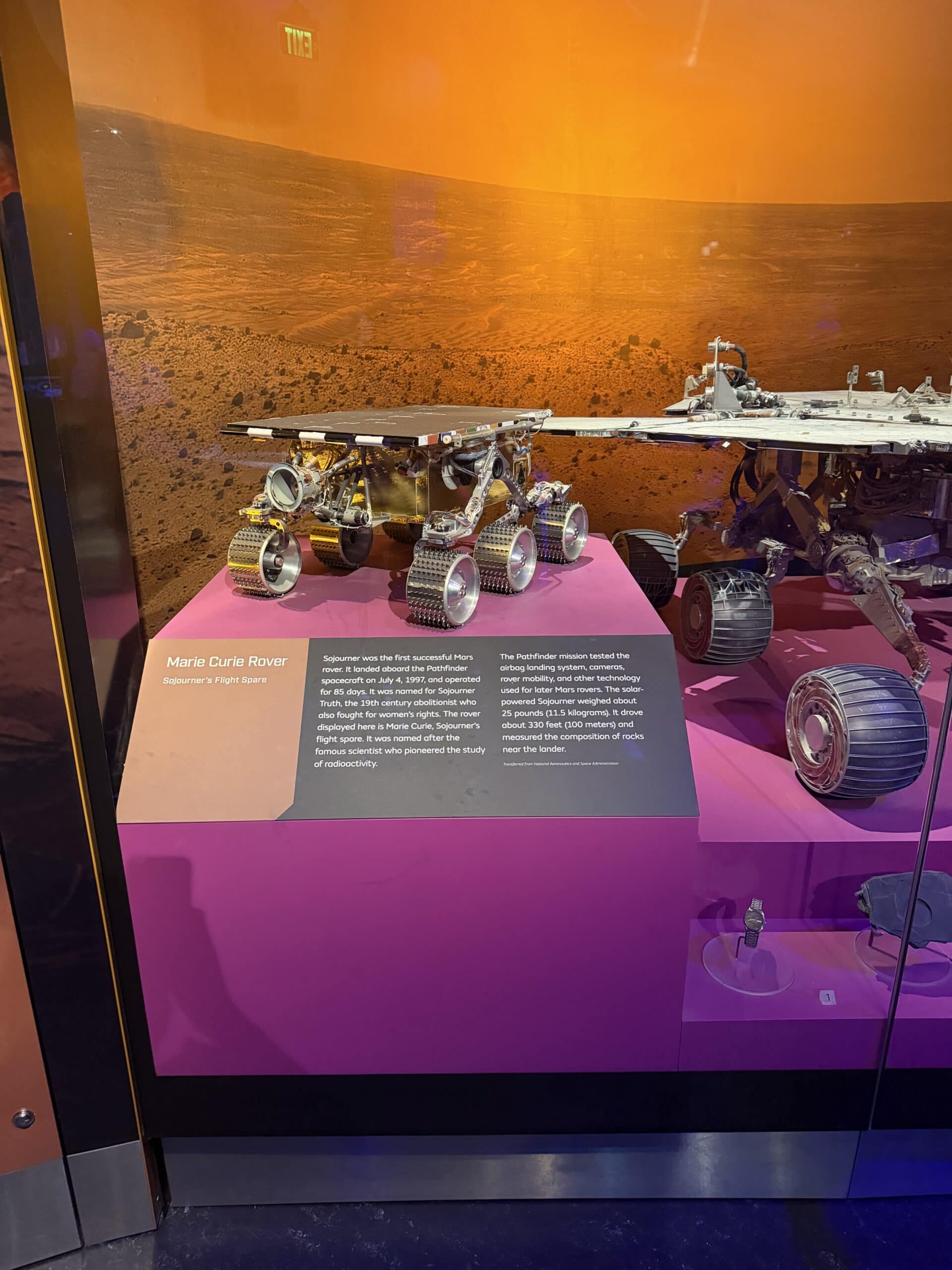
Mars Pathfinder Sojourner at the Smithsonian on July 1, 2026 image taken by 19FortyFive.
A Cliff Scientists Still Argue About
Not everything about Olympus Mons is settled, and its most contested feature is the ring of cliffs at its base. That basal escarpment, rising in places to seven or eight kilometers, is unusual among Martian shield volcanoes, and its formation remains a subject of active scientific debate.
One school attributes it to landslides and mass movement. A 2004 study led by Patrick McGovern of the Lunar and Planetary Institute used orbital data to argue that portions of the scarp formed through catastrophic slope failures, and a 2014 study led by a Rice University researcher added evidence that the escarpment formed through ordinary landslide processes combined with the volcano spreading outward under its own weight.
A competing and far more provocative hypothesis proposes water. A study led by a researcher at Université Paris-Saclay suggested the cliffs formed where lava flowed into a liquid ocean, cooling and solidifying sharply on contact, the way lava does when it meets seawater on Earth, which would imply the break in slope marks an ancient Martian shoreline and a water column several kilometers deep.
Rice’s Julia Morgan has expressed reservations, doubting that the evidence across the Martian landscape supports oceans that deep, and suggesting the benches could instead be features of the volcano’s own outward growth with no shoreline required. The disagreement remains unresolved, and it ties this single volcano to one of the largest questions about Mars: whether the planet once held oceans of liquid water.
Is Olympus Mons Actually Dead?
The final open question is whether Olympus Mons is finished. Its most recent large eruption is estimated to have occurred about 25 million years ago, which sounds ancient but is geologically recent for a feature that has been building for over a billion years.
The youngest lava flows on its flanks, dated by crater counts to as little as 2 million years old, suggest the volcano has erupted in episodic pulses well into the recent past. There have been no eruptions during the era of spacecraft observation, so no images of an active Olympus Mons exist.
It has been dormant throughout the decades that humans have studied Mars up close, ever since Mariner 9 first photographed it in detail in 1971. Yet the relative youth of its surface lava keeps scientists from declaring it extinct.
The prevailing view is that Olympus Mons is dormant rather than dead, capable in principle of erupting again, which means the largest volcano in the solar system could, given enough time, grow larger still.
For a mountain already two and a half times the height of Everest and wide enough to blanket a US state, that possibility is the most humbling number of all.
About the Author: Harry J. Kazianis
Harry J. Kazianis (@Grecianformula) was the former Senior Director of National Security Affairs at the Center for the National Interest (CFTNI), a foreign policy think tank founded by Richard Nixon based in Washington, DC. Harry has over a decade of experience in think tanks and national security publishing. His ideas have been published in the NY Times, The Washington Post, The Wall Street Journal, CNN, and many other outlets worldwide. He has held positions at CSIS, the Heritage Foundation, the University of Nottingham, and several other institutions related to national security research and studies. He is the former Executive Editor of the National Interest and the Diplomat. He holds a Master’s degree focusing on international affairs from Harvard University.

