
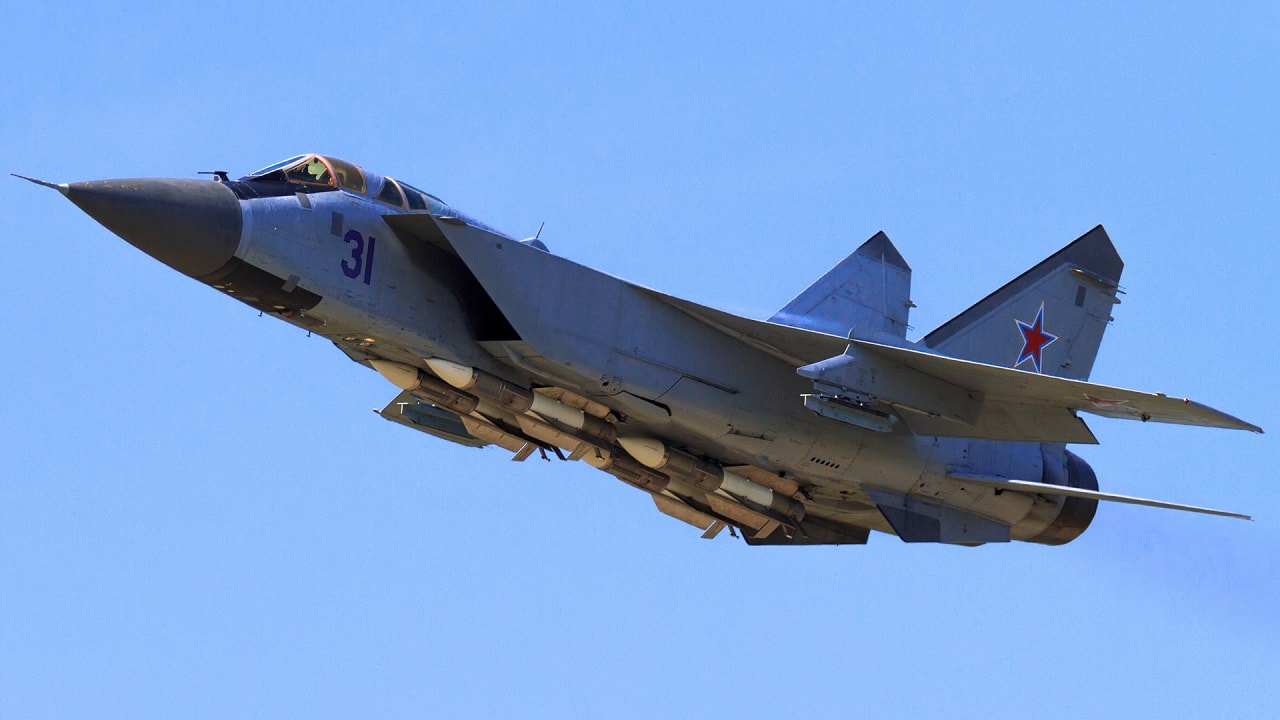
Summary and Key Points: Russia has spent more than 30 years trying to replace the MiG-31 Foxhound, but every serious successor has failed before reaching service. The MiG-31M was judged ready for production after a record-setting missile shot in 1994, only to die with the post-Soviet budget collapse. Clean-sheet concepts, satellite-killer variants, and paper projects followed the same path. Even the long-promised MiG-41 remains without a visible prototype. Meanwhile, upgraded MiG-31BM and MiG-31K aircraft still guard Russian airspace, launch long-range missiles, and carry Kinzhal weapons. The Foxhound survives because Russia has never built anything capable of replacing it.
Russia Has Been Trying to Replace the MiG-31 for More Than 30 Years. Five Successors Are Dead — and the 50-Year-Old Foxhound Still Guards Russia Alone
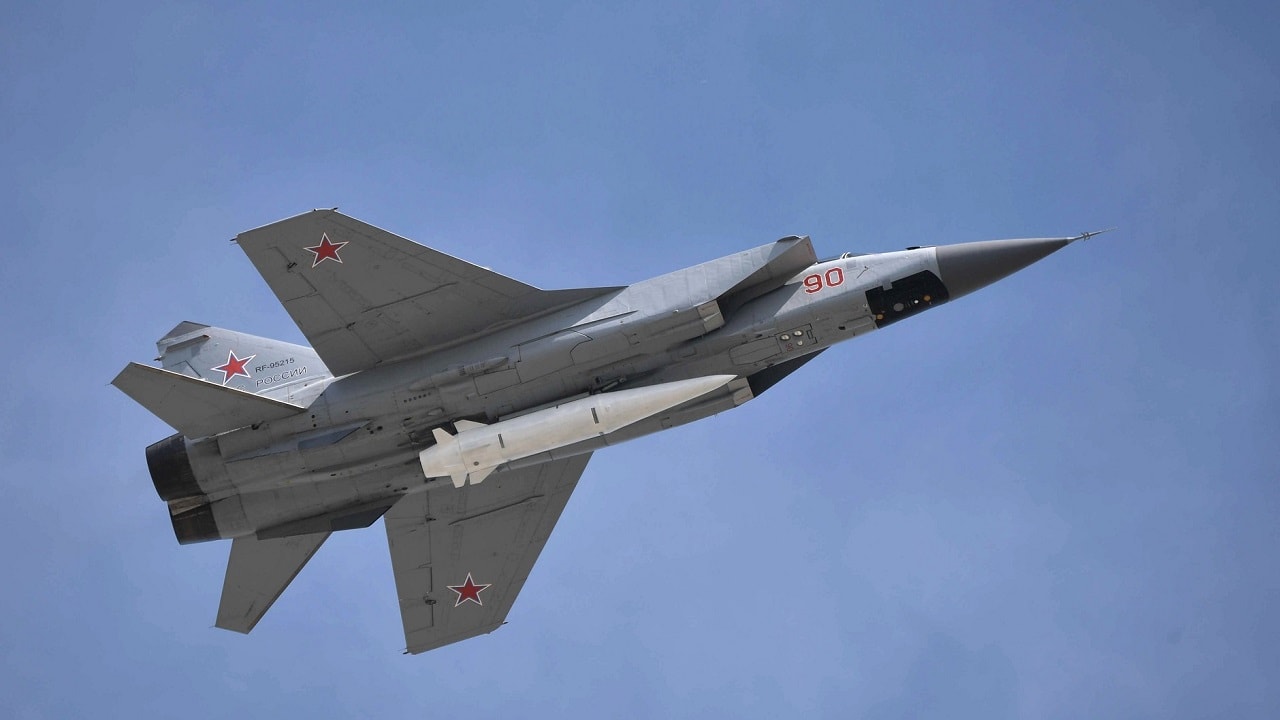
A Kh-47M2 Kinzhal ALBM being carried by a Mikoyan MiG-31K interceptor.
In April 1994, a Russian test crew fired a missile from a MiG-31M and killed a target 300 kilometers away, the longest air-to-air engagement ever recorded at the time. The jet that fired it was the Foxhound’s designated replacement, judged ready for production. Within months, it was dead, canceled by a country that could no longer pay for it. So was the clean-sheet interceptor behind it, and the satellite-killer variant behind that, and the paper projects behind those — and the MiG-41 promised since 2013 has yet to show a single piece of metal. Five successors on, the MiG-31 is still flying, still irreplaceable, and now the last of its kind in only one air force on Earth.
Being chosen to replace the MiG-31 has proven, for more than three decades, to be a fatal assignment. The Foxhound itself first flew on September 16, 1975, entered service in 1981, and more than 500 were built by the mid-1990s — the fastest operational combat aircraft in the world then, and by most reckonings still. Every aircraft designed to succeed it has died before reaching a squadron, and over thirty years, the succession failures have become not a footnote to the Foxhound’s story but the story itself: a graveyard with four headstones and a fifth still being carved, which explains better than any design study why a half-century-old interceptor remains the most strategically important jet in Russian service.
Defense History: The Super Foxhound That Died at the Finish Line
The first and best successor was simply a better MiG-31. Development of the MiG-31M began in 1984, and the “Super Foxhound” first flew on December 21, 1985: a deep redesign with the larger Zaslon-M radar and its 1.4-meter antenna able to see AWACS-class targets 400 kilometers out, six fuselage missile stations instead of four, uprated D-30F6M engines, more fuel, a one-piece windscreen, and the gun deleted in favor of pure long-range killing power. Seven flying airframes were built. The first prototype was lost in a crash on August 9, 1991; the coup that ended the Soviet Union began ten days later, and the program’s fate was sealed by that coincidence.
The M kept flying on momentum — the first R-37 missile launch from the type came in October 1993, and the April 1994 record shot followed — and by then the jet was widely judged ready for serial production. Production never came. The customer that ordered it had ceased to exist, and its successor state was selling aircraft carriers for scrap.
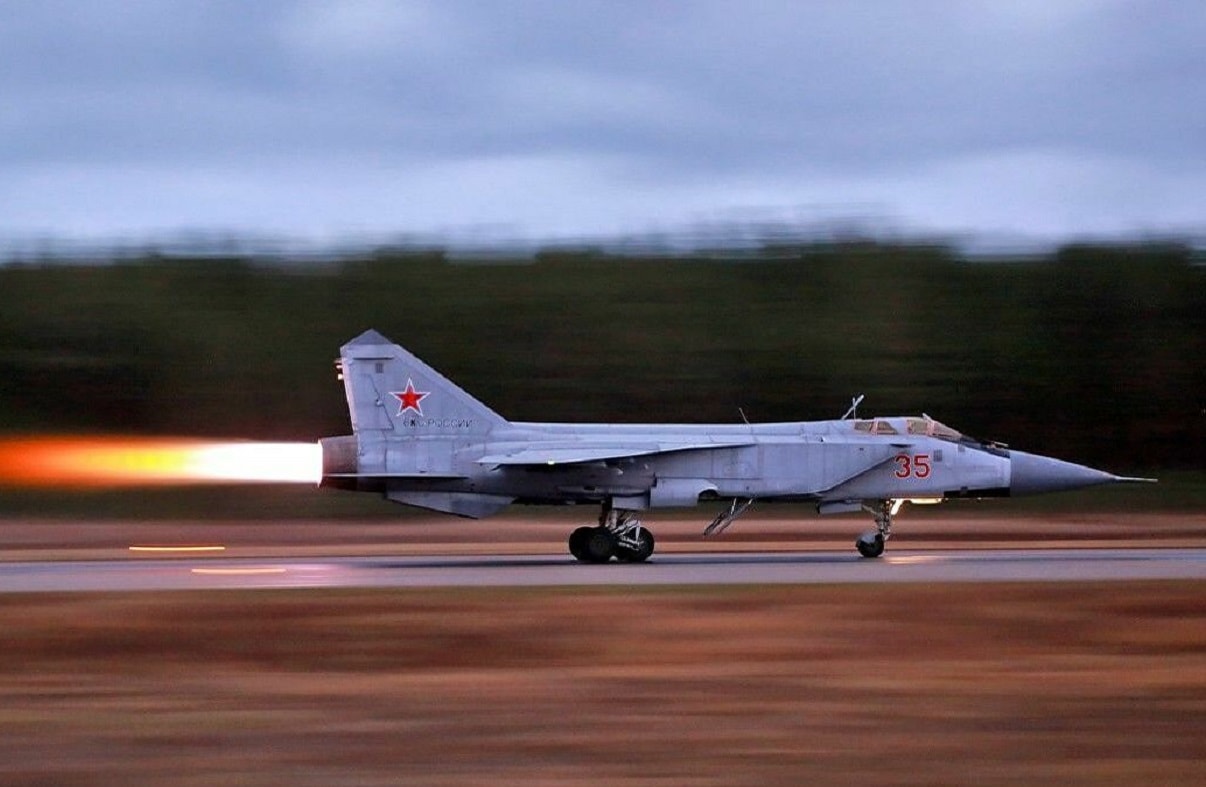
MiG-31. Image: Russian state media.
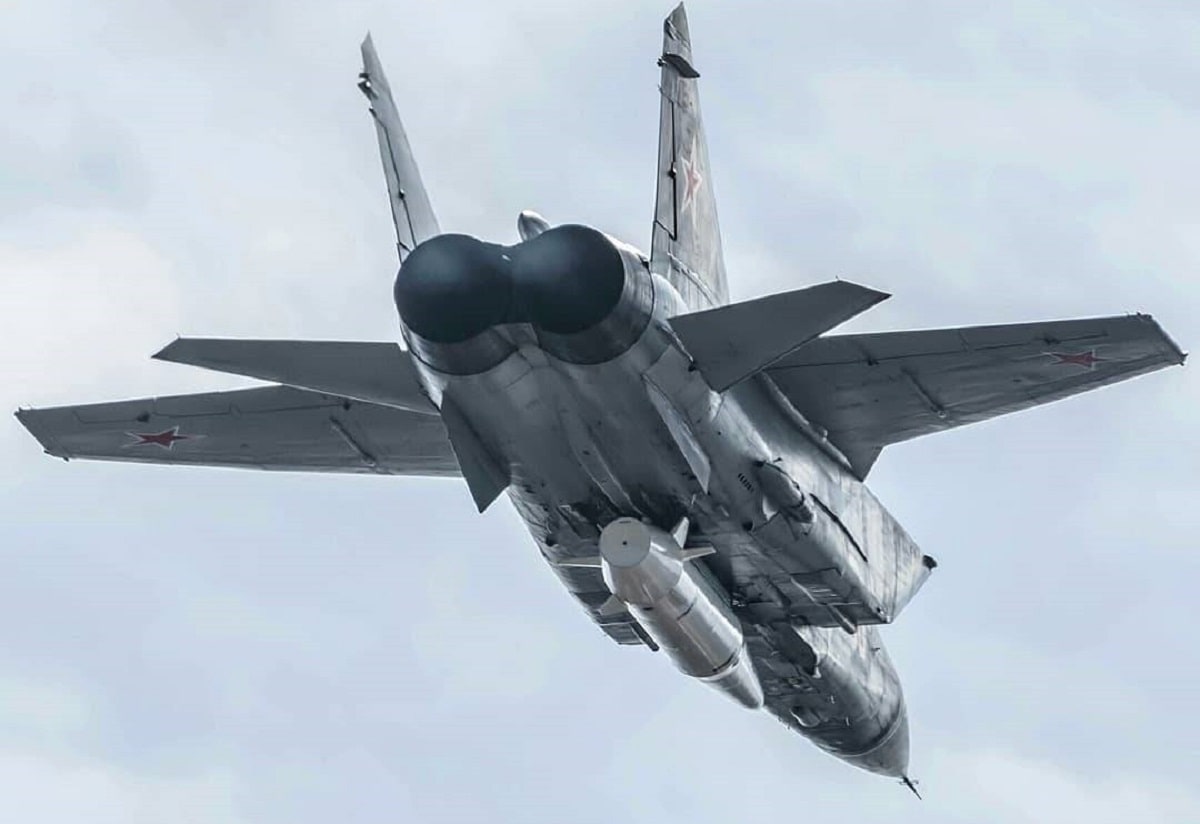
MiG-31
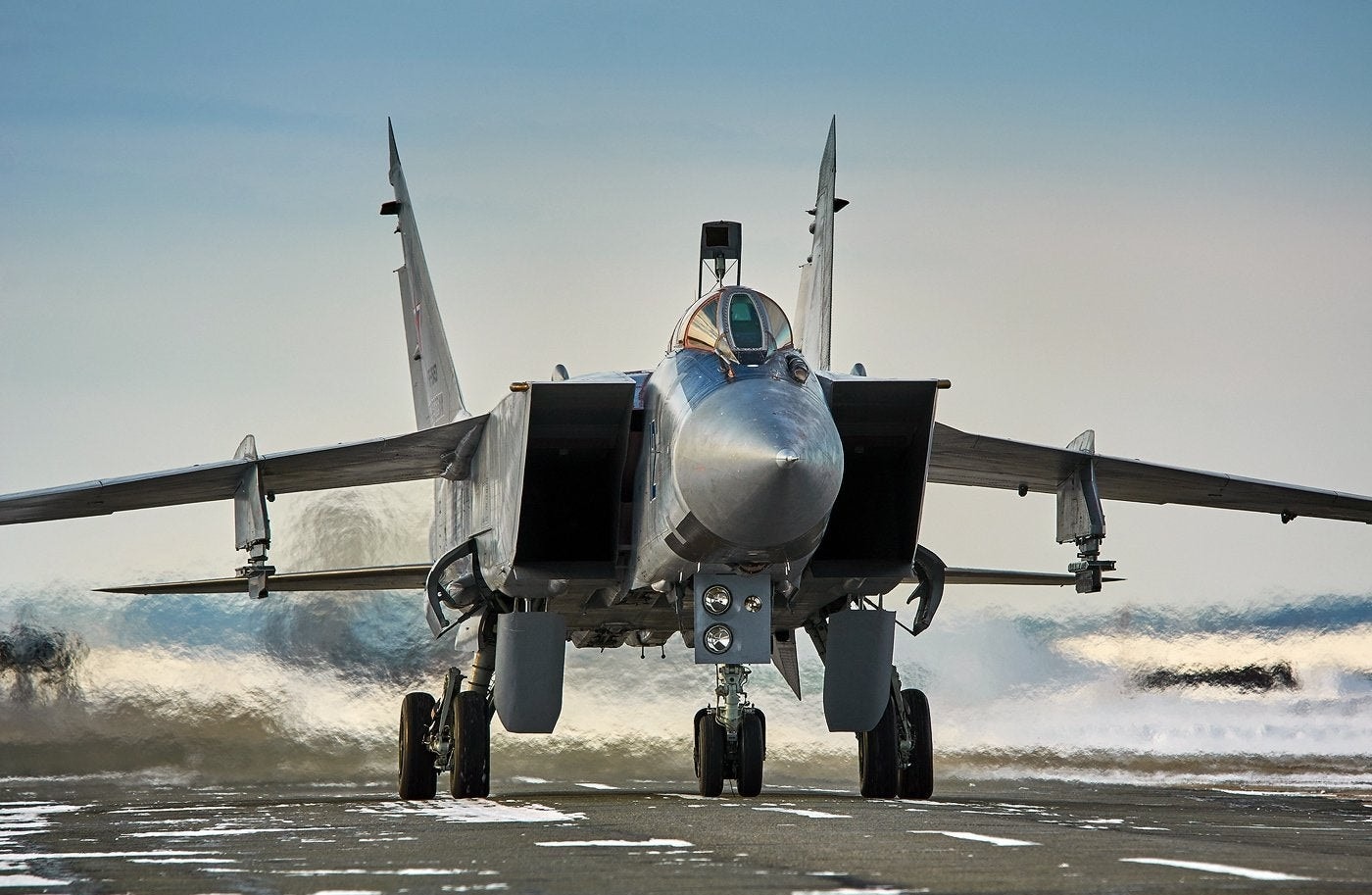
MiG-31. Image Credit: Creative Commons.
What happened next set the pattern for everything that followed: the dead successor became an organ donor. The Zaslon-M radar, the R-37 missile, and much of the M’s avionics were grafted onto upgrades of the original airframes — the MiG-31BM and BSM standards that constitute today’s fleet — so that the replacement’s inheritance went to the very jet it was meant to retire. Russia got most of the Super Foxhound’s capability at a fraction of the cost, and in the process removed the strongest argument for ever building a new interceptor at all.
Aerospace Graveyard: The 701, the Satellite Killer, and the Paper MiGs
The clean-sheet successor died even less gloriously. The Mikoyan 701, or izdeliye 7.01, was the heavyweight of the family: a long-range interceptor concept with side-by-side engines and performance estimates reaching a 2,500-kilometer-per-hour cruise and an 11,000-kilometer range, intended to carry the Foxhound’s mission deep into the 21st century. The program was killed outright in 1993; the design never progressed past drawings. Two follow-on studies from the same starving decade, the MiG-301 and MiG-321, never got that far.
The third headstone is the one the MiG-41’s marketing department should study. The MiG-31D, izdeliye 07, was the satellite killer: two prototypes built with ballast where the radar belonged and a Vympel anti-satellite missile on the centerline, flying trials at Zhukovsky until the money ran out around 1993. The near-space, space-warfare mission that today’s MiG-41 briefings present as a sixth-generation frontier was flown, tested, and buried more than thirty years ago — and when Russia eventually revived anti-satellite trials with the Burevestnik missile in 2018, it hung the weapon on a modified MiG-31. Even the exotic missions come home to the old jet. The missile told the same story in miniature: the R-37 that set the 1994 record was dropped around 1998 on cost grounds, reborn from 2006 as the R-37M, and finally entered service in 2018 — a 24-year journey from world record to fielded weapon, completed on the airframe it was originally meant to leave behind.
Russia’s MiG-41 Promise: Headstone Number Five Is Still Being Carved
Which brings the story to the successor that exists mostly as a ledger of dated promises. The MiG-41 first surfaced publicly a dozen years ago. In 2016, MiG’s then-chief, Sergey Korotkov, declared that “by 2028, the fighter-interceptor MiG-31 will cease to exist,” leaving time to create its replacement. In 2018, his successor, Ilya Tarasenko, insisted the project was not mythical and would be shown publicly soon. The design was pronounced “finalized” at the end of 2019; Rostec announced the development phase in January 2021; Russian media floated a 2023 first flight; the official target became 2025. That year has now come and gone without a prototype, a photograph, or an acknowledgment, and the current assessment is blunt: the MiG-41 remains “more a long-running concept than an operational program nearing reality,” from an industry that is simultaneously slipping schedules on airliners and reportedly weighing a return of Antonov biplanes to service.
The program’s loudest recent advocate illustrates the problem. When the MiG-41 resurfaced in Russian commentary late last year, the Ukrainian outlet Defense Express noted the specifics were coming not from anyone running the program but from Maj. Gen. Vladimir Popov, a retired officer who now works as a television commentator. “I believe we’ll see the new interceptor’s maiden flight in the next few years,” Popov offered: the same tense, and roughly the same promise, the program has used since 2013, attached to specifications analysts have long doubted will ever leave the drawing board: Mach 4-plus speed, near-space operations, anti-satellite weapons. The mission set of the canceled MiG-31D, in other words, with a press release attached and a service horizon that has receded to the mid-2030s.
Fleet Reality: The Only Operator of the World’s Fastest Warplane
What thirty years of failed succession leaves behind is arithmetic. The fleet of failures numbers somewhere between 85 and 131 upgraded MiG-31BM/BSM interceptors by open estimates, plus several dozen airframes converted into MiG-31K and I-standard carriers for the Kinzhal ballistic missile, a conversion line that completed flight tests of its latest configuration in April 2024. In 2020, Russia extended the type’s airframe life from 2,500 to 3,500 flight hours, allowing it to remain in service until at least 2030. Kazakhstan, the only other operator in history, retired its Foxhounds in 2023, leaving Russia alone with a type that India test-flew and repeatedly declined, and that Syria twice failed to buy. The interceptor nobody else wanted became the one Russia cannot function without.
The war has proven both halves of that sentence. On the ledger’s credit side, a RUSI study found MiG-31BMs firing as many as six R-37M missiles a day at Ukraine’s air force in late 2022, operating from altitudes and speeds that left them all but immune to reply, while the K-model jets forced nationwide air alerts with every sortie. On the debit side, the old jets are now dying the modern way, on the ground: Foxhounds were confirmed destroyed in the imagery from Ukraine’s 2024 strike on Belbek, another was among the targets of December’s drone attack on Crimea per The War Zone, and the Kyiv Independent reported one more damaged in the April strikes there. The fleet the MiG-41 is supposed to relieve is being whittled down while its relief remains a drawing.
The Counterpoint: Maybe the Upgrades Are the Succession
The honest defense of Russia’s record here is that the graveyard was rational. The BM/BSM upgrade path delivered most of the MiG-31M’s capabilities at a fraction of the cost of a new type, which is the same logic behind the American B-52’s eternal life and the F-15EX.
The MiG-41’s advertised missions — killing hypersonic weapons, fighting at the edge of space — may genuinely require technologies that do not yet exist, in which case not bending metal is prudence rather than failure. And a country fighting an expensive war has better uses for its rubles than a Mach 4 prestige project.
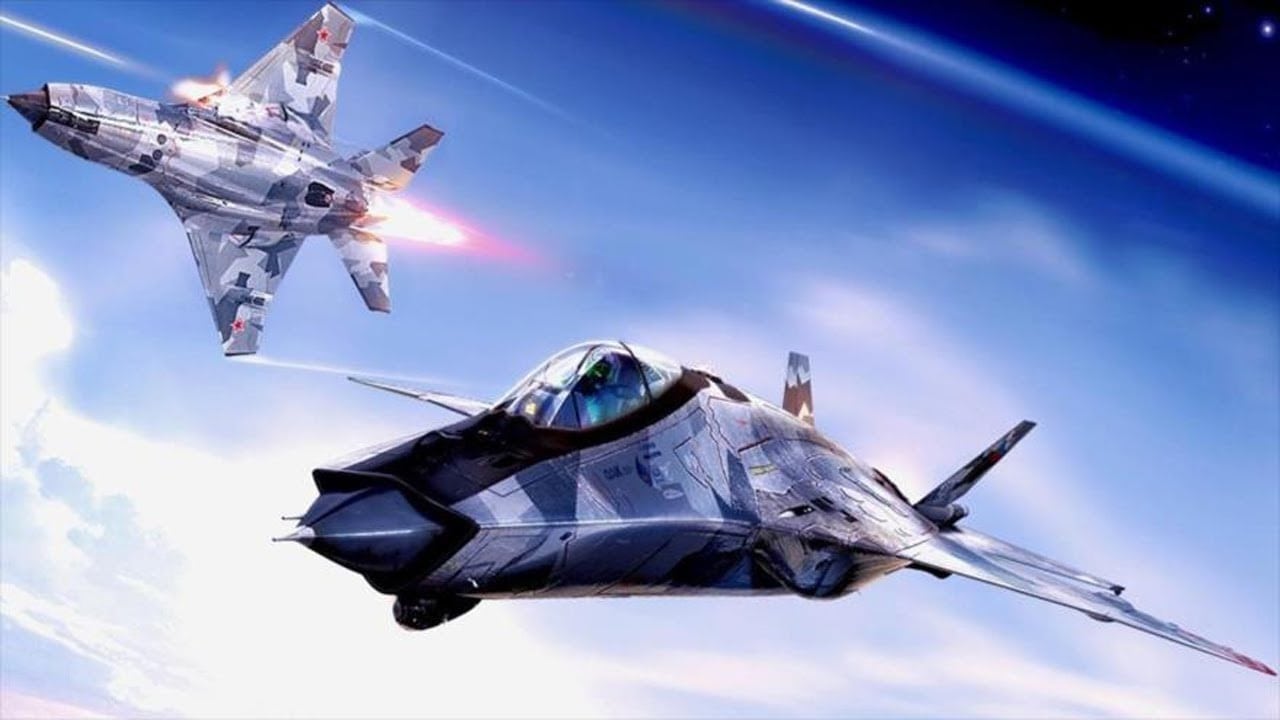
MiG-41 or PAK DP Screenshot from YouTube.
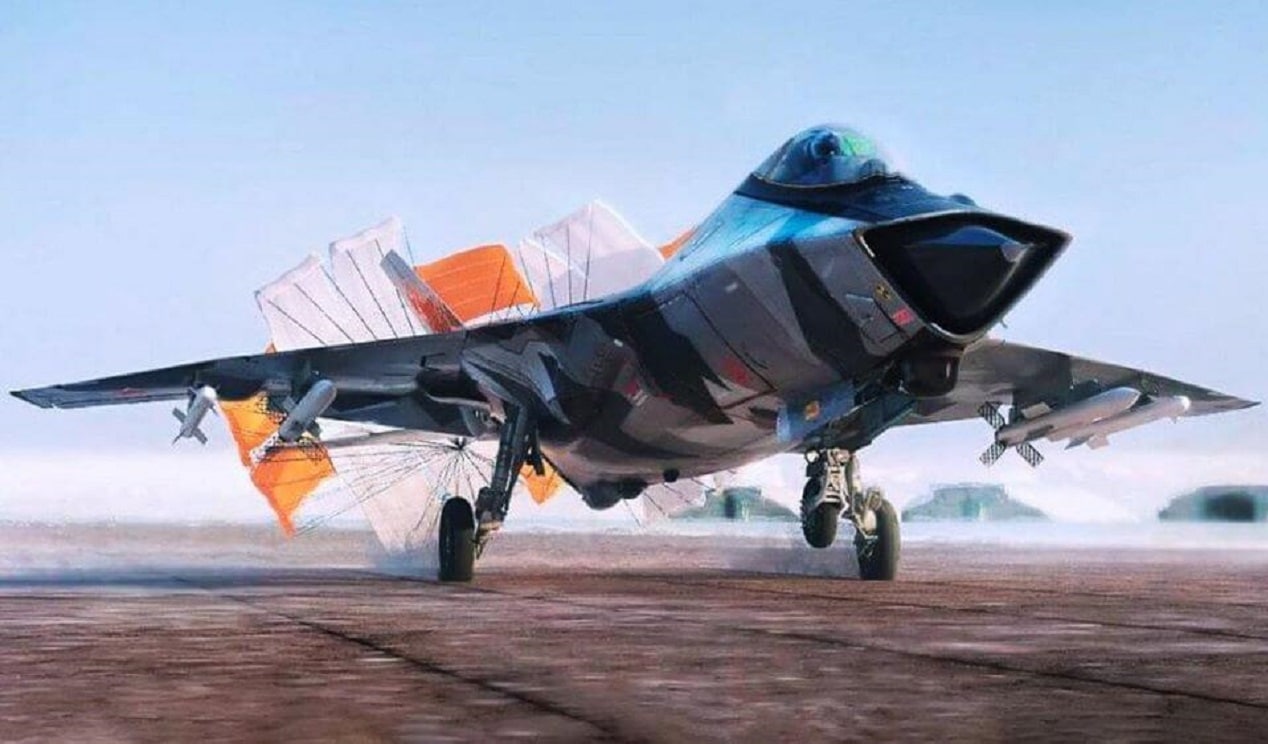
MiG-41 Fighter Artist Concept. Image: Creative Commons.
All of that is true, and all of it runs on a clock. Airframes retire on flight hours, not arguments, and the 3,500-hour extension buys the 2030s at best, the same decade into which the MiG-41’s horizon keeps receding, from a design bureau whose last clean-sheet production fighter first flew in 1977.
The race that matters now is between metal fatigue and a drawing. In April 1994, a doomed jet fired the longest air-to-air shot in history; the record’s inheritance, like everything else in this story, passed to the old Foxhound.
Fifty years after its first flight, the MiG-31 still sits alert in the Arctic and in revetments in Crimea, guarding the airspace of a country that has spent three decades burying its replacements — the last interceptor standing, in part because nothing Russia designed afterward ever managed to exist.
About the Author: Harry J. Kazianis
Harry J. Kazianis (@Grecianformula) was the former Senior Director of National Security Affairs at the Center for the National Interest (CFTNI), a foreign policy think tank founded by Richard Nixon based in Washington, DC. Harry has over a decade of experience in think tanks and national security publishing. His ideas have been published in the NY Times, The Washington Post, The Wall Street Journal, CNN, and many other outlets worldwide. He has held positions at CSIS, the Heritage Foundation, the University of Nottingham, and several other institutions related to national security research and studies. He is the former Executive Editor of the National Interest and the Diplomat. He holds a Master’s degree focusing on international affairs from Harvard University.

