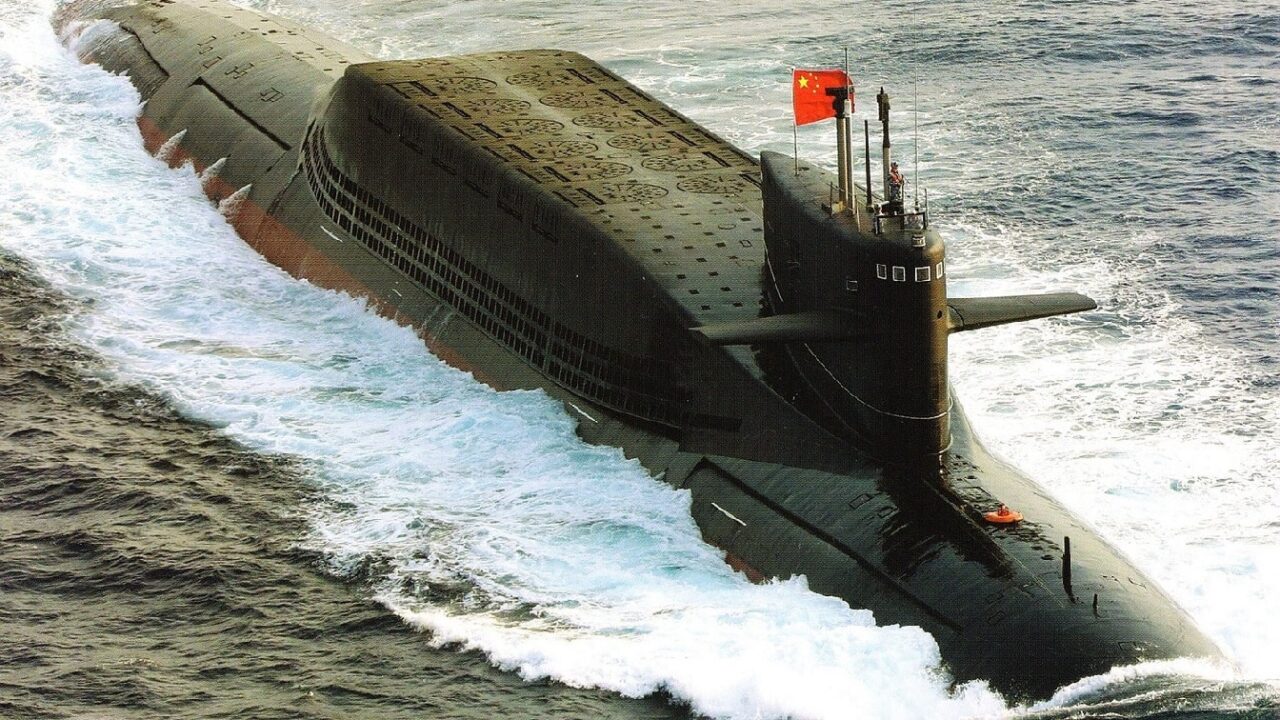
Summary and Key Points: China conducted an unannounced submarine-launched ballistic missile test on July 6, sending a missile with a dummy warhead from beneath the Pacific into international waters around noon Beijing time. Beijing declined to confirm the weapon’s type, and Western defense analysts believe it was the JL-3, the most advanced missile in the People’s Liberation Army Navy’s sea-based deterrent, credited with a range of up to 8,000 miles, up to ten independently targetable warheads, and guidance from the BeiDou satellite network. The United States, Japan, Australia, and New Zealand condemned the launch as provocative, and the test underscores how far Chinese submarines have advanced from their once-noisy reputation.
China’s Sea-Launched Ballistic Missile Test Changes Everything
China just sent a clear signal to the world: back off. In an era when China-bashing seemed easy, Beijing has clearly put the kibosh on that. You see, many acknowledge that China is an economic dynamo. Many others worry that China’s military threat is rising. Yet, few believe that China has reached parity with the United States military–especially in the technical services, such as the Navy. China’s recent successful submarine-launched ballistic missile (SLBM) test on July 6 just put that notion to bed, too.
Around noon (Beijing time), a missile streaked out from the depths of the Pacific Ocean carrying a dummy warhead. It followed a trajectory that carried it into the Pacific’s international waters. Beijing refused to confirm the type of missile.
But they did want the rest of the world to see that the Chinese People’s Liberation Army Navy (PLAN) has developed an increasingly advanced SLBM capability.
Why Second-Strike Capability Matters
In the realm of nuclear warfare, an SLBM capability is key, as it ensures that a nuclear-armed nation has what’s known as a “second-strike capability.” This second strike capability is an old concept dating back to the Cold War era. Essentially, land-based and plane-loaded nuclear weapons are first-strike systems. As the name suggests, they’re the forces that usually drop the hammer on an enemy first. Those systems can hit the known land- and air-based nuclear systems of the targeted country–and can hit before that country can get the nukes out of their silos or in the air aboard bombers.
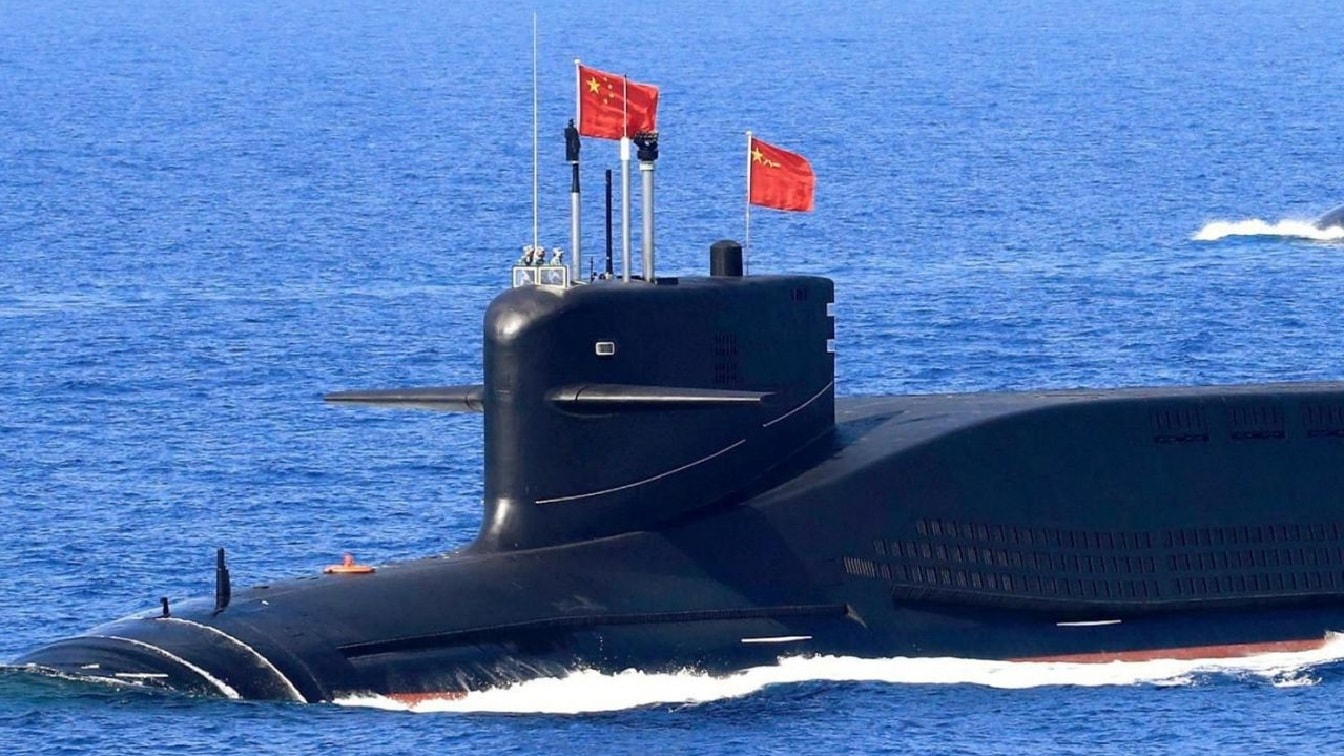
Chinese nuclear missile submarines. Image Credit: Creative Commons.
A submarine-launched nuclear weapon, though, is extraordinarily difficult to preemptively attack unless one of your submarines or anti-submarine surface warfare units gets lucky and finds it before that nuclear sub can launch its payload. And those nuclear-armed submarines are usually reserved for retaliating against a nuclear power that struck your homeland first. Hence, second-strike.
China’s Submarines Have Come a Long Way
Anyway, historically, Chinese-made submarines were always the laughingstock of the submariner community worldwide. The Americans are the best in class. Followed closely by the Russians. The British had some impressive systems, too. But the Chinese were never taken seriously. One retired American submariner told me once that, as a sonar officer, he “could hear a ChiCom sub operating in the South China Sea all the way back at Pearl!”
Obviously, that’s an overstatement. Nevertheless, it illustrates the point that the Chinese were always behind the other great nuclear-armed powers. The July 6 test proves that this is no longer true.
Mass Production Is Closing the Technological Gap
Here are some developments over the last decade that have changed the dynamic in undersea warfare. For starters, China is a legitimate high-tech power. They’ve merged that high-tech competitiveness with their inherent advantages in mass industrial production. Chinese shipyards today churn out infinitely more ships–both civilian and military–than American yards do.
Mass production of high-end systems creates an iterative process that enables China to refine its technology across multiple development cycles. So, if a Chinese submarine class starts inferior to an American or Russian sub, over time, that class will improve.
Today, Chinese nuclear submarines are getting quieter and more capable. And because China can mass-produce them, it has now surpassed Russia’s once-mighty submarine fleet in size. It is now only behind the Americans. In this, too, one can anticipate that China will eventually displace the American submarine force.
At some point, that Chinese submarine force will not only match but likely surpass the US submarine force, at least in technical terms. The quality of Chinese sailors remains unknown. And that’s the qualitative edge that both Russian and American submarine forces still have over the Chinese.
Meet the JL-3: China’s Most Advanced Sea-Based Nuclear Weapon
Let’s move back to the SLBM launch. Western defense analysts believe the system that China launched on July 6 was the latest JL-3 SLBM.
Julang-3 (“Giant Wave-3”) is China’s most advanced SLBM. China showcased the weapon at a 2025 military parade and is the basis of the PLAN’s sea-based nuclear weapons deterrent. The weapon has a range of up to 8,000 miles, which is one reason essentially all the Western powers (the US, Japan, Australia, even New Zealand) condemned the unannounced launch as provocative. That, of course, was the point.
Anyway, the J-3 is equipped with multiple independently targetable reentry vehicles (MIRVs) and can carry up to 10 warheads per missile (meaning it can strike multiple locations at once). It’s a three-stage, solid-fuel rocket engine providing for faster launch–key in a nuclear war scenario. The potent BeiDou satellite navigation network provides targeting telemetry for highly accurate targeting and guidance.
The Bastion Strategy Strengthens China’s Nuclear Deterrent
Another interesting element of China’s nuclear submarine warfare doctrine is its “bastion” defense strategy.
In other words, the JL-3 provides PLAN submarines extended range, meaning that PLAN sub captains do not have to needlessly risk the safety of their submarines in the open sea. Instead, they can hunker down in waters closer to China, where other Chinese defenses can better protect them from retaliation from American anti-nuclear submarine hunters.
While the Bastion concept does not make Chinese nuclear submarines impervious to American counterattacks, it certainly degrades their effectiveness. That, too, is the point. The JL-3 does the hard work of targeting and hitting distant targets in the United States–even after a potential US first-strike against Chinese nuclear forces located on land or in the air.
China Is Signaling That It Has Arrived
China wanted its recent SLBM test to come as a surprise to the West.
That test signaled to the world’s capitals that China had arrived. Not only does China possess advanced nuclear weapons, but they are now steadfastly gaining parity with advanced US nuclear submarine forces–just a year after Beijing proudly announced its submarine force had outpaced the Russian nuclear submarine fleet in terms of size.
For too long, Western analysts have been in a fever dream.
They’ve convinced themselves that China is a permanent number two to America’s number one. Yet, after decades of Chinese economic advances–and concomitant technological leaps forward–one would have thought that the best-and-brightest set in DC would see the truth. Instead, they jealously clung to the old 1990s notion that China would always play second fiddle to the United States. Meanwhile, the Chinese kept building and kept closing the gap with America across multiple domains.
America’s Last Great Undersea Advantage Is Eroding
One of the last key areas that China must gain equality with the Americans in is the nuclear submarine domain.
China’s recent successful JL-3 SLBM launch demonstrates how close they are.
Given how badly the US has fared in the last 20 years of its wars around the world, one would have thought a moment like what happened on July 6 in the Pacific Ocean would have finally broken that fever dream that has enraptured American analysts for too long.
So far, the old patterns of downplaying and ignoring China’s true rise continue to dominate the minds of American analysts.
That may well be America’s undoing, as conflict with Beijing inches closer and closer.
About the Author: Brandon J. Weichert
Brandon J. Weichert is the Senior National Security Editor at 19FortyFive.com. He also manages The Weichert Brief on Substack. Weichert also hosts “National Security Talk” on Rumble. He is the author of four bestselling national security books, the most recent of which is A Disaster of Our Own Making: How the West Lost Ukraine (Encounter Books). Follow him via Twitter/X @WeTheBrandon.