
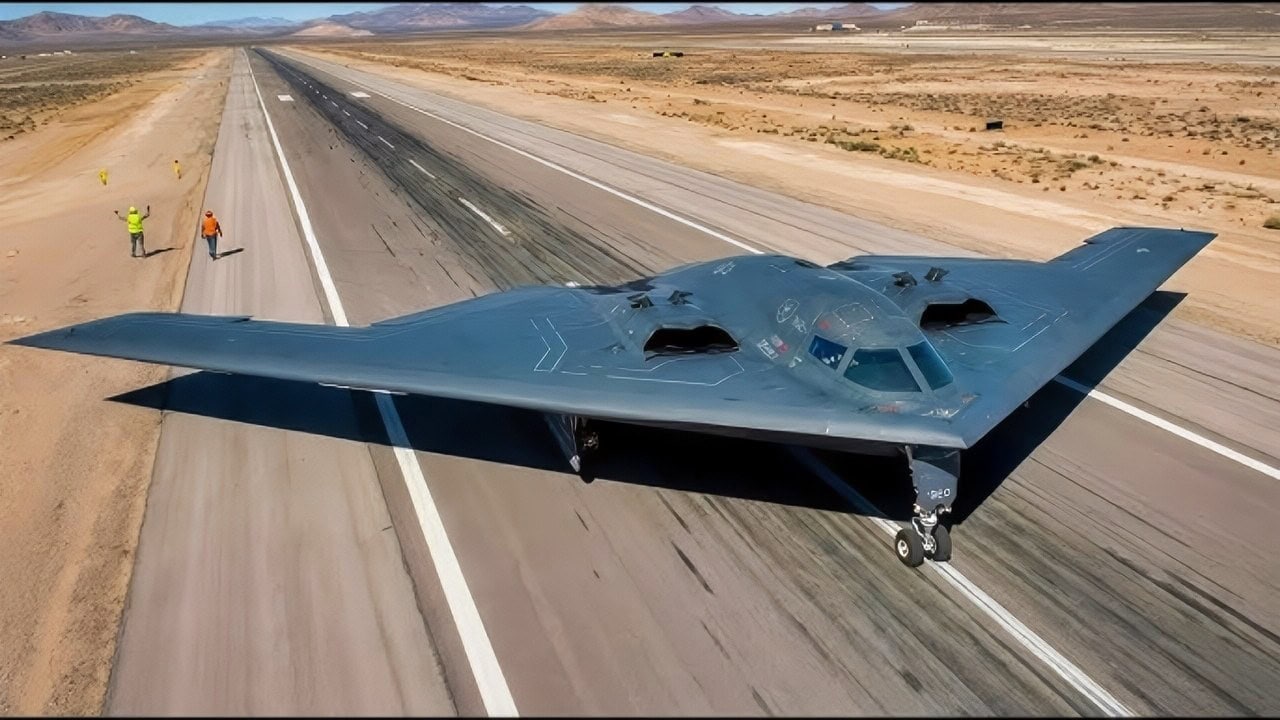
Access denied. One of the feel-good stories of the summer involves the venerable B-2 Spirit stealth bomber. Over at Sandboxx News, Alex Hollings is all over the story that the U.S. Air Force has outfitted the B-2 to fire the Long-Range Antiship Missile (LRASM), a newfangled munition specifically meant to assail hostile shipping in theaters like the Taiwan Strait. The announcement came as a surprise; the Air Force undertook the initiative on the sly. And it is a welcome surprise. China must command the Strait to invade Taiwan, or to mount an effective blockade to starve the islanders out. If denied maritime command, Chinese strategy vis-à-vis Taiwan fails. The island stands.
The U.S. Air Force is on the case. It appears the B-2 can carry up to 16 LRASMs. It packs a lot of firepower for marine access-denial missions. So mating up the missile with the bomber is a big deal. Better yet, the junction between the two goes beyond tactics. It has operational, strategic, and even political import.
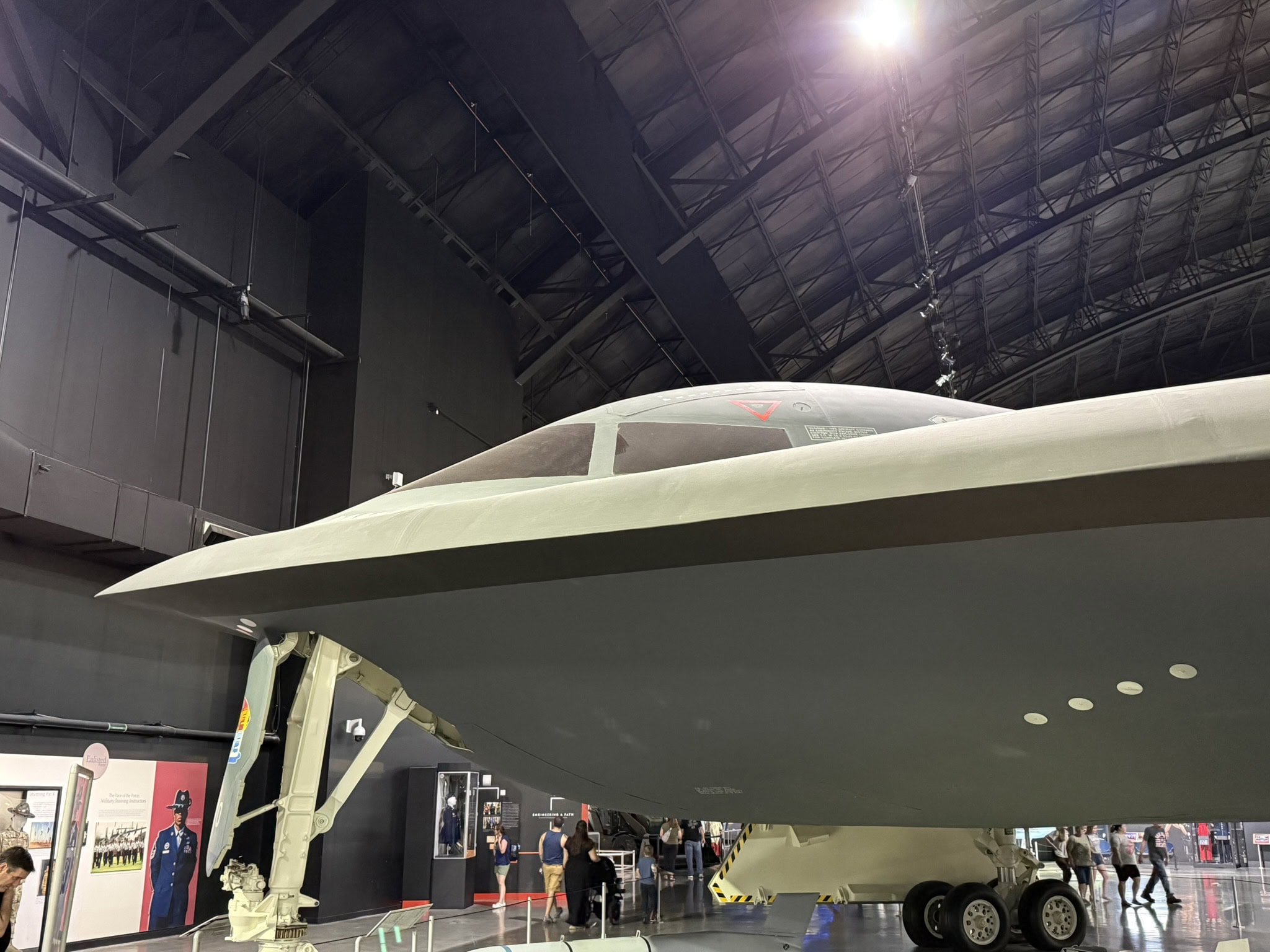
B-2 Spirit at the National Museum of the U.S. Air Force. Image Credit: Harry J. Kazianis.
Think about it. Time, range, and institutional culture constitute the major challenges to U.S. maritime strategy in the Taiwan Strait and China seas. First, time. China’s People’s Liberation Army (PLA) has designed its anti-access/area-denial arsenal precisely to hold off U.S.-based joint forces—the U.S. Pacific Fleet, along with affiliated Air Force and Army expeditionary forces—long enough to let PLA commanders accomplish Beijing’s goals in the Taiwan Strait, South China Sea, or wherever the battleground happens to be. They need to stall.
If successful, anti-access and area denial would enlist time as China’s ally.
The idea behind underwriting anti-access is to delay forces coming from the U.S. West Coast or Hawaii from linking up with forces already stationed in the Western Pacific, chiefly in Japan. A combined U.S. force would stand some chance of balking China’s strategy. But the advantage would go to PLA defenders if they could keep the U.S. force fragmented while weakening the individual fragments through missile, air, surface, and subsurface attacks. PLA strategists do not delude themselves that they can deny access to the region altogether. But they do believe anti-access can fetter U.S. freedom of movement, slowing down reinforcements long enough to keep the U.S. military from grouping superior force at the time and place of battle.
So again, time is a critical strategic factor. In effect, the PLA needs to slow things down to speed them up. The PLA needs to slow U.S. forces down enough to win quickly against a local antagonist. For China, then, anti-access/area denial is a strategy of delaying—or, in the ideal case, halting—U.S. intervention in the Western Pacific. Slow, fast.
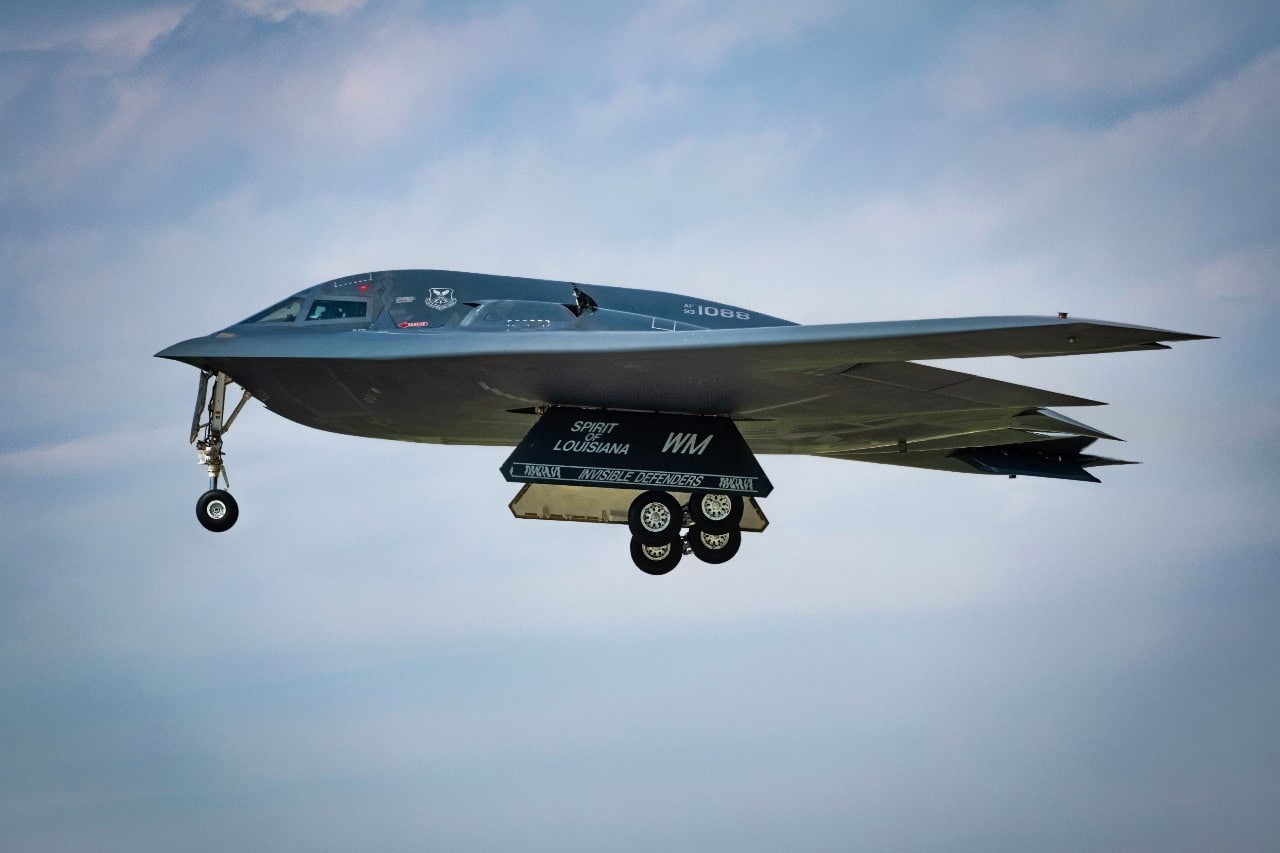
A B-2 Spirit stealth bomber departs from Whiteman Air Force Base, Missouri, April 16, 2025. The B-2 is capable of penetrating heavily defended air spaces and delivering conventional and nuclear munitions anywhere on the globe. (U.S. Air Force photo by Senior Airman Joshua Hastings)
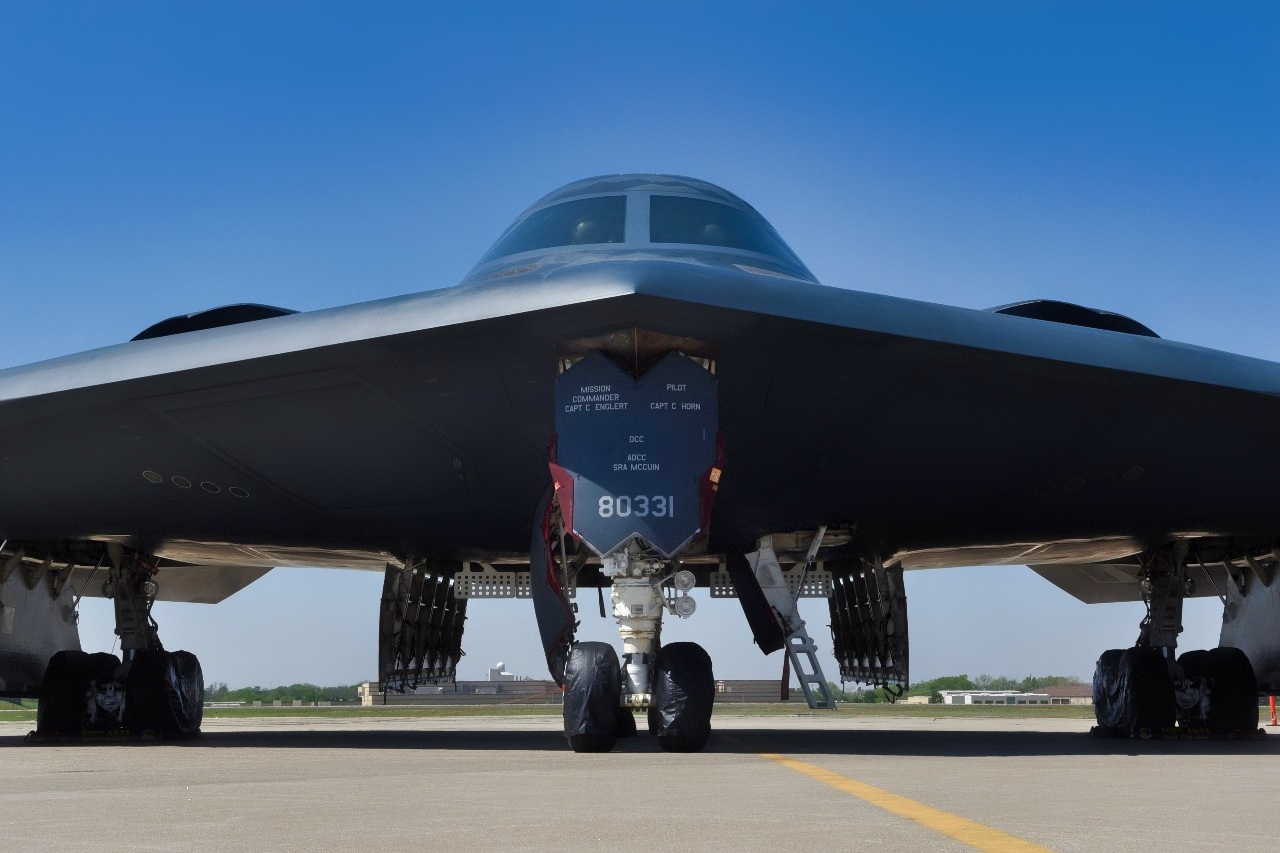
B-2A, serial #88-0331, ‘Spirit of South Carolina’ of the 509th Bomb Wing, Air Force Global Strike Command, on the parking ramp at Tinker Air Force Base, Oklahoma, during a visit April 11, 2017. The B-2A ‘stealth bomber’ visited the base to allow hundreds of personnel who work in direct support of the aircraft program through continuous software upgrades to see it in person and better understand the aircrafts’ role in the nation’s defense. (U.S. Air Force photo/Greg L. Davis)
That being the case, the U.S. military needs to stretch things out—or lose. It too needs to make time an ally. Unlike the PLA, it needs to slow things down, full stop. It needs to slow China down so slow-moving U.S.-based forces can get to the scene of action in time to make a difference.
Here’s the thing. We tend to assume access denial is a Chinese thing, but the logic works both ways. China can try to deny access; others can deny it access. That’s why the Air Force contribution gladdens. A stealthy B-2 fleet carrying LRASMs could penetrate within the PLA anti-access envelope to strike at Chinese shipping. For instance, if a contingency erupted in the Taiwan Strait and Air Force bombers could disable or sink a significant fraction of the Chinese invasion fleet, then they would have at least temporarily denied China access to real estate it must have to accomplish its goals—namely Taiwan. Aerial raids would have bought time.
Successful access denial would grant heavy forces the leisure to unite at the scene of battle with a reasonable chance of vanquishing the PLA in detail.
Second, and intimately related, weapon range. The U.S. Air Force has drawn up doctrine explaining how to execute what service chieftains term “countersea” operations, and Air Force aircraft have practiced such missions with zest in recent years. (By the way, props to the U.S. Army for also embracing its role as a sea service.) The farther out missile-toting air forces can strike, the better their chances of interdicting Chinese access to the battlefield—and the better their chances of surviving the encounter with potent PLA defenses. Range increases potency while mitigating risk.
Exactly how this would play out remains unclear. The publicly announced range for the LRASM is 200 nautical miles or better, but the Pentagon—for obvious reasons—is coquettish about disclosing actual technical specifications. The LRASM is an offshoot of the U.S. Air Force’s Extended Range Joint Air-to-Surface Strike Missile (JASSM-ER), a weapon boasting a range estimated at up to 575 nautical miles. Chances are the LRASM, unlike its JASSM-ER brethren, would not achieve almost triple its advertised 200-nautical-mile striking reach. After all, it would have to maneuver against a moving target trying to defend itself. Maneuvering burns fuel.
Still, the missile could well outdo its publicly stated technical parameters—improving U.S. bombers’ chances of popping the PLA anti-access bubble and defeating China’s purposes.
Range matters.
And third, culture. “Denial defense,” the strategy mandated in the 2026 U.S. National Defense Strategy, is a strategy of the weaker combatant. This is simple reality. There is next to no chance U.S. and allied forces will be the stronger pugilist on day one of a Western Pacific conflict. The fraction of U.S. forces stationed in East Asia will confront the combined weight of the People’s Liberation Army on PLA home ground. Hence the imperative to play defense until superior forces can assemble in the region.
Denial thus runs counter to U.S. military preferences for quick triumphs. For decades, the U.S. armed forces have grown accustomed to being the stronger combatant. In fact, these preferences are imprinted on U.S. military doctrine, and thus on how American seafarers, aviators, and groundpounders view the profession of arms. As noted above, denial means playing for time until the weak can turn the tables on the strong and win. Yet starting off as the lesser contender is a way of war alien to U.S. traditions dating from 1942, when the Imperial Japanese Navy was on the rampage. Since the smashing triumph at the Battle of Midway that June, the U.S. armed forces have always campaigned from a position of strength. (Well, except for that brief but frightful interlude in Korea.)
The bottom line being that U.S. forces are used to sweeping hostile forces from contested geophysical space and imposing their will on the foe. Commanding the sea, a staunchly offensive worldview, differs radically from denying command to a stronger enemy, a defensive worldview. The distinction matters. Bureaucratic institutions, such as military forces, are notoriously resistant to changing their modes of operation as the world around them changes. They are machines of a sort, and machines do not readily reengineer themselves while running—even if the operating environment morphs. It is far from a foregone conclusion that the U.S. military machine can shift smoothly from an offensive to a defensive mindset. Yet it must.
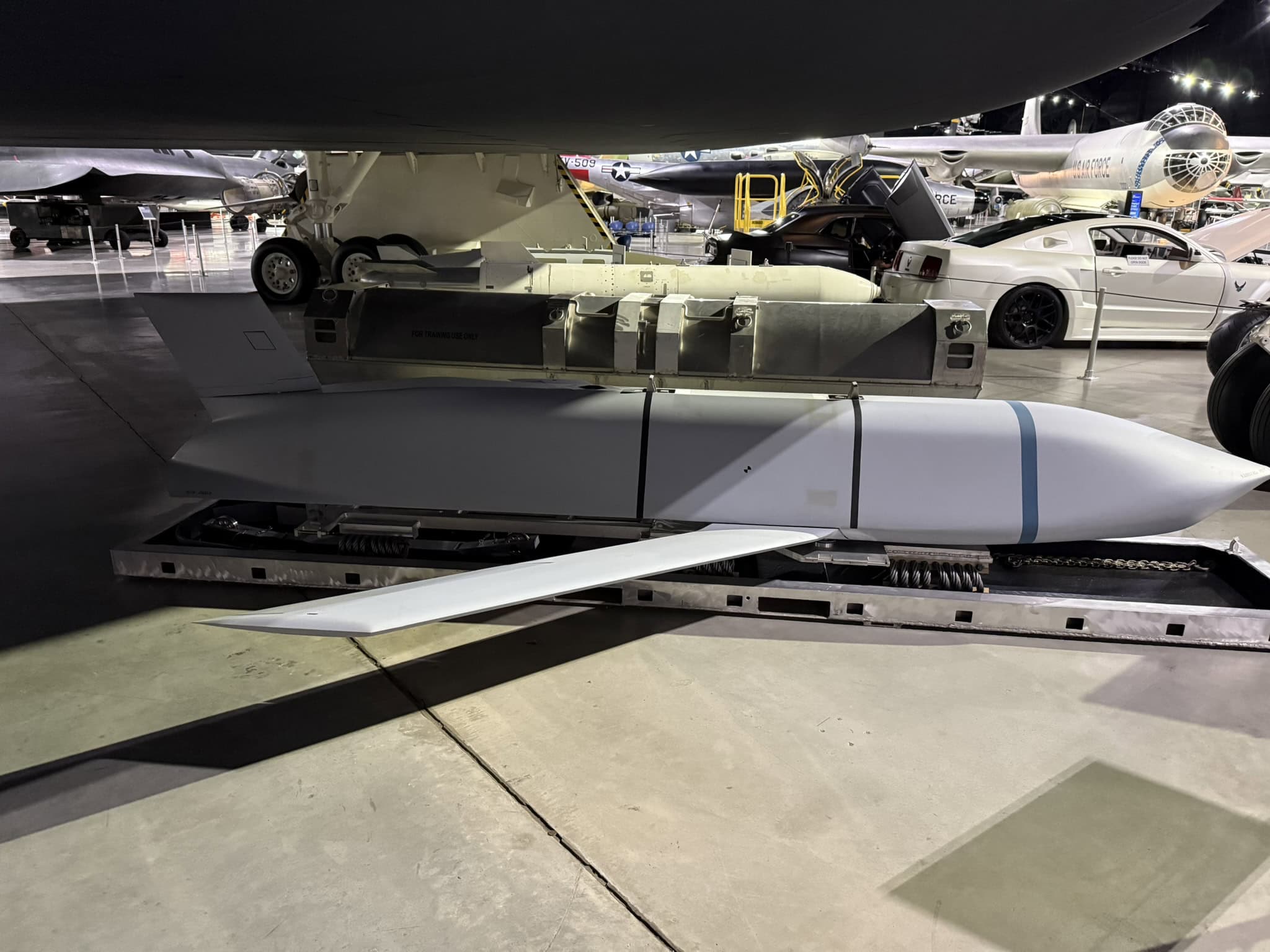
JASSM Missile. Image Credit: 19FortyFive
In short, pairing the LRASM and B-2 makes eminent sense. It shows tactical, operational, and strategic promise. It represents one way the U.S. Air Force can play strategic defense through tactical offense. What’s not to like? But hurdles to American success linger.
MORE – Why the Dassault Rafale Fighter Keeps Selling Like Hot Cakes
About the Author: Dr. James Holmes, U.S. Naval War College
James Holmes is J. C. Wylie Chair of Maritime Strategy at the Naval War College and a Faculty Fellow at the University of Georgia School of Public and International Affairs. The views voiced here are his alone.