
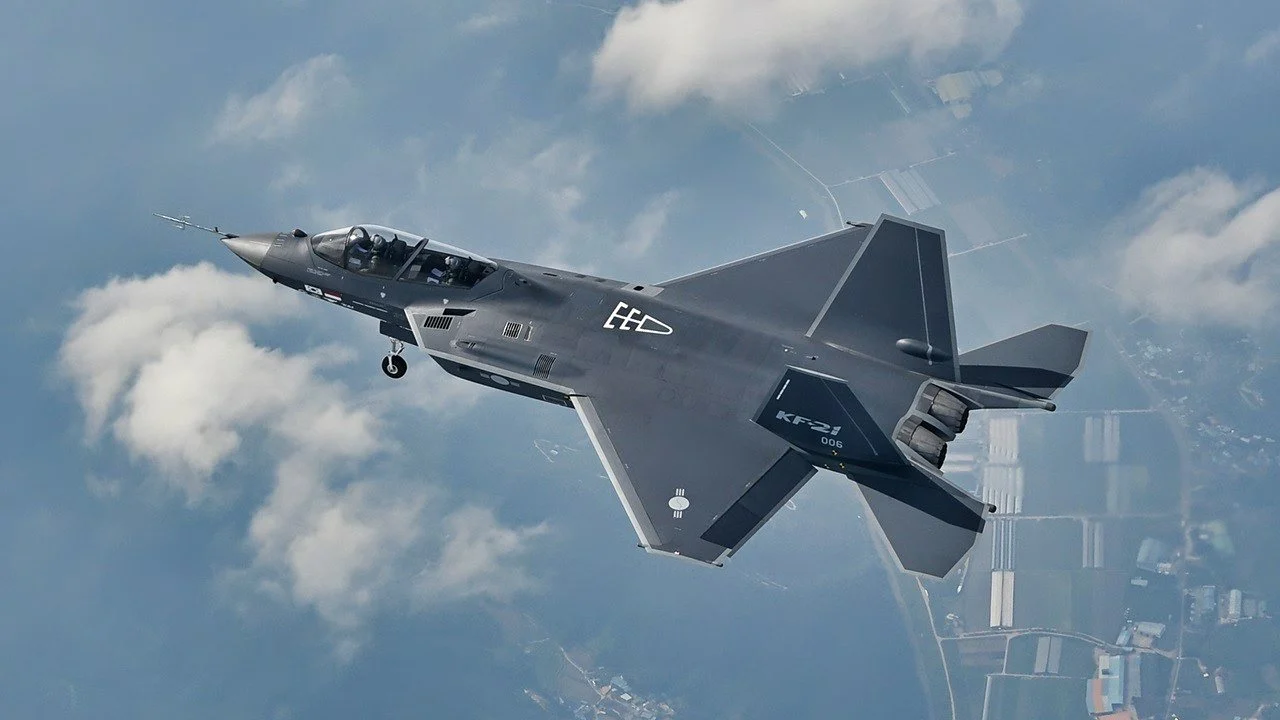
For years, South Korea’s KF-21 Boramae looked like a fighter no one would buy. Now Indonesia, the Philippines, the United Arab Emirates, and Malaysia are all in talks for it, drawn by a jet that promises near-stealth capability at a fraction of an F-35’s price, with technology transfer and far fewer political strings. It is a compelling sales pitch. It also has a hole in it: the “sovereign” fighter that supposedly frees buyers from Washington still flies on American engines, and despite the momentum, no one has actually signed a contract yet.
The KF-21 Boramae Is Coming
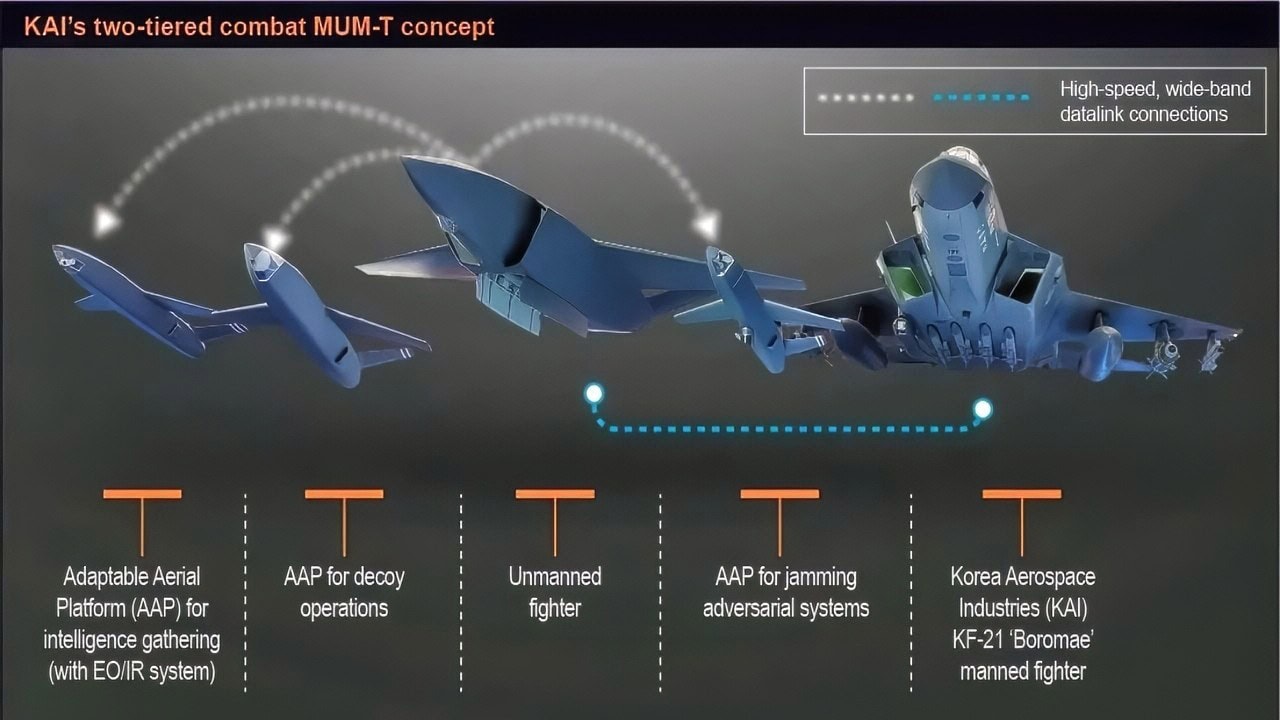
KF-21 Graphic. Image Credit: Creative Commons.
A few years ago, the conventional wisdom on South Korea’s KF-21 Boramae was blunt. A first-time fighter builder had spent billions on a jet that would struggle to find any foreign buyer at all.
That wisdom is being rewritten. As of mid-2026, Korea Aerospace Industries is running four simultaneous export conversations, with Indonesia, the Philippines, the UAE, and Malaysia, and its own air force has begun taking the jet into service. For a program that was widely written off, that is a striking turnaround. The question is what is drawing these buyers, and whether the pitch survives scrutiny.
The Pitch
The foundation is price. A Block I KF-21 runs somewhere between roughly $65 and $83 million, comfortably below an export F-35, far under a Rafale or Eurofighter Typhoon, and competitive with Saab’s Gripen E, which it is already going head-to-head against in competitions from Peru to the Philippines.
For that money, buyers get a modern twin-engine jet with an indigenous AESA radar, an infrared search-and-track sensor, a full electronic-warfare suite, and a semi-stealthy airframe, essentially a high-end 4.5-generation fighter with room to grow.
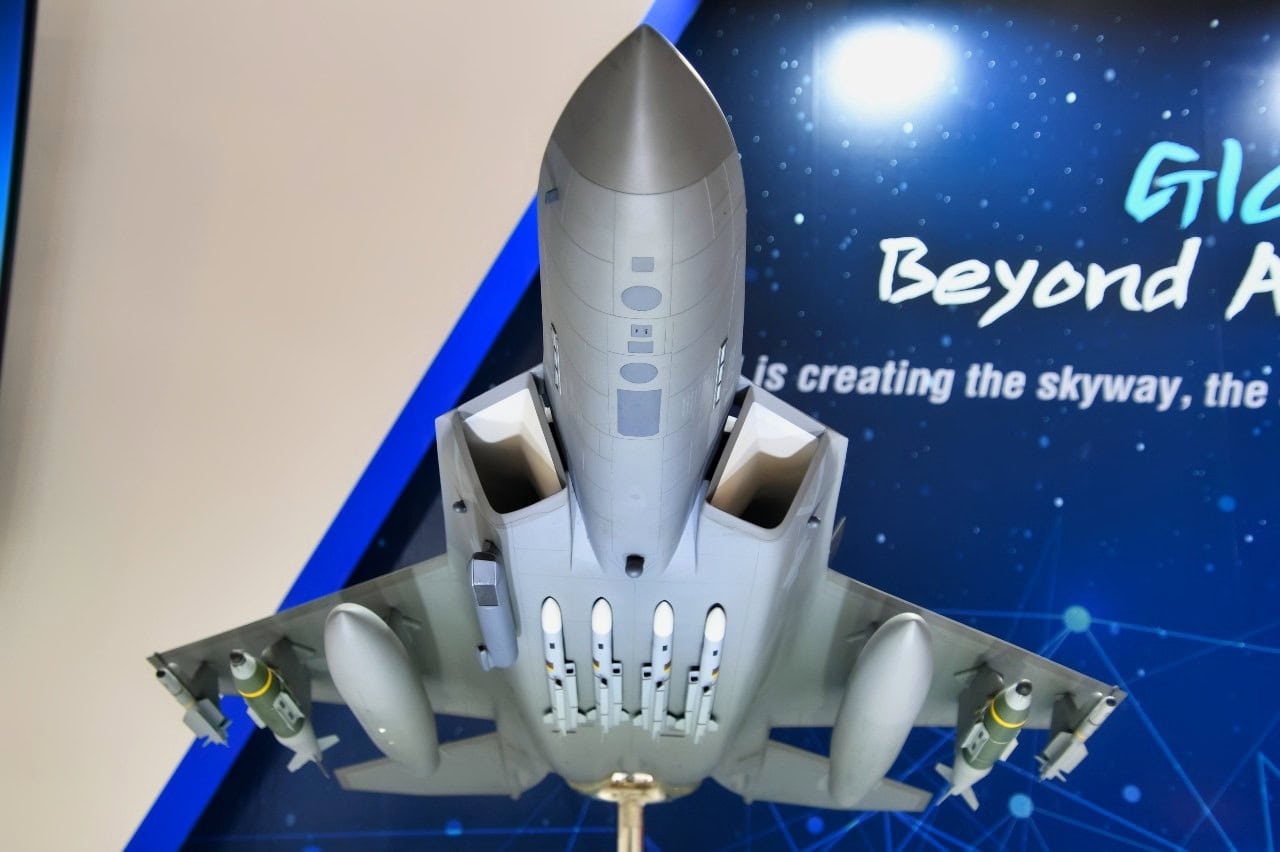
That growth path is a big part of the sale. The current Block I is an air-superiority jet; the coming Block II adds full air-to-ground capability, and a later block promises internal weapons bays and genuine fifth-generation stealth. Buyers are not purchasing a dead-end design but a platform Seoul intends to evolve for decades.
Then comes the politics, which may matter most. South Korea is deliberately marketing the KF-21 as a “third option” between expensive, restriction-laden Western stealth fighters and politically toxic Russian ones.
It offers something the F-35 does not: technology transfer, local assembly, maintenance hubs, and generous Korean state financing, the Philippine package would be roughly 70 percent covered by Korean export loans. KAI even lets prospective customers fly the jet before buying, with air chiefs from Indonesia, Poland, and the UAE having already taken the controls of a prototype.
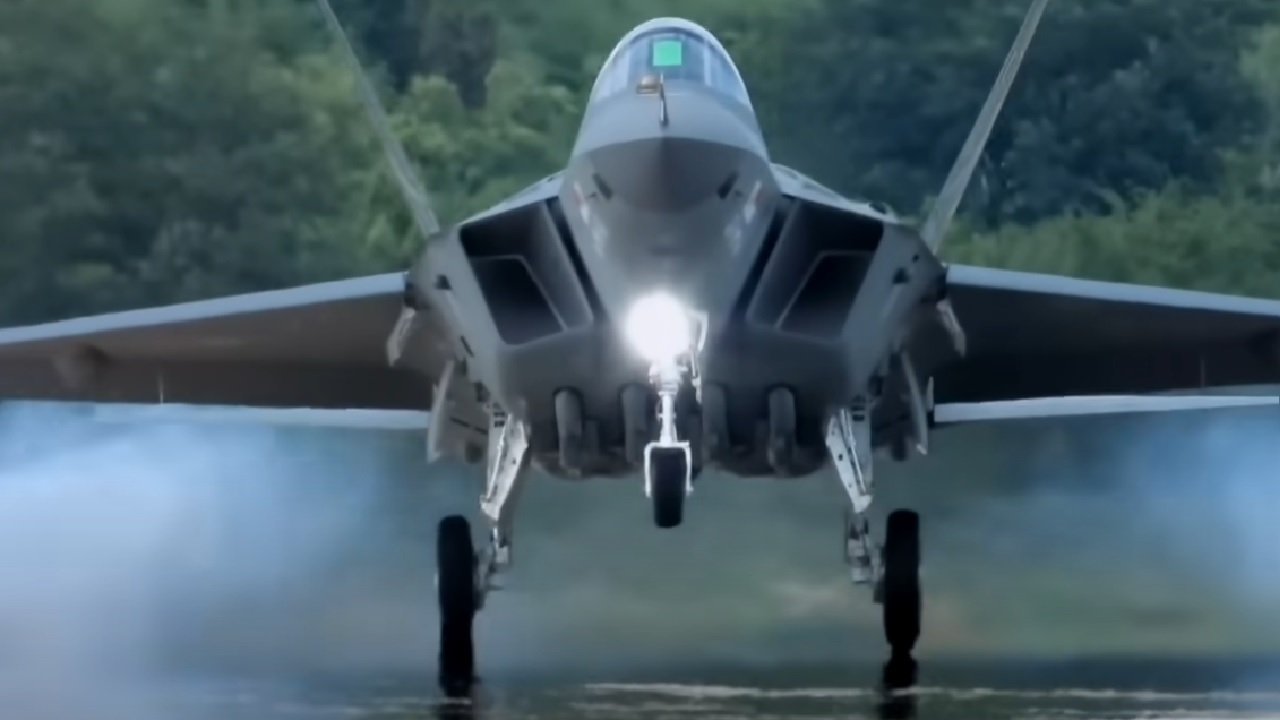
KF-21 screenshot from first flight. Image Credit: YouTube Screenshot.
South Korea’s KF-21 Boramae is entering mass production, positioning KAI as a global defense leader. With Poland and other buyers interested, can it challenge the F-35 in export markets?
Underpinning all of it is South Korea’s track record. Having sold the K9 howitzer, the K2 tank, and the FA-50 light fighter across Asia and Europe, Seoul has built a reputation for delivering on time and honoring contracts, and every FA-50 operator is a natural KF-21 customer through shared training and support.
The jet also just shed its biggest liability: in May 2026, it received full combat-suitability approval after roughly 1,600 accident-free test sorties, moving it out of the development-risk category that had made buyers hesitate.
The Buyers
The interest is real and current. Indonesia, a former development partner, is the frontrunner, with a 16-jet package worth about $2.2 billion that advanced to a preliminary agreement during the Indonesian president’s visit in April.
The Philippines is negotiating for up to 20 jets, complete with a maintenance hub at Clark Air Base, and some analysts think Manila could actually sign first. The UAE is pursuing a far larger co-development arrangement valued as high as $15 billion, and Malaysia is weighing up to 30. Behind them, Poland, Peru, Saudi Arabia, and Egypt have all been linked to the program.
The Catch
Now the problems, because they are real too. The KF-21’s proudest selling point, freedom from American control, is only half true. Its two engines are General Electric F414s, American-designed and merely license-assembled in Korea, which means Washington still holds a veto over where those engines, and therefore the jets, can go. South Korea is well aware of the contradiction: it has budgeted to develop a domestic engine by the 2030s precisely to make the “sovereign” pitch real, an admission that, for now, it isn’t.
The jet is also not yet the stealth fighter its brochures imply. In its current form, it carries weapons externally and sits firmly in the crowded 4.5-generation market against the combat-proven Rafale and F-16, an increasingly affordable F-35, and Turkey’s competing KAAN.
Its anchor customer keeps wavering, too: Indonesia slashed its planned buy from 48 to 16, downgraded from co-production to a straight purchase, and hedged by ordering 48 Turkish KAANs alongside its Korean talks. And the KF-21 has never seen combat, making it an unproven quantity against rivals with decades of war records.
Most telling of all, for all the momentum, no binding foreign order had actually been signed by the middle of 2026. The pitch is winning the room. It has not yet closed the sale.
Whether It Closes
The honest verdict is that South Korea has built an attractive product and wrapped it in an even more attractive package of price, financing, and industrial partnership, aimed squarely at the large market of nations that want more than an old F-16 but cannot afford or cannot obtain an F-35.
That is a smart place to compete, and the four live negotiations prove buyers are listening.
Whether they buy will hinge on the things the sales brochure downplays: the American engine, the still-distant stealth, and the willingness of a first customer to bet on an unproven jet.
The first signature, whenever it comes, will tell us whether the KF-21 is a genuine new force in the fighter market or merely a promising pitch that could not quite close.
MORE – The B-2 Spirit Can Attack China’s Navy
About the Author: Harry J. Kazianis
Harry J. Kazianis (@Grecianformula) was the former Senior Director of National Security Affairs at the Center for the National Interest (CFTNI), a foreign policy think tank founded by Richard Nixon based in Washington, DC. Harry has over a decade of experience in think tanks and national security publishing. His ideas have been published in the NY Times, The Washington Post, The Wall Street Journal, CNN, and many other outlets worldwide. He has held positions at CSIS, the Heritage Foundation, the University of Nottingham, and several other institutions related to national security research and studies. He is the former Executive Editor of the National Interest and the Diplomat. He holds a Master’s degree focusing on international affairs from Harvard University.

