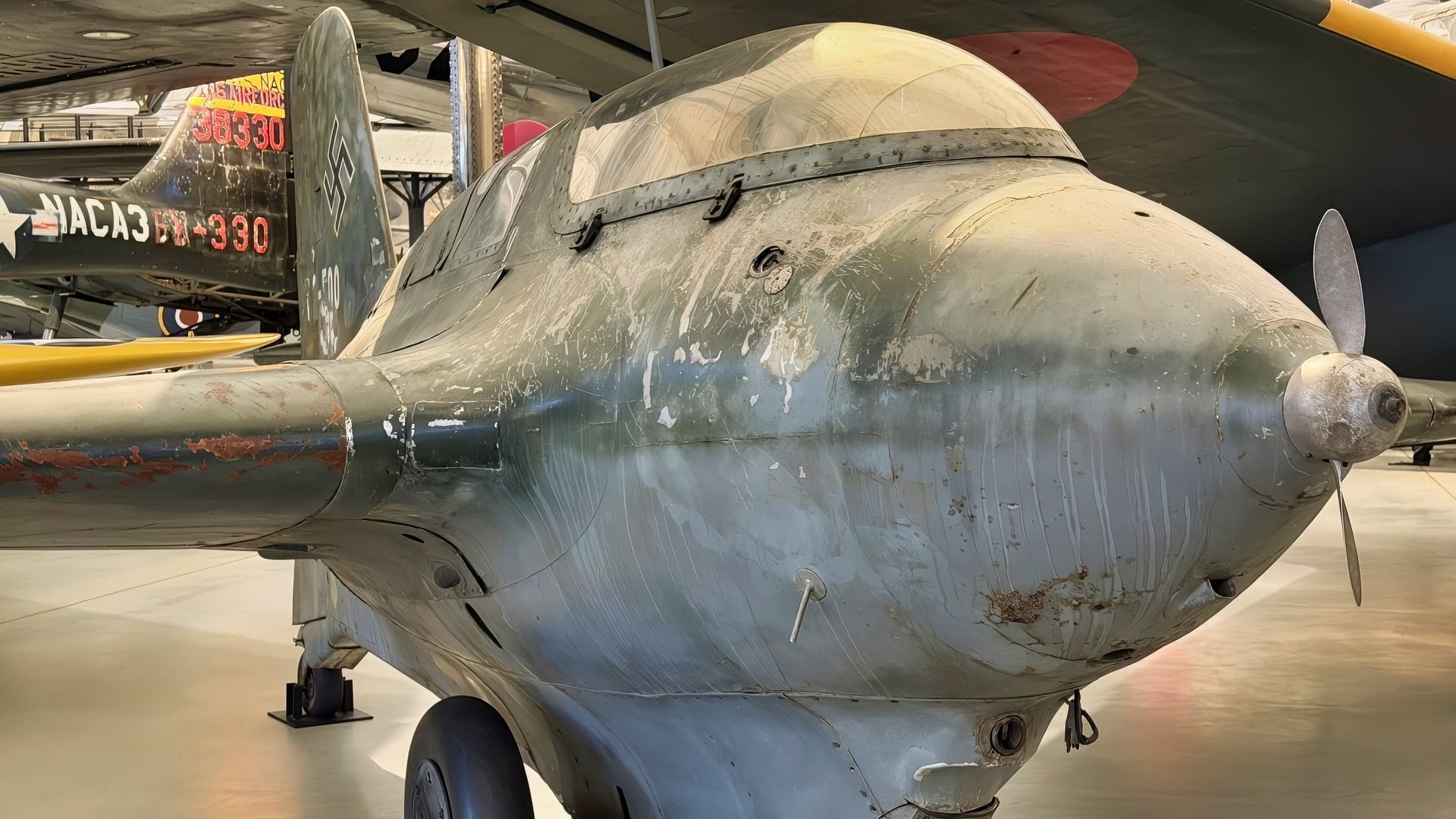
Summary and Key Points: The Messerschmitt Me 163 Komet was the world’s first rocket-powered interceptor, born from prewar work by aerodynamicist Alexander Lippisch and rocket-engine pioneer Hellmuth Walter. It first flew in 1941 and exceeded 620 mph in an age before the jet engine, climbing to 40,000 feet in about three minutes to strike Allied bomber formations. Its revolutionary performance came with fatal limits. Powered flight lasted only about eight minutes before the aircraft became an unpowered glider, easy prey for Allied escort fighters, and its two highly reactive propellants could explode or cause lethal chemical fires in even a minor crash. Germany built 279, but the Komet officially downed only nine Allied aircraft, and after the war, no power chose to field rocket fighters.
BONUS – 19FortyFive went to the Smithsonian outside of Washington, DC, and visited the Me 163 in person. We present some very special photos below.
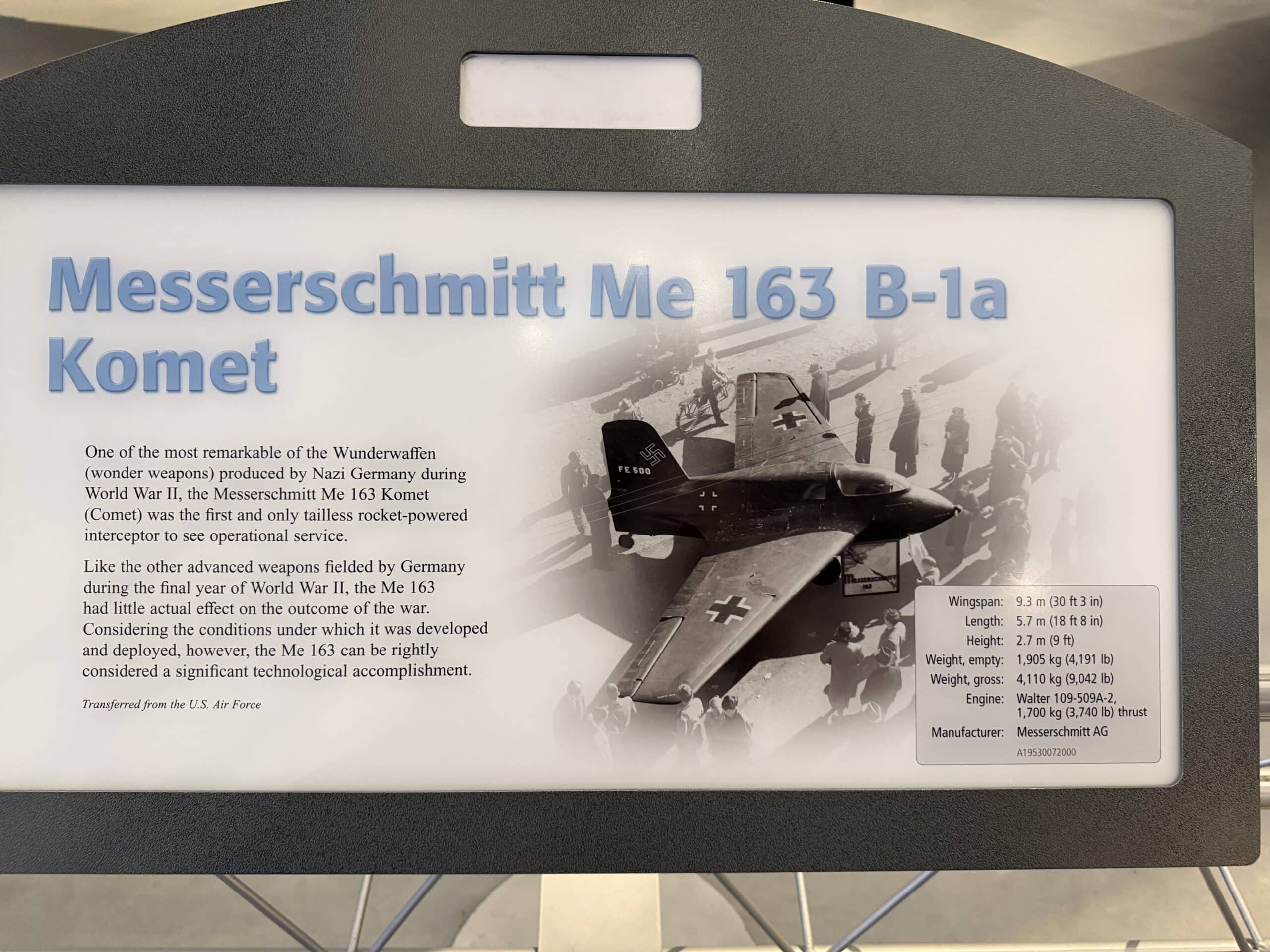
Messerschmitt Me 163 Komet: An Introduction
German engineering has long been the envy of the world. Whether it be in automobiles or airplanes, Germany has always led the way in developing cutting-edge, innovative designs.
Indeed, some defense writers, like former aerospace editor for Jane’s Defense Weekly, speculated in his fascinating 2002 book The Hunt for Zero-Point that the Nazis may have been experimenting with “anti-gravity” propulsion systems toward the end of the war.
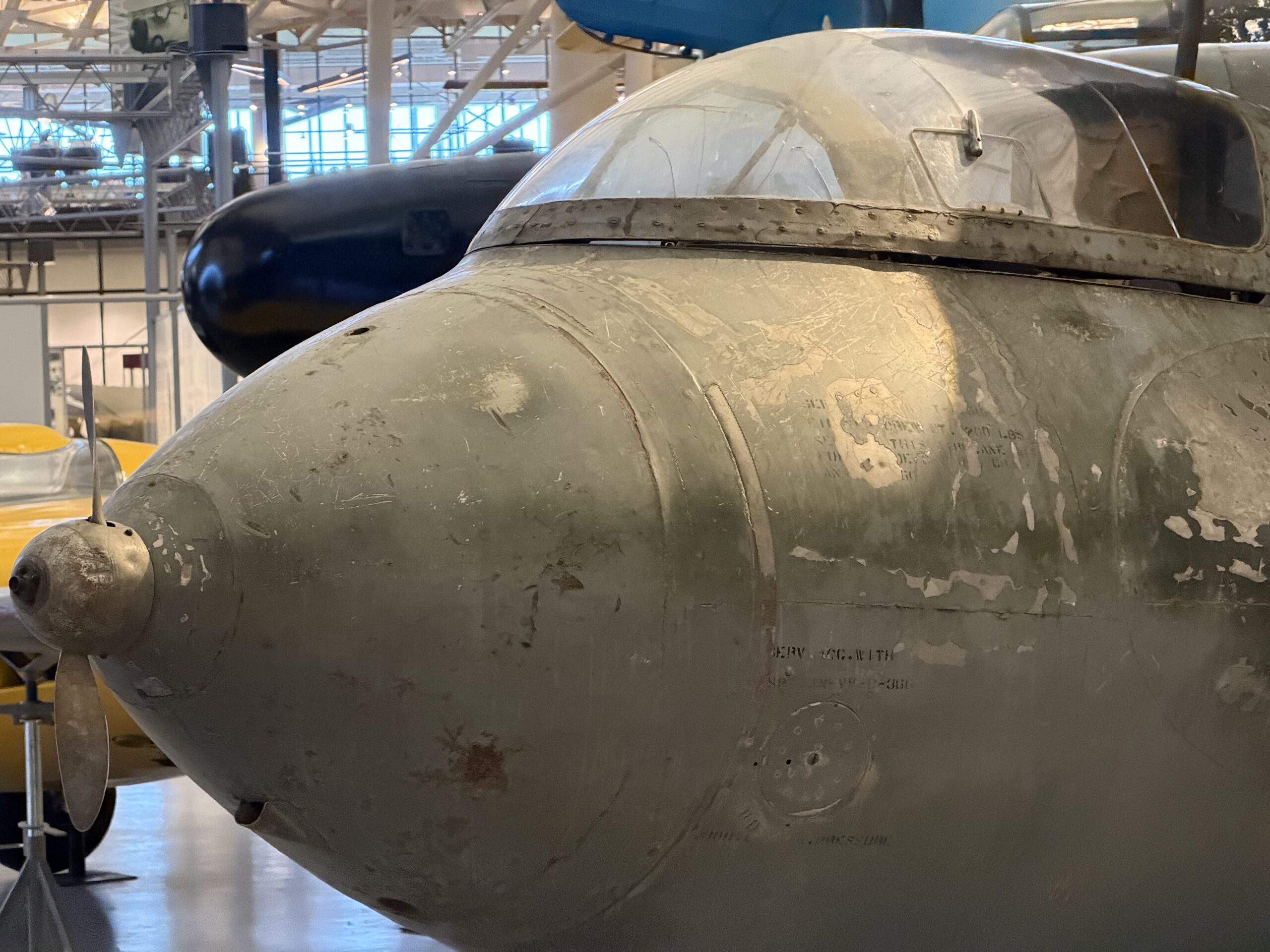
Me 163 Fighter 19FortyFive Image. Image Taken at the Smithsonian Outside of Washington, DC.
Of course, Cook’s fascinating claims remain unproven.
But the reason a mainstream journalist would take the time to write a research book on that subject is that Germany has historically been at the bleeding edge of engineering.
One such cutting-edge system the Germans created (albeit far more terrestrial than what Cook suggested Hitler’s scientists were experimenting with at the end of the war) was the Messerschmitt Me 163 Komet.
Having emerged from prewar research by German aerodynamicist Alexander Lippisch, as well as research conducted by Hellmuth Walter, it was developing liquid-fueled rocket engines.
German military scientists merged these two separate concepts into a single design to create the world’s first rocket-propelled interceptor.
The first Komet flew in 1941 and shattered every speed record at the time, exceeding 620 miles per hour. Mind you, this was an age that preceded the jet engine.
The way that the Me 163 operated was simple.
It would launch, climb at almost an astonishing 90-degree angle, and attack US bomber formations coming in from Britain.
After completing its interception mission, the Komet would return safely home, its fuel exhausted.
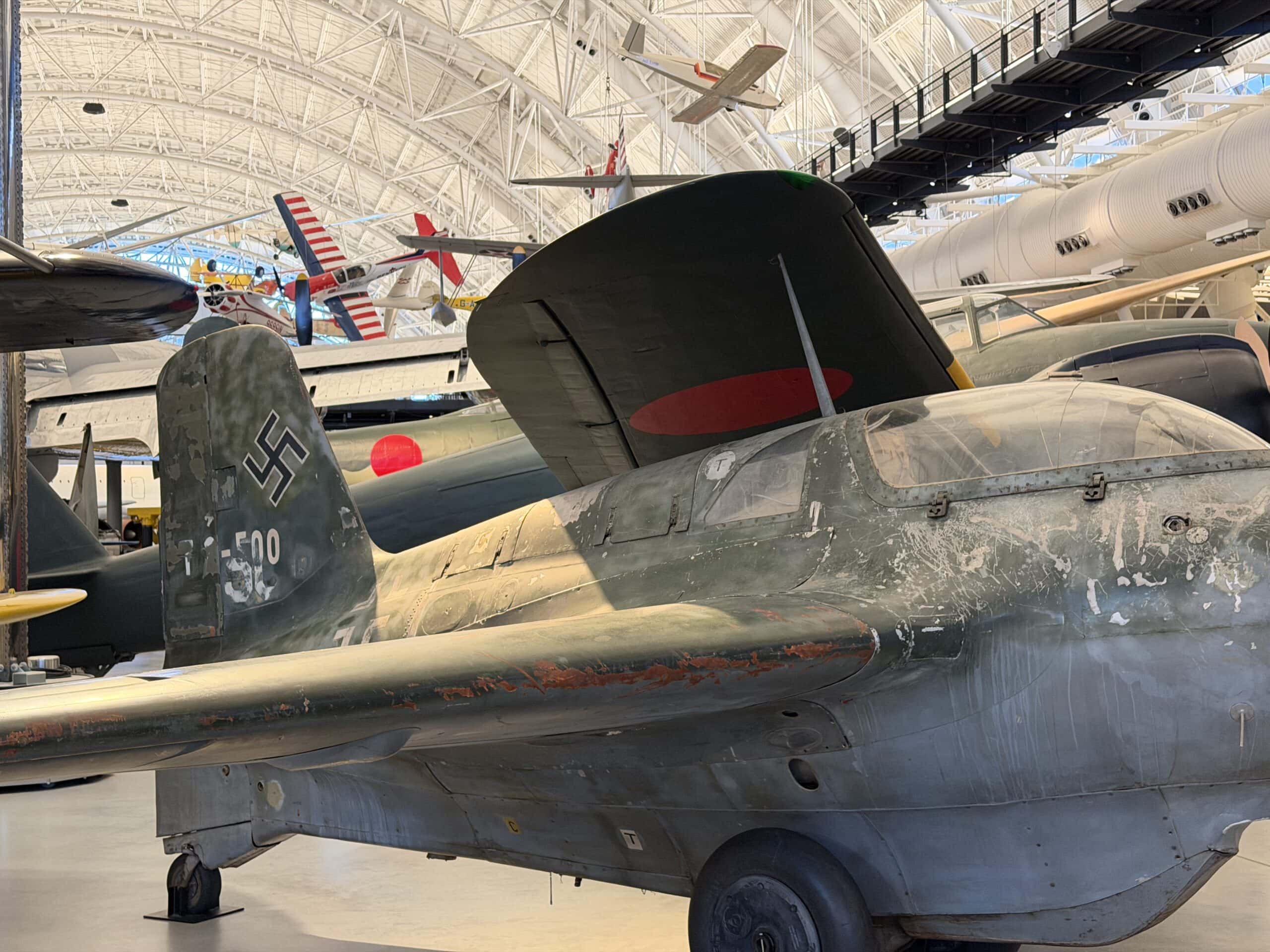
Me 163 Fighter 19FortyFive Image. Image Taken at the Smithsonian Outside of Washington, DC.
The development of this system was born out of German desperation to better protect its airspace, as by the time the Americans entered the European Front of the Second World War, the Nazis were having difficulty keeping the massive Allied bombing campaigns away from their territory.
Too bad for the Luftwaffe that the Komet’s revolutionary design on paper didn’t work so well in practice. Combat is its own kind of test for new machines, after all.
Seven Minutes of Joy Followed By Sheer Terror
For about seven minutes, the Me 163 Komet outflew and outmatched any Allied aircraft in the war.
Rocketing to 624 mph, with an initial climb rate of 16,000 feet per minute, the Messerschmitt Komet could achieve an altitude of 40,000 feet in about three minutes.
German designers armed the Komet with two powerful 30mm Mk 108 cannons that could destroy heavy bombers with but a few well-placed hits.
Me 163 Fighter 19FortyFive Image. Image Taken at the Smithsonian Outside of Washington, DC.
Put yourself back into the flight suits of the American B-17 fliers running one of the Allies’ countless aerial bombing campaigns over German territory in the war.
As you fly in formation, watching for enemy flak from air defenses and readying to drop your devastating payload on the sprawling cities below, you catch sight of something that looks like it’s from the Flash Gordon comics you read as a kid.
An aircraft rocket streaking up from the ground below you arrives in a few minutes amid your tightly packed formation of bombers.
Many bomber crews that went up against the next-level Komet were not sure if they had encountered a new Nazi weapon or an otherworldly force.
Again, at this time, rocketry was in its infancy, and most nations relied upon propeller-driven warplanes to wage air campaigns.
Everything Went Wrong
Like so many great machines ahead of their time, the Komet’s greatest strength was its greatest weakness. The rocket-airplane’s engine burned at a high temperature and burned out quickly.
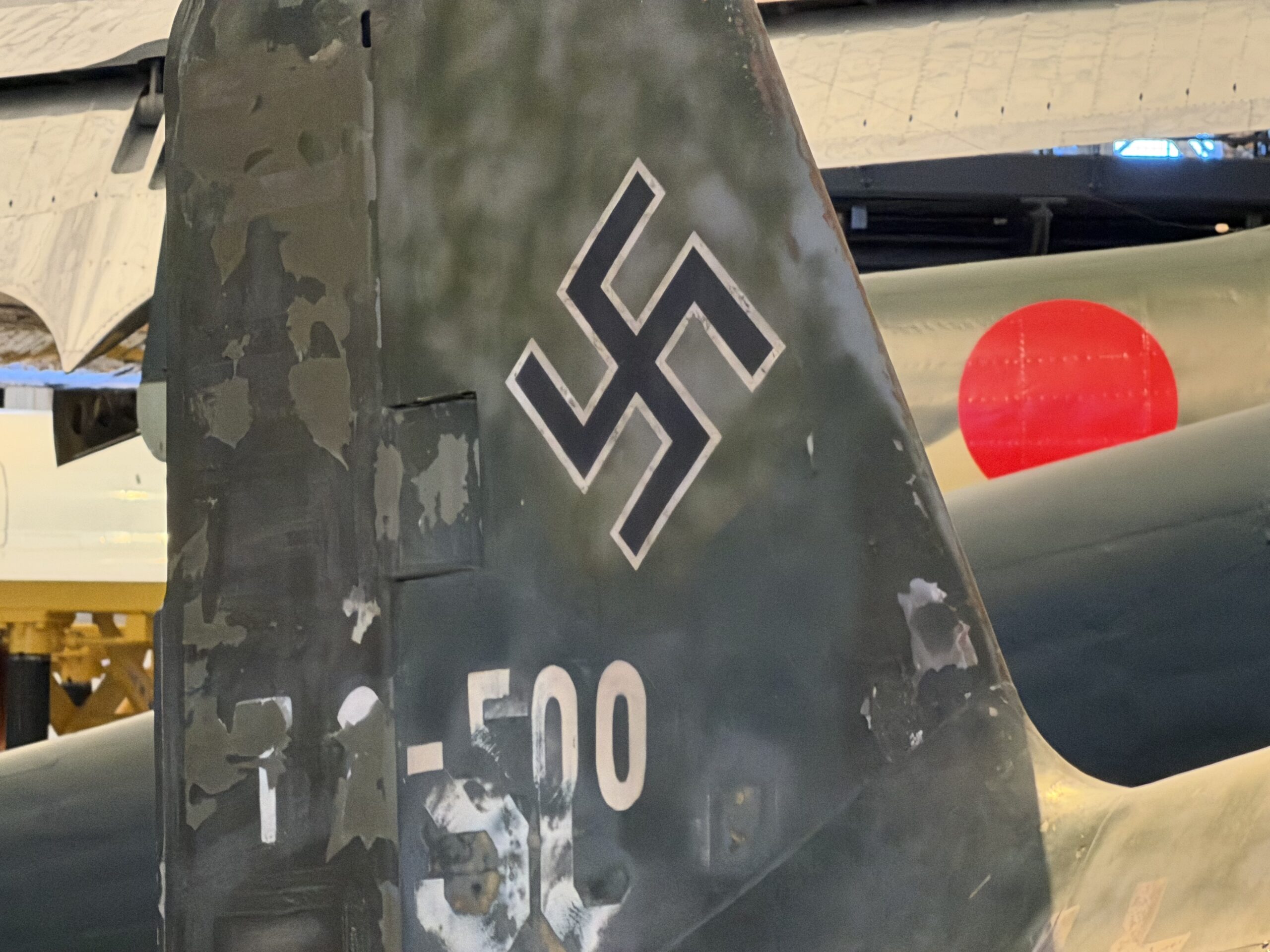
Me 163 Fighter 19FortyFive Image. Image Taken at the Smithsonian Outside of Washington, DC.
Once airborne, pilots were lucky to get eight minutes of powered flight before the engines ran out of fuel. Then, the rocket-airplane became a simple glider.
So, Komets engaged in a single attack run. Sometimes, the luckier and better-skilled Komet pilots got two attack runs before running out of juice.
After that, the Komets had to glide back down to base.
Allied escort fighters became accustomed to this pattern.
After the initial shock of the sudden arrival of these otherworldly planes wore off, escort birds protecting the Allied bombers would wait until the Komets had quickly run out of fuel.
Allied pilots would turn their guns on the Komets once the airplane-rockets became glorified gliders, knowing that the German pilots could not accelerate or maneuver away from attacking Mustangs or Thunderbolts.
The Fuel Itself Was Lethal
More than enemy fire, fuel was the Komet’s biggest concern.
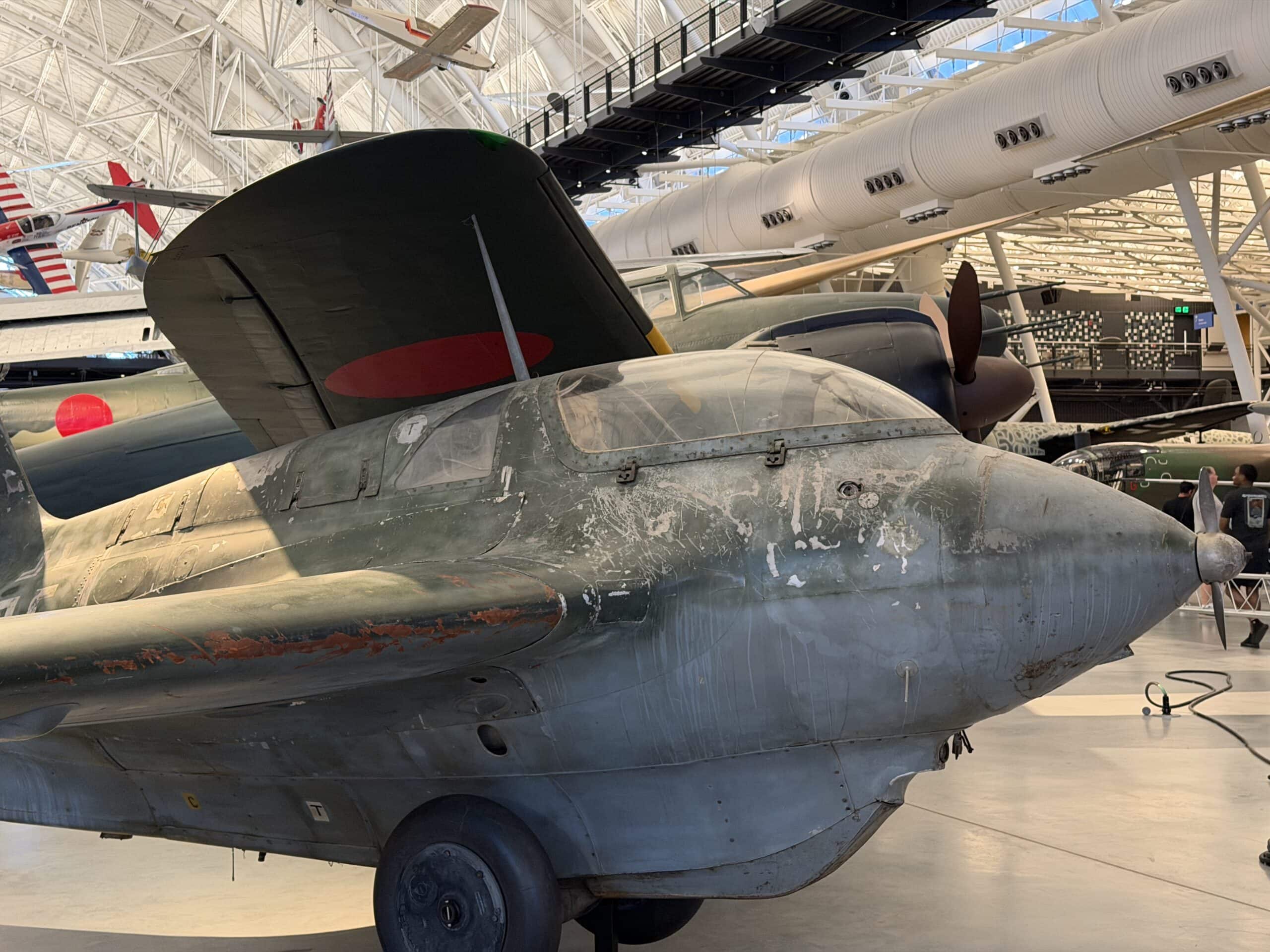
Me 163 Fighter 19FortyFive Image. Image Taken at the Smithsonian Outside of Washington, DC.
The Me 163 employed two different, highly reactive propellants: T-Stoff, a highly concentrated hydrogen peroxide oxidizer, and C-Stoff, a hydrazine-methanol fuel admixture. On their own, these propellants were dangerous.
When combined, the Komet quickly became a fiery meteor that crashed to Earth.
Even minor crashes involving the Komet often ruptured both tanks–which were always kept separate onboard so the pilot wouldn’t explode during flight–producing explosions or corrosive chemical fires.
In those instances, pilots died instantly. In the case of chemical fires, pilots often dissolved. Ground crews had to follow elaborate fueling procedures because even the slightest mistake could kill.
In the Case of the Comet, Speed Rarely Killed
Germany deployed the Me 163 in 1944. By then, Allied fighter escorts were nearly unstoppable. Berlin could not win the air war by that point. Plus, by 1944, Germany was experiencing drastic fuel shortages.
Surprisingly, Germany produced 279 operational Komets for the Luftwaffe. However, only one operational wing of the airplane-rocket–JG 400–saw serious combat.
And its combat results were not really worth the effort the Germans put into building the Me 163.
The Komet officially downed only nine Allied aircraft during its lifetime, while 14 Me 163s fell in combat–with many others lost due to accidents.
Oh, and the aircraft’s blistering speed made accuracy with its powerful twin cannons almost impossible.
These airplane-rockets closed on their targets so quickly after launch that Komet pilots had seconds to score hits on Allied bombers before overshooting those bomber formations.
A Technological Dead End?
Germany’s Me 163 Komet demonstrated the feasibility of rocket propulsion. Yet, the system also proved why rockets were a poor choice for fighters.
Rocket engines offered insane thrust, yet they also provided horrible endurance. These engines ran on fuels that posed greater harm to the pilots than enemy fire did. And the airplane-rocket offered no tactical flexibility whatsoever.
After the war, the Allied powers–including the Soviet Union–examined the Komets their forces captured at the end of the war.
None chose to field operational rocket-powered fighters based on their observations. Instead, Messerschmitt’s other iconic bird, the Me 262, dominated the future.
That plane was the first turbojet aircraft. While it sacrificed some climb performance, it gained far greater range than the Komet ever enjoyed, as well as enhanced endurance and greater utility in combat.
About the Author: Brandon J. Weichert
Brandon J. Weichert is the Senior National Security Editor at 19FortyFive.com. He also manages The Weichert Brief on Substack. Weichert also hosts “National Security Talk” on Rumble. He is the author of four bestselling national security books, the most recent of which is A Disaster of Our Own Making: How the West Lost Ukraine (Encounter Books). Follow him via Twitter/X @WeTheBrandon.