
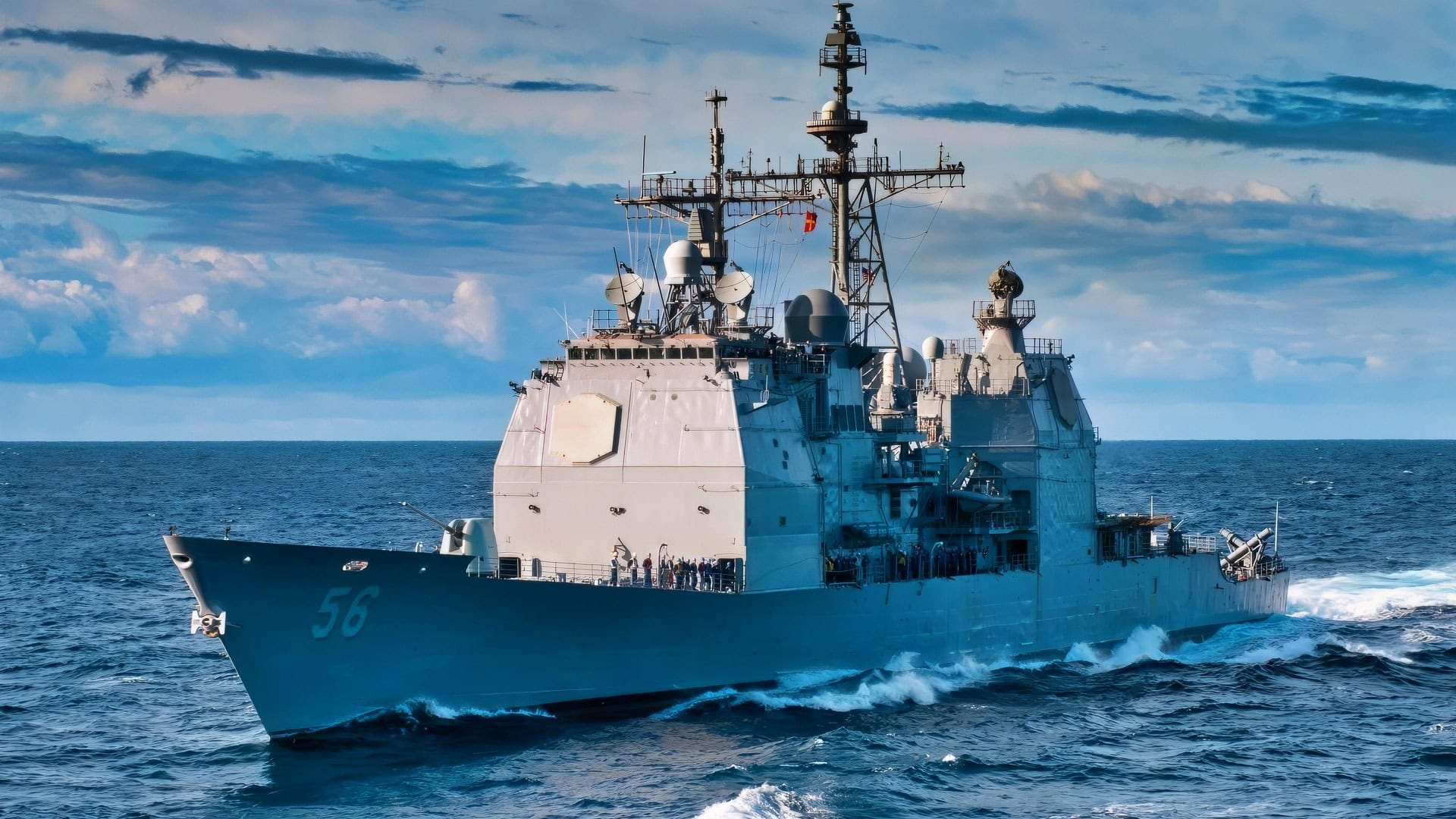
Summary and Key Points: The Ticonderoga-class cruiser, the most heavily armed surface warship in the U.S. Navy, is almost gone. The service’s newest inactivation list sends two more cruisers, USS Shiloh and USS Lake Erie, out of the fleet this year, shrinking the class toward its last three survivors, extended to 2029. When the final one, likely USS Cape St. George, hauls down its commissioning pennant, the U.S. Navy will operate no cruisers at all for the first time in generations, and nothing in the fleet will match their firepower.
Ticonderoga-class Cruiser: The Final Days
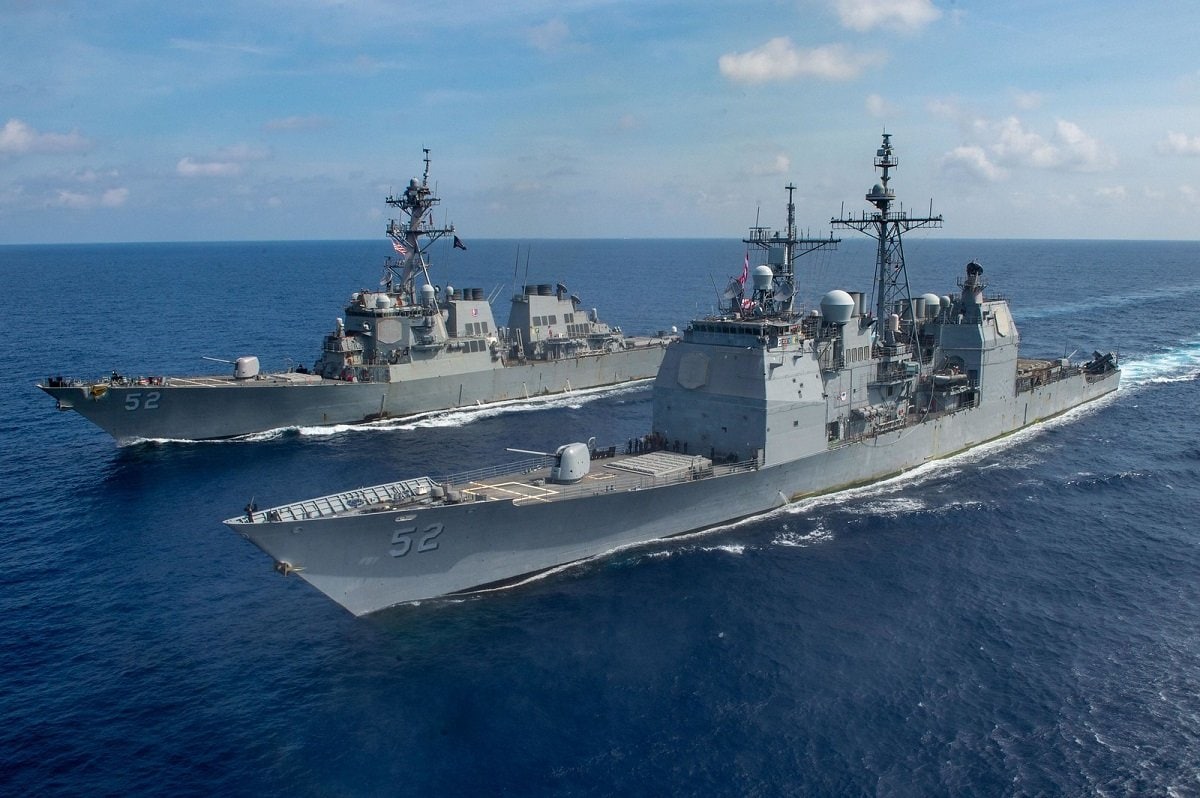
SOUTH CHINA SEA (April 18, 2020) The Ticonderoga-class guided missile cruiser USS Bunker Hill (CG 52), front, and the Arleigh Burke-class guided-missile destroyer USS Barry (DDG 52) transit the South China Sea. Bunker Hill is deployed to the U.S. 7th Fleet area of operations and is operating with the America Expeditionary Strike Group in support of security and stability in the Indo-Pacific region. (U.S. Navy photo by Mass Communication Specialist 3rd Class Nicholas V. Huynh/Released)200418-N-IW125-2047.
The end of the American cruiser now has a schedule. The Navy’s fiscal 2026 inactivation plan, released in April, designates USS Shiloh and USS Lake Erie as logistics support assets, spare-parts sources for the sisters that remain, and the last cruiser homeported overseas began its journey home in March. Of the 27 Ticonderogas built beginning in 1980, the first warships ever to carry the Aegis combat system, the fleet will soon be down to three.
The Firepower Nobody Replaces
What leaves with them is arithmetic; the Navy cannot hide. Each Ticonderoga carries 122 vertical-launch cells plus two 5-inch guns, and the ships were built as the air-defense command posts of carrier strike groups. Their replacement in that role, the Flight III Arleigh Burke destroyer, carries 96 cells and existed as exactly one ship when the retirement schedule was set, meaning every swap trades away 26 missile tubes. Multiply across the class and hundreds of launch cells vanish from a fleet that just watched Operation Epic Fury burn through Tomahawks far faster than industry can build them. The true successor, DDG(X), is not expected before 2032 at the earliest, and the ship originally meant to replace the cruisers evolved into the Zumwalt class, of which the Navy bought just three.
The Reprieve That Proves the Point
The Navy knows exactly what it is losing, which is why the final three are still here. In November 2024, the service extended USS Gettysburg, USS Chosin, and USS Cape St. George into 2029, ten cumulative ship-years added, explicitly tied to being ready for a possible Pacific war by 2027. The ships will serve 38 years each against a 30-year design life, and the Navy secretary put the reasoning plainly: “I know the incredible value these highly capable warships bring to the fleet.”
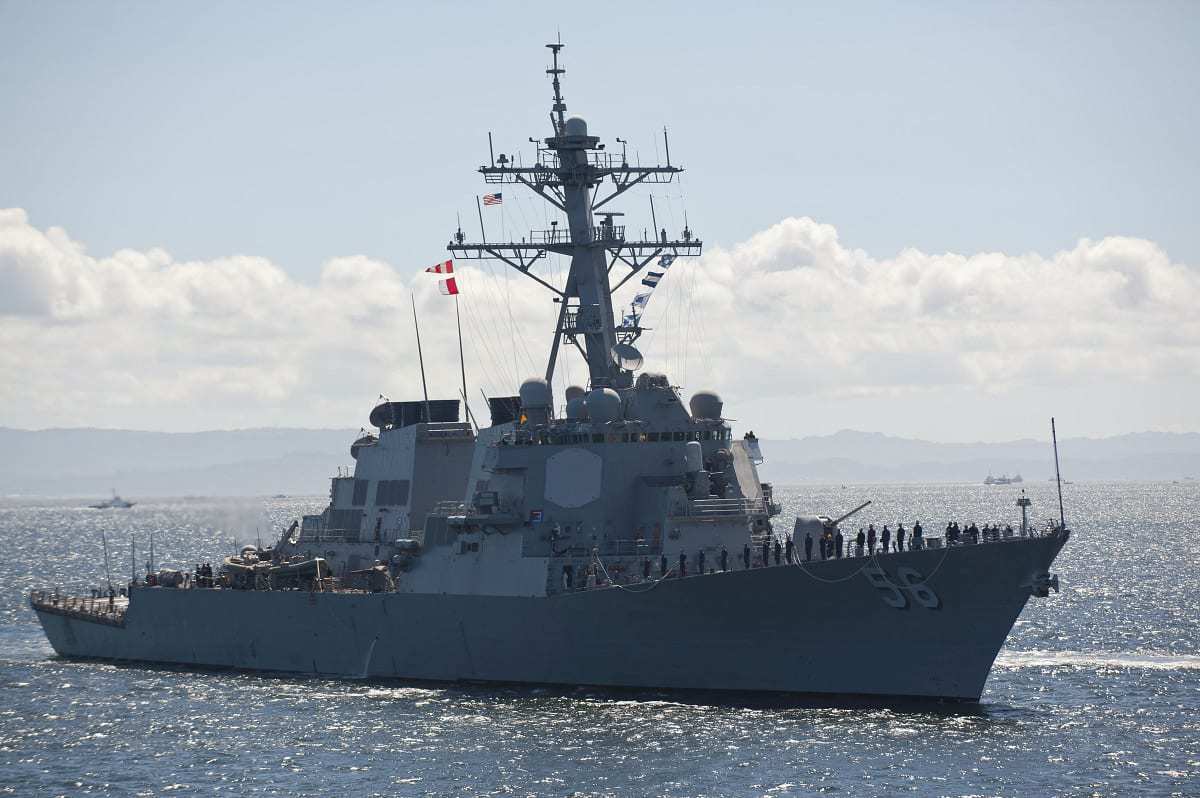
YOKOSUKA, Japan (Aug. 22, 2012) Sailors aboard the Arleigh Burke-class guided-missile destroyer USS John S. McCain (DDG 56) render side honors as they pass by the Ticonderoga-class guided-missile cruiser USS Cowpens (CG 63). Cowpens is part of the George Washington Carrier Strike Group, the US Navy’s only forward deployed carrier strike group, based out of Yokosuka, Japan, and is conducting a routine western Pacific Ocean patrol. (U.S. Navy photo by Mass Communication Specialist 3rd Class Paul Kelly/Released)
The reprieve followed a decade of failure. The Navy planned to modernize 11 cruisers into the 2030s, spent billions, and watched the program collapse under delays, cost overruns, and hulls cracking with age. Vicksburg and Cowpens were decommissioned in 2024 with their modernizations never completed, nearly a billion dollars spent between them. Three salvaged survivors are all that remains of that ambition, holding the air-defense line for carrier strike groups already stretched thin by a fleet in which the newest carrier faces a year in the repair yard.
The Last Cruiser
The fair counterpoint is real: the Flight III Burkes carry a far more powerful radar than the aging cruisers, the class is plentiful, and keeping 35-year-old hulls alive costs a fortune the Navy would rather spend forward. Retirement is defensible. What is not replaceable, on any current schedule, is the magazine depth, at a moment when America’s fleet math is already unforgiving.
So the countdown runs. Two cruisers leave this year. Three sail on to 2029, and fleet trackers project Cape St. George, still the last product of the doomed modernization program, will be the final American cruiser in commission. When she goes, the U.S. Navy will have no cruisers and no plan to build another, and 122 launch cells will leave the fleet with her.
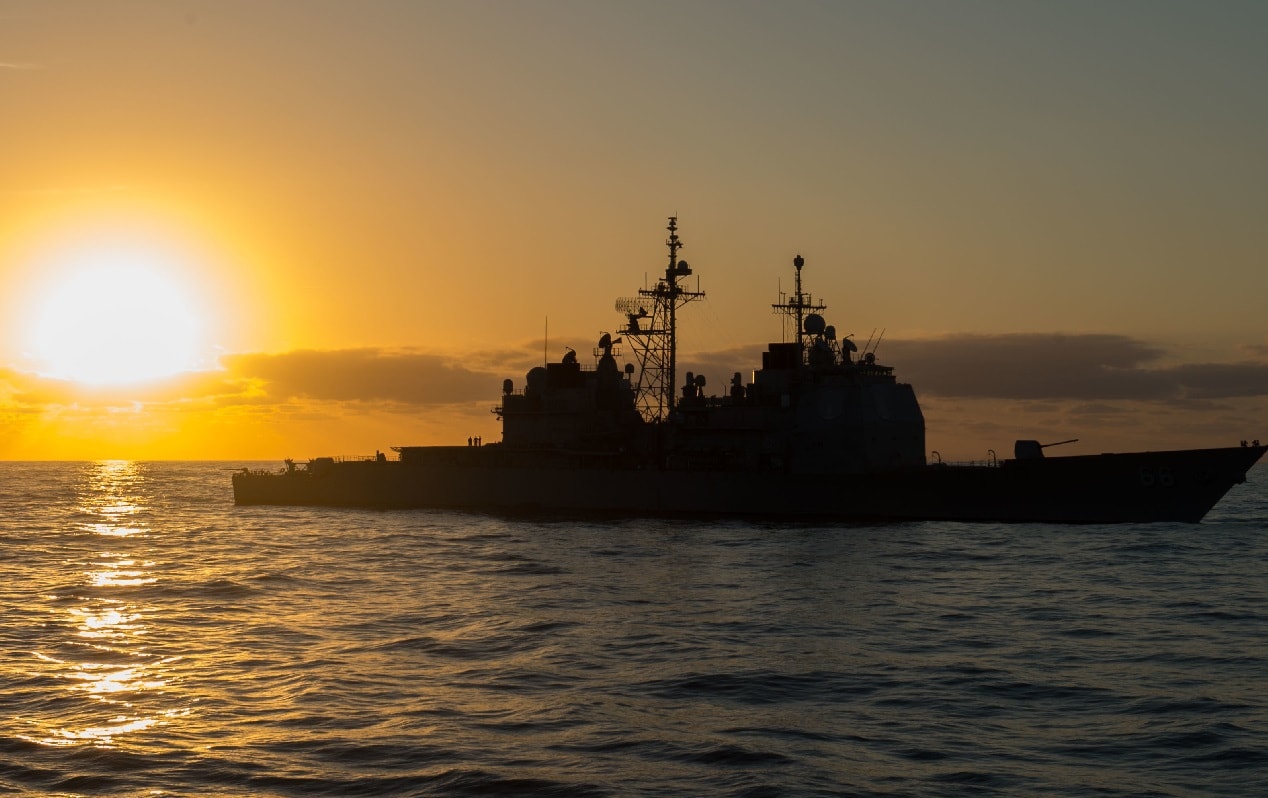
The sun rises over the Ticonderoga-class guided-missile cruiser USS Hue City (CG 66) in the Atlantic Ocean March 28, 2018. Hue City is underway supporting Carrier Strike Group Four Task Force Exercise 18-2. (U.S. Navy photo by Mass Communication Specialist 3rd Class Danny Ray Nuñez Jr.)
About the Author: Harry J. Kazianis
Harry J. Kazianis (@Grecianformula) was the former Senior Director of National Security Affairs at the Center for the National Interest (CFTNI), a foreign policy think tank founded by Richard Nixon based in Washington, DC. Harry has over a decade of experience in think tanks and national security publishing. His ideas have been published in the NY Times, The Washington Post, The Wall Street Journal, CNN, and many other outlets. He has held positions at CSIS, the Heritage Foundation, the University of Nottingham, and several other institutions related to national security research and studies. He is the former Executive Editor of the National Interest and the Diplomat. He holds a Master’s degree focusing on international affairs from Harvard University.

