
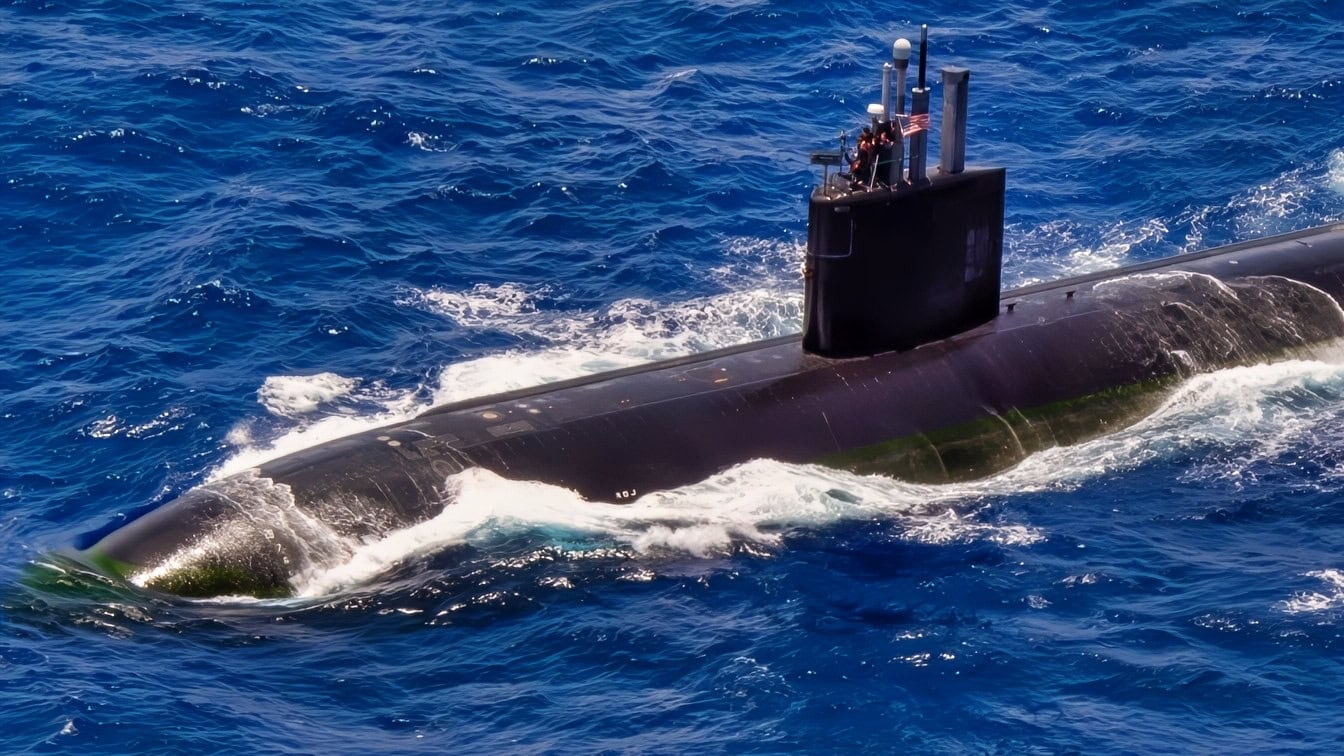
Summary and Key Points: A quiet revolution in undersea warfare is moving into the fleet: a system that lets a submerged attack submarine launch an autonomous drone through a standard 21-inch torpedo tube, send it dozens of miles away on a mission, and then take it back aboard without ever surfacing. The Defense Innovation Unit put it under contract in March, and it is now being evaluated aboard Virginia-class submarines. Getting here took the Navy three programs, a canceled drone that was too big, a historic first marred by a failed recovery in a Norwegian fjord, and a second cancellation before the design that stuck.
The Great U.S. Navy Submarine Mothership: What We Know
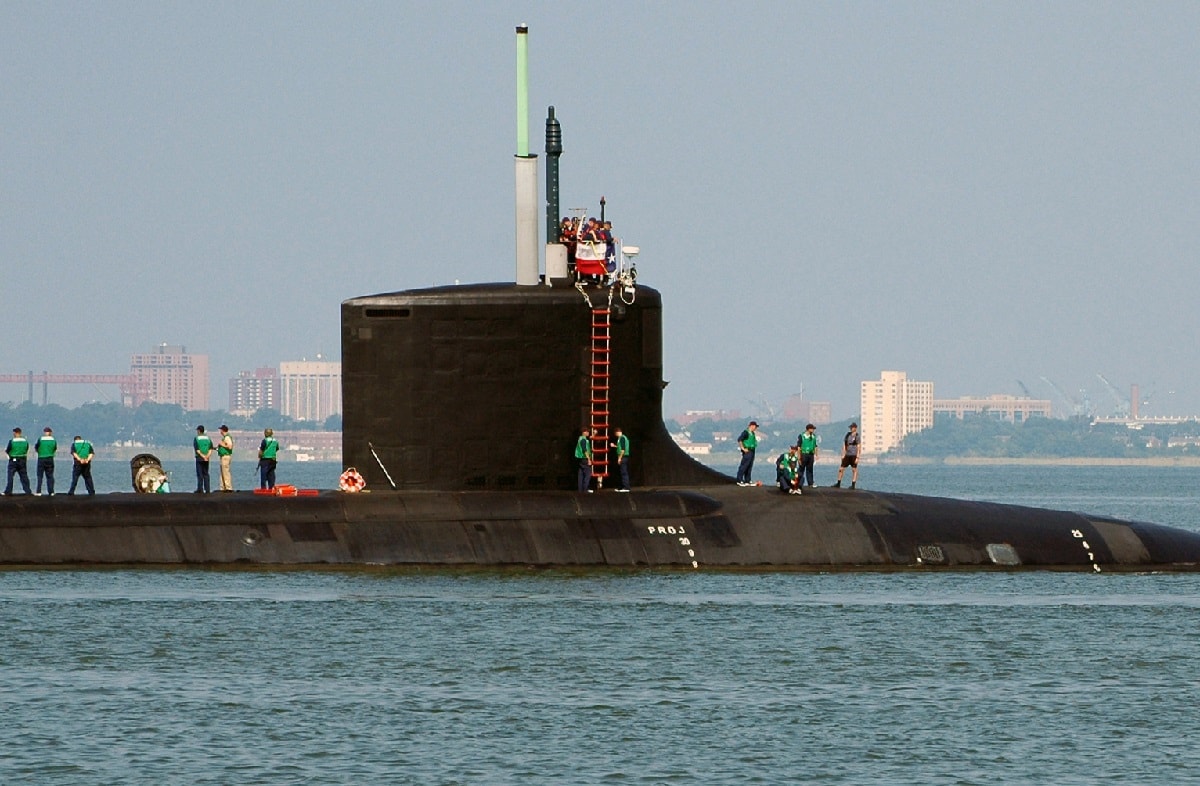
U.S. Navy Sailors stationed aboard the Virginia Class New Attack Submarine Pre-Commissioning Unit (PCU) TEXAS (SSN 775) stands topside as the boat gets underway from Naval Station Norfolk, Va., Aug. 22, 2006. TEXAS is the second Virginia Class submarine built and the first major U.S. Navy combatant vessel class designed with the post-Cold War security environment in mind. TEXAS will be commissioned Sept 9, 2006 in Galveston, Texas. (U.S. Navy photo by Mass Communication Specialist Seaman Kelvin Edwards) (Released)
For more than a century, everything fired from a submarine’s torpedo tubes has been built to leave and never come back. Torpedoes, cruise missiles, mines, decoys: all one-way. Launching is easy; recovering a vehicle from a submerged submarine is the hard half of the problem, and it is the half that just got solved on contract. On March 25, the Defense Innovation Unit awarded L3Harris an agreement to deliver its Torpedo Tube Launch and Recovery system, which deploys and retrieves the company’s Iver4 900 drones through standard tubes, validated by U.S. and allied navies for reconnaissance, mine detection, and seabed missions. The company’s maritime president, Nino DiCosmo, framed the status plainly: “not a future capability, it’s answering combatant commander needs today.”
Three Tries to Crack the Recovery Problem
The Navy has been chasing this for years, and the road is littered with attempts. A previous torpedo-room drone, Snakehead, was canceled in 2023 in part because it was too big even for the dry deck shelters that carry vehicles externally. Then came the genuine first. In operations announced by Submarine Forces on May 30, 2025, the Virginia-class attack submarine USS Delaware executed the first-ever forward-deployed torpedo tube launch and recovery of an unmanned underwater vehicle on a tactical objective, flying a drone called Yellow Moray, a modified REMUS 600, on three sorties of six to ten hours each, all with the same vehicle and no divers in the water.
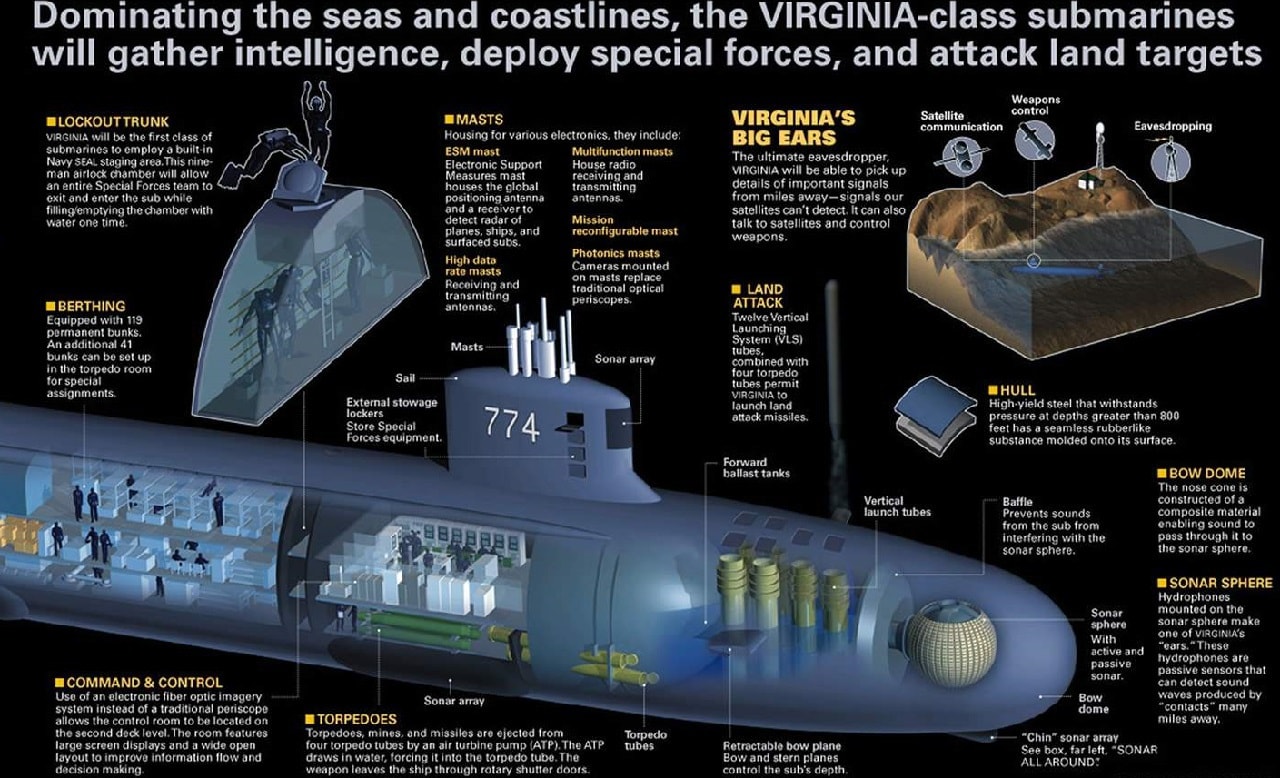
Image of Virginia-class Submarine features. Image Credit: Creative Commons.
The first attempt had failed. In a Norwegian fjord that February, the vehicle would not come back aboard after multiple recovery tries; technicians found a damaged component, shipped the drone home for repair, returned it to the theater, and reloaded it through a first-of-its-kind pierside torpedo tube loading in Norway before the successful runs. Vice Admiral Rob Gaucher, commander of Submarine Forces, said the capability extends a submarine’s sensors “at both shallower and deeper depths than a manned submarine can access.” Then came the twist: within weeks, the Navy canceled the Yellow Moray effort itself, the second tube-recovered drone program to die. The requirement survived. The third design is the one now entering the fleet.
The Third Design Enters the Fleet
The L3Harris approach packages the drone inside a specialized enclosure called the SAFECAP that fits a standard torpedo tube; the Iver4 900 swims out, runs its mission, and autonomously navigates back into the enclosure, with no structural modifications to the submarine required. The drone itself is about 2.5 meters long with a 9-inch carbon-fiber hull, under 230 pounds, rated to 300 meters, running more than 40 nautical miles on standard batteries or over 80 on lithium-ion cells, the first lithium-ion technology approved for Navy submarines, with hot-swap packs for quick turnaround. Payload bays in the nose, tail, and sides swap between sonar, seabed mapping, mine-hunting, and intelligence packages, and Naval News reports the system is being proven through at-sea availabilities with Virginia-class submarines as an underwater “loyal wingman,” untethered and able to range dozens of miles from its host submarine for 16 to 24 hours at a time. The hardware is built in Fall River, Massachusetts, delivered as shipsets of two drones, and the company ties the system’s cross-class interoperability to AUKUS cooperation, a natural fit for a submarine class designed to keep absorbing new capabilities block by block.
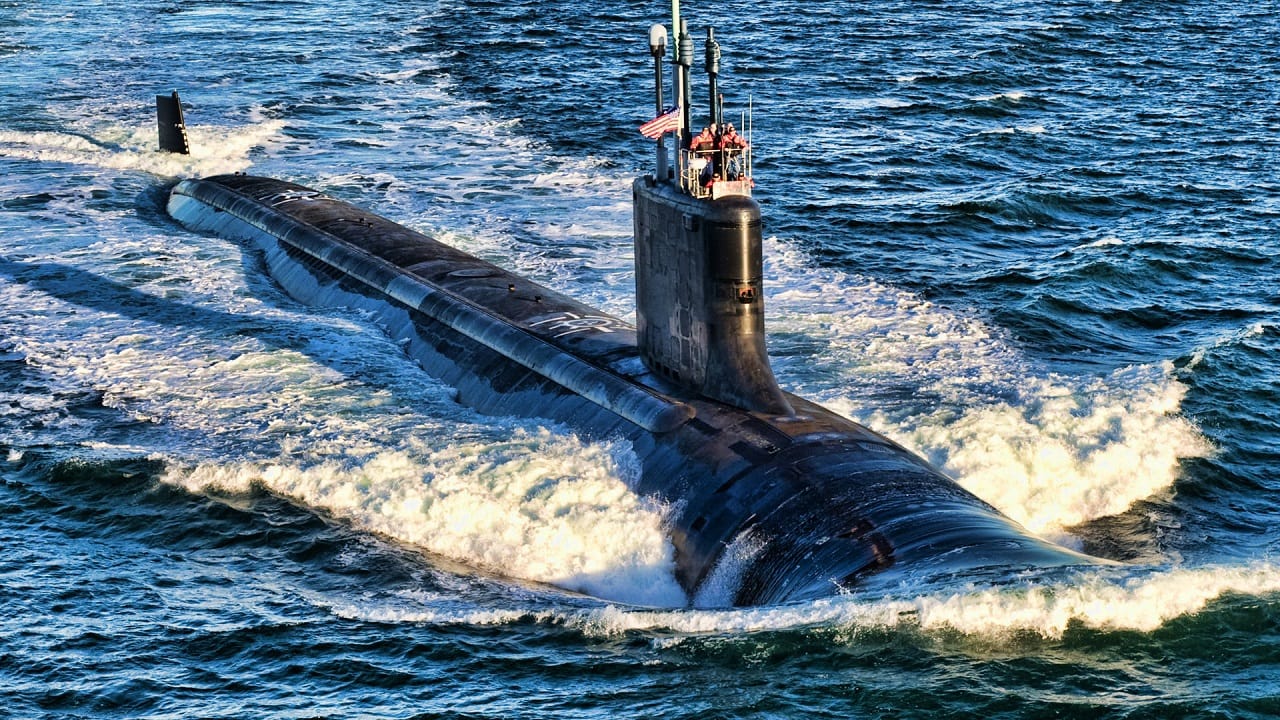
US Navy Attack Submarine. Image Credit: Creative Commons.
Why It Matters More Than One Drone
The strategic logic is arithmetic. The Navy needs 66 attack submarines and has 47, each one among the most heavily tasked assets in the entire fleet.
A recoverable drone turns every torpedo tube into a force multiplier: instead of one submarine sensing from one location, a commander gets distributed eyes across mine-threatened straits, seabed cables, and defended coastlines, missions long recognized as gaps, without risking the multibillion-dollar submarine itself or waiting for new hulls that arrive one commissioning at a time.
It is also a preview: the Navy’s next-generation attack submarine is being sketched with internal space for underwater drones from the keel up.
The honest caveats belong in the record.
The contract’s value and quantities are undisclosed; delivery timelines were declined; the method of communicating with the drone at long range remains publicly unanswered; and this is a fleet evaluation, not yet a standard fit on every hull.
But the hard part is already a demonstrated fact: an American submarine launched a drone through its torpedo tube, took it back aboard while submerged, and did it again the next day.
After three tries, the one-way tube finally works in both directions.
MORE – The Navy’s Most Heavily Armed Warships Are Retiring
About the Author: Harry J. Kazianis
Harry J. Kazianis (@Grecianformula) was the former Senior Director of National Security Affairs at the Center for the National Interest (CFTNI), a foreign policy think tank founded by Richard Nixon based in Washington, DC. Harry has over a decade of experience in think tanks and national security publishing. His ideas have been published in the NY Times, The Washington Post, The Wall Street Journal, CNN, and many other outlets. He has held positions at CSIS, the Heritage Foundation, the University of Nottingham, and several other institutions related to national security research and studies. He is the former Executive Editor of the National Interest and the Diplomat. He holds a Master’s degree focusing on international affairs from Harvard University.

