
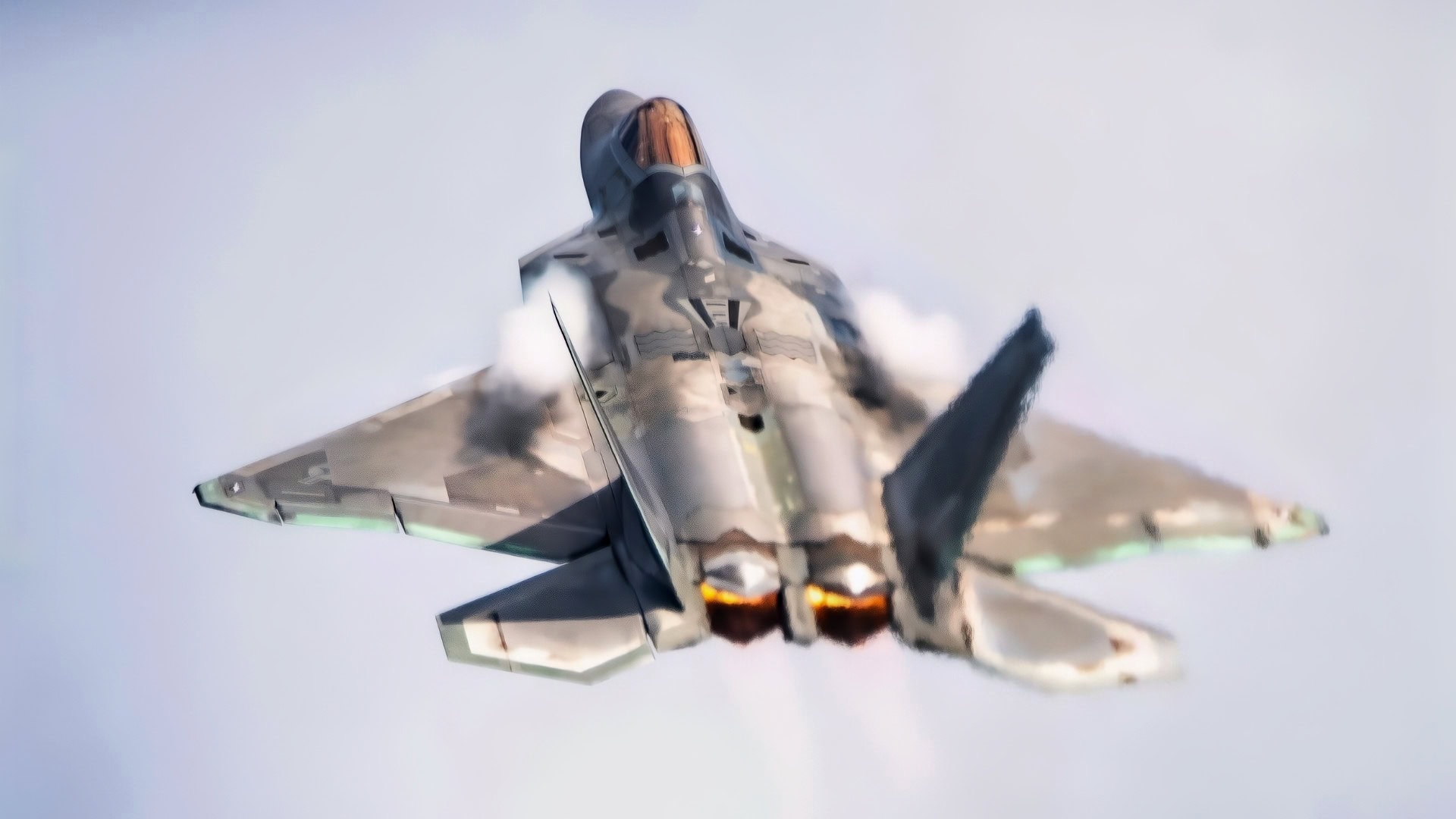
Summary and Key Points: Every stealth aircraft before the Lockheed Martin F-35 paid a brutal price for invisibility: a fragile radar-absorbing skin that degraded almost as soon as it was applied and required enormous hours of maintenance. The F-22 Raptor is the cautionary tale: its coatings are a major reason it costs roughly $60,000 an hour to fly and it struggles to keep half its fleet mission-ready. The F-35 was engineered a decade later to solve exactly that, baking its stealth into the skin itself. The result was so much better that the Air Force went back and put the newer jet’s coatings onto the older one.
The Stealth Fighter Challenge Everyone Forgets
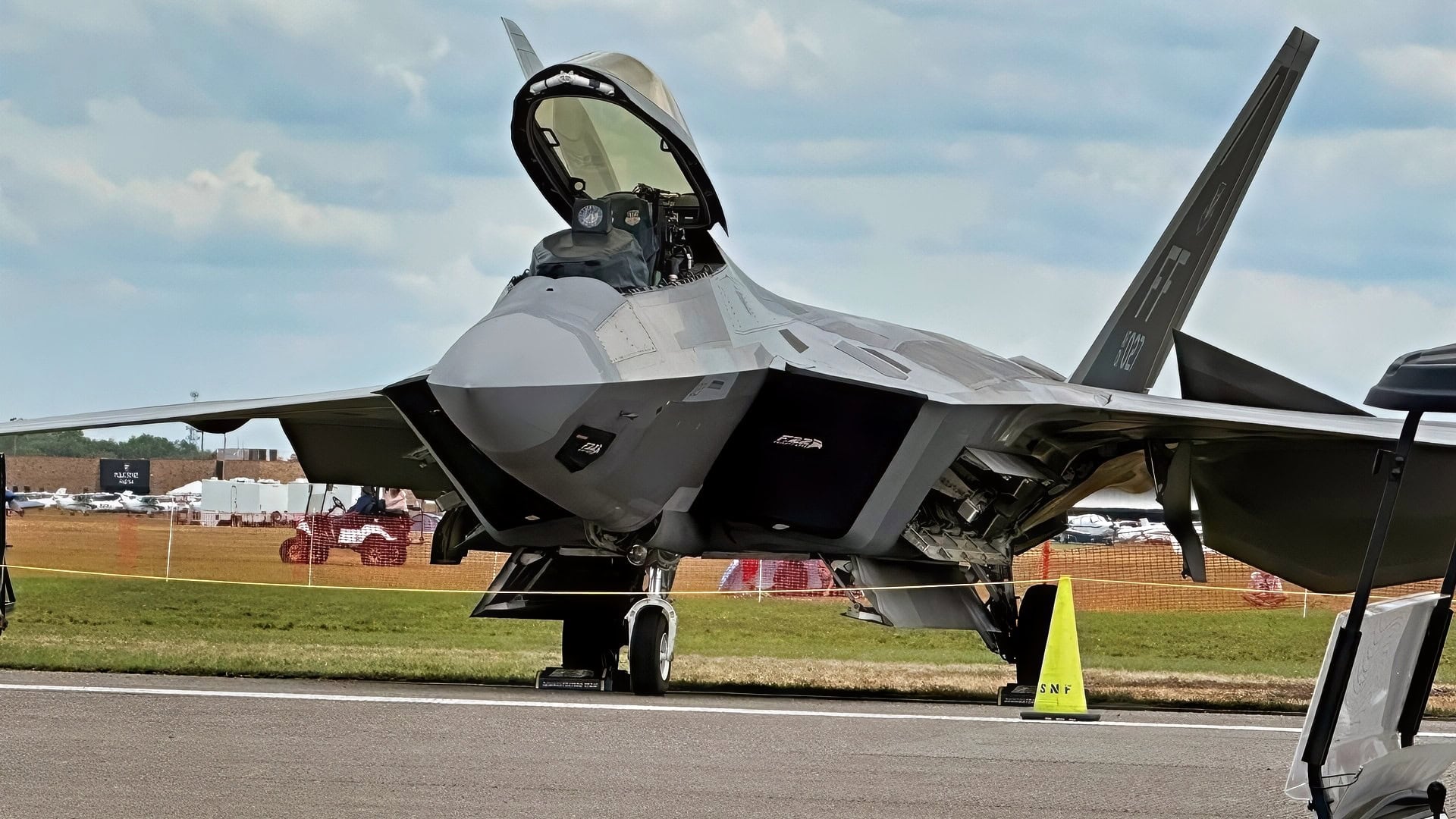
F-22 Raptor Lakeland Florida Airshow. Taken by Harry J. Kazianis on 4/19/2026.
Stealth has always come with a hidden tax, and it is not the one most people imagine. The famous challenge of building a radar-evading aircraft is shaping it correctly, but the enduring, expensive challenge is keeping it stealthy once it is flying. The radar-absorbent materials, or RAM, that soak up enemy radar energy have historically been delicate, and prolonged exposure to weather, heat, and chemicals rapidly degrades a coating’s effectiveness, which is why maintaining low-observable skin has been one of the great burdens of the stealth age. The story of the F-35’s coating is the story of how engineers finally tamed that problem, and it is best understood by starting with the aircraft that suffered from it most.
The Raptor’s Expensive Skin
The F-22 Raptor is one of the most capable air-superiority fighters ever built, and its stealth skin is one of the most demanding maintenance burdens in military aviation. Like the F-117 and B-2 before it, the Raptor relies on radar-absorbent coatings and tapes that must be carefully applied to the seams between its body panels, and those treatments begin degrading almost immediately.
As The War Zone documented in a striking set of images, the RAM on an F-22’s nose can visibly crumble and fall away, corroding under exposure and flight stress. Keeping that skin combat-ready is, by that outlet’s account, one of the costliest aspects of operating an aircraft that runs roughly $60,000 per flight hour and has hovered near a 50 percent mission-capable rate. The maintainers who do the painstaking work, masking, sanding, and re-binding coatings by hand so a jet returns from a training range undetected, have their own nickname in the fleet: “Martians,” for the low-observable world they work in.
Baking Stealth Into the Skin
The F-35 arrived roughly a decade after the Raptor, and its designers treated that maintenance nightmare as a problem to engineer away. Instead of relying primarily on coatings painted and taped onto the surface, the F-35 uses a fibermat RAM baked directly into its multilayer composite skin, so the radar-absorbing property is part of the structure rather than a fragile layer on top. It is more durable, easier to work with, and faster-curing than older topcoats.
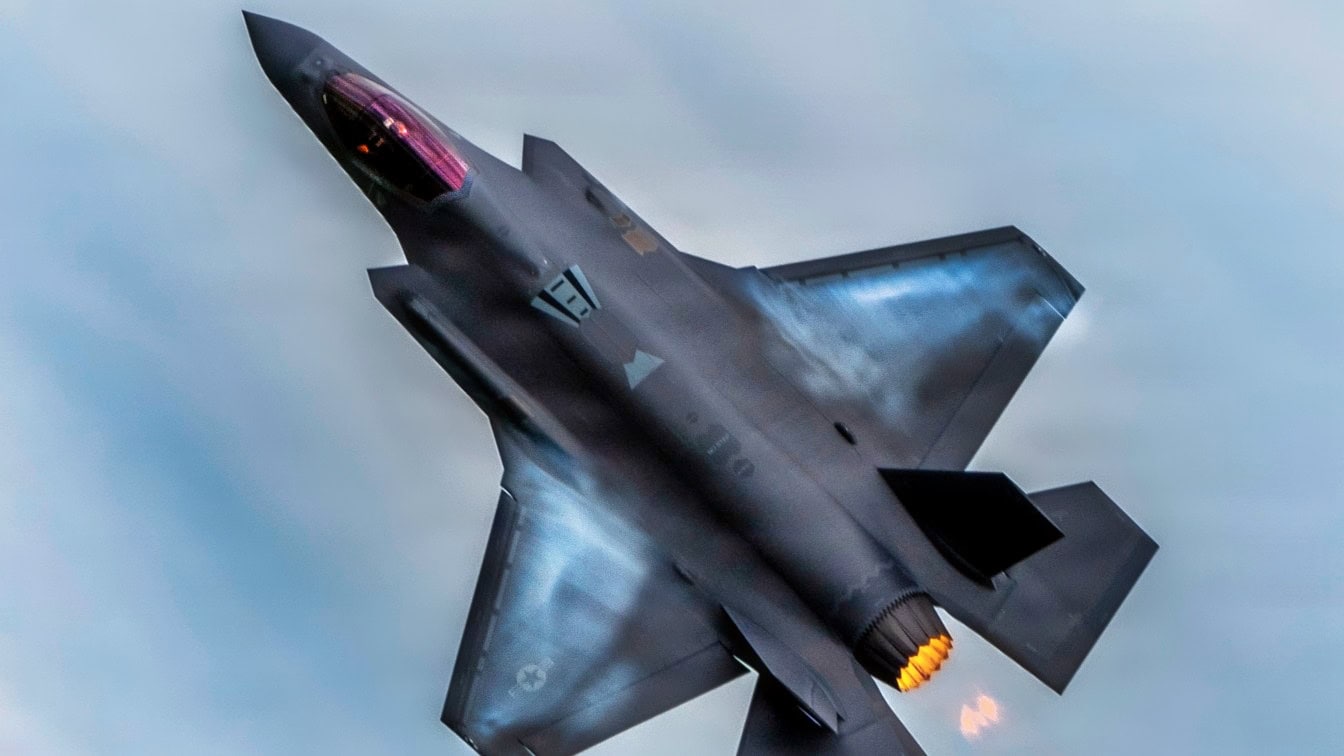
A U.S. Air Force F-35A Lightning II, assigned to the F-35A Lightning II Demonstration Team, performs precision aerial maneuvers during the Columbus Air Show at Rickenbacker Air National Guard Base, Columbus, Ohio, June 21, 2026. The F-35A Demonstration Team showcases the unique aerodynamic capabilities, advanced avionics, and combat readiness of the military’s premier fifth-generation fighter to inspire the next generation of Airmen and demonstrate American air power. (U.S. Air National Guard photo by Airman 1st Class Samir Harris)
The precision of the manufacturing matters just as much as the material. The F-35’s body panels are cut and fitted by multi-axis robots and laser measurements to extraordinarily fine tolerances, so the gaps between panels are a fraction of those on older jets. Because the reflective seams between panels are one of the classic giveaways that radar exploits, shrinking them to near nothing means the airframe is not only absorbent in itself but assembled so tightly that there is little for radar to catch. The payoff is resilience, which the older jets never had. The Navy boasts that the F-35C retains its stealth with minimal low-observable maintenance even in the harshest shipboard conditions, the salt-laden carrier environment that would ruin the coating on a B-2.
The Proof, and the Catch
Lockheed Martin set out to prove the durability with data. Before the jet entered service, the company built a full-scale signature-measurement model, then, according to the same War Zone reporting, simulated the cumulative effect of more than 600 flight hours of “extensive damage” on it. The all-important radar cross-section measurements showed the jet’s stealthy signature remained intact, evidence that accumulated wear does not push the aircraft out of spec. That same resilience explains the “rusty F-35” photos that circulated widely: the brown staining seen on carrier jets was a surface effect on a coating known to contain iron, an oxidation that analysts judged unlikely to meaningfully affect the jet’s stealth qualities, and one the Navy had been developing shipboard repair processes for since well before the F-35C ever deployed.
None of this means the F-35’s stealth is maintenance-free, and it would be misleading to suggest otherwise. Restoring the coating after real damage still means rebuilding both the exact physical contour and the electromagnetic properties of the surface, work that demands validation against precise specifications and, for the more complex repairs, engineering oversight from the manufacturer. As far back as 2012, the Navy was already working out how to perform low-observable repairs aboard ship without specialized facilities, a measure of how involved the task is. Easier than the Raptor is not the same as easy.
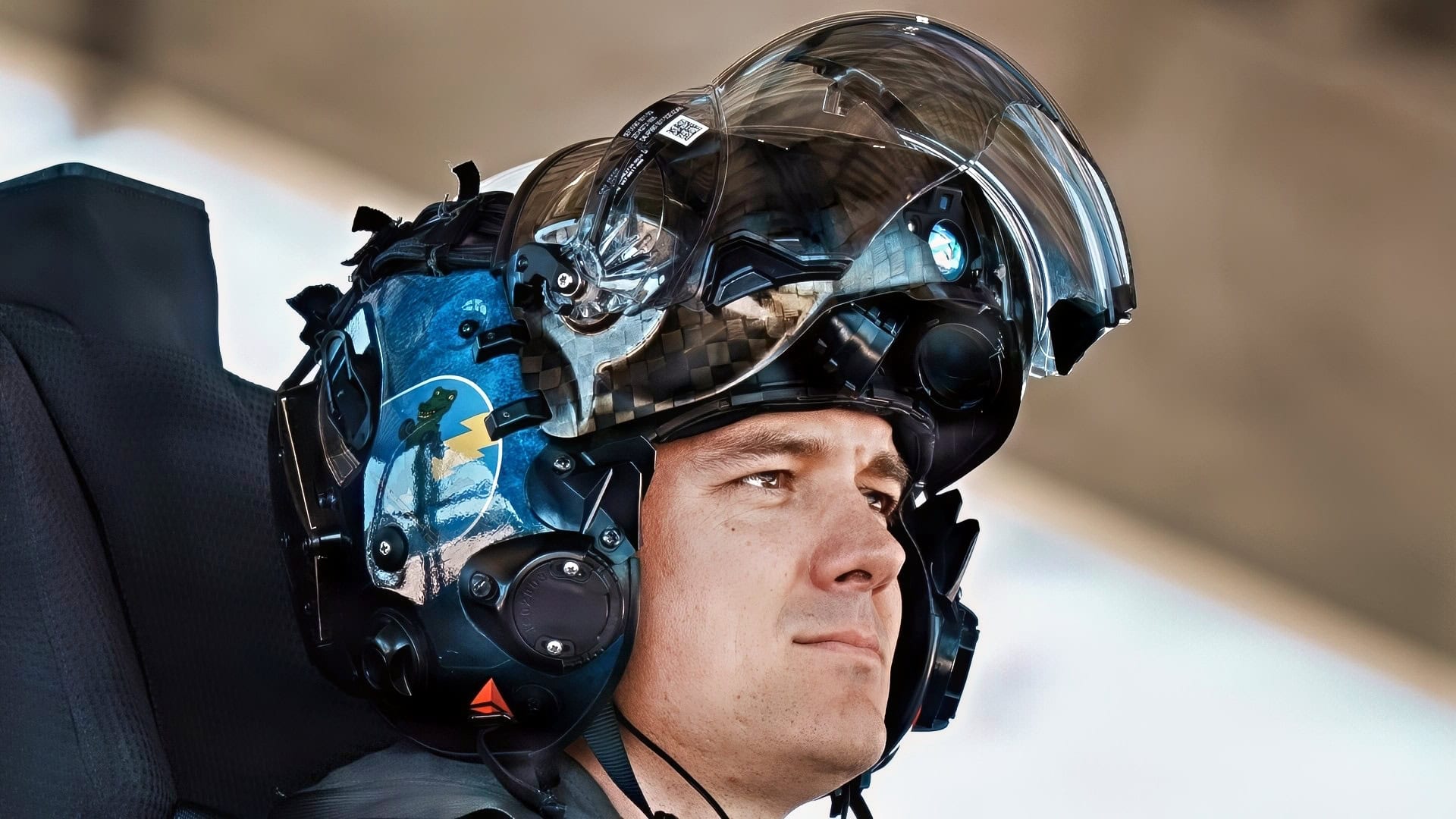
An F-35A Lightning II pilot assigned to the 125th Fighter Wing conducts a preflight maintenance check at Jacksonville Air National Guard Base, Florida, April 15, 2026. Coordination between pilots and maintainers ensures aircraft are mission-ready to execute aerospace control and air defense missions under Air Combat Command. The 125th FW sustains readiness to support federal and state missions, including combat operations, humanitarian assistance, and disaster response. (U.S. Air National Guard photo by Staff Sgt. N.W. Huertas)
The Skin That Upgraded Its Elder
The clearest measure of how well the F-35’s approach worked is what the Air Force did with it. Lockheed Martin has confirmed that some of the more durable low-observable coatings and gap-fillers developed for the F-35 were subsequently incorporated into the F-22, with program officials stating that the newer materials improved the system and reduced the Raptor’s life-cycle cost. The student successfully advanced to a master’s degree.
That trajectory now points forward. The coming B-21 Raider is expected to carry another leap in low-maintenance stealth materials, and the experimental mirror-like coatings glimpsed on a handful of F-22s at Nellis Air Force Base hint at the multi-spectral, easier-to-sustain skins that sixth-generation fighters like the F-47 will demand.
Each generation inherits the same hard lesson the F-22 taught, and the F-35 answered: an aircraft is only as stealthy as the skin you can keep in fighting shape, and the real breakthrough was not making a jet invisible, but keeping it that way without grinding the fleet to a halt.
MORE – The U.S. Navy Wants Nuclear Attack Submarine Drone Motherships
About the Author: Harry J. Kazianis
Harry J. Kazianis (@Grecianformula) was the former Senior Director of National Security Affairs at the Center for the National Interest (CFTNI), a foreign policy think tank founded by Richard Nixon, based in Washington, DC. Harry has over a decade of experience in think tanks and national security publishing. His ideas have been published in the NY Times, The Washington Post, The Wall Street Journal, CNN, and many other outlets worldwide. He has held positions at CSIS, the Heritage Foundation, the University of Nottingham, and several other institutions focused on national security research and analysis. He is the former Executive Editor of the National Interest and the Diplomat. He holds a Master’s degree focusing on international affairs from Harvard University. Kazianis Is Editor-In-Chief of 19FortyFive.

