
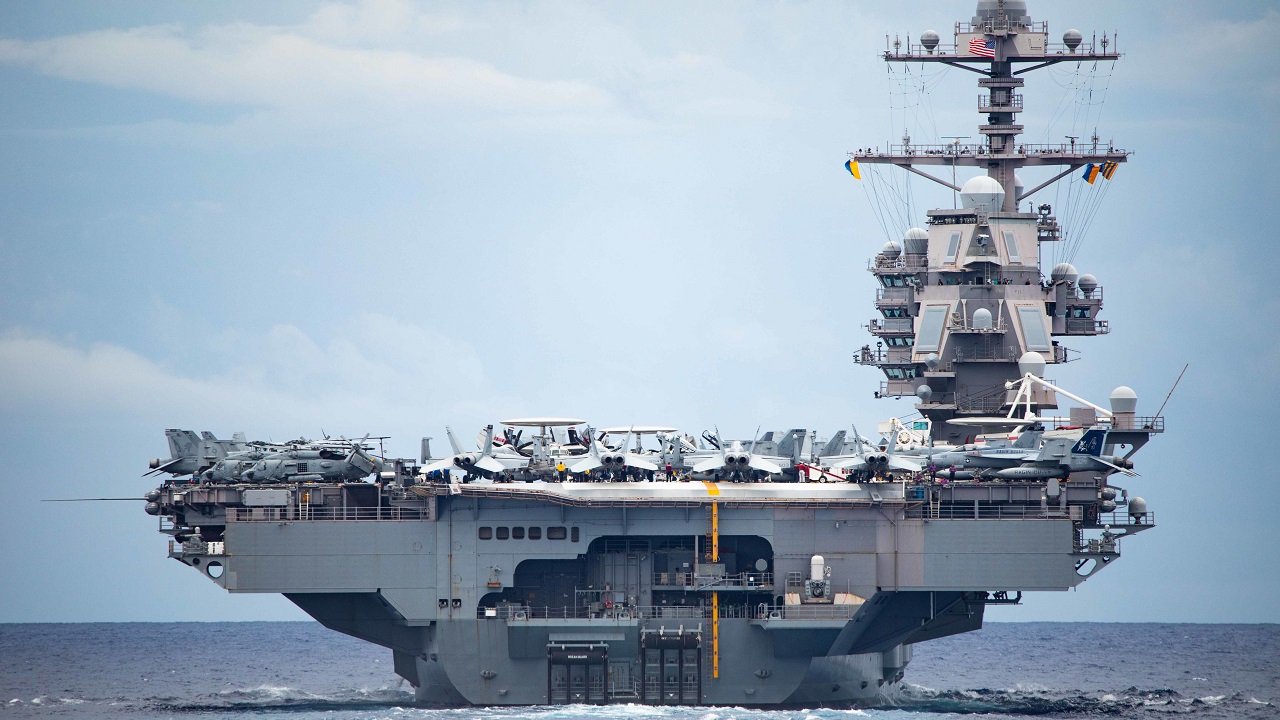
Summary and Key Points: The USS Gerald R. Ford and its sisters are the most advanced and most expensive warships ever built, and they finally work: the lead ship completed a full combat deployment, and the fleet is real. But the story of how America spent roughly $120 billion and the better part of two decades to get here is a case study in almost everything broken about the way the country builds warships. The capability is genuine. The program that produced it is the monument.
The Cost Caps Were a Suggestion: The Navy’s Ford-Class Carrier Mistake?
Start with the two numbers, because they frame everything else. The Ford-class program traces its origins to design work begun in the early 2000s, and the lead ship, ordered in the middle of that decade, did not make its first deployment until 2022. Across that span, the program’s total cost has climbed toward $120 billion, a figure many outlets put at the price of the full class. The lead ship alone cost about $13.3 billion, making it the most expensive warship in history. Neither the time nor the money bought a smooth arrival.
When Congress authorized the Ford class, it tried to hold the line. A 2007 law capped the lead ship at $10.5 billion and every follow-on carrier at $8.1 billion. The Navy blew through both. The Ford came in around $13.3 billion, and the ships behind it have grown more expensive rather than cheaper: the second, USS John F. Kennedy, is pegged at about $13.2 billion, the third, Enterprise, at $14.2 billion, and the fourth, Doris Miller, at $15.2 billion, with unit costs still creeping upward.
The oversight was worse than the overruns. The Government Accountability Office found the lead ship ran more than $2 billion over its own estimate, judged the Navy’s cost estimate for the Kennedy unreliable, and reported that over an eleven-year stretch, the program took in more than $15 billion without a single independent cost estimate.
The GAO called it “one of the most expensive programs in the defense portfolio,” and for over a decade, the Navy funded it without the basic financial checks such a program is supposed to have.
Aircraft Carrier Problems: The Systems That Would Not Work
The money bought technology that, for years, did not do what it promised. The Ford traded steam catapults for an Electromagnetic Aircraft Launch System, and the results were not close. EMALS was required to run 4,166 launches between critical failures; in testing it managed 181. The Advanced Arresting Gear that stops landing aircraft was supposed to cycle 16,500 times between failures; it broke down after roughly 450. The Navy had designed the ship with a fourth arresting engine for redundancy, then deleted it as a cost-saving measure, and testers later concluded the ship needed it back.
The trouble ran deeper than two systems. The advanced weapons elevators, meant to rush ordnance from the magazines to the flight deck, were delivered non-functional; the first Ford entered service with elevators that did not work, and even after fixes, the system logged 109 failures across about 20,000 movements. During one carrier qualification, all four jet-blast deflectors failed at once, felled by corroded fasteners, sending the ship back to port. The one-off dual-band radar struggled during a pre-deployment exercise and is being entirely stripped out of the follow-on ships.
As of the Pentagon’s most recent testing report, the Navy’s own evaluators still wrote that catapult and arresting-gear reliability continues to “adversely affect sortie generation” and that the crew remained dependent on off-ship contractor support to keep the systems running.
The Root Cause: Everything at Once
None of this was bad luck. It was a choice. Instead of improving a proven carrier one system at a time, the way the Nimitz class got better across its run, the Navy packed more than twenty new technologies into a single hull: new catapults, new arresting gear, new elevators, a new reactor, a new radar, sweeping automation, and a redesigned flight deck.
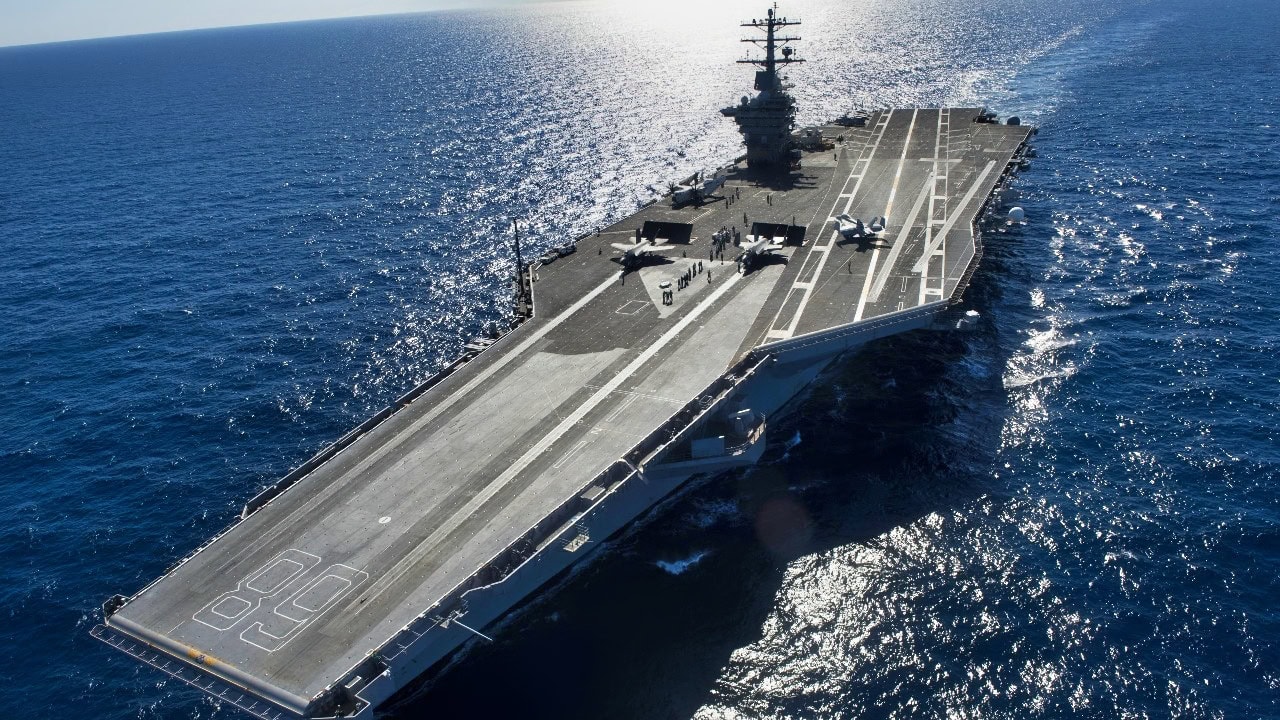
Ford-Class. Image Credit: Creative Commons.
Worse, it began building the ship before the technologies were mature, so systems were designed while being constructed and fixed after delivery. The lead ship was commissioned in 2017 and did not deploy until October 2022, more than five years later. President Trump, who has repeatedly derided the electromagnetic catapults and pushed to replace them with steam, is only the loudest voice in a long line of critics.
The Bill Comes Due at the Worst Time
The strategic timing sharpens the indictment. With USS Nimitz retired and the Kennedy running two years late, the carrier fleet has dropped to ten hulls against a legal floor of eleven. The Ford itself just returned from a record deployment and pulled into the shipyard for repairs that include fixing damage from an onboard fire. Every one of these ships concentrates more than $13 billion of national treasure into a single target, at a moment when cheap missiles and drones are multiplying.
The Capability Is Real. The Process Is the Monument
Here is the fair counterweight, and it matters. The Ford is a genuinely capable warship. On its 2023 deployment, it flew thousands of sorties its own testers judged sufficient for combat tasking, and its design delivers a sortie rate a third higher than the Nimitz with 1,100 fewer sailors aboard, with tripled electrical capacity meant to power the lasers and sensors of the coming decades. The ships that follow are absorbing the lead ship’s hard lessons, and the per-hull cost should ease as production settles. A first-of-class warship of this complexity was never going to be painless.
But “painless” and “this” are different things. The Ford class did not overrun a cost cap; it obliterated one Congress wrote into law. It did not slip a schedule by months; the lead ship took over five years from commissioning to first deployment.
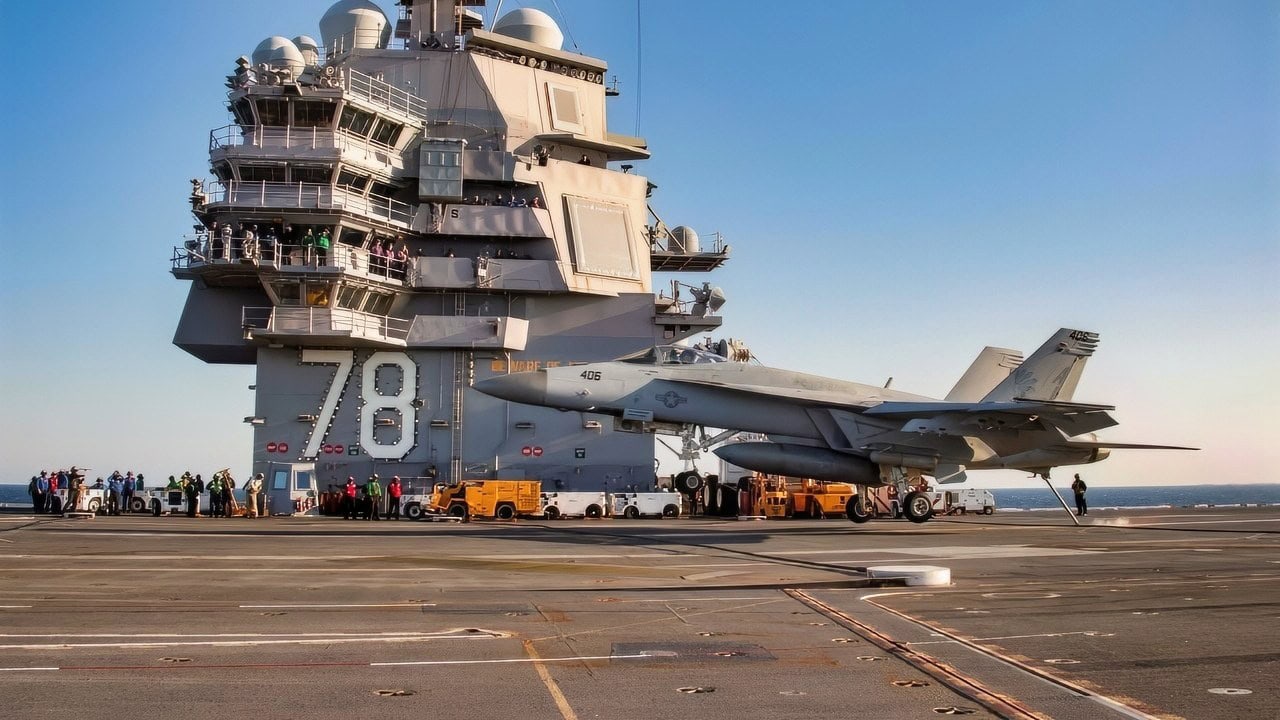
USS Gerald R. Ford Supercarrier Flight Deck. Image Credit: Creative Commons.
Its signature systems did not underperform by a margin; they missed reliability targets by more than an order of magnitude.
The finished carrier is a marvel, and the two decades and $120 billion it took to build, the blown caps, the eleven years without a cost estimate, and the systems that could not reliably launch, land, or arm the aircraft they were built around, are a monument to how far America has drifted from building a warship on time and on budget.
The ship works. The way the country got there is the warning.
About the Author: Harry J. Kazianis
Harry J. Kazianis (@Grecianformula) was the former Senior Director of National Security Affairs at the Center for the National Interest (CFTNI), a foreign policy think tank founded by Richard Nixon based in Washington, DC. Harry has over a decade of experience in think tanks and national security publishing. His ideas have been published in the NY Times, The Washington Post, The Wall Street Journal, CNN, and many other outlets. He has held positions at CSIS, the Heritage Foundation, the University of Nottingham, and several other institutions related to national security research and studies. He is the former Executive Editor of the National Interest and the Diplomat. He holds a Master’s degree focusing on international affairs from Harvard University.

