
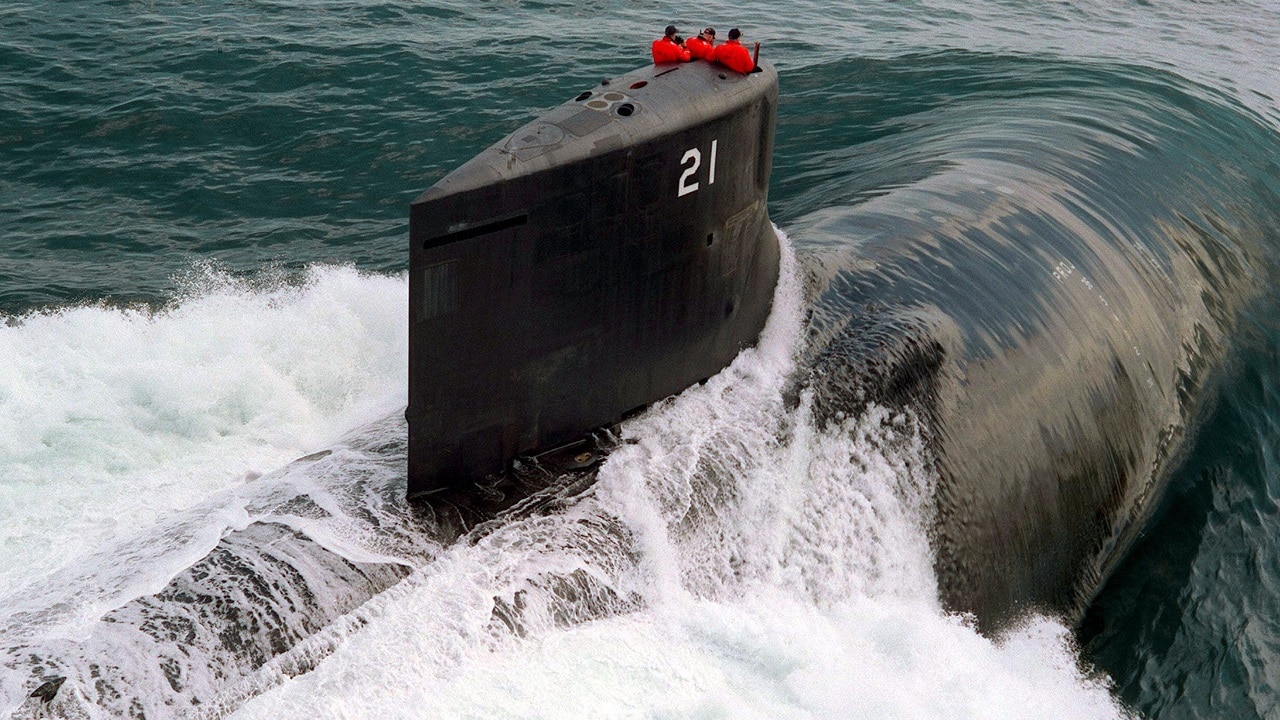
America’s Submarine Shortage Is Worse Than the Hull Count Says. The Repair Yards Can’t Keep Up Either: The famous number in America’s submarine crisis is the construction gap: the Navy needs 66 attack boats and is heading toward 46. But that number describes only half the problem, and not the worst half. A large share of the boats the Navy already owns cannot go to sea because the yards that repair them cannot keep up. Roughly 37 to 40 percent of the attack fleet is tied up waiting for or stuck in maintenance at any given time, which means the force that can actually deploy is smaller than the hull count suggests. The country is losing submarines at both ends of their lives, slow to build and slow to fix, and the repair bottleneck is the piece almost no one talks about.
The Navy’s Submarine Repair Challenge
That availability figure is not a stray statistic. A June 2023 Congressional Research Service report found 37 percent of the nuclear attack fleet unavailable and the trajectory worsening, and U.S. Naval Institute analysis has pegged the share of boats that cannot deploy for maintenance at nearly 40 percent. Either way, something close to four in ten attack submarines are not available to their commanders at a given moment, and the cause is not the enemy. It is the shipyards.
The scale of the loss is measured in a metric the Navy tracks but rarely advertises: maintenance delay days, the cumulative count of how far depot work slips past its planned completion date. The Government Accountability Office found that between fiscal years 2008 and 2018, attack submarines racked up 10,363 days of idle time and maintenance delays due to getting into and out of the shipyards. Across the whole fleet, the figure has since grown to more than 33,700 excess maintenance days since 2014. Those are not abstractions. A submarine sitting pierside waiting for a drydock is not tracking a Chinese boat or gathering intelligence, and every hull in extended maintenance is one fewer at sea. The delays turn a fleet that looks adequate on paper into one that is chronically short of ships at sea.
Four Yards, All Older Than the Problem
The heart of the bottleneck is a simple fact of infrastructure: America maintains its nuclear submarines at just four public shipyards, Norfolk, Portsmouth, Puget Sound, and Pearl Harbor, and all four are more than a century old. The oldest active graving dock in the system, Dry Dock 1 at Norfolk, has been in continuous use since 1834, built to service ships of sail. These yards were never laid out for the scale and complexity of modern nuclear overhauls, and the Navy is now trying to run twenty-first-century maintenance through nineteenth- and twentieth-century plants.
The delays are not caused by any single failure but by several that compound. Overhauls routinely uncover unplanned work only after planning is supposedly finished, because no one knows the true condition of a thirty-year-old boat until it is opened up. The workforce is thin and green: a post-pandemic hiring surge brought in thousands of new tradespeople, but nuclear-certified welders, pipefitters, and electricians take years of supervised experience to develop, and experienced workers are retiring faster than replacements reach proficiency. Parts shortages stall work in progress. And underneath all of it sits the capacity trap: the four yards have run above 100 percent of their rated capacity for years, which means there is no slack anywhere in the system, so a slip on one boat cascades into delays for the next.
Billions Spent on Boats That Can’t Sail
The financial waste is its own scandal. In March 2026, the GAO reported that the Navy has spent roughly $4.2 billion over the past decade supporting idle submarines, crews and tenders, and upkeep for boats that provide no operational capability because they are waiting on or trapped in maintenance. That figure has nearly tripled from the $1.5 billion the GAO tallied for the previous decade, and the trajectory is alarming.
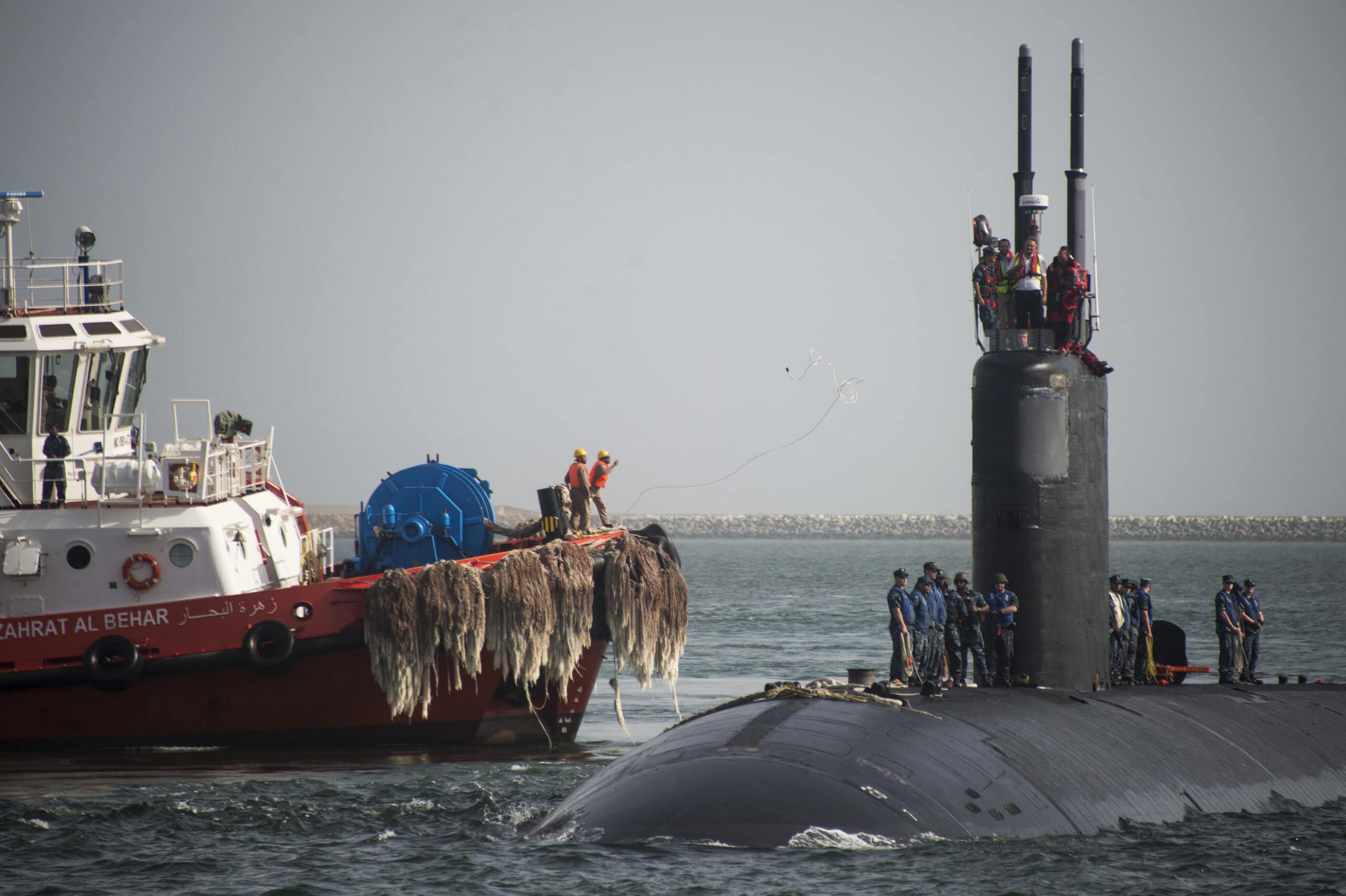
The Los Angeles-class attack submarine USS Boise (SSN 764) pulls into port in Duqm, Oman. Boise is the first nuclear vessel to conduct a port visit in Oman since 1996 and it will be the precursor to future nuclear powered vessels conducting port calls in Oman. (U.S. Navy photo by Mass Communication Specialist 2nd Class Daniel M. Young/Not Reviewed)
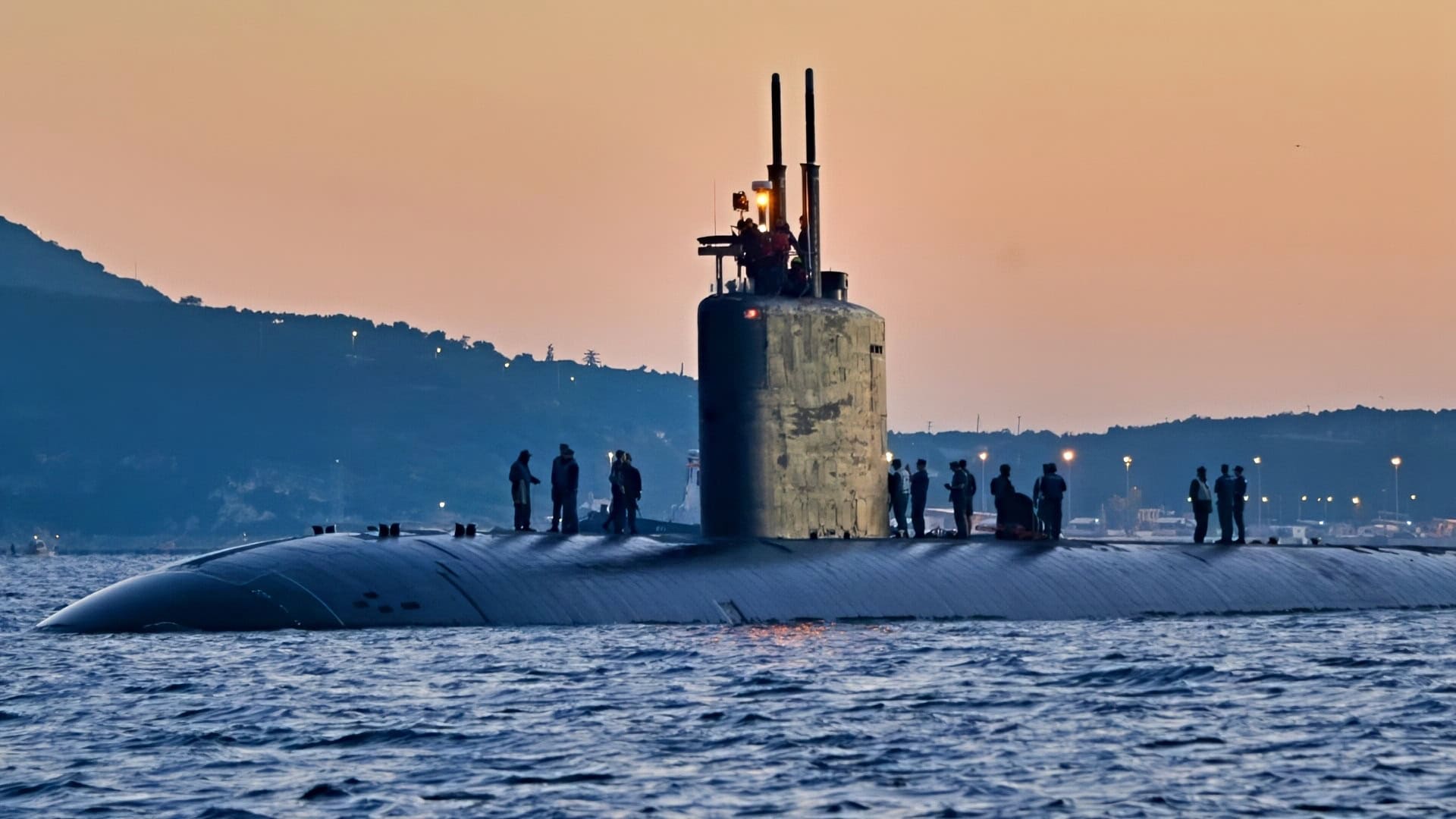
USS Boise (SSN 764) enters Souda Bay, Greece, during a scheduled port visit Dec. 23, 2014. Boise, a Los Angeles-class submarine, homeported in Norfolk, is conducting naval operations in the U.S. 6th Fleet area of operations in support of U.S. national security interests in Europe. (U.S. Navy photo by Mass Communication Specialist 2nd Class Jeffrey M. Richardson/Released)
Two boats put faces on the numbers. The USS Boise sat idle from 2015, lost its dive certification in 2017, waited nearly nine years for an overhaul that finally began in 2024, and was then mothballed in April 2026 after one patrol in eleven years, its repair judged not worth the cost. The Seawolf-class USS Connecticut, holed by an undersea seamount in 2021, remains in drydock at Puget Sound, with its return now slipped to late 2026 or early 2027, roughly 15 years out of service over its lifetime. Neither is a freak accident. Both are what a system with no surge capacity does to boats that need complex work.
The Relief Valve That Isn’t There
The obvious fix is to send overflow work to private yards, and the Navy has tried. The problem is that the two private shipyards capable of nuclear submarine work, Newport News and Electric Boat, are the same two yards already maxed out building Columbia and Virginia-class boats. Construction and repair draw on a shared pool of scarce labor, suppliers, and drydock space, so shifting maintenance to private yards mostly shifts the bottleneck rather than relieving it. The acting Chief of Naval Operations put the constraint bluntly to the Senate: asked what he needed, he said he needed more yards, for both construction and repair. There is no third nuclear yard to absorb the overflow; the private industrial base has shrunk from more than twenty major builders in the 1980s to roughly six, and a new nuclear-capable yard is a decade-plus undertaking that Congress cannot appropriate into existence on the timeline the China problem runs on.
Is the Fix Working?
The Navy is not ignoring the problem, and honesty requires saying so. It has poured money and attention into recovery, and it worked once: a former CNO noted that delay days were cut from 7,700 to about 3,000 in three years. The centerpiece of the long-term fix is the Shipyard Infrastructure Optimization Program, a twenty-year, roughly $21 billion effort to rebuild the four public yards, and it is finally moving from plans to construction, with a $377 million contract in September 2025 to upgrade Dry Dock 4 at Puget Sound.
The trouble is scale and clock speed. The Congressional Budget Office projects that SIOP, fully executed, yields only about a 5 percent efficiency gain, a real improvement but not one that closes a 40 percent availability hole. The GAO found the Navy could not even produce a full cost-and-schedule estimate for the program until fiscal 2025. And twenty years is longer than the window in which a Pacific confrontation with China is widely thought to be most dangerous. The fix is genuine, funded, and probably too slow.
That is what makes the current moment so telling. In the same stretch of 2026 that the Navy walked away from the Boise for want of affordable repair, its FY27 budget request pushed shipbuilding to $65.8 billion, more than double the prior year’s enacted level. Washington has decided it can spend its way toward more submarines. What it has not yet solved is how to keep the ones it already owns out of the drydock and in the water, and until it does, every new hull it builds will sail into the same overwhelmed system that is quietly shrinking the fleet from within.
About the Author: Harry J. Kazianis
Harry J. Kazianis (@Grecianformula) was the former Senior Director of National Security Affairs at the Center for the National Interest (CFTNI), a foreign policy think tank founded by Richard Nixon based in Washington, DC. Harry has over a decade of experience in think tanks and national security publishing. His ideas have been published in the NY Times, The Washington Post, The Wall Street Journal, CNN, and many other outlets. He has held positions at CSIS, the Heritage Foundation, the University of Nottingham, and several other institutions related to national security research and studies. He is the former Executive Editor of the National Interest and the Diplomat. He holds a Master’s degree focusing on international affairs from Harvard University.