
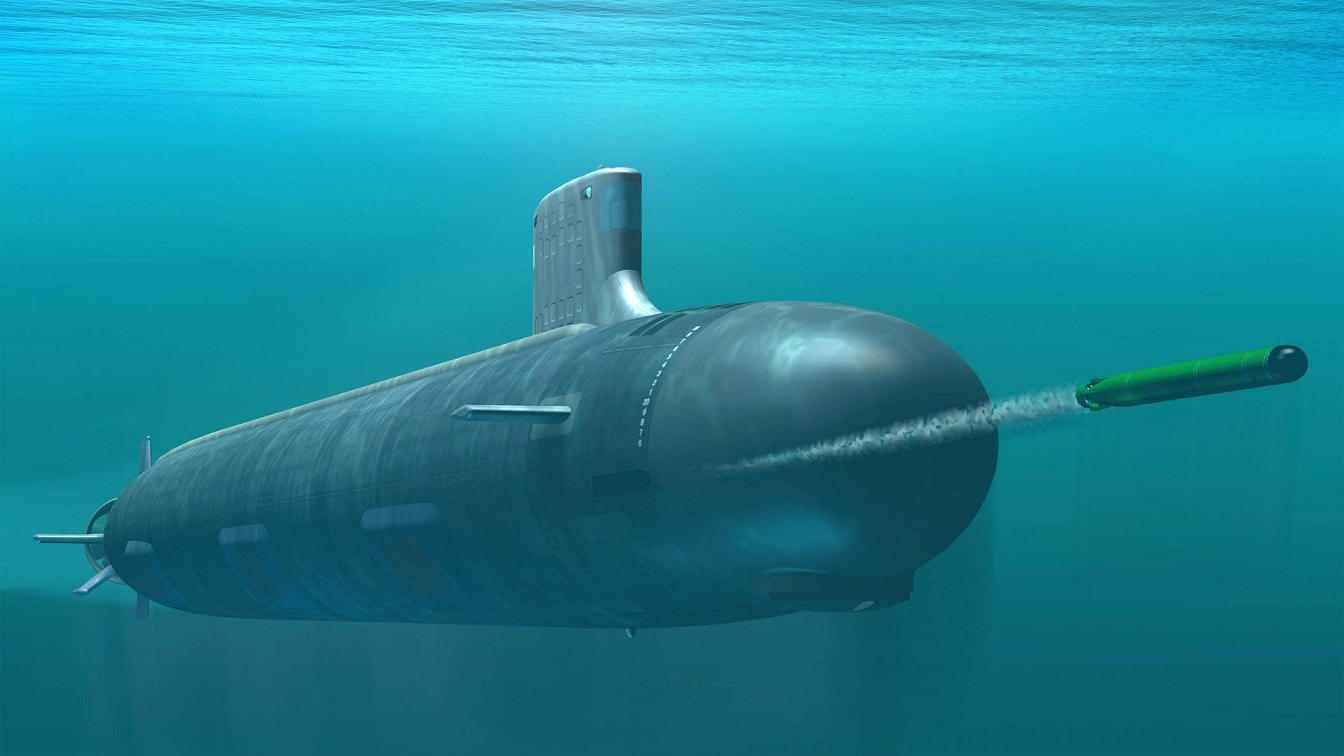
The Threat to U.S. Navy Submarines Is “Inside the House”: It’s Not Torpedoes
In most people’s minds, the biggest threats to American submarines (or naval assets more generally) might be something like a torpedo run, a close-quarters fight, or new sensors that make it easier to detect them.
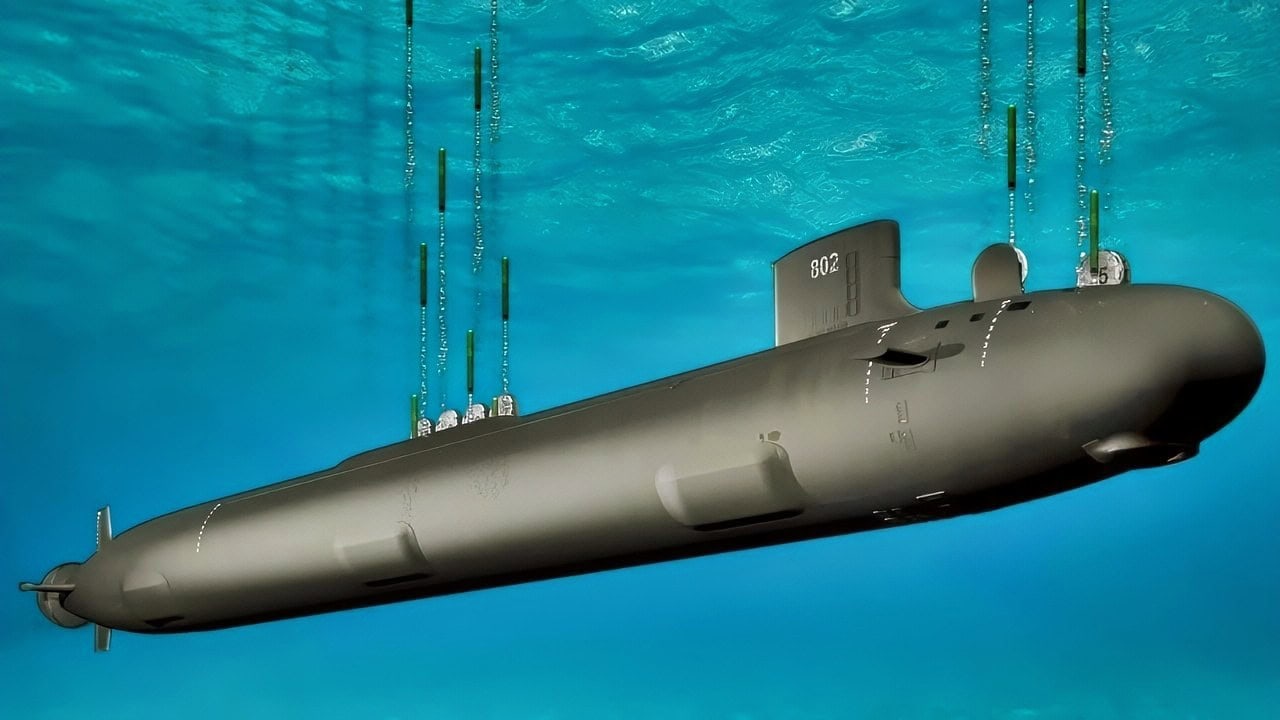
Columbia-Class SSBN USN. Image Credit: Creative Commons.
The reality, however, is much less cinematic: the most immediate constraint on U.S. undersea power and readiness today is, in fact, America’s struggling industrial base.
A growing share of America’s attack submarine fleet is being sidelined by extended maintenance and repair cycles, driven largely by shipyard capacity limits, workforce constraints, and supply-chain problems. That reality is not disputed and is being increasingly discussed by government oversight bodies and analysts.
In national security terms, the risk here is pretty simple: submarines don’t need to be sunk to be rendered useless. If they are stuck in depot maintenance for extended periods of time, they are not out tracking adversary submarines or gathering intelligence. Every submarine in maintenance is one less active vessel in the fleet – and it’s a persistent problem.
Understanding Today’s Maintenance Delays
The Navy and Congress track submarine readiness partly through maintenance delay days – a cumulative measure of how much scheduled depot-level repair work slips past planned completion dates.

An artist rendering of the future U.S. Navy Columbia-class ballistic missile submarines. The 12 submarines of the Columbia-class will replace the Ohio-class submarines which are reaching their maximum extended service life. It is planned that the construction of USS Columbia (SSBN-826) will begin in in fiscal year 2021, with delivery in fiscal year 2028, and being on patrol in 2031.
A Congressional Research Service review of submarine readiness trends summarized comments from then-Rear Adm. Jonathan Rucker, who said the attack submarine force carried roughly 1,100 maintenance delay days at the end of fiscal year 2022, compared with about 1,500-1,600 delay days in FY2019, and warned that late-arriving materials alone could add 100 or more days of delay to individual overhauls. In other words, even when work is properly planned, parts and industrial delays can still keep submarines in the yard longer than expected.
Those trends from 2022 have not changed in recent years, either. For example, in 2024, USNI reports described how the Navy awarded a long-delayed repair contract for USS Boise more than seven years after the overhaul was originally expected to begin – a good illustration of how yard congestion and capacity limits can sideline an attack submarine for almost a decade.
The Navy is well aware of the problem and is attempting to address it through funding and reforms aimed at reducing maintenance delays, as well as long-term modernization at public shipyards. Problems, however, persist to this day – and when combined with labor shortages and supply-chain constraints, it’s hard to see where it ends.
Public Shipyards Are a Bottleneck
America’s nuclear submarine fleet depends heavily on four public shipyards for complex depot maintenance – Norfolk, Portsmouth, Puget Sound, and Pearl Harbor. When those yards fall behind, the operational fleet feels the impact immediately – and government oversight has repeatedly documented that slippage.
A GAO review published in 2020, for example, found the Navy’s four shipyards completed 38 of 51 maintenance periods late for aircraft carriers and submarines with planned completion dates in FY 2015-FY 2019 – 75 percent – producing 7,424 total days of maintenance delay. For submarines specifically, the report found an average delay of 225 days per instance of late availability. The GAO also found that the delays were caused by systemic factors, ranging from unplanned work discovered after planning is “finished” to shipyard workforce performance and capacity constraints.
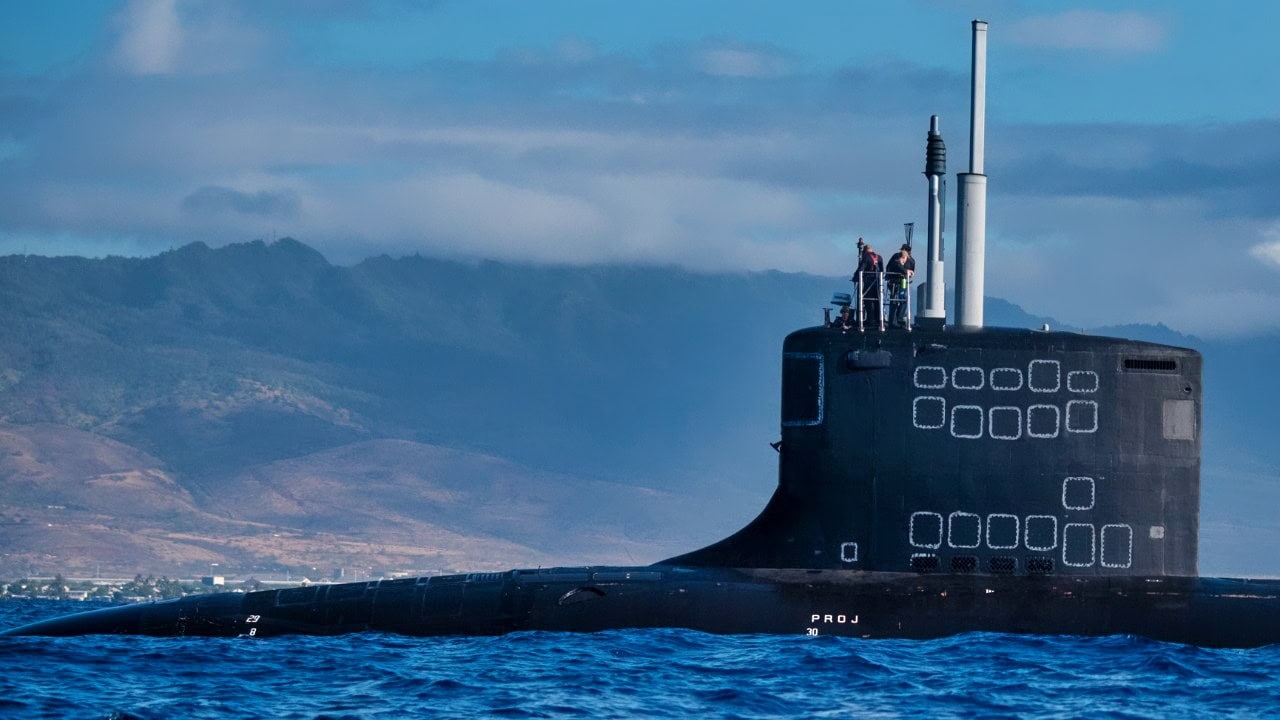
(July 9, 2018) – Multi-national Special Operations Forces (SOF) participate in a submarine insertion exercise with the fast-attack submarine USS Hawaii (SSN 776) and combat rubber raiding craft off the coast of Oahu, Hawaii during Rim of the Pacific (RIMPAC) exercise, July 9. Twenty-five nations, 46 ships and five submarines, about 200 aircraft, and 25,000 personnel are participating in RIMPAC from June 27 to Aug. 2 in and around the Hawaiian Islands and Southern California. The world’s largest international maritime exercise, RIMPAC provides a unique training opportunity while fostering and sustaining cooperative relationships among participants critical to ensuring the safety of sea lanes and security of the world’s oceans. RIMPAC 2018 is the 26th exercise in the series that began in 1971.` (U.S. Navy photo by Mass Communication Specialist 1st Class Daniel Hinton)
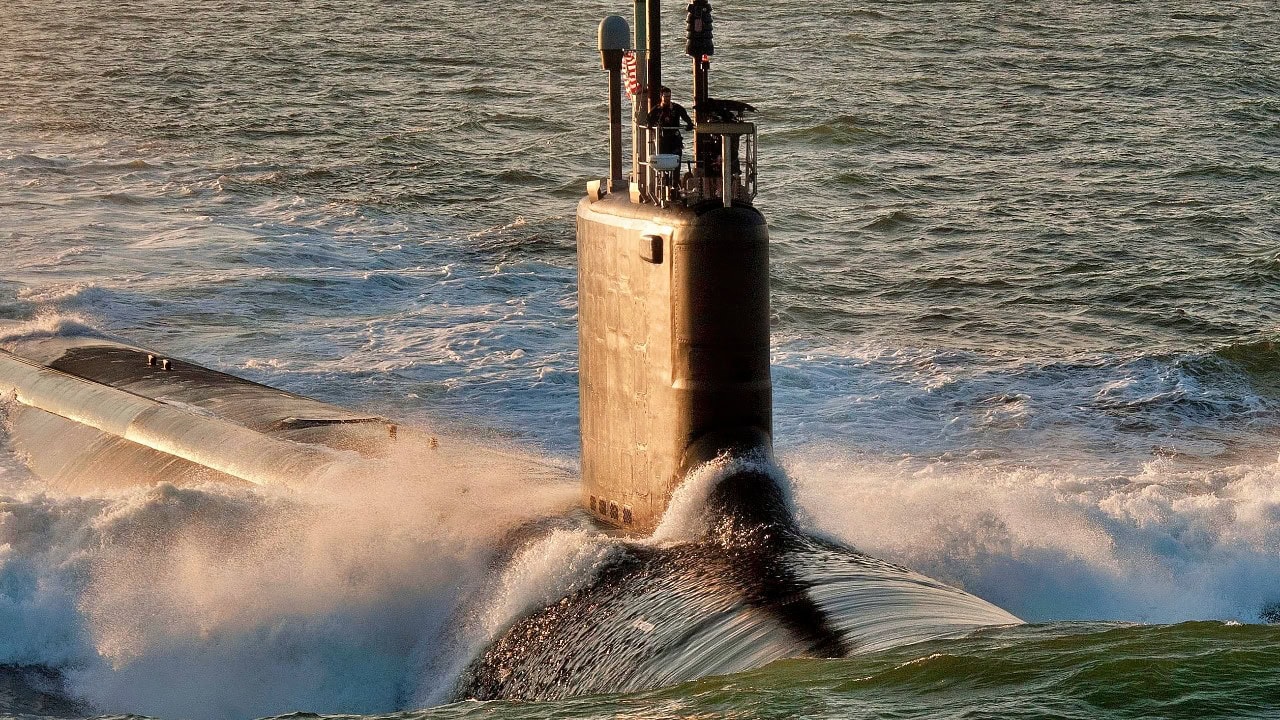
U.S. Navy Virginia-Class Submarine.
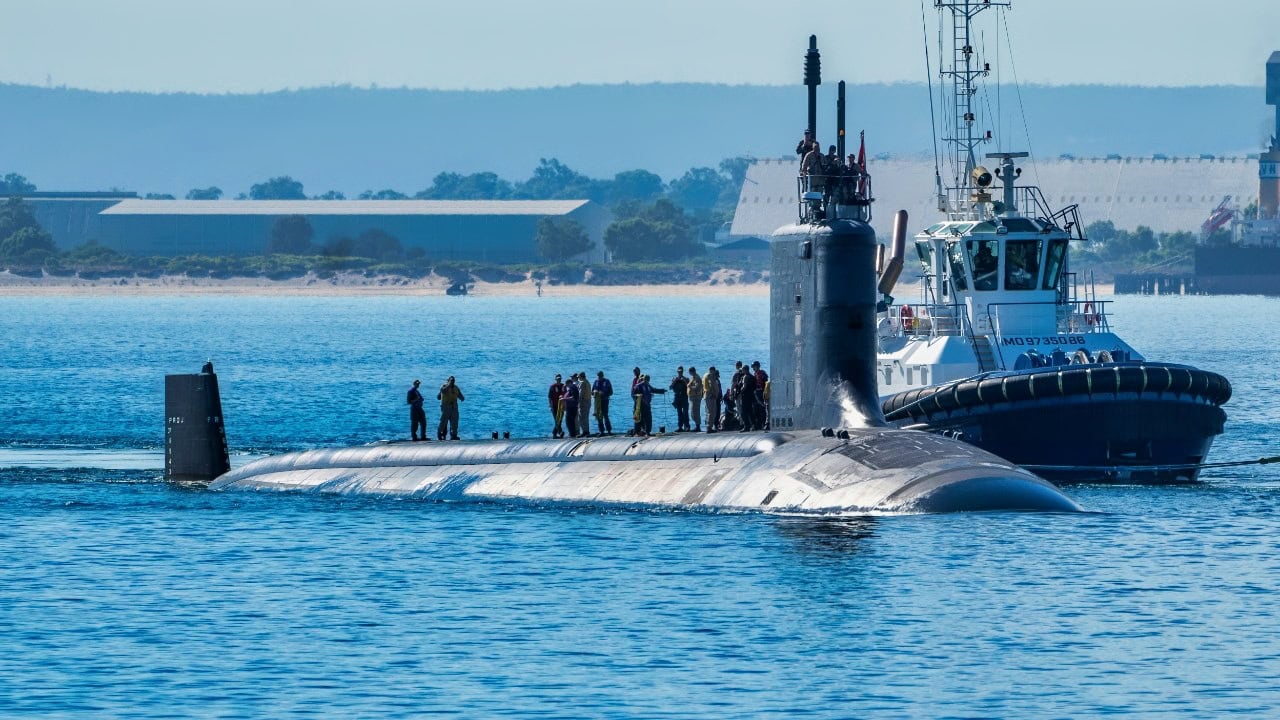
Western Australia, Australia (Feb. 25, 2025) The Virginia-class fast-attack submarine USS Minnesota (SSN 783) prepares to moor at HMAS Stirling, Western Australia, Australia, Feb. 25, 2025. Minnesota arrived in Western Australia kicking off the first of two planned U.S. fast-attack submarine visits to HMAS Stirling in 2025. Minnesota is currently on deployment supporting the U.S. 7th Fleet, the U.S. Navy’s largest forward-deployed numbered fleet, operating with allies and partners in preserving a free and open Indo-Pacific region. (U.S. Navy photo by Lt. James Caliva)
This Looks Like A National Security Risk
A 2024 shipbuilding review conducted by the U.S. Navy concluded that major programs – including the Columbia-class ballistic missile submarine (SSBN) and the Virginia-class attack submarine (SSN) – are running late as a result of workforce and supply-chain challenges.
The Navy projected that the first Columbia would be delivered 12 to 16 months after its contractual delivery date.
The review, ordered by U.S. Navy Secretary Carlos Del Toro in January of that year, found that five classes of ships under construction for the U.S. Navy were years behind schedule. The problems were so severe that the Navy was forced to consider extending the life of the Ohio-class nuclear-capable submarines to bridge the gap.
Why the Problem Persists
The risk here is compounded by the fact that submarine construction and submarine maintenance draw from overlapping pools of already scarce labor, specialized suppliers, and facilities. There is great business to be made in this industry for companies that are capable of supplying these facilities, expertise, and products – but they simply don’t exist, and with every delay in construction, there are inevitably cascading effects that ripple through the maintenance cycles, too.
Meanwhile, the Navy is investing heavily to modernize the shipyards themselves through the Shipyard Infrastructure Optimization Program (SIOP) – a multi-year, multi-billion-dollar push to help facilitate the more rapid return of submarines to the fleet.
Work is ongoing: the Navy and Naval Facilities Engineering Systems Command continue modernization work across all four public yards, including recent awards such as a $377 million contract in September 2025 for upgrades to Dry Dock 4 at Puget Sound. In FY 2025, the Navy also began spending SIOP funds on real construction work, including more than $8.6 million for facility upgrades at Portsmouth Naval Shipyard in Maine, one of the yards that handles nuclear submarine maintenance.
And unless these shipyard and industrial base investments continue to move quickly, the United States risks allowing a self-inflicted readiness shortfall to become the most immediate threat to its undersea deterrent and combat power.
About the Author: Jack Buckby
Jack Buckby is a British researcher and analyst specialising in defence and national security, based in New York. His work focuses on military capability, procurement, and strategic competition, producing and editing analysis for policy and defence audiences. He brings extensive editorial experience, with a career output spanning over 1,000 articles at 19FortyFive and National Security Journal, and has previously authored books and papers on extremism and deradicalisation.