
The Navy’s Last Three New Warships All Failed. Government Auditors Say the Replacements Are Repeating the Same Mistake: The U.S. Navy’s submarine crisis is a story of being unable to build and repair boats fast enough. Its surface-ship crisis is different and, in one way, worse: the service keeps designing new warships, and the new warships keep failing. Three flagship surface programs this century, the Littoral Combat Ship, the Zumwalt destroyer, and the Constellation frigate, each ended in cancellation, truncation, or a fleet a fraction of what was promised. The Navy has studied why, and the diagnosis is clear. The problem is that its own auditors say the ships meant to replace those failures are already showing the same symptoms.
The Navy’s Great Surface Ship Challenge
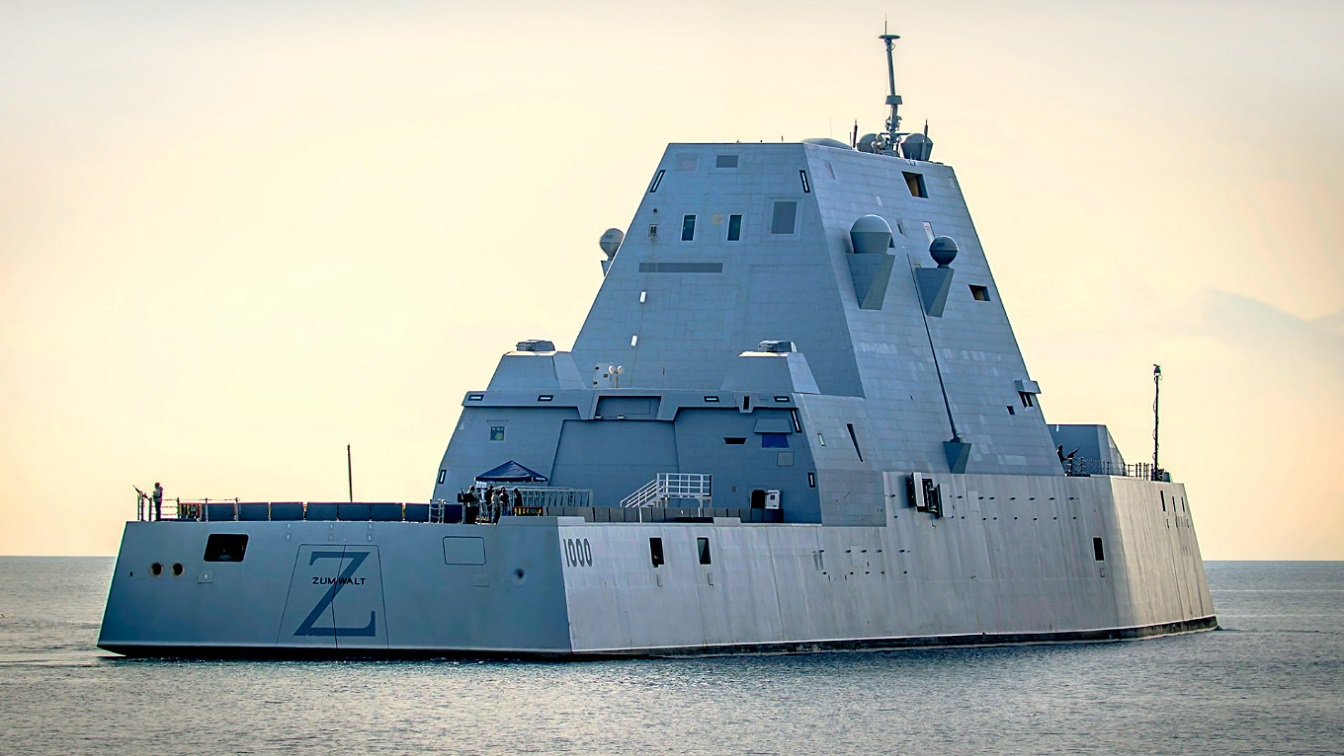
We should start with the record, because it is the setup, not the argument. The Littoral Combat Ship consumed roughly $22 billion for a fleet of small combatants so lightly armed and unreliable that the Navy began retiring hulls barely a decade old. The Zumwalt-class destroyer was truncated from 32 ships to three, its main guns rendered useless when the specialized ammunition hit nearly a million dollars a round, and the three orphaned hulls are now being rebuilt to carry a handful of hypersonic missiles instead. The Constellation-class frigate was canceled outright in November 2025, cut from a planned 20 ships to the two already under construction, its lead ship only about 12 percent built years after work began. Three programs meant to bring new capability into the fleet, three failures, a record this author has traced before.
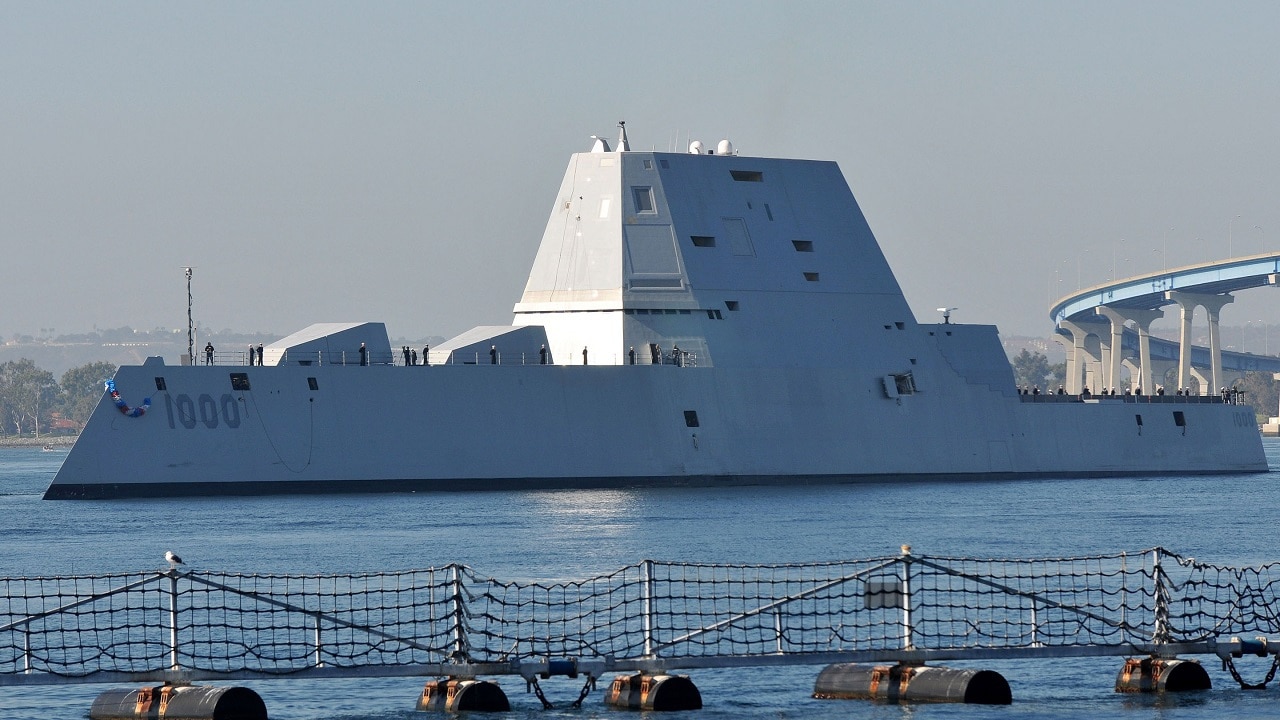
161208-N-ZF498-130 .SAN DIEGO (Dec. 8, 2016) The U.S. Navy’s newest warship, USS Zumwalt (DDG 1000) passes Coronado bridge on its way to Naval Base San Diego. Zumwalt is the lead ship of a class of next-generation multi-mission destroyers, now homeported in San Diego. (U.S. Navy photo by Petty Officer 3rd Class Anthony N. Hilkowski/Released)
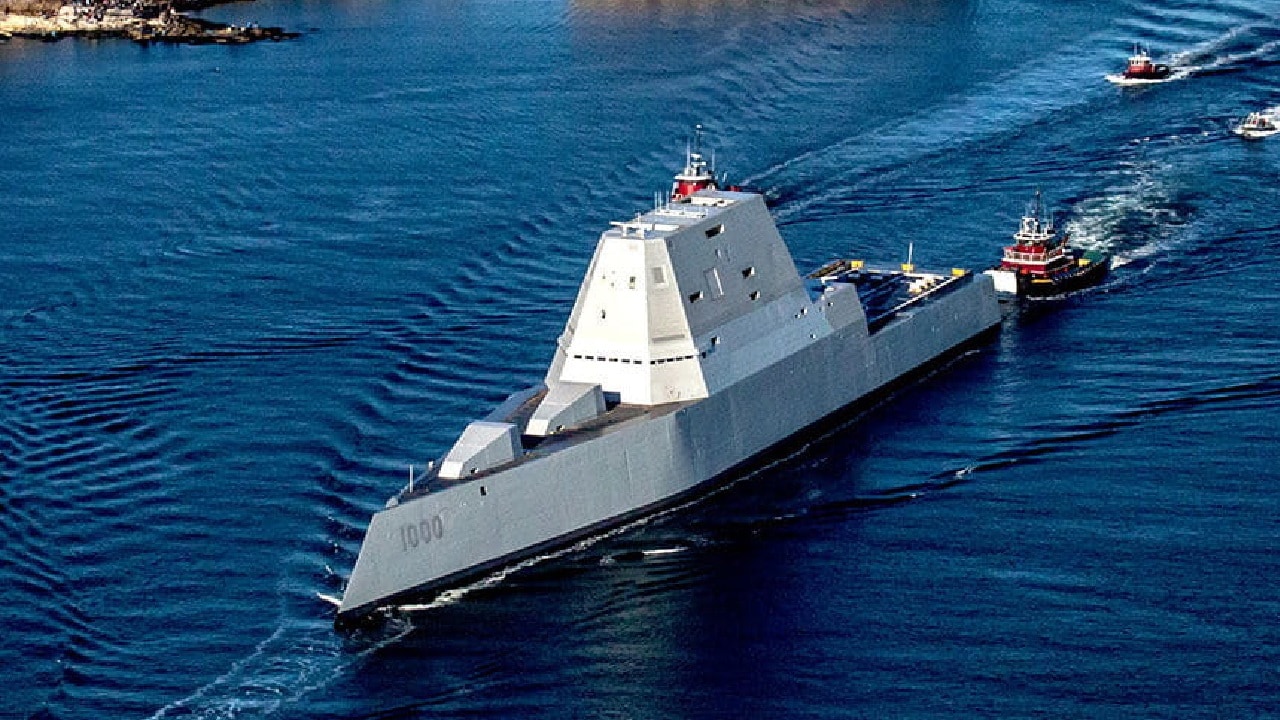
Zumwalt-class destroyer. Image Credit: Raytheon.
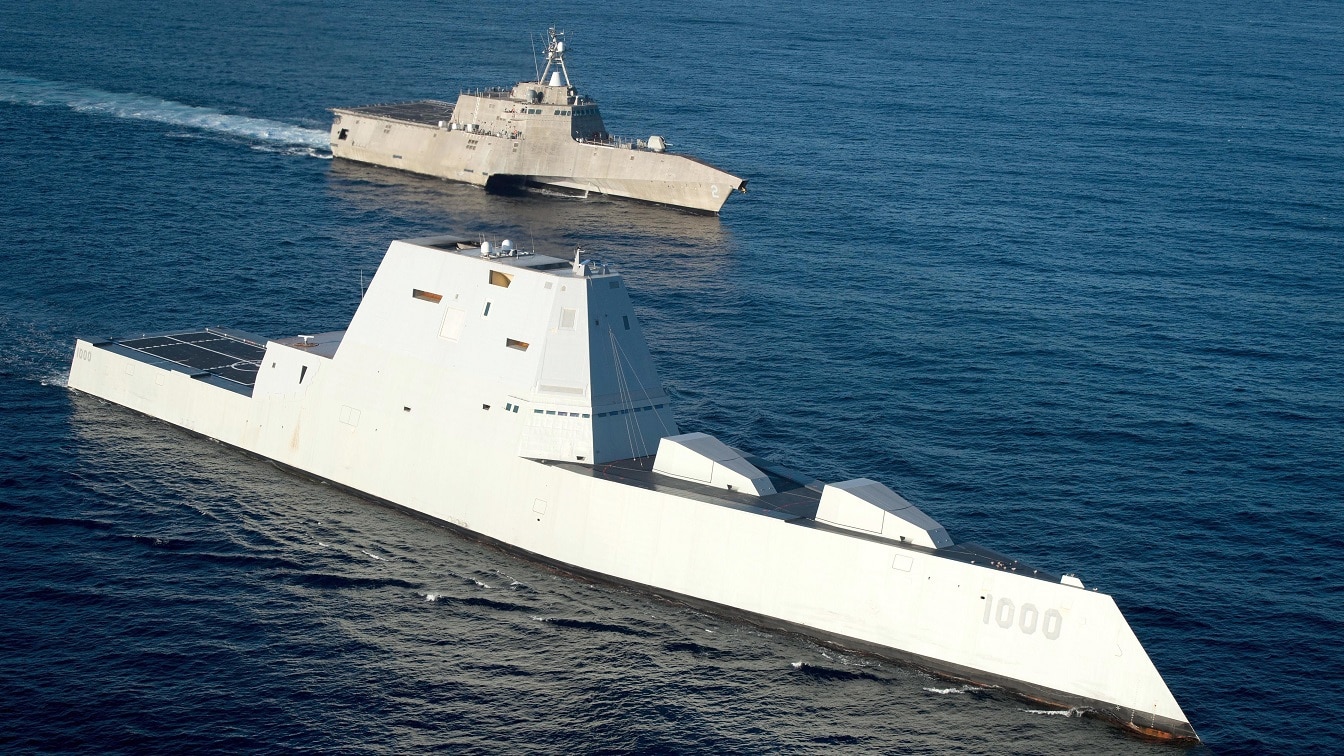
PACIFIC OCEAN (Dec. 8, 2016) The guided-missile destroyer USS Zumwalt (DDG 1000), left, the Navy’s most technologically advanced surface ship, is underway in formation with the littoral combat ship USS Independence (LCS 2) on the final leg of its three-month journey to its new homeport in San Diego. Upon arrival, Zumwalt will begin installation of its combat systems, testing and evaluation, and operation integration with the fleet. (U.S. Navy photo by Petty Officer 1st Class Ace Rheaume/Released)161208-N-SI773-0401
The Diagnosis Is Not a Mystery
The Navy is not confused about what went wrong, and neither is Congress’s watchdog. In a 2025 assessment, the Government Accountability Office concluded that despite nearly doubling the shipbuilding budget over two decades, the Navy has not achieved its planned fleet growth, in large part because it repeatedly launches programs with weak business cases and begins construction before the design is finished. The frigate is the textbook case: GAO found that the Navy started building the lead ship before the design was stable; the design then grew by roughly 759 metric tons, about 13 percent; and the delivery date slid from 2026 to 2029 before the program was killed. The pattern across all three failures is the same: a decision to build before knowing exactly what is being built, and it is expensive every time.
Knowing the disease, the Navy has prescribed a cure for itself and is now applying it to three replacement efforts. Each one echoes a mistake it was supposed to have learned from.
The Frigate: The Same Low-Risk Bet, Again
After canceling Constellation, the Navy moved fast to start over. Its new frigate, the FF(X), will be based on the Coast Guard’s National Security Cutter, a proven hull already in production at Huntington Ingalls, awarded sole-source to that builder with a promise to have the first ship in the water by 2028. On its face, this is the Navy learning its lesson: take an existing, low-risk design and resist the urge to reinvent it.
The trouble is that this is the identical logic that produced Constellation. That program, too, was sold as the safe choice, a proven Franco-Italian frigate design adopted specifically to avoid first-in-class development risk. It failed anyway, because the Navy could not stop layering American-unique requirements onto the foreign parent design until the ship was hundreds of tons heavier and years late. The Secretary of the Navy’s own epitaph for the program was blunt: it had become “80% of the cost of a destroyer and 60% of the capability.” Whether FF(X) ends differently depends entirely on whether the Navy can do the one thing it could not do last time: hold the requirements still. Nothing in the record guarantees it will.
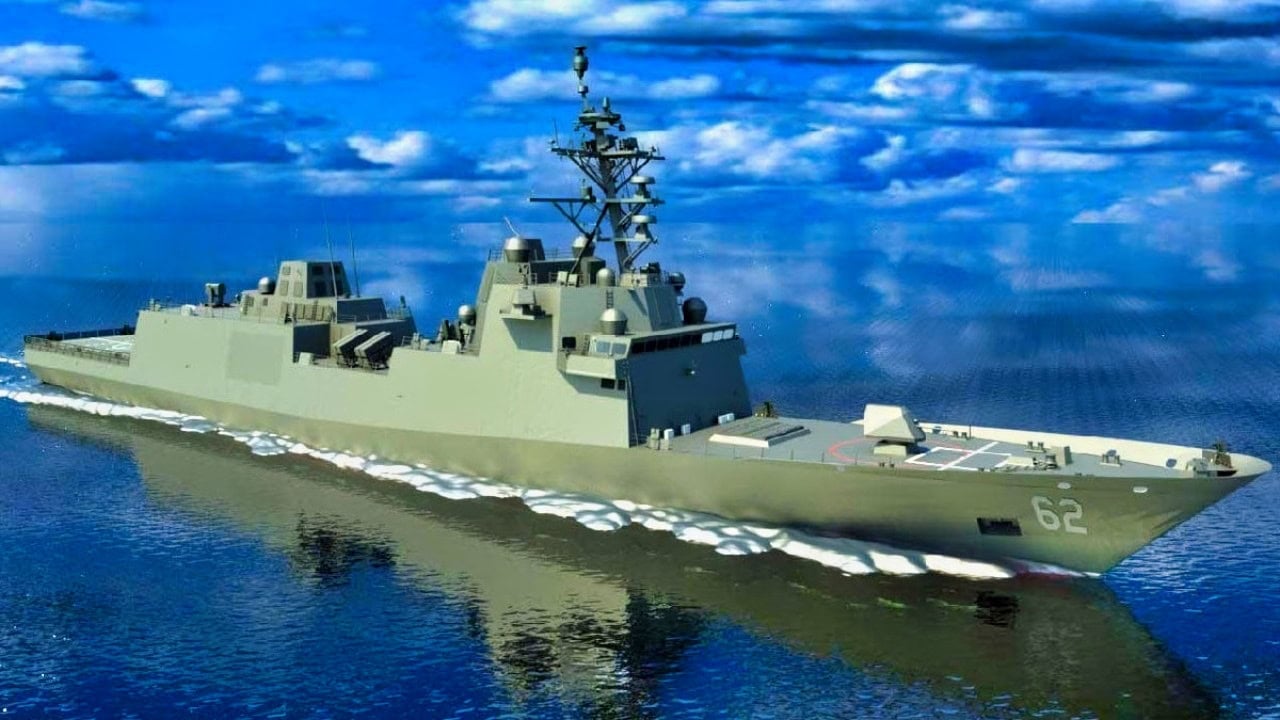
Constellation-Class Frigate. Image Credit: Creative Commons.
The Destroyer That Won’t Get Built
The next-generation destroyer, DDG(X), was supposed to be the surface fleet’s future, the clean-sheet replacement for the aging Arleigh Burke line. Its top-level requirements were approved in December 2020, yet more than five years later, the program is still designated with an “X” because the design has not been settled, and the Congressional Budget Office estimates it will cost about $4.4 billion per ship, roughly a third more than the Navy’s own estimate. Now it is being shelved. The Navy has signaled it will halt the DDG(X) program to pursue a new class of battleship, leaving the service, for the moment, with no clean-sheet surface combatant in active development. The one program designed from scratch to be done right is being set aside before it starts.
A Battleship No One Has Designed
In its place comes the Trump-class battleship, a ship that does not yet exist on paper. It has no completed design, no keel, and no realistic timeline, and the warning signs are already in print. Analysts note the concept is accumulating exactly the features that sink big programs: a railgun, new nuclear weapons, and as many as 192 vertical launch cells on a hull far larger than anything the Navy has built in generations. The Congressional Budget Office’s naval analyst put the danger plainly, asking whether the Navy will control itself and avoid the requirements creep that has wrecked program after program, or, as has happened all too often, will keep adding capability until the ship becomes unaffordable. A battleship starting its life with a railgun and nuclear weapons already on the wish list is not an obvious break from the pattern. It is the pattern.
What the Auditors Actually Concluded
None of this is a fringe worry. In its 2025 report, pointedly titled “Enduring Challenges Call for Systemic Change,” the GAO examined the Navy’s newer surface programs, the Constellation frigate and the Medium Landing Ship, and found they showed the same symptoms of deficient business cases that doomed the earlier ones. Its conclusion is the sentence that should worry anyone counting on the surface fleet: the recent programs carry too many similarities to the LCS and Zumwalt to presume the Navy has learned its lessons, and the service cannot expect to find the answer inside its existing playbook. The watchdog is not describing history. It is describing the ships the Navy is trying to build right now.
The Clock Belongs to China
The stakes are what make this more than a budgeting story. China already fields the largest navy in the world by hull count and is still expanding it, and the scale gap in the yards is staggering: a 2025 CSIS study found that China’s largest state-owned shipbuilder produced more commercial tonnage in 2024 alone than the entire U.S. shipbuilding industry has built since the end of World War II. That civilian base feeds directly into a military one, which is why China has fielded the Type 052D and the formidable Type 055, the latter widely rated among the best surface combatants afloat and a direct spur for the American destroyer program now being shelved. Every year, the U.S. surface fleet spends chasing new designs that collapse, while China spends the year launching ships that sail. The margin that once let the Navy absorb a failed program has closed.
The Case That It’s Different This Time
Honesty requires the other side, and there is a real one. The Navy is at least saying the right things: its May 2026 shipbuilding plan, branded the Golden Fleet, makes getting back on schedule its stated priority and promises to value schedule discipline above feature-chasing. The FF(X) decision to build on a hot Coast Guard production line is a genuinely lower-risk move, arguably the clearest lesson the Navy has actually applied. And when the service builds what it already knows how to build, it still delivers: the first Flight III Arleigh Burke destroyer, the USS Jack H. Lucas, entered service in December 2025 with a powerful new radar and little drama. The surface fleet’s problem has never been building proven ships. It has been building new ones.
That is the honest verdict. The Navy can still reproduce the classes it has mastered, and it has taken one real step to lower the risk on its next frigate. But the ships that are supposed to carry new capability into a Pacific fight, a frigate repeating an old bet, a next-generation destroyer being abandoned, and a battleship no one has designed, are being pursued in the very way its auditors say has failed three times running. The fleet is sliding toward a low of 288 ships in 2027 while the 355-ship goal recedes toward the 2040s, and the margin for another failed program is gone. The Navy has diagnosed its own disease with unusual clarity.
Whether it can stop repeating is the question the next three programs will answer, and so far, the auditors are not convinced.
About the Author: Harry J. Kazianis
Harry J. Kazianis (@Grecianformula) was the former Senior Director of National Security Affairs at the Center for the National Interest (CFTNI), a foreign policy think tank founded by Richard Nixon based in Washington, DC. Harry has over a decade of experience in think tanks and national security publishing. His ideas have been published in the NY Times, The Washington Post, The Wall Street Journal, CNN, and many other outlets. He has held positions at CSIS, the Heritage Foundation, the University of Nottingham, and several other institutions related to national security research and studies. He is the former Executive Editor of the National Interest and the Diplomat. He holds a Master’s degree focusing on international affairs from Harvard University.