
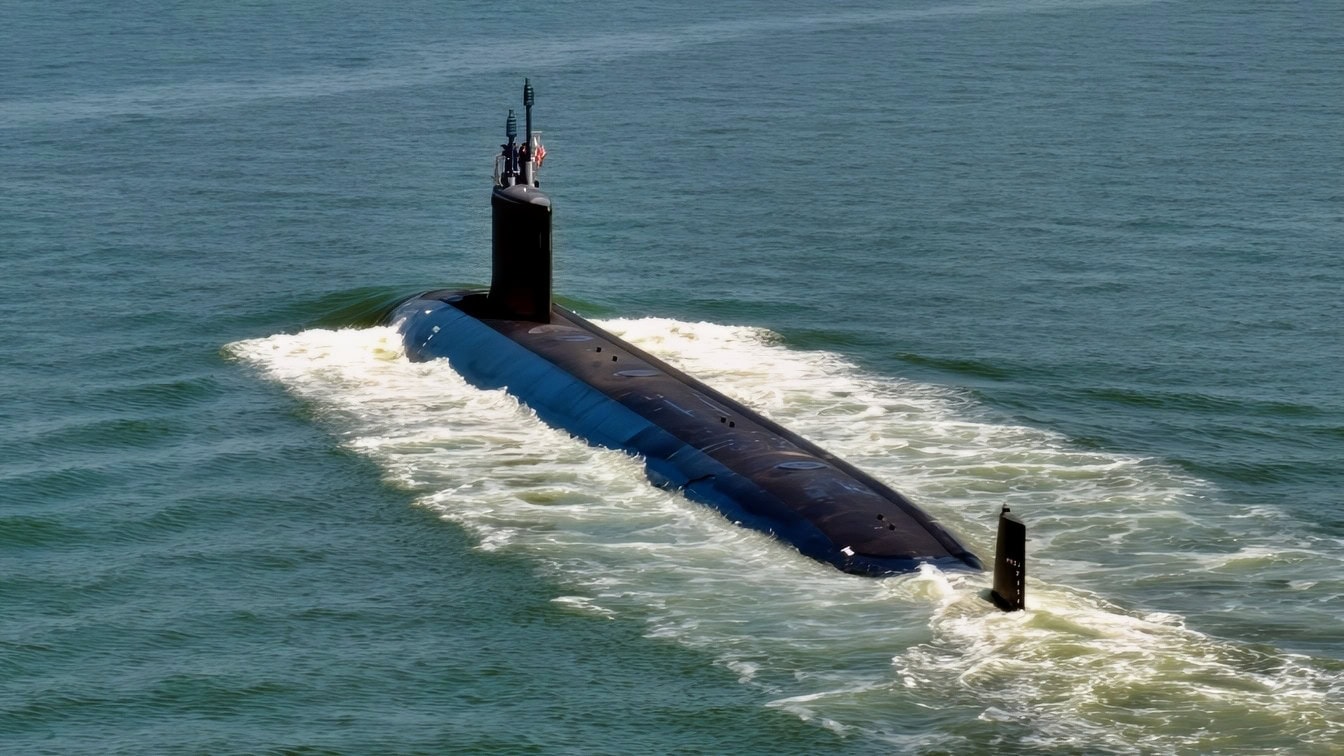
The Navy Just Commissioned Its Two Newest Attack Submarines. Each Took a Dozen Years. Here’s Where the Time Goes: This spring, the U.S. Navy commissioned two brand-new Virginia-class attack submarines within a month of each other: USS Massachusetts in Boston in March, USS Idaho in Connecticut in April. Both were ordered in April 2014. A dozen years from contract to fleet, for a class, the shipyards once turned out in six, and the submarine force is the one place where America’s undersea advantage over China is supposed to be decisive. This is the anatomy of the clock.
The Stopwatch
Follow the newest boat in the fleet. The Massachusetts was ordered in April 2014 as part of the $17.6 billion ten-boat Block IV contract. Her keel was laid on December 11, 2020, in a ceremony held virtually because of the pandemic. She was christened in 2023, finished sea trials in October 2025, was delivered in November, and was commissioned on March 28, 2026, at a pier in South Boston with USS Constitution under tow nearby — just under twelve years after the Navy signed for her. She is not an outlier. USS Idaho, ordered under the same 2014 contract, was commissioned on April 25. The two newest attack submarines in the United States Navy each took roughly a dozen years to go from contract to commissioning pennant.
It was not always so. The Congressional Budget Office told Congress in April that in the 2000s, the industry built submarines in five to six years, and now needs nine to ten, with the delays still growing. The clock has roughly doubled inside a generation, on a design that the yards have now built more than two dozen times.
Where the Time Goes: Why It Takes So Long to Built A Nuclear Attack Submarine
The Congressional Research Service’s report to Congress names the drivers on the record: workforce challenges, “first time quality” problems, material and supplier delays, and lead ship issues with the new payload module — and behind each sits a structural fact. Only two yards in America, Electric Boat in Connecticut and Newport News in Virginia, can build a nuclear submarine, and they build every Virginia together, swapping modules, while also carrying the Columbia-class ballistic-missile submarine, the Navy’s declared top acquisition priority. The boomer eats the same welders, the same suppliers, and the same floor space, and it eats first.
Then there are the people. Electric Boat employs more than 24,000 workers and is trying to hire another 8,000 this year alone, double its recent pace, because attrition and retirements claw back a share of every class it trains, and a nuclear-certified welder is not made in a budget cycle. The supplier base beneath the yards tells the same story: thousands of firms, many the last one standing, making their part, whose late deliveries of sequence-critical material ripple straight into the schedule.
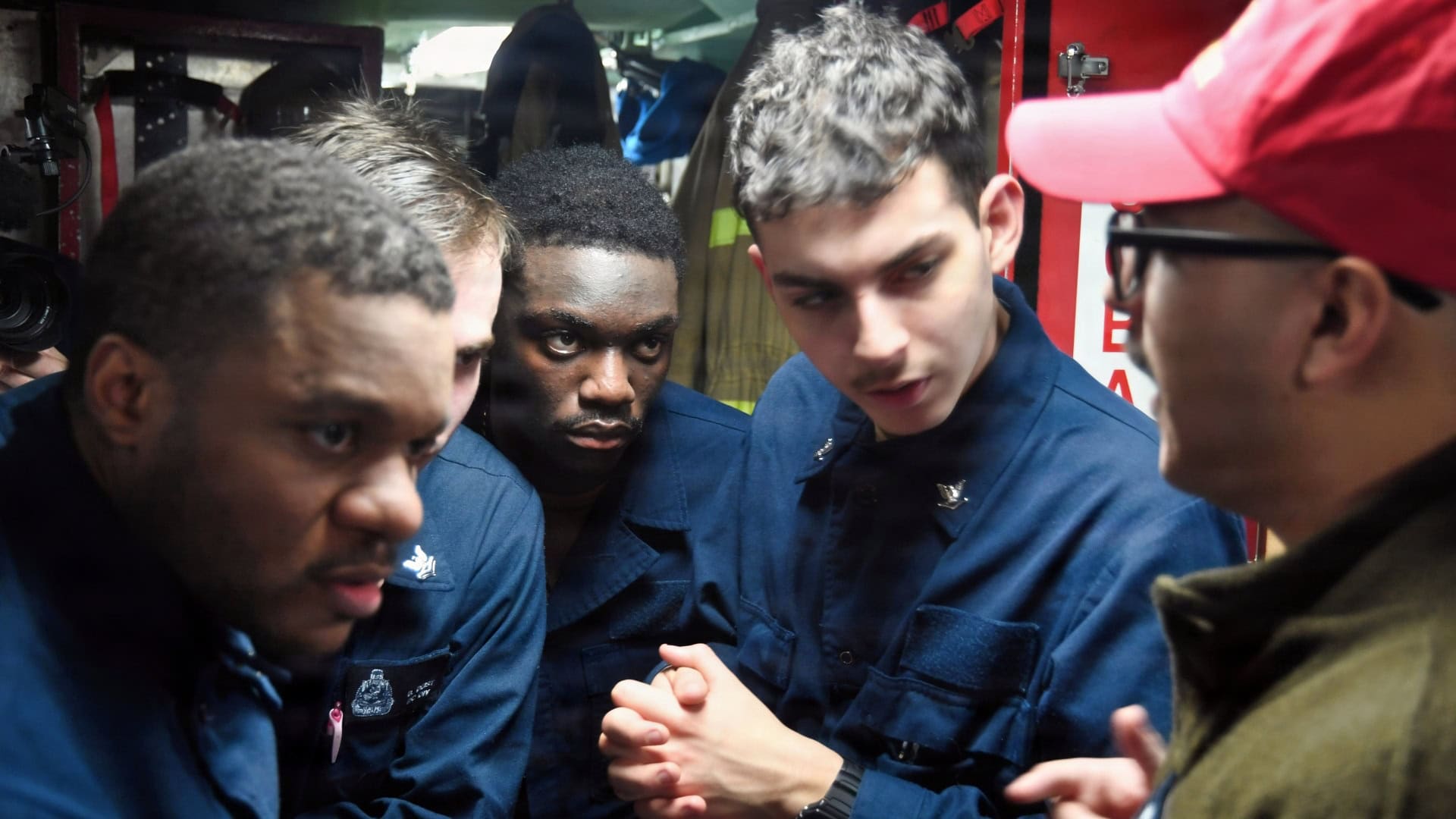
260321-N-ME988-1286 ARCTIC OCEAN (March 21, 2026) Machinist’s Mate (Nuclear) 1st Class Christian Garcia, right, assigned to the Virginia-class fast attack nuclear-powered submarine USS Delaware (SSN 791), provides feedback during a Crucible event to earn the Submarine Warfare qualification, commonly referred to as “fish,” while Delaware transits the Arctic Ocean, March 21, 2026. The Crucible event is the final stage in earning the Submarine Warfare qualification and consists of a question-and-answer board as well as damage control drills to demonstrate knowledge and skills learned. Delaware and crew operate under Submarine Squadron (SUBRON) 12 whose primary mission is to provide fast-attack submarines that are ready, prepared, and committed to meet the unique challenges of undersea combat and deployed operations in unforgiving environments across the globe. (U.S. Navy photo by Chief Mass Communication Specialist Darren M. Moore)
And the boats themselves grew. The current Block V design adds a 90-foot payload section that makes each submarine roughly 25 percent more work than the versions before it, with costs the CRS puts at over $4 billion per boat, and the same report notes the first payload-module boat generated exactly the lead-ship problems first-of-anything always does. A longer, more complex submarine, built by a strained workforce at two saturated yards, is the twelve-year clock in a sentence.
The Rate the Clock Sets
A slow clock per boat becomes a broken rate per year. The Navy needs two Virginias annually, 2.33 counting the boats promised to Australia under AUKUS, and the yards are delivering about 1.3, with the chief of naval operations telling Congress in May that two a year now arrive around 2032 — a target the Navy secretary promised for 2028 back in 2023. The result, per the CRS, is a growing backlog of submarines Congress has bought that the yards have not built, with analysts projecting the attack-boat fleet sliding toward 46 hulls against the Navy’s stated need for 66 — an industrial problem the Navy has not been able to buy its way out of, even as China’s shipbuilding complex out-produces America’s by orders of magnitude. The undersea fleet is the one domain where the U.S. holds a clear qualitative edge in the Pacific, and the same two-yard bottleneck that slows the carriers is quietly rationing it.
The next contract is already moving: the Navy has put $2.3 billion of pre-construction money into Block VI, boats that, on the current clock, will be commissioned in the late 2030s by officers who are in high school today.
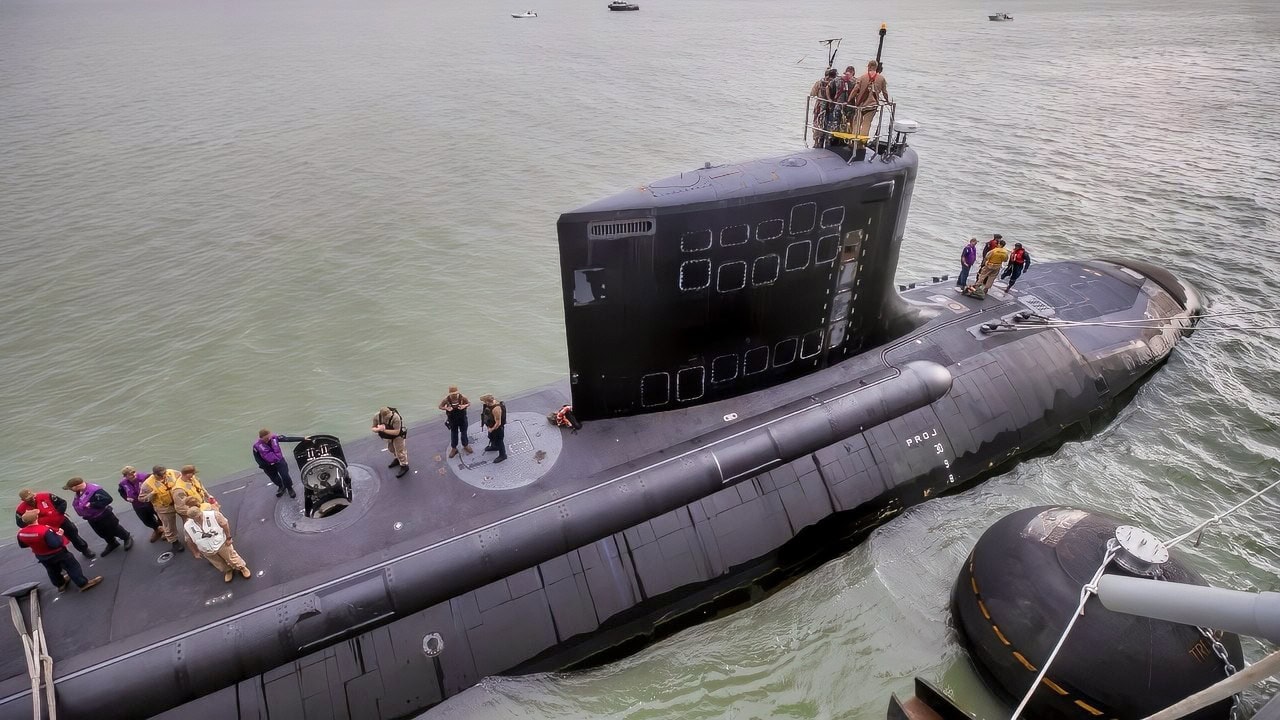
DARWIN, Northern Territory, Australia (March 31, 2025) – The Virginia-class fast-attack submarine USS Minnesota (SSN 783) departs from the submarine tender USS Emory S. Land (AS 39) after a scheduled port visit at Darwin, Northern Territory, Australia, Mar. 31, 2025. Darwin is Emory S. Land’s 17th port call since it departed on deployment May 17, 2024. Emory S. Land and Minnesota are operating in U.S. 7th Fleet, the U.S. Navy’s largest forward deployed numbered fleet, operating with allies and partners in preserving a free and open Indo-Pacific region. (U.S. Navy photo by Mass Communication Specialist Seaman Mario E. Reyes Villatoro)
The Massachusetts and the Idaho are superb submarines, and the fleet is glad to have them.
But a dozen years apiece is the real number behind every promise made about American sea power, and until that clock moves, the maintenance-starved fleet already in the water has to hold the line with the boats it has.
The advantage America counts on most is being built one dozen-year submarine at a time.
About the Author: Harry J. Kazianis
Harry J. Kazianis (@Grecianformula) was the former Senior Director of National Security Affairs at the Center for the National Interest (CFTNI), a foreign policy think tank founded by Richard Nixon based in Washington, DC. Harry has over a decade of experience in think tanks and national security publishing. His ideas have been published in the NY Times, The Washington Post, The Wall Street Journal, CNN, and many other outlets worldwide. He has held positions at CSIS, the Heritage Foundation, the University of Nottingham, and several other institutions related to national security research and studies. He is the former Executive Editor of the National Interest and the Diplomat. He holds a Master’s degree focusing on international affairs from Harvard University.

