
The Next Trump-Kim Summit Would Start on North Korea’s Terms – Most of the chatter about a new Trump-Kim summit treats North Korea as a problem Washington set down for a few years and can now simply pick back up. Xi Jinping’s trip to Pyongyang this June, his first in seven years, should have put an end to that idea. So should Kim’s own statement, days later, that his country would now exercise its position as a nuclear state. Neither got much attention in Washington. Both are why Kim’s price for coming back to the table just went up, and nobody currently talking about a summit has priced that in.
Kim went into the 2018 and 2019 diplomacy under heavy sanctions pressure and real isolation, with significant nuclear concessions at least nominally on the table in exchange for relief and normalization. He isn’t negotiating from that position anymore. He’s negotiating as the head of a state that considers its arsenal permanent, and he wants Washington to deal with him on those terms without saying so out loud. His June statement plays to a domestic audience too, but it also announces the basis on which he expects any future talks to happen.

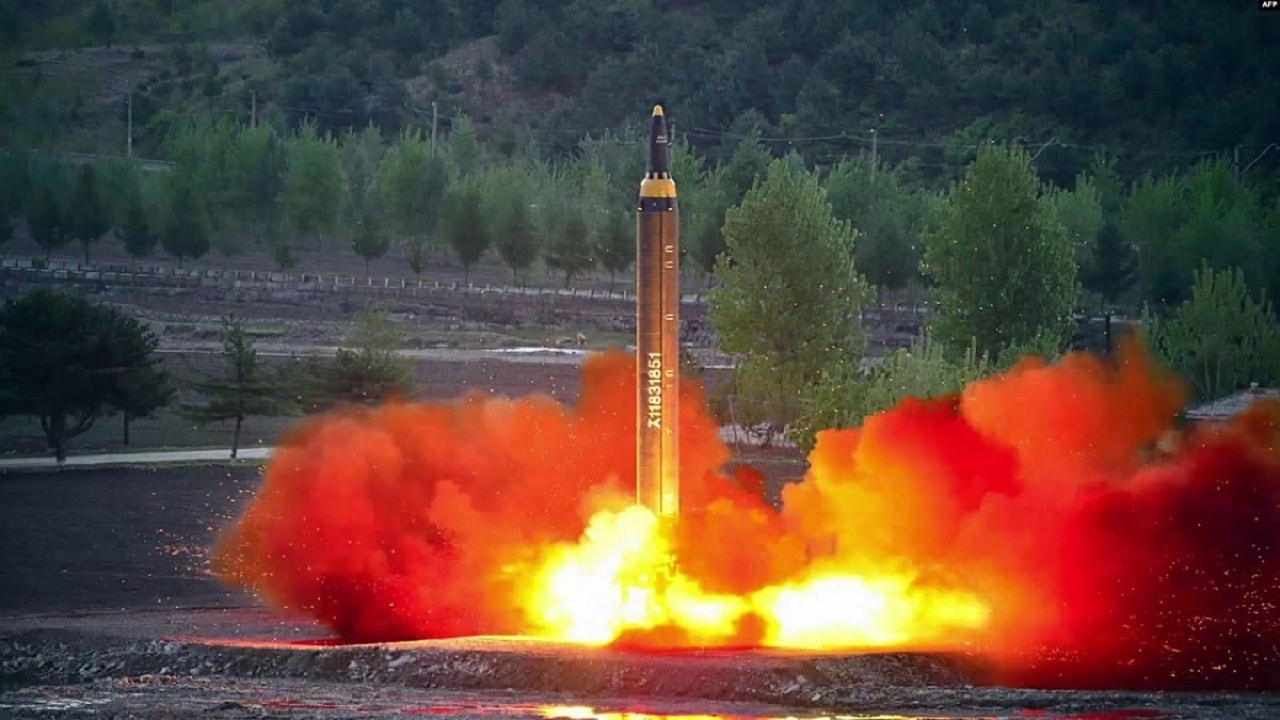
North Korea Hwasong-17 ICBM. Image Credit: Creative Commons.
The old framework offered relief and normalization for movement toward denuclearization, on the assumption that North Korea needed something only Washington could provide. That’s the deal that collapsed in Hanoi in 2019. What’s emerging now is a different bargain: benefits for limits on an arsenal that stays exactly where it is. The shift happened slowly enough that most commentary on North Korea hasn’t caught up.
What Washington Had That Matters Less Now
Washington was never Kim’s only source of external leverage. China has been Pyongyang’s patron for seven decades. What Washington had, going back to Singapore and Hanoi, was narrower: sanctions relief, a path to diplomatic normalization, and the legitimacy of an American president willing to treat him as a counterpart rather than a pariah.
That package mattered because Kim had few alternatives. He isn’t publicly asking Washington for much these days, which says less about his price than about how little urgency he feels about returning to the table at all.
Start with Russia, since the treaty is the clearest evidence on the table. Pyongyang has sent troops and large volumes of ammunition to support Moscow’s war in Ukraine. In exchange, per South Korean intelligence assessments, it has received economic assistance and military technology support under a 2024 strategic partnership with a mutual defense clause. None of it depends on North Korea’s nuclear posture or requires Kim to pretend he’s open to giving anything up.
China’s angle is less transactional but still significant. Xi Jinping made his first trip to Pyongyang in seven years this June, his first foreign trip of 2026, not long after Kim’s alignment with Moscow had visibly deepened. Beijing followed up this month by sending Wang Huning, its fourth-ranked official, to Pyongyang to reaffirm the agreements from Xi’s visit. North Korea has always hedged between Beijing and Moscow to some degree, but the current level of Russian support gives Kim a degree of room to maneuver that didn’t exist on anything like this scale in 2018.
Moscow hasn’t made North Korea prosperous. It has made American relief less indispensable than it used to be, a shift formalized when the two countries ratified their pact.
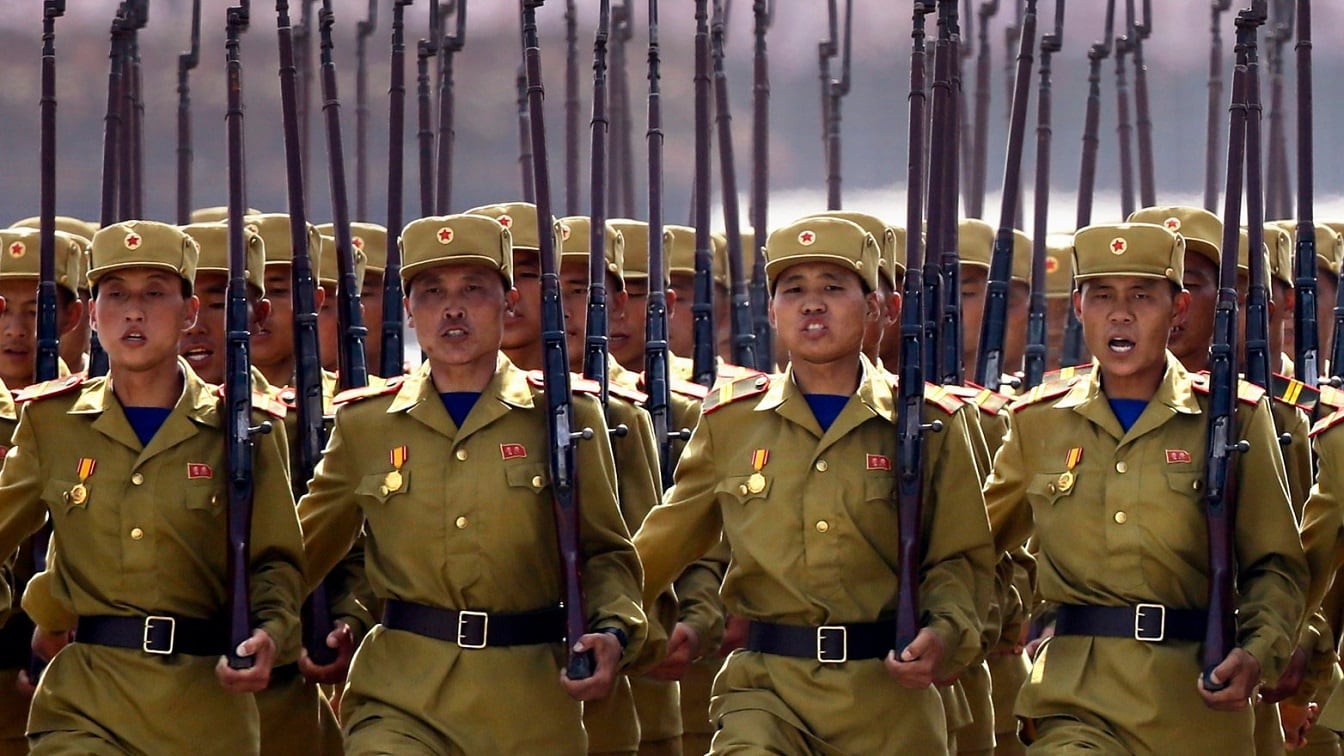
North Korean Military. Image Credit: Creative Commons.
The Recognition Kim Wants Doesn’t Require the Word
So what does Kim actually want from a renewed negotiation? Not what he wanted in 2018.
He doesn’t need Washington to formally declare North Korea a nuclear-weapons state. That would be diplomatically costly for any American president, and Kim knows it. What he needs is the practical substance of recognition without the label. A freeze instead of disarmament. Sanctions relief for restraint, not surrender. Fewer allied exercises, fewer American strategic assets in the region, maybe a peace declaration that leaves the arsenal untouched. Get enough of that, and the label stops mattering.
South Korea’s Lee Jae-myung has floated a version of this: halting further fissile-material production, transfers of weapons or materials abroad, and continued ICBM development, while preserving full denuclearization as a longer-term goal. According to Lee, Trump said that could be one way forward. Worth being precise here. Lee’s proposal tells you how Seoul and Washington might be adjusting to a harder set of facts, not that Kim would accept it on those terms. What Kim has actually said is narrower: his country will operate as a nuclear power, full stop. Lee’s plan responds to that reality. It doesn’t confirm it.
Whether a verifiable freeze along those lines is worth pursuing is a fair policy question, and a different one from the one this piece is asking.
A Meeting Isn’t the Same Thing as Progress
Trump’s instinct, when he gets to it, will be to treat a face-to-face with Kim as leverage in its own right, the same instinct that produced Singapore. That isn’t obviously wrong. Sometimes personal diplomacy does move things. But it depends on walking into the room from strength, and this time, Kim is the one who can afford to wait. He can decline a meeting until Washington narrows its demands, or offers something up front just to secure his attendance. If that’s how it plays out, the photos will show an American president returning to a man with a bigger arsenal and no more interest in discussing it than he had last time.
None of this is really about whether Trump and Kim eventually meet. The real question is what gets conceded before the meeting and in what order. If sanctions loosen, exercises shrink, or deterrence commitments soften before Kim has restrained anything verifiable, the summit itself will have been the reward, not the outcome. Kim’s higher price becomes the new floor, and the next negotiation starts there instead of where things stood in 2018. That is the test Washington actually has to pass, and it is a much harder one than getting Kim back into a room.
About the Author: Dr. Andrew Latham
Andrew Latham is a professor of international relations and political theory at Macalester College in Saint Paul, MN. You can follow him on X: @aakatham.