

The Seawolf-class fast attack submarine USS Connecticut has been, in some ways, a hard-luck boat.
Five years ago, it hit an underwater seamount, and the repair process has been expensive and time-consuming.
Now the U.S. Navy has set a retirement date for the sub even though it is returning to active duty soon.
The Americans need as many attack submarines as possible that can fire missiles during overseas contingencies these days, and the decommissioning of the Connecticut will be a sad day in 2031.
What Happened?
In October 2021, the sub smashed into an underwater mountain while conducting a classified humanitarian mission in the South China Sea.
This surprised the Navy since the Seawolf-class is one stealthy and effective group of submarines that usually conducts operations without incident.
The accident happened near Hainan Island, which is off China’s southern coast and near a People’s Liberation Army military base.
When the accident happened, Connecticut had to immediately surface, showing the world that it was patrolling so close to China. The crash hurt 11 sailors.
Thankfully, there was zero damage to the nuclear propulsion system, but China was able to find out that the Americans were patrolling near one of Beijing’s most active defense installations.
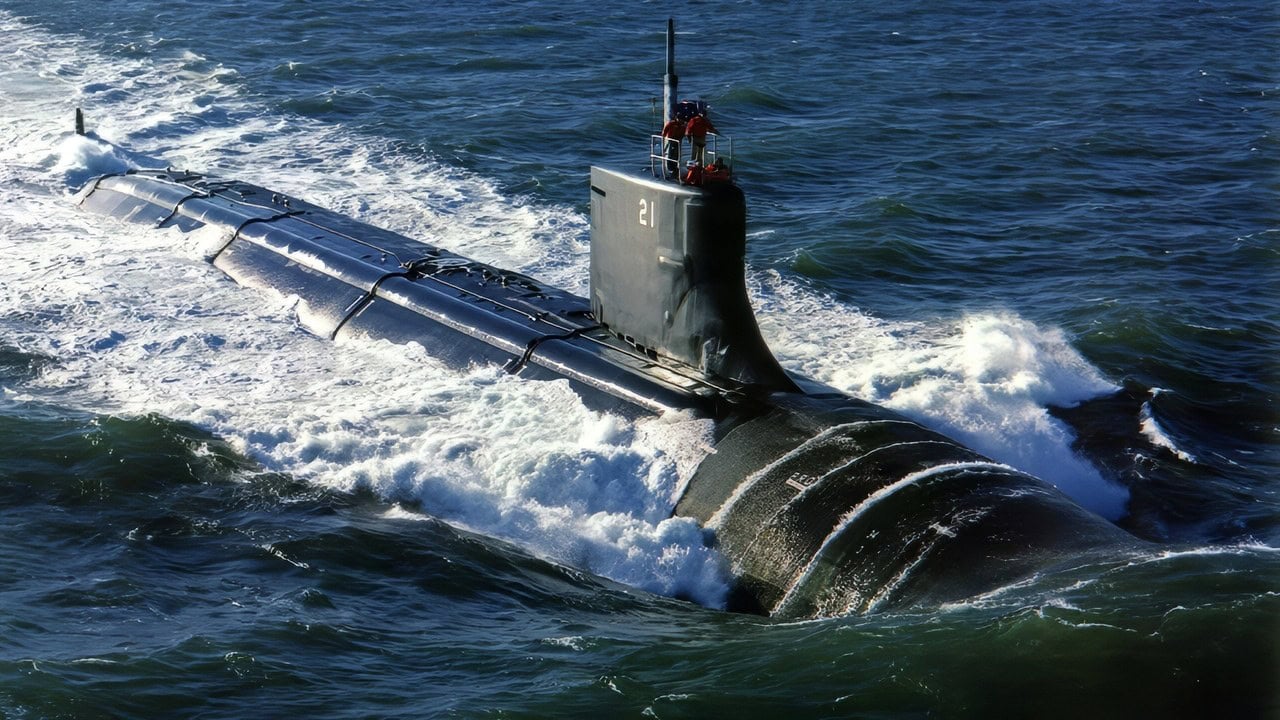
The nation’s newest and most advanced attack submarine Seawolf (SSN 21) puts to sea in the Narragansett Bay operating area for her first at-sea trial operations on July 3, 1996. Sea trials include various tests of the Seawolf propulsion systems and the first underway submergence of the submarine. The Seawolf represents the Navy’s most advanced quieting technology, weaponry, tactical capability and communications. Seawolf is scheduled to be delivered to the Navy and commissioned this fall. U.S. Navy photo courtesy of General Dynamics.
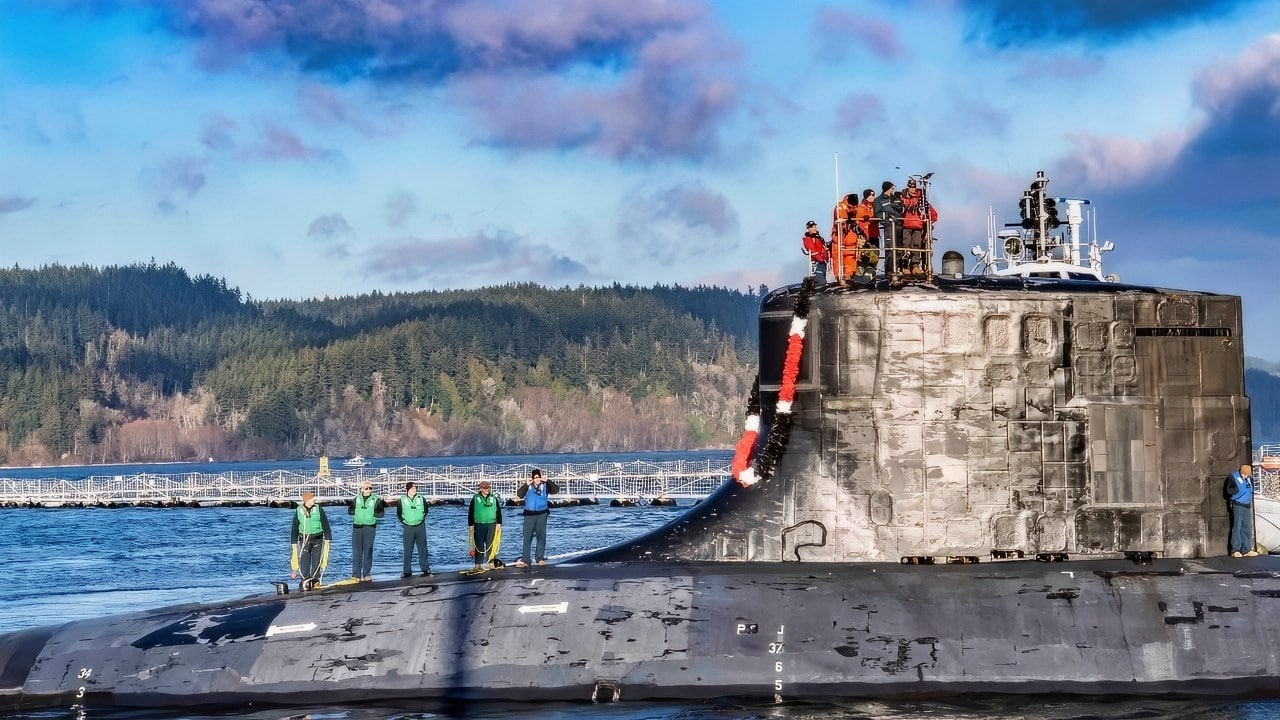
The Seawolf-class fast-attack submarine USS Seawolf (SSN 21) returns home to Naval Base Kitsap-Bangor, Washington, Dec. 14, 2022, following a seven-month deployment. Seawolf is the first of the Navy’s three Seawolf-class submarines, designed to be faster and quieter than its Los Angeles-class counterpart. (U.S. Navy photo by Mass Communication Specialist 2nd Class Gwendelyn L. Ohrazda)
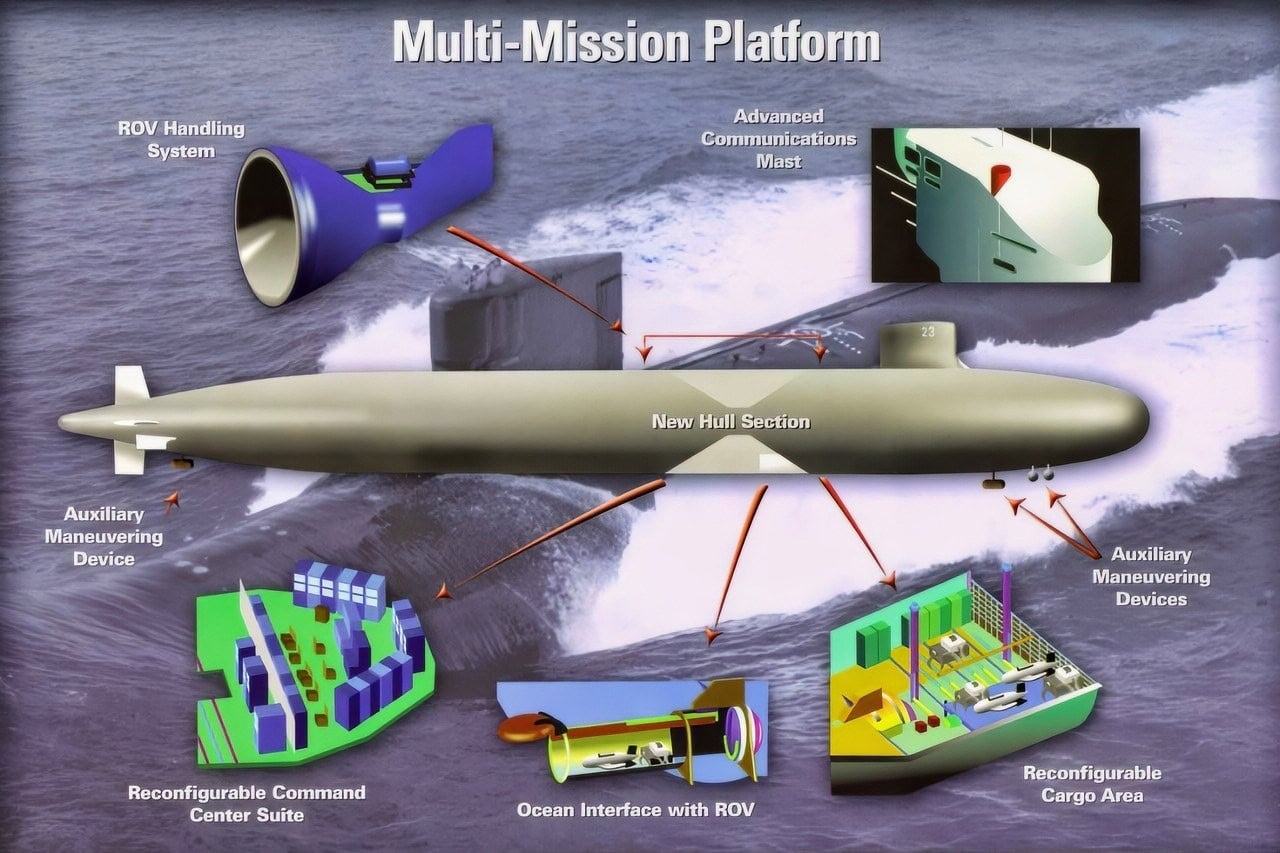
USS Jimmy Carter Seawolf-Class. Image Credit: Creative Commons.
Bad Damages Plagued the Sub and Its Crew
There was extensive damage to the Connecticut’s bow and sonar dome since the sub was grounded at high speed.
Unfortunately, the waters were poorly charted. An after-incident report conducted by the Navy two years later revealed an unsatisfactory command climate on the boat. Commanding officer Cmdr. Cameron Aljilani was held responsible for failing to avoid the accident.
What the After Action Report Found
“No single action or inaction caused this mishap, but it was preventable. It resulted from an accumulation of errors and omissions in navigation planning, watch team execution, and risk management,” the report revealed.
“Prudent decision-making and adherence to standards in any one of these three areas could have prevented the grounding.”
Command Neglect Led to Extensive Damages
The boat was going 24 knots at the time, making for a powerful collision with the sea mount. Extensive damage meant it had to limp back to Okinawa for emergency repairs after the chain of command failed to navigate the hazards.
“The navigation review team, including the CO, incorrectly assessed that Connecticut would be operating in an open ocean environment,” the report said.
“They should have recognized the ship would be in restricted waters based on the planned track passing near multiple navigation hazards.”
The repairs took 4.5 years and required $80 million. The original price of the sub was $3.1 billion. It took five years to construct the boat in the 1990s.
About the Seawolf-class
The Connecticut is the second of the powerful Seawolf-class submarines that have normally been so dependable over the years. SSN-22 was manufactured by General Dynamics Electric Boat at their yard in Groton, Connecticut.
Its keel was laid down in September 1992, and it conducted sea trials five years later on September 1, 1997. The Connecticut was commissioned on December 11, 1998.
Even though the sub will enter active duty soon, it will still be retired in five years.
This is a stunning development for an attack sub that may have experienced hard luck, but should have many years left in its service record beyond the next five years.
The Seawolf-class has eight torpedo tubes with the ability to carry 50 of the weapons, plus another 50 Tomahawk cruise missiles.
The subs can carry top-secret payloads and feature a 100-foot hull extension capable of conducting intelligence, surveillance, and reconnaissance, as well as scientific experiments. The subs are highly stealthy and fast.
What Will Happen Next?
The retirement of the Connecticut comes at a time of fraught geopolitical risk.
The Navy needs these attack boats of the Seawolf-class to continue patrolling in the South China Sea to answer a contingency that could happen if China attacks Taiwan or continues to harass shipping in the vital oceans in the First Island Chain.
It will still be an excellent development that Connecticut will enter sea duty again.
Let’s hope the crew will be more careful when operating in dangerous, uncharted waters. The wreck is sure to be studied in various Navy training schools.
No accident like this should happen again, and it is a good thing that the Silent Service was able to invest so much time and money in repairs to get it in shape for more deployments.
Questions Must Be Answered
However, the crash raised questions in the undersea environment near China. Is the Navy pushing its subs too hard?
Can fast attack subs maintain high speed in crowded areas of the sea? What are some of the countermeasures that Seawolf-class subs take when in danger?
These questions need to be answered before the Connecticut deploys again.
The Navy poured significant time and money into its repairs and even set a retirement date that is disappointing since the United States depends on underwater warfare to fire as many cruise missiles as it can against enemies.
Fast attack submarines are the workhorses of the fleet, and taking even one out of duty is not a stellar development.
More: China’s J-20 Stealth Fighter Is Ready for War
About the Author: Brent M. Eastwood, PhD
Author of now over 3,500 articles on defense issues, Brent M. Eastwood, PhD, is the author of Don’t Turn Your Back On the World: A Conservative Foreign Policy and Humans, Machines, and Data: Future Trends in Warfare, plus two other books. Brent was the founder and CEO of a tech firm that predicted world events using artificial intelligence. He served as a legislative fellow for US Senator Tim Scott and advised the senator on defense and foreign policy issues. He has taught at American University, George Washington University, and George Mason University. Brent is a former US Army Infantry officer. He can be followed on X @BMEastwood.