
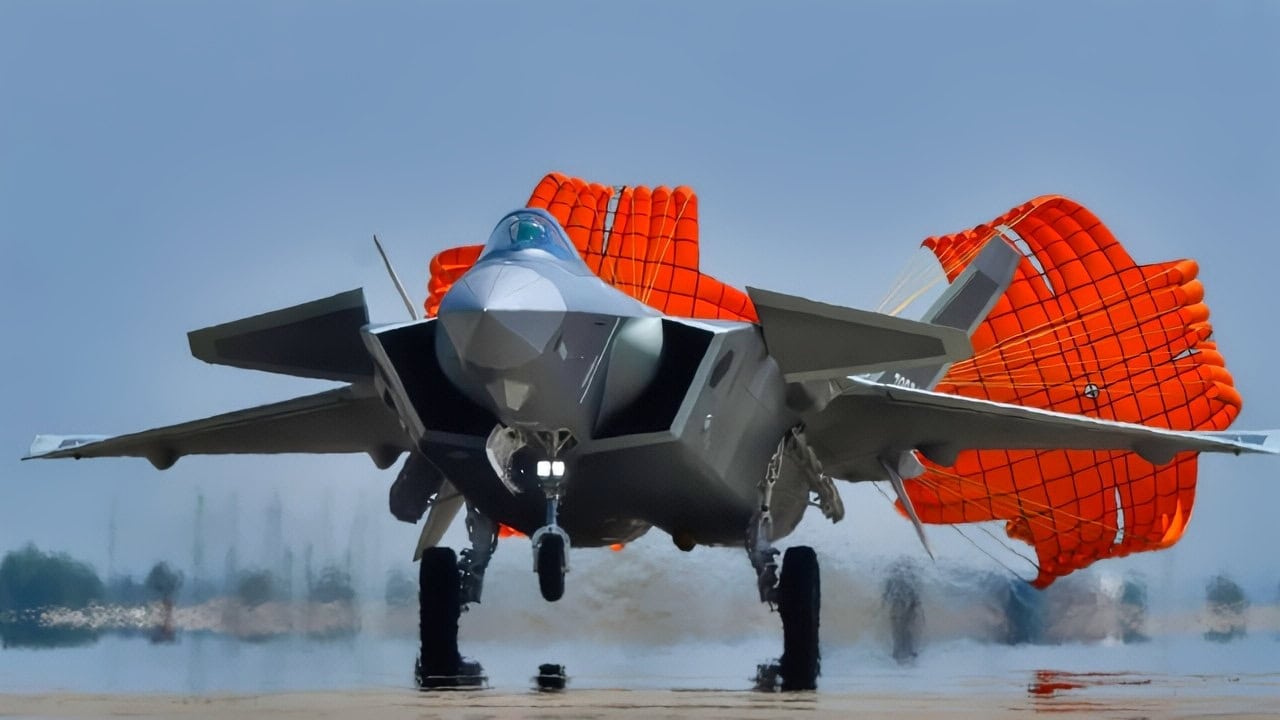
China Largely Fixed the J-20’s Engine Problem After Years of Russian Dependence: China’s Chengdu J-20 entered service in 2017 with an engine problem Beijing had not solved. The fighter’s stealth shaping, long-range weapons, and sensors were Chinese, but initial production aircraft relied on Russian AL-31-series turbofans because the more powerful WS-15 intended for the design was still years from readiness.
That weakness has largely been corrected. By 2021, People’s Liberation Army Air Force media showed J-20s with domestic WS-10 engines, and the U.S. Defense Department later reported that J-10 and J-20 production was shifting toward the WS-10 even as some Russian engines remained in use.
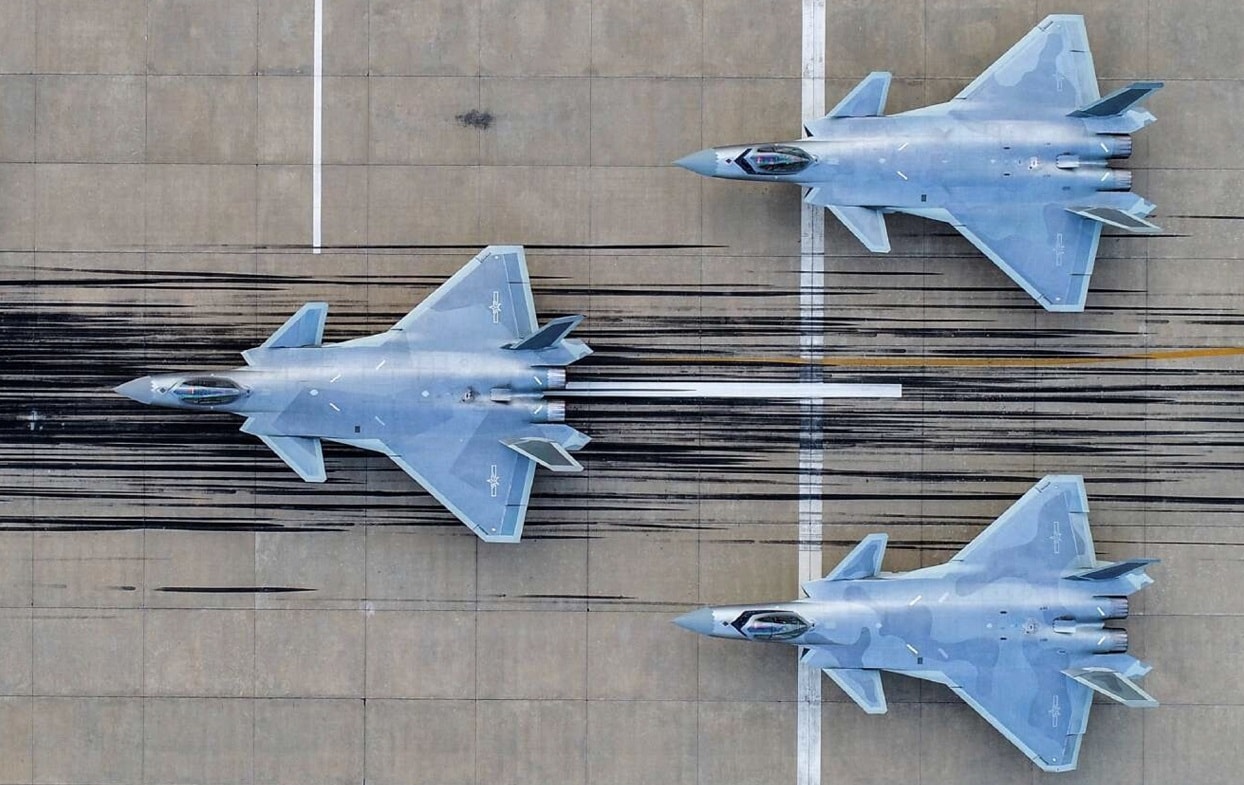
J-20. Image: Creative Commons.
The WS-10C delivered less thrust than expected from the final powerplant, yet it removed the immediate dependence on Moscow, provided a stronger domestic engine for serial production, and allowed China to field the J-20 across more units while the WS-15 continued testing.
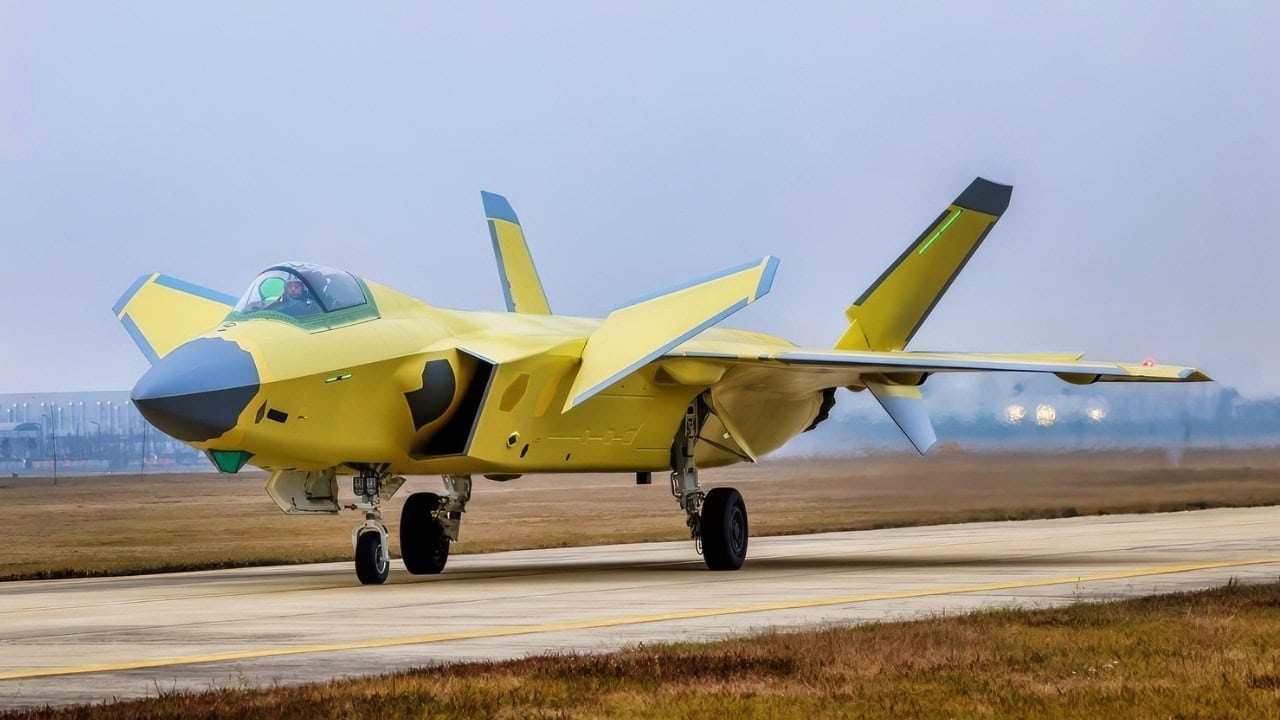
The latest step appeared in January 2026. Chengdu released footage of upgraded J-20As in yellow primer, a finish associated with pre-delivery aircraft, and analysts identified features consistent with WS-15 installation. China has not published fleetwide fielding data, but the engine issue no longer defines the program as it did at service entry.
Russian Engines Put the J-20 Into Service Without Unlocking Its Full Performance
A 2020 Royal United Services Institute study assessed the initial AL-31-powered J-20s as somewhat underpowered and likely unable to supercruise.
The Russian nozzles also lacked stealth-oriented serrations, increasing radar reflections from the rear, below, and overhead.
Supercruise preserves fuel while sustaining supersonic speed and limits the use of afterburners, which increase heat and fuel consumption.
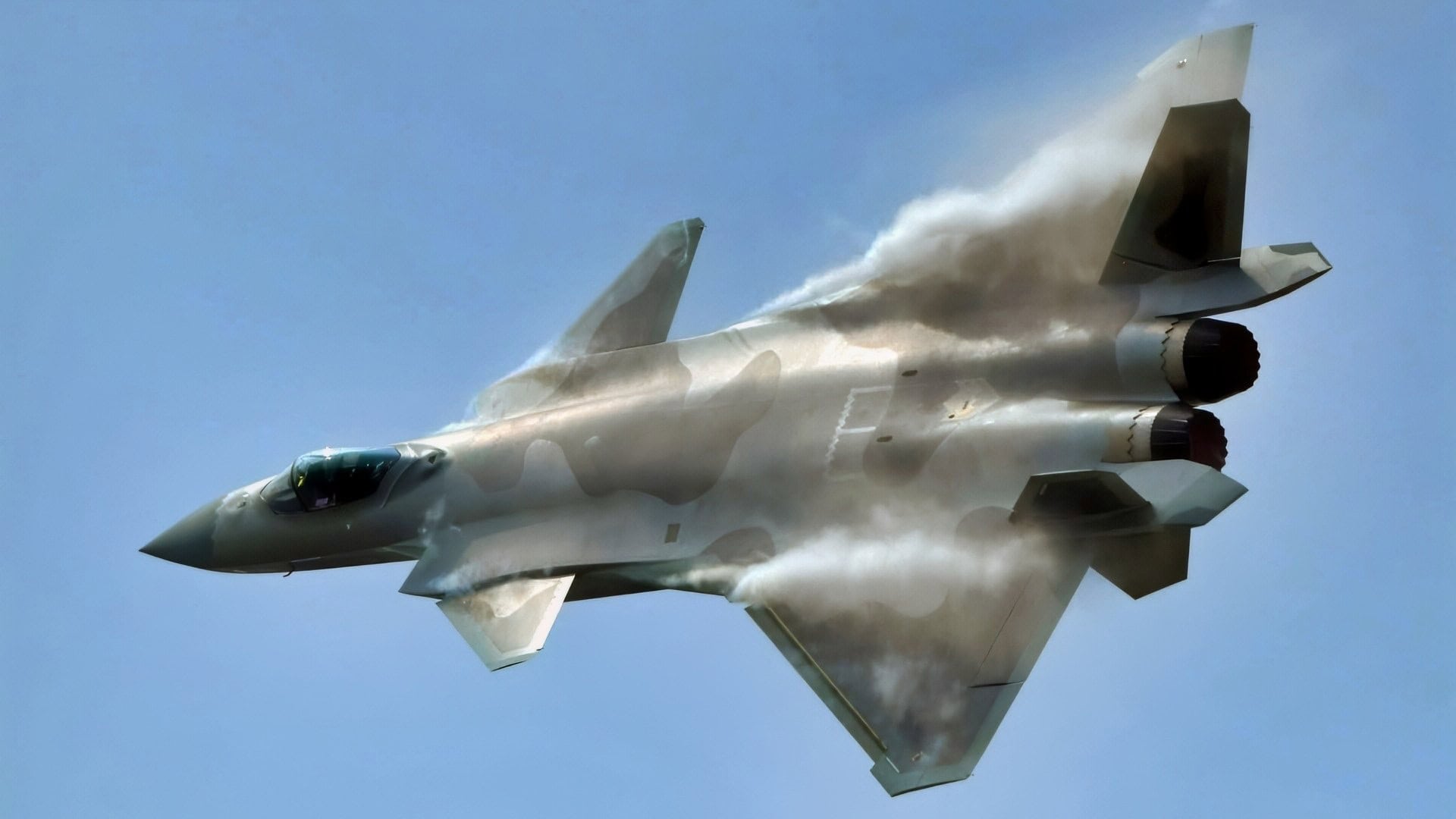
China J-20A Fighter. Image Credit: PLAAF.
J-20 Fighter from China X Screenshot. Image Credit: Creative Commons.
Waiting for the WS-15 would have delayed the entire fighter force. China accepted an interim engine, trained pilots, built maintenance units, developed tactics, and refined weapons. The AL-31 therefore supported early operations even as it limited the airframe’s intended performance, a compromise reflected in the J-20’s long dependence on Russian propulsion technology.
The WS-10C Fixed the Strategic Dependency First
Domestic-engine J-20s became publicly visible before Airshow China 2021, where Beijing displayed aircraft powered by Chinese engines. The state-run Global Times said that the switch to imported power plants was accompanied by an expansion in production. The WS-10C also used serrated exhaust nozzles that reduced one source of rear-aspect radar reflection.
The industrial effect mattered more than a single performance figure.
Every Russian engine placed the J-20 production line behind a foreign supply decision. A domestic powerplant let Chengdu align engine deliveries with airframe output while China expanded its factories.
A U.S. Indo-Pacific Command official said in 2024 that the WS-10 and WS-15 families had become credible powerplants and linked the supply shift to higher aircraft production capacity. China’s expanding J-20 manufacturing base no longer depends on Russian AL-31 deliveries.
The WS-15 Is Moving From a Long-Delayed Goal Toward Production Aircraft
Chinese state media reported in 2022 that the WS-15 was undergoing further testing and optimization.
In June 2023, imagery appeared to show a J-20 flying with two WS-15s, although Janes said the available images were insufficient for independent confirmation. Clearer photographs in 2024 showed a J-20A prototype with the new engine’s exhaust configuration.
The January 2026 footage moved the program closer to delivery. At least three J-20As appeared in protective primer during flight and ground testing, a stage associated with newly built aircraft awaiting final coatings. The imagery pointed to pre-delivery testing rather than transparent proof of widespread operational service.
Higher thrust should improve acceleration, high-altitude performance, and sustained supersonic flight. It also gives a missile more speed and altitude at launch, increasing the energy available during a long-range engagement.
Those gains strengthen the J-20’s role as a threat to tankers, surveillance aircraft, and airborne command platforms rather than reducing the aircraft to a dogfight comparison with the F-22.
A Better Engine Makes China’s J-20 Production Rate More Important
The J-20 now serves across all five Chinese theater commands, and newer variants are entering a production system that has expanded sharply. More aircraft powered by domestic engines reduce the effect of foreign sanctions or supply interruptions and give the PLAAF a larger force for regional operations.
The combination of scale and improved propulsion matters more than claims that one engine has surpassed an American counterpart.
The WS-15 also supports the redesigned J-20A and the broader effort to improve the fighter’s aerodynamics, fuel volume, and avionics.
China’s growing stealth-fighter output has already changed the numerical balance, while the production scale behind the J-20 and J-35A places additional pressure on the U.S. Air Force.
Beijing has not publicly identified an operational unit flying the WS-15-powered J-20A, nor has it released a time-between-overhaul figure for the engine.
About the Author: Harry J. Kazianis
Harry J. Kazianis (@Grecianformula) was the former Senior Director of National Security Affairs at the Center for the National Interest (CFTNI), a foreign policy think tank founded by Richard Nixon based in Washington, DC. Harry has over a decade of experience in think tanks and national security publishing. His ideas have been published in the NY Times, The Washington Post, The Wall Street Journal, CNN, and many other outlets worldwide. He has held positions at CSIS, the Heritage Foundation, the University of Nottingham, and several other institutions related to national security research and studies. He is the former Executive Editor of the National Interest and the Diplomat. He holds a Master’s degree focusing on international affairs from Harvard University.

