
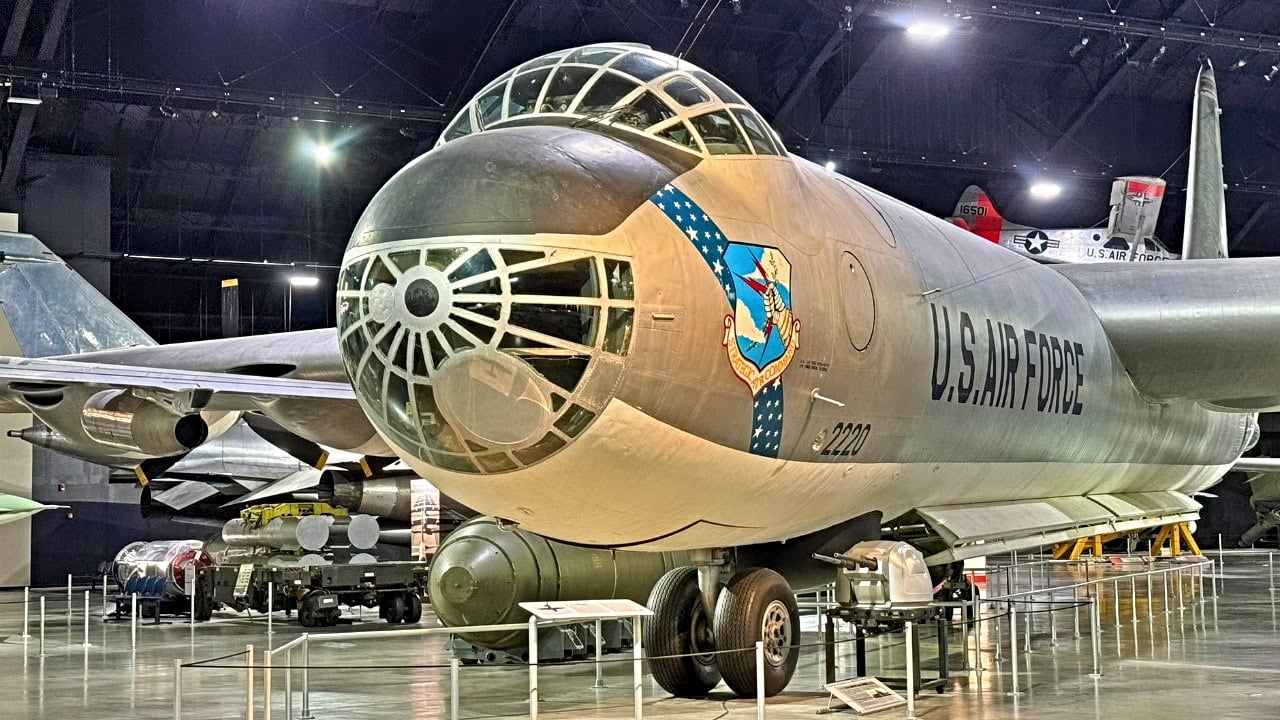
Meet the B-36 Peacemaker: The United States developed a heavy, long-range bomber that was second to none in World War II.
The hefty B-36 Peacemaker bomber was a force of nature that had a range of over 10,000 miles – enough to reach Germany from the United States at 236 to 435 miles per hour with 86,000 pounds of bombs. In fact, we visited the B-36 at the National Museum of the US Air Force last year and have embedded this article with photos from that visit in Dayton, Ohio.
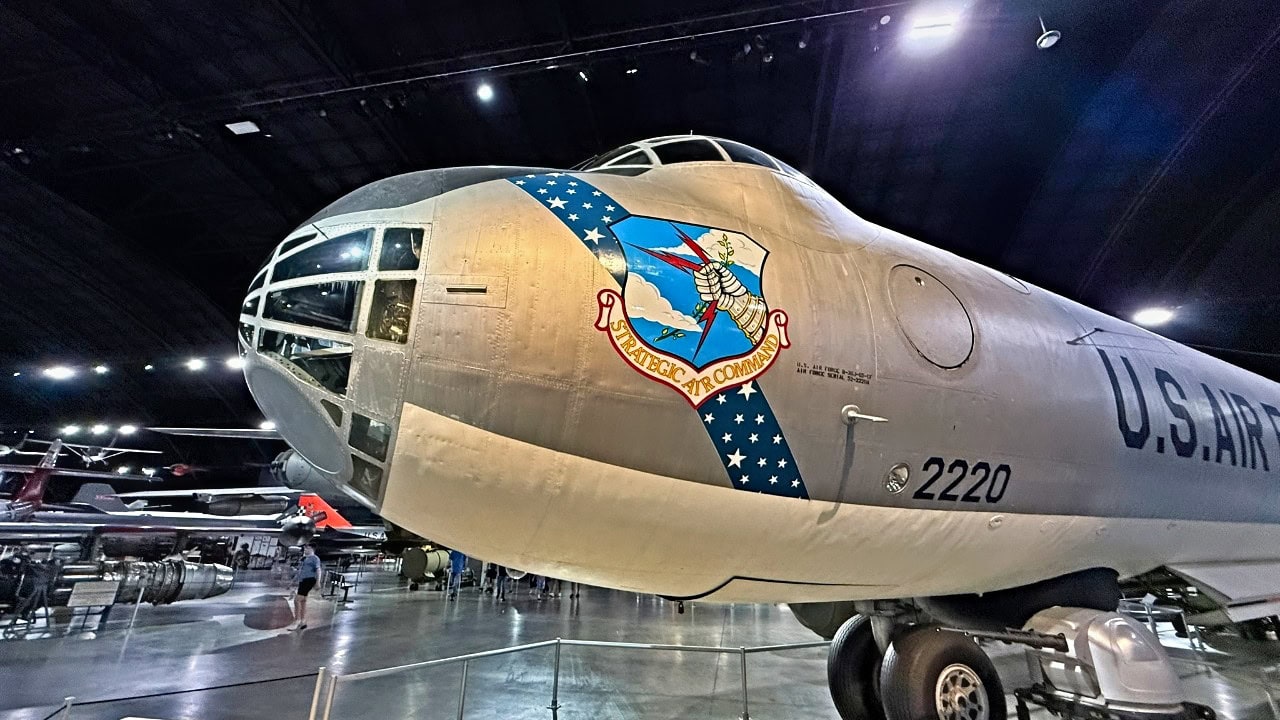
B-36. Image by 19FortyFive.
The Nazis had no real answer for this humongous beast, and it lifted the Americans’ morale to have such a significant instrument of death and destruction.
Give Convair Credit
Convair was able to build this intercontinental airplane with a mix of ingenuity and elbow grease from valuable workers who toiled on the assembly lines with a determination not seen on other weapons of war.
Frightful Times Influenced U.S. Bomber Development
It was 1941, and the war in Europe looked dark indeed. Britain was struggling in the air war with Germany. It looked like the Luftwaffe was dominating at first.
There were even fears that Hitler would order an amphibious invasion into the United Kingdom and London could fall.
What if the Americans had something that could punish Germany before the worst transpired in England?
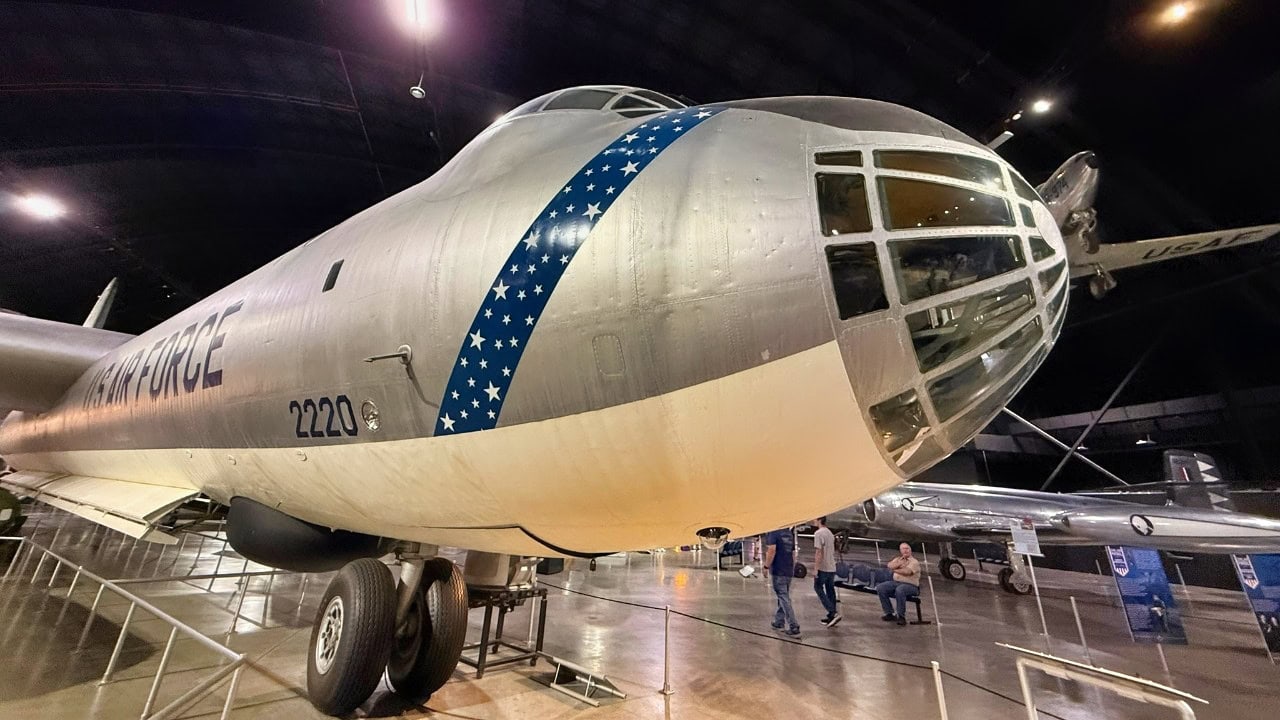
B-36 Bomber 19FortyFive Image.
Striking the Nazis on Their Home Turf Looked Unattainable
If that happened, where would the United States stage its own airplanes to conduct air strikes on Germany? This was a perplexing problem.
Most of Europe was taken over by the Wehrmacht. U.S. battle planners feared that without an intercontinental weapon system, they would not be able to take the fight to the enemy in the air.
Who Has the Best Ideas?
The U.S. Army Air Corps took action and called for proposals on how the Americans could bomb Germany in one full stroke with an airplane that could make it all the way to Europe and back.
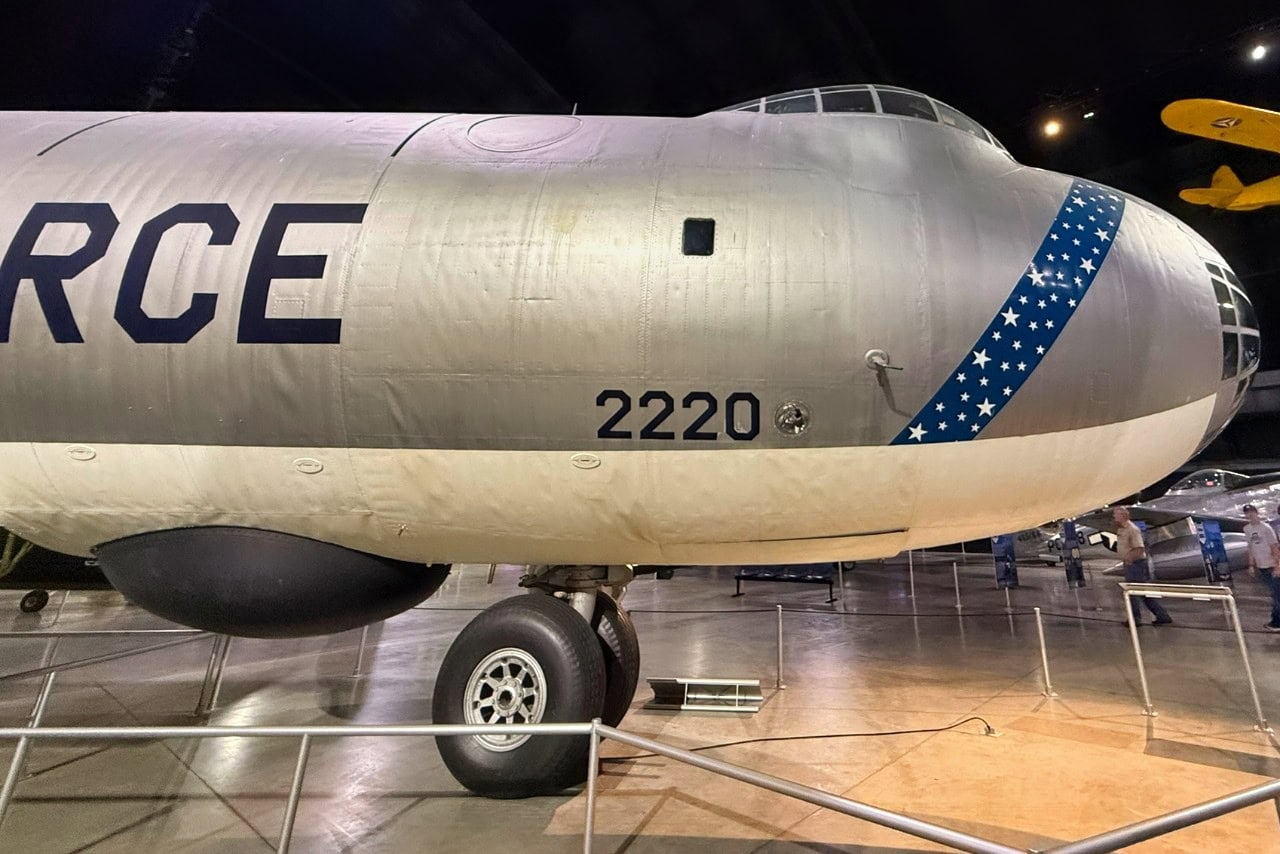
B-36 Bomber Dayton, Ohio USAF Museum. Image Credit: 19FortyFive.com/Harry J. Kazianis
There were no refueling tankers in those days, so the new airplane would have to hold a substantial amount of fuel.
It would be a high-flying warbird that would require a crew that could fly for long hours and an oxygen system for that immense altitude needed. The top ceiling was 40,000 feet.
Convair Gets Cooking
Convair was awarded the contract for “Model 36.” Engineers and designers were excited. This was a chance to make a difference with a historic bomber that could tilt the war in the Allies’ favor.
The new airplane would be even bigger than the monstrous B-29 Superfortress. The engines would need incredible power.
The bomb sights would be first-rate, and there would be an immense number of defensive systems to make it survivable when flying over Germany.
Six Powerful Engines Would Do the Job
The B-36 had six monstrous Pratt & Whitney R-4360 Wasp Major piston engines mounted in a “pusher configuration.” Four General Electric J47S could also be used sometimes. This was the biggest piston-engine airplane ever built, and the wingspan also set records.
Shifting Priorities
Not all was well with the B-36 program. The Army Air Corps also wanted to produce B-24 Liberators.
The British won the Battle of Britain, and Hitler never called for that invasion of England. The Americans had a choice to make.
Use the United Kingdom for a staging base for its bombers or continue working to make the B-36 in great numbers for cross-continent air strikes.
The priority also shifted to making numerous B-17 Flying Fortresses too. The B-36 program dwindled, and the Peacemaker never approached its heady goals. It did not serve in the war.
Some Features Had Never Been Attempted Before
Another problem was the new technology needed to develop the B-36. As my colleague Caleb Larson wrote, “the designers ran into several technological hurdles.
The massive 230-foot wingspan required thick wing roots that crews could physically crawl through for in-flight maintenance.
Early versions incorporated a twin-tail arrangement, but this was later replaced by a single massive vertical stabilizer to save weight and improve stability.”
The pressure system needed more work. Radar would need to be added, and that wingspan problem did not go away.
The engines sucked tons of fuel.
Maintenance needs would require a large ground crew. These people needed extensive training. Plus, there was the issue of pilot and crew fatigue from such a long journey from the United States to Europe.
Cold War Stalwart in the Nuclear Age
However, the B-36 had another use after the war that made all the difficulties worthwhile. It would have a nuclear weapons delivery system. This made it even more valuable at the beginning of the Cold War.
The B-36 was desperately needed as the Soviet Union was developing its own nuclear bombs. All that work to get the B-36 ready to take on Germany was bearing fruit after World War Two.
Now the mission was to strike Soviet targets such as military bases and even cities. The Peacemaker would be seen as the “Warmaker.”
Intelligence Collection Platform
The B-36 was also good at photo reconnaissance. It was able to collect intelligence imagery along the borders of the Soviet Union. This gave the United States greater situational awareness before the jet age enabled long-range flight.
Overcome by Events and a New Preference for Jet Engines
But the reign of the B-36 ended. Piston engines were going away, and it was time for the jet age. The B-47 Stratojet was being developed, which would give way to the B-52 Stratofortress.
The B-36 was going by the wayside. But what a great airplane.
It showed that the Americans could create a long-range intercontinental bomber that set records. Designers and engineers at Convair did their jobs well. You can still see it at the National Air and Space Museum in Dayton, Ohio.
About the Author: Brent M. Eastwood, PhD
Brent M. Eastwood, PhD, has written over 3,500 articles on defense issues. Eastwood, PhD, is the author of Don’t Turn Your Back On the World: A Conservative Foreign Policy and Humans, Machines, and Data: Future Trends in Warfare, plus two other books. Brent was the founder and CEO of a tech firm that predicted world events using artificial intelligence. He served as a legislative fellow for US Senator Tim Scott and advised the senator on defense and foreign policy issues. He has taught at American University, George Washington University, and George Mason University. Brent is a former US Army Infantry officer. He can be followed on X @BMEastwood.