
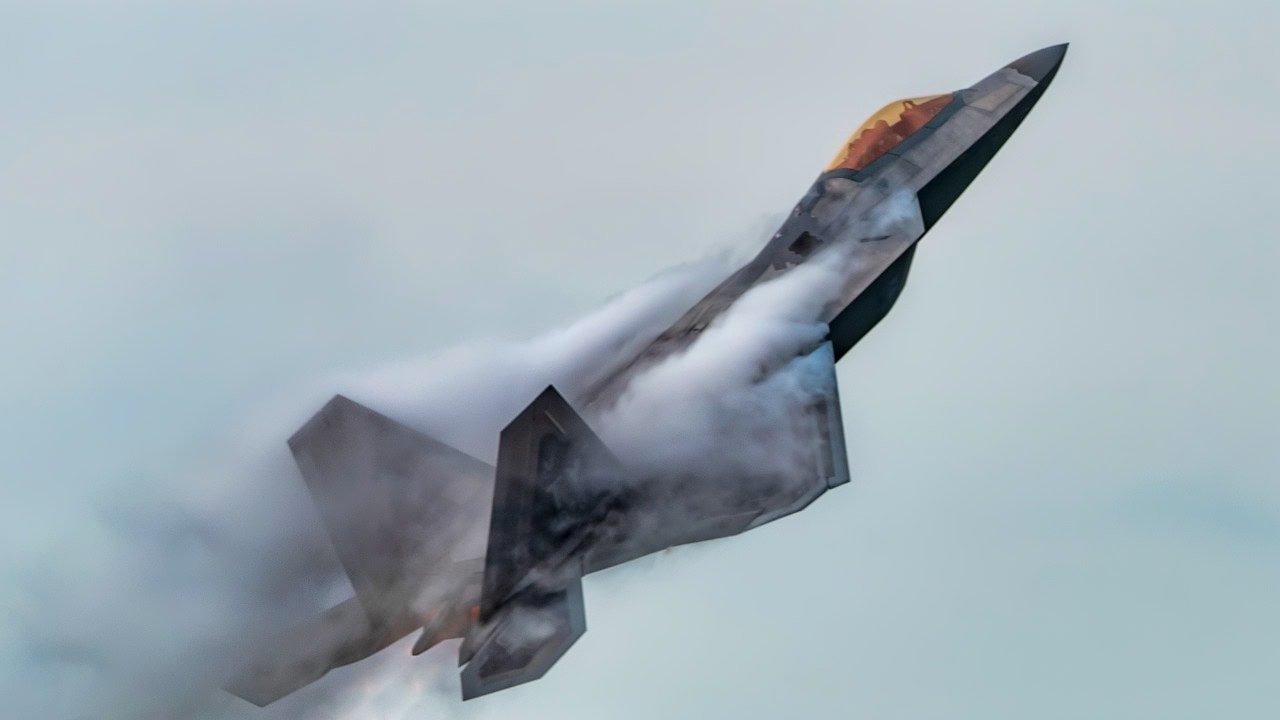
The F-22 Raptor entered operational service in 2005 and is arguably the world’s most sophisticated air superiority fighter.
The jet was designed primarily to destroy advanced Soviet/Russian fighters beyond visual range, but, of course, by the time the F-22 went operational, the Soviet Union had collapsed, and Russia was rebuilding, leaving the F-22 without its primary reason for existence.
Unsurprisingly, despite the F-22’s design purpose, the world’s most dominant air-to-air fighter went nearly 18 years without an air-to-air kill.
And when it finally came, on February 4, 2023, it came in an unorthodox fashion: an F-22 flying at roughly 58,000 feet fired an AIM-9X Sidewinder at a Chinese surveillance balloon drifting above South Carolina.
Within the next few days, the F-22 was used to shoot down two more unidentified airborne objects over Alaska and Canada, giving the vaunted jet a strange and unanticipated combat record.
Built for a Different War
The F-22 originated in the Cold War Advanced Tactical Fighter program, which was intended to defeat the next generation of Soviet aircraft.
The program’s design combined several capabilities that were revolutionary when development began, including very low radar cross-section, AN/APG-77 AESA radar, passive electronic surveillance, internal weapons carriage, supercruise, thrust vectoring, and integrated sensor fusion.
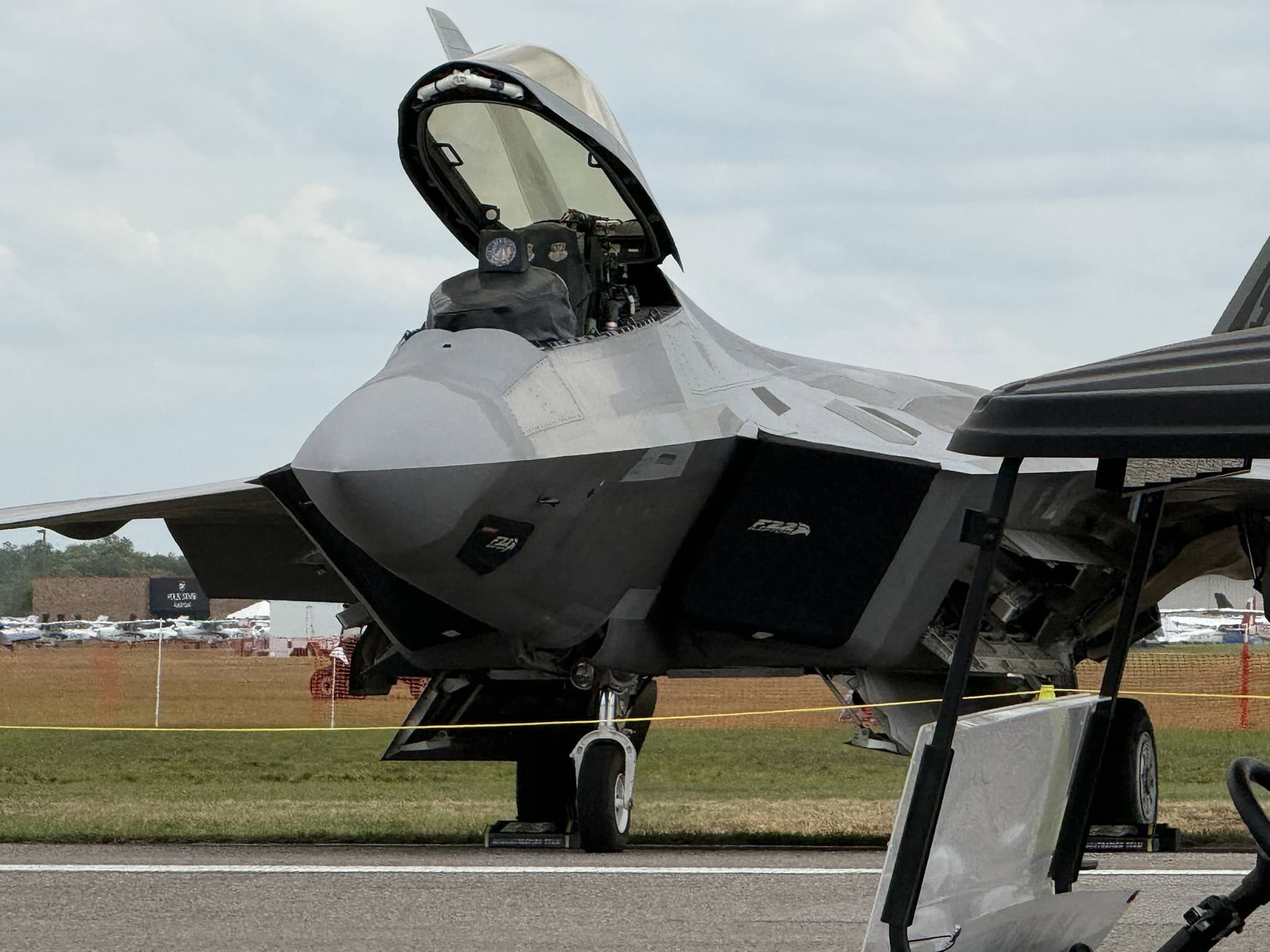
F-22 Raptor. Taken on 4/19/2026 by Harry J. Kazianis for 19FortyFive.com
With two Pratt & Whitney F119 engines generating roughly 35,000 pounds of thrust each (in afterburner), the F-22 was a remarkable machine.
And unlike most fighters, the Raptor was distinct for its ability to sustain supersonic flight without continuously using fuel-hungry afterburners (a feature known as supercruise). The jet’s top speeds remain classified but are officially stated as above Mach 2.
Two Decades Without a Kill
The irony of the Raptor is historical; the jet was designed for a war that never happened.
The Soviet Union collapsed before the F-22 could enter service, and America’s subsequent wars were fought against opponents who lacked the ability to challenge US superiority—leaving the F-22 sidelined.
The Raptor did eventually experience combat, beginning in Syria in 2014. But the jet was used primarily for ground attack, surveillance, deterrence, and airspace-control missions—not the anticipated fighter-vs-fighter engagements it was built for.
So the aircraft did accumulate extensive operational experience, only without encountering the enemy fighters that the F-22 was so adept at destroying.
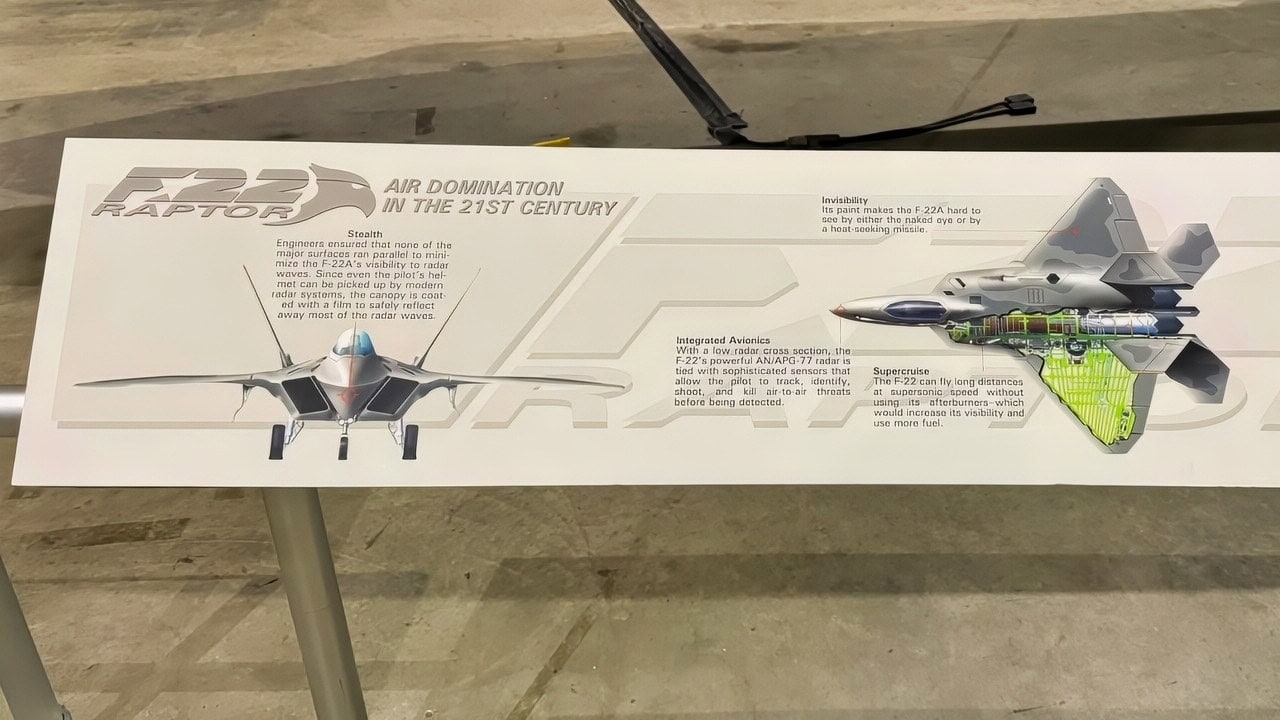
F-22 Raptor Diagram from National Museum of the U.S. Air Force. Image Credit: Harry J. Kazianis.
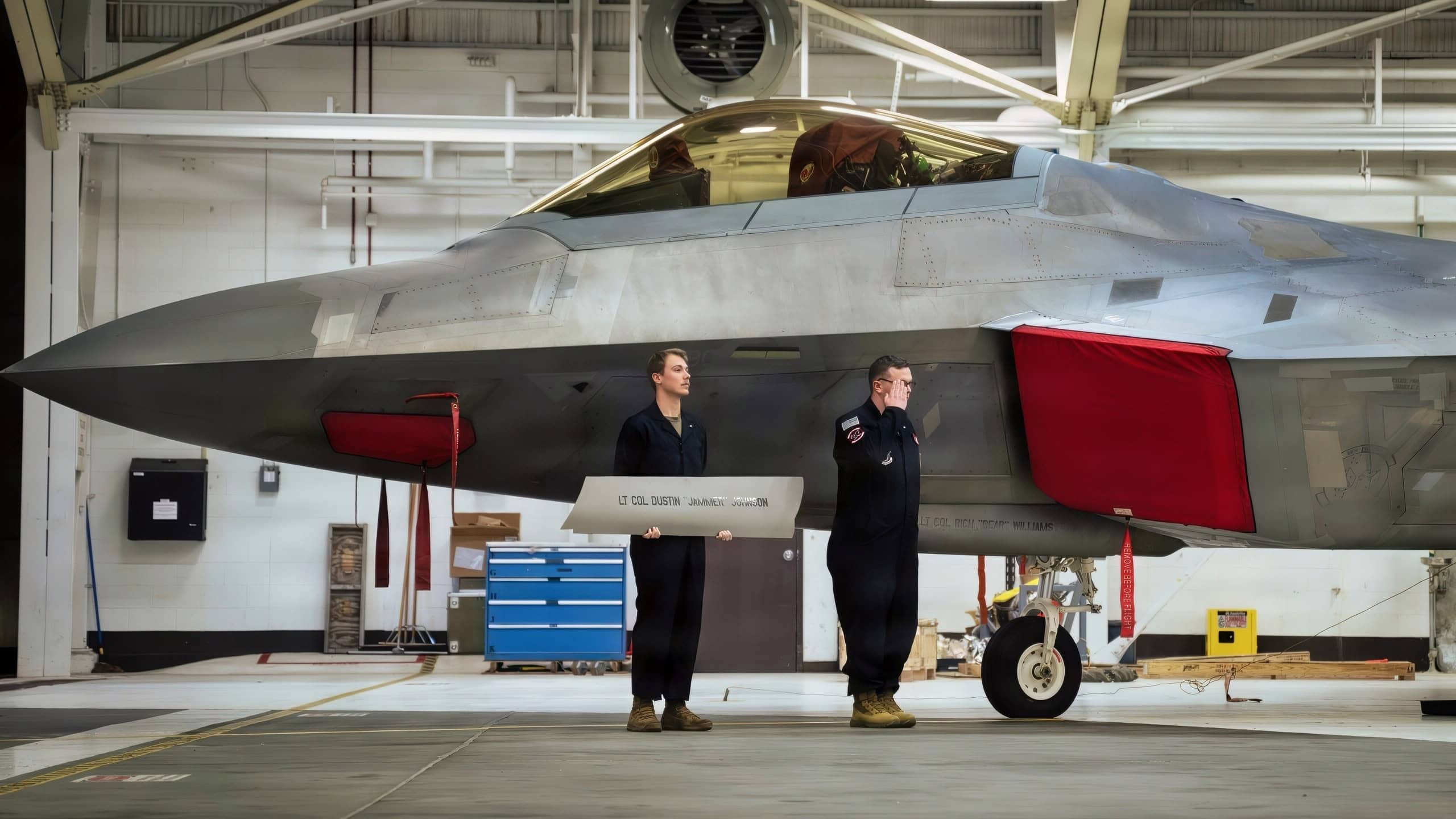
U.S. Air Force Airmen reveal the name of Lt. Col. Richard Williams, commander of the 90th Fighter Squadron, on an F-22 Raptor following the 90th FS change-of-command ceremony on Joint Base Elmendorf-Richardson, Alaska, March 16, 2026. (U.S. Air Force photo by Airman Keola Vischi)
The Balloon Thing and the F-22 Raptor
The 2023 Chinese balloon incident finally produced the F-22’s first confirmed aerial victory.
The engagement itself demonstrated an unusual aspect of fighter performance—the ability to attain high altitude.
The balloon in question was operating at an altitude of roughly 60,000 to 65,000 feet, near the upper operating envelope of conventional fighters, but the F-22’s exceptional high-altitude performance made it an obvious choice for interception.
To destroy the balloon, an AIM-9X Sidewinder was selected rather than the radar-guided AIM-120 AMRAAM.
Then, six days later, another F-22 destroyed an unidentified object over Alaska. And then, the following day, an F-22 operating under NORAD authority destroyed another object over Canada’s Yukon.
Over the course of one week, 18 years after making its debut, the F-22 had developed a combat record dominated by balloons and mysterious high-altitude objects.
Remaining Formidable
Shooting down balloons fails to highlight how dangerous the F-22 actually is.
The jet benefits from information asymmetry—the ability to detect the enemy while making it extraordinarily difficult for that same enemy to detect the F-22.
Equipped with the AN/ALR-94 electronic warfare suite, with antennas distributed around the airframe, the F-22 can passively detect and characterize hostile electromagnetic emissions.
The APG-77 can then provide extremely precise radar information using low-probability-of-intercept techniques.
But beyond information asymmetry, the F-22 is just a kinetically impressive aircraft.
With 70,000 pounds of thrust and thrust-vectoring nozzles, the Raptor is powerful and maneuverable—capable of flying high and flying fast.
The F-22’s unusual history says less about the aircraft than about the era in which it served.
America spent billions creating a fighter optimized for an extraordinarily demanding mission—but by the time the investment manifested, the need for that demanding mission had disappeared.
The Raptor was never used as intended, but that doesn’t diminish the airframe’s capabilities, which remain the world’s most capable air superiority fighter.
MORE – China has 50 Frigates. The US Navy Has None
About the Author: Harrison Kass
Harrison Kass is a writer and attorney focused on national security, technology, and political culture. His work has appeared in Tablet, City Journal, The Hill, The Spectator, and The Cipher Brief. He holds a JD from the University of Oregon and a master’s in Global & Joint Program Studies from NYU. More at harrisonkass.com.