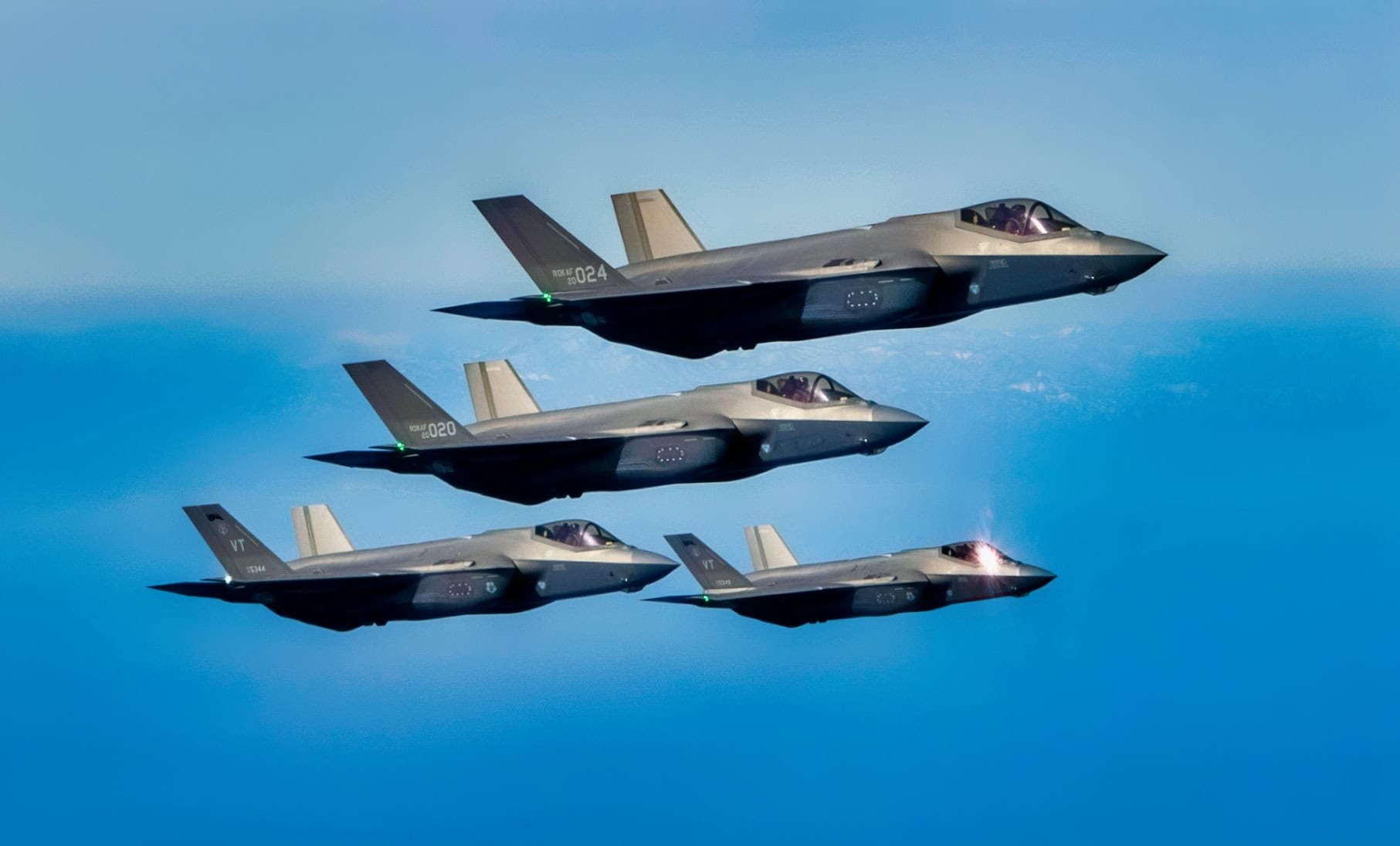
Canada’s F-35 Review Is Now Part of Its US Trade Talks – Ottawa has officially tethered the finalization of its long-anticipated F-35 Lightning II purchase from the United States to the broader, tense trade negotiations underway between Washington and Ottawa, according to Canadian Defense Minister David McGuinty.
The Canadian defense chief acknowledged that a military procurement of the F-35 program’s size would, of course, become part of the intense talks between Canada and the United States. Per McGuinty, “Acquisition of that size would normally be a point of debate or dialogue between two sovereign nations.”
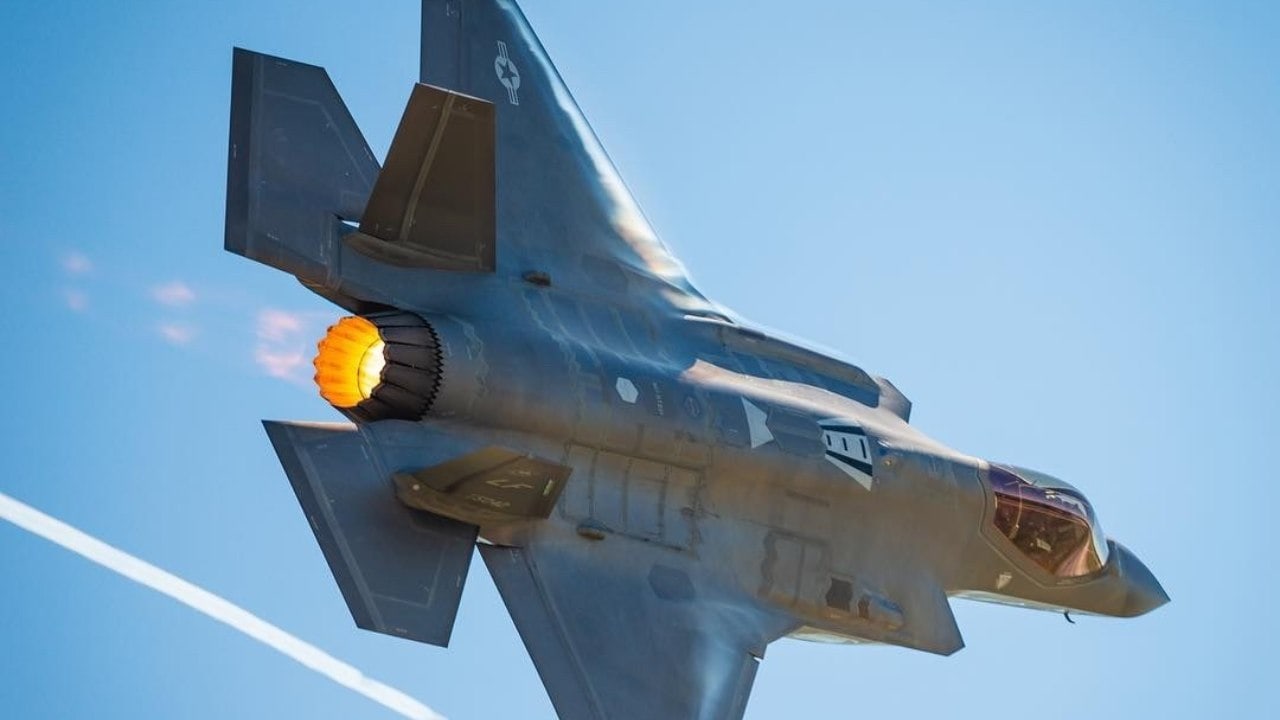
Capt. Andrew “Dojo” Olson, F-35 Demonstration Team commander and pilot performs a dedication pass in an F-35A Lightning II during the 2019 Wings Over Wayne Airshow April 27, 2019, at Seymour Johnson Air Force Base, North Carolina. The WOW Airshow marks the third public performance of the F-35 Demo Team’s new aerial demonstration during 2019 airshow season.
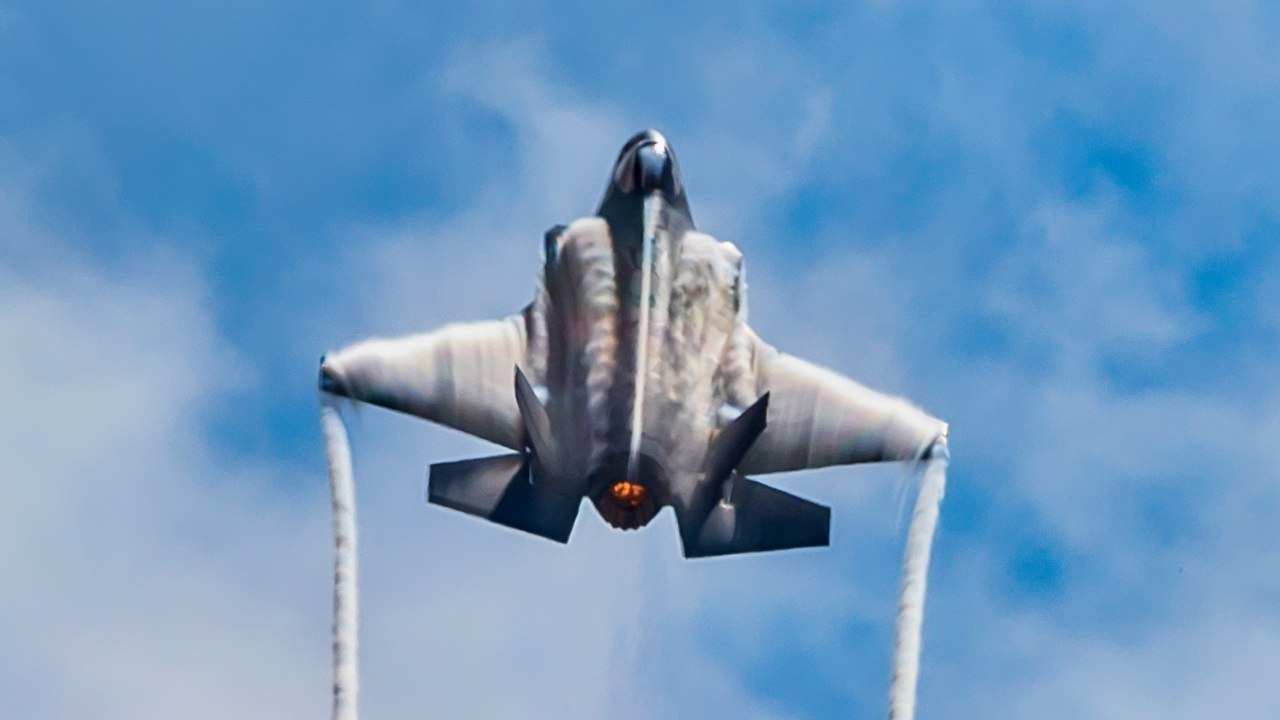
Capt. Andrew “Dojo” Olson, F-35 Demonstration Team pilot and commander performs aerial maneuvers during the Wings Over Houston Airshow Oct. 18, 2019, in Houston, Texas. The show featured performances from the U.S. Air Force Thunderbirds, Tora, Tora, Tora, and Oracle. (U.S. Air Force photo by Senior Airman Alexander Cook)
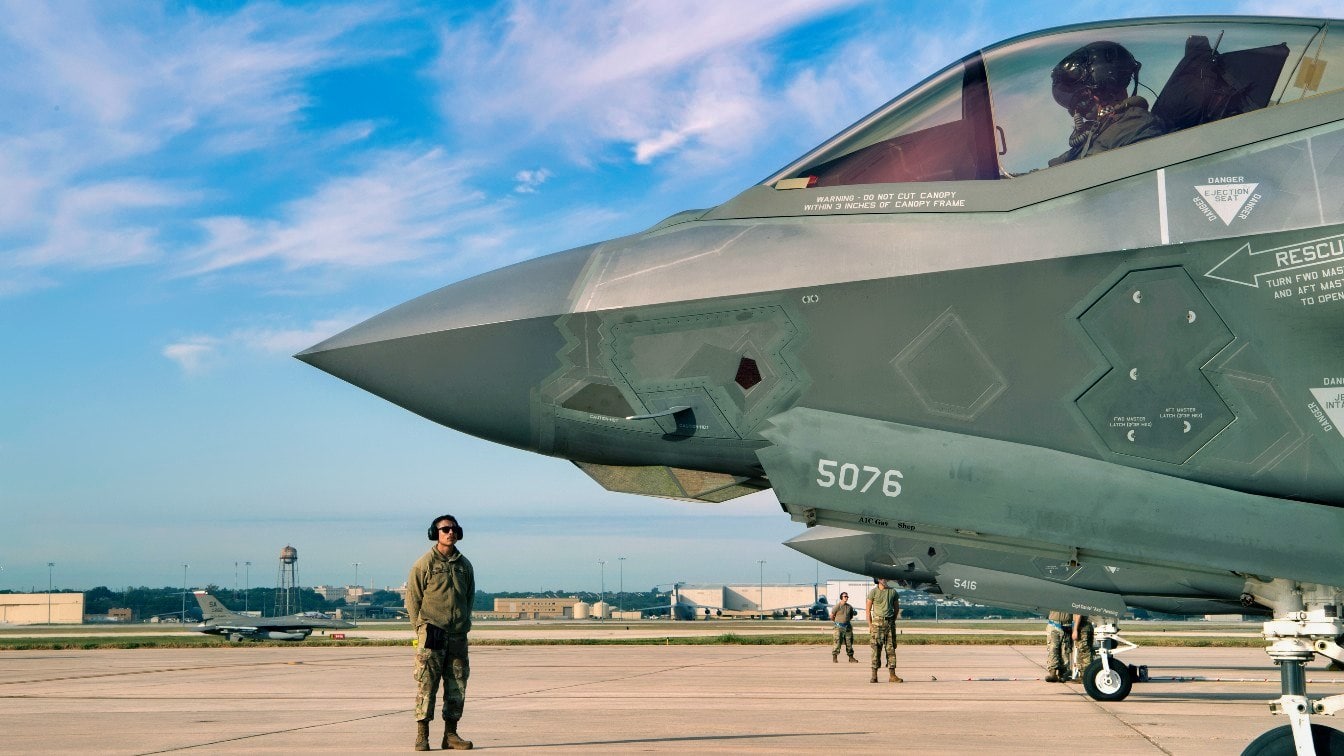
F-35s from the 62nd Fighter Squadron visit Joint Base San Antonio-Lackland, October 21, 2021. F-35 Lightning II aircraft traveled to JBSA-Lackland for a two week stay to train and fly with multiple different aircraft from the surrounding area to include the 149th Fighter Wing’s F-16 Vipers. (Air National Guard Photo by Staff Sgt. Ryan Mancuso)
And the Canadian defense minister is correct in theory.
Yet, before 2025, the deal with the United States over the F-35 purchase was essentially a fait accompli. Indeed, the Canadian defense industrial base had already started integrating itself into the larger Lockheed Martin F-35 supply chain in anticipation of the finalization of talks.
The Background
Since Donald Trump became president, though, trade tensions between Ottawa and Washington have been at historic levels. Indeed, one might say that the Trump administration’s aggressive protectionist policies toward Canada were enough to cause a systemic rupture in US-Canadian relations–and you’re likely seeing that play out in the F-35 deal.
McGuinty himself has said that the F-35 procurement plan is only one issue in a much greater negotiation involving trade, defense, and other economic interests. The Canadian defense minister emphasized in recent remarks to the global press that his boss, Prime Minister Mark Carney, would not be “rushed” into deciding the fate of the F-35 deal.
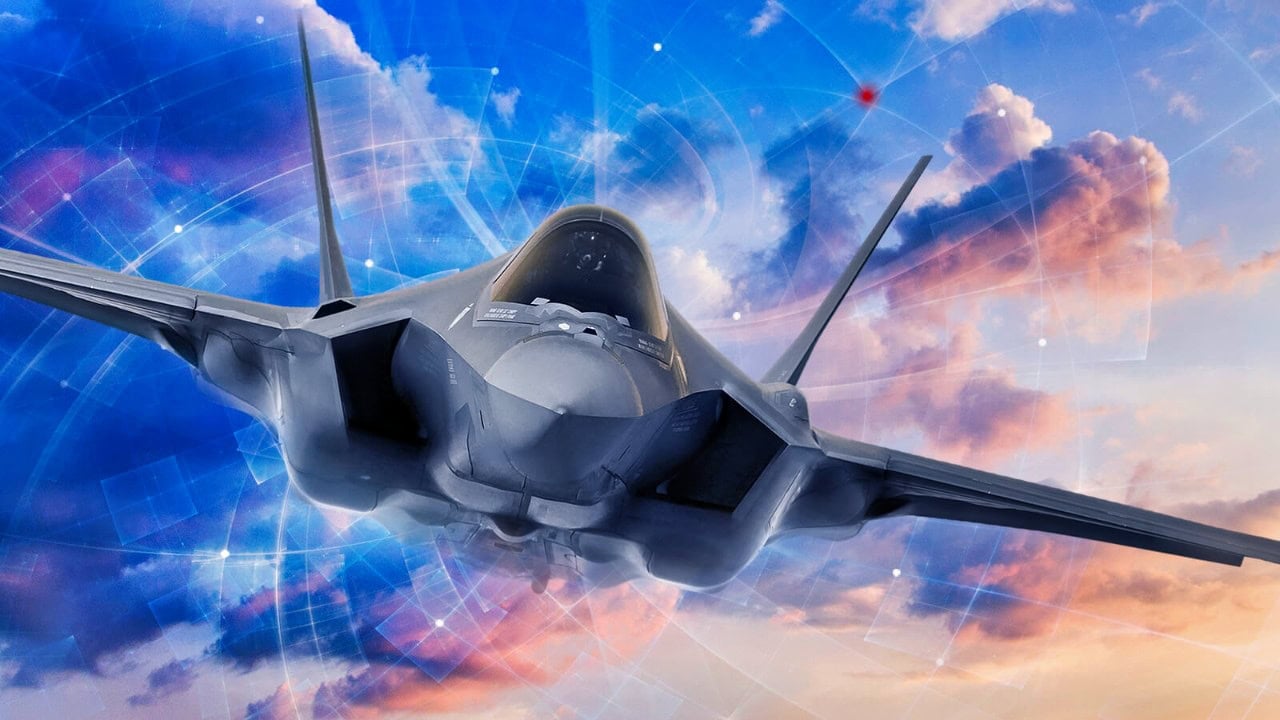
F-35 fighter. Image Credit: BAE systems.
That is a sea change from what the world was told back in 2023, when the two neighbors signed the initial deal.
That deal was signed between the then-Prime Minister Justin Trudeau and former US President Joe Biden and called for Canada to purchase 88 Lockheed Martin F-35A Lightning II fifth-generation warplanes at an estimated cost of 27.7 billion Canadian dollars. Sixteen of the 88 warplanes are already in production, with the first deliveries expected before the end of this year.
Those birds are likely to be delivered on time. It’s the remaining planes that are less certain. In this uncertainty, Ottawa has already hinted at its willingness to procure other fighters from other NATO members, such as the JAS-39 Gripen from Sweden.
Prime Minister Carney ordered a review of the acquisition last Spring as relations with Washington soured over the Trump administration’s grievous tariff policies. The review was to conclude last September. It has not officially concluded. Hence, McGuinty’s comments.
F-35 Question Comes Amid Tariff Fight
The fighter debate unfolds as Canada and the United States approach another significant trade deadline. The Trump administration has threatened Ottawa with 50 percent tariffs on approximately 28 billion Canadian dollars worth of Canadian products by Aug. 19. The targeted goods include dairy products, alcohol, and hockey equipment–even some products that fall under the United States-Mexico-Agreement (USMCA) that President Trump successfully created as a replacement to NAFTA in his first term.
Washington wants to impose the tariffs on Canada under Section 338 of the Tariff Act of 1930, as a purported retaliation against Ottawa for what it describes as discriminatory Canadian trade practices related to the management of Canada’s dairy supply (and provincial restrictions on American alcohol).
Ottawa wants to negotiate a broader agreement that could reduce existing American tariffs that are harming Canada’s steel, aluminum, automobiles, and forestry products.
Canada has indicated a willingness to remove automobile counter-tariffs, and Ottawa is trying to persuade eight of Canada’s provinces to lift restrictions on US alcohol and change how they manage the country’s dairy supply chain.
None of these moves, though, appears powerful enough to stop the Trump administration’s trade war.
Where Do We Go From Here?
So, Canada’s defense ministry has intervened with the challenge to the F-35 deal. Indeed, the Carney government in Ottawa has repeatedly signaled a willingness to reduce Canada’s overall dependence on US military suppliers.
Canadian representatives argue that 70 cents of every dollar in the Canadian defense budget was sent to the United States because of Ottawa’s dependence on US military suppliers.
Indeed, the Carney government has released a new national defense strategy that explicitly demands Canadian defense spending remain mostly within Canada while expanding relationships with non-US military suppliers.
So, what of the remaining 72 F-35s that Canada was supposed to acquire (irrespective of larger trade negotiations with Washington)?
That program remains dangerously in limbo. That is a problem not only for American military contractors but also for North America’s combined air defense. The Canadian Air Force is supposed to maintain reliable patrols in the Arctic. For years, Canada has been unable to do this because their current crop of aging warplanes has not been up to the challenge. For that reason, Ottawa wanted the F-35: both to upgrade its aging fleet and to replace its fourth-generation warplanes with newer, interoperable fifth-generation aircraft.
These delays are stymying the renewed need for North American Arctic defense while harming the economies of both countries, which were relying on the new F-35 line. If the US wants to finalize this sale of F-35s to Canada, it sounds like Ottawa will insist that Washington become more flexible on a wider range of trade issues.
But for President Trump, tariffs are an almost religious belief. So, getting the forty-seventh president to bend on that issue seems unlikely–even if it means Canada breaks its commitment to the F-35 program and potentially procures planes from Sweden.
About the Author: Brandon J. Weichert
Brandon J. Weichert is the Senior National Security Editor at 19FortyFive.com. He also manages The Weichert Brief on Substack. Weichert also hosts “National Security Talk” on Rumble. He is the author of four bestselling national security books, the most recent of which is A Disaster of Our Own Making: How the West Lost Ukraine (Encounter Books). Follow him via Twitter/X @WeTheBrandon.