
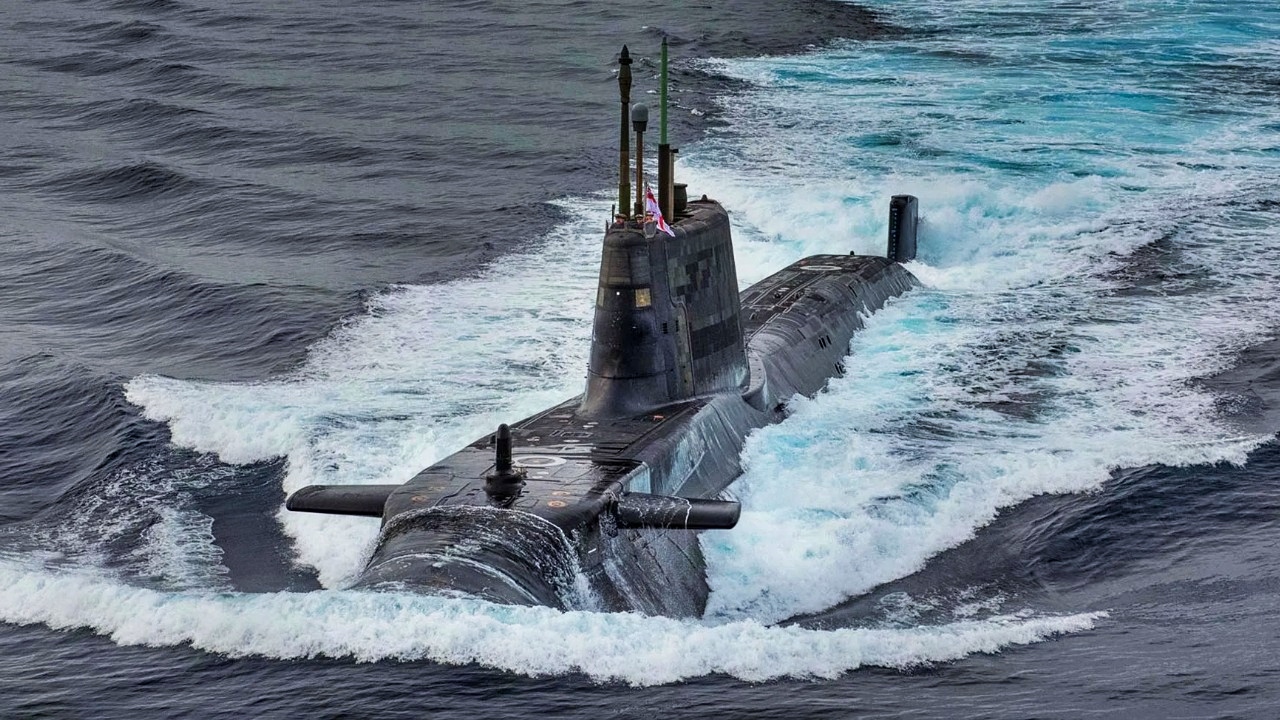
HMS Superb was a Swiftsure-class nuclear-powered fleet submarine built to hunt submarines and surface warships. The 272-foot boat displaced roughly 5,000 tons submerged, used a Rolls-Royce PWR1 reactor to drive a single shaft, and exceeded 28 knots underwater. Five 21-inch tubes fired Spearfish heavyweight torpedoes. Her nuclear plant supported long submerged patrols, with food and crew endurance imposing the practical limits.
On May 26, 2008, Superb struck the seabed south of Suez. The charted underwater pinnacle damaged her bow and main sonar. All 112 people aboard escaped injury, the pressure hull remained watertight, and inspections found no reactor damage.
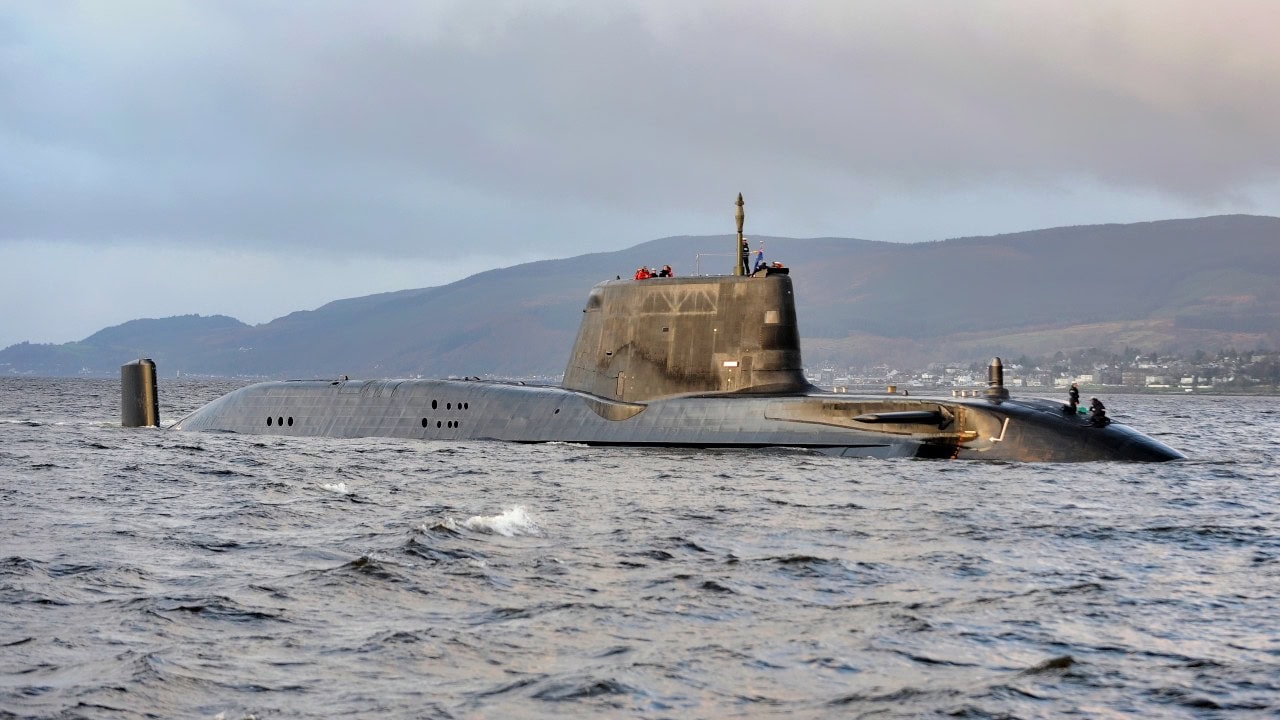
Astute-Class Submarine Royal Navy
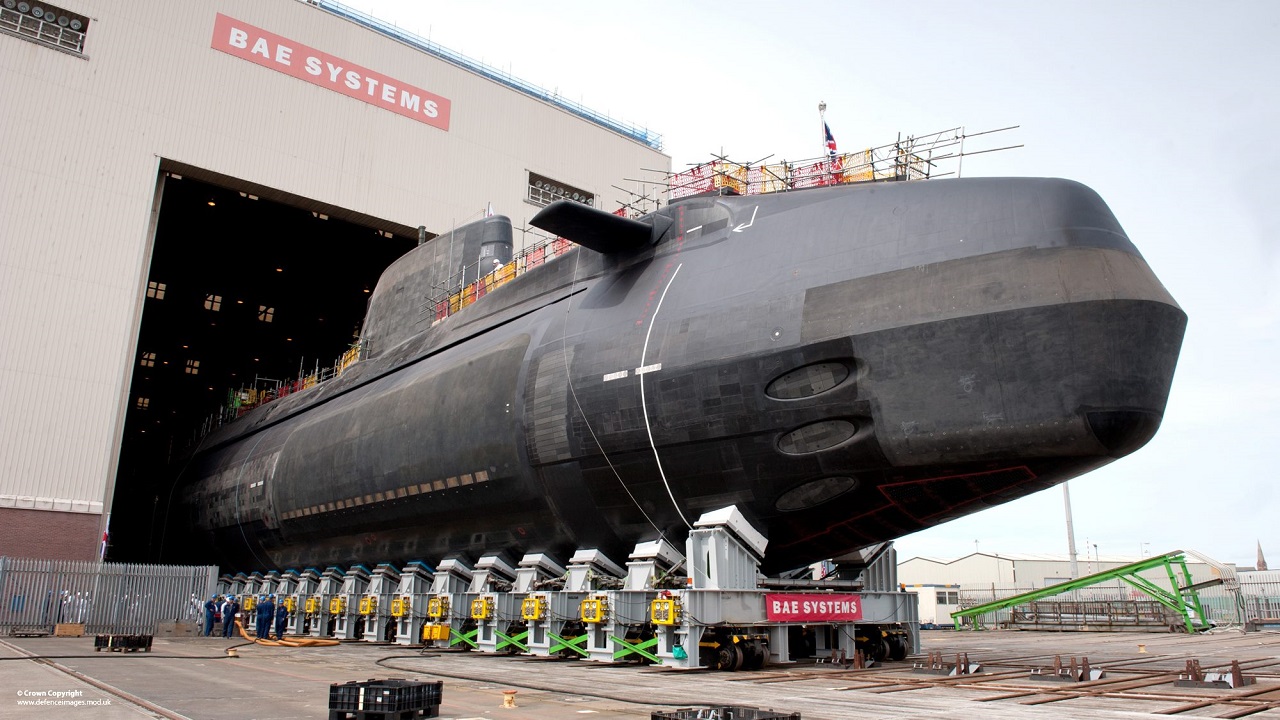
Royal Navy Astute-Class Submarine.
The submarine surfaced and continued under her own power, but she was no longer fit for submerged operations. A boat designed around stealth and underwater detection had lost the sonar capability central to both navigation and combat.
The Ministry of Defence Board of Inquiry found no equipment failure. Superb’s charts, inertial navigation system, and echo sounder were accurate and working. A rushed plan, a misread depth, a four-mile shortcut, weak supervision, and poor watch handovers placed the submarine directly over a known hazard.
A 123-meter Sounding Was Read as 723 Metres
Superb left Britain on May 6 for an operational deployment east of Suez. The crew received instructions on May 20 to conduct part of the Red Sea passage submerged and prepared the route while crossing the Mediterranean.
The command team selected British Admiralty chart BA 159, intended primarily for surface navigation, because its scale looked useful. Bottom-contour and specialist hydrographic charts were aboard, but they were not used as the main reference.
The dive chart began as a training exercise for the casing officer before it became the working plan.
The final depth decision came only about one hour and 25 minutes before Superb submerged. A technical problem had reduced available speed, adding pressure to make up time and reach the rendezvous.
Evidence presented at court-martial showed a summit marked at 123 meters was read as 723 meters. Commander Steven Drysdale approved a deeper transit, reportedly around 250 meters, believing the seabed lay far below the submarine.
The inquiry found six people had opportunities to detect the danger, including three officers with formal responsibility for navigation.
The late change left too little time for an independent review.
A Four-Mile Shortcut Crossed the Shoal
After Superb submerged, a close-quarters drill involving a surface contact moved the boat away from its intended track.
To regain the planned speed of advance, the tactical watch leader ordered a four-mile shortcut.
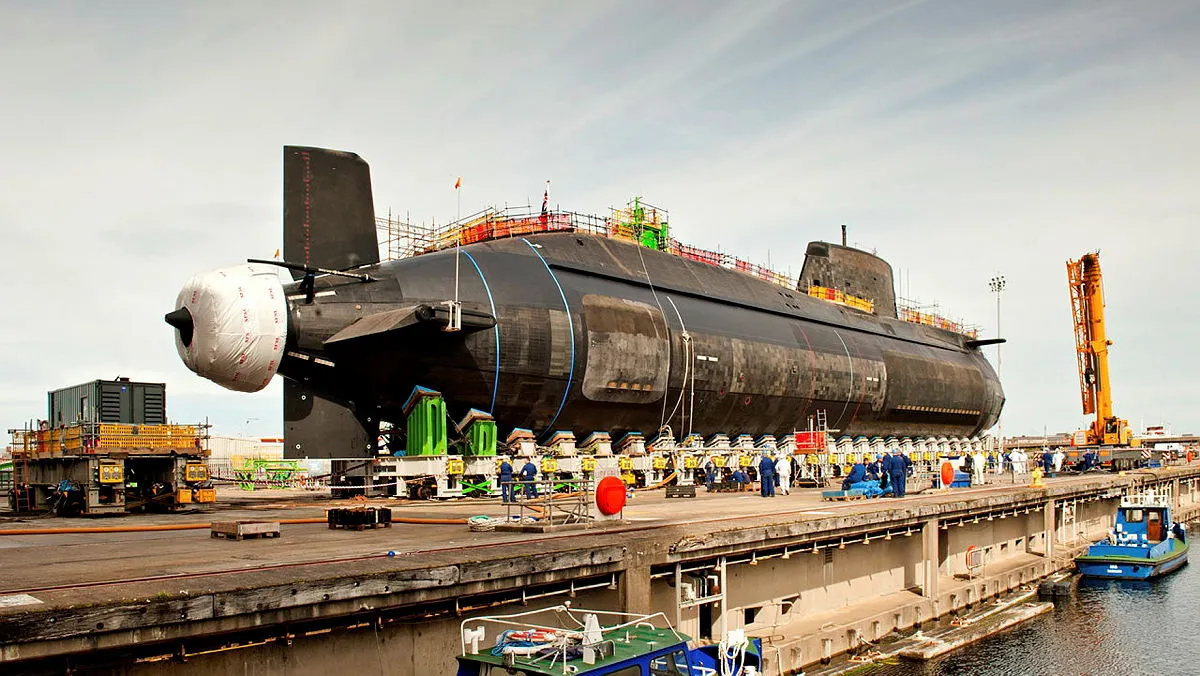
Royal Navy’s Astute-Class Submarines. BAE Systems.
The Logistics Officer, serving as plot officer despite limited navigation training and no bridge-warfare qualification, drew the revised track across the shoal. The watch leader gave it only a cursory check. Drysdale was not formally informed, even though his standing orders required notification.
Several watch handovers then occurred together. Senior navigation personnel had stood down, and incoming watchkeepers did not independently examine the chart. The echo sounder was operating, but nobody was assigned to monitor it as the seabed rose rapidly.
At about 10:01 p.m., Superb struck a slope estimated at 20 degrees. Heavy jolts ran through the boat, with the starboard bow suffering the worst damage. The crew ordered full rise and full power, blew the main ballast tanks, and brought Superb to the surface.
The Crew Prevented a Far Worse Accident
A flood alarm sounded during the emergency, but inspections found no breach. Reactor specialists checked the plant, shielding, and core integrity. The official inquiry described the crew’s response after impact as exemplary.
Temporary repairs at Souda Bay, Crete, allowed Superb to reach Devonport on June 28. Damage to the bow sonar left the submarine unable to resume its deployment. The later USS Connecticut grounding produced years of repair work after a strike against the bow. The 2005 USS San Francisco accident had already shown how quickly a navigation error becomes catastrophic when a fast attack submarine meets rising terrain.
The Inquiry Changed Royal Navy Procedures
Investigators concluded the crew possessed the information needed to avoid the pinnacle. The failure came from route planning, command oversight, allocation of responsibility, and watch transfer rather than faulty machinery.
The Board recommended placing an electronic chart system into formal service and connecting it to the submarine’s inertial navigation system. Crews would mark “no-go” water and receive warnings as a boat approached it. Other changes included depth alarms for echo sounders, stronger handover rules, standardized navigation plots, automatic supply of specialist charts, and an emergency procedure for grounding at depth.
The report also stressed that a submarine operating area offered no guarantee of safe water. A “moving haven” kept friendly submarines apart; it did not replace chart work or transfer responsibility away from the captain.
Superb had entered service in November 1976 and was nearing retirement. The Trafalgar class had replaced the Swiftsures, while the first Astute-class boats approached service. The grounding became Superb’s final deployment, and she was decommissioned on September 26, 2008, slightly ahead of schedule.
Drysdale, officer of the watch, Lieutenant Commander Andrew Cutler, and Navigating Officer Lieutenant Lee Blair later pleaded guilty to neglecting their duties. On March 15, 2010, a Portsmouth court-martial reprimanded all three.
About the Author: Harry J. Kazianis
Harry J. Kazianis (@Grecianformula) was the former Senior Director of National Security Affairs at the Center for the National Interest (CFTNI), a foreign policy think tank founded by Richard Nixon based in Washington, DC. Harry has over a decade of experience in think tanks and national security publishing. His ideas have been published in the NY Times, The Washington Post, The Wall Street Journal, CNN, and many other outlets worldwide. He has held positions at CSIS, the Heritage Foundation, the University of Nottingham, and several other institutions related to national security research and studies. He is the former Executive Editor of the National Interest and the Diplomat. He holds a Master’s degree focusing on international affairs from Harvard University.

