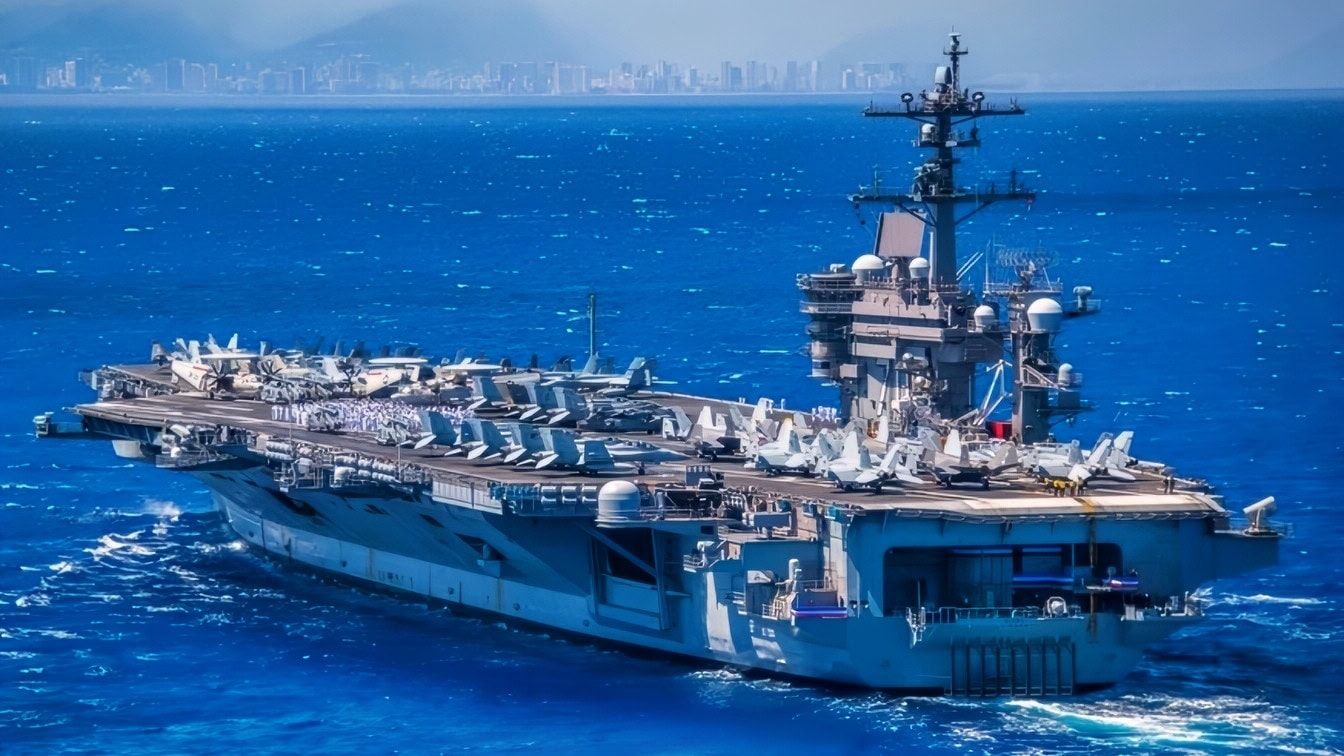
Since the outbreak of WWII, aircraft carriers have remained central to modern naval strategy. The carrier’s ability to deploy airpower across the open seas is a massive force multiplier for any naval force and massively outweighs the advantages of, say, large battleships.
Throughout history, however, only five battles have seen aircraft carriers from opposing navies face each other. These battles—Coral Sea, Midway, Eastern Solomons, Santa Cruz, and the Philippine Sea—all occurred within 25 months of each other and involved the same navies. After the Second World War, the U.S. Navy became the premier carrier power on the globe, with no other nation able or willing to contest that power except the former Soviet Union and modern China.
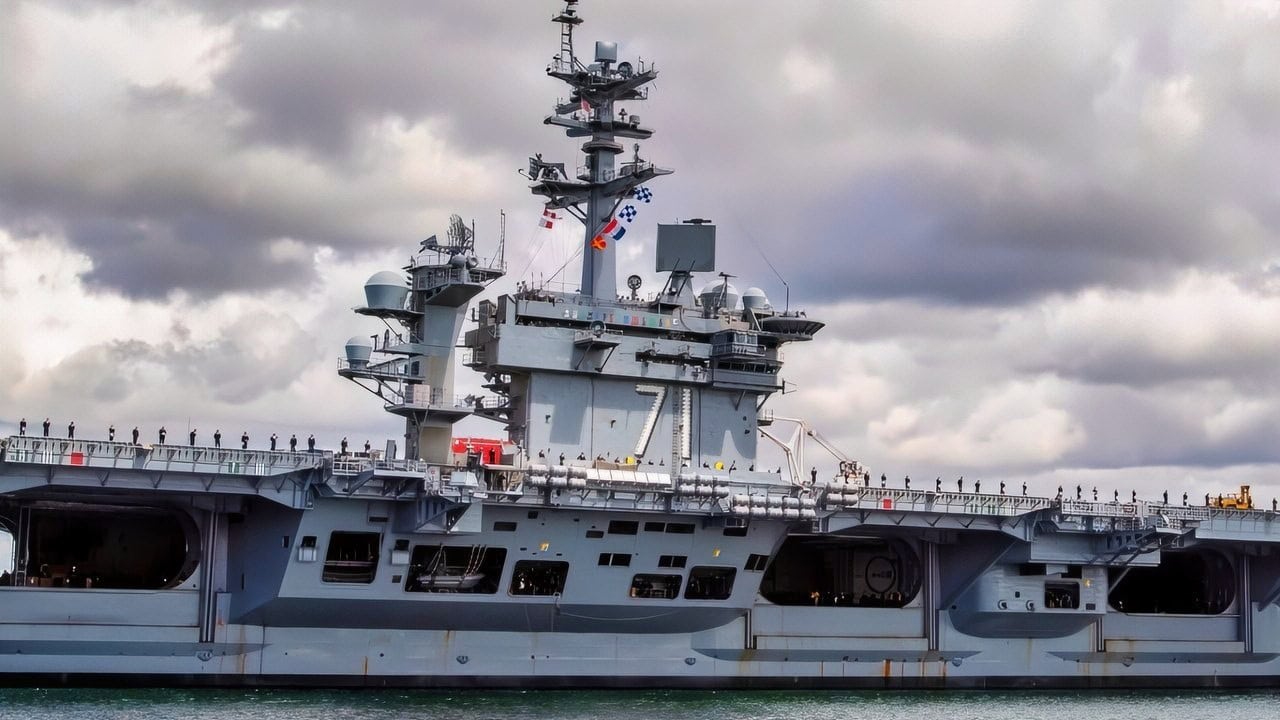
(March 23, 2023) Nimitz-class aircraft carrier USS Theodore Roosevelt (CVN 71) returns to Naval Air Station North Island following a regularly-scheduled maintenance availability and completion of sea trials, March 23. The ship changed its homeport from Bremerton to San Diego after completing an 18-month docking planned incremental availability in Bremerton, Washington, during which the ship received extensive restorations and upgrades to support the F-35C Lightning II, E-2D Advanced Hawkeye, and CMV-22B Osprey, as well as future platforms such as the MQ-25 Stingray unmanned aircraft system. (U.S. Navy photo by Mass Communication Specialist 2nd Class Keenan Daniels)
The Battle of the Coral Sea: Aircraft Carrier Showdown
The Battle of the Coral Sea was the first major naval engagement in history in which neither opposing fleet saw or fired upon the opposing side. The battle was conducted exclusively with aircraft carriers.
It took place in the waters northeast of Australia as Japan sought to capture Port Moresby in New Guinea and strengthen its perimeter in the Pacific.
At the time, Imperial Japan believed controlling Port Moresby would support its broader goal of isolating Australia from the United States and securing its control in the Pacific.
To that end, the Imperial Japanese Navy (IJN) deployed the fleet carriers Shokaku and Zuikaku along with the Light carrier Shoho.
Unbeknownst to the IJN, however, American codebreakers had intercepted some of their transmissions, enabling Admiral Frank J. Fletcher to position his carrier task force to oppose the Japanese force.
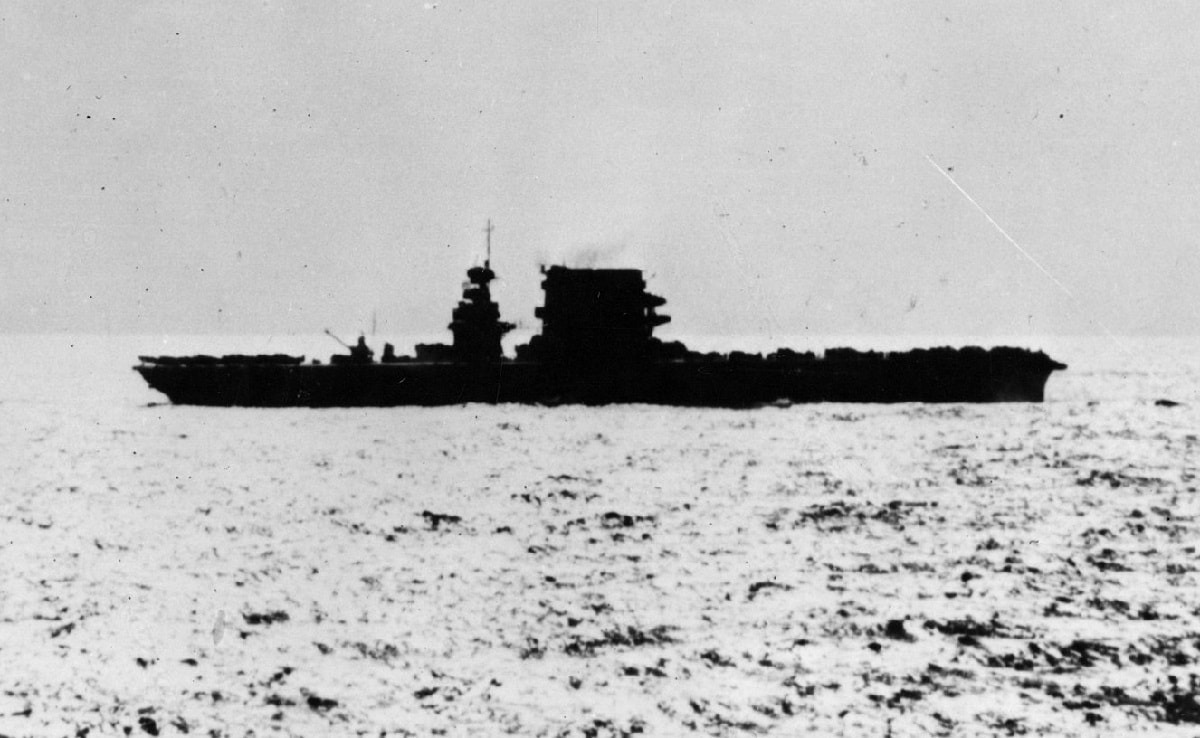
USS Lexington (CV-2) during the action, seen from USS Yorktown (CV-5), 8 May 1942. Large number of planes on deck and low sun indicate that the photo was taken early in the morning, prior to launching the strike against the Japanese carrier force. Yorktown has several SBDs and F4Fs on deck with engines running, apparently preparing to take off. Lexington, whose silhouette has been altered by the earlier removal of her 8-inch gun turrets, has planes parked fore and aft, and may be respotting her deck in preparation for launching aircraft. Official U.S. Navy Photograph, now in the collections of the U.S. National Archives.
Fighting began when U.S. aircraft discovered and sank the light carrier Shoho on May 7. The following day, both carrier groups exchanged large-scale strikes.
Japanese aircraft inflicted heavy damage upon the USS Lexington, which later had to be scuttled, while Yorktown sustained damage but survived.
On the Japanese side, the fleet carrier Shokaku was heavily damaged, while Zuikaku lost most of her aircraft and experienced pilots.
Although the Americans lost 3 ships, including one fleet carrier, it was overall a strategic victory for the Allies.
The Japanese were forced to abandon plans to invade Port Moresby, marking the first time a Japanese offensive in the Pacific failed.
Additionally, due to the damage done to Shokaku and Zuikaku, neither carrier was able to participate in the upcoming Battle of Midway.
The Battle of Midway
Many historians consider it the turning point of the Pacific War. Following the attack on Pearl Harbor, the IJN hoped to lure America’s remaining carriers into a decisive battle and cripple the United States Navy once and for all.
Admiral Isoroku Yamamoto planned an attack on the Midway Atoll, hoping that the Americans would commit their fleet to defend the strategically valuable island.
Unfortunately for Yamamoto, American cryptanalysts had broken the IJN’s code and learned of the operation. Admiral Chester Nimitz used this intel to position the carriers Enterprise, Hornet, and the hastily repaired Yorktown northeast to ambush the Japanese.

The Japanese heavy cruiser Mikuma, photographed from a USS Enterprise (CV-6) Douglas SBD-3 Dauntless during the afternoon of 6 June 1942, after she had been bombed by planes from Enterprise and USS Hornet (CV-8). Note her shattered midships structure, torpedo dangling from the after port side tubes and wreckage atop her number four 203 mm gun turret. The photo flight was led by Lt(jg) E.J. Kroeger, A-V(N), USNR, of Bombing Squadron 6 (VB-6) with photographer Mr. A.D. Brick of Fox Movietone News in a SBD-3 of VB-3 (“3-B-10”). Kroeger was accompanied by Lt.(jg) C.J. Dobson of Scouting Squadron 6 (VS-6) and photographer CP(PA) J.S. Mihalovitch in SBD “6-S-18”.
On June 4 1942, Japanese carrier aircraft attacked Midway’s defenses.
While the IJN debated whether to rearm their aircraft for more strikes or prepare them for anti-ship missions, American carrier aircraft caught them off guard.
Following a fierce battle, dive bombers deployed from the Enterprise and Yorktown attacked almost simultaneously, catching the carriers Akagi, Kaga, and Soryu with fueled and armed aircraft on their decks. Within minutes, all three carriers were fatally damaged.
The carrier Hiryu launched a subsequent counterattack and damaged Yorktown, but the Americans located and destroyed her as well.
Consequently, the IJN lost four frontline fleet carriers, hundreds of aircraft, and some of their most experienced naval aviators. American losses included the carrier Yorktown (again) and the destroyer Hamman.
Battle of the Eastern Solomon Islands
Two months after Midway, the struggle for Guadalcanal became the focus of the Pacific War.
Allied forces had landed on Guadalcanal in August 1942 to seize an airfield under construction by the Japanese.
In response, Japan launched efforts to reinforce the island and destroy Allied naval forces supporting the campaign.
The resulting Battle of the Eastern Solomons became the third major carrier battle of the war.
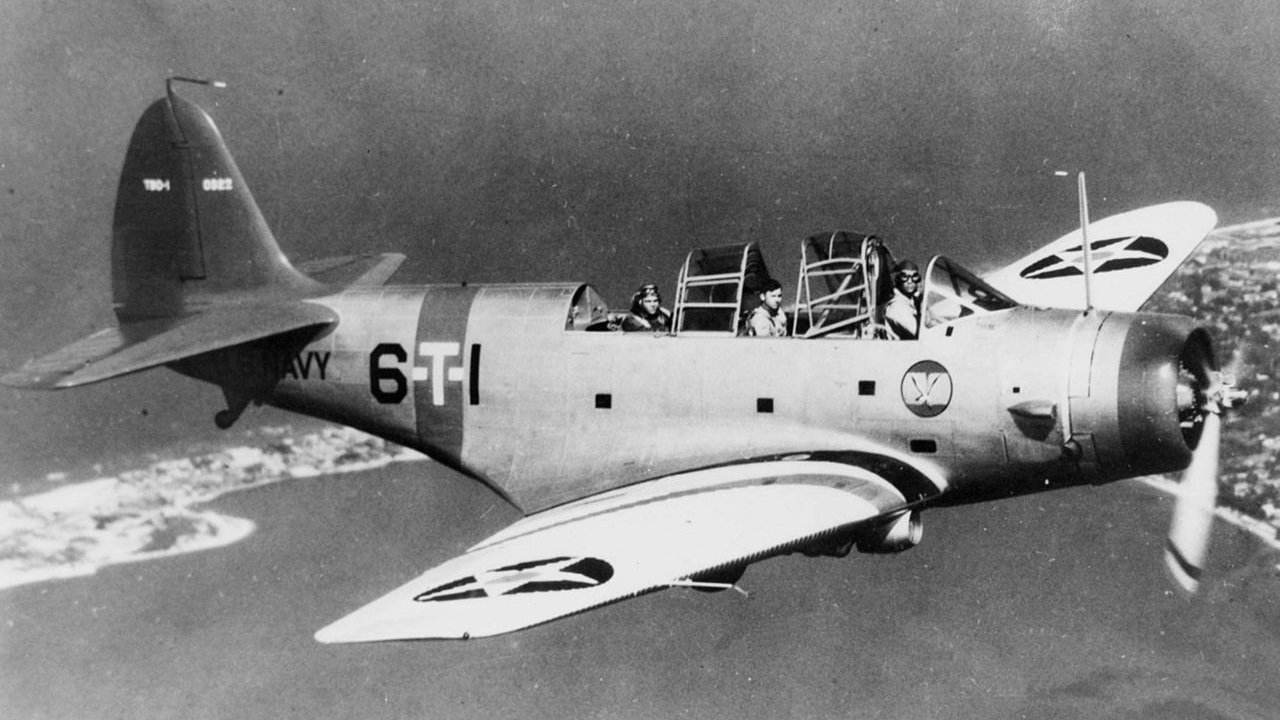
A U.S. Navy Douglas TBD-1 Devastator (BuNo 0322) of Torpedo Squadron Six (VT-6) pictured in flight, probably over Virginia (USA). Note the squadron insignia, a Great White Albatross, on the fuselage beneath the cockpit. Established as VT-8S in 1937, the squadron was redesignated VT-6 that same year. Accepting delivery of its first TBD-1 aircraft in 1938, the squadron operated from USS Enterprise (CV-6) until after the Battle of Midway in June 1942. The TBD-1 0322 ditched after stalling on takeoff from the Enterprise on 10 March 1939. The crew could be rescued uninjured.
American carrier forces, commanded by Admirals Frank Fletcher and Thomas Kinkaid, faced Japanese forces led by Admirals Chuichi Nagumo and Nobutake Kondo.
As in previous carrier battles, the opposing fleets never sighted one another directly.
Aircraft did all the fighting. During the battle, American aircraft sank the Japanese light carrier Ryujo and inflicted significant losses on Japanese aircraft.
Japanese bombers struck USS Enterprise, causing damage but failing to put the carrier out of action permanently.
More importantly, Japanese troop transports intended to reinforce Guadalcanal were forced to withdraw or delay their missions.
Battle of the Santa Cruz Islands
The Battle of the Santa Cruz Islands occurred during the continuing Guadalcanal campaign.
It was yet another attempt by the IJN to destroy the U.S. Navy’s carrier strength in the South Pacific.
By this point, both sides had suffered considerable losses in ships, aircraft, and trained personnel.
Japanese forces included the carriers Shokaku and Zuikaku, along with supporting light carriers. The U.S. forces, meanwhile, comprised the Enterprise and the Hornet, along with their supporting ships.
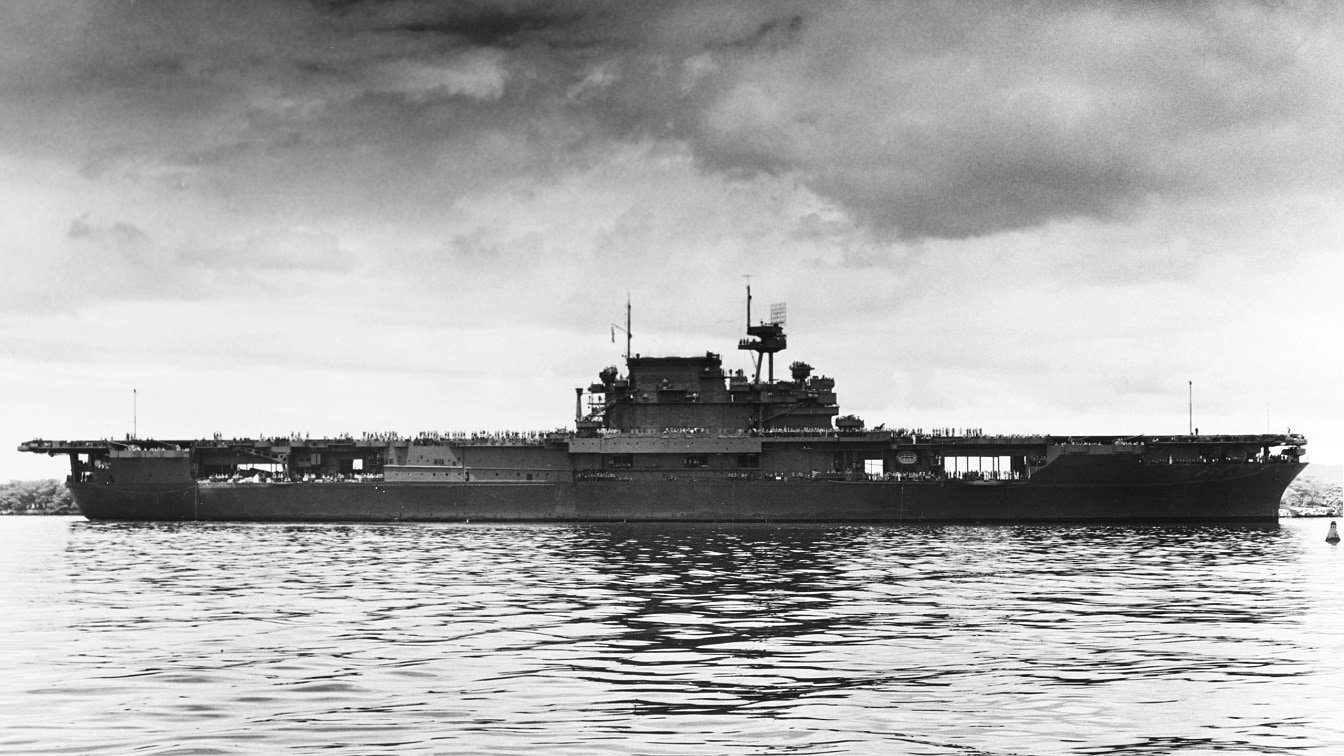
The U.S. Navy aircraft carrier USS Enterprise (CV-6) entering Pearl Harbor on 26 May 1942, following the Battle of Coral Sea and shortly before the Battle of Midway.
Fighting began on October 26 as both carrier groups desperately sought to deal the killing blow.
This time, the USS Hornet was struck by bombs and torpedoes, and was eventually abandoned.
Meanwhile, Enterprise was also damaged and temporarily put out of action.
Although the IJN had indeed dealt a hearty blow to the U.S. carrier fleet in the Pacific, it had done so at a great cost, and the Americans, far from being strategically defeated, would rebound.
Battle of the Philippine Sea
By 1944, the writing was more or less on the wall for the IJN. The United States had launched a massive island-hopping campaign and was advancing toward the Philippines.
To halt the American advance, Japan assembled much of its remaining carrier force for a decisive engagement in the Philippine Sea.
However, unlike earlier battles, the United States now enjoyed overwhelming advantages in ships, aircraft, new radar technology, and much more.
American fast carrier task forces confronted Japanese carriers in what would become the largest carrier battle in history.
What followed was what many American servicemen nicknamed the “Great Marianas Turkey Shoot.” The Japanese were at a severe technological disadvantage.
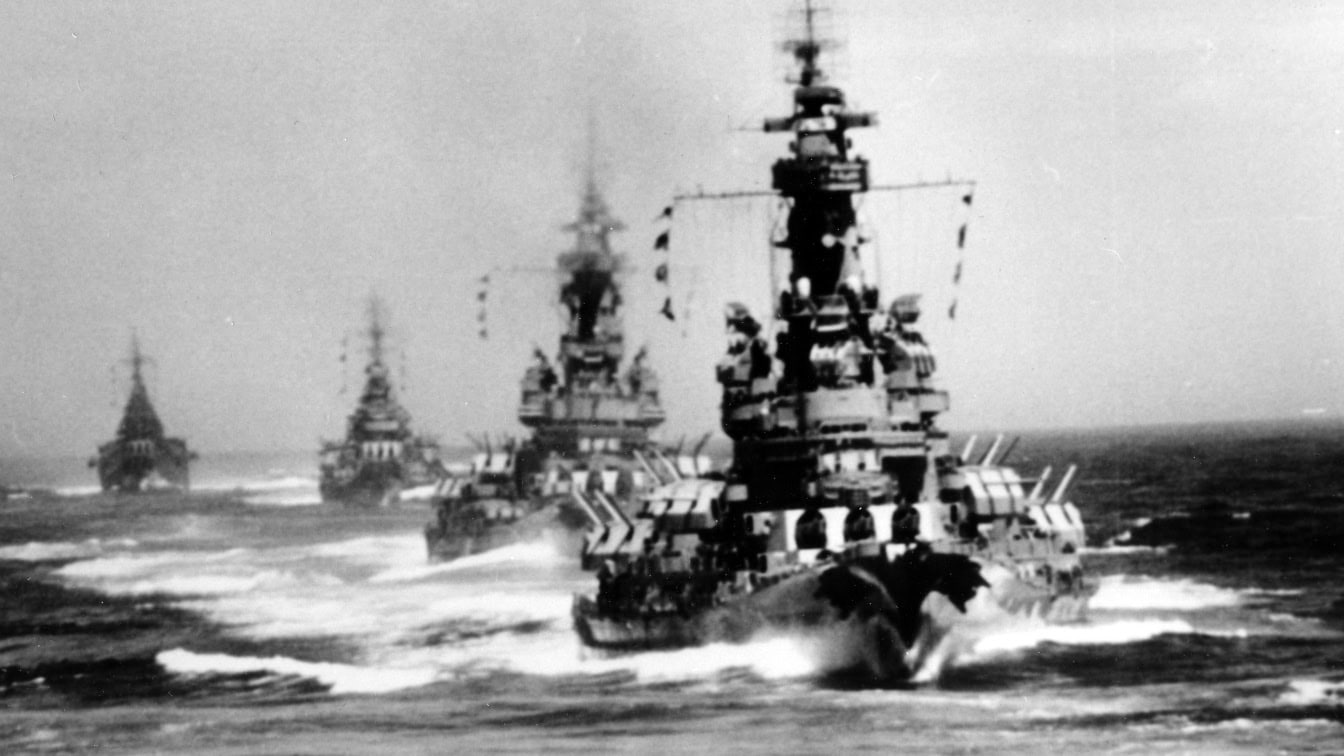
Battleships and heavy cruisers steam in column off Kamaishi, at the time they bombarded the iron works there, as seen from USS South Dakota (BB-57). USS Indiana (BB-58) is the nearest ship, followed by USS Massachusetts (BB-59). Cruisers Chicago (CA-136) and Quincy (CA-71) bring up the rear. Official U.S. Navy Photograph, now in the collections of the National Archives.
Thanks to the implementation of aerial radars, American pilots shot down Japanese fighters with ease (this was also due to the fact that the IJN had lost pretty much all of its experienced fighter pilots by this point).
The carriers Taiho and Shokaku were sunk by submarines, while most of its other carriers were either damaged or destroyed.
On the American side, only the battleship South Dakota suffered damage.
Not only was it the last time the IJN’s carrier force posed a significant threat to the United States, but it was the last time that two opposing carrier forces would ever face off against each other in combat.
About the Author: Isaac Seitz
Isaac Seitz, a Defense Columnist, graduated from Patrick Henry College’s Strategic Intelligence and National Security program. He has also studied Russian at Middlebury Language Schools and has worked as an intelligence Analyst in the private sector.