
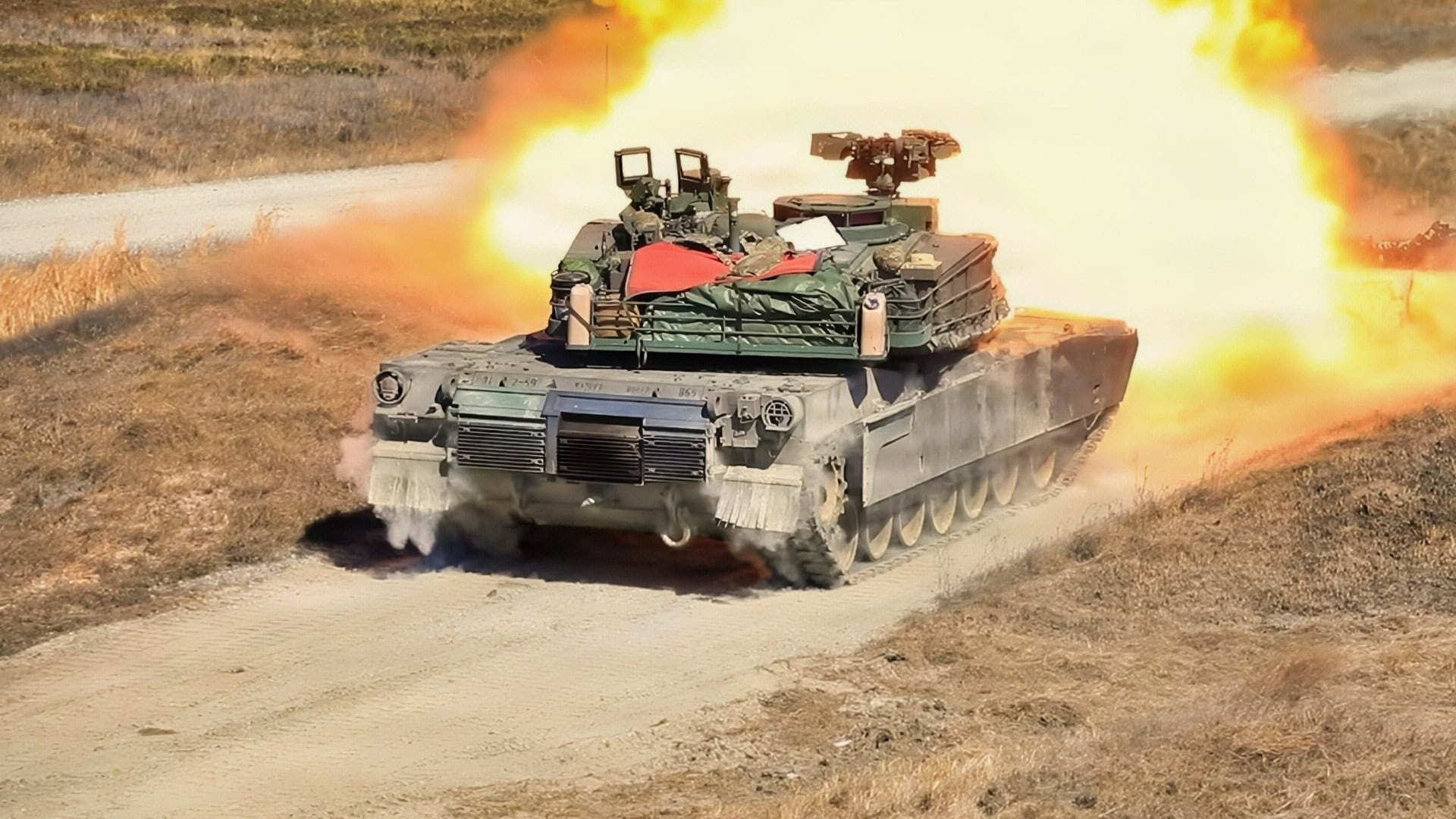
The M1A2 SEPv3 Abrams is currently the most advanced iteration of the Abrams family in operational service. Introduced around 2019, the SEPv3 retains most features of previous Abrams tanks while improving situational awareness, quality of life, protection, and other areas.
Many experts and tank enthusiasts consider the M1A2 SEPv3 one of the best tanks in the world right now, and for good reason.
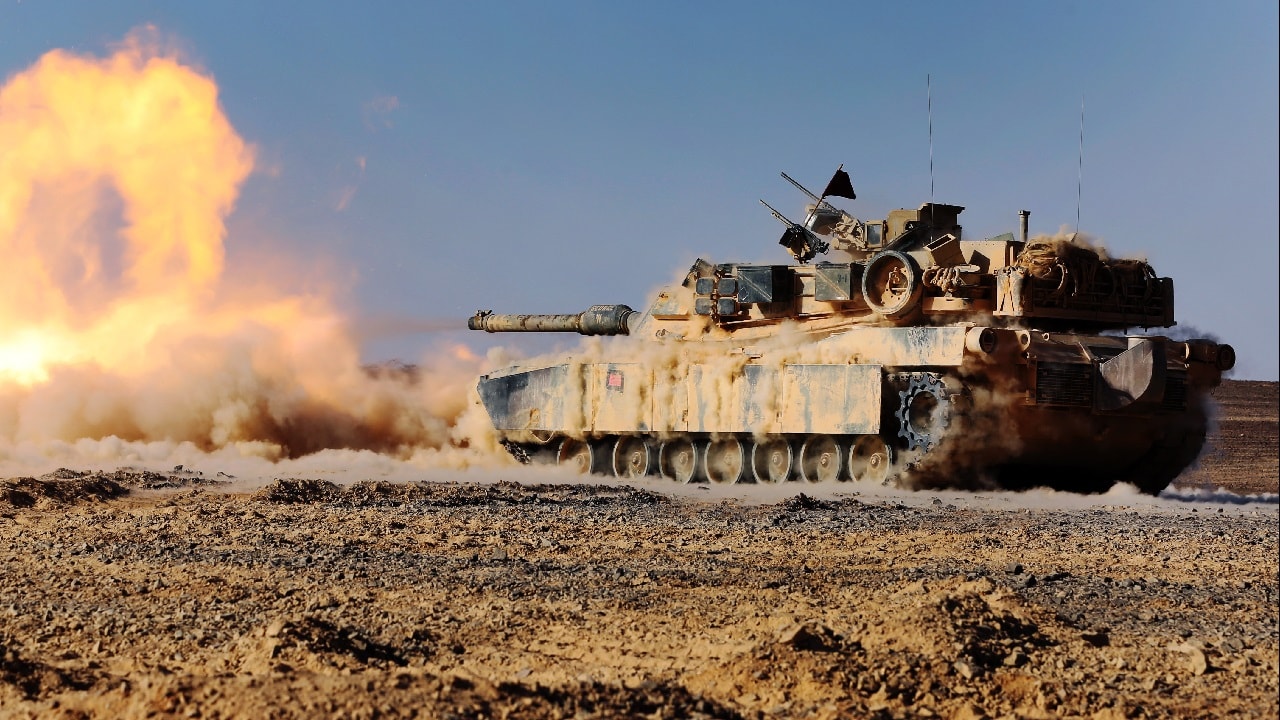
(U.S. Marine Corps photo by Sgt. Devin Nichols/Released)
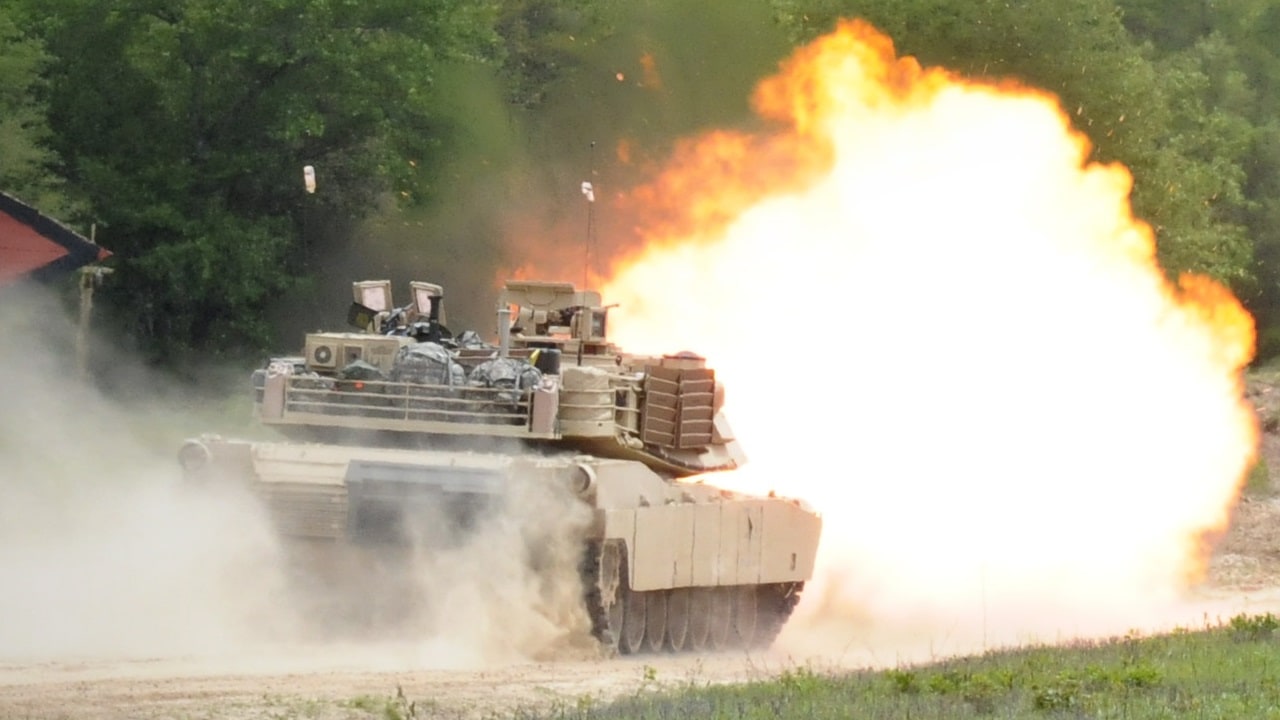
M1 Abrams Tank like in Ukraine. Image Credit: Creative Commons.
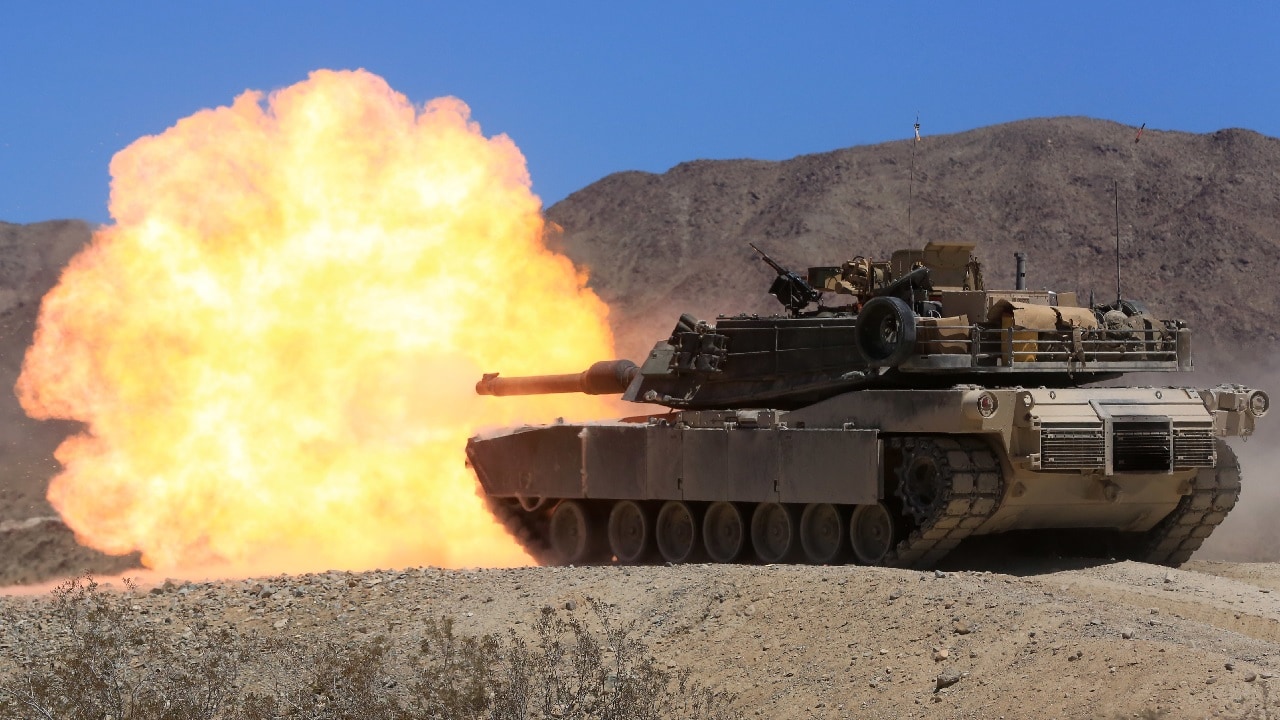
M1 Abrams Tank
It is a perfect blend of armor, firepower, and mobility while also boasting some of the most sophisticated sensors ever put on a tank so far. But how does it compare to the most advanced tanks from China and Russia?
What Separates the SEPv3 From Other Abrams Tanks?
On the outside, the SEPv3 looks almost identical to previous Abrams variants.
The tank retains the Common Remotely Operated Weapon Station (CROWS) that was introduced on the SEPv2, along with the same overall turret and hull design.
The SEPv3 also retains the tried-and-true M256 120mm smoothbore cannon, now capable of firing more advanced projectiles, such as the M1147 advanced multi-purpose (AMP) round. This new round combines several functions into one round, replacing dedicated airburst, point-detonate, and delayed-destination rounds. The rounds are programmable and controlled via the Ammunition DataLink (ADL), which lets the commander and gunner program the ammunition to meet their specific needs.
The tank also retains the old Honeywell AGT1500, both to its benefit and detriment. While the turbine engine can propel the massive tank at high speeds, it remains the same notoriously fuel-hungry engine. It has its pluses and minuses, but it is one of the weaker aspects of the Abrams family.
Other external differences include mountings for Abrams Reactive Armor Tiles (ARAT), placed along the sides of the turret and hull for additional protection against shaped charges and kinetic armor-piercing rounds. Other armor improvements include an improved counter-IED package and the Next Generation Armor Package (NGAP).
It’s the Inside That Counts
What really separates the SEPv3 from previous Abrams iterations is what’s inside the tank. A number of comprehensive changes have been made to the Abrams’ sensor suite in order to give the crew maximum situational awareness.
It is fitted with a new Vehicle Health Management System (VHMS) and Line-Replacement Modules (LRMs) for simpler maintenance. The tank is also equipped with Improved Forward Looking Infrared (IFLIR) technology for both the commander’s and gunner’s sights.
IFLIR improves the SEPv3’s detection capabilities at greater ranges and in all conditions, even when the enemy deploys obfuscants like smoke or fog.
The tank also uses the Joint Tactical Radio System handheld, man-pack, and small-form fit radio to ensure network readiness and interoperability with future brigade combat teams.
The roof-mounted, low-profile CROWS also includes upgraded day cameras that give the commander a 340% larger field of view in wide FOV mode and improved targeting in both open- and closed-hatch conditions.
These improvements ensure every tank crew has a complete, constantly updating picture of the battlefield at the start of every mission.
The tank’s systems can interface with joint battle command networks that seamlessly share and receive data from other battlefield units and systems.
Per Army requirements, the M1A2 must operate in the Army Common Operating Environment (ACOE) to improve combined arms operations. This makes the SEPv3 ideal for networked environments, even in the presence of enemy electronic warfare systems.
The SEPv3 vs the Enemy’s Most Advanced Tanks
Comparing the M1A2 SEPv3 to the latest foreign models is difficult. While the Army is often quite transparent with the Abrams’ systems and capabilities (mostly for congressional oversight), the Chinese and the Russians are more tight-lipped about their newest tanks.
Between the Russian T-14 and the Chinese Type-100, more information is available about the T-14. Russia’s T-14 Armata is often used as a punching bag by the West, usually because of its constantly delayed development.
However, if we strictly compare the T-14’s assumed capabilities with the SEPv3, a few things work in favor of the Armata.
On paper, the T-14 is a decent tank.
It was one of the first tanks equipped with an unmanned turret (disregarding the many test beds used by both the Americans and the Soviets), with the three-man crew housed inside a heavily armed capsule. The tank uses a 2A82-1M 125mm smoothbore cannon, with new ammunition reportedly made specifically for the T-14.
It also uses a roof-mounted remote weapons system integrated into the commander’s sight. Both the commander and the gunner have thermal imagers with improved target detection capabilities. According to some sources, the tank can detect and identify a target from 7,500 meters away.
If we take Russian claims at face value (which is always risky), the Armata is potentially superior in protection and maybe firepower as well.
However, in terms of situational awareness, it is highly unlikely that the T-14’s Russian-made systems are better than the Abrams’ battle-tested combat systems.
About China’s Type-100, there is even less to say.
The tank was first spotted last year during rehearsals for China’s Victory Day Parade.
The tank uses a 105mm smoothbore cannon with a much higher muzzle velocity, giving it a similar performance to a 120mm or 125mm gun. Like the T-14, the Type 100’s turret is unmanned, with the crew housed in an armored capsule.
Reports indicate the tank uses a hybrid diesel-electric power pack and can operate solely on electrical power to reduce its acoustic signature.
It also uses two GL-6 APS systems, each with four launchers each, mounted on either side of the turret.
Compared to the SEPv3, there isn’t enough information to compare the two tanks accurately.
How much armor can its main gun penetrate? Weighing at only 40 tons, does the tank have enough armor to protect the crew?
There isn’t enough information to answer these questions.
About the Author: Isaac Seitz
Isaac Seitz, a Defense Columnist, graduated from Patrick Henry College’s Strategic Intelligence and National Security program. He has also studied Russian at Middlebury Language Schools and has worked as an intelligence Analyst in the private sector.